
Their Turn - The Social Justice Movement of Our Time Their Turn - The Social Justice Movement of Our Time

Animal Exploiters Recklessly Dig in Their Heels

December 12, 2014 by 2 comments


Opinion

Once an animal rights campaign is embraced by the mainstream public, the corporation that is targeted would be wise to stop defending, and start fixing, the issue in question. But all too often, companies fight to maintain the status quo, prioritizing short-term profits over their reputations and even the long-term viability of their organizations. This week, two companies foolishly dug in their heels by defending practices that have been rejected by the public and, in many cases, by their own customers.

NATIONAL PORK PRODUCERS COUNCIL

In a letter to the editor of the NY Times in response to an opinion piece criticizing gestation crates, the President of the National Pork Producers Council, Howard Hill, writes that the crates are humane and “allow farmers to provide individual care to sows, monitor their feed intake and eliminate aggression among sows.”
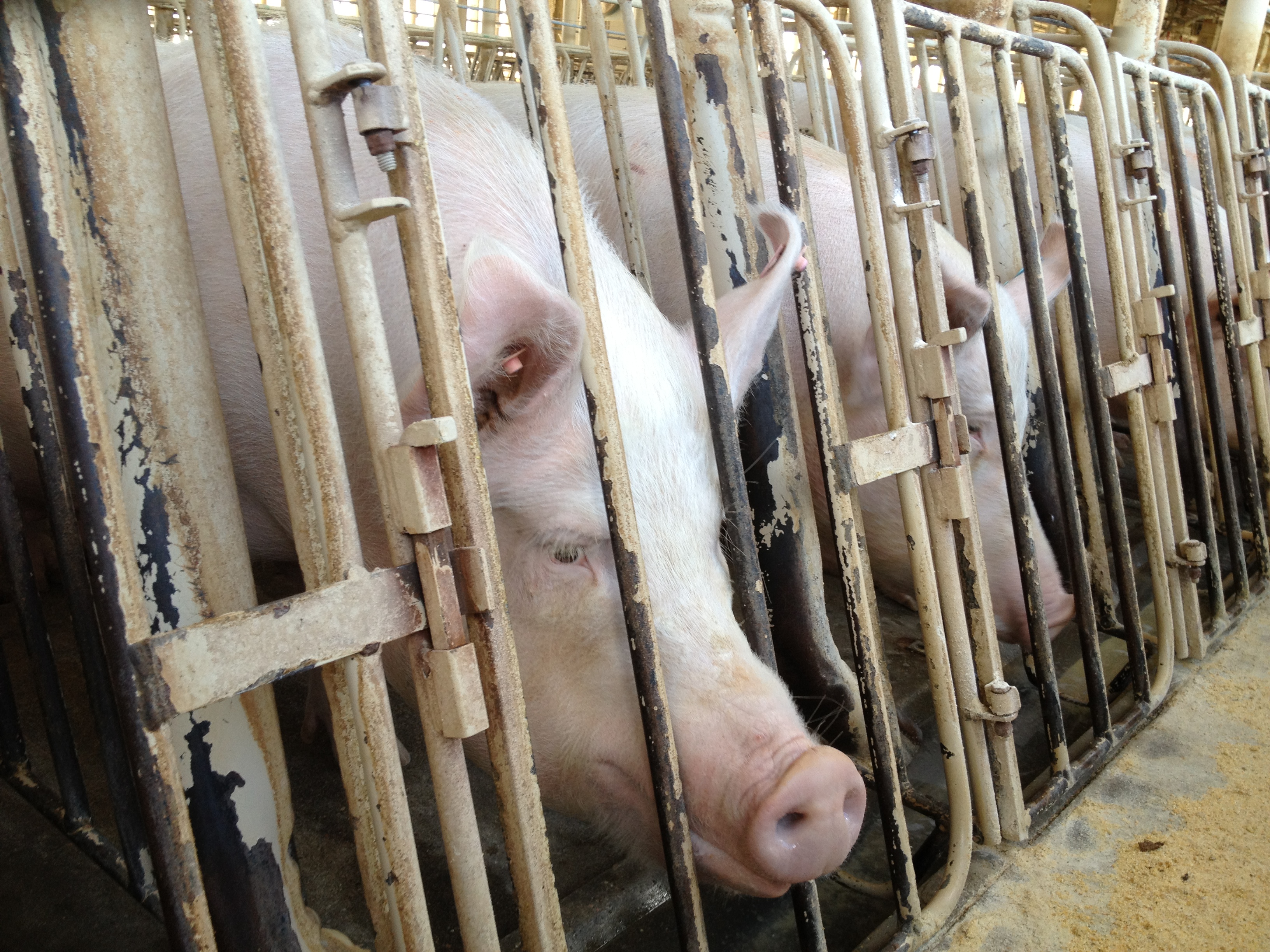
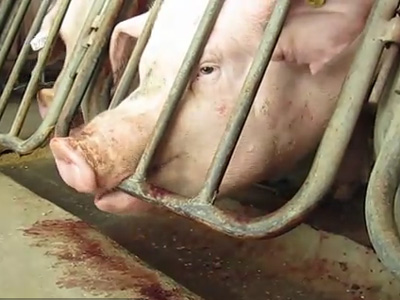
gestation crate

Is Mr. Hill living on the same planet as the rest of us? Surely he knows that even meat eaters reject the most intensive forms of farm animal confinement. In a recent poll taken in New Jersey, for example, 93% of respondents said they oppose pig gestation crates. The ship has sailed, Mr. Hill. If you want members of the public to take “pig producers” seriously, then you need to eliminate, not justify, the metal cages that drive pigs (and activists) insane. Individualized care? Really?

SEAWORLD

On December 9th, activists in San Diego hand-delivered a petition to the Mayor asking him to help retire Corky (aka Shamu), an orca who has been performing tricks in a barren pool since she was plucked out of the ocean in 1969 — 45 years ago!
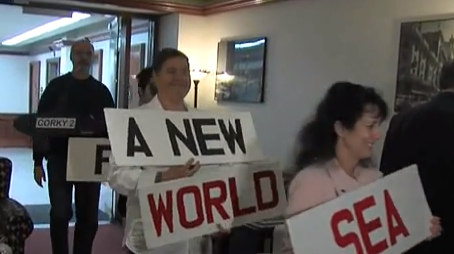
Delivering petition to retire Corky

Delivering petition to retire Corky

In response to the “Retire Corky” petition, SeaWorld issued a statement describing the activists as “a handful of extremists” who are “out of touch with reality” and stated that Corky is “happy and healthy.”
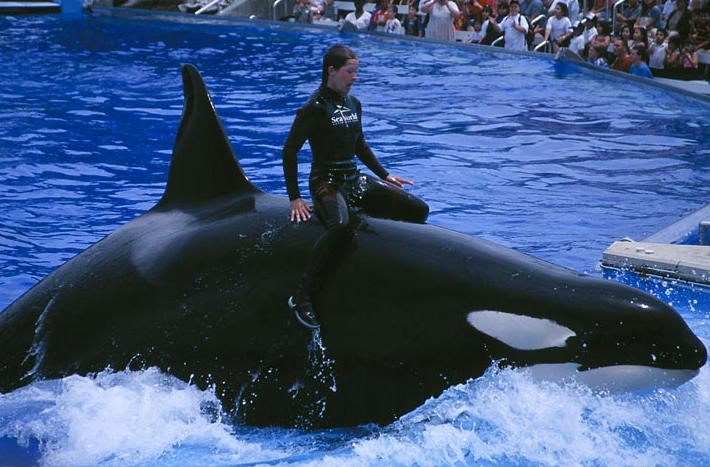
Corky gave birth 7 times in captivity. All of her babies died in a matter of days.

Corky gave birth 7 times in captivity. All of her babies died in a matter of days.

Those words might have resonated with the public before Blackfish created an anti-captivity revolution. Now, they make SeaWorld sound delusional. Does their stock price have to drop to $0 before they accept the fact that the whales who once earned them billions are now poised to sink the entire company?
Three Victories to Celebrate!

December 11, 2014 by Comments are off for this post


The News

Today, it really is Their Turn! We have three victories to celebrate – each better the next.

First up – Eight female pigs are jumping for joy – literally – because their recent journey from gestation cage to slaughterhouse was pleasantly interrupted by people who liberated them. The brains behind the rescue? A student taking a “swine production” class who fell in love with them. The money? None other than Sam Simon, the Simpsons co-creator who is donating his fortune to animal rights causes.

Next up- the gay bull in Ireland who became an international sensation when his story went viral. As Benjy was being fattened up for a premature slaughter because he wasn’t inseminating female cows, the Irish animal rights group ARAN convinced his owner to sell him. Now, Benjy will live out his remaining years at a luxurious sanctuary, serving as an ambassador to all farm animals. And who’s funding his retirement? A few hundred people made contributions, but Sam Simon swooped in with the big bucks to close the deal.

Last, but not least, lawmakers in Oakland, California, have voted to ban the use of bull hooks, the weapons used by circuses to beat their elephants into submission (see video below). Los Angeles is the only other U.S. city with a bull hook ban. Without these weapons, the monsters at Ringling Bros. will be unable to bring their battered elephants into the city limits. The ban doesn’t go into effect until 2017, but it’s a major victory, and it sets a precedent for other municipalities. Let’s hope that Ringling employees don’t take out their anger on the elephants.

Your Turn

Hit the pause button to celebrate, share and be re-energized by the victories.


Farmers Say Activists With Cameras Spread Disease on Factory Farms

December 10, 2014 by 2 comments


News & Opinion

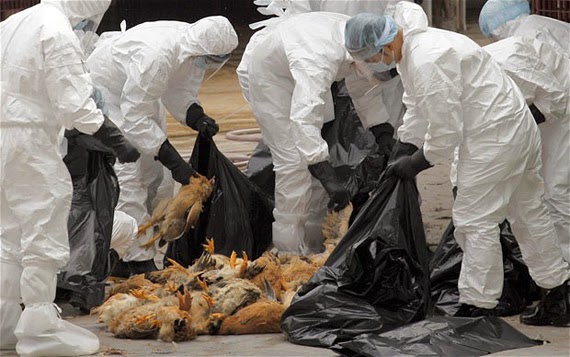
In an effort to pass harsher laws to keep cameras out of factory farms, agribusinesses in Eastern Australia are claiming that activists pose a threat to “biosecurity” because they can spread disease to their animals. The factory farmers are not only attempting to hide animal abuse from the public, but they are also shifting the blame for disease outbreaks away from overcrowding and intensive confinement on their farms. If the “biosecurity” measure is passed, activists who enter farms illegally could face up to three years in jail or a $1.1 million fine.

https://youtu.be/hHkqrd44dDw

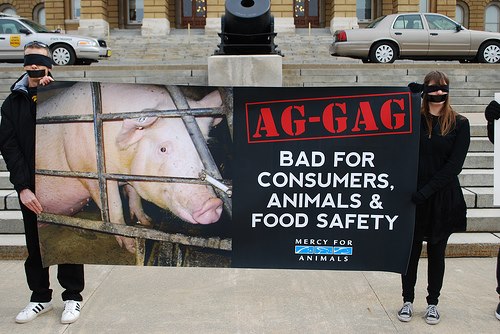
This is not the first attempt by Australian agribusiness to pass American-style “ag gag” laws. In 2012, after several undercover investigations cast a negative spotlight on Australia’s wool and pork industries, a Senator in South Australia introduced the Surveillance Devices bill, which would have criminalized the taking of photos and video of “a legally operating animal enterprise.” It would have also required activists to turn over their videos to authorities within 48 hours. The bill’s sponsor claimed the law would “strengthen genuine animal welfare protections,” as if cameras harm animals. The bill was voted down, re-introduced with changes in July 2014 and voted down again.

In 2013, Australian farmers killed almost 500,000 egg laying hens during an outbreak of avian flu. At the time, no one blamed the outbreak on a cell phone camera.

Agribusiness attempts to shift blame for disease outbreaks from overcrowded barns to activists with cameras

Agribusiness attempts to shift blame for disease outbreaks from overcrowded barns to activists with cameras

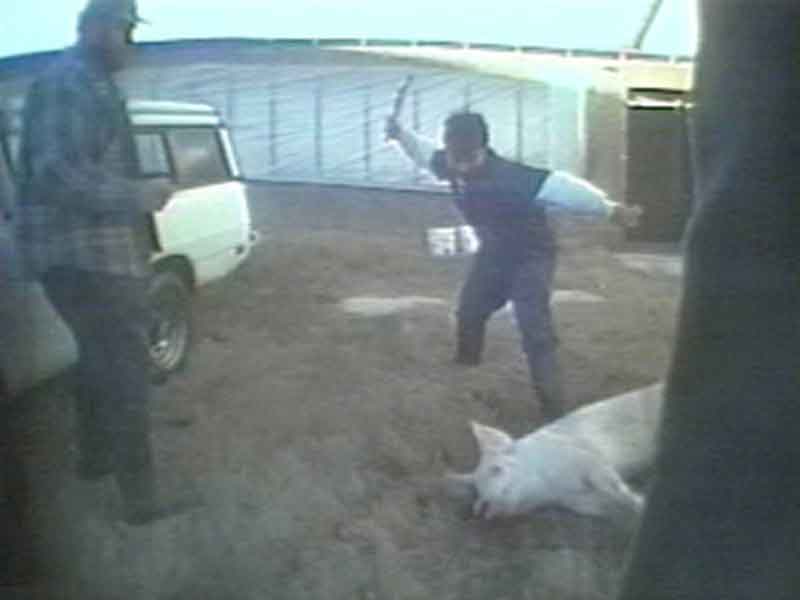
Intensive confinement and overcrowding on factory farms spread diseases. Hidden cameras spread the truth. Criminalizing them will make horrific conditions for animals on factory farms even worse, as agribusiness will have no incentive to minimize abuse.

Hidden cameras hold famers accountable (Photo: PETA)

Hidden cameras hold famers accountable (Photo: PETA)

Factory farmers in Australia and around the world confine, mutilate, abuse and slaughter billions of farm animals each year, but they and the government officials in their pockets would like the public to think that activists with cameras are the criminals. History will be the judge.

U.S. Animal rights groups are fighting "ag-gag" bills

U.S. animal rights groups are fighting “ag-gag” bills


What the Media WON’T Say About NYC’s Explosive Horse Carriage War

December 9, 2014 by 4 comments


The News

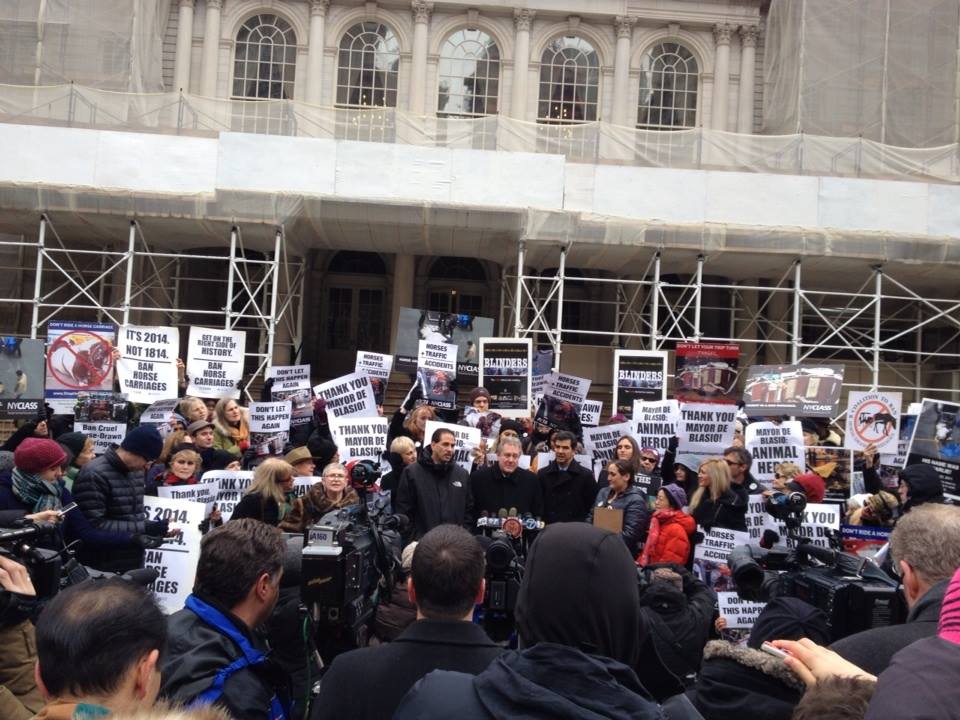
It’s official. After a nine year campaign by grass roots advocacy groups, NYC Mayor Bill de Blasio has introduced a bill to ban horse-drawn carriages from the streets of NYC.

All of the advocacy groups rallied at City Hall in support of the bill

All of the advocacy groups rallied at City Hall in support of the bill

Unfortunately, NYC’s pro-carriage newspapers have not only lied about the Mayor’s motives, claiming that he’s merely re-paying a campaign donor who wants to buy the stables, but they have also largely failed to provide fair balance. If the media shared this information, then elected officials and members of the public would at least have the chance to make an informed decision about whether or not to support the Mayor’s bill.

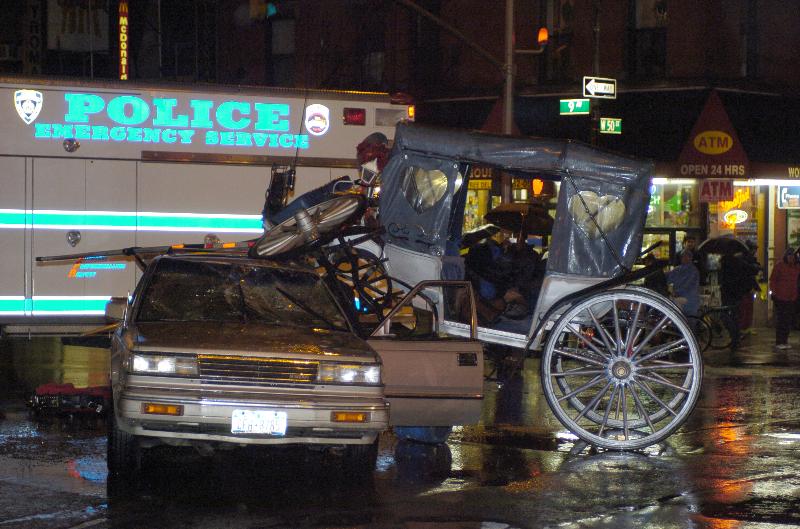
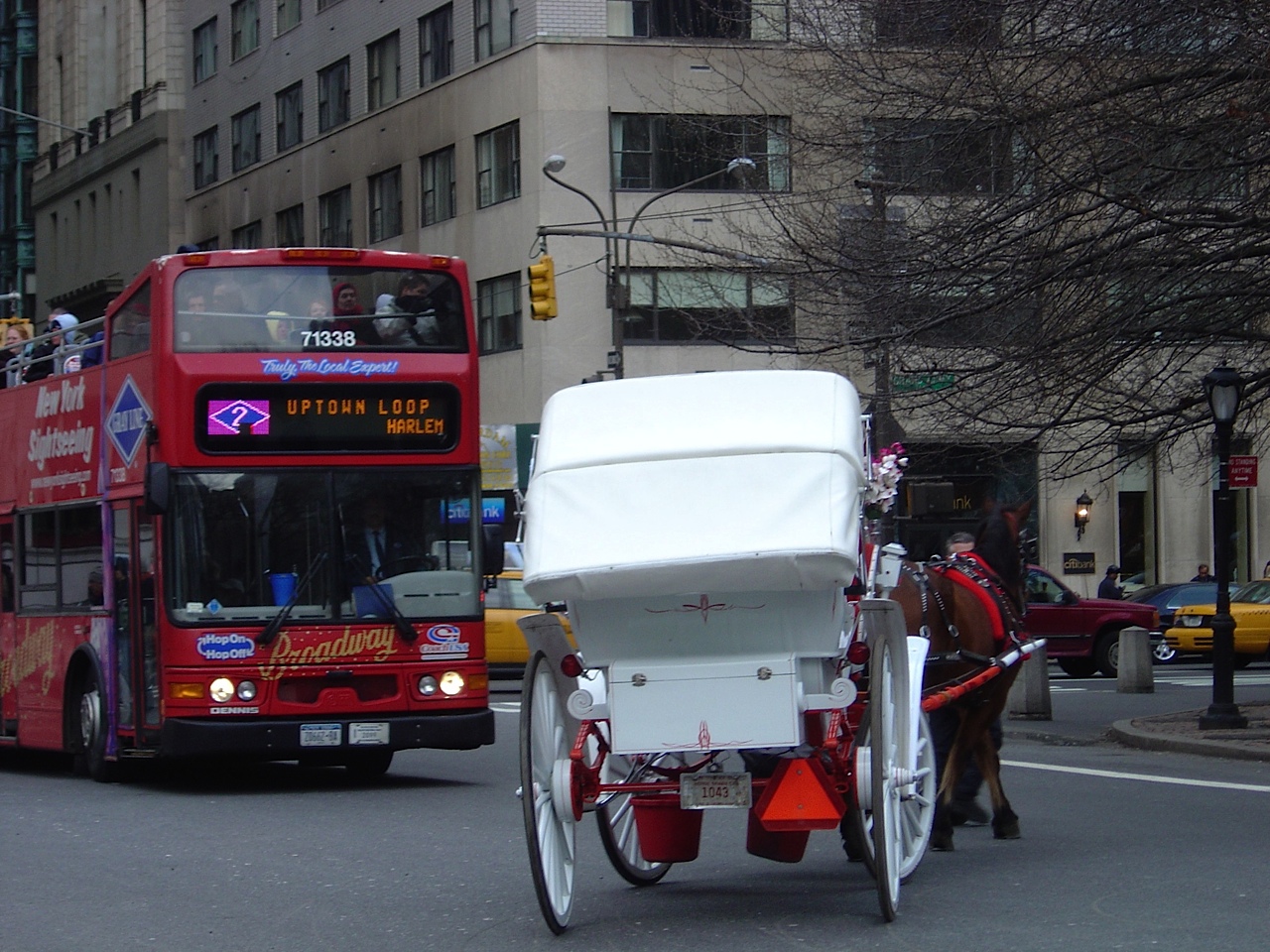
Horses are flight animals who sometimes flee when spooked by sirens, potholes, bright colors or other stimuli. The blinders, which partially restrict their vision, aren’t foolproof. Over the years, spooked carriage horses, who become weapons when running frantically down a busy street, have caused many tragic accidents. It was the 2006 death of Spotty, a carriage horse who galloped down Ninth Avenue and crashed into a car, that triggered the current movement to ban horse-drawn carriages.

Spotty died after spooking and crashing into a moving car.

Spotty died after spooking and crashing into a moving car.

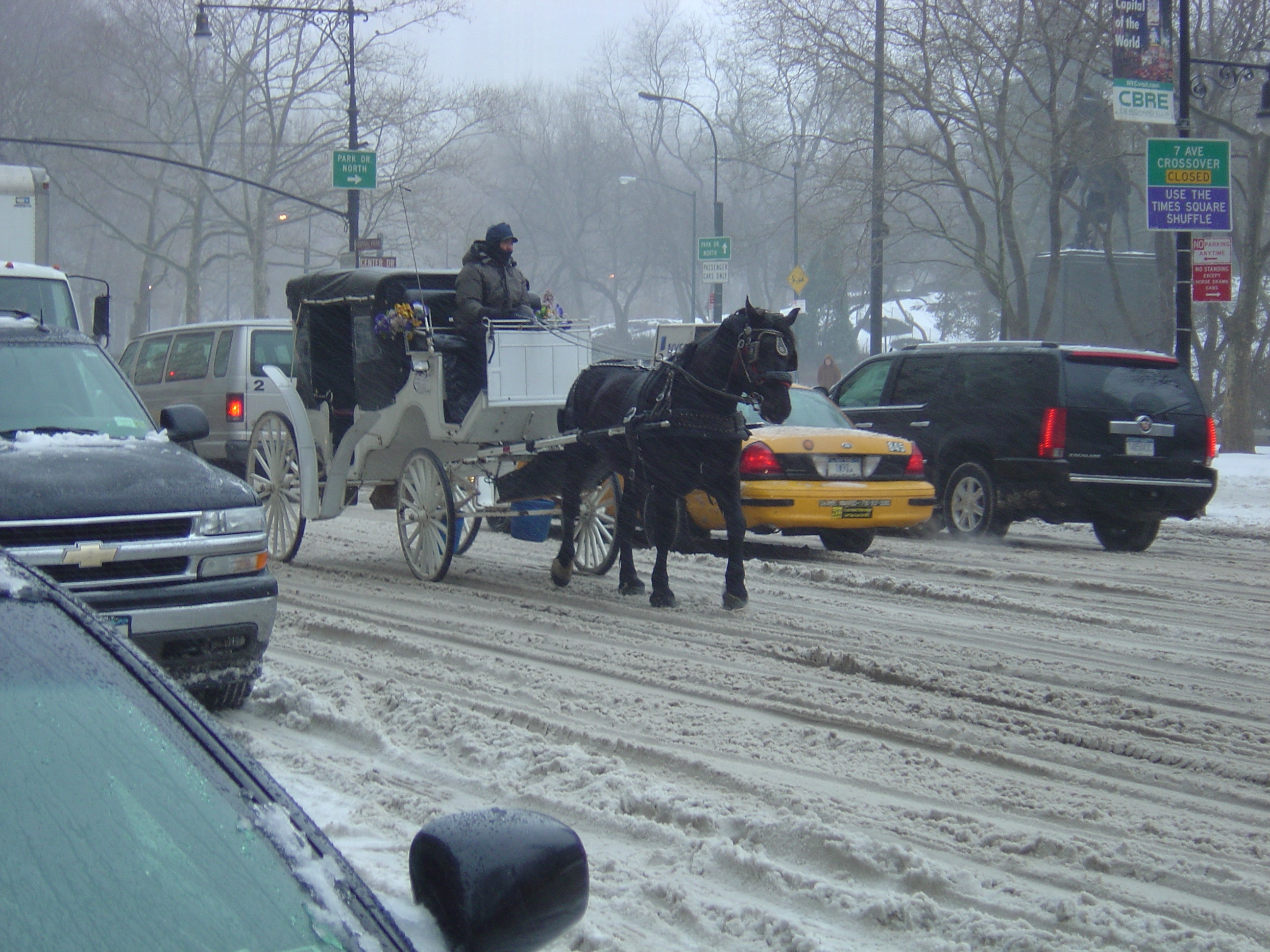
Horses are grazing animals, but New York City has no pasture. The horses are either confined to their stalls or between the shafts of their carriages, burdened by equipment. Denying the horses the chance to graze and move around unencumbered each day is inhumane. As herd animals, horses should also have the opportunity to interact physically. Without a pasture for daily turnout, the horses are unable to fulfill their most basic instincts.

Carriage in snow on CPS

NYC’s dangerous streets are no substitute for a pasture

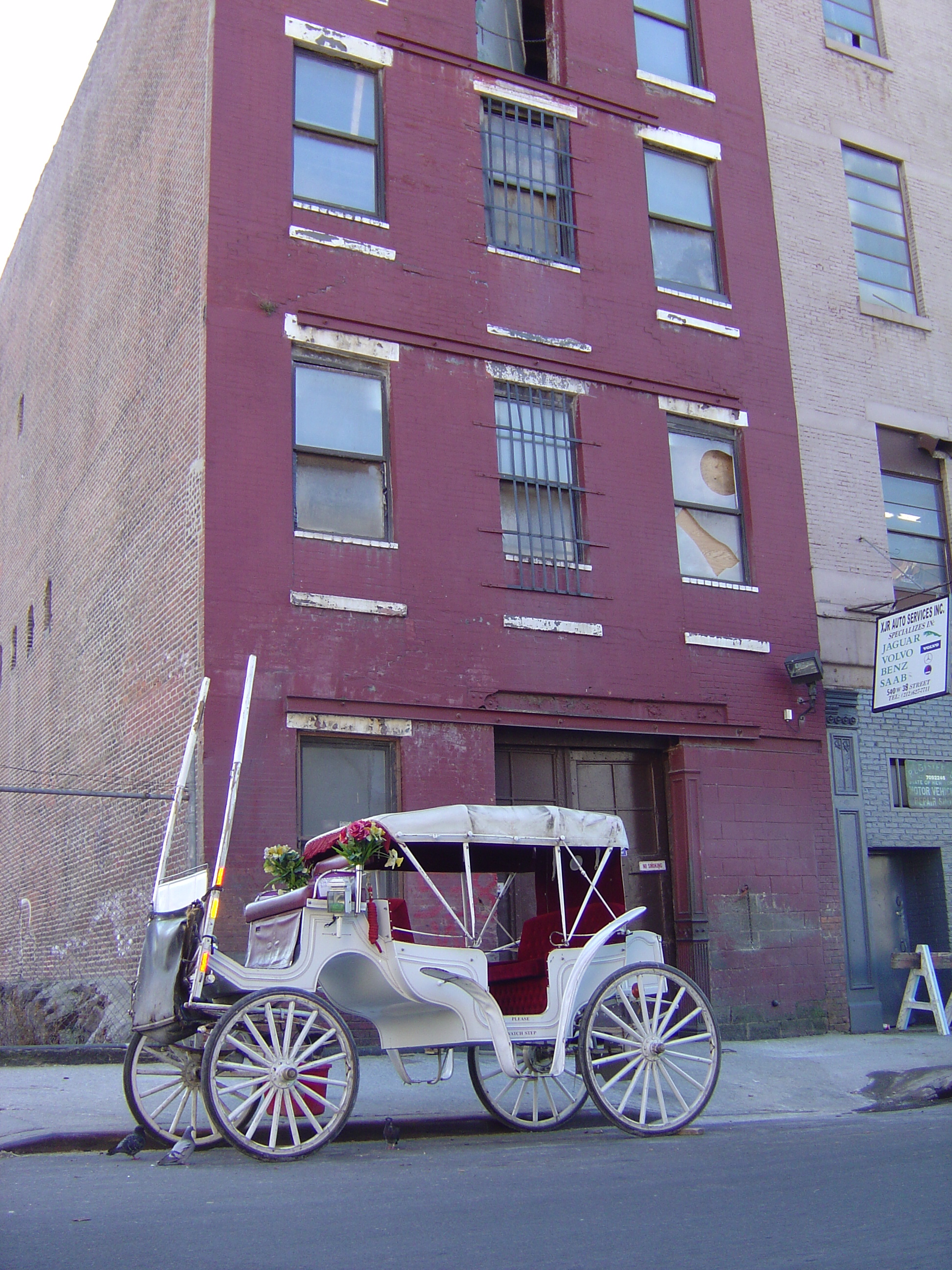
Horses live in multi-story firetraps. Most of the carriage horses are kept in stalls on the 2nd and 3rd floors of four stables on the far West Side of Manhattan. If a fire broke out in one of these buildings, in which highly flammable hay is stored, the panicked horses would be unable to escape down the narrow ramps, assuming someone opened their stalls one-by-one to let them out. In 2011, NYC’s Department of Health recommended that the City prohibit new stables from having stalls above the ground floor, but that change, if implemented, would have done nothing to help horses trapped in the current stables.

One of four stables in midtown Manhattan

One of four stables in midtown Manhattan

Working in the streets with aggressive taxi drivers, ambulances and other motor vehicles is dangerous and unhealthy. Over time, ingesting car exhaust during their “nose-to-tailpipe” workday can cause respiratory disease, and the hard pavement can cause lameness. In December 2013, a horse-drawn carriage driver was charged with animal cruelty for working a lame horse.

Manhattan

Manhattan

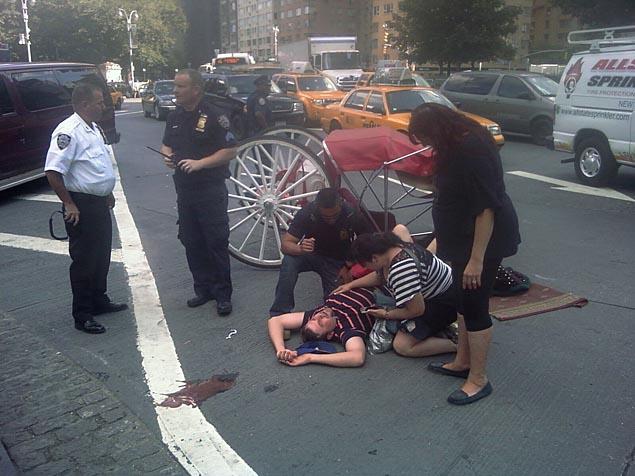
Horse-drawn carriages jeopardize the safety and quality of life of people. Slow-moving contraptions add to traffic congestion; increase the response times of emergency vehicles; and cause accidents. Pedestrians, bicyclists and passengers in motor vehicles have been injured in horse-drawn carriage crashes, as have customers who ride in these open buggies with no seat belts or helmets. Finally, horse manure contaminates the streets and leaves a stench in and around Central Park, where people walk, jog and bike.

carriage human injured

Our country was built on the backs of horses. It’s time we reciprocate by taking them out of harm’s way and giving them a humane retirement.

Your Turn

1. If you live in NYC, please join NY-CLASS in its efforts to rally support among lawmakers for the Mayor’s bill to ban horse-drawn carriages. If you live elsewhere, please sign their petition.

2. To learn more about the issue and keep apprised of news, subscribe to the weekly newsletter of the Coalition to Ban Horse-Drawn Carriages by sending an email to coalition@banhdc.org.

3. Watch the award-winning documentary film BLINDERS to see why people have been fighting for years to take the horses out of NYC:


Turning the Tables, Filmmakers to Lock Up Humans in Crates

December 8, 2014 by Comments are off for this post


The News

Activists will go to extreme lengths to help animals — from protesting naked to liberating minks from fur farms. But how many are willing to live in their own excrement for 10 days?  “We have a waiting list,” according to the makers of Farming Humans, a one-hour documentary film in the early stages of development.

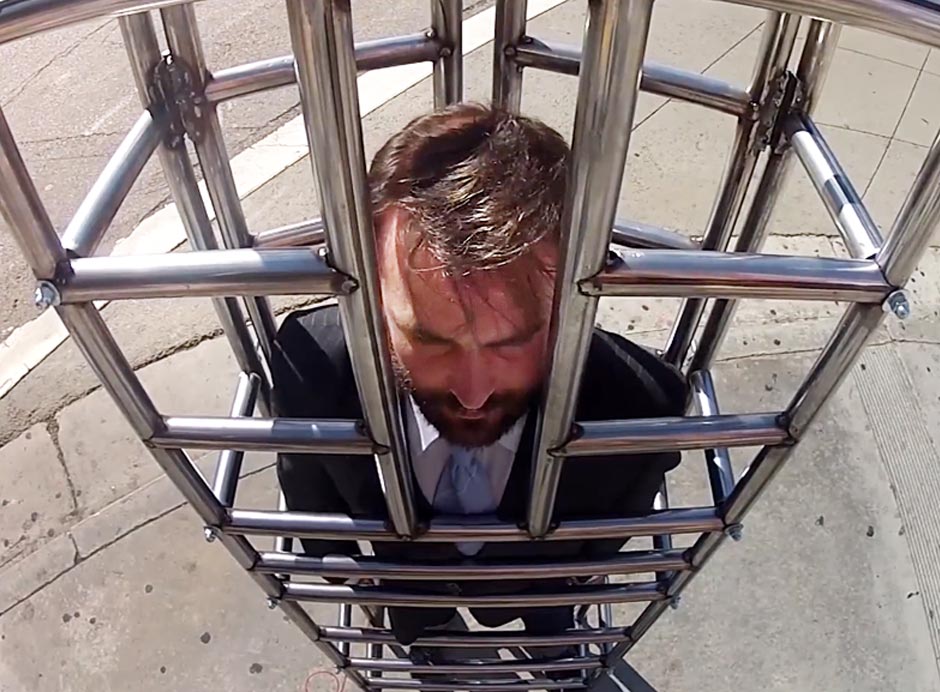
In Farming Humans, 12 people will be locked up in small cages for 10 days to emulate the intensive confinement of pigs, calves and chickens on factory farms. Unlike other animals, the captive humans will be able to describe their physical discomfort, the smell of their waste and the stress of being unable to move. They will also be able to beg for mercy and leave if they start to go insane, which is what happens to pigs in gestation crates.

gestation crates

Pigs who go insane from confinement chew the metal bars that imprison them

The filmmakers will make life difficult for the human animals, but they will stop short of carrying out the worst abuses, such as castration, dehorning, tail cutting, branding, debeaking, gratuitous physical attacks and, of course, slaughter.

TV host Jane Velez-Mitchell talks to the filmmakers about their provocative concept in an interview.

This isn’t the first time that human animals have stepped into a farm animal cage. In the months leading up to a vote on a gestation crate ban in New Jersey, HSUS challenged people in the state to step inside of one. That challenge, however, lasted only 4 minutes.

Gestation crate challenge in NJ (Photo: HSUS)

Gestation crate challenge in NJ (Photo: HSUS)

As expected, NJ governor Chris Christie vetoed the bill in an effort to curry favor with  hog farmers in Iowa, who have an outsized influence in the race for U.S. President. In reaction to his veto, actress and musician Cher called him a “despicable bully,” and comedian John Stewart criticized him on his show:

cher gestation crate

https://youtu.be/cFim-euvBMY

Your Turn

To learn more about the project and/or support the filmmakers in this endeavor, please visit Farming Humans.