Their Turn - The Social Justice Movement of Our Time Their Turn - The Social Justice Movement of Our Time

The Rape Rack

June 15, 2016 by Leave a Comment


The News

Perhaps the only thing that the animal agriculture industry and animal rights activists can agree upon is the name of the device in which dairy cows are impregnated – the “rape rack.”
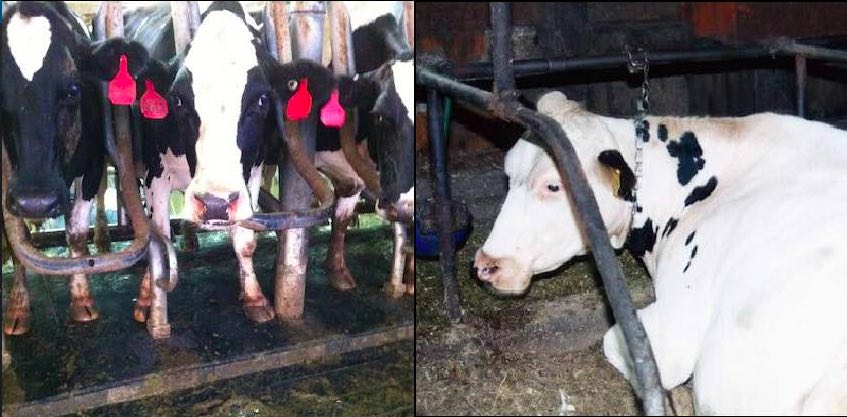
Female cows restrained in a device reffered to as the "rape rack."

Female cows restrained in a device referred to as the “rape rack”

The “rape rack” is a narrow, chute-like device in which female cows are restrained while they undergo a process the dairy industry euphemistically refers to as “artificial insemination.” During artificial insemination (AI), a dairy worker inserts one of his arms into the rectum of a restrained cow and, with his other arm, inserts a rod-like device called an Al gun into her vagina. The Al gun, which contains bull semen, is pushed in further until it reaches the cervix (the entrance to the uterus). The semen is then injected into the uterus.
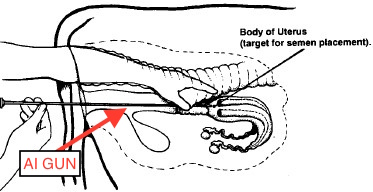
A diagram illustrated how to artificially inseminate a female cow.

A diagram illustrates how to artificially inseminate a female cow.

Many supporters of animal rights argue that forcibly impregnating cows constitutes sexual abuse. “As public awareness of its barbaric practices increases, the dairy industry is desperate to whitewash them,” said Kathy Stevens, the Executive Director of Catskill Animal Sanctuary. “They can call this practice ‘artificial insemination’ if they wish, but impregnation against one’s will using forcible restraint pretty much sounds like rape to me.”
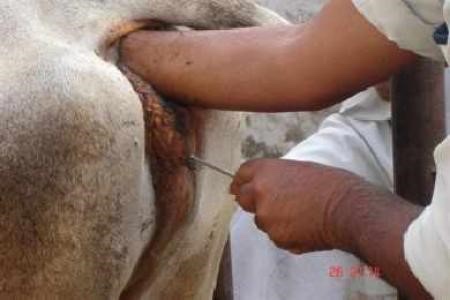
A female cow undergoing the process of artificial insemination.

Artificial Insemination

In order to produce milk, cows and other animals used for dairy production must be impregnated each year because their milk production stops at around the time their calves would naturally stop nursing.

To maximize the amount of milk available for human consumption, babies are typically taken away from their mothers within 24 hours of birth, causing profound distress to both the mother and her newborn. Mother cows bellow and call to their babies for days following the separation. Some of the babies are sent directly to the slaughterhouse, to veal farms, or to feedlots; the rest become dairy cows like their mothers.        
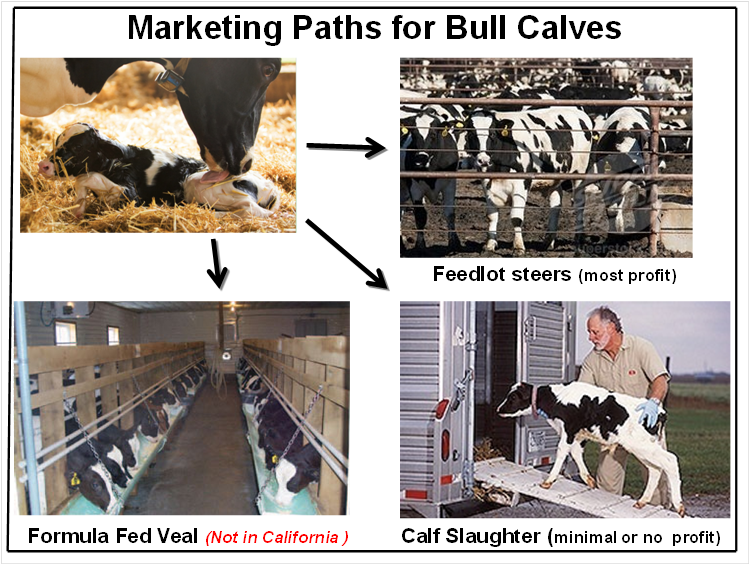
Dairy industry diagram illustrates the different ways to profit off of male calves, who cannot produce milk.

Dairy industry diagram illustrates the different ways to profit off of male calves, who cannot produce milk.

The psychological and physical stresses of life in the dairy industry rapidly weaken and/or sicken cows, quickly rendering them unprofitable to their owners. They are therefore sent to slaughter at a fraction of their natural lifespan. When the cows arrive at the slaughter plant, they often need to be dragged to the kill floor because they are too weak to walk.
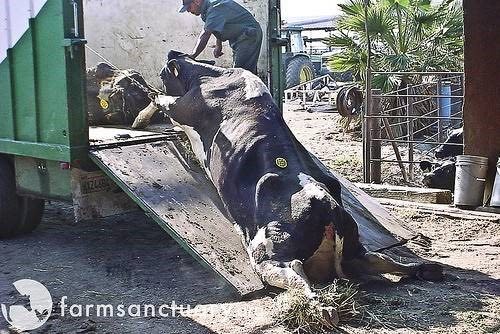
A cow too weak to walk (downer) is pulled into a truck which will carry her into the slaughter plant.

A cow too weak to walk (downer) is pulled into a truck which will carry her into the slaughter plant.

A 2014 horror film entitled “The Herd” vividly depicts the torment endured by cows in the dairy industry. This film, directed by Melanie Light, portrays a fictional dairy farm in which the cows are replaced with human women.

In an interview with “Shock Till You Drop,” a website devoted to reviewing horror films, Light, who describes herself as a “vegan feminist,” said: “A lot of people don’t make the connection. Being female isn’t exclusive to humans . . .These cows, pigs and sheep are abused for their reproductive systems.”

Over the years, the term “rape rack” has gradually disappeared from the dairy industry’s vernacular. “It used to be common parlance in dairy farming. Today, farmers are far more savvy about terminology—as are other industries that use animals” says Katie Arth of PETA. “As a result, that term has vanished from the farmers’ vocabulary in the same way that ‘iron maidens’ and ‘restraint chairs’ have been renamed ‘sow stalls’ and ‘gentling devices.’ The industry now prefers to use euphemisms such as ‘breeding boxes’ to describe the boxes or chutes where female cows are restrained while a worker forcibly inseminates them.”
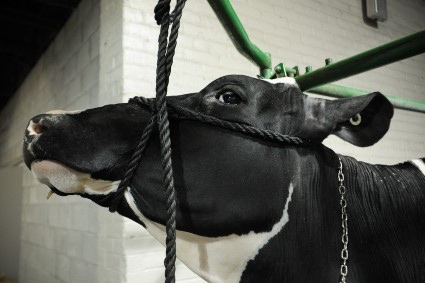
A restrained female cow undergoing artificial insemination.

A restrained female cow undergoing artificial insemination

Your Turn

To learn more about artificial insemination please visit Free From Harm.

To learn about other dairy industry practices and undercover investigations done on dairy farms please visit Mercy for Animals.

To watch “The Herd” in full, click here


Filed under: Food
Tagged with: , ,

Germany’s Decision to Affirm Legality of Male Chick Shredding Shines Global Spotlight on Practice

June 10, 2016 by Leave a Comment


The News

The German parliament recently voted against a Green Party bill that would have banned the practice of killing newborn male chicks in the egg industry. According to a spokesman from the ruling Christian Democratic Union Party, the decision was made out of fear that “…animal production will move to another country.” A high court affirmed this decision, arguing that German law allows the killing of animals if it can be justified economically and that chick shredding is “…part of the process for providing the population with eggs and meat.” An agricultural minister from Northern Germany disagreed with the decision, stating “We must finally stop treating animals like garbage.”

https://youtu.be/u8-fiHHbdRs

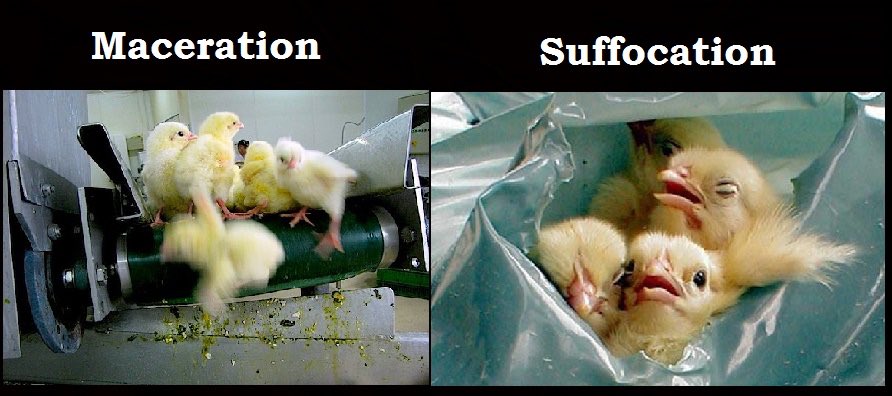
Since male chicks cannot lay eggs or be profitably raised for meat, they are usually killed within hours of hatching. The most common methods are grinding them up alive (maceration), gassing, electrocution or suffocation by stuffing them into garbage bags. In Germany, approximately 40 million newborn male chicks are killed every year. Worldwide, the number is estimated to be 2.5 billion.

Two widely used methods of male chick culling are maceration and suffocation.

Two widely used methods of male chick culling are maceration and suffocation.

“If killing millions of newborns doesn’t violate the animal protection laws of a country widely perceived as being on the forefront of animal welfare reform, then one can only imagine what farm animal practices are legal in countries like the U.S.,” said Karen Davis, President of United Poultry Concerns, a national advocacy group that promotes the compassionate and respectful treatment of domestic fowl. “It is thus interesting that the U.S. egg industry trade group, United Egg Producers (UEP), has just announced it will, by 2020, replace the killing of newborn male chicks with ‘in-ovo egg sexing,’ a process in which the sex of chicks is identified before they develop inside of their eggs.”

UEP’s announcement was made in response to a campaign by The Humane League, a national animal advocacy organization that works to protect animals through public education, campaigns and rescue.

In response to the news, Davis said, “While in-ovo chick sexing must surely be less inhumane than the mass-extermination of fully developed chicks, it does not eliminate the inherent cruelty of commercial egg production.”

Israeli animal rights activists occupy a chick hatchery and shuts down a macerator in the process of grinding newborn male chicks.

Israeli animal rights activists occupy a chick hatchery and shuts down a macerator in the process of grinding newborn male chicks.

The practice of chick shredding has generated tremendous controversy worldwide in recent years. In June, 2015, Israeli animal rights activists occupied a hatchery and shut off a macerator that was grinding newborn chicks. When police arrived at the scene,  activist Tal Gilboa challenged an officer, saying “I want to see you, as a human being regardless of your uniform, cop or no cop, turn on the power supply.” The video of this act of civil disobedience was viewed over two million times on Facebook.

Your Turn

To learn more about The Humane League’s successful campaign to end the mass killing of male chicks in the egg industry, please visit the organization’s blog post about its victory.

To learn more about the plight of chickens in the egg industry, please visit United Poultry Concerns.


Filed under: Food
Tagged with: , ,

Thousands Attend NYC VegFest (VIDEO)

May 11, 2016 by Leave a Comment


The News

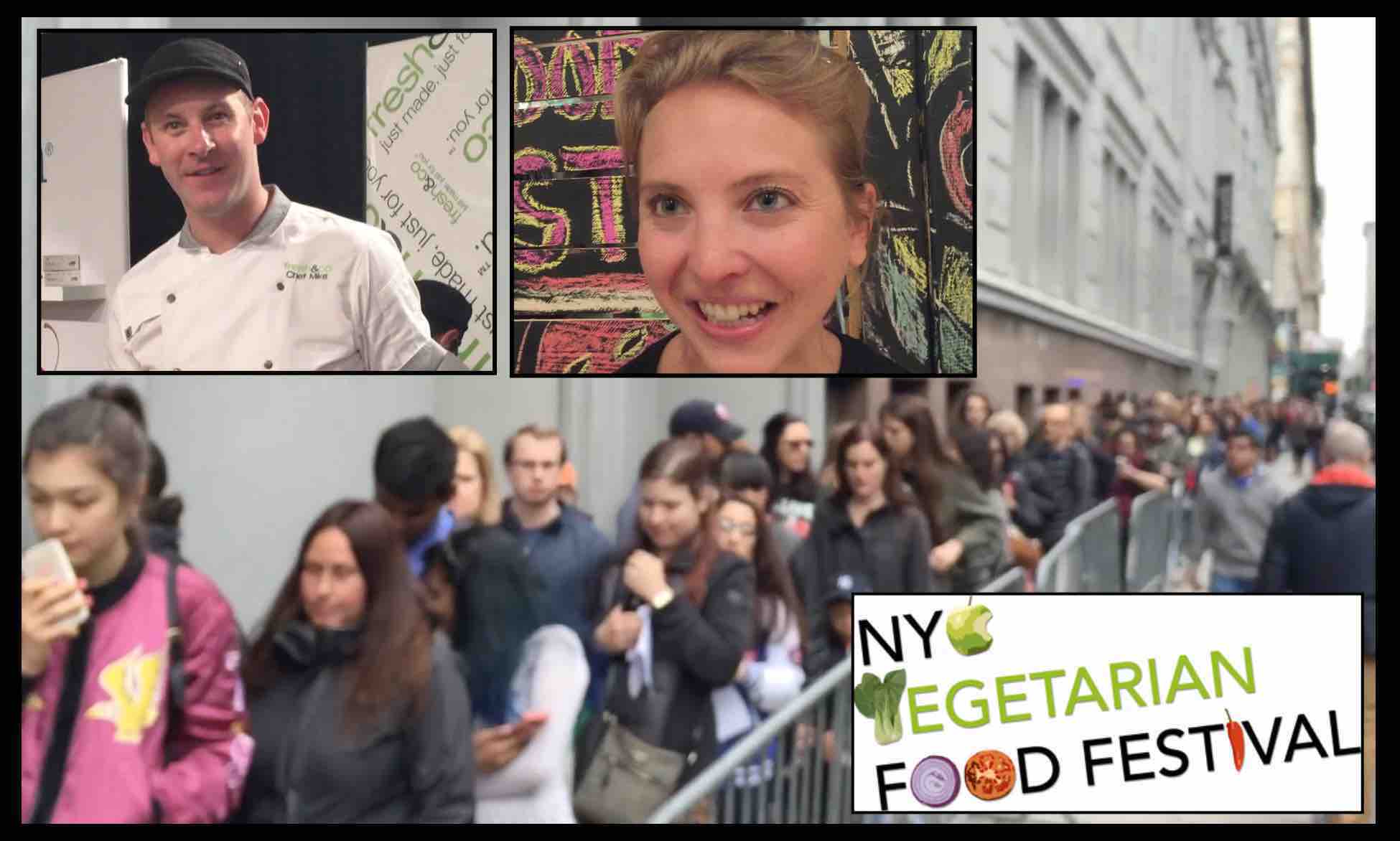
On May 7th and 8th, thousands of people stood in line to enter the explosively popular NYC VegFest. And, according to the many attendees TheirTurn spoke to, it was well worth the wait.

For more information about the event, including vendors and speakers, please visit NYC Veg Food Fest.

Thousands of people line up to enter the NYC Veg Food Fest.

Thousands of people line up to enter the NYC Veg Food Fest.


Filed under: Food
Tagged with: ,

The 2016 Veggie Pride Parade: “Give Peas a Chance!”

April 19, 2016 by Leave a Comment


The News

Some participants marched in fruit and vegetable costumes; others carried posters promoting animal liberation. But their messages to the public were consistent: “Animals are not food.”

On April 3rd, animal advocates took to the streets of Greenwich Village for the 9th annual Veggie Pride Parade, attempting to awaken their fellow New Yorkers to the plight of animals exploited for food and the health and environmental benefits of a plant-based diet. Curious onlookers fumbled for their smart phones to document the unique and unexpected parade and to take selfies with a giant pea pod.

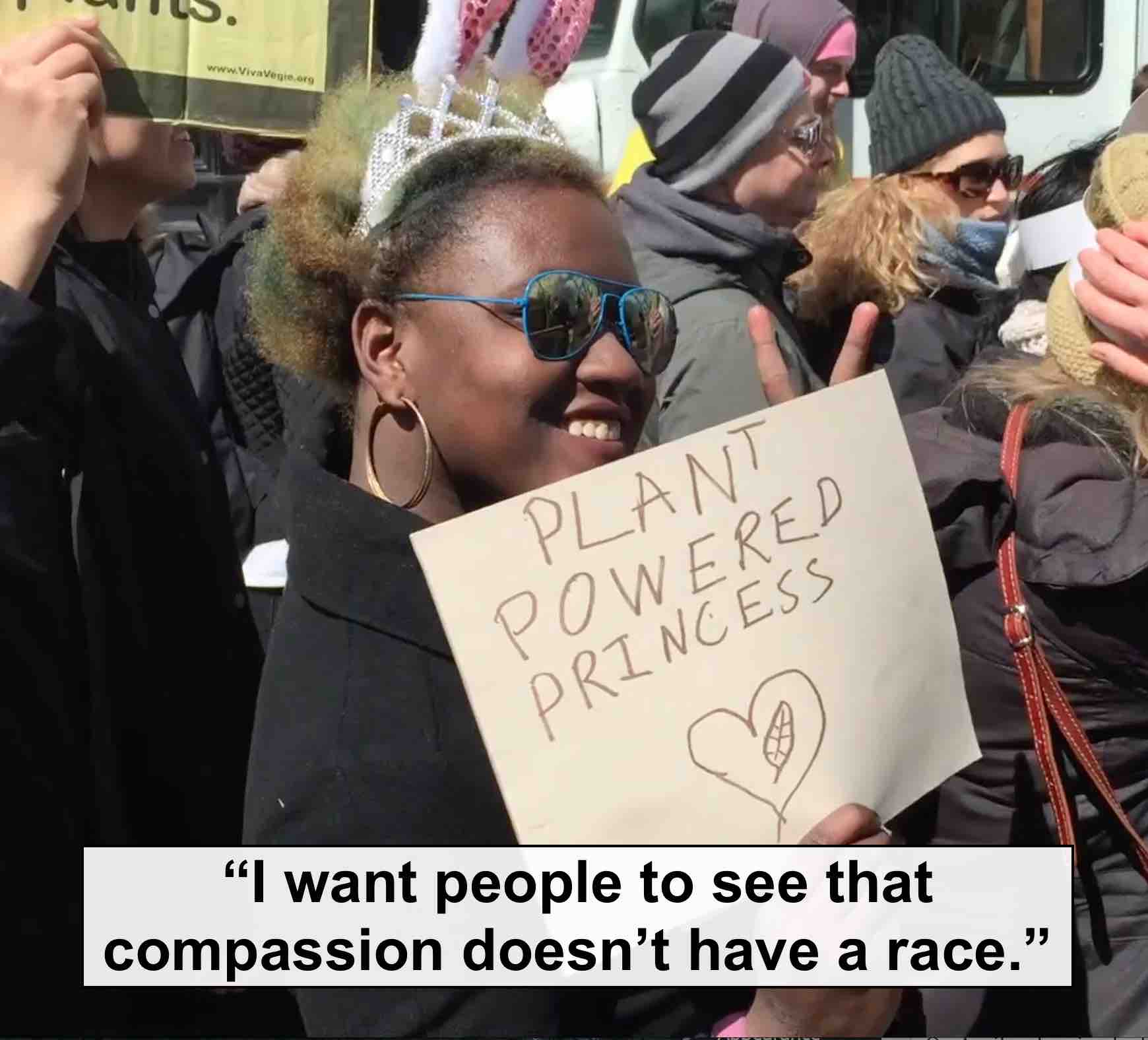
Racial, ethnic and socio-economic diversity at the Veggie Pride parade.

Racial, ethnic and socio-economic diversity at the Veggie Pride parade.

The parade began in the “Meatpacking District,” a neighborhood that was once dominated by commercial butcher shops. Today, those businesses, which have been priced out of the trendy neighborhood, have been replaced by restaurants that, of course, serve meat (for now).

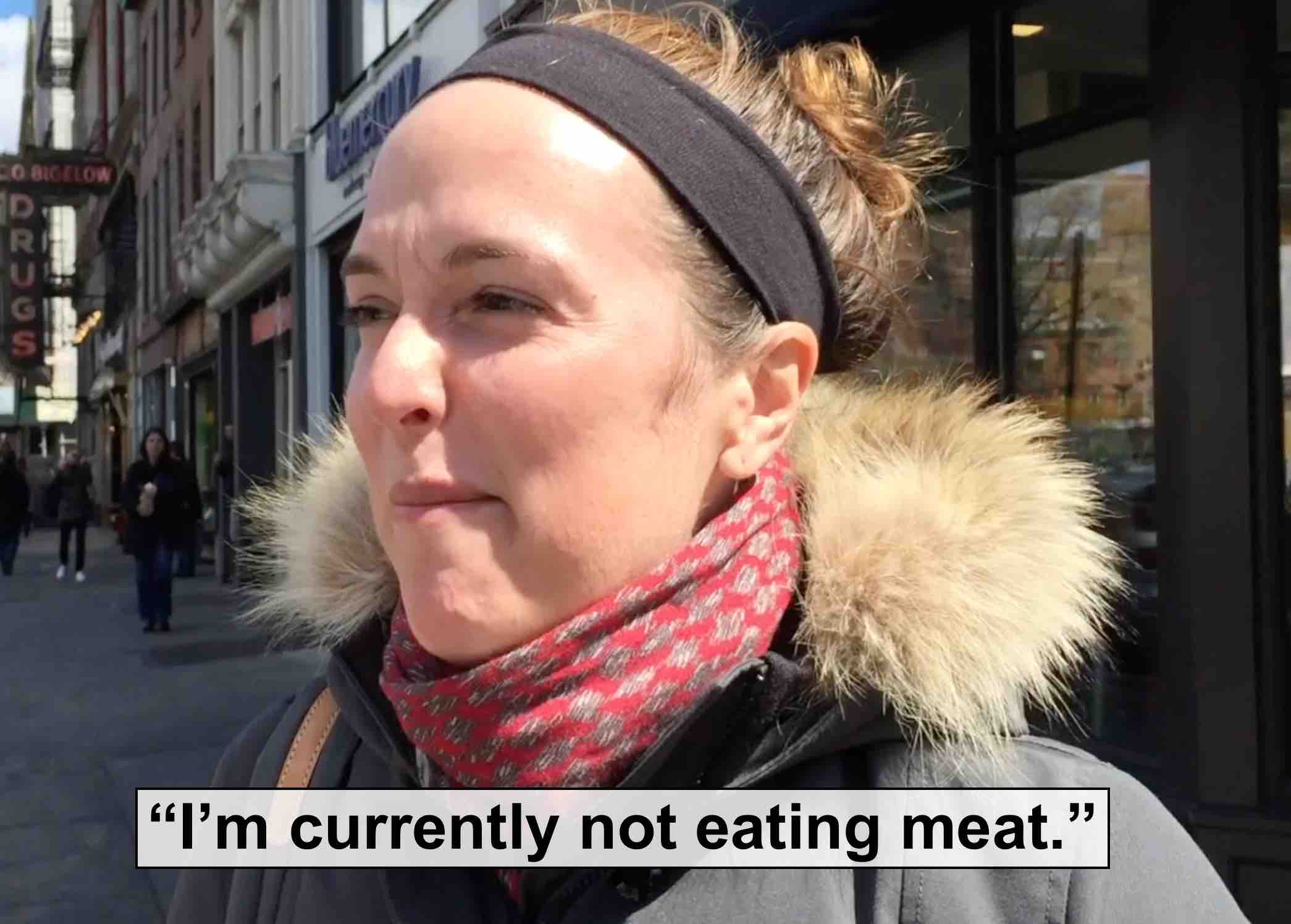
Parade onlooker wearing Canada Goose coat with fur trim expressed excitement about seeing the parade.

Parade onlooker wearing Canada Goose fur coat expressed excitement about seeing the parade.

When the parade spilled into Union Square, where it ended, organizer Pamela Rice staged a spirited rally, and parade participants indulged in vegan fare sold by local restaurants and food companies.

Veggie Pride Parade Organizer Pamela Rice

Veggie Pride Parade Organizer Pamela Rice


Filed under: Food
Tagged with: , ,

Hundreds Gather in California for Conscious Eating Conference

April 14, 2016 by Leave a Comment


The News

In March, several hundred people came together in Berkeley, California, for the annual Conscious Eating Conference. Throughout the day, advocates, authors and philosophers from around the country made presentations about the ethics of eating and how food choices impact animals, human health and the planet. To view and share the full presentations, please visit  United Poultry Concerns.

The David Brower Center in Berkeley was filled to capacity with several hundred attendees.

Hope Bohanec of United Poultry Concerns

Hope Bohanec of United Poultry Concerns

During the breaks, attendees visited the booths of animal advocacy groups, animal sanctuaries, authors  and vegan companies.

The 2016 Conscious Eating Conference featured exhibitors from around the country

The 2016 Conscious Eating Conference featured exhibitors from around the country

Your Turn

United Poultry Concerns is a national advocacy group that “promotes the compassionate and respectful treatment of domestic fowl.” To learn more about UPC and to support their work, please visit their website.


Filed under: Food
Tagged with: , ,