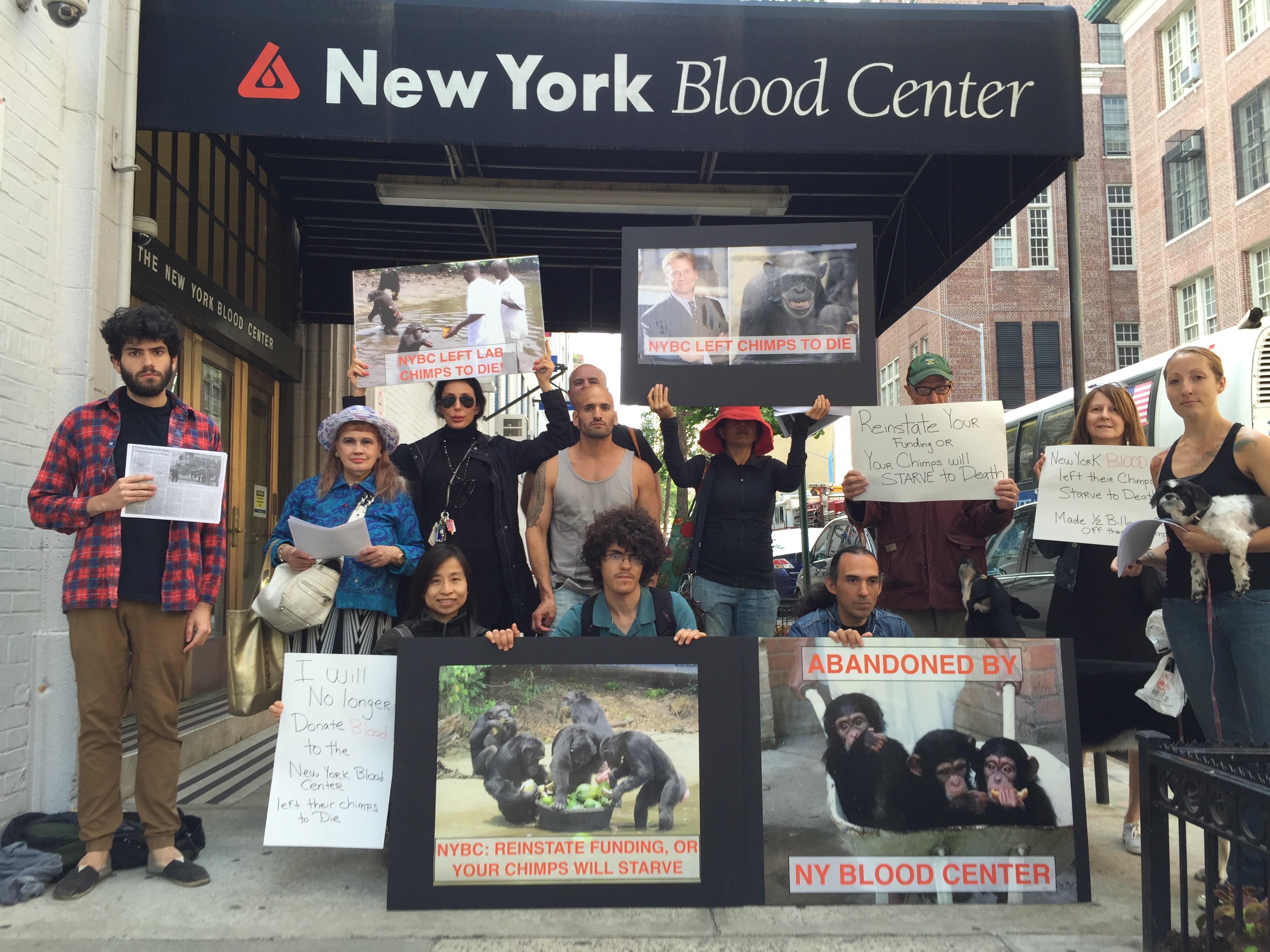
Six days after the NY Times reported that the New York Blood Center abandoned 66 of its lab chimps, leaving them to die on islands in Liberia with no food or water, activists in New York City staged a disruption at its headquarters, demanding that the organization reinstates the funding.
Activists protest NYBC’s decision to abandon chimps after experimenting on them for 30 years
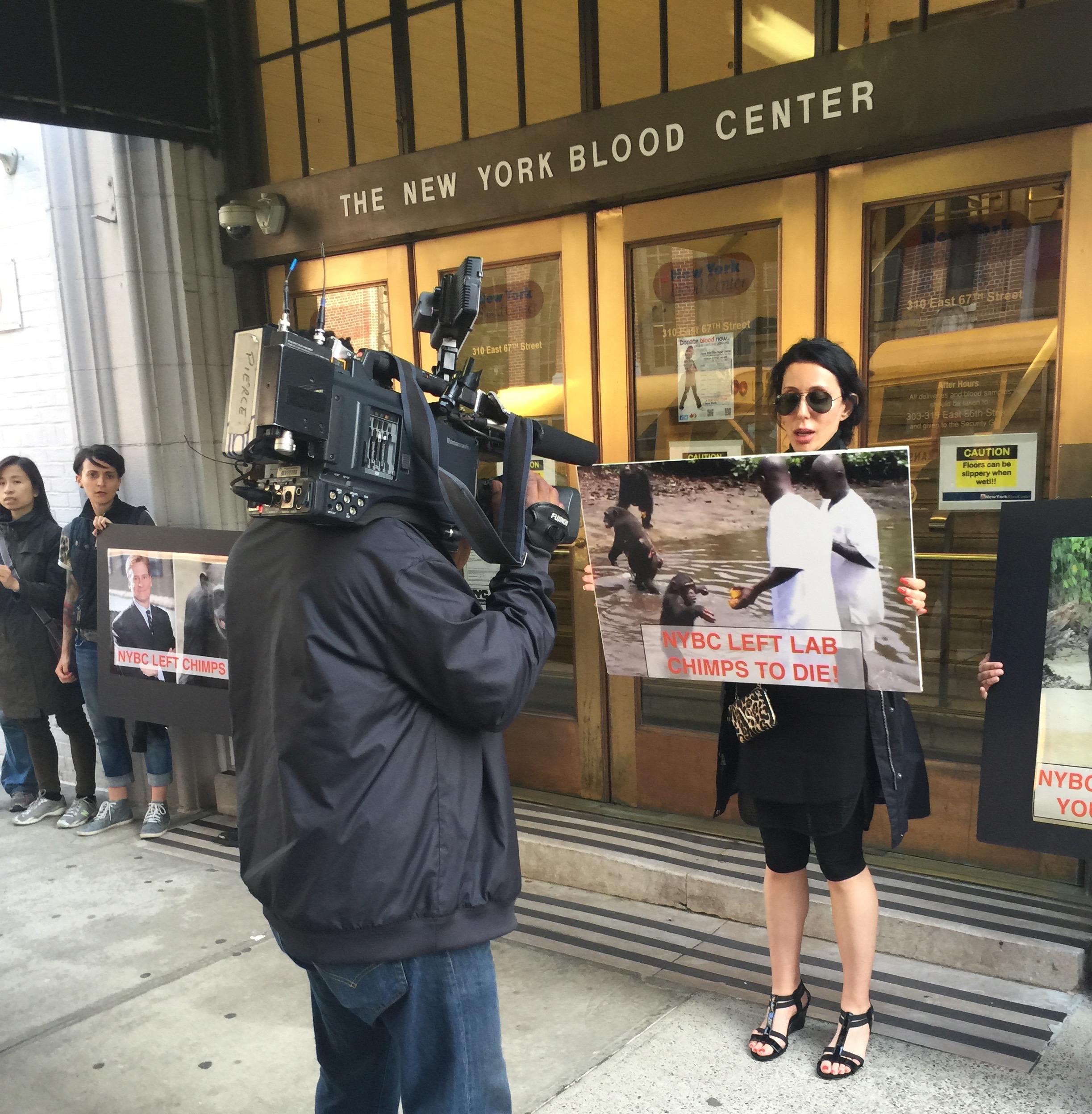
Activists did not alert the media, but Fox News heard about the protest and sent a cameraman
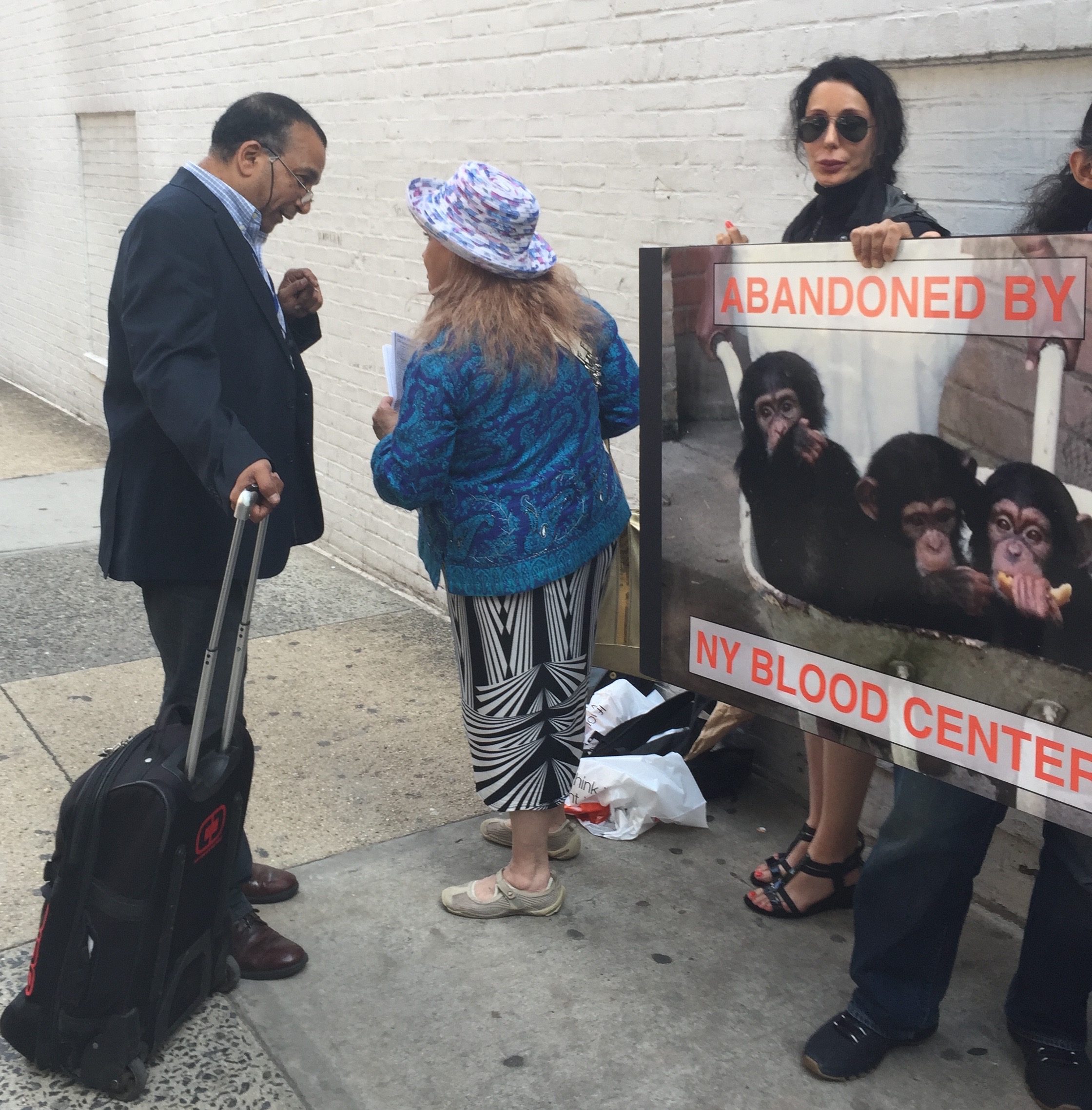
Hundreds of pedestrians stopped to take leaflets, ask questions and convey their support
Activists plan to protest until the NY Blood Center reinstates funding for the chimps who they left to die.
Your Turn
For updates on the campaign to get the NY Blood Center to reinstate funds, please join the Facebook page: NY Blood Center: Do the Right Thing
Call Christopher Hillyer, the President & CEO of the NY Blood Center, and demand that his organization fulfills its obligation and promise to provide lifelong care to the chimpanzees used in their medical experiments: (212) 570-3000.
Sign the Change.org petition “to urge NYBC to reinstate funding for this chimpanzee colony before it’s too late!”
An institution that conducted experiments on approximately 500 hundred chimpanzees and made a commitment to provide the survivors with lifelong care has abandoned the ones who are still alive, leaving them to die of starvation. The New York Blood Center (NYBC), which tested treatments and vaccines on the great apes at a medical research center in Liberia from 1974 to 2005, has terminated its $30,000/month funding to feed and care for the chimps, who are living on secluded islands near the country’s capital, Monrovia.
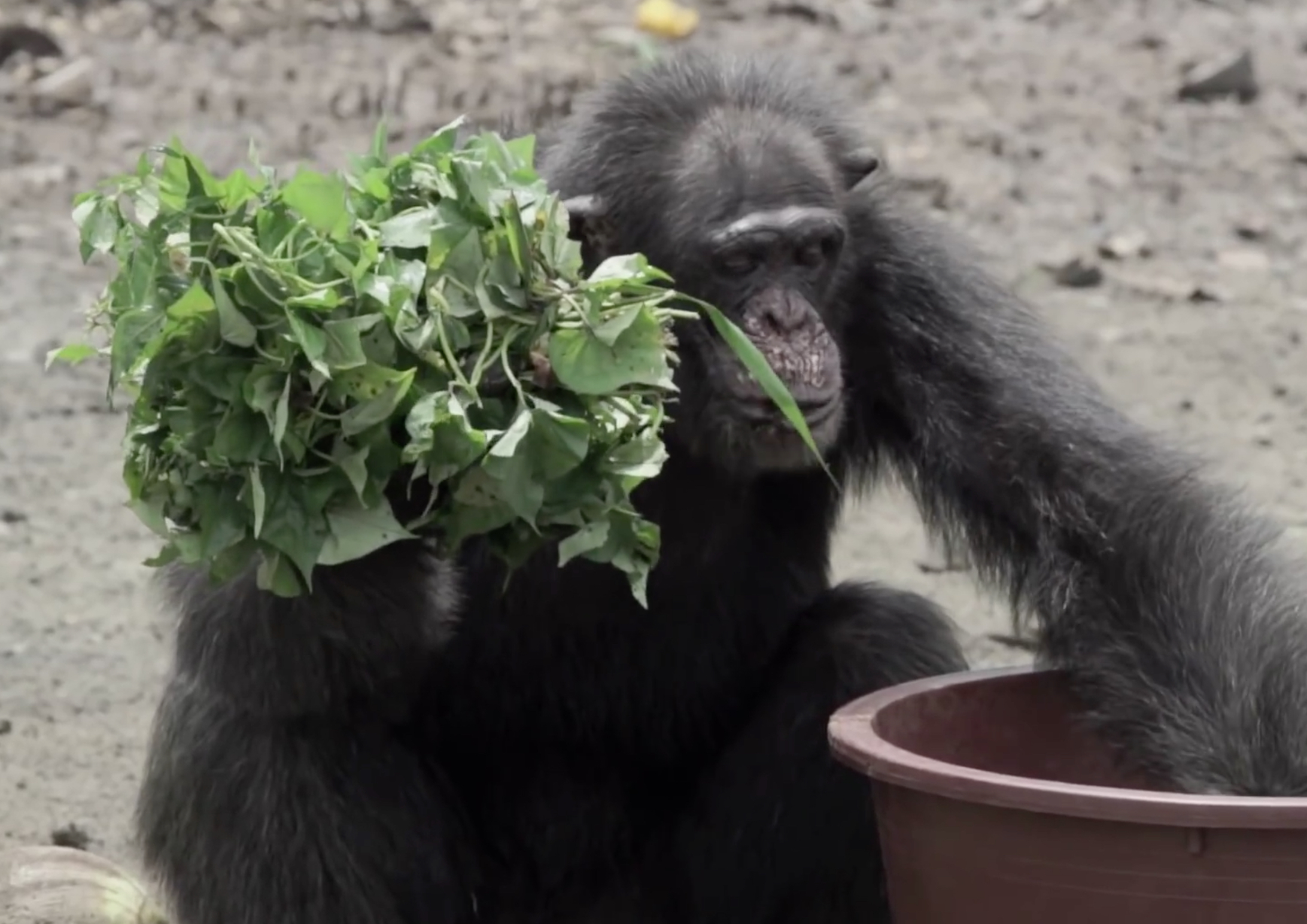
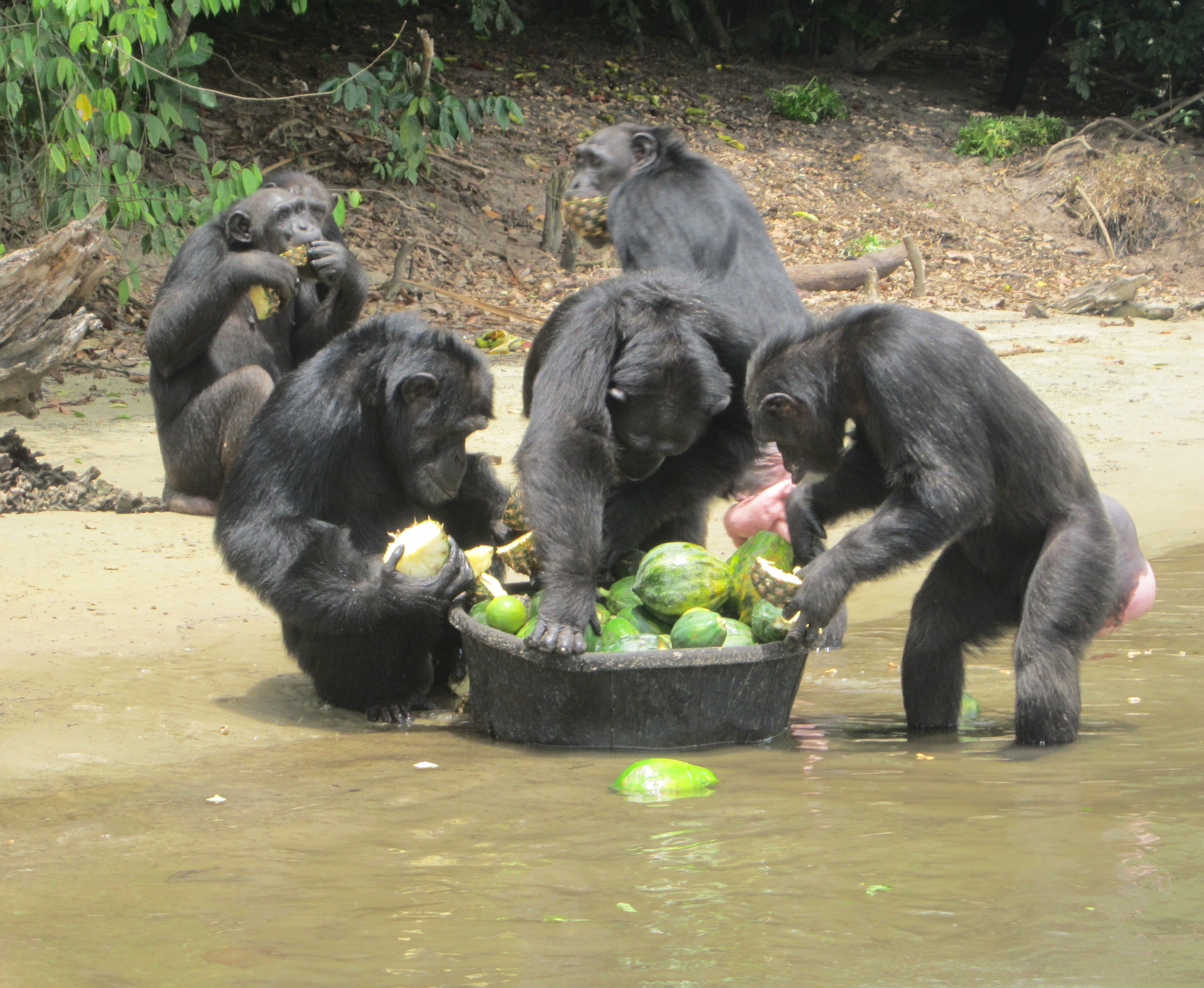
The chimpanzees raised at the NY Blood Center’s research facility are dependent on human caregivers for sustenance (all photos: screenshots The Real Planet of the Apes)
NYBC, which has reportedly earned over $500 million in royalties for discoveries made at the chimp research center, has neither denied the allegations nor responded to repeated inquiries from advocacy groups around the world.
The NY Blood Center experimented on chimpanzees at the Liberia Biomedical Research Institute from 1974 – 2006.
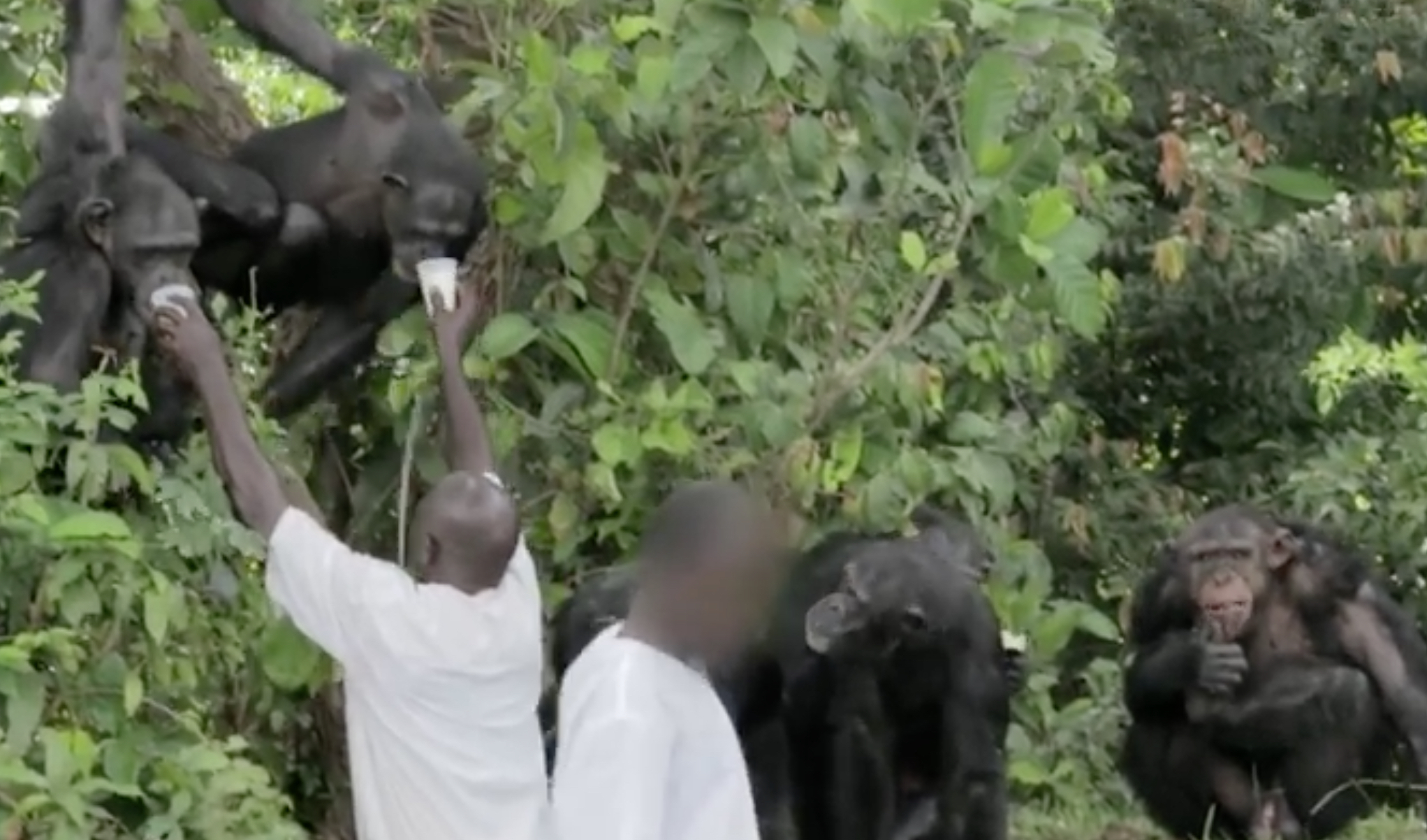
According to Dr. Fatorma Borlay, the current head of the facility where the experiments were conducted, the New York Blood Center “left [the chimps] to die of starvation.” Another advocate with local contacts says that the situation is “totally desperate,” as chimps could very well perish if the Blood Center doesn’t resume funding. As a stop gap measure, some of the chimps’ caretakers have, as volunteers, continued to travel to the islands to provide the chimps with limited amounts of food purchased with money donated by the Humane Society of the United States and other groups and individuals.
Workers feed former laboratory chimps living on secluded islands near Liberia’s capital, Monrovia.
In 1974, the New York Blood Center launched its chimp research program on the grounds of the then defunct Liberian Institute for Biomedical Research. According to Betsy Brotman, who directed the program, Liberia was chosen because of the availability of the facility; the cooperation of the government; and the large number of chimps who could no longer be kept by locals as pets.
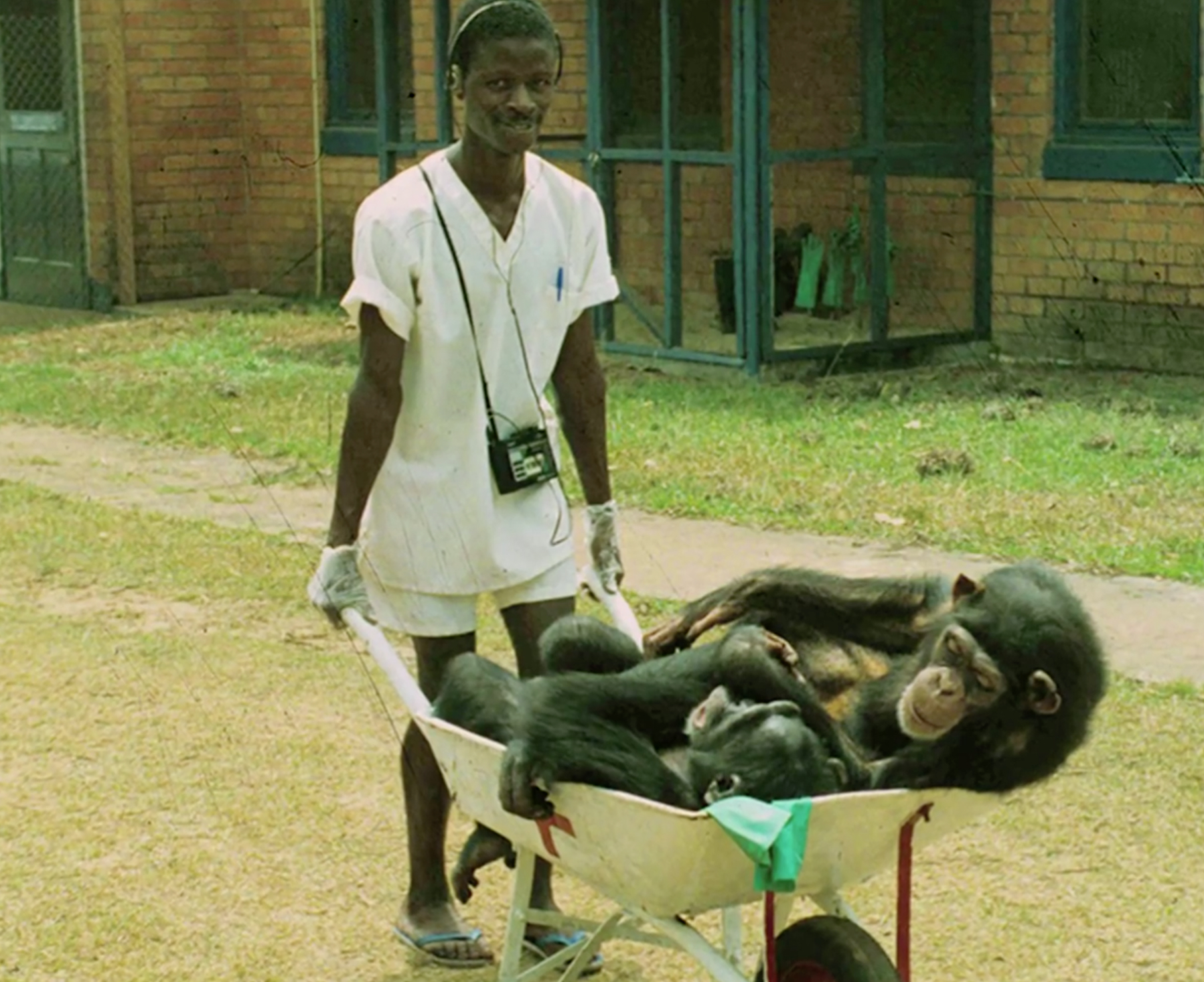
Caretaker and chimps at NY Blood Center’s research facility in Liberia
In 1984, Ms. Brotman acknowledged the obligation of the New York Blood Center to provide the chimps with a humane retirement: ”It’s our responsibility to try to pay them back by letting them live out their lives in their natural environment.” She repeated the assertion in The Real Planet of the Apes, a 2014 documentary film about her research and the islands on which the chimps were retired: “If you’re going to do work in chimpanzees, you should set up a system so that at the end of the research they have a place where they can . . . live a nice chimp life to the best of whatever is available.”
A caretaker at the NY Blood Center’s research facility in Liberia
Under Ms. Brotman’s leadership, the New York Blood Center released the chimps onto six islands near Monrovia where they would be safe from human predators and where employees from the research facility who knew them could provide them with lifelong care. “That’s what we agreed upon doing, and we did it,” said Brotman in The Real Planet of the Apes.
The NY Blood Center broke its promise to provide lifelong care to the research chimps
Advocates, who speculate that the Blood Center used the distraction of the Ebola epidemic as an opportunity to discreetly extricate itself from its commitment, have staged two disruptions inside of the lobby of the organization’s headquarters.
UPDATE: The NY Times and Motherboard have picked up the story and provided more detailed information about the plight of the chimps and the decision by the NY Blood Center to abandon them. In addition, Jane Goodall sent an open letter to the NY Blood Center demanding that it reinstates the funding.
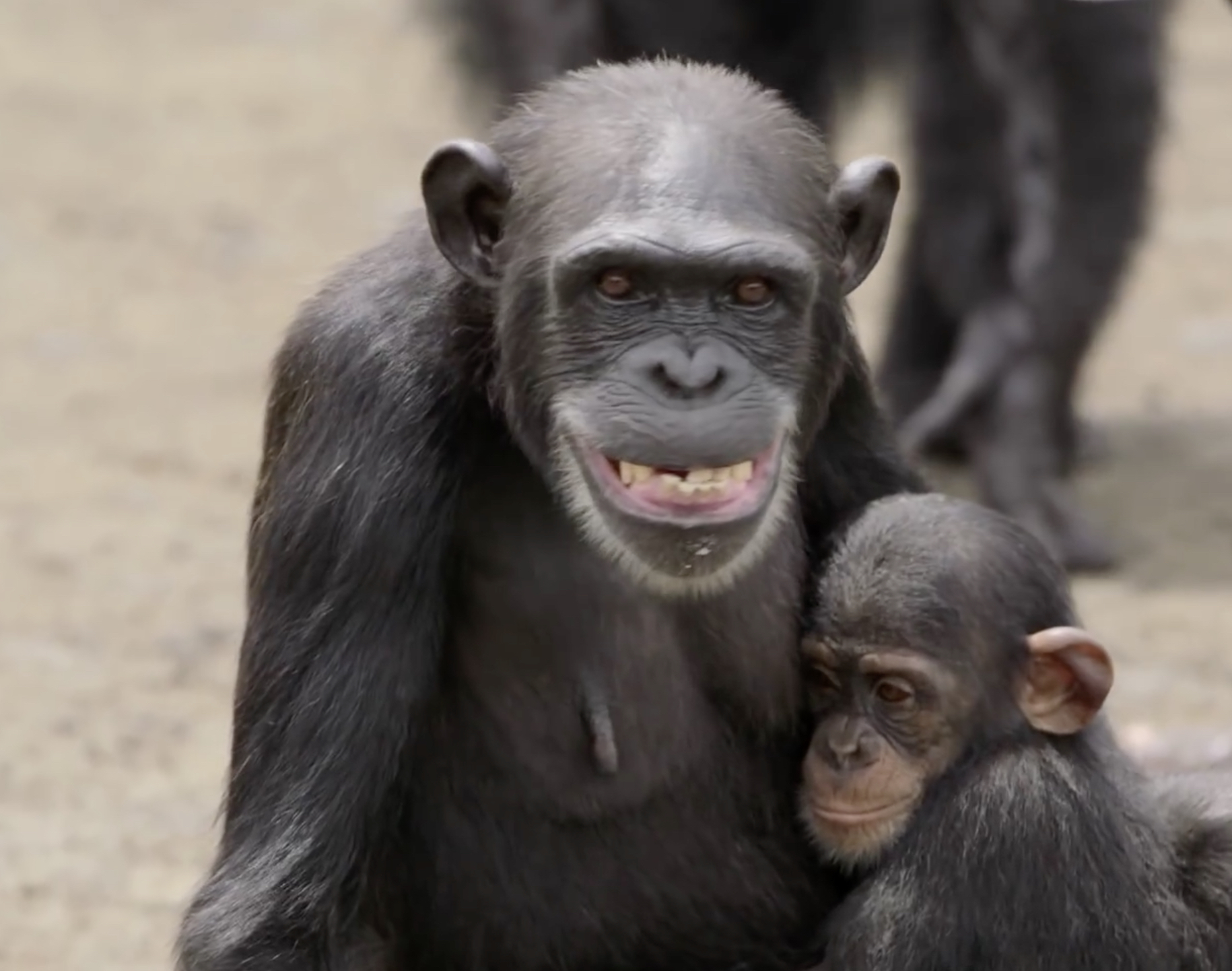
A former NY Blood Center lab chimp in Monrovia, Liberia
On the topic of our planet’s future, Jane Goodall, the legendary chimpanzee researcher, does not mince words: “How is it possible that the most intellectual creature that has ever walked on planet earth is destroying its only home?” Dr. Goodall, who is 81, spends 300 days year traveling the world in an effort to save it. The biggest problem, she says, is climate change. And the biggest culprit? Animal agriculture.
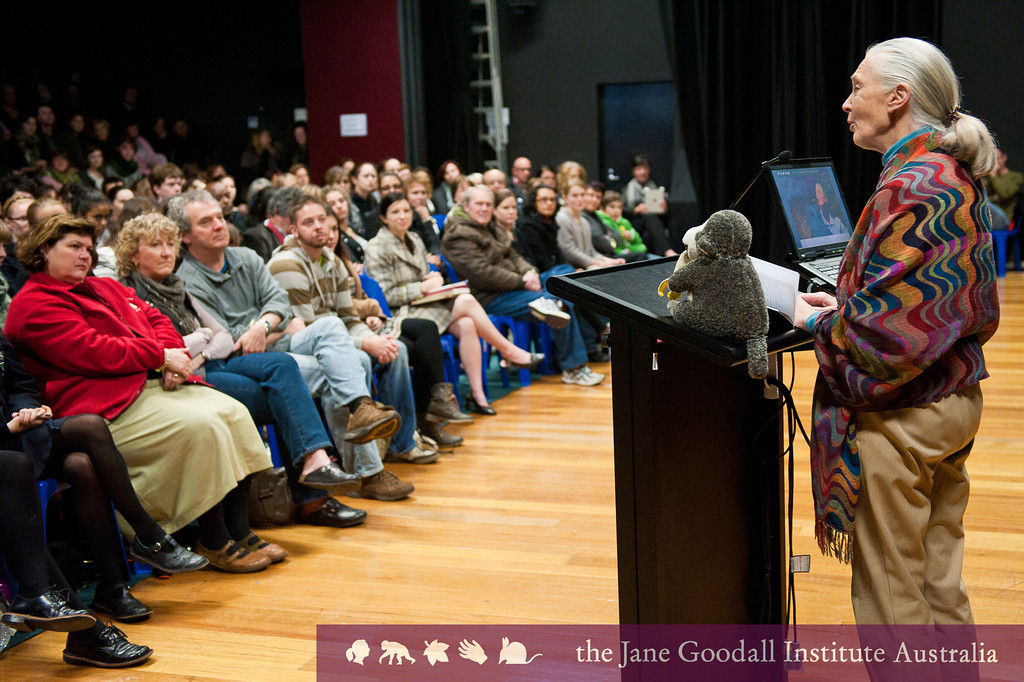
In a lecture to hundreds of fans in NYC on April 15th, Dr. Goodall explained that agribusinesses are clearing rainforests in the Amazon to graze cattle and grow crops to feed them. Without rainforests – the “lungs of the earth” – the planet’s ability to convert carbon dioxide (CO2), a greenhouse gas, into oxygen is compromised.
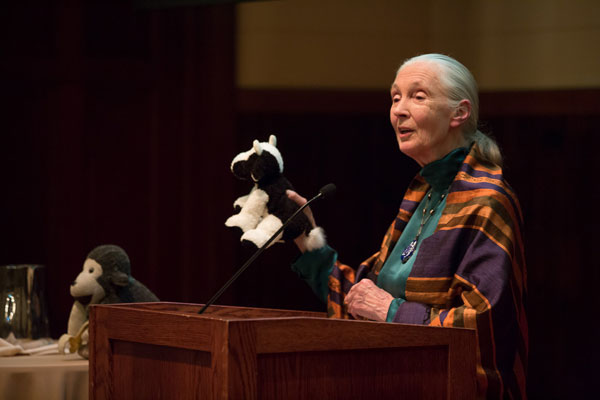
Even more harmful than CO2, Goodall said, is the methane gas emitted in cow farts. As developing countries adopt Western diets heavy in animal protein, more methane and CO2 are released into the atmosphere, further warming the planet and jeopardizing our ability to inhabit it.
Jane Goodall uses a stuffed cow to point out that methane gas is emitted in cow farts. (photo: WildCare)
During her talk, Dr. Goodall described some of the other destructive effects of animal agriculture, including land and water pollution, antibiotic resistance, depletion of fresh water resources and animal cruelty, which is was motivated her to go veg. In a recent interview with the Toronto Globe & Mail, she said, “I became a vegetarian because of the horrendous suffering on factory farms and in abattoirs.”
Jane Goodall paints a grim picture of the state of the planet, but she is hopeful that humans will work together to save ourselves from ourselves. And she offers some advice that each of us can put into action today:
Go vegetarian.
Consume less. The more we buy, she argues, the more natural resources we extract from the planet. How much stuff do we really need?
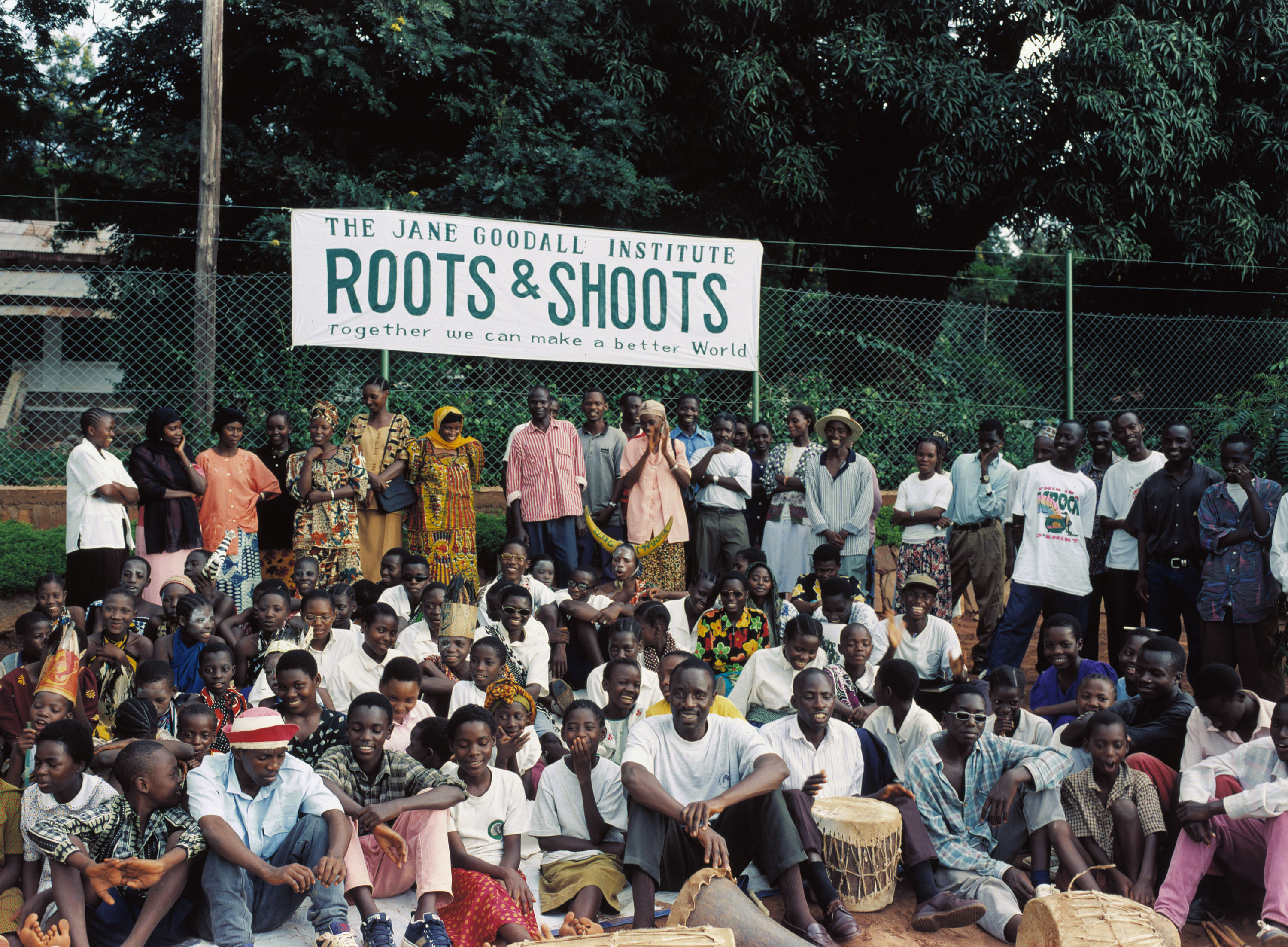
Improve the environment in our own communities. Goodall’s Roots & Shoots program, which has chapters in 130 countries, is helping people plant trees, clean rivers and perform other community services in their own backyards.
Roots & Shoots has chapters in 130 countries
At the end of her presentation, Dr. Goodall showed a video of a newly-released captive chimpanzee hugging her when she emerged from her crate and realized she was home in the jungle. Goodall uses this remarkable event to point out that, as intelligent as chimps are, their brains are far less powerful than those of humans. And she left the audience with a challenge — to harness the brainpower that we’ve used to damage the planet to save it.
In the short documentary film The Real Planet of the Apes, Betsy Brotman, an American researcher who spent 30 years conducting tests on chimps, says, “The animal rights activists were right. Chimpanzees really shouldn’t be used in experiments. I really do feel this way.” (see 13:30 in video below) From 1974 – 2005, Ms. Brotman ran a research institute in Liberia that conducted experiments on more than 100 chimps.
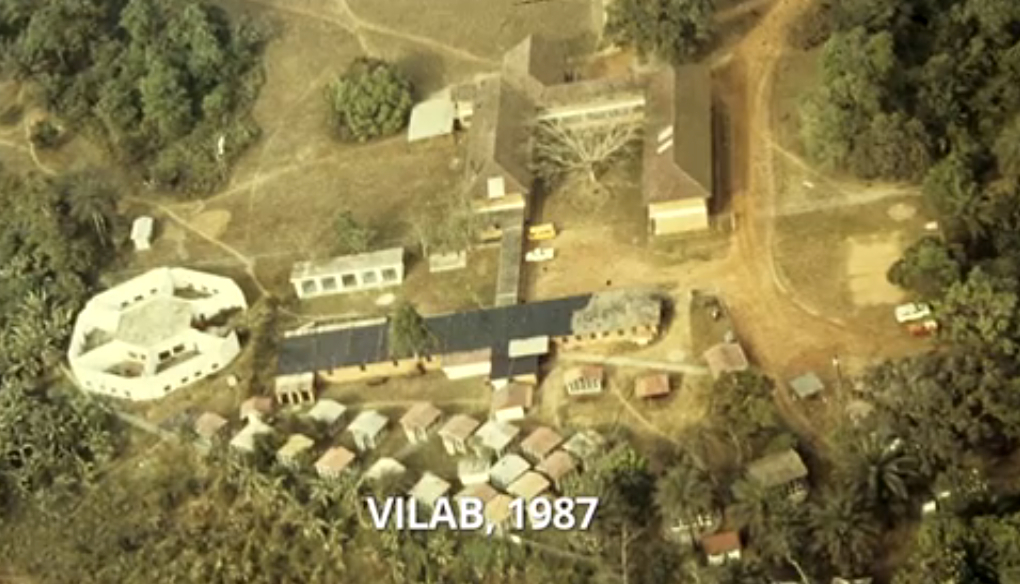
Chimpanzee Research Center in Liberia
In her interview, Ms. Brotman says, “There are certain instances where it would be very difficult to do the research without chimps unless you use humans.” She is referring to the development of a hepatitis B vaccine, which her colleague says could only be tested on chimps, as no other species is susceptible to the virus.
Betsy Brotman Studied Chimps in Liberia for 30 years
Since this research was conducted, science has advanced, eliminating any scientific rationale for using chimps. But Steve Wise, the founder of the Nonhuman Rights Project, isn’t taking any chances. In an effort to free all captive chimps, he is leading the legal battle to classify chimps as persons – instead of inanimate objects – on the grounds that they, like people, they desire things, act in an intentional manner to acquire those things, and have a sense of self. If Mr. Wise is successful, holding chimps captive in any setting will be illegal.
Here’s a short NY Times documentary about his quest to reclassify chimps as “persons” instead of “things.”
Today, sixty chimps, most of whom recovered from the diseases with which they were infected at the research center, live on “Monkey Island” near Monrovia, Liberia’s capital. The chimps live freely in a somewhat natural habitat, and The New York Blood Center pays for their care.
Former lab monkeys, Monkey Island (photo: liberiana.wordpress.com)








Follow Their Turn