
Their Turn - The Social Justice Movement of Our Time Their Turn - The Social Justice Movement of Our Time

USDA Uses “Demand” to Justify Intensive Confinement of Farm Animals

April 14, 2015 by 17 comments


The News

In a speech on climate change at Yale University’s School of Forestry & Environmental Studies, the Secretary of the U.S. Department of Agriculture (USDA), Tom Vilsack, defended the intensive confinement of farm animals on the grounds of demand, saying “the market has been encouraging [farmers] to do that.” He also stated unequivocally that abuse on factory farms is the exception, not the norm, in spite of the fact that confinement is, in and of itself, abusive and that animal mutilation is standard practice on industrialized farms.
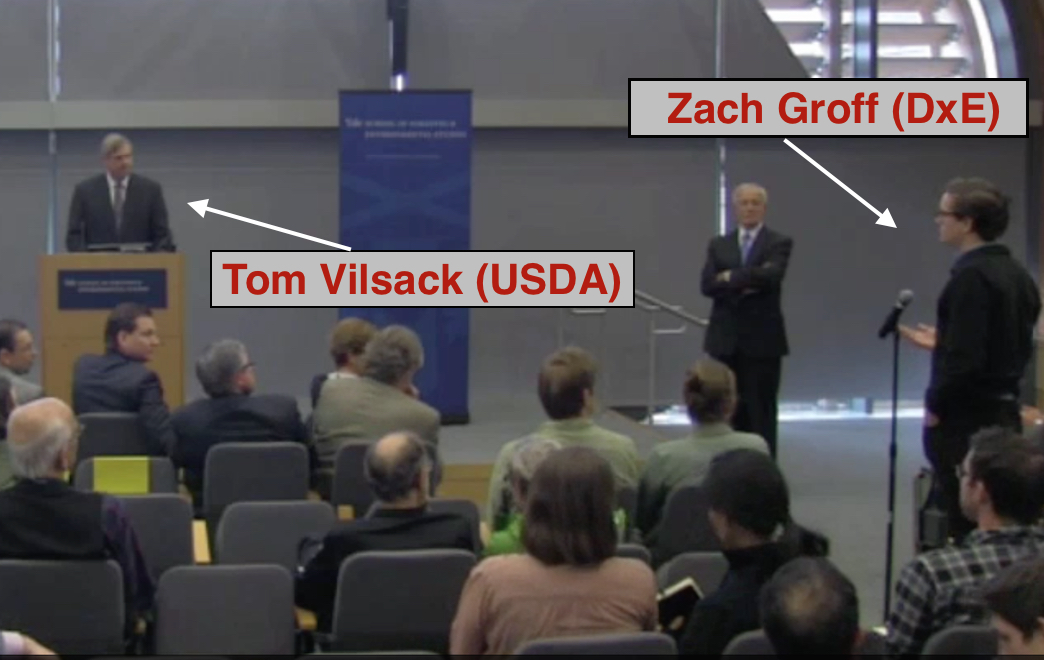
USDA versus animal rights activists

Animal rights activist Zach Groff confronts USDA Secretary Tom Vilsack

Mr. Vilsack made the remarks in response to the following question posed by animal rights activist and Direct Action Everywhere (DxE) organizer Zach Groff: “You are on the record supporting more subsidies for animal agriculture, defending animal agriculture left and right whether it goes for pink slime or keeping animal products in the [government’s] nutritional guidelines. Everyone in this room knows that animal agriculture is devastating for forests, for the climate, for the water supply. But most ignored is that there are innocent animals who are routinely the victims of horrendous violence. And I want to ask you – why do you support horrendous violence against innocent animals?”

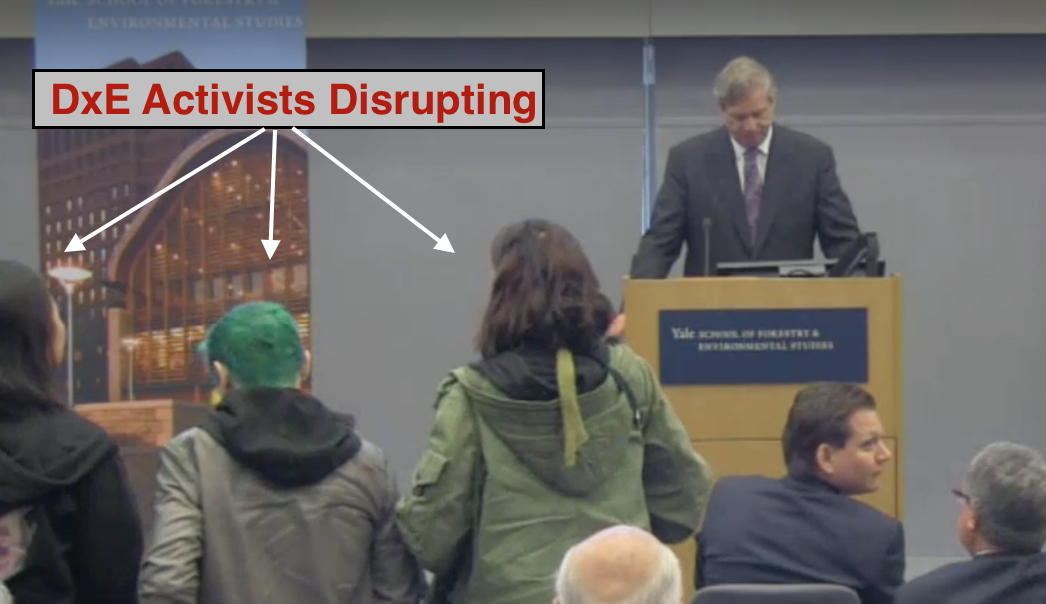
After Mr. Vilsack addressed Mr. Groff’s remarks, categorically denying the inherent cruelty of animal agriculture, DxE activists disrupted the event, chanting “It’s not food. It’s violence” as they exited the auditorium.

Brian Burns, a DxE spokesperson said, “Tom Vilsack is dangerous. His carefully crafted messages about built-in animal protections and his sympathetic tone belie the fact that he is subsidizing the country’s most violent industry with our tax dollars. And his lies about animal agriculture, which must sound compelling to those who are uninformed, serve to marginalize the activists who are fighting to end the cruelty.”

Tom Vilsack

USDA Secretary Tom Vilsack

DxE activists disrupt USDA Secretary Tom Vilsack after he minimized animal abuse on factory farms

DxE activists disrupt USDA Secretary Tom Vilsack after he minimized animal abuse on factory farms

Activists say that Mr. Vilsack is the American version of Barnaby Joyce, Australia’s Minster of Agriculture who notoriously works to convince the public that the millions of sheep and cattle who are abused and tortured in his country’s live export trade are treated “humanely in almost every instance.”
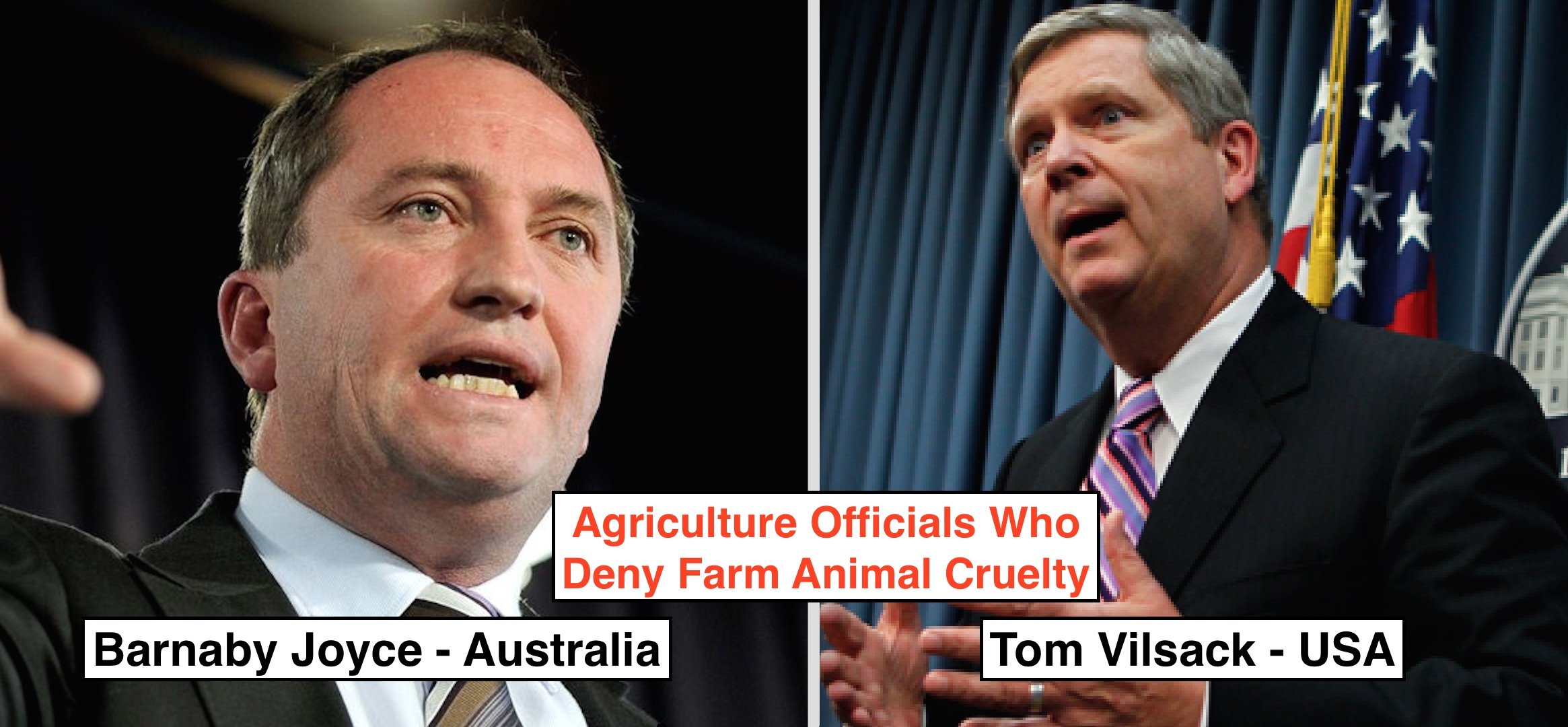
Has Australia's Minister of Agriculture Barnaby Joyce met his match?

Has Australia’s Minister of Agriculture Barnaby Joyce met his match?

DxE is growing rapidly. In the 1.5 years since launching the “It’s not food. It’s violence” campaign, the organization has added chapters in 110 cities in 24 countries, including India, Bolivia, Romania, Indonesia and the Republic of Georgia. Following is short video highlighting their recent non-violent direct actions.

Your Turn

Please visit Direct Action Everywhere to learn about, support and/or join the organization’s ground-breaking campaign to expose animal cruelty in the very spots where it is taking place.
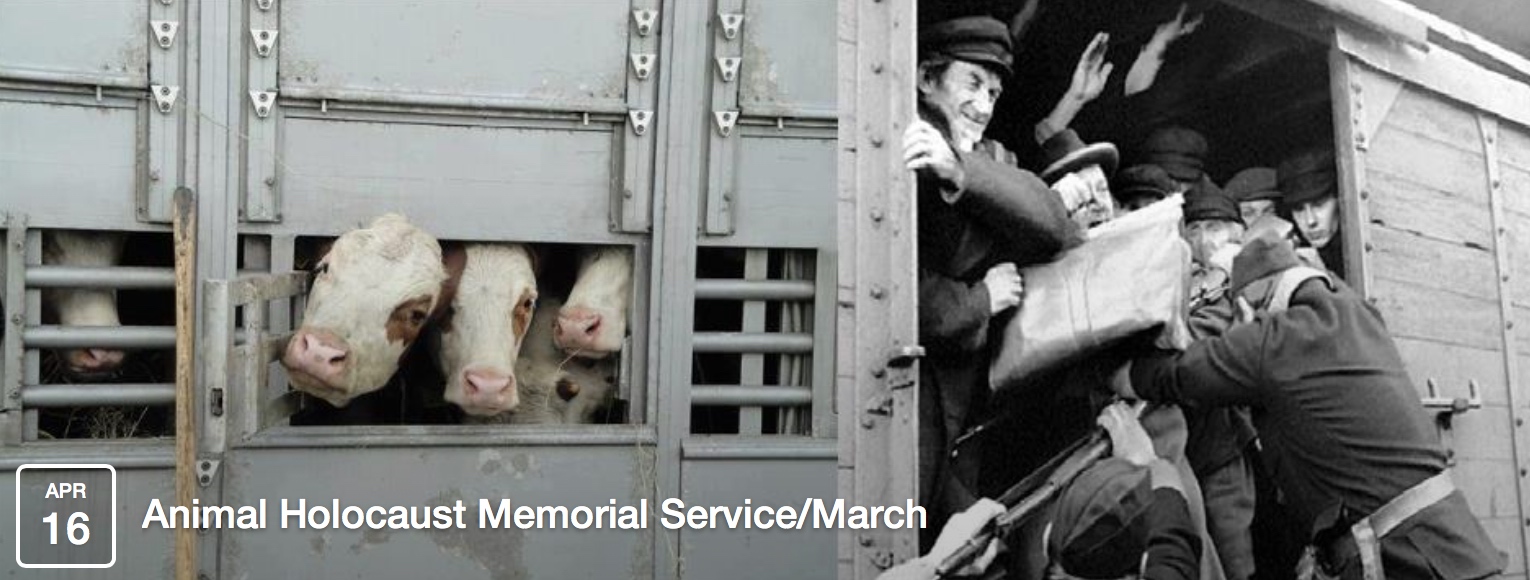

Funeral To be Held in New York For Victims of Animal Holocaust

April 12, 2015 by 5 comments


The News

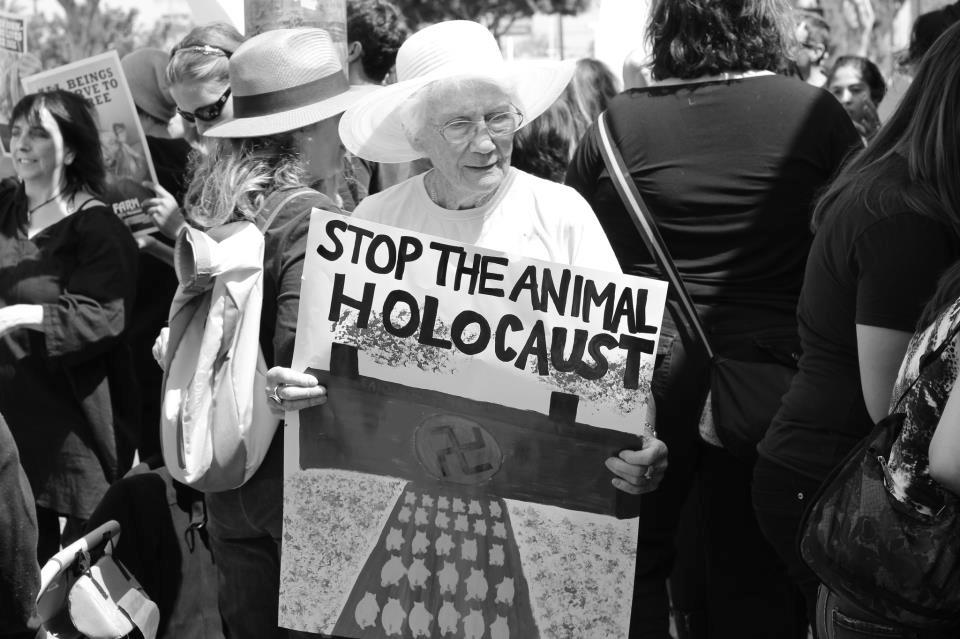
On Holocaust Remembrance Day (4/16), victims of the animal holocaust will be remembered during a funeral procession in New York City. Among the participants will be a survivor from Hungary who lost her sister and father in Nazi concentration camps and has dedicated her life to fighting atrocities committed against animals.

Funeral for victims of animal holocaust on Holocaust Remembrance Day

Funeral for victims of animal holocaust on Holocaust Remembrance Day

The animal holocaust

The animal holocaust

“The longest running holocaust in history is taking place right under our noses, but it is being ignored.” said organizer Shimon Shuchat, who comes from a Hasidic Jewish family in Brooklyn. “Right now, mother cows are crying out for their kidnapped babies; piglets are being castrated with no painkillers; male chicks are being dropped into shredding machines; monkeys are being tortured laboratories; and millions of farm animals are making the long, terrifying journey to a slaughterhouse. For what?”

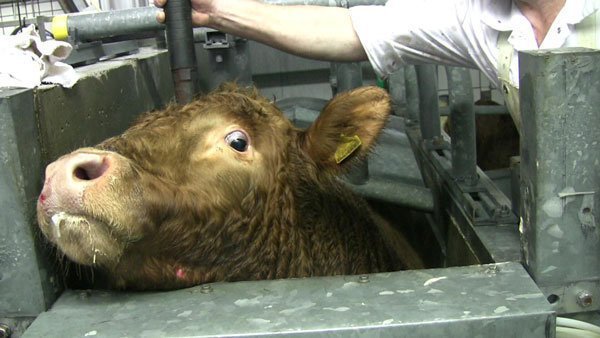
cow-slaughter

Slaughterhouse

Every year in the United States, roughly 10 billion land animals and 50 billion sea animals are killed for food.

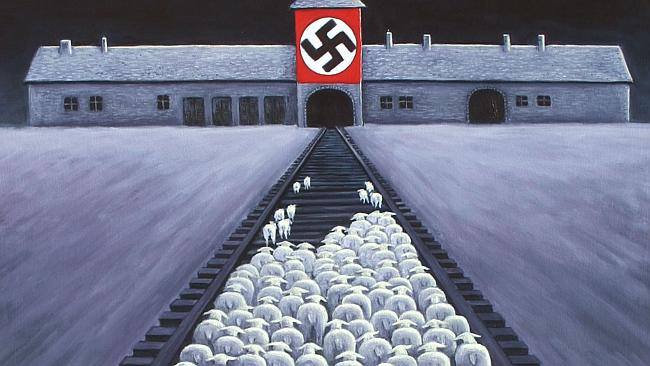
animal concentration camp

Painting by Jo Frederiks

One of the founders of the modern day animal rights movement, Alex Hershaft, is a Holocaust survivor, and, like Mr. Shuchat, he’s not shy about invoking the genocide when speaking about animal factory farms and slaughterhouses.

Before being smuggled out of the Warsaw Ghetto during World War II, five year old Hershaft saw Jews being beaten by Nazis in the streets. He lost most of his family during the war, but he gained empathy that helped him connect dots between crimes against humans and crimes against animals. In 1976, Dr. Hershaft founded the organization that would eventually become the Farm Animal Rights Movement (FARM).

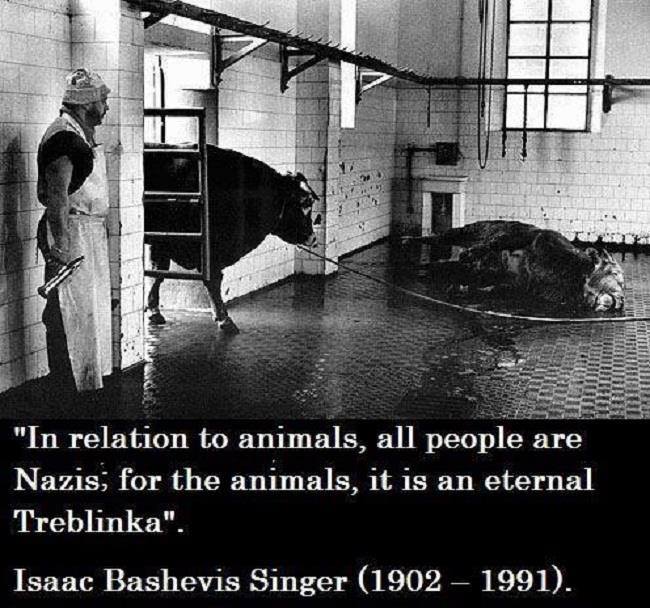
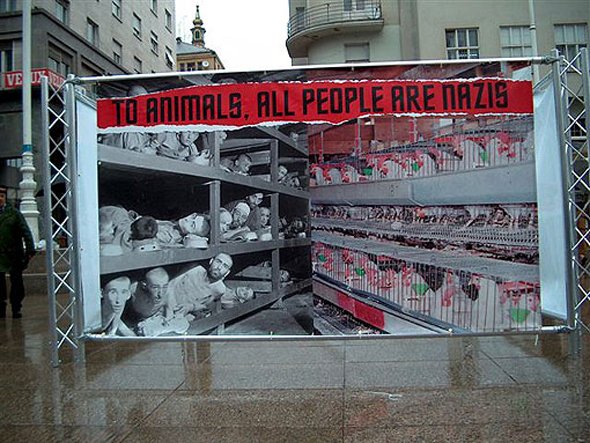
Over the years, the animal rights group PETA has come under fire for using Holocaust imagery – juxtaposing images of  concentration camps with factory farms. Some activists believe that the comparison gives the target audience license to dismiss the message, which defeats the purpose of the campaign. Others support the analogy. In fact, author Isaac Besheva Singer said, “In their behavior toward creatures, all men are Nazis. For the animals, it is an eternal Treblinka. Human beings see oppression vividly when they’re the victims. Otherwise they victimize blindly and without a thought.”

The animal holocaust

The animal holocaust

PETA's Holocaust Campaign

PETA’s animal holocaust Campaign

It is the “cries of the silent victims of modern day concentration camps” that Mr. Shuchat intends to amplify on Holocaust Remembrance Day. Shuchat also hopes to change behavior: “When footage of factory farms farms is played side by side with footage of the Holocaust, people can see that there’s not much of a difference. If only a few of those people stop eating animals, then we know we will have made a difference.”

Funeral procession participants will gather in midtown at 7:00 p.m. and, carrying posters and banners, will travel to Times Square for a candlelight vigil.

Coby's family hid Jews during in Amsterdam during WWII. She has been vegan for 35 years (photo: Kyle Justin DiFulvio)

Coby’s family hid Jews in Amsterdam during WWII (photo: Kyle Justin DiFulvio)

Two weeks prior to Holocaust Remembrance Day, Germany announced that it will be the first country in the world to ban live chicken shredding. Fifty percent of chickens born into the egg industry – the males – are either dropped alive into a shredding machine or are suffocated to death because they cannot lay eggs. In Germany alone, an estimate 45 million baby male chicks are killed each year.


Monkey C-Section Abortions Performed by Non-Veterinarians

April 8, 2015 by 6 comments


The News

Primate Products, a monkey breeding company at the center of the MonkeyGate scandal in Hendry County, Florida, assigned invasive surgeries to vet techs instead of veterinarians – in violation of state law. David Roebuck, a former employee at the Florida company, told TheirTurn that vet techs performed C-section abortions on pregnant monkeys so that the company could sell the fetal organs and the mothers’ milk.

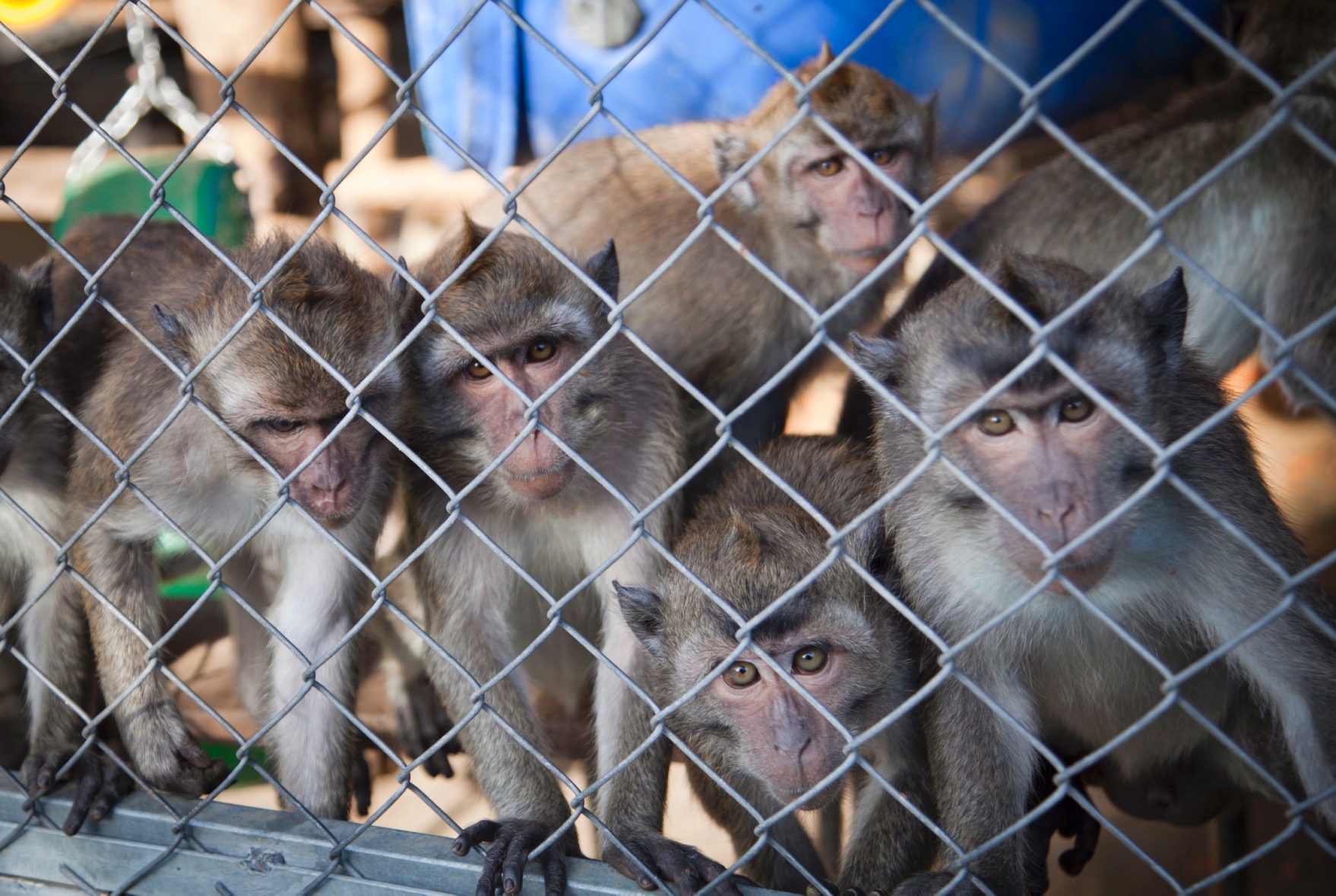
Primate Products lab monkeys

Primate Products lab monkeys

According to the American Veterinary Medical Association (AVMA), “Veterinary technicians can assist in performing a wide variety of tasks, but they cannot diagnose, prescribe, perform surgery, or engage in any activity prohibited by a state’s veterinary practice act.”

Mr. Roebuck’s account of the surgeries has been corroborated by Wink News, a local TV station that obtained Primate Products’ “Standard Operating Procedure” manual. The manual provides instructions on how to cut open a pregnant monkey and extract the fetus — a tutorial that a licensed and trained veterinarian would not need. When asked by a local reporter, Primate Products president, Thomas Rowell, did not deny the charges. The company has not respond to TheirTurn’s inquiries.

Mr. Roebuck, who was employed by Primate Products in 2008, was tasked with vacuum packing the monkey fetus organs. He resigned after one week on the job when his supervisor told him the monkey surgeries were routine: “If you know what a deep freezer looks like, there were two of those, filled with parts.”

monkey restrainer for lab experiments

According to Primate Products, the restrainer provides “trouble-free accessibility”

A representative from the Florida Medical Veterinary Association said surgery is an “unlicensed activity” for a vet tech and that the supervising veterinarian would be accountable under state law.

According to the Florida Department of Business and Professional Regulation, a non-veterinarian practicing veterinary medicine is subject to a $3,000 – $5,000 fine for each count. A veterinarian who knowingly employs unlicensed persons in the practice of veterinary medicine is subject to both monetary fines and probation or suspension.

Local residents have asked Florida Attorney General Pam Bondi to launch an independent investigation. In addition, a formal complaint with the Florida Department of Business and Professional Regulation is being prepared.

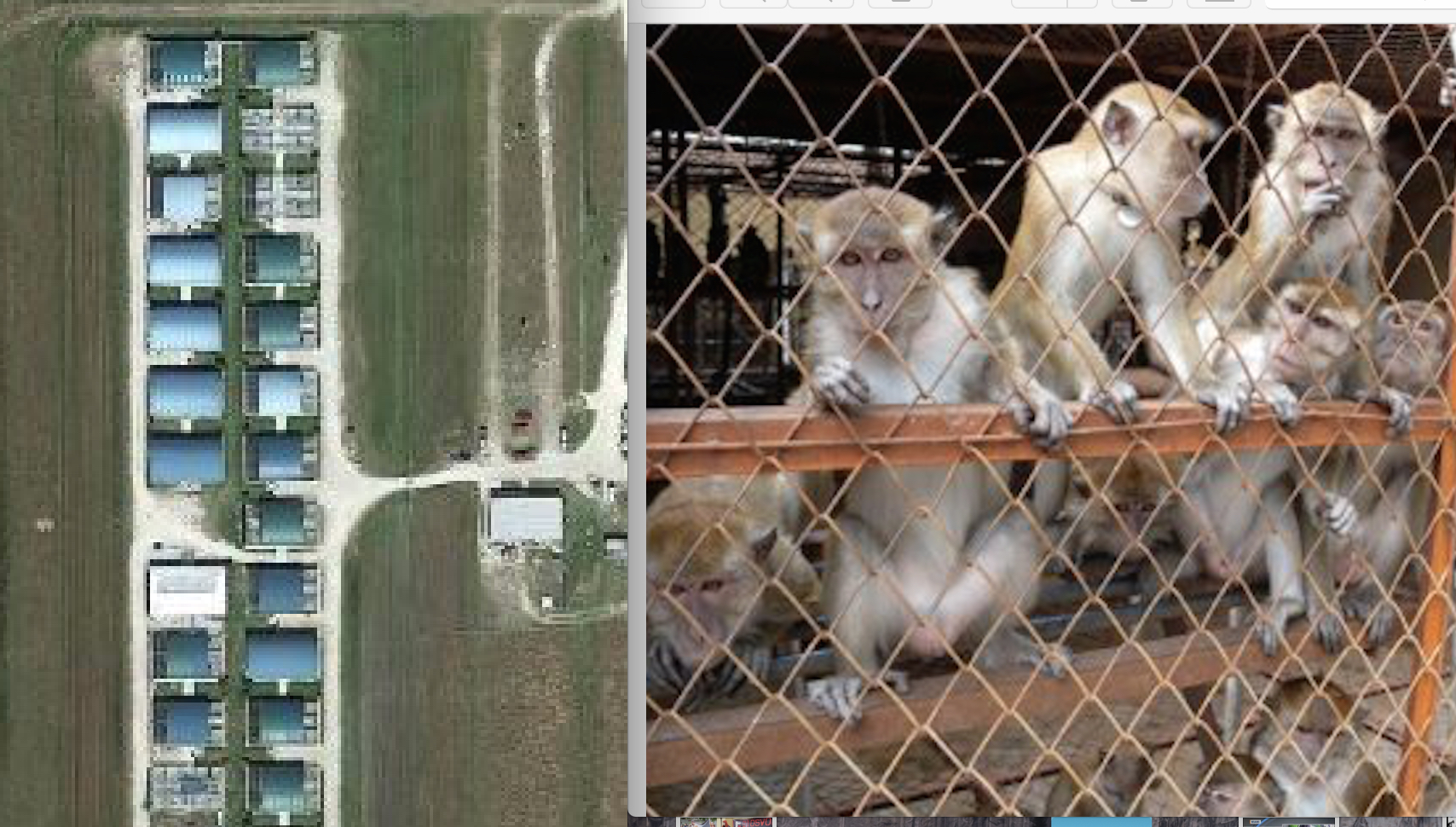
Monkey breeding farm (photo: Alon Ron)

Monkey breeding farm (photo: Alon Ron)

Holly Cheever, a founding member of the Leadership Council of the Humane Society Veterinary Medical Association, said “a well-trained and compassionate licensed veterinary technician is an invaluable part of a veterinary practice, providing superb skills and a gentle touch to his/her patients, but their skill set does not include the performance of either simple or advanced surgeries. They receive no training in surgical skills or techniques.”
Protest Against Primate Products

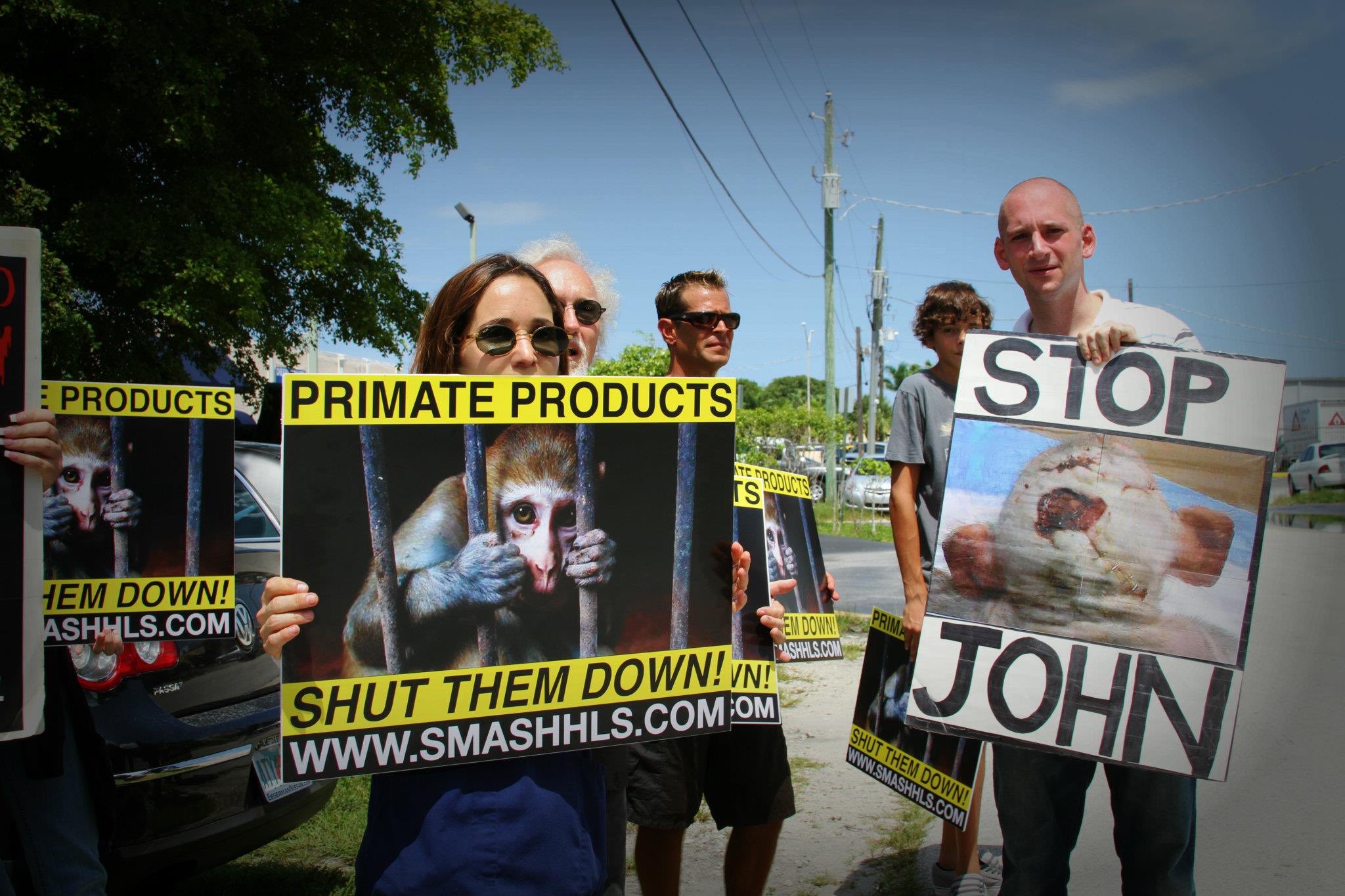
Smash HLS protests Primate Products

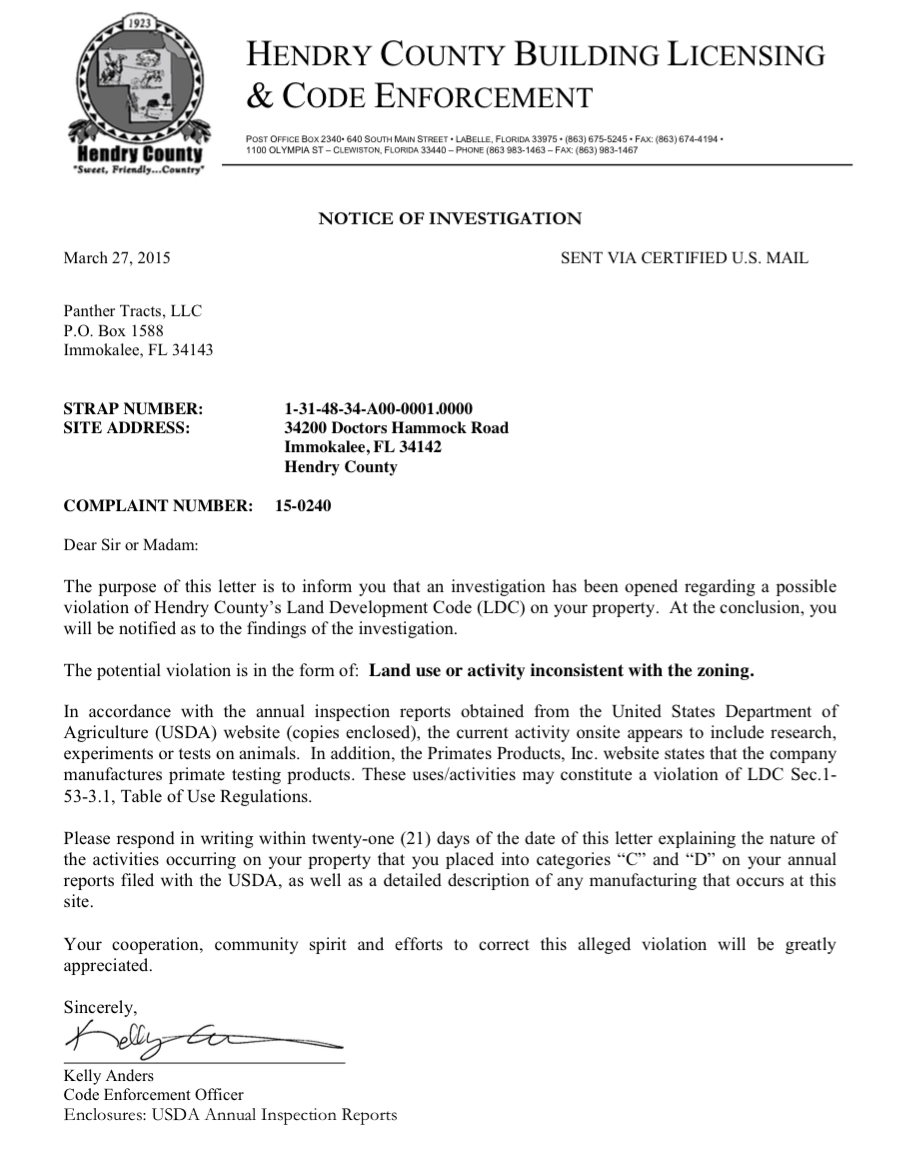
In addition to violating state veterinary laws, Primate Products breached zoning laws in Hendry County by performing surgery on land zoned for agricultural purposes. Charles Chapman, the County Administrator, said that the procedures brought to his attention are not agricultural. On March 27th, Hendry County launched an investigation.

Notice of investigation

Notice of investigation

Your Turn

Please ask Hendry County’s five commissioners to stop the expansion of Primate Products pending county and/or state investigations: bocc1@hendryfla.net, bocc2@hendryfla.net, bocc3@hendryfla.net, bocc4@hendryfla.net, bocc5@hendryfla.net

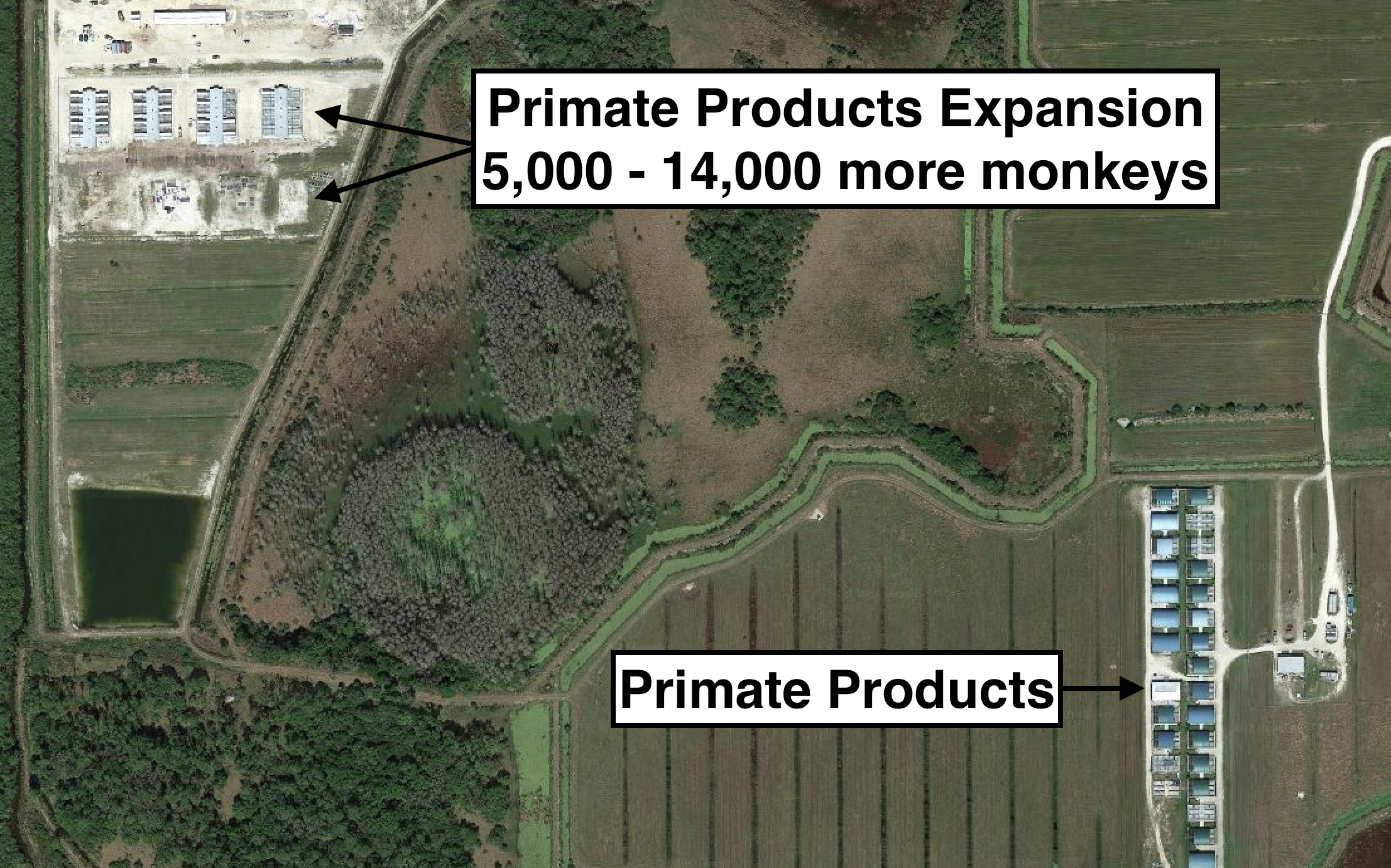
Primate-Products-Expansion

Primate Products’ monkey breeding & lab equipment manufacturing facility in Hendry County, Florida


Media Coverage of California Water Shortage Omits Biggest Culprit — Animal Agriculture

April 7, 2015 by 3 comments


The News

In its extensive coverage of the California drought, the New York Times has consistently focused on the cultivation of crops without so much as mentioning animal agriculture, which is far more water intensive.

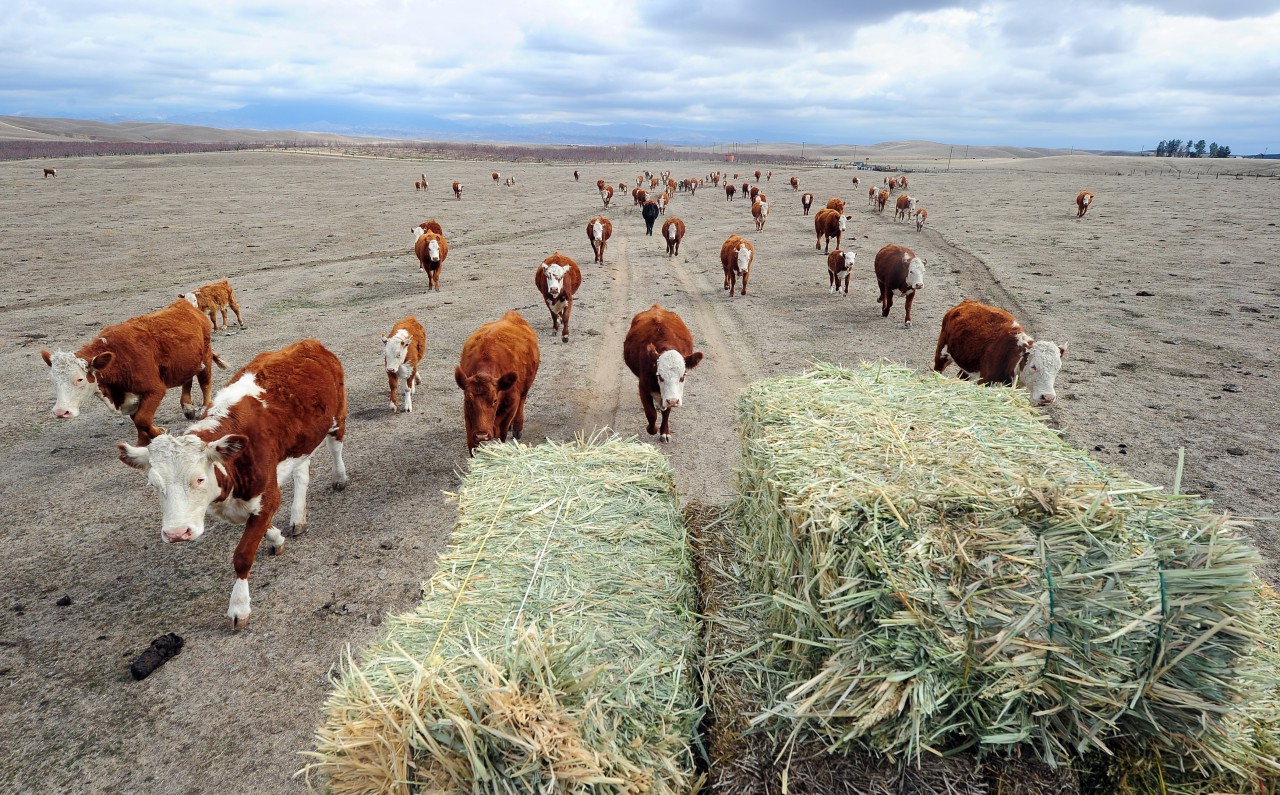
Cattle during California drought (photo: Frederic J. Brown/AFP/Getty Images)

Cattle during California drought (photo: Frederic J. Brown/AFP/Getty Images)

The glaring omission has sent readers the message that fruits, vegetables and nuts  – not beef and dairy – are responsible for the state’s grave water shortage. Following are excerpts from the NY Times over the past three days.

April 6th: “Even as the worst drought in decades ravages California, . . . millions of pounds of thirsty crops like oranges, tomatoes and almonds continue to stream out of the state and onto the nation’s grocery shelves.”

April 5th: “The expansion of almonds, walnuts and other water-guzzling tree and vine crops has come under sharp criticism from some urban Californians.”

April 4th: ”There is likely to be increased pressure on the farms to move away from certain water-intensive crops — like almonds.”

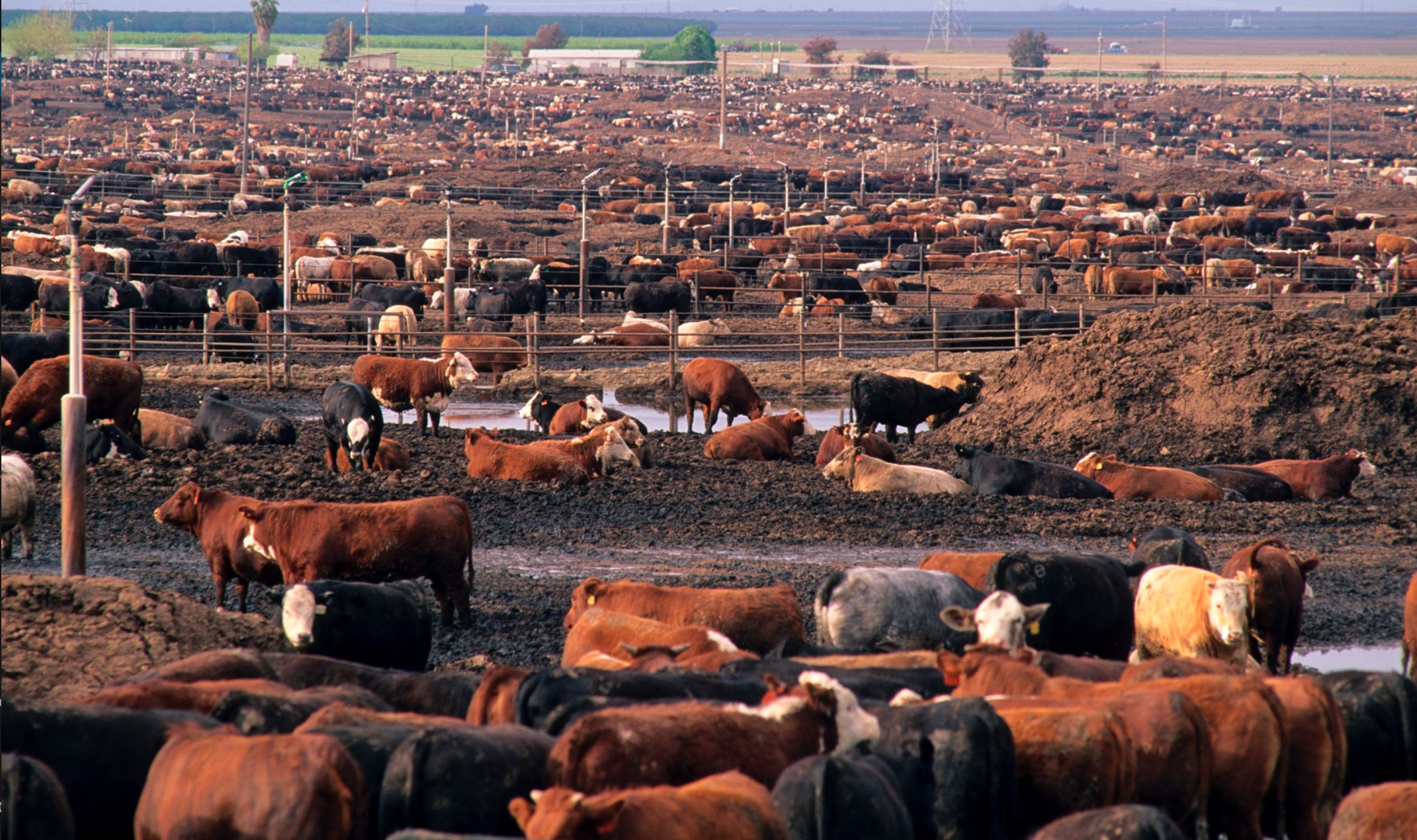
Cultivating crops might be be water intensive, but it uses a fraction of the water consumed in animal agriculture. On California’s factory farms, which house tens of millions of chickens, pigs and cows, water is used not only to hydrate these animals but also to grow their feed and clean the facilities and slaughterhouses where they are raised and killed.

Cows in a California feedlot

Cows in a California feedlot

Eliminating animal agriculture, which inefficiently uses of a scarce resource and is altogether unnecessary, would undoubtedly help to curb California’s water shortage.

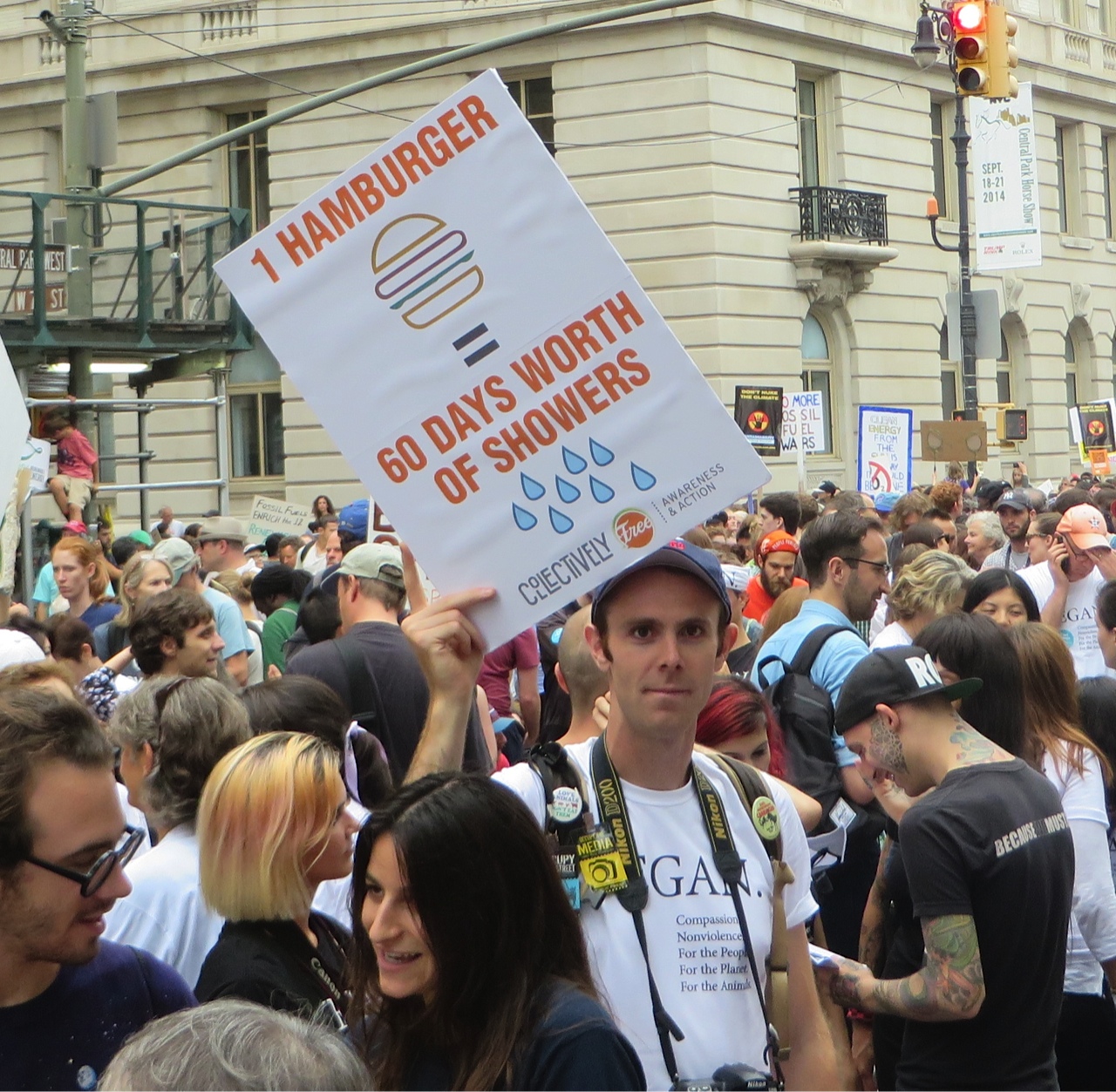
2014 Climate March participants highlighted impact of animal agriculture on water supply

2014 Climate March participants highlighted impact of animal agriculture on water supply

Following are just a few statistics that demonstrate the impact of animal agriculture on the water supply:

  • 2,500 gallons of water are used to produce one pound of beef compared to 100 gallons for a pound of wheat.
  • Vegetables use about 11,300 gallons of blue* water per ton. Pork, beef and butter use 121,000, 145,000 and 122,800 gallons per ton respectively. (*Blue water is water stored in lakes, rivers and aquifers.)
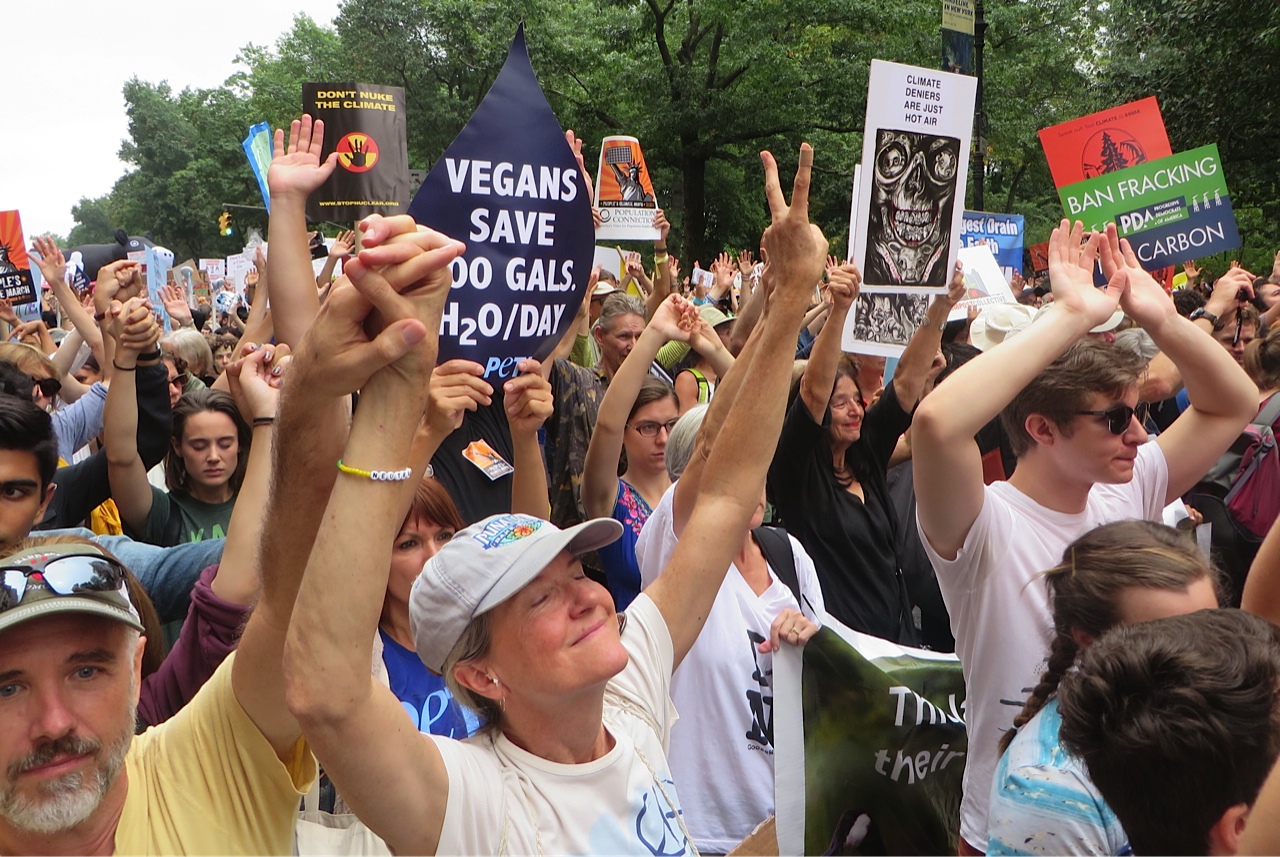
  • Each day, cows consume 23 gallons of water; humans drink less than one.
  • The amount of water needed to produce a gallon of milk is equivalent to one month of showers.
  • 132 gallons of water are used every time an animal is slaughtered.

One year ago (March, 2014), the NY Times published an op-ed, Meat Makes the Planet Thirsty, that included statistics comparing the amount of water used for crops and animals. So why is it omitting this vital information in its current coverage of the drought? Could it be a mere oversight? Or is it something more sinister?

2014 Climate March participants highlighted the the amount of water used in animal agriculture.

2014 Climate March participants highlighted impact of animal agriculture on water supply


Should We Buy Products with “Sustainable” Palm Oil?

April 2, 2015 by 23 comments


The News

Articles posted on social media routinely direct us to boycott palm oil because its production displaces indigenous communities, kills wildlife, and destroys rainforests, which contributes to climate change. In fact, the cultivation of palm fruit trees is so destructive to the environment and to animals that, to many, palm oil, which is derived from a fruit, is no longer regarded as vegan.

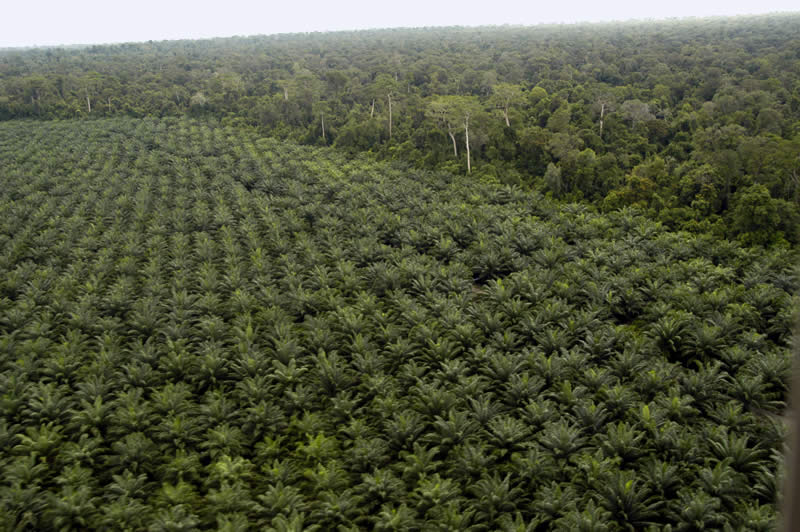
Palm oil plantation on newly cleared rainforest

Palm oil plantation on newly cleared rainforest

Some products contain palm oil that is labeled “sustainable,” but what does that mean? In an effort to determine whether or not we should be consuming “sustainable” palm oil, TheirTurn spoke to several rainforest and wildlife NGOs; companies that use sustainable palm; and a leader in the production of de-forestation-free palm.

orangutans - victims of palm oil cultivation

Orangutans, who are displaced, orphaned, kidnapped and killed, have become a symbol of the destructive effects palm oil (photo: Biosprit-subventionen)

What is sustainable palm oil?

In the U.S., palm oil is found in 50% of packaged consumer goods sold in grocery stores. It is widely used because it minimizes separation and is free of trans-fats. NGOs estimate that 18% of palm currently sold comes from sustainable sources.

At the moment, only one organization, the Roundtable on Sustainable Palm Oil (RSPO), has a global certification program, but the criteria are so weak and enforcement so lax that “sustainable” no longer has meaning.

According to a spokesperson at the Rainforest Action Network (RAN), “‘sustainable’ is just a claim; it’s not credible.” For instance, the RSPO will certify palm grown on certain deforested lands. That’s not good enough, according to the RAN, which opposes the clearing of any forest worth conserving. RAN says that the newly-created Palm Oil Innovation Group (POIG) is working to strengthen the RSPO criteria and to pressure the biggest manufacturers to adopt a stronger set of requirements from its growers. The process, however, is slow going.

The Roundtable Sustainable Palm Oil certification criteria are weak and often unenforced

The Roundtable Sustainable Palm Oil certification criteria are weak and often unenforced

Should we boycott palm oil?

Palm oil is here to stay for the indefinite future. The vast majority is consumed in countries in Asia and the Middle East where rainforest conservation is a low priority and consumer demand for sustainable products is negligible. If the American, European and Australian NGOs fighting to save the rainforests call for a boycott, then the companies that use palm will have no incentive to purchase it from sustainable sources. After all, why would companies spend more money on sustainable palm if the people who care about sustainability aren’t buying it? That is why many NGOs argue that demanding and buying responsible palm oil will, over time, protect the remaining forests more than boycotting it will.

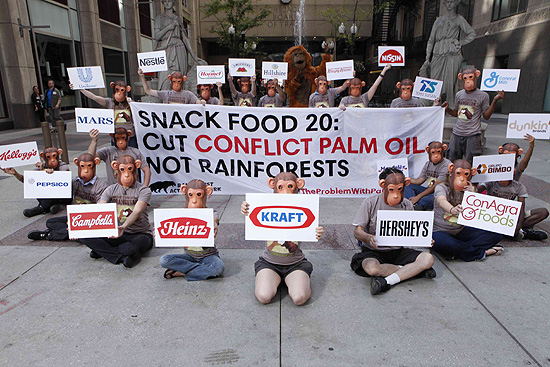
The Rainforest Action Network targets the top 20 companies that use unsustainable, or "conflict," palm oil.

The Rainforest Action Network targets the top 20 companies that use unsustainable, or “conflict,” palm oil.

Following are factors to consider when deciding whether or not to buy packaged foods with palm oil at this point in time

  • If “sustainable” is not printed on the label, then you have to assume the palm fruit trees were grown on cleared rainforest.
  • If “sustainable” is printed on the label, then the palm oil may or may not have been grown on cleared rainforest.
  • Tracing palm oil to the actual land on which it was grown is challenging at the moment. As a result, most consumer products companies don’t know the exact source of their palm oil and should therefore not be making sustainability claims.
  • In the U.S., any company can print “sustainable” on its label because the government does not have a regulatory agency to monitor that claim.
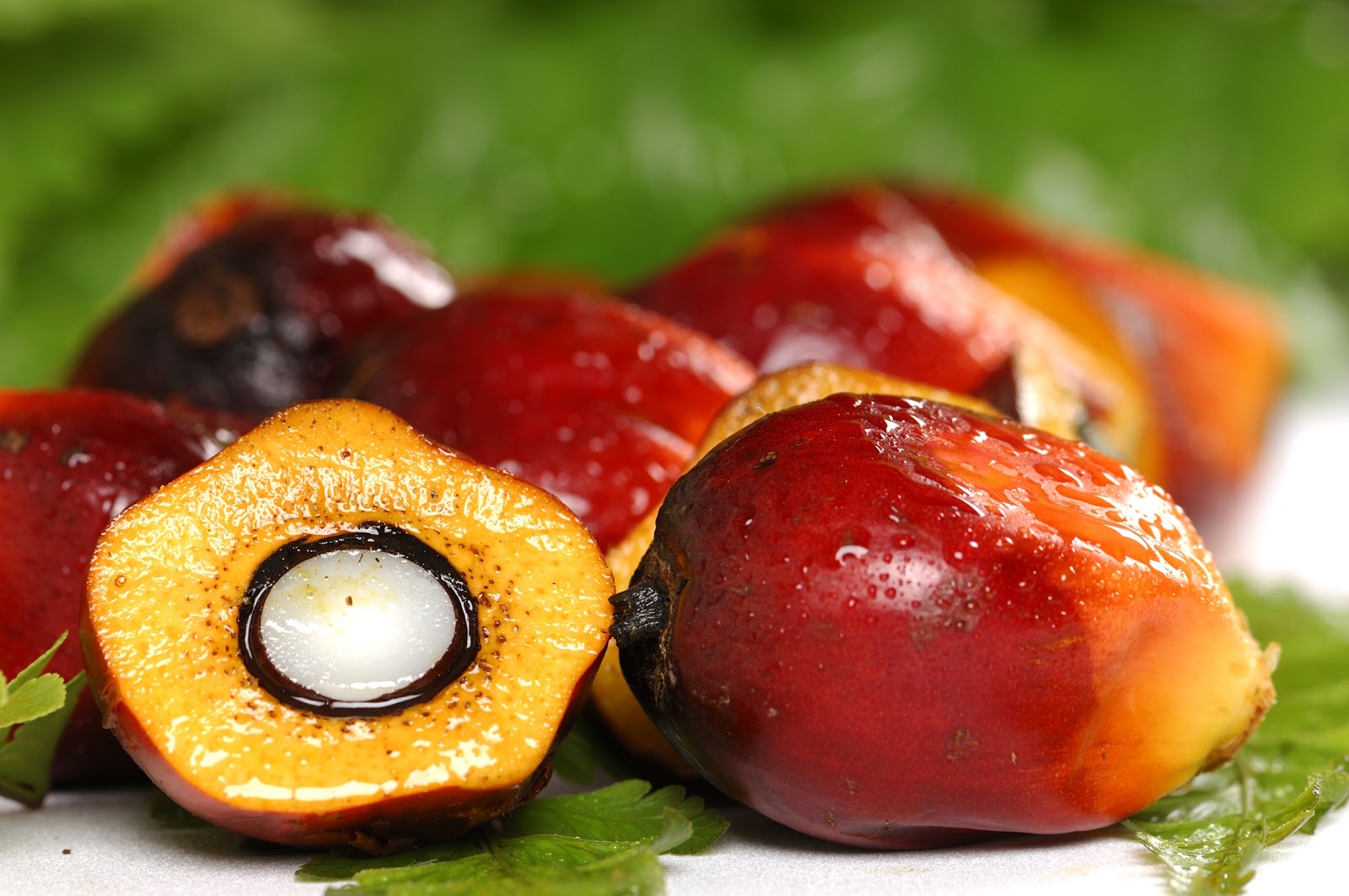
Palm oil is extracted from palm fruit that grows on trees in the tropics

Palm oil is extracted from palm fruit that grows on trees in the tropics

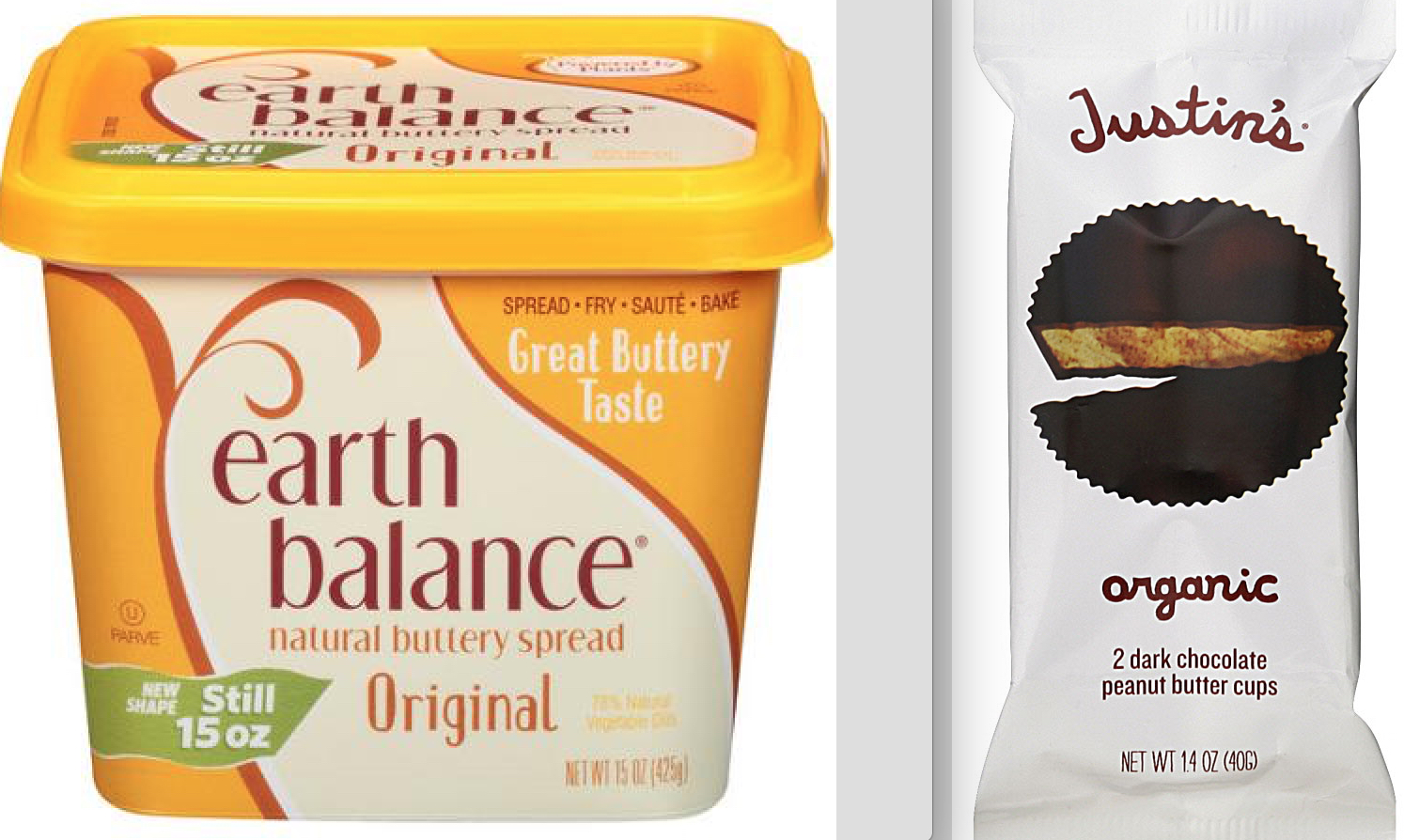
Can we eat Earth Balance and Justin’s?

TheirTurn contacted the makers of Earth Balance and Justin’s because they make products with palm oil that are popular with vegans. Both companies buy RSPO-certified palm and appear genuinely eager to ensure that it’s deforestation-free, but, short of hiring investigators to follow their palm vendors, they simply cannot guarantee it at the moment.

However, according to the the Rainforest Action Network, Boulder Brands, the maker of Earth Balance, has “made the strongest palm oil commitment” of any U.S. company, demanding that its suppliers move in the direction of providing the company with palm produced in accordance with the POIG’s strict requirements. Now, Earth Balance needs to work with its supplier to implement this higher standard on the ground in Indonesia and Latin America.

Are plant-based foods vegan if they contain palm oil?

Are plant-based foods vegan if they contain palm oil?

What is Palm Oil?

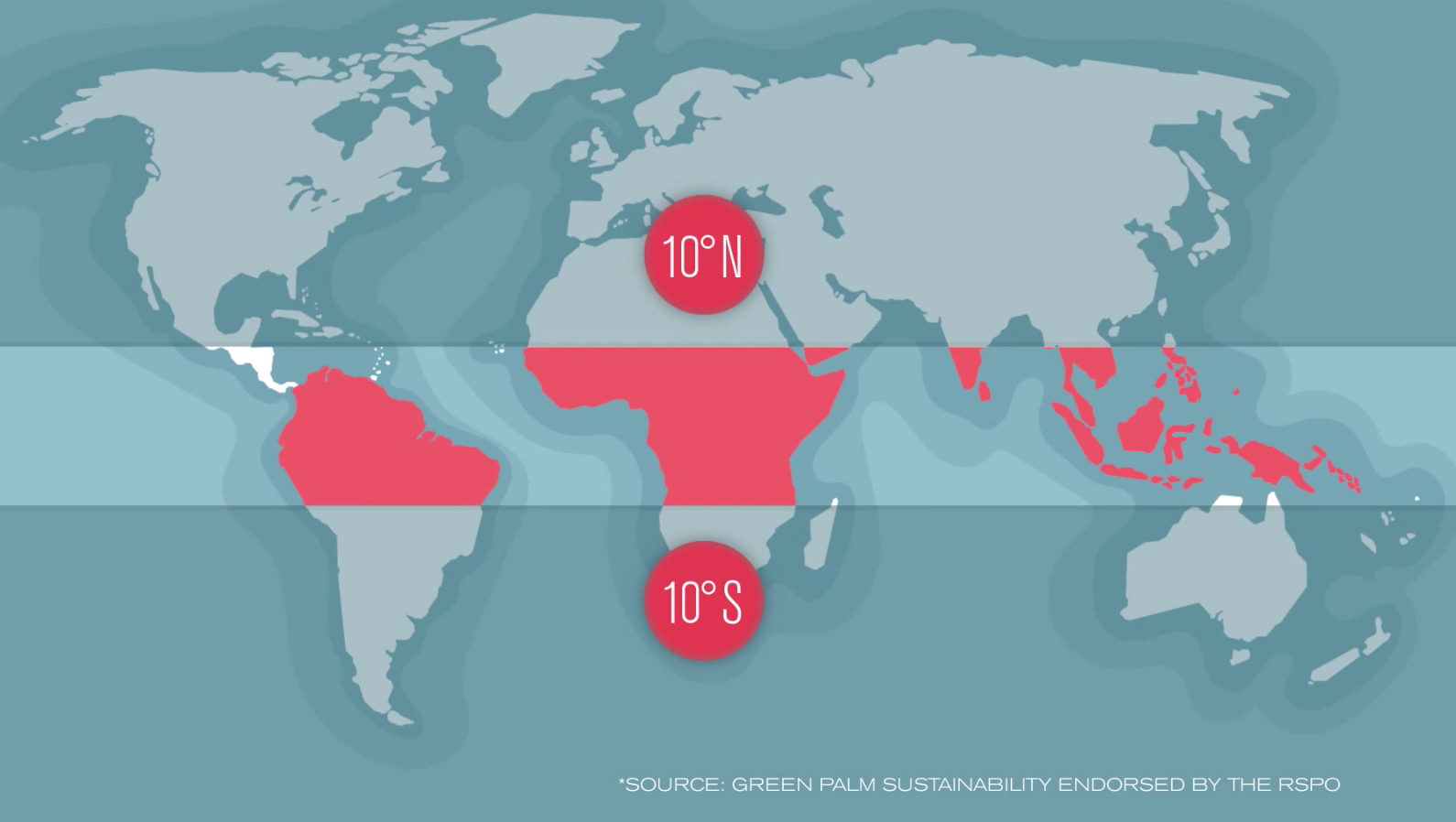
Palm oil is extracted from the fruit of palm trees that can only be grown in the tropics (show map), the heavily-forested areas near the equator that are often described as “the lungs of the earth.”

Palm fruit trees can be grown in the tropics, 10 degrees on either side of the equator. About 90% is currently grown in Indonesia (far right)

Palm fruit trees can be grown in the tropics, 10 degrees on either side of the equator. About 90% is currently grown in Indonesia (far right)

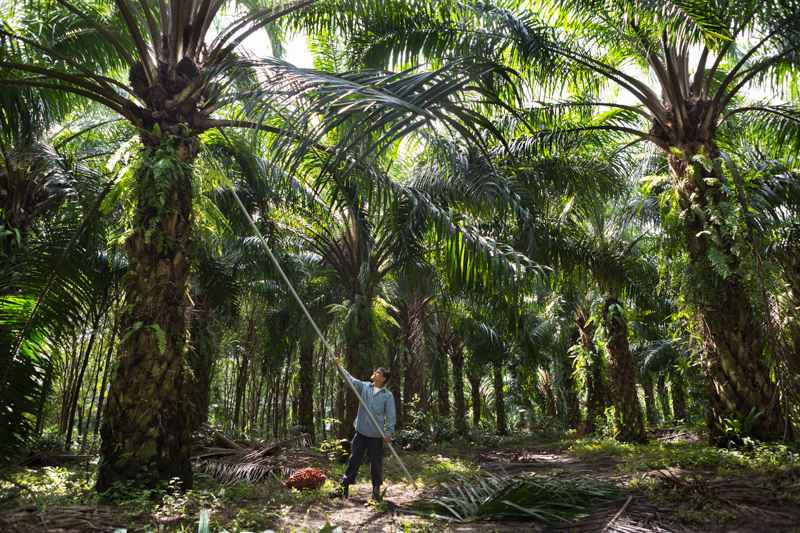
Once planted, palm fruit trees bear fruit after four years. After 20 years, the trees are chopped down and replanted because plantation workers can no longer reach the fruit bundles. After four cycles, the yield is reduced. Does that mean that palm growers will move  their plantations to new land that is covered in forest? It’s too soon to say.

When plantation workers can no longer reach palm fruit bundles, the trees are cut down, and new trees are planted.

When plantation workers can no longer reach palm fruit bundles, the trees are cut down, and new trees are planted.

If every company that uses palm oil decided to purchase it from responsible sources, would there be enough non-forested land to supply the global demand?

According to the Orangutan Land Trust, an advocacy group that works to preserve orangutan habitat, the island of Borneo alone has 35 million acres of unforested land that is suitable for oil palm cultivation, and that far exceeds projected growth for the next few decades: “It is a complete fallacy that new oil-palm plantations need to come at the expense of forests.”

Your Turn

To find out how you can help protect the planet’s remaining rainforests from being cleared for palm fruit tree plantations, please visit the Rainforest Action Network’s Palm Oil Action Team.