Some participants marched in fruit and vegetable costumes; others carried posters promoting animal liberation. But their messages to the public were consistent: “Animals are not food.”
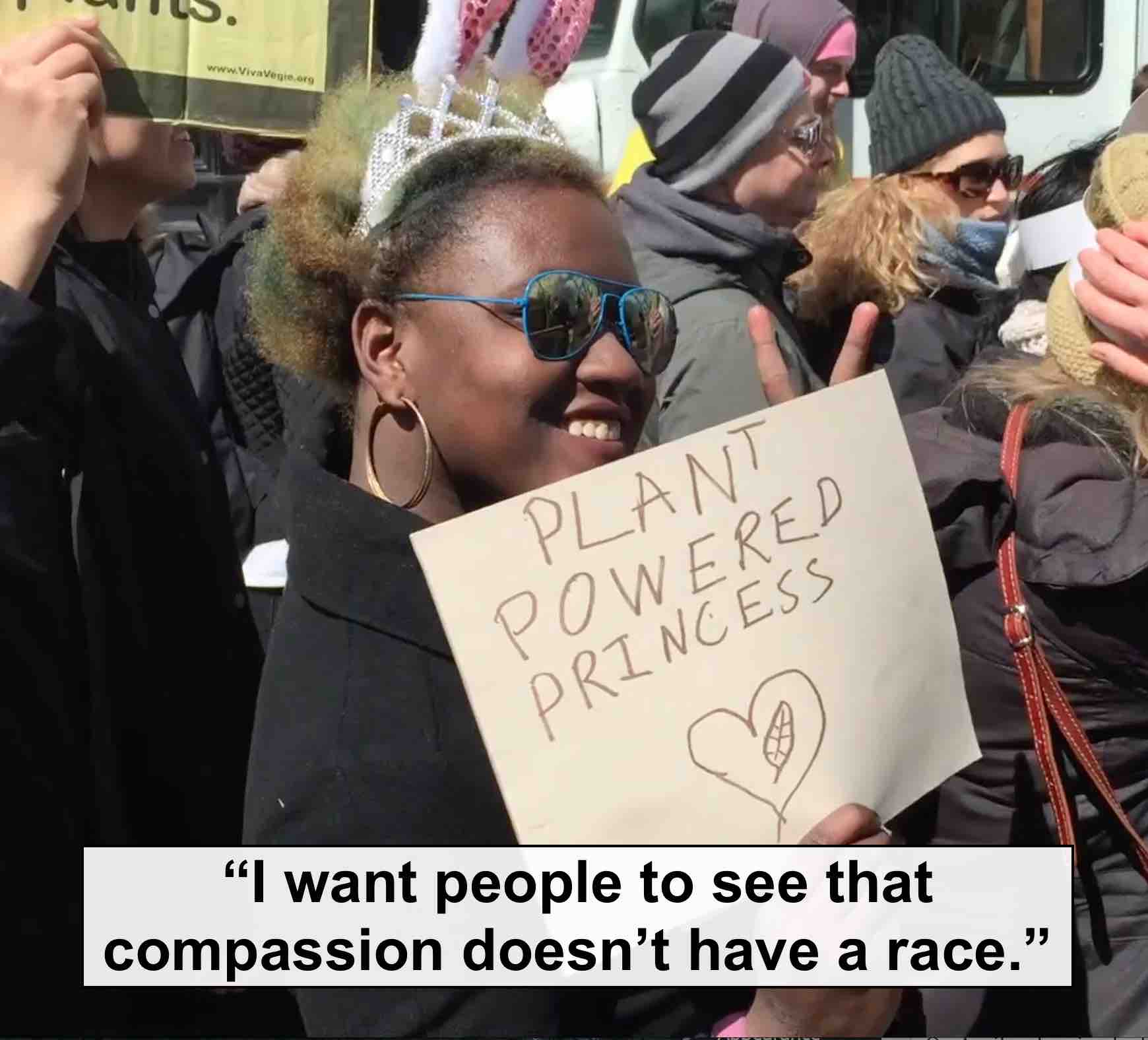
On April 3rd, animal advocates took to the streets of Greenwich Village for the 9th annual Veggie Pride Parade, attempting to awaken their fellow New Yorkers to the plight of animals exploited for food and the health and environmental benefits of a plant-based diet. Curious onlookers fumbled for their smart phones to document the unique and unexpected parade and to take selfies with a giant pea pod.
Racial, ethnic and socio-economic diversity at the Veggie Pride parade.
The parade began in the “Meatpacking District,” a neighborhood that was once dominated by commercial butcher shops. Today, those businesses, which have been priced out of the trendy neighborhood, have been replaced by restaurants that, of course, serve meat (for now).
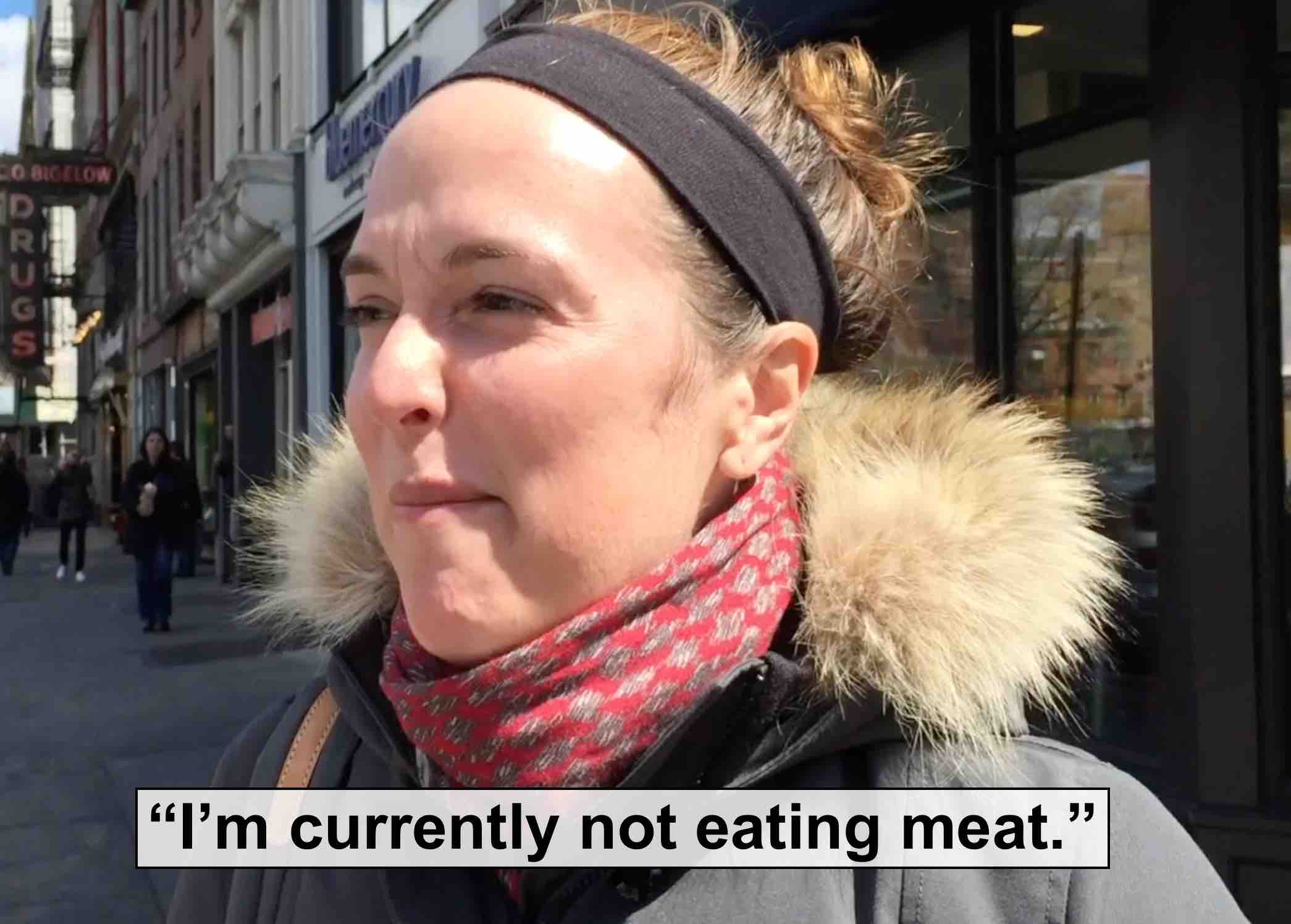
Parade onlooker wearing Canada Goose fur coat expressed excitement about seeing the parade.
When the parade spilled into Union Square, where it ended, organizer Pamela Rice staged a spirited rally, and parade participants indulged in vegan fare sold by local restaurants and food companies.
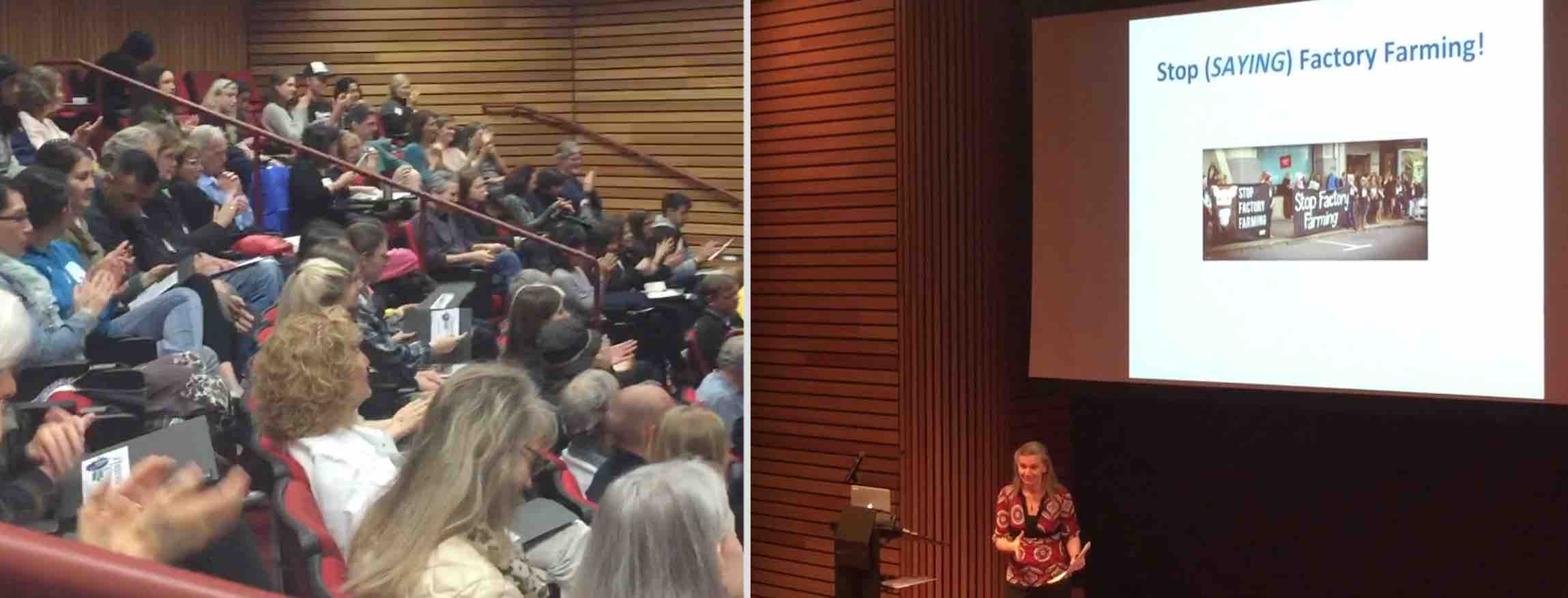
In March, several hundred people came together in Berkeley, California, for the annual Conscious Eating Conference. Throughout the day, advocates, authors and philosophers from around the country made presentations about the ethics of eating and how food choices impact animals, human health and the planet. To view and share the full presentations, please visit United Poultry Concerns.
The David Brower Center in Berkeley was filled to capacity with several hundred attendees.
Hope Bohanec of United Poultry Concerns
During the breaks, attendees visited the booths of animal advocacy groups, animal sanctuaries, authors and vegan companies.
The 2016 Conscious Eating Conference featured exhibitors from around the country
Your Turn
United Poultry Concerns is a national advocacy group that “promotes the compassionate and respectful treatment of domestic fowl.” To learn more about UPC and to support their work, please visit their website.
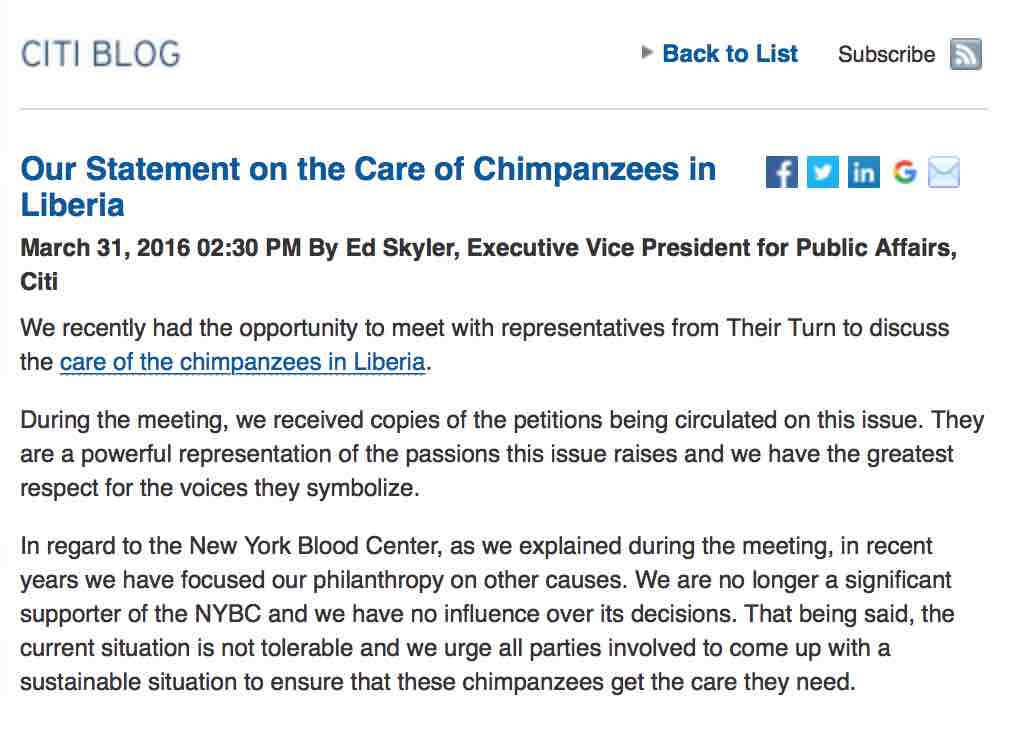
In a stunning display of corporate philanthropy, Citigroup is making a $50,000 donation to help pay for the care of the chimpanzees abandoned on islands in Liberia by the New York Blood Center (NYBC). In addition, the company has issued the following statement, in which it asserts that “the current situation is not tolerable.”
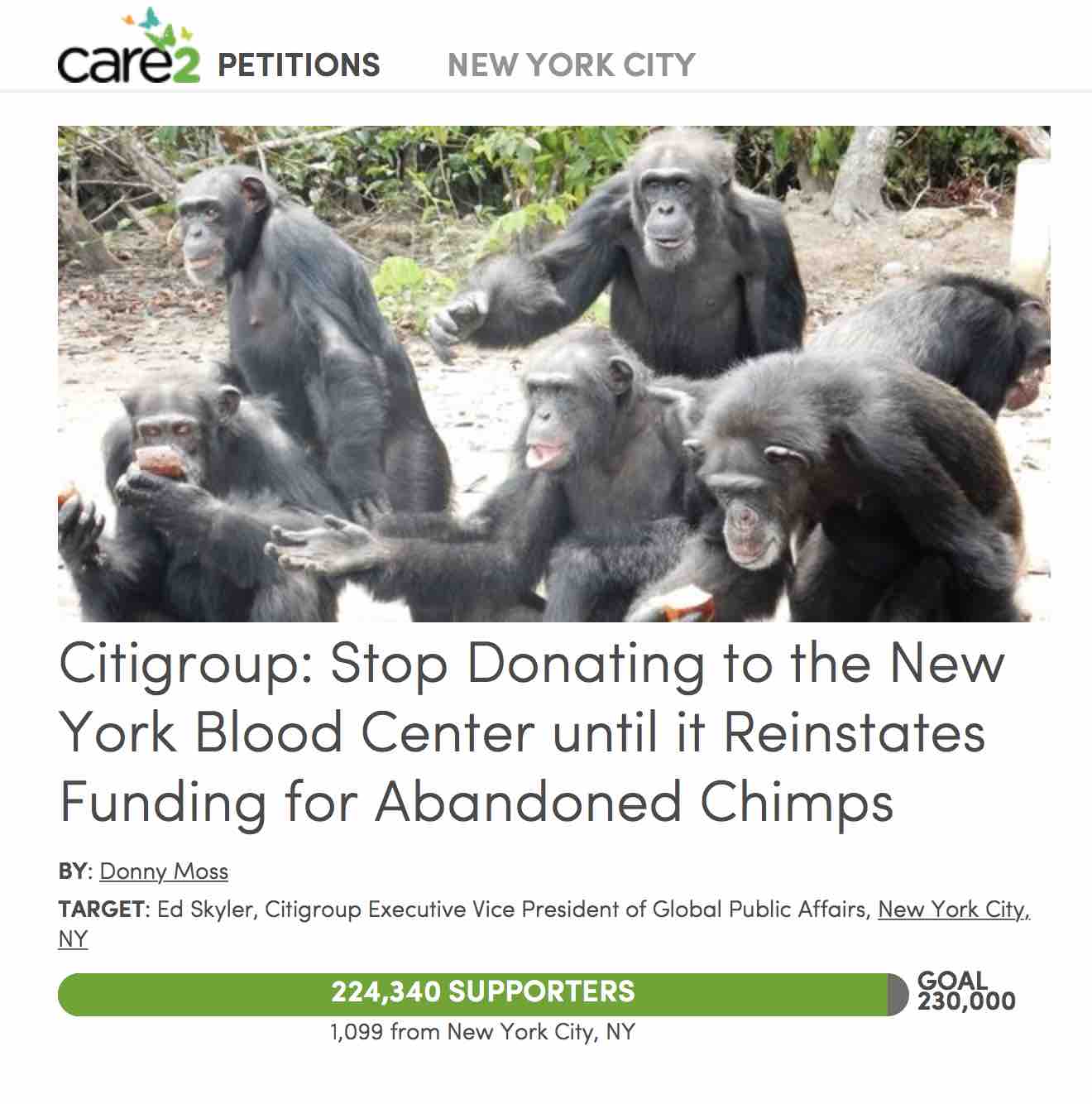
In response to a Care2 petition signed by over 224,000 people asking the company to stop supporting NYBC, executives from Citigroup invited representatives from TheirTurn to brief them on the crisis and discuss possible ways in which they could help.
Citigroup engaged with advocates and took action as a result of this petition and other grass roots tactics.
For a thirty year period starting in the mid-1970s, NYBC conducted experiments on over 400 hundred chimpanzees in Liberia, where they could capture, breed and experiment on them with little regulatory oversight. After the research was conducted, NYBC moved the survivors onto six islands with no natural food or water and made a public commitment to provide them with lifelong care.
In May, 2015, the NY Times reported that NYBC had “withdrawn all funding for them,” leaving the chimps to die of starvation and thirst. In order to keep the chimps alive, Liberians who had been employed by the blood center to deliver food and water, began to care for them on a volunteer basis. With virtually no resources and burdened by the Ebola outbreak in Liberia, these volunteers kept the chimpanzees alive until an HSUS-led coalition of over 30 animal conservation groups raised funds from the public to pay for the chimps’ care on an emergency basis — until NYBC reinstates funding.
The New York Blood Center, which earned an estimated $500 million in royalties off of the research conducted on the chimpanzees, has publicly stated that it has no “contractual obligation” to pay for the chimps’ food and water and has shifted the burden of caring for their captive chimp population to the animal welfare community.
When the news broke in the Spring of 2015 about NYBC’s decision to abandon the chimps, thousands of grass roots activists worldwide began to mobilize – contacting NYBC, donating to the fund to pay for the chimps’ care; signing and circulating petitions; and participating in online actions organized by NYBC: Do The Right Thing.
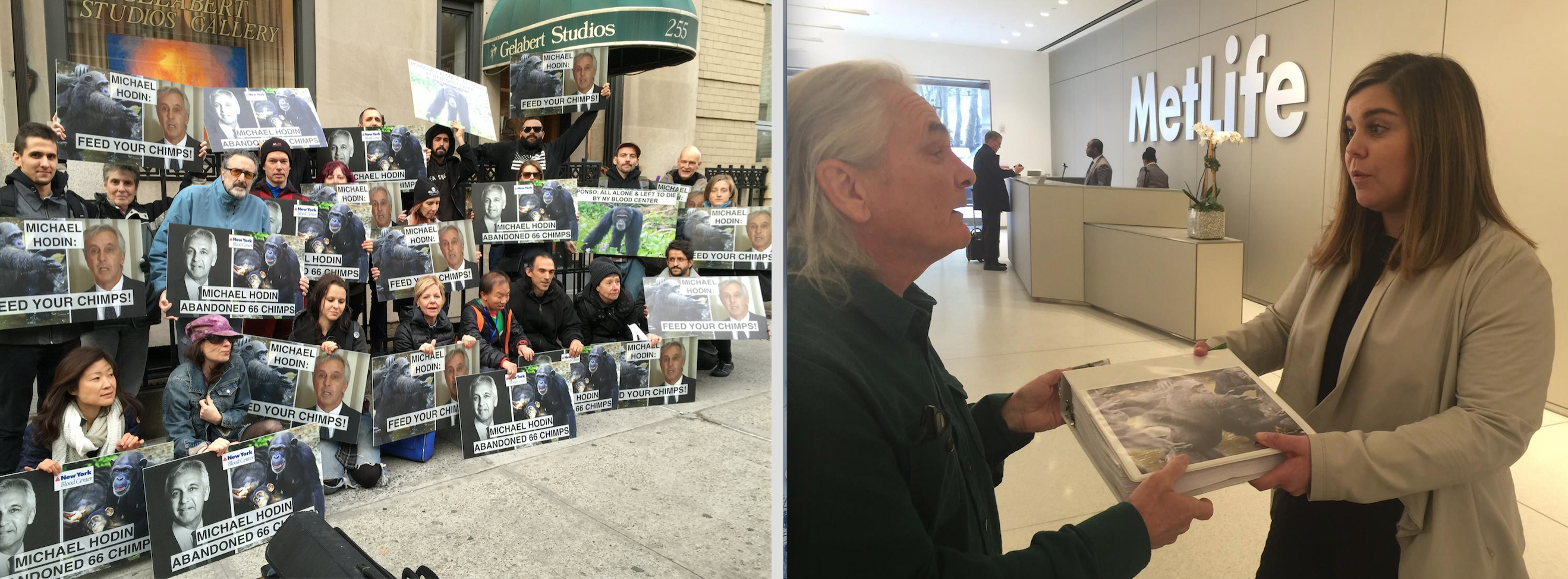
In New York City, home of the NY Blood Center’s headquarters, grass roots activists began staging protests in May. They are now turning their attention to the blood center’s corporate donors, the largest of which is MetLife.
From left to right: Activists in NYC stage an NYBC protest; Primatologist Bob Ingersoll delivers a petition to MetLife, NYBC’s largest corporate donor.
Citigroup’s bold decision to make a public statement about the chimps and generously provide much-needed funding for their care represents a big step forward for the chimps and the concerned citizens worldwide who have been advocating on their behalf. But the campaign is not – and will not – be over until the New York Blood Center fulfills its obligation – and promise – to provide lifelong care for their former lab chimpanzees.
Your Turn
Please join the Facebook page: New York Blood Center: Do the Right Thing to stay apprised of news and to participate in online actions to pressure NYBC board members to fulfill their promise to provide lifelong care to their laboratory chimps.
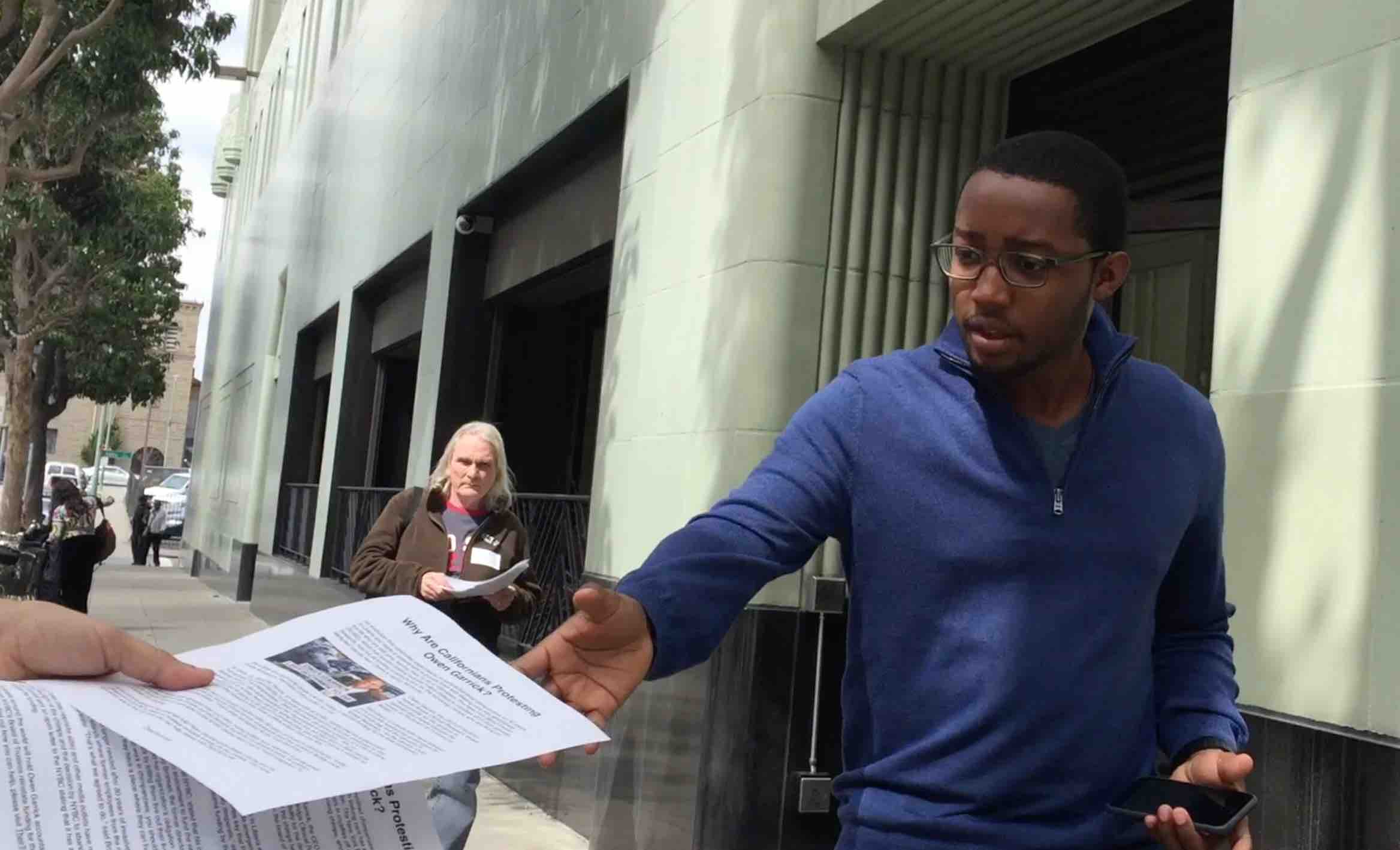
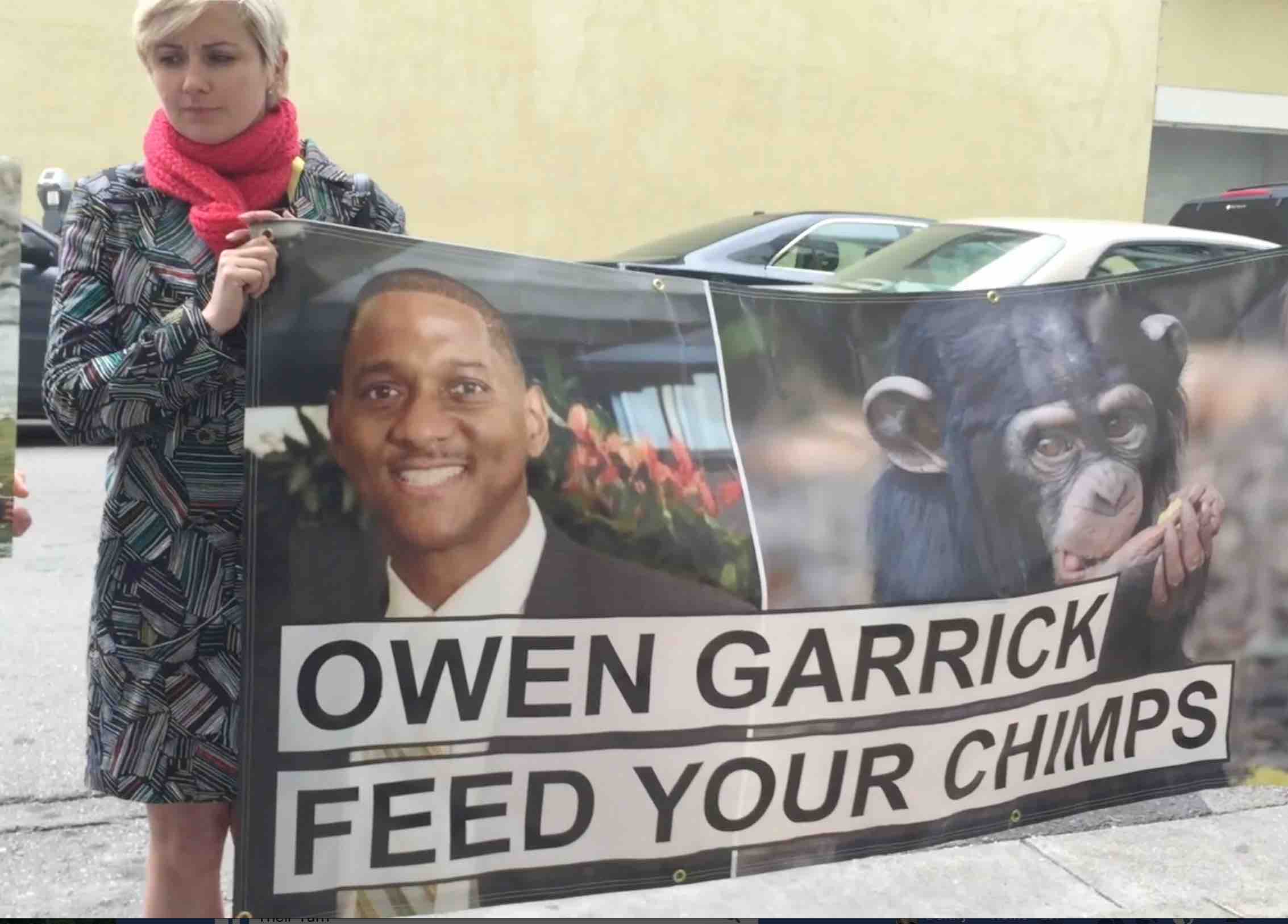
As hundreds of workers entered and exited their office building in downtown Oakland on March 18th, one thing became clear to the activists who were outside protesting their neighbor from Suite 013: Most of them already knew that Owen Garrick abandoned chimpanzees in Liberia from news coverage and prior protests, and most were grateful that people were speaking out on behalf of the chimps.
“Owen Garrick must be using a back entrance and taking the stairs in order to avoid facing people in his building,” said protest organizer and primatologist Bob Ingersoll. “After three protests, his neighbors have told us they know who he is and about the moral crime he committed.”
Advocates distributed several hundred handouts to Owen Garrick’s neighbors in Oakland, CA
Activists stage protest in Oakland at the office building of NY Blood Center’s Owen Garrick
Activists are protesting Owen Garrick and his colleagues on the board of the New York Blood Center because they all bear responsibility for the organization’s decision to abandon their former lab chimpanzees on desert islands with no food or water after promising to provide them with lifelong care. For a thirty year period starting in the mid-1970s, NYBC conducted invasive research experiments on over 400 hundred chimpanzees in Liberia, where they could capture chimps in the wild, breed them in captivity and experiment on them with little regulatory oversight.
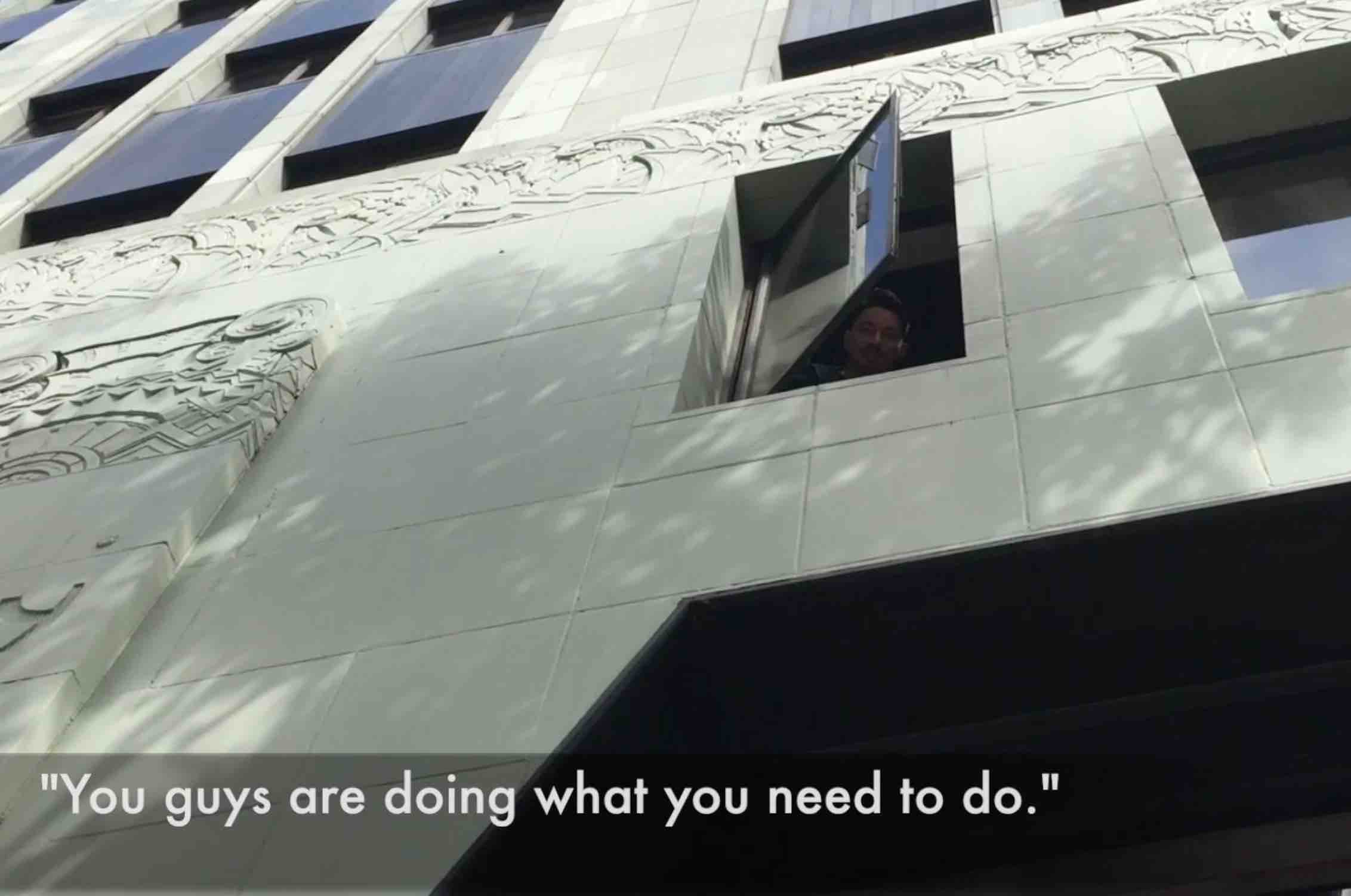
Curious neighbors open their windows to find out why people are chanting in front of their building
In May, 2015, the NY Times reported that the blood center walked away from its $25,000 monthly obligation, leaving the chimps to die of starvation and thirst while arguing that animal welfare groups should pay for the long-term care of the chimps. To date, NYBC has earned an estimated $500 million in royalties off of the research conducted on the chimps.
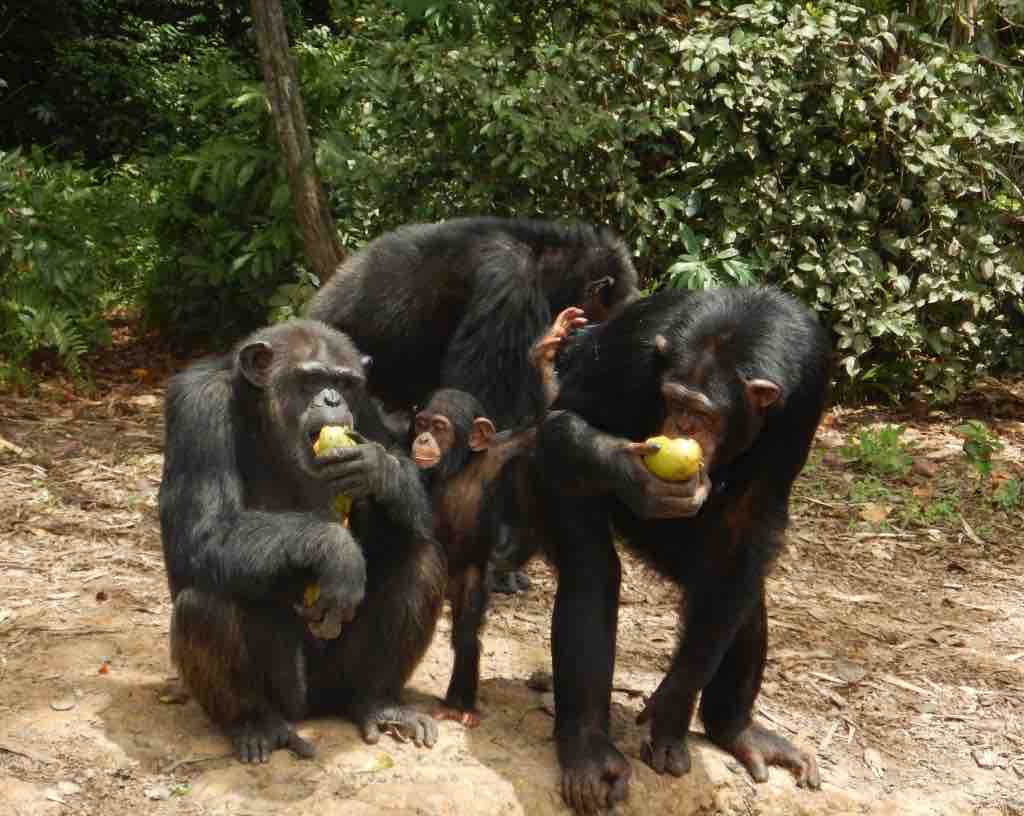
Chimps abandoned by the New York Blood Center are fed once daily with money donated by the public
Your Turn
Please join the Facebook page: New York Blood Center: Do the Right Thing to stay apprised of news and to participate in online actions to pressure NYBC board members to fulfill their promise to provide lifelong care to their laboratory chimps.
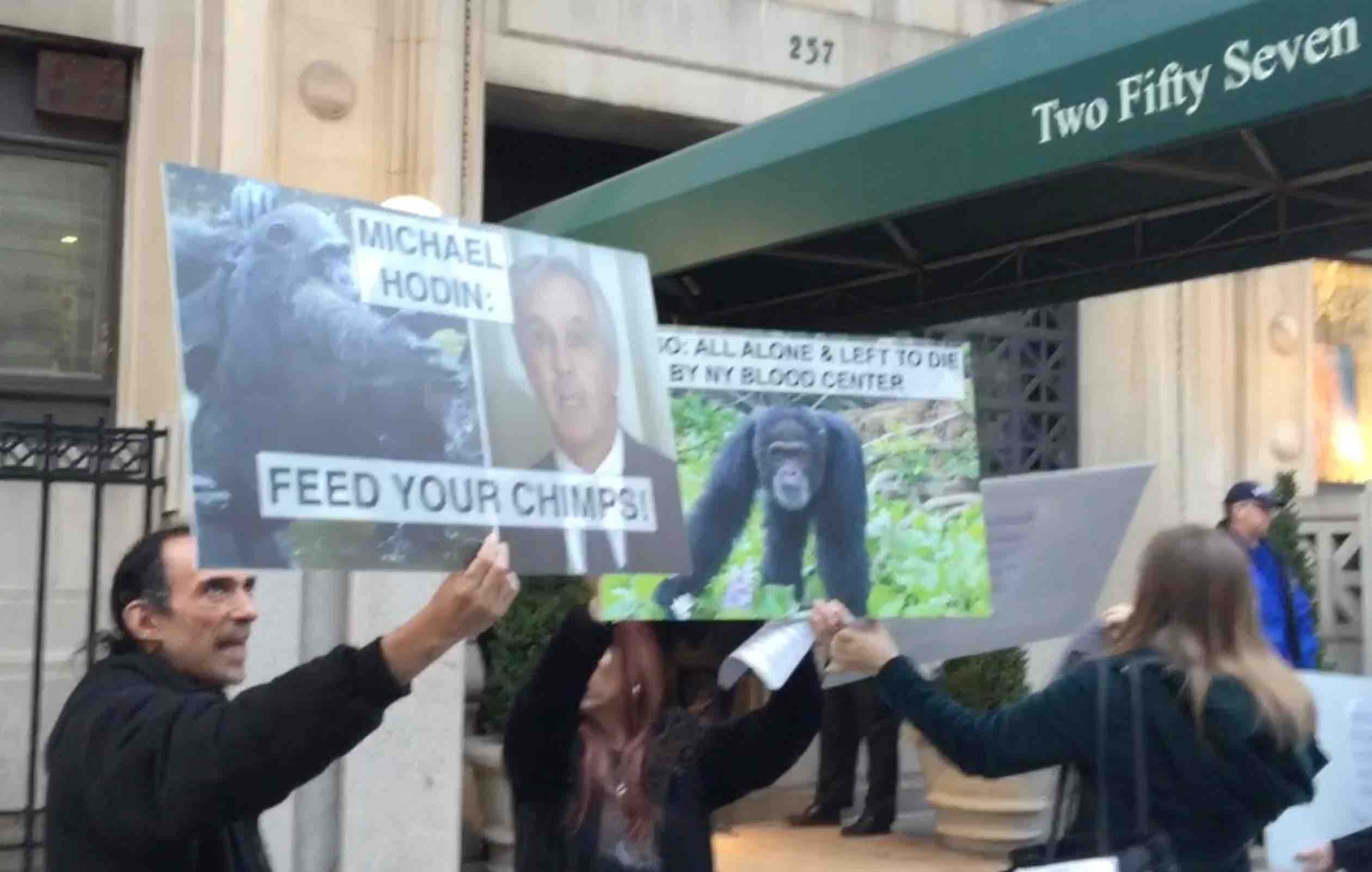
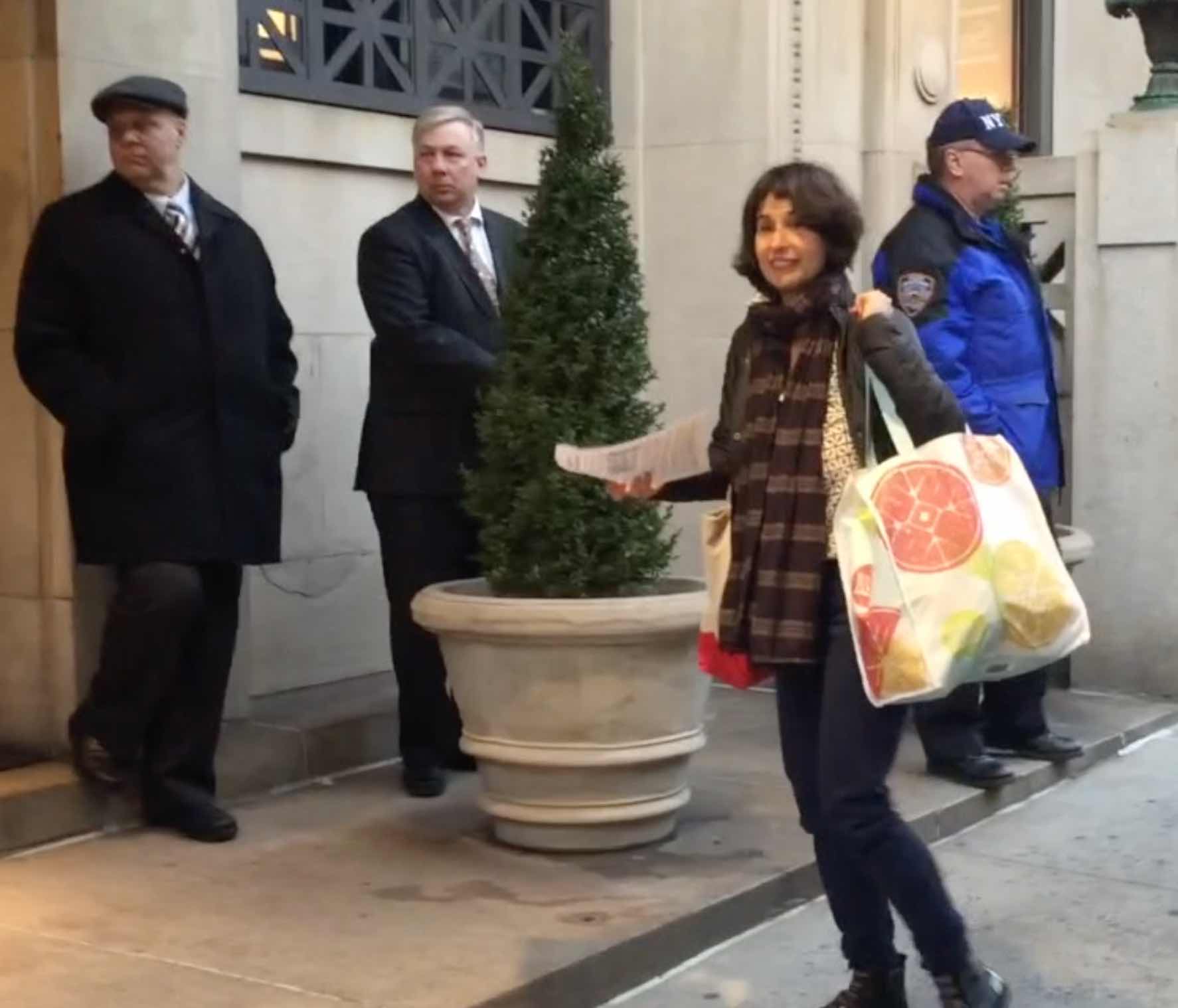
Animal rights activists and other caring New Yorkers staging weekly demonstrations at the home of New York Blood Center (NYBC) board member Michael Hodin are being greeted by his neighbors with increasing hostility – an indication that their patience for protesters is wearing thin.
Their use of the “F” word to express their rage at the protests in front of their building has left many activists asking, “Are they really more angry about peaceful demonstrations than the fact that their neighbor left 66 chimps to die with no food or water?”
Advocates inform Michael Hodin’s neighbors about his decision to abandon 66 chimps with no food or water
Not all of Michael Hodin’s neighbors, however, are cursing the activists. Many have stopped to express concern about the abandoned chimps, and others have thanked them for their commitment and tenacity.
Some of Michael Hodin’s neighbors express concern about the abandoned chimps
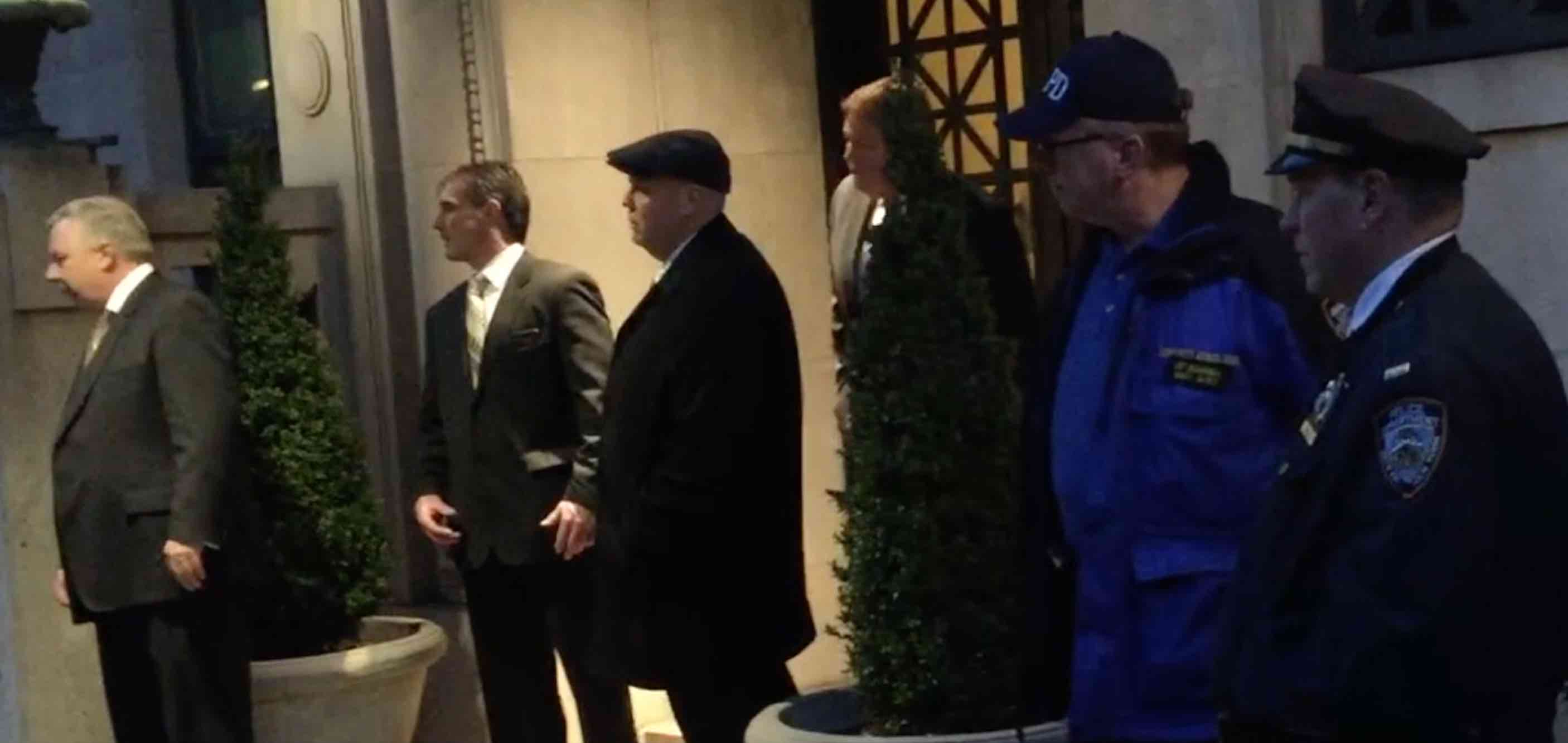
While the reaction to the presence of activists varies, one aspect of the weekly protests is consistent: the extraordinary amount of security — a combination of a private security squad; at least four NYPD officers; and Michael Hodin’s building security. “It seems wasteful,” said Michael Dolling, one of the protesters.”Can’t the blood center use the money being spent on all of this excessive security to feed the chimps?”
An army of public and private security agents block the entrance to Michael Hodin’s home.
Activists are protesting NYBC’s board members because they bear responsibility for the organization’s decision to abandon their former lab chimpanzees after promising to provide them with lifelong care. For a thirty year period starting in the mid-1970s, NYBC conducted invasive research experiments on over 400 hundred chimpanzees in Liberia, where they could capture chimps in the wild, breed them in captivity and experiment on them with little regulatory oversight.
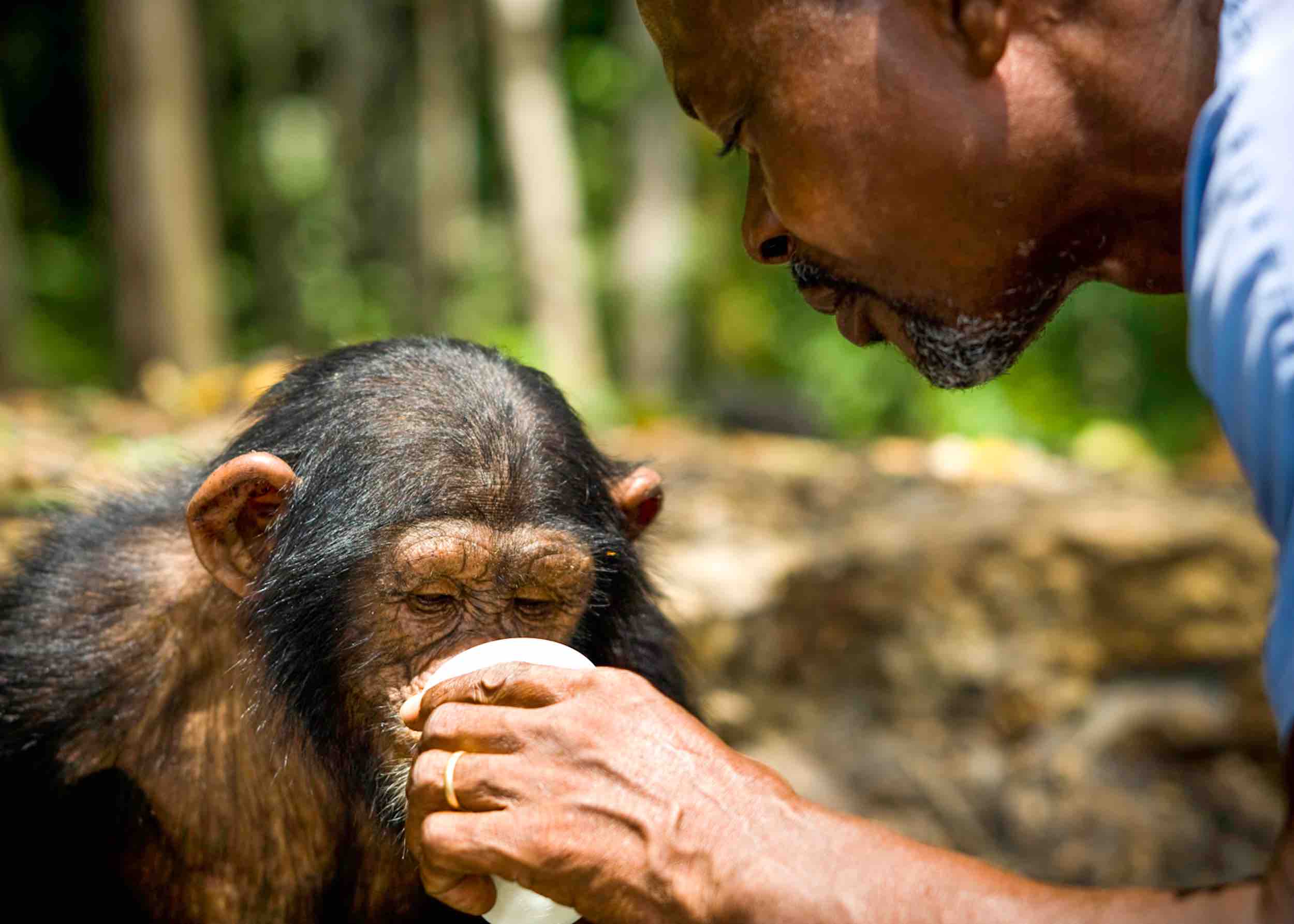
Caregiver hired by HSUS with money donated by the public (photo: Jeff Topham)
In May, 2015, the NY Times reported that the blood center walked away from its $25,000 monthly obligation, leaving the chimps to die of starvation and thirst while arguing that animal welfare groups should pay for the long-term care of the chimps. To date, NYBC has earned an estimated $500 million in royalties off of the research conducted on the chimps.
Your Turn
Please join the Facebook page: New York Blood Center: Do the Right Thing to stay apprised of news and to participate in online actions to pressure NYBC executives and board members to fulfill their promise to provide lifelong care to their laboratory chimps.