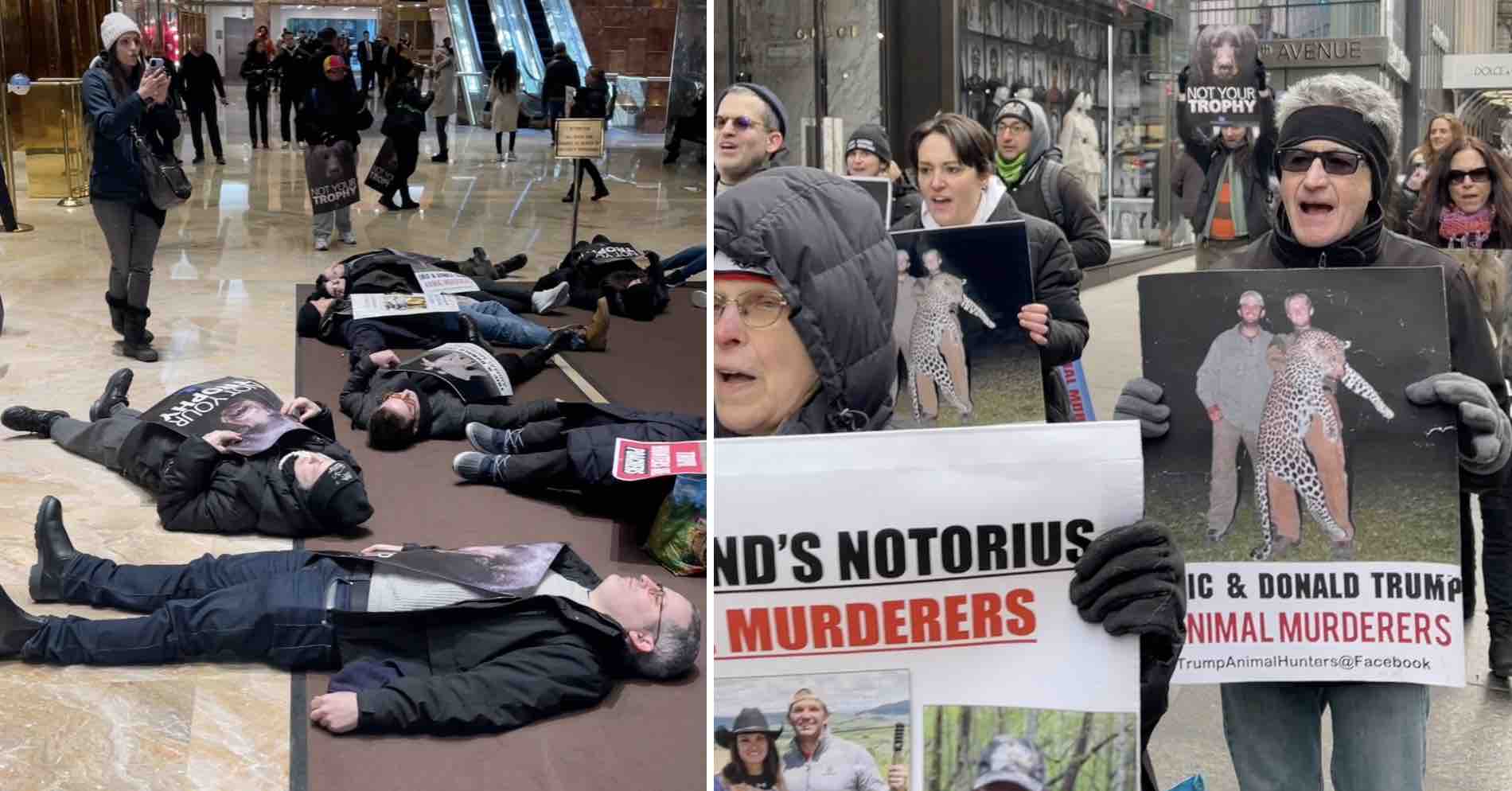
On February 25th, approximately 30 animal rights activists in New York City staged a disruption in the lobby of Trump Tower as part of the Worldwide Rally Against Trophy Hunting (WRATH), an annual multi-city demonstration produced by CompassionWorks International. Organizers of the NYC rally chose Trump Tower because Donald Trump Jr. and Eric Trump have participated in many well-publicized trophy hunts and have posted photos with their victims.
Activists also staged rallies in Denver, Chicago, Birmingham (U.K.) and Nashville, where Safari Club International’s annual hunting convention took place. WRATH, which is timed to coincide with the annual convention, aims to “raise awareness about the ego-driven and senseless murder of countless wild animals by trophy hunters.”
During the Worldwide Rally Against Trophy Hunting, animal rights activists in NYC staged a die-in in Trump Tower in memory of the animals who Donald Trump Jr. and Eric Trump slaughtered on their trophy hunting expeditions. After the lobby disruption, the activists continued the rally on busy Fifth Avenue.
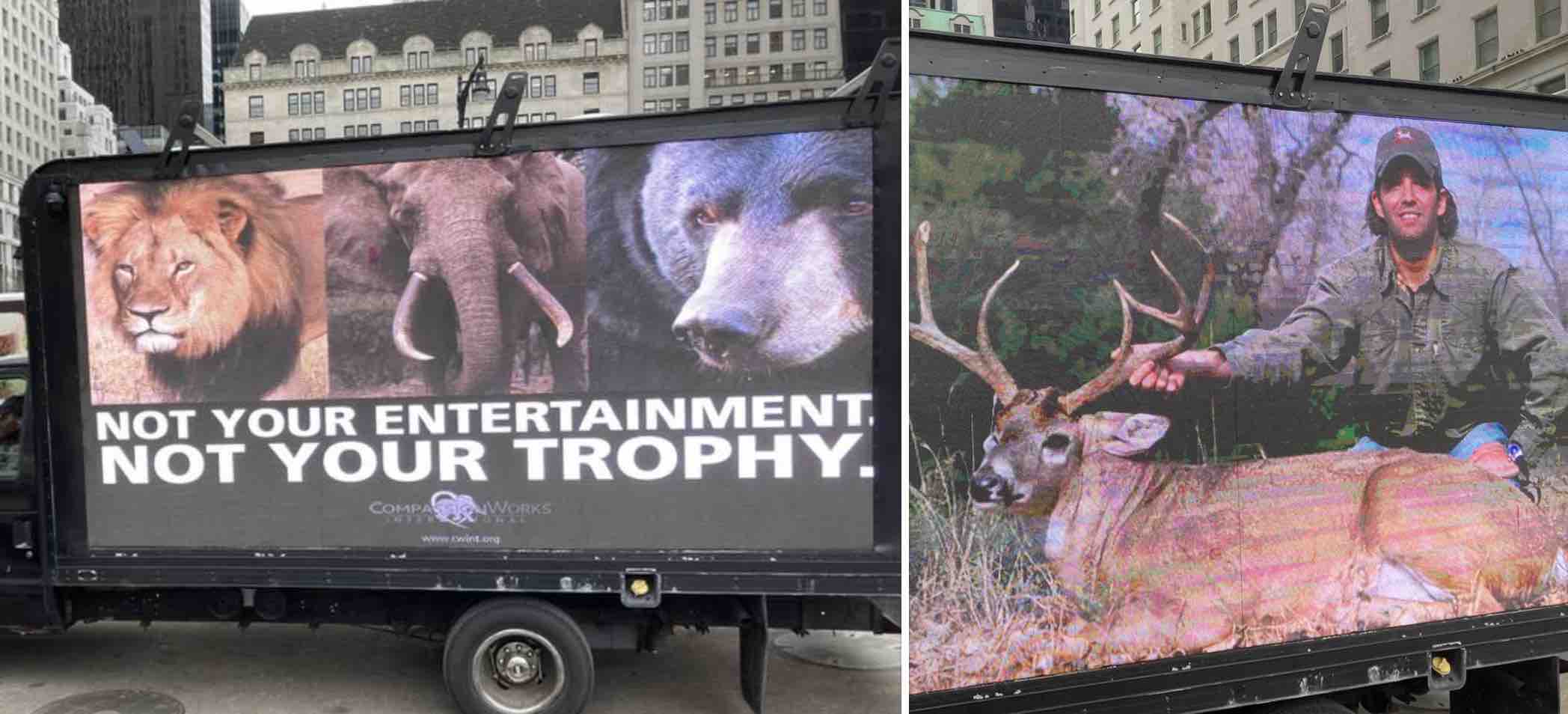
In NYC, organizers rented a mobile billboard that projected images of trophy hunters, including the Trumps, and played a wrap song called Hunter! Listen up by Entyce.The song is featured in TheirTurn’s video about the NYC rally.
As part of the Worldwide Rally Against Trophy Hunting (WRATH), a mobile billboard driving through Midtown Manhattan displayed images of trophy hunters and their victims
After protesting and staging a die in inside of Trump Tower, the activists exited the building and conducted educational outreach with tourists in the bustling midtown neighborhood. While most of the pedestrians who acknowledged the rally were supportive, some Trump supporters and hunters taunted the activists.
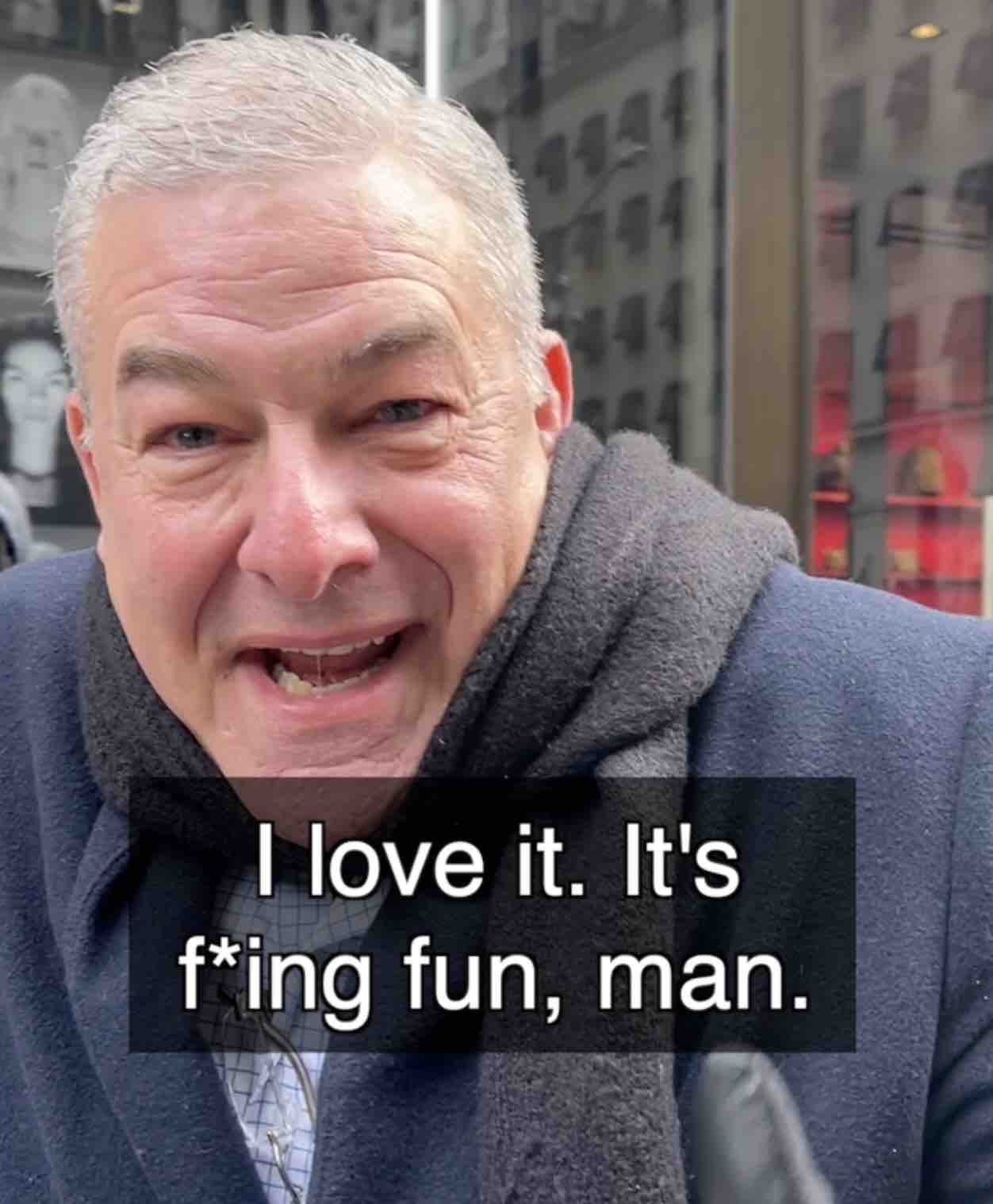
In an apparent effort to taunt WRATH participants, a pedestrian repeatedly stated that hunting is fun and encouraged protesters to try it.
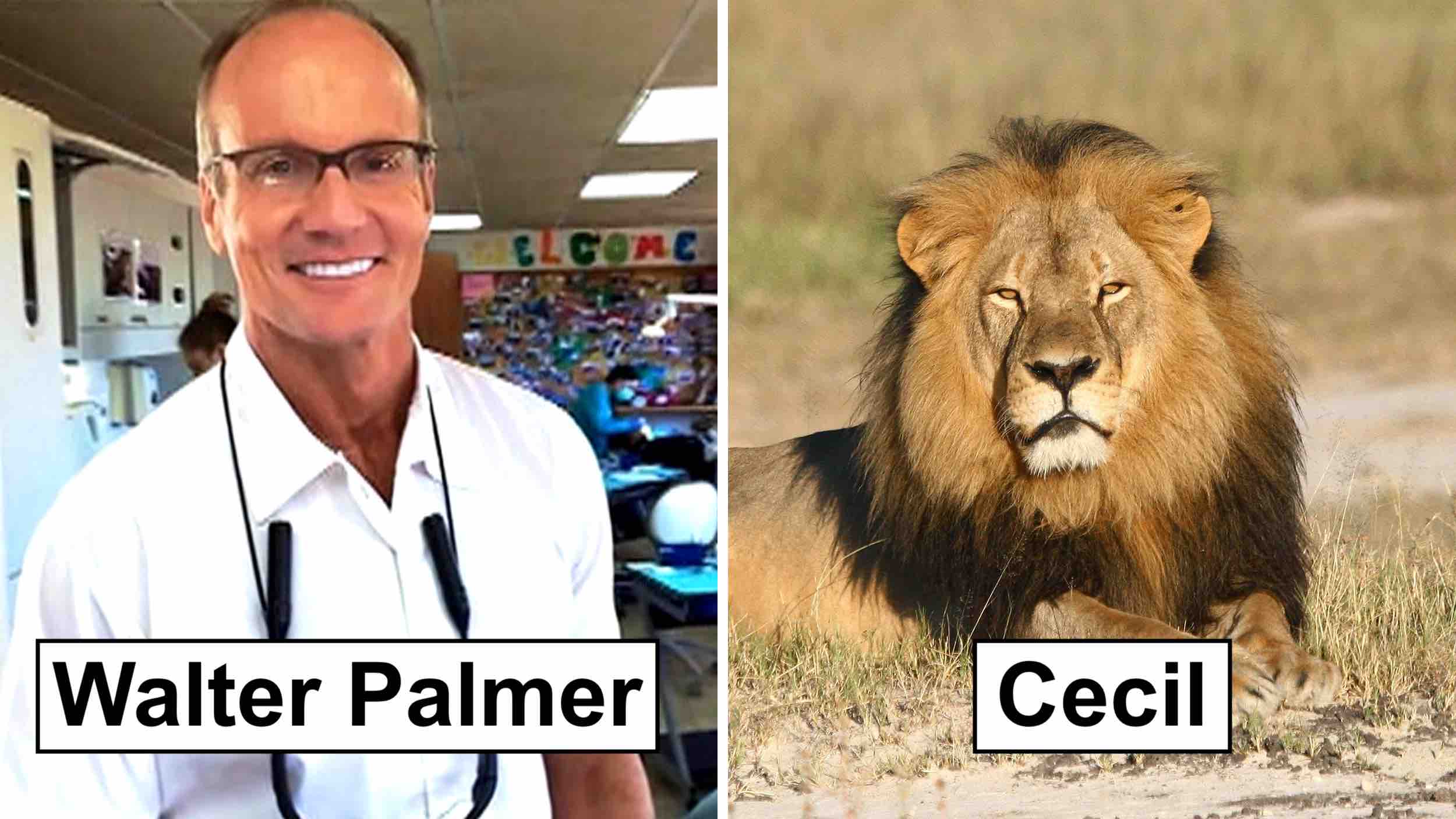
In 2015, anti-trophy hunting sentiment moved into the mainstream when Cecil, a beloved lion in Zimbabwe, was shot and killed by Walter Palmer, a big game hunter from Minnesota. The killing of Cecil, which was widely reported in mainstream media outlets, led U.S. Fish and Wildlife to add lions in Africa and India to the endangered species list, making it more difficult for Americans to partake in lion hunting.
Walter Palmer, a trophy hunter from Minnesota, killed and beheaded Cecil, a beloved lion in Zimbabwe.
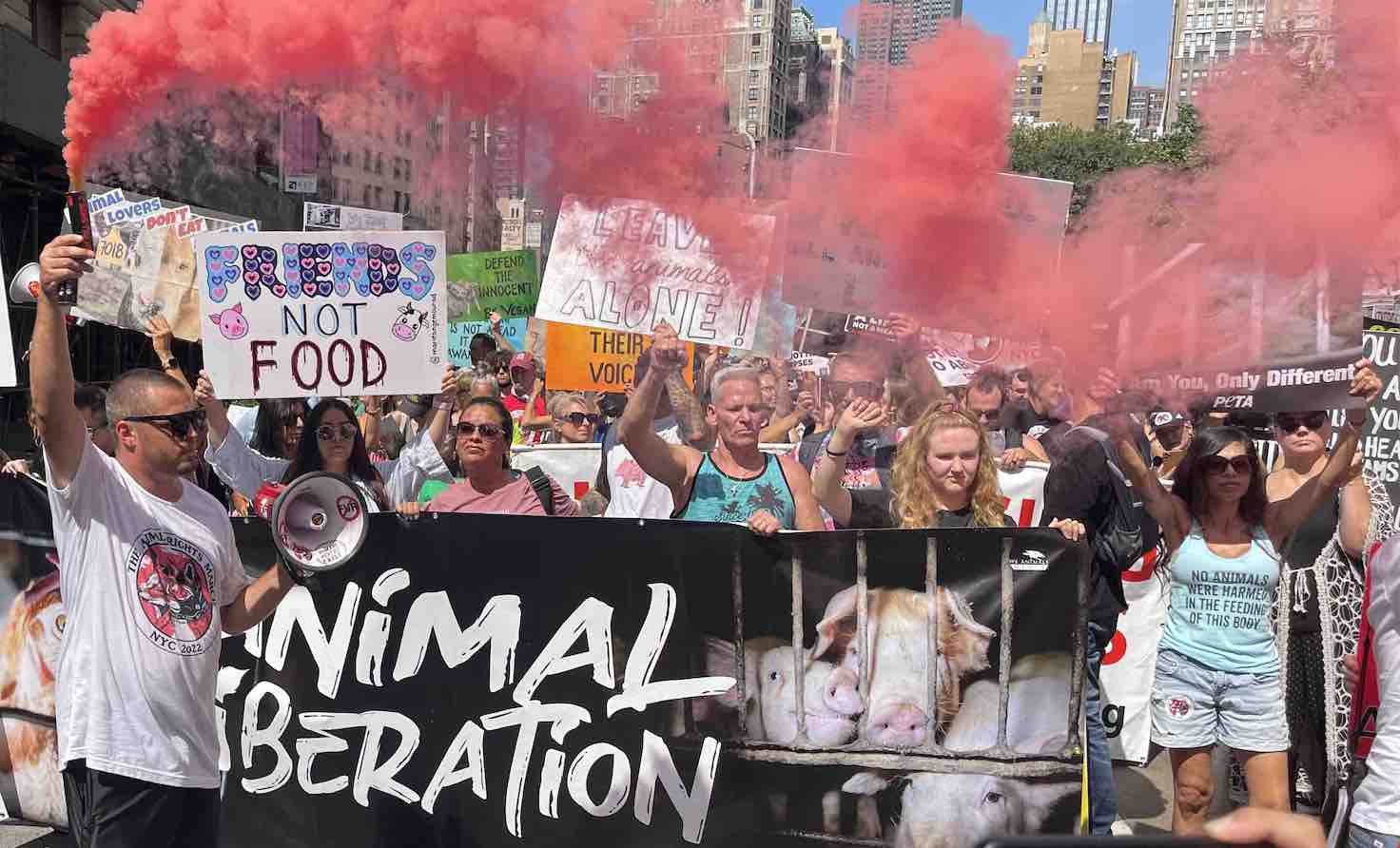
During the 2022 Animal Rights March in New York City, we asked 11 participants what made them go vegan. Here’s what they said:
While millions of people, including those featured in this video, go vegan for ethical reasons, others make the switch to a plant-based diet to improve their health or to protect the planet. Animal agriculture is not only one of the largest greenhouse gas emitters, but it is also a leading cause of deforestation, species extinction, ocean dead zones, antibiotic resistance and zoonotic disease outbreaks, such as avian flu and swine flu.
Animal rights activists from New York, the surrounding states and Canada participate in the 2022 Animal Rights March, which took place on August 27, 2022
If you are interested in learning more about making the switch to a plant-based diet, please order a free Vegan Starter Kit from PETA.
PETA’s vegan start kit helps people transition to a plant-based diet
Dozens of animal rights activists with Animal Cruelty Exposure Fund and PETA staged three days of protests at Madison Square Garden as spectators entered the annual bull riding show hosted by the Professional Bull Riders (PBR). While some of the PBR fans took a handout explaining why bull riding is inhumane, most of them either ignored or taunted the activists, encouraging them to “get a job” and “eat steak.” According to the protesters, none of them defended bull riding by stating that the bulls are treated well or that the practice is humane.
“The bulls are stuffed into trailers, hauled around the country and provoked with cattle prods, flank straps and spurs to get them to buck,” said Nora Constance Marino, President of Animal Cruelty Exposure Fund (ACEF), a New York-based animal rights organization. “If they want to partake in bull riding, they can use mechanical bulls.”
According to PETA, animals used in rodeo events, including bull riding, “commonly sustain broken bones, punctured lungs, snapped necks, or torn muscles, and they sometimes die in an arena. Anyone who cares about animals should avoid these spectacles of suffering.”
Bull riders provoke bulls into bucking with cattle prods, flank straps and spurs
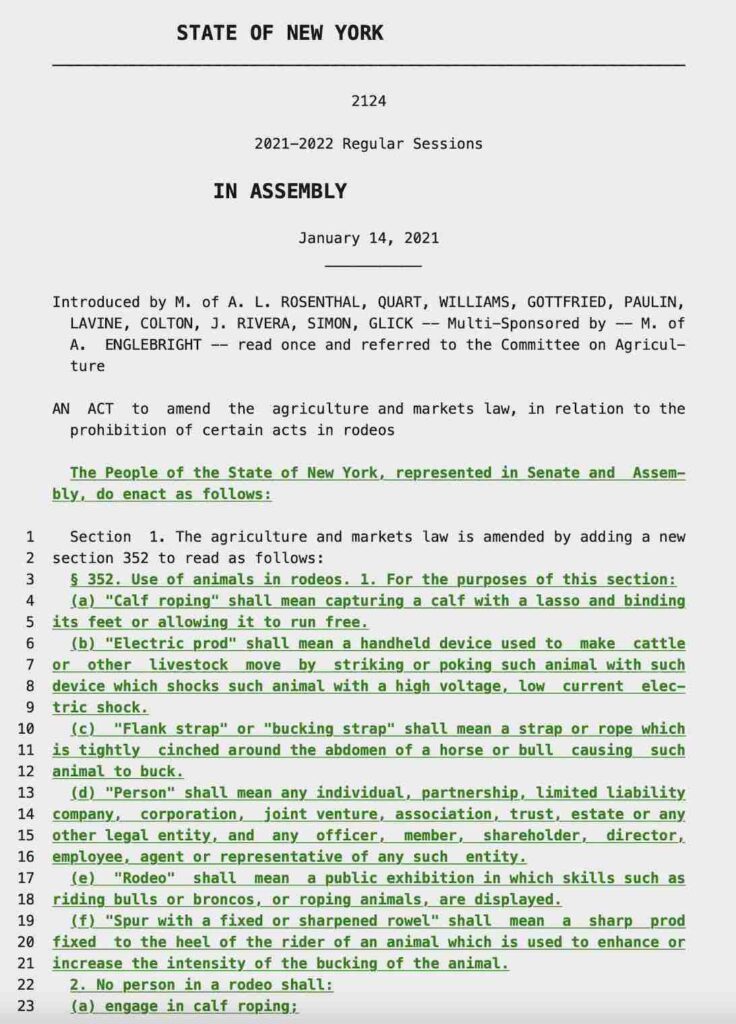
ACEF, PETA and other local animal rights groups have been protesting the annual bull riding show at Madison Square Garden for at least ten years. In 2021, their efforts were bolstered by New York State Assembly Member Linda Rosenthal, who introduced legislation that would prevent bull riding from taking place in the state by banning the tools that bull riders use to make the animals buck. The bill is pending in the legislature’s agriculture committee.
In 2021, NY State Assembly Member Linda Rosenthal introduced legislation that would end bull fighting in the state by banning the tools used to provoke the bulls into bucking (click photo to see legislation)
In addition to demonstrating at the bull riding events, NYC activists have staged six anti-rodeo protests at the Manhattan home of Andrew Lustgarten, the CEO of Madison Square Garden. Based on feedback from his neighbors, the activists speculate that the protests led him to move out of his luxury condominium on Manhattan’s Upper East Side.
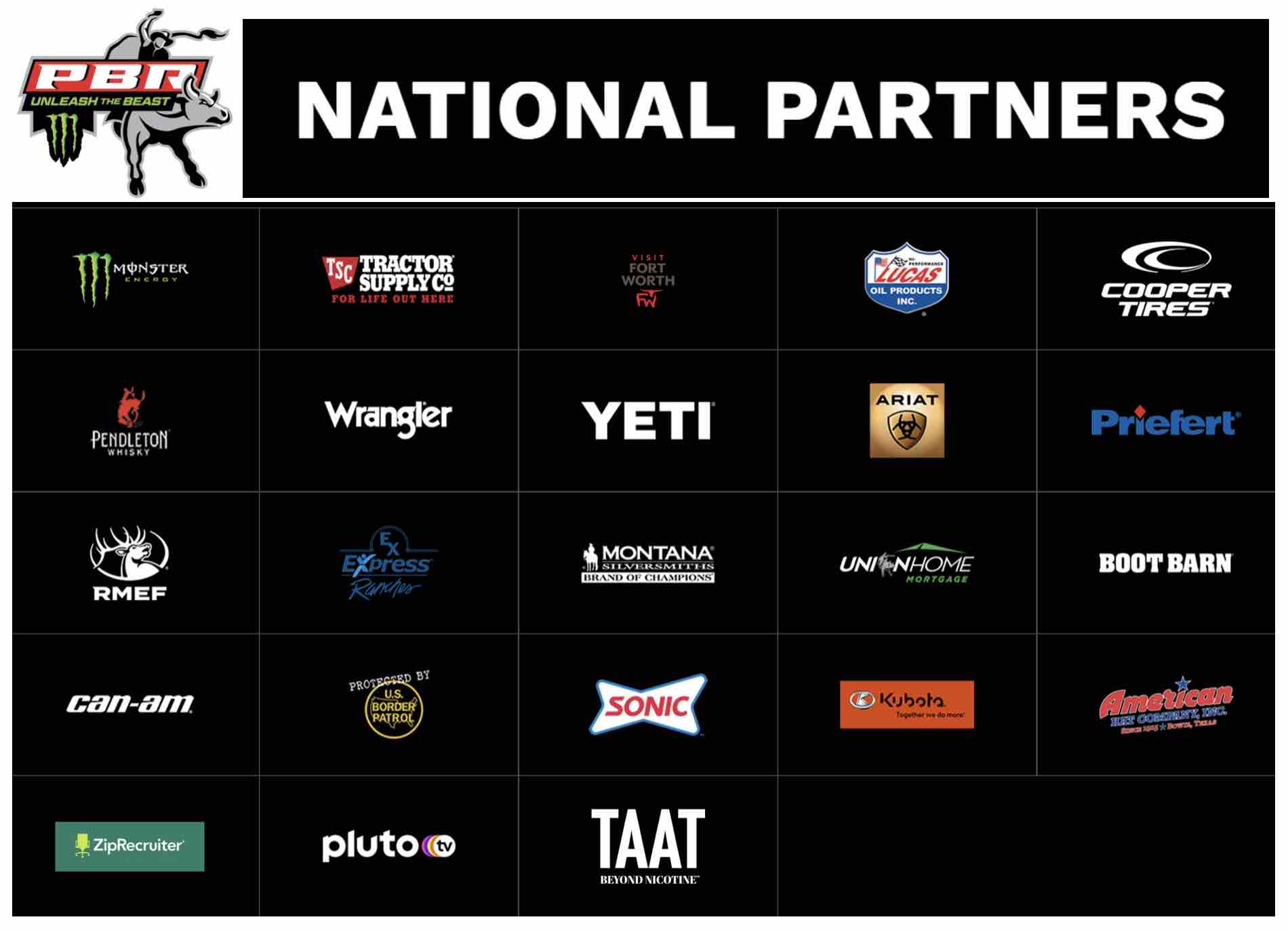
The PBR is sponsored by several national corporations. Its largest sponsor is Monster, the energy drink company.
After claiming for over 2.5 years that the Humane Society of New York (HSNY) has been closed to the public due to COVID, the Executive Director of the prominent animal shelter and vet clinic, Sandra DeFeo, has posted a public statement announcing renovations to the lobby that will enable the building to reopen “in 2023.” In 2018, a client of the HSNY’s vet clinic sued the organization because the building is not wheelchair accessible under Americans with Disabilities Act (ADA) guidelines. In talks with shelter animal advocates who have been calling on DeFeo to send the HSNY’s animals to shelters that are open to adopters or to foster homes, DeFeo claimed that the ADA issues had been settled and were unrelated to the ongoing closure of the building.
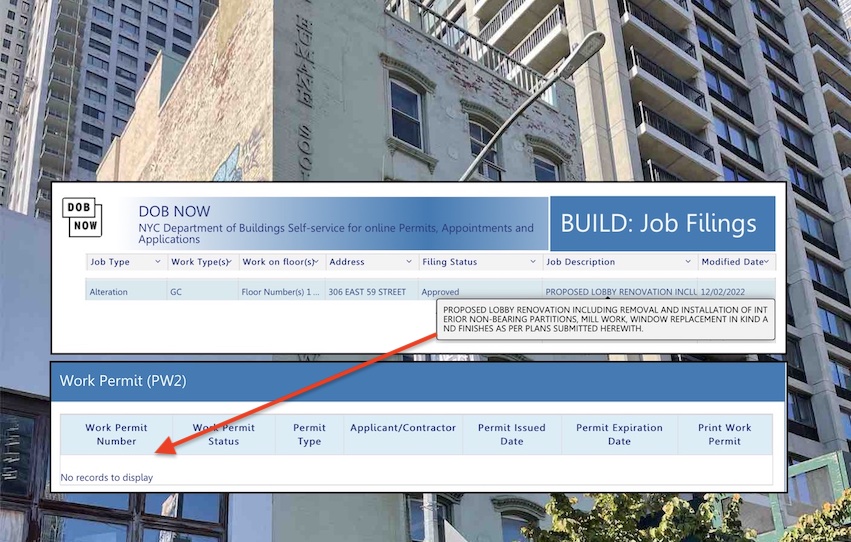
The Humane Society of New York claims to have begun renovating the lobby in order to make it ADA compliant despite not yet having received a work permit from the NYC Department of Buildings
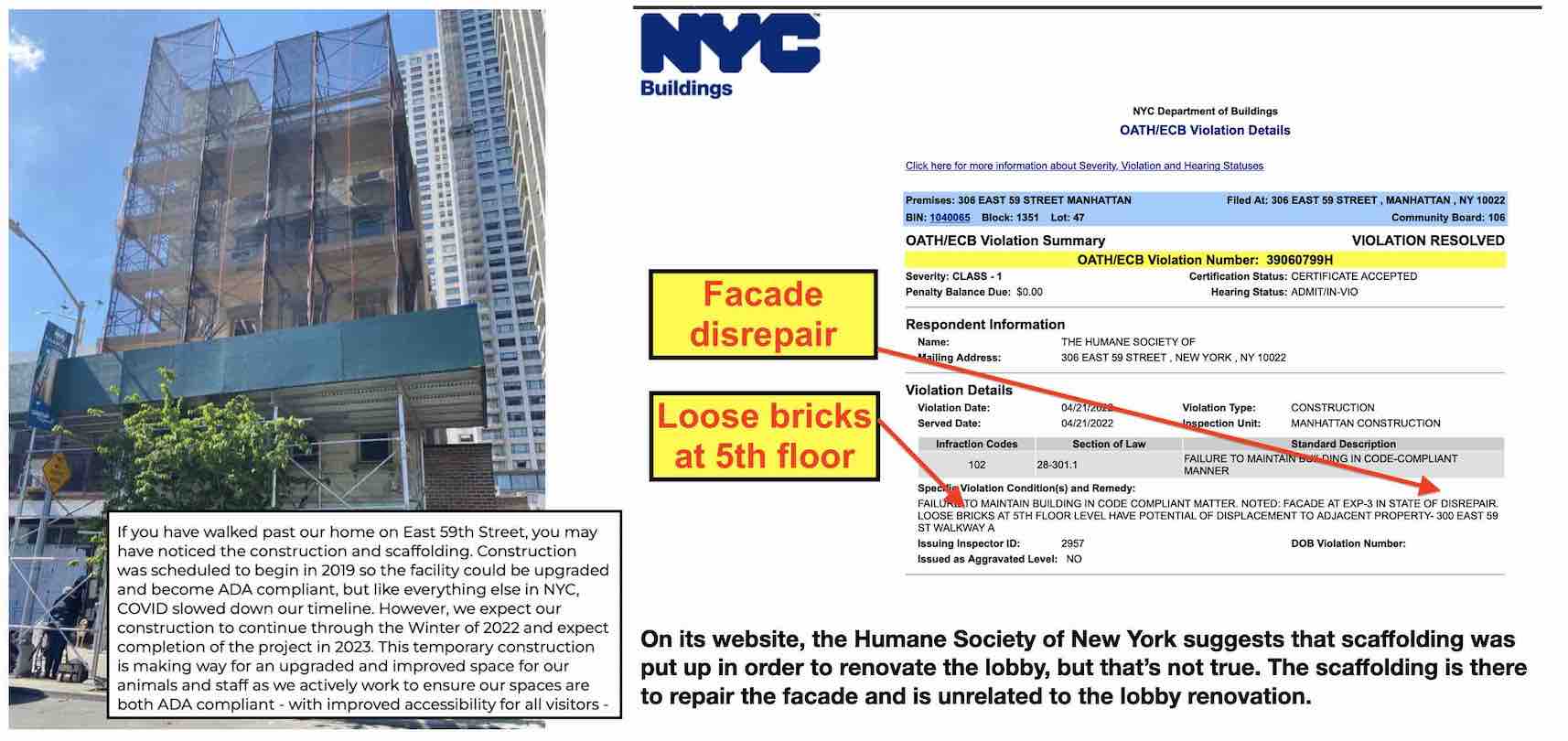
While the lobby renovations have not yet begun, DeFeo, in her statement, uses a photo of the HSNY’s scaffolded building to suggest that they have. The exterior scaffolding was erected to facilitate repairs to the facade and is unrelated to the interior lobby renovation needed to make the building ADA compliant. As of December 7th, the NYC Department of Buildings has not yet issued the HSNY with a work permit to make the lobby renovations that DeFeo claims are already underway.
On its website, the Humane Society of New York suggests that scaffolding was erected in order to renovate the lobby, but that’s not true. The scaffolding is there solely to repair the facade.
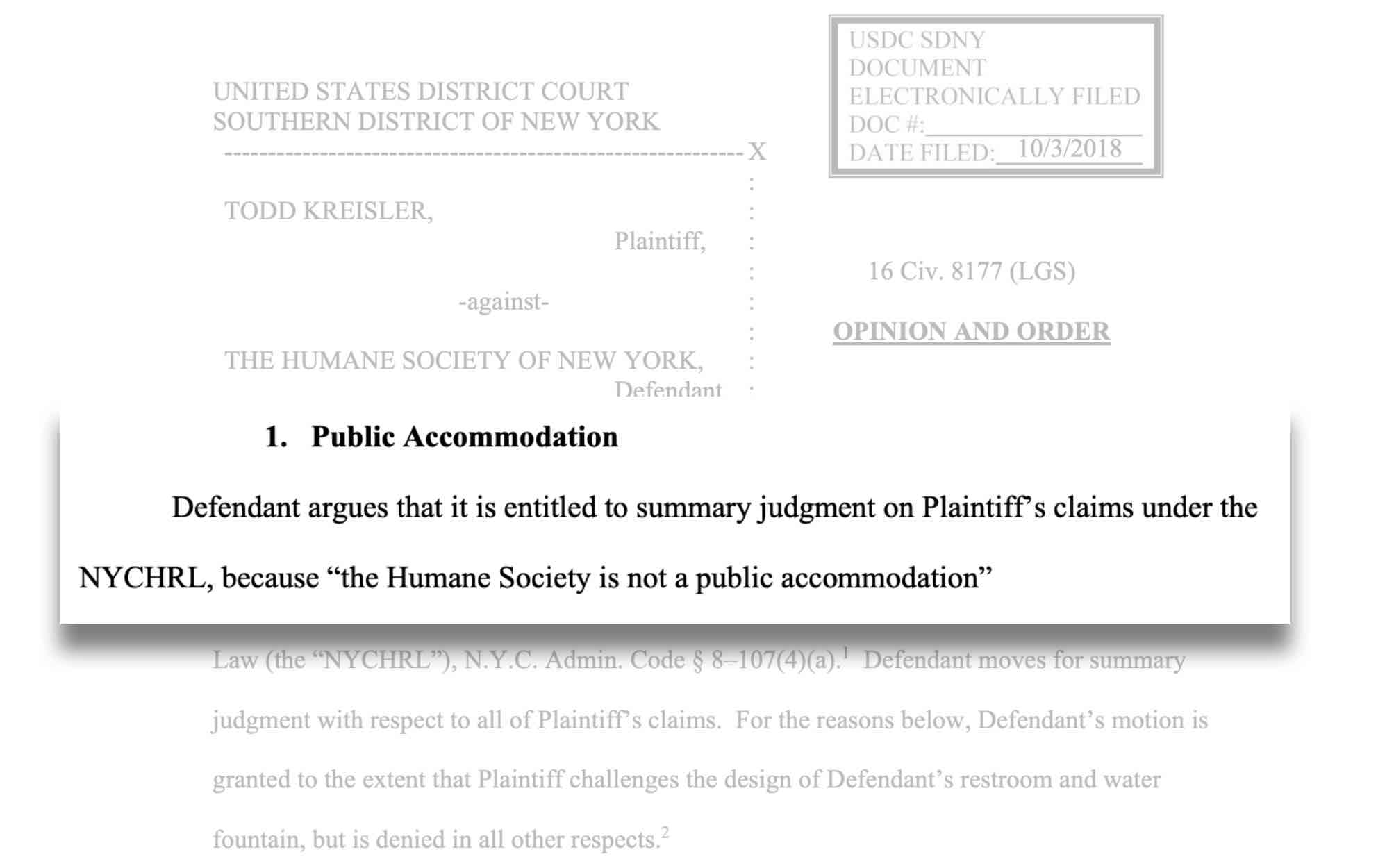
In her statement, DeFeo also claims that she intended to begin the lobby renovations in 2019 and attributes the delay to COVID. A search of the Department of Buildings public database, however, shows no building permit applications in 2019. In addition, a 2018 court filing about the ADA lawsuit shows that the HSNY argued against renovating the building to make it wheelchair accessible.
The Executive Director of the Humane Society of New York, Sandra DeFeo, claims that she planned to renovate the lobby in 2019, but that contradicts 2018 court documents demonstrating her opposition to the renovations
Bonnie Tischler, the former Adoption Director of 22 years who retired in 2020, says that, in 2019, DeFeo made no mention of making the building ADA compliant and that DeFeo told her in 2021 that the ADA lawsuit was settled and that the building was closed due to COVID. “Sandra [DeFeo] had no intention of making the ADA renovations and was planning to keep members of the public out of the building indefinitely. She’s only moving forward with the renovations now — four years later — because of the negative spotlight cast by the protests.”
DeFeo states that she expects “completion of the project in 2023.” However, without a permit and with widespread construction delays due to labor shortages and supply chain issues, she has no way of knowing when construction will be completed.
Animal rights activists became aware that animals were being warehoused at the Humane Society of New York in July 2021 when a whistleblower sent a letter to a prominent shelter advocate informing her that adoptions had come to a virtual standstill 15 months earlier and that DeFeo was keeping the building closed to the public under false pretenses. After conducting an investigation which corroborated the allegations, Donny Moss of TheirTurn and other animal rights activists began calling on the HSNY to send the animals in its adoption center to shelters that are open to the public or to foster homes, where they could live outside of a cage with a family and where adopters could meet them. During a call with Moss in August 2021, DeFeo claimed that adoptions were taking place and that the animals are fine in their “apartments,” a term that DeFeo routinely uses to describe shelter cages. When asked why she wouldn’t send animals to foster homes so that they’re not living in cages, she said that the HSNY “is their foster home.”
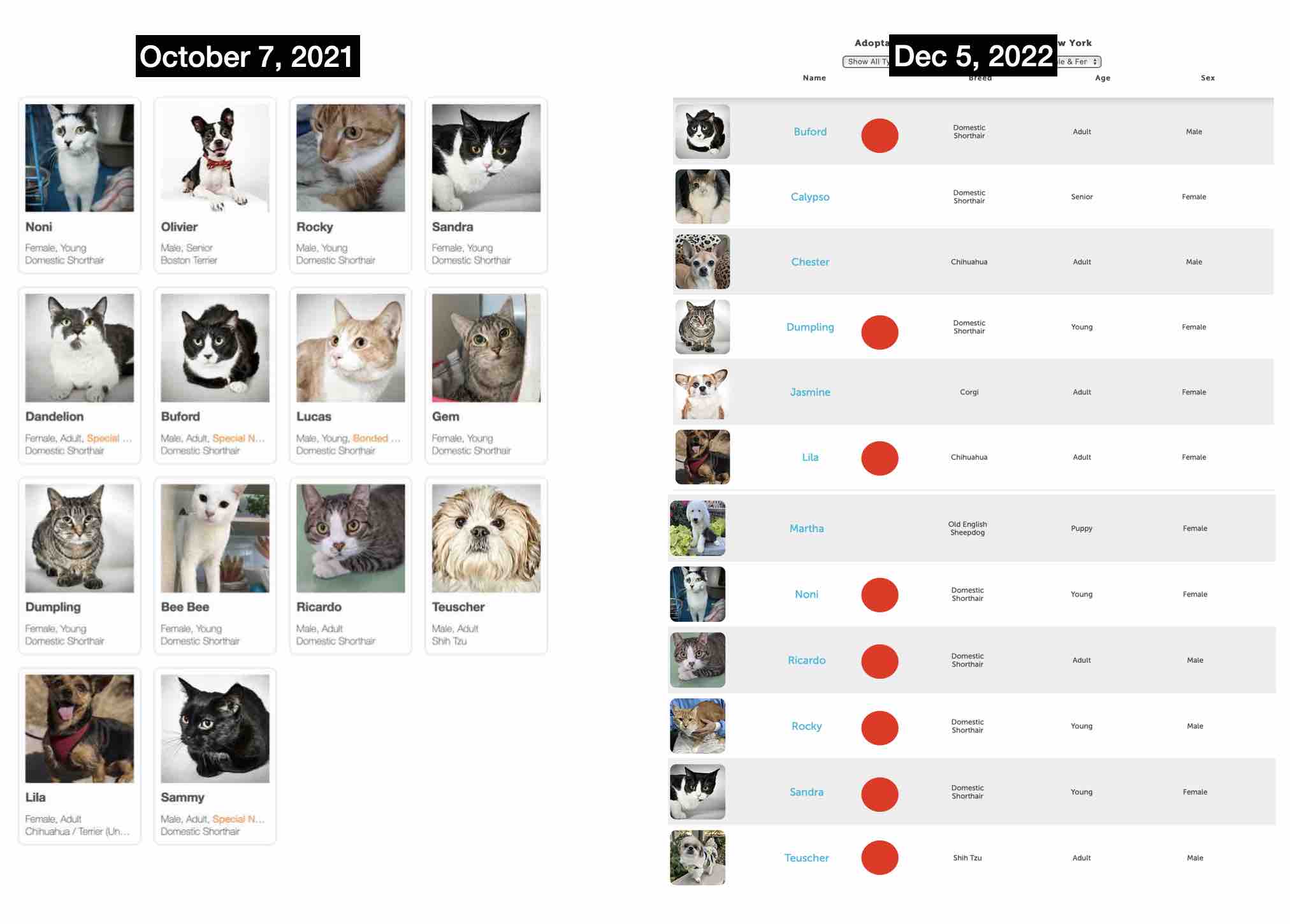
Eight of the 14 animals listed on the Humane Society of New York’s adoption page in October 2021 were still posted in December 2022 — 14 months later. The Humane Society says that it posts “just a few” of their animals online. With the building closed to the public, adopters have no way of knowing that the other animals in need of a home even exist.
In December 2021, Tischler sent letters and/or emails to all of the HSNY’s board members, many of whom she knew well from having worked there for so long, to sound the alarm about the warehousing of animals and to ask them to intervene. Of the 15 board members she contacted, two responded and agreed to speak to her. During the calls, Tischler told them the activists would stop protesting the HSNY if the board provided her with proof that “adoptions have continued” since the building was closed to the public, as DeFeo was claiming. The board members agreed, but within two weeks, they resigned without providing the information. Tischler suspects that the adoption numbers were so low that DeFeo refused to share the data with them.
In a one month period in 2021, three board members resigned amid the controversy, but their departures, Tischler said, “did nothing to help the animals who were warehoused on their watch and who they left behind when they quit.”
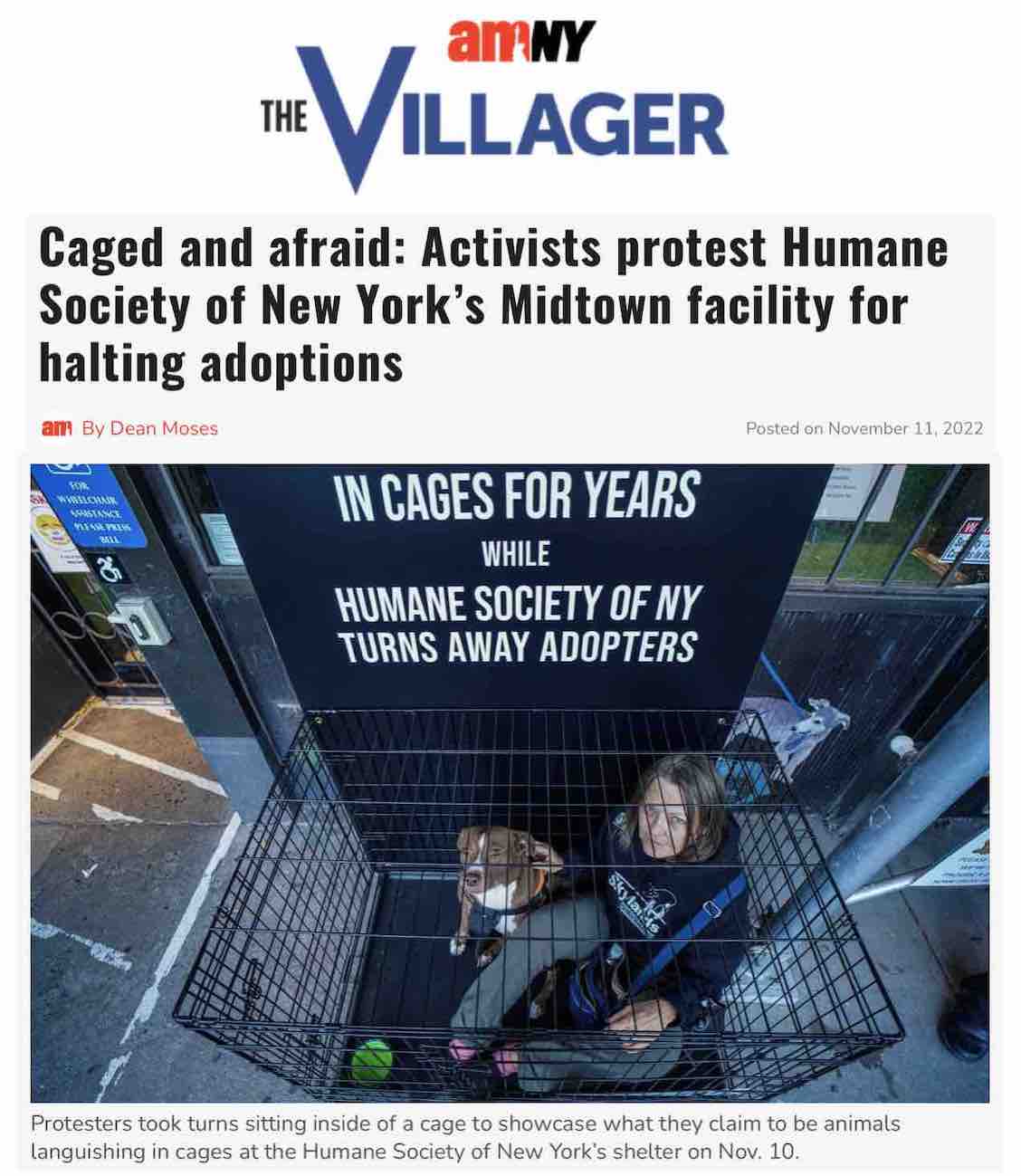
AM New York, a daily newspaper in New York City, published a story about the campaign to help the cats and dogs being warehoused at the Humane Society of New York
In July 2022, the activists escalated their efforts on behalf of the shelter animals by disrupting Broadway Barks, an annual star-studded animal adoption event in the theater district. When Bill Berloni, an animal trainer with the Humane Society of New York, took the stage, activists pulled out posters and chanted “Stop The Hoarding” on bullhorns to draw attention to the plight of the animals. Bernadette Peters, the host of Broadway Barks, attempted to discredit and marginalize the activists by claiming that the HSNY is open to the public. Twice she said, “Anybody can take a tour of the Humane Society.” Berloni, who remained on stage during the protest, did not correct her. The following day, Christina Fritz, a vet clinic client who has been critical of the the organization’s refusal to allow clients and adopters into the building, called DeFeo to ask for a tour, referencing Bernadette Peters “anybody can take a tour” remark. In response, DeFeo said, “That’s not correct. I don’t know why she might have said that.” An audio recording of that exchange is included in the following video:
In the statement on the Humane Society’s homepage, DeFeo claims that the HSNY has facilitated about 160 adoptions since she closed the building to the public in March 2020. If true, that represents an average of about one animal per week, “an abysmal number,” says Tischler “for a large, prominent shelter in a busy and wealthy residential neighborhood that raises millions of dollars each year in donations.” Tischler and the other activists believe that the average number of weekly adoptions has been significantly lower than one.
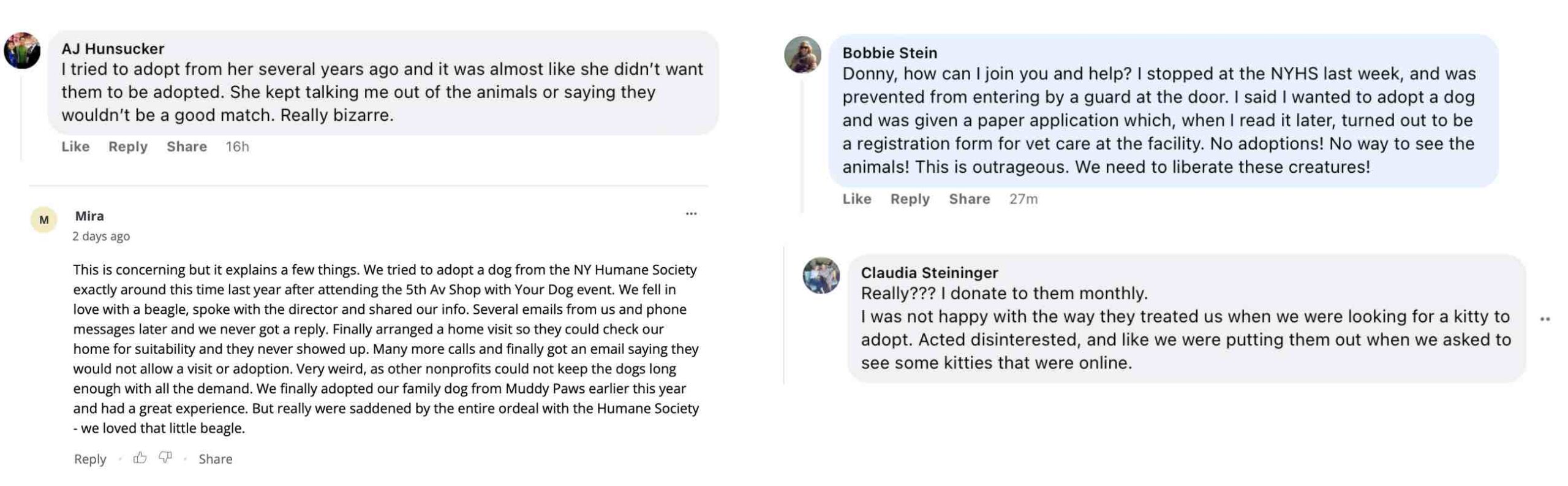
Testimonials posted online about failed attempts to adopt animals from the Humane Society of New York
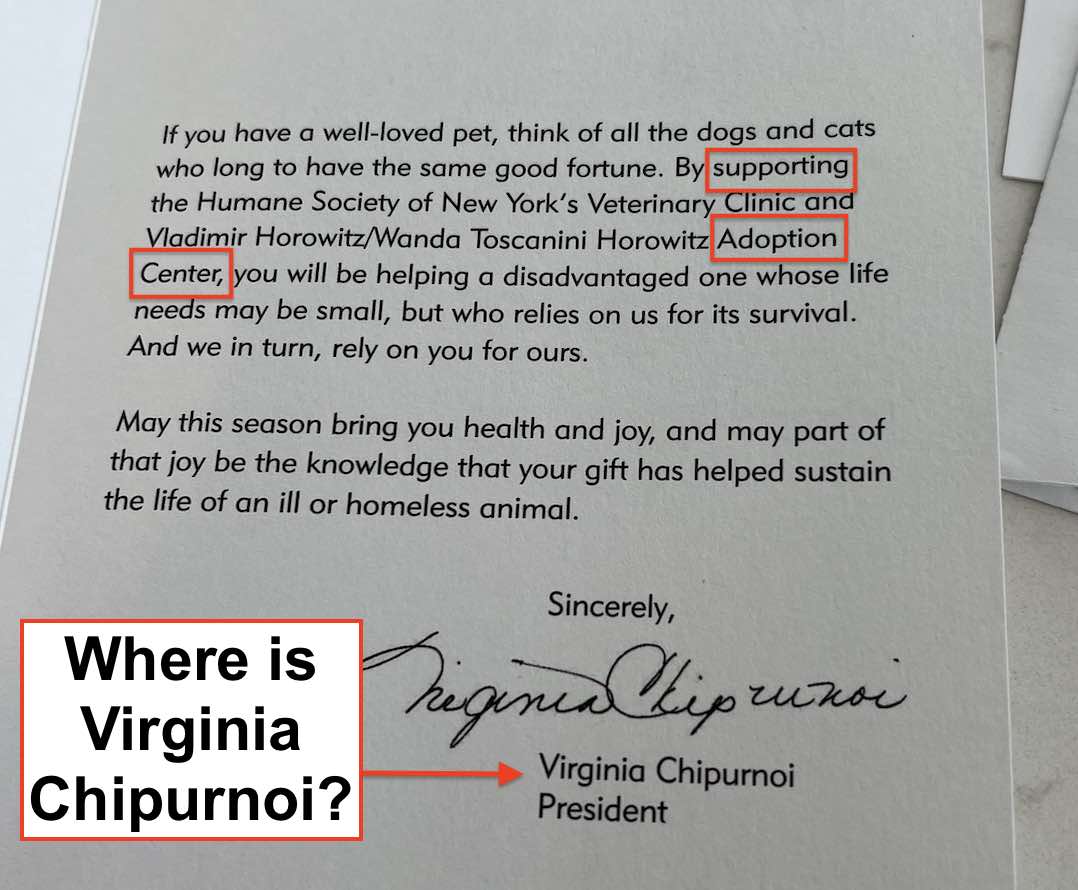
In early December, the HSNY sent out its annual holiday fundraising letter soliciting donations for its adoption center and vet clinic. The letter is signed by Virginia Chipurnoi, the President of the Board. Tischler and other former HSNY employees believe that Chipurnoi, who is 88 years old, isn’t aware of the letter because she was showing signs of dementia four years ago. In 2021 and 2022, several people who had personal relationships with Chipurnoi sent her emails and texts in an effort to discuss the concerns raised by the activists. She didn’t respond to any of them. “It’s a perfect storm for the animals,” said Tischler. “You have an unsupervised Executive Director who believes that cages are ‘apartments’ who is running an adoption center that’s closed to adopters.”
The Humane Society of New York solicits contributions for its adoption center even though it has been closed to the public for over 2.5 years and adoptions have come to a virtual standstill
Activists say that DeFeo’s decision to renovate the lobby instead of keeping the building closed to the public indefinitely is one of several ways they know they’re making a positive impact. DeFeo has also begun to promote adoptions more routinely and to allow vet clinic clients into the lobby, despite the legal risk. Whether or not these changes help the animals who have been stuck in cages for 2.5 years or longer remains to be seen.
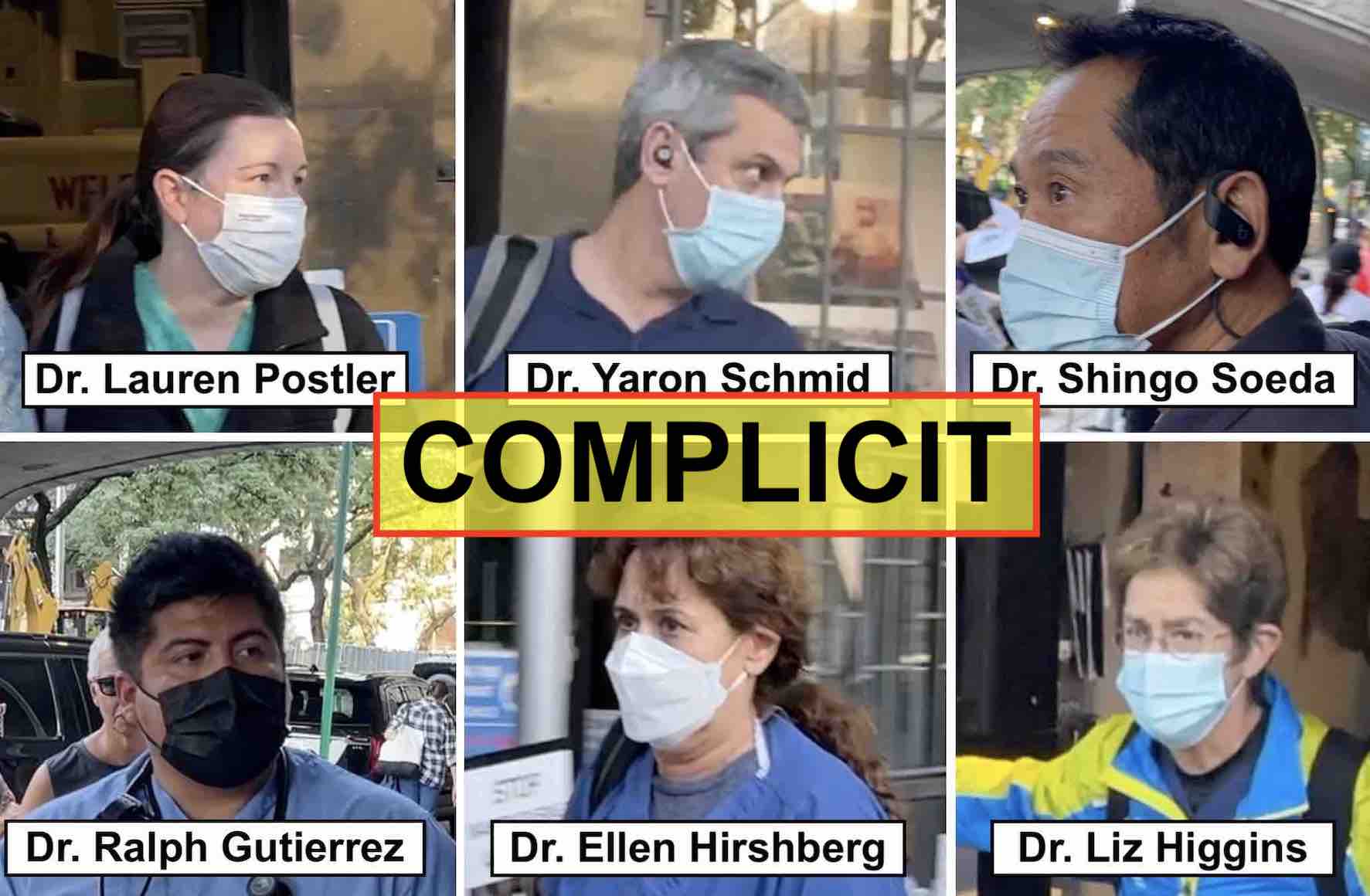
For their part, the activists, whose efforts continue to be validated by people who share accounts of failed efforts to adopt from the shelter, will continue to call on Sandra DeFeo and the six veterinarians who work in the HSNY’s clinic to send the animals to shelters that are open to adopters or to foster homes. The veterinarians, Drs. Yaron Schmid, Shingo Soeda, Lauren Postler, Ralph Gutierrez, Liz Higgins and Ellen Hirshberg, have ignored the activists pleas to intervene on behalf of the animals who are being warehoused on their watch.
Shelter advocates say that the veterinarians who work in the Humane Society of New York’s clinic are turning a blind eye to the warehousing of animals in the organization’s adoption center. (From left to right: Lauren Postler, Yaron Schmid, Shingo Soeda, Ralph Gutierrez, Ellen Hirshberg and Liz Higgins)
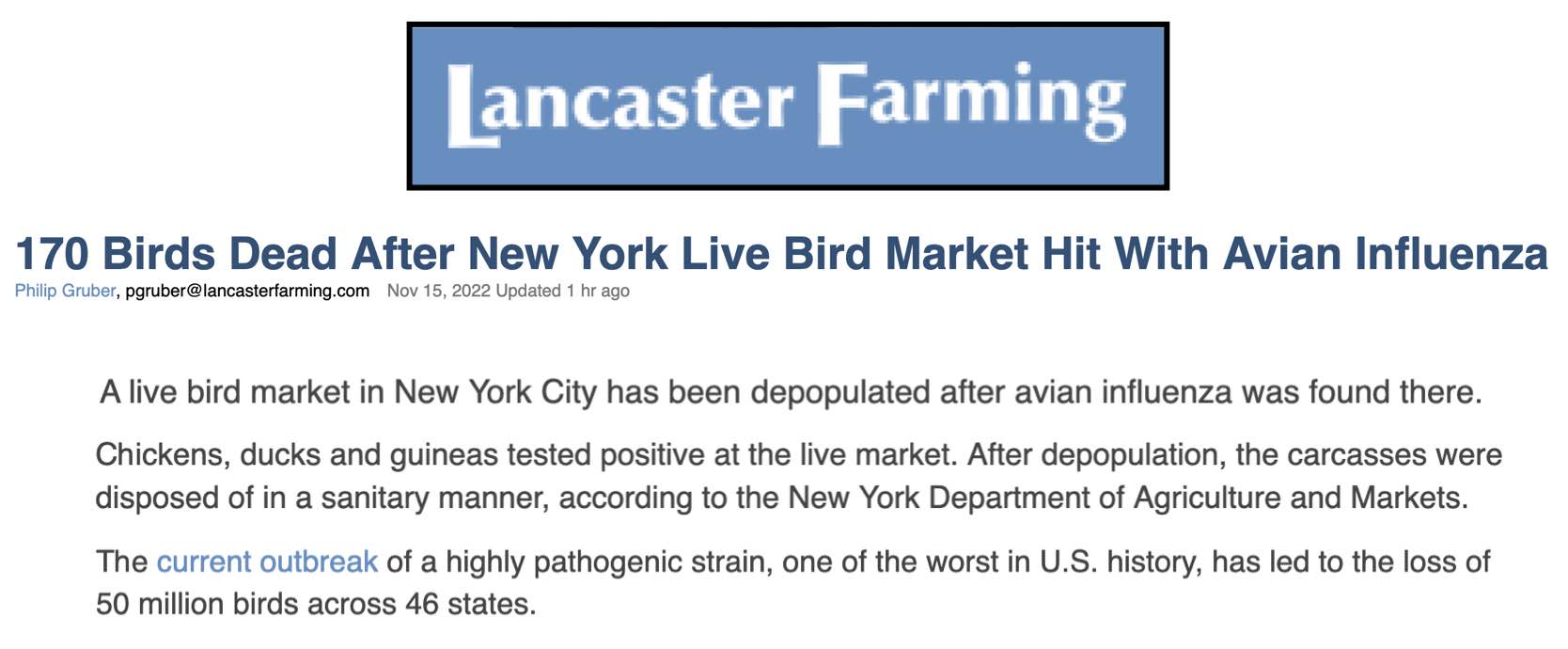
In a letter to the New York State Department of Agriculture & Markets, local and national animal protection organizations are calling on Commissioner Richard Ball to suspend operations at the 87 live animal markets across the state that sell live animals to the public and slaughter them on the premises. The calls come amid an avian flu outbreak at a Queens live poultry market that led to the temporary closure of 34 similar markets in New York and New Jersey. Approximately 170 birds were killed in the Queens facility where the flu was found.
In the letter, the advocacy groups urge Commissioner Ball to “cease operations” at the markets in order to prevent “the next pandemic” from originating in one of them. COVID, the advocates note, was transmitted from animals to humans in a live market in China and spread throughout China before health authorities were even aware of it. Like the live markets in China, many of those in New York City are located in densely populated neighborhoods, where a virus could rapidly spread before being detected.
Lancaster Farming was the first media outlet to report on the outbreak of avian flu in a New York City live poultry market
While the current strain of avian flu is not easily transmitted from birds to humans or among humans, some cases have resulted in “severe disease that resulted in death,” according to the CDC. Young children and infants are at higher risk. Scientists are concerned that a mutation in the virus could create a pathogen that could sicken and kill humans in far greater numbers. According to infectious disease experts, live poultry markets, which house multiple species of birds, are a breeding ground for mutations.
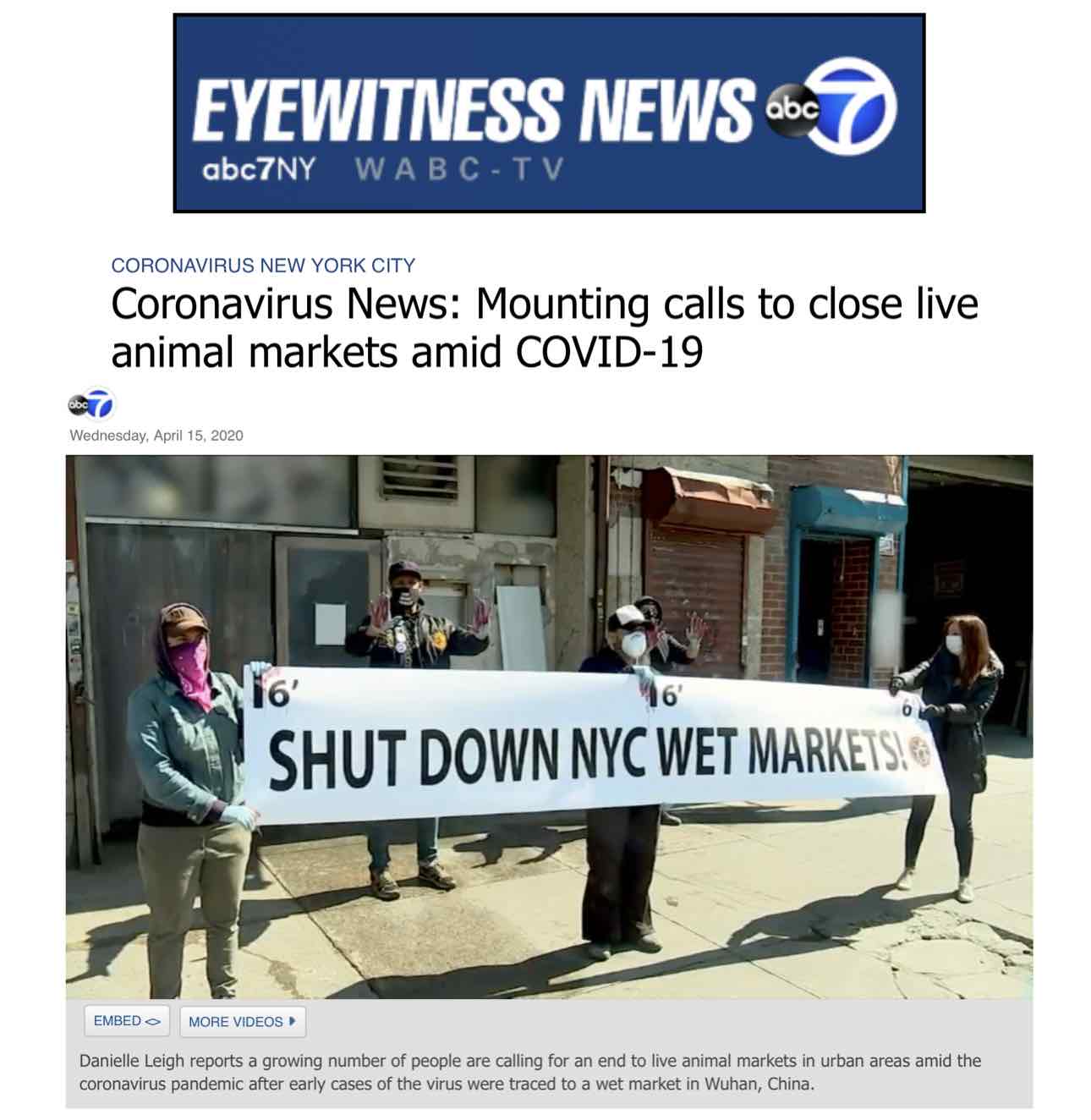
When COVID-19 reached New York, mainstream media outlets reported on the ongoing efforts of the advocacy group Slaughter Free NYC to shut down the City’s 80+ live animal markets
Professor KF Shortridge, a microbiologist at the University of Hong Kong who studied a 2005 avian flu outbreak that originated in Hong Kong, describes live bird markets as an “avian influenza melting pot.”
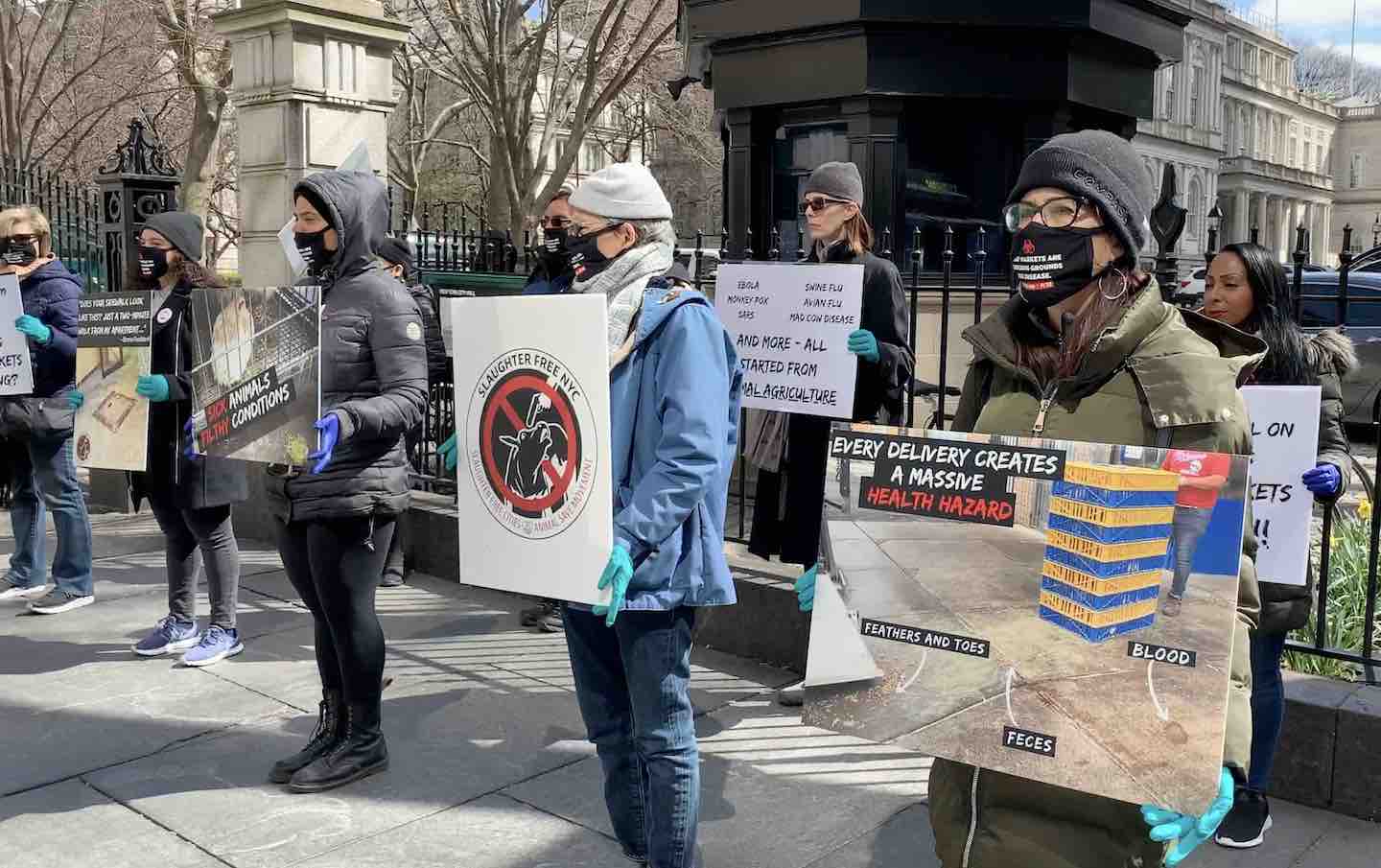
Over 80 markets in New York State sell and slaughter live animals. The storefront slaughterhouses are open to the public
In April 2022, parents of New York City public school children sent a letter to Governor Kathy Hochul and NYC Mayor Eric Adams asking them to suspend the operation of live animal market due to an avian flu outbreak elsewhere in New York state. In the letter, Brooklyn resident Irma Labiosa expressed particular concern about the close proximity of a live animal market to her son’s elementary school. “The sidewalk in front of the live animal market next to my son’s school is often contaminated with chicken feces and blood,” said Ms. Labiosa, who signed the letter to Mayor Adams and Governor Hochul. “He could be tracking this waste into his classroom, onto the subway and into our home.”
Calls to suspend operations at live animal markets began in 2018 when public health and animal rights activists with the advocacy group Slaughter Free NYC began conducting educational outreach about the health risks in front of markets in Manhattan, Brooklyn and Queens. Despite the fact that the outbreak of COVID lent credence to Slaughter Free NYC’s mission, New York designated the state’s live markets as “essential businesses” which could remain open during the statewide lockdown.
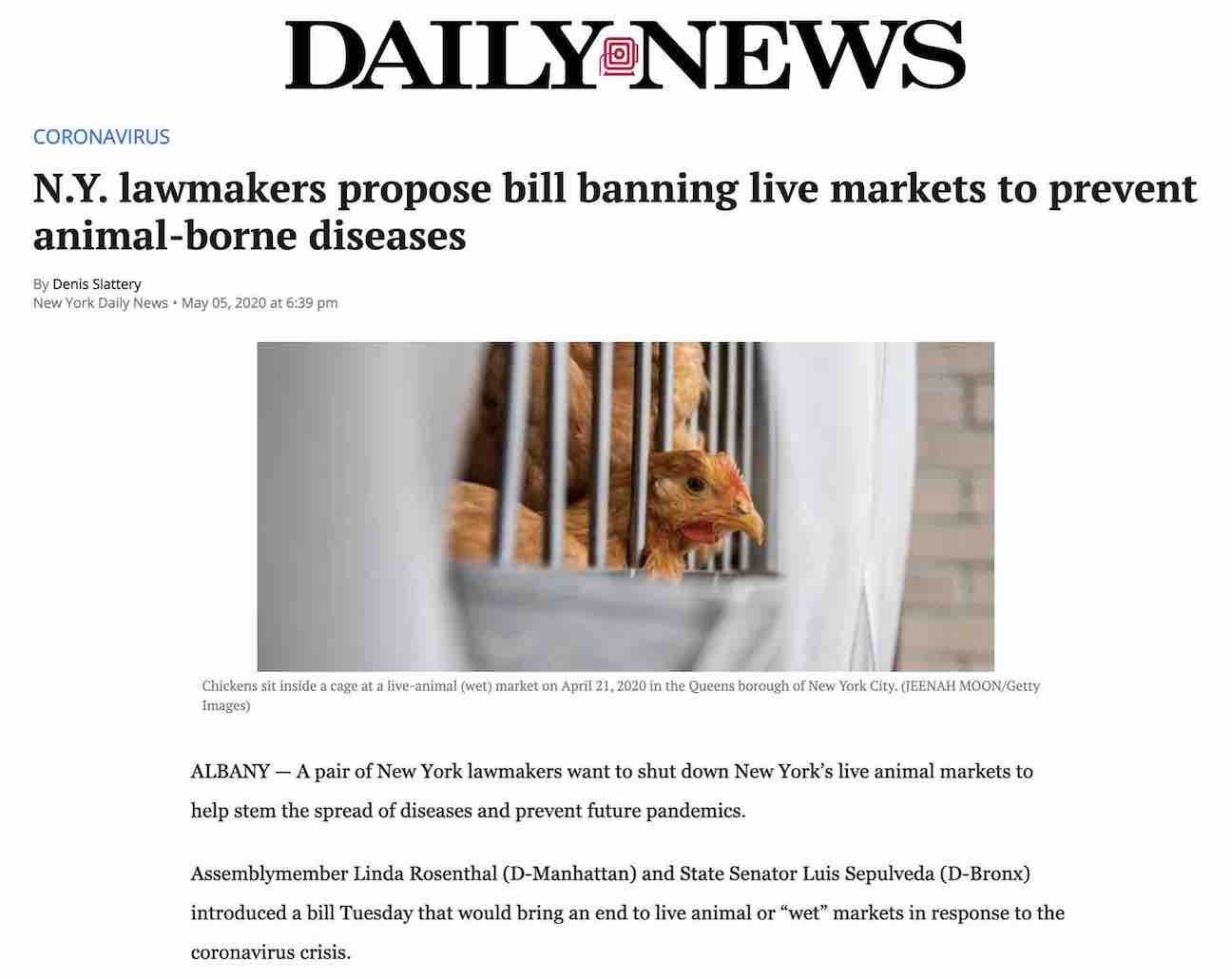
NY State Assembly Member Linda Rosenthal and Senator Luis Sepulveda introduced legislation in May 2020 to suspend the operation of live animal markets
Angered by the state’s failure to protect to the public health, NY State Assembly Member Linda Rosenthal and NY State Senator Luis Sepulveda introduced legislation to shutter the markets until a safety assessment could be conducted. “We should have learned after the COVID-19 pandemic struck and claimed millions of lives that live animal markets are breeding grounds for zoonotic diseases,” said Assembly Member Rosenthal. “When chickens, ducks, rabbits and other animals are kept in crowded cages and in unsanitary conditions, the risk of disease spread is great and the impact on public health can be tragic. As avian flu outbreaks proliferate around the world, as well as right here in New York City where dozens of live animal markets operate just steps from apartment buildings, schools and playgrounds, it is irresponsible to do nothing. It is time for swift action by the City and State to protect public health. I also look forward to passage of my bill, which would pause the operation of these live animal markets so the state can conduct a thorough evaluation of the safety of these markets.”
Amid COVID-19 outbreak, public health and animal rights activists are calling on New York City and State officials to shut down the approximately 80 live animal markets in NYC
In an April 2020 interview about COVID on Fox News, Dr. Anthony Fauci, the Director of the National Institute of Allergy and Infectious Disease, weighed in on the controversy surrounding live animal markets, stating, “I think they should shut down those things right away. It boggles my mind how, when we have so many diseases that emanate out of that unusual human/animal interface, that we don’t just shut it down. . . . I would like to see the rest of the world really lean with a lot of pressure on those countries that have that because what we’re going through right now is a direct result of that.” Fauci, the public face of the COVID pandemic, made no specific reference to the wet markets in the United States.