

Their Turn - The Social Justice Movement of Our Time Their Turn - The Social Justice Movement of Our Time

Holocaust Comparison Triggers Outrage

June 1, 2014 by Comments are off for this post


The News

A candidate for the Board of the Royal Society for The Prevention of Cruelty to Animals (RSPCA) in the U.K. triggered outrage when he compared factory farming to the Holocaust. The people who spoke out about the candidates’ remarks didn’t indicate that they disagree with them. They merely pointed out that the use “holocaust” is so inflammatory that it diminishes arguments made on behalf of animals suffering on factory farms.
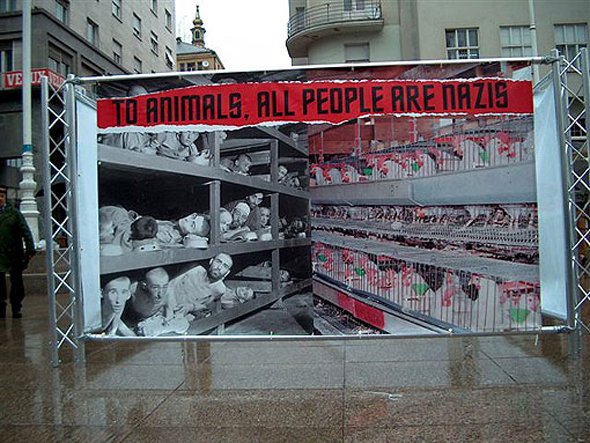
this-ad-for-petas-holocaust-on-your-plate-campaign-was-banned-by-germanys-high-court

News & Opinion

For many years, PETA has juxtaposed images of factory farm and concentration camps to raise awareness of the plight of farm animals. It’s an approach that resonated with me because that is what I think of when I see images of factory farms. However, I use that metaphor only when I think it will have the desired effect. For maximum impact, evaluate your audience before crafting your message.
PETA Campaign Linking Autism to Dairy Sparks Anger

May 30, 2014 by Comments are off for this post


The News

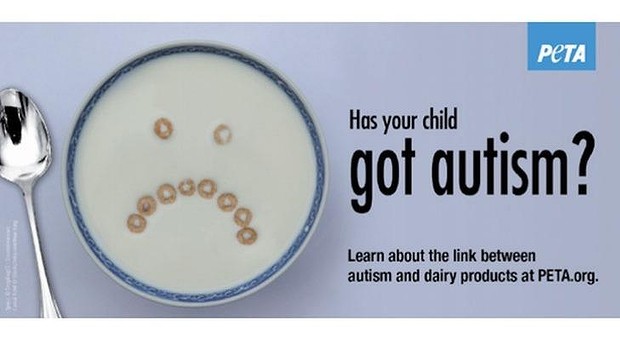
Using data from two controversial and small scientific studies, PETA has run a billboard ad campaign linking dairy consumption to autism. When PETA first ran the ad a few years ago, an uproar caused the billboard company to take it down. But the ad is running again, and PETA has more information about alleged link on its website.

got autism

News & Opinion

On its website, PETA states, “More research is needed, but scientific studies have shown that many autistic kids improve dramatically when put on a diet free of dairy foods.” True to form, PETA is being provocative to drive people to its website to learn more about all forms of animal cruelty. PETA’s controversial approach aside, every activist should be equipped with the reasons why dairy products are bad for our health, for the environment and, of course, for the “dairy” cows, who are nothing more than milk machines whose babies are stolen from them shortly after birth.


NYC revokes License of Carriage Driver who Forced Injured Horse to Work

May 29, 2014 by Comments are off for this post


The News

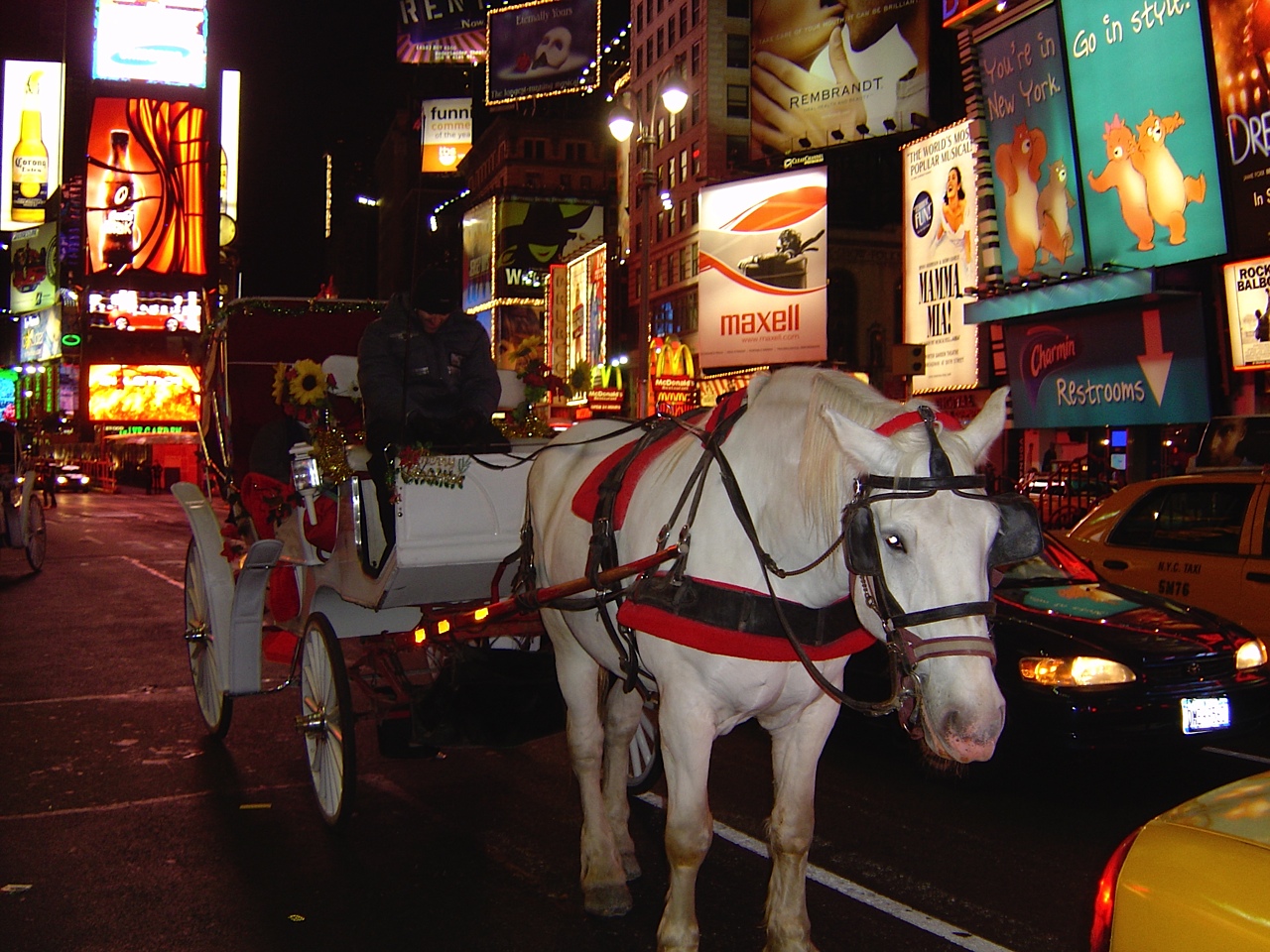
The NYC Dept. of Consumer Affairs revoked the ­license of Saverio Colarusso, a horse-drawn carriage driver who was arrested in December after police officers saw him working his horse “despite a painful injury to its hind leg.” The horse, Blondie, had a bacterial infection known as thrush, according to the vet who examined her.

Photo credit: Donny Moss

Photo credit: Donny Moss

News & Opinion

When he was elected NYC Mayor at the end of 2013, Bill de Blasio promised to ban horse-drawn carriages for humane and safety reasons. He made bold statements to the press like, “Watch me do it” and “It’s over.” After five months in office, he not yet taken action. To make matters worse, the Daily News and Teamsters labor union have launched a crusade to keep horse-drawn carriages on the streets. In what has become a very challenging time for the local animal rights community, activists welcome the news that a driver has been held accountable for abusing his horse.


Australia to Resume Live Animal Exports to Iran

May 29, 2014 by 1 comment


The News

Australia is set to resume the export of sheep and cattle to Iran after a 30-year ban. Hundreds of thousands of animals are already exported by boat to the Middle East each year, but the industry experienced a financial set back when exports to Indonesia were temporarily banned in 2011 after Australian TV aired graphic footage “showing brutal treatment of cattle in Indonesian abattoirs.” Regarding the resumption of exports to Iran, Australian lawmaker Andrew Wilkie said, “That is just appalling news. The fact is that the live-animal export trade is systemically cruel.” In 2011, thousands of people around the country marched against live animal exports.

News & Opinion

According to the animal rights group Animals Australia, “Most animals who are exported live for slaughter have their throats cut while fully conscious. Millions have died at sea. Some 30 investigations have revealed that in destination countries, many animals endure routine abuse and brutal slaughter in places where laws do not protect them from cruelty.” For more information and to find out how you can help, please visit Ban Live Export.


Activists Fight Australia’s Plan to Kill 1,600 Kangaroos

May 27, 2014 by Comments are off for this post


The News

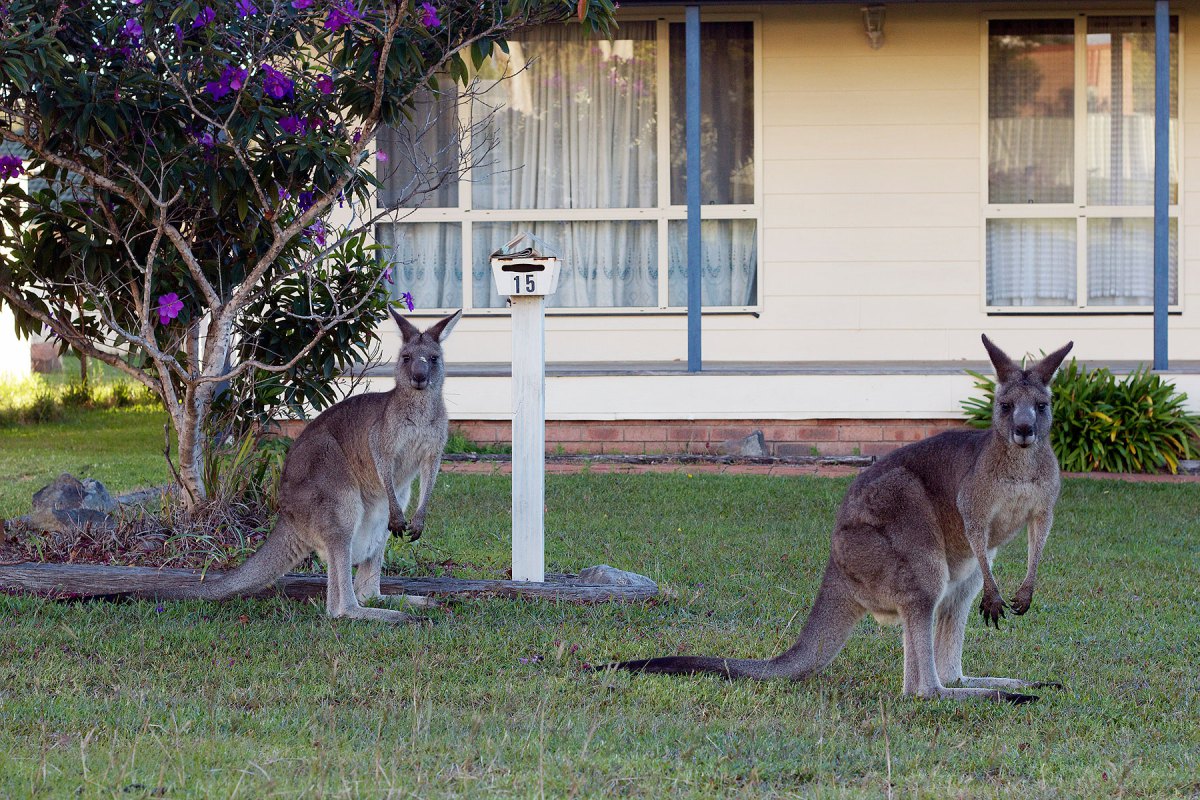
Canberra, the capital of Australia, plans to kill 1,600 wild kangaroos in an effort to reduce overgrazing and minimize dangerous interactions between humans and kangaroos. Lawyers for Animal Liberation ACT, an Australian animal rights group, have persuaded a judge to delay the cull, saying “If the government wants to kill more than 1,600 healthy wild animals, we have to be clear that the science is impeccable before we let them do that.” The activists also point out that their babies will have to be killed, “And remember, those 1,600 deaths don’t take into account the joeys that have to be brutally dispatched by shooters after they’ve killed their mothers.”

Photo credit: Time Magazine

Photo credit: Time Magazine

News & Opinion

Is a wild animal “cull” ever acceptable? In cases of overpopulation? Starvation? Danger to humans? We don’t cull humans even though we are the most overpopulated species on the planet. Do alternatives to killing, such a birth control and making the environment less hospitable, always exist? As activists, should we formulate our opinions about culls on a case-by-case basis? I don’t know the answers. In this case, Animal Liberation ACT is convinced that the kangaroo cull is cruel and unnecessary, and they need funds to continue to pay for the legal costs to stop it.