

Their Turn - The Social Justice Movement of Our Time Their Turn - The Social Justice Movement of Our Time

Rabbit Meat Protests at Whole Foods: What is Our Rationale?

August 18, 2014 by 1 comment


Opinion

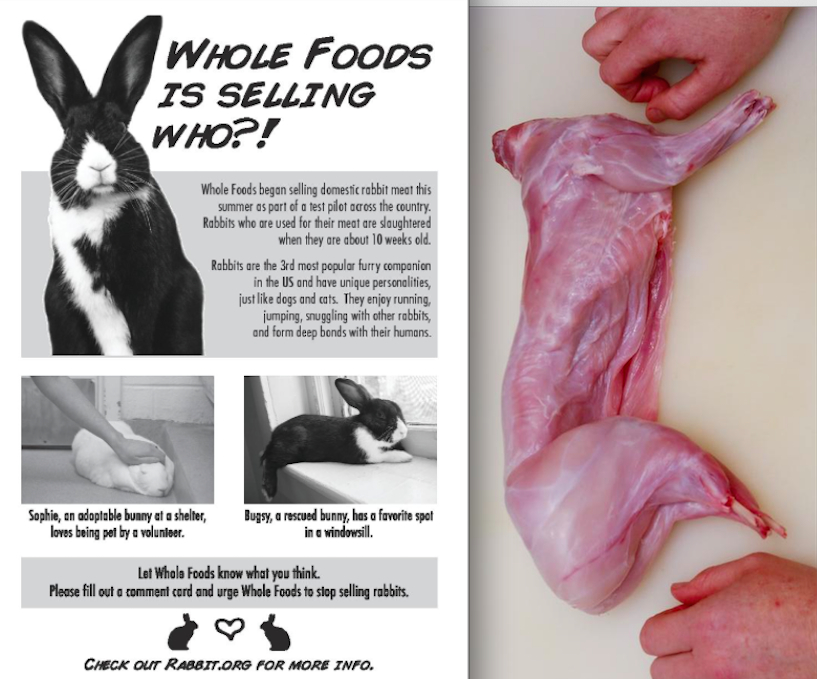
Whole Foods is selling rabbit meat and whole frozen rabbits in some part of the country, and activists are protesting. One handout reads, “Rabbits are the 3rd most popular furry companion in the U.S. and have unique personalities just like dogs and cats. They enjoy running, jumping, snuggling with other rabbits and form deep bonds with their humans.”

Whole Foods is defending the sale of rabbits, claiming they are treated humanely: “The rabbits will be raised in pens on solid floors with dry bedding to allow them to socialize, hide, climb, forage and play. The rabbits also have to have continuous access to drinking water, feed, gnawing blocks, tunnels and places for seclusion.”
rabbit meat

The commercial farming of ANY animal for human consumption is inhumane, and it all has to stop – for the sake of the animals and the environment. In the meantime, why are we be protesting the sale of rabbits at Whole Foods if they do, in fact, have better lives than the broiler chickens being sold at the grocery store down the street? Do we think that companion animals deserve to be spared any more than chickens or cows, or are we simply using the “companion animal” rationale because it might be an effective approach to helping at least a few animals?

In our efforts to ban the slaughter of American horses, activists often use the same “companion animal” rationale. While I don’t think that horses or rabbits deserve to live or die any more than other animals, I will nonetheless be thrilled when the slaughter of horses and sale of rabbit meat are banned. (Please sign change.org petition to Whole Foods). I am grateful to activists who campaign against any form of animal abuse. At the end of the day, we’re probably most effective when we pick the battles that resonate most with ourselves.



“Large Dogs” As Status Symbols?

August 15, 2014 by Comments are off for this post


Opinion

When I visited Hong Kong in November 2013, I remember seeing exotic birds and fish being sold in (awful) markets, but I don’t remember seeing dogs anywhere. I didn’t give it any thought at the time because I was so distracted by the 7 million people crammed onto a tiny island – like one big Times Square. But now it makes sense: With its large population and a scarcity of green space (in the developed areas), Hong Kong doesn’t seem dog-friendly at all. So I am surprised and disappointed to read that Hong Kong’s newest status symbol is not just dogs – but large dogs.

Hong Kong has about 10 very upscale shopping malls with the same luxury brands – Prada, Gucci, Louis Vuitton and the like. Some of these malls are situated within a few blocks of each other. Given how prevalent these fancy stores are, people who like to display their wealth but can no longer distinguish themselves in the crowd by wearing a Rolex have resorted to purchasing large dogs, according to China Topix: “Having a large dog is meant to signal that the owner can afford equally spacious homes in a city where luxury apartments cost twice as much as in New York.”

As would be expected from people who buy companion animals for the wrong reason, “Some give up their dogs after these are fully grown, and much larger than the cute puppies they signed up for.” This reminds me of the chihuaha craze triggered by Hollywood socialite Paris Hilton and the movies Legally Blond and Beverly Hills Chihuahua. Animal shelters were overrun with chihuahas when people were bored with their dog accessory or were unequipped to care for them. In the U.S., puppy mills flooded the market with chihuahuas to the demand, and the same thing is happening in Hong Kong with large dogs (who, of course, are being raised in poor conditions.)

Sheila McClelland, the founder of the Lifelong Animal Protection Charity, says it best: “Having dogs must be for life, and not just for status.”  To that I would add, please adopt. Buying an animal from a pet store or breeder kills a shelter dog’s chance of finding a home.

Photo: CNN Money

Photo: CNN Money


SeaWorld Announces Construction of Bigger Orca Tanks

August 15, 2014 by 1 comment


The News

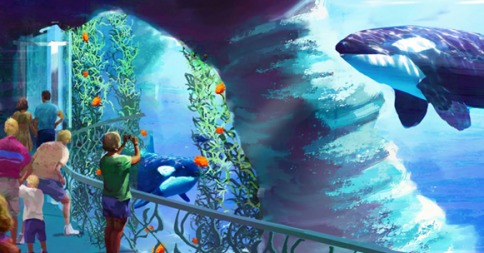
Animal rights activists are saying “Thanks, but no tanks” in response to SeaWorld’s announcement that they are expanding the size of their killer whale enclosures. While refusing to admit that the larger tanks are a concession to animal rights activists, SeaWorld said the new habitats will be “not just larger but more dynamic, and with a lot more of the kind of mental and physical stimulation that we know is so important for overall health and well-being.”

Sea world tank

Rendition of expanded tank

Your Turn

Why would SeaWorld invest millions of dollars in larger tanks? Based on the plummeting stock price, the public has already decided, thanks in large part to Blackfish, that the killer whales should not be held captive. The whale enclosures will eventually go either because people Boycott SeaWorld or because laws will be passed to outlaw them. To join the fight to free the imprisoned orcas, please see the Blackfish Take Action page.


Carriage Drivers Paint Horses to Hide Injuries

August 15, 2014 by Comments are off for this post


The News

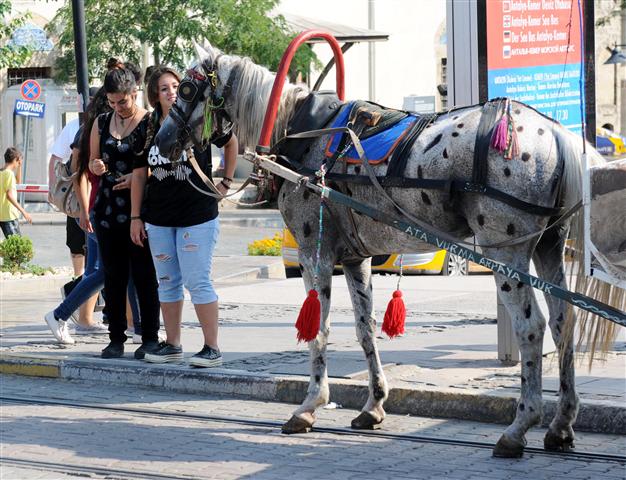
Horses who pull carriages in the extreme summer heat of Antalya, Turkey, are painted with carcinogenic oil to cover up work-related injuries, such as harness rubs. The Antalya Bar Association’s animal rights council, which has filed a criminal complaint against the carriage operators, says that the 15 horses pull carriages for up to 14 hours/day before returning to “restricted spaces in poor sanitary conditions.”

DHA Photo

DHA Photo

Your Turn

When faced with criticism, horse-drawn carriage drivers assert that they have to take care of their horses because their horses earn them a living. That sounds compelling, but it’s simply not true. With an overpopulation of horses (like dogs and cats), disposing of sick and injured horses and replacing them with healthy ones is far less expensive than providing appropriate medical care in the first place. Carriage horses, like circus elephants and captive dolphins, are not companion animals; they are money-making commodities who are exploited until they can no longer turn a profit for their owners. To learn more about why horse-drawn carriages are inherently inhumane and unsafe so that you can speak out against horse-drawn carriages, please see Blinders.


Thai Activists Attempt to Block Dolphin Show

August 15, 2014 by Comments are off for this post


The News

Three animal rights groups in Thailand are petitioning the fisheries department to deny a zoo license to a planned dolphinarium in the beach resort of Phuket. SEEK Phuket, DolphinProject.org, and the Love Wildlife Foundation have hosted several events to condemn the dolphinarium, including a speech by Richard O’Barry from the documentary film, The Cove. In a statement, the head of the Love Wildlife Foundation said, “We’re basically taking these animals from the wild to die in a show for our entertainment.” The Ukrainian company that is building the dolphinarium is already selling tickets for shows starting in October. In 2011, Thai activists protested the opening of a “swim with dolphins” concession in Pattaya.

Pattaya Dolphin World (EPA Photo)

Pattaya Dolphin World (EPA Photo)

Your Turn

Captive dolphins are kidnapped from their families in ocean during a brutal roundup; trained to perform tricks through food deprivation; confined for life in small enclosures and deprived of the ability to do anything that comes naturally to them. These intelligent mammals who have sophisticated social lives are reduced to photo ops. If “swimming with dolphins” is on your bucket list, please cross it off and help Rick O’Barry bring an end to dolphin zoos.