It’s official. After a nine year campaign by grass roots advocacy groups, NYC Mayor Bill de Blasio has introduced a bill to ban horse-drawn carriages from the streets of NYC.
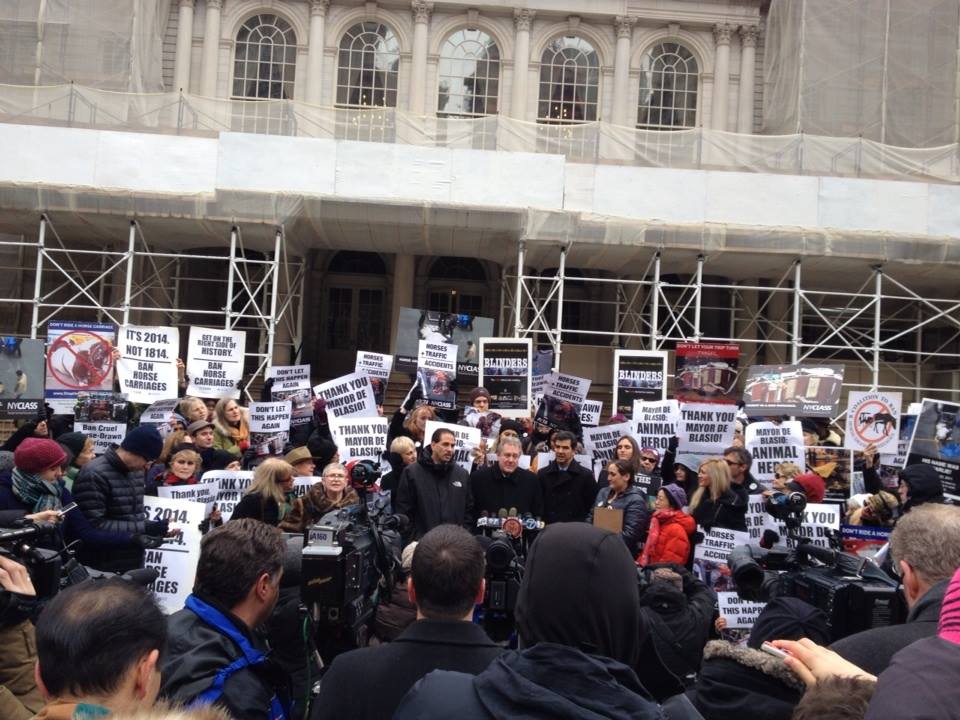
All of the advocacy groups rallied at City Hall in support of the bill
Unfortunately, NYC’s pro-carriage newspapers have not only lied about the Mayor’s motives, claiming that he’s merely re-paying a campaign donor who wants to buy the stables, but they have also largely failed to provide fair balance. If the media shared this information, then elected officials and members of the public would at least have the chance to make an informed decision about whether or not to support the Mayor’s bill.
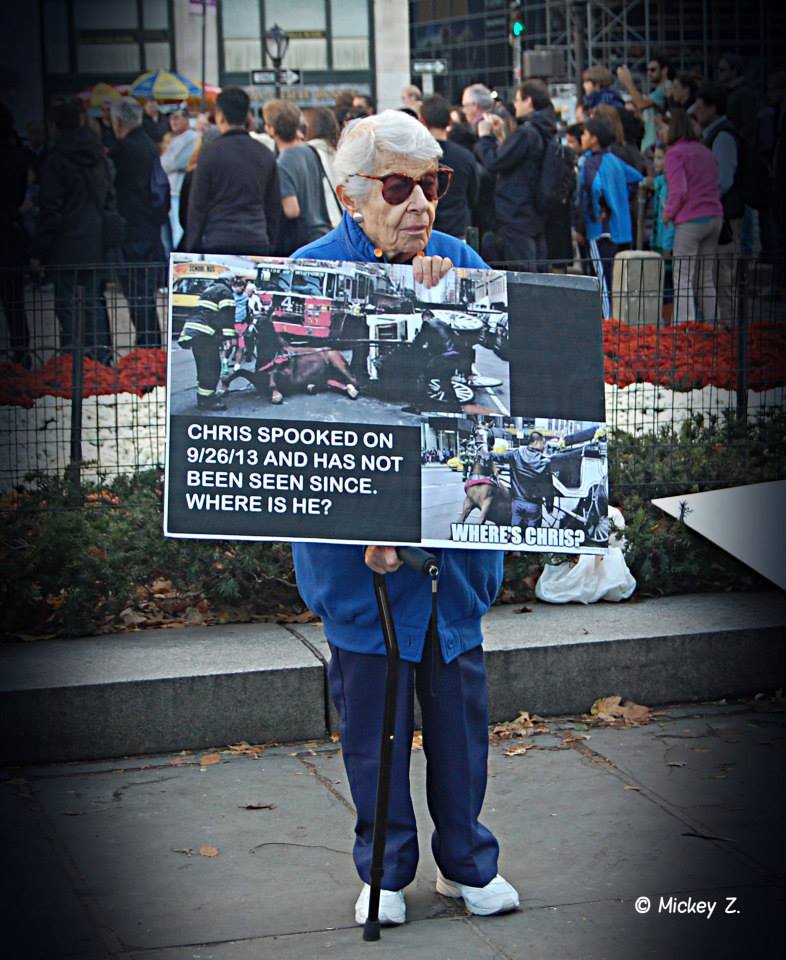
Horses are flight animals who sometimes flee when spooked by sirens, potholes, bright colors or other stimuli. The blinders, which partially restrict their vision, aren’t foolproof. Over the years, spooked carriage horses, who become weapons when running frantically down a busy street, have caused many tragic accidents. It was the 2006 death of Spotty, a carriage horse who galloped down Ninth Avenue and crashed into a car, that triggered the current movement to ban horse-drawn carriages.
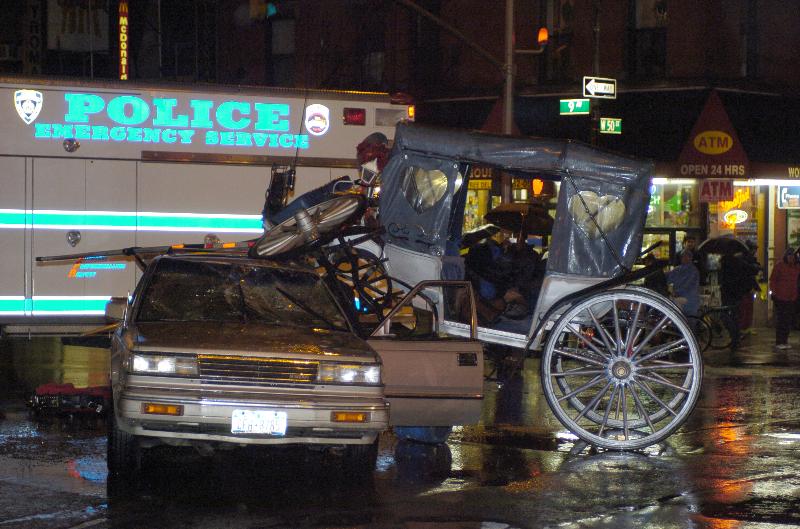
Spotty died after spooking and crashing into a moving car.
Horses are grazing animals, but New York City has no pasture. The horses are either confined to their stalls or between the shafts of their carriages, burdened by equipment. Denying the horses the chance to graze and move around unencumbered each day is inhumane. As herd animals, horses should also have the opportunity to interact physically. Without a pasture for daily turnout, the horses are unable to fulfill their most basic instincts.
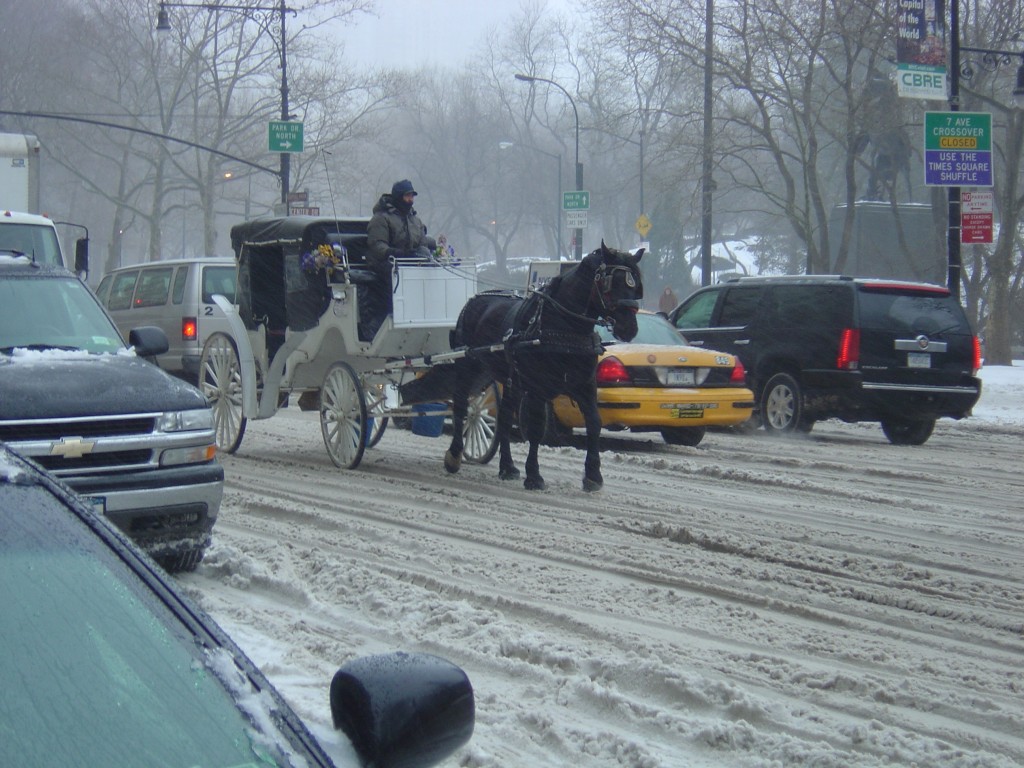
NYC’s dangerous streets are no substitute for a pasture
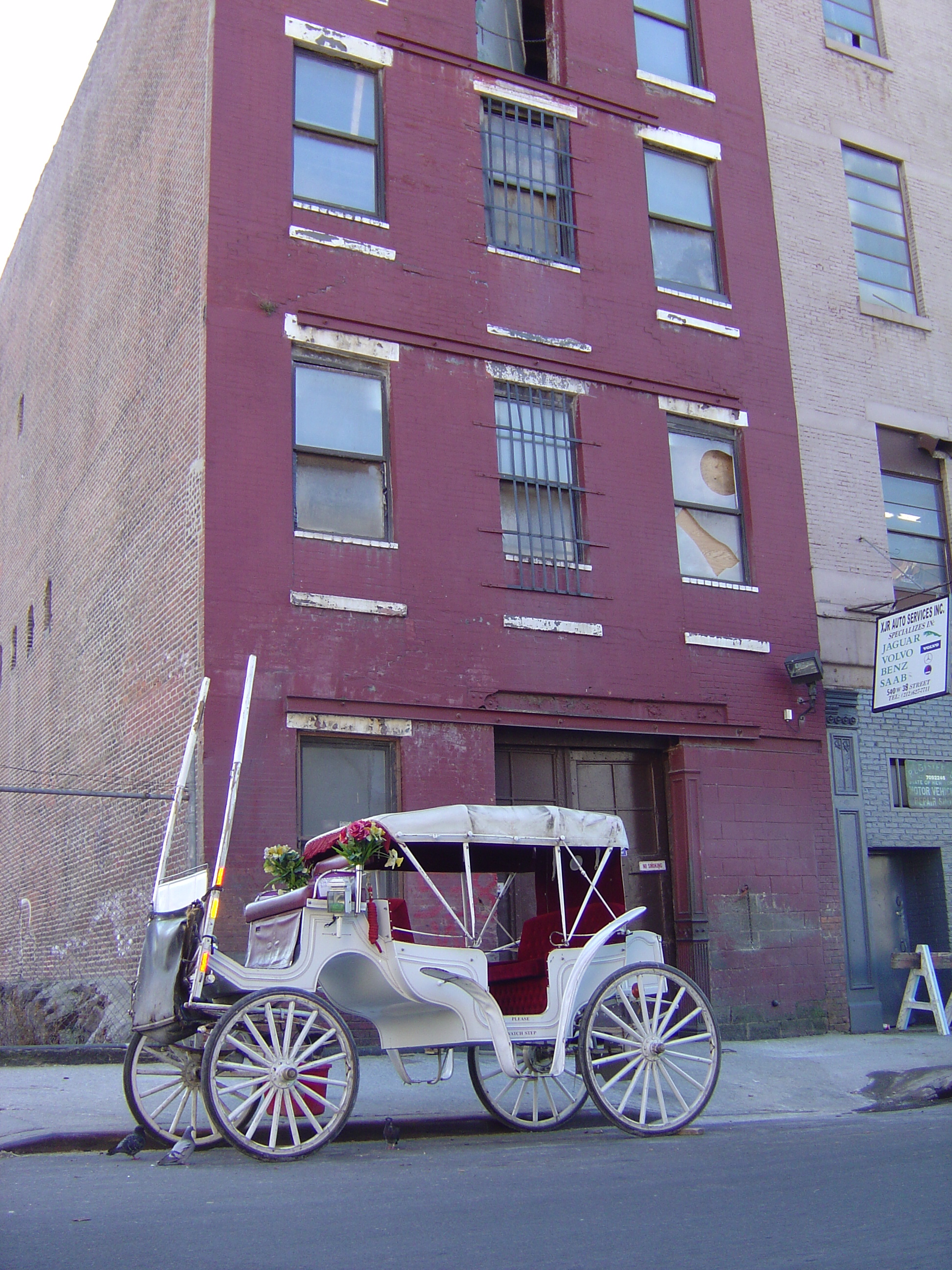
Horses live in multi-story firetraps. Most of the carriage horses are kept in stalls on the 2nd and 3rd floors of four stables on the far West Side of Manhattan. If a fire broke out in one of these buildings, in which highly flammable hay is stored, the panicked horses would be unable to escape down the narrow ramps, assuming someone opened their stalls one-by-one to let them out. In 2011, NYC’s Department of Health recommended that the City prohibit new stables from having stalls above the ground floor, but that change, if implemented, would have done nothing to help horses trapped in the current stables.
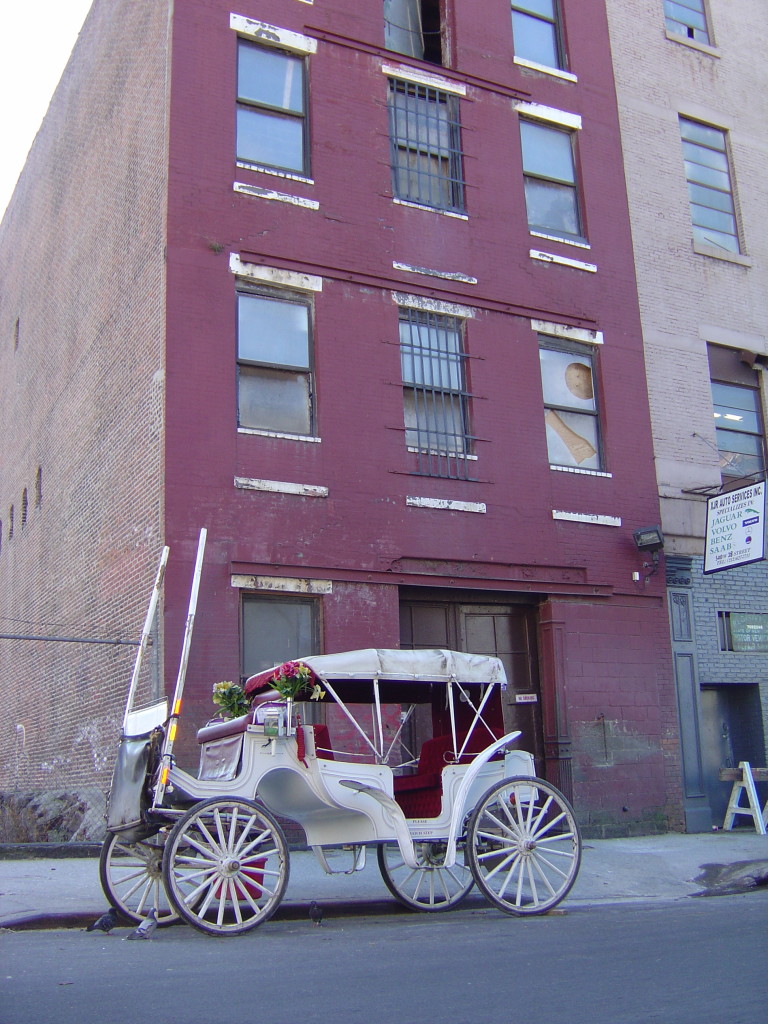
One of four stables in midtown Manhattan
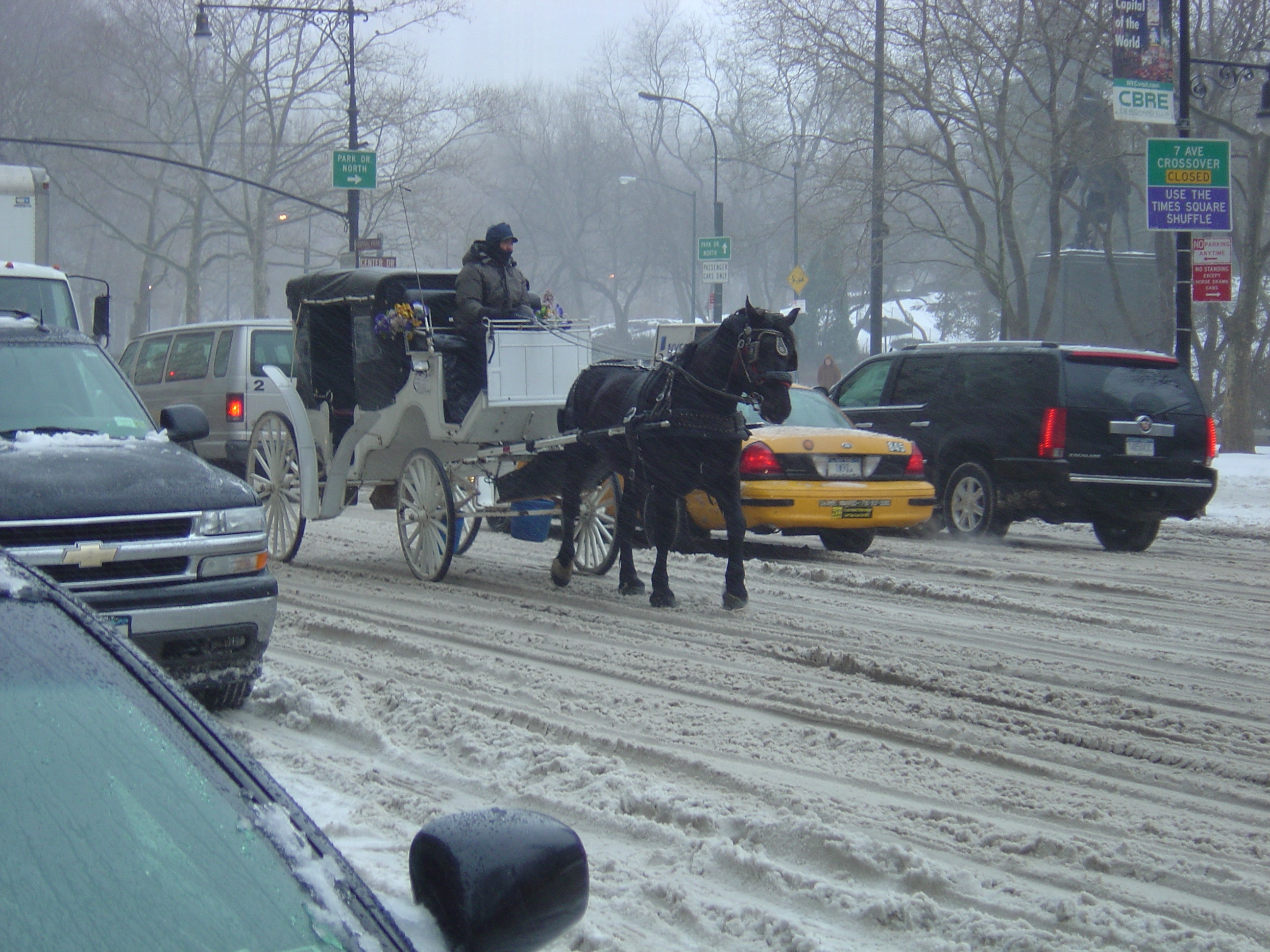
Working in the streets with aggressive taxi drivers, ambulances and other motor vehicles is dangerous and unhealthy. Over time, ingesting car exhaust during their “nose-to-tailpipe” workday can cause respiratory disease, and the hard pavement can cause lameness. In December 2013, a horse-drawn carriage driver was charged with animal cruelty for working a lame horse.
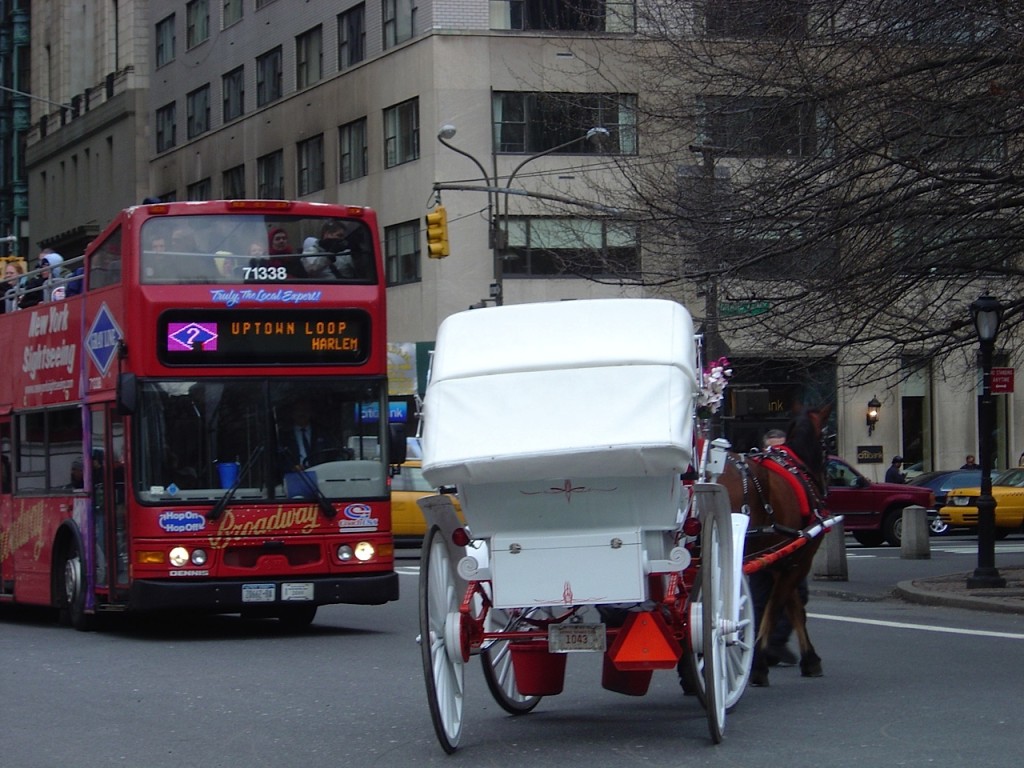
Manhattan
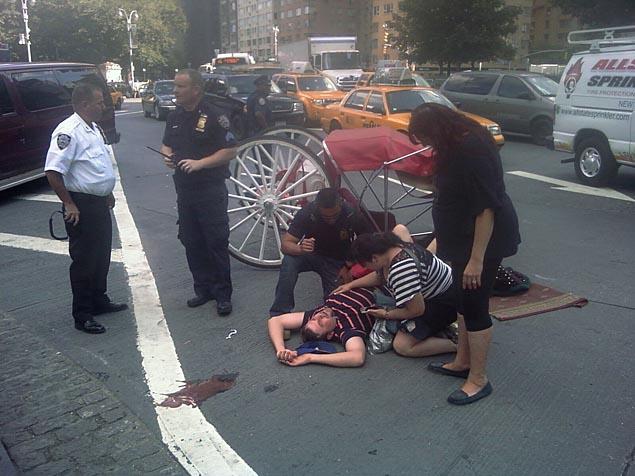
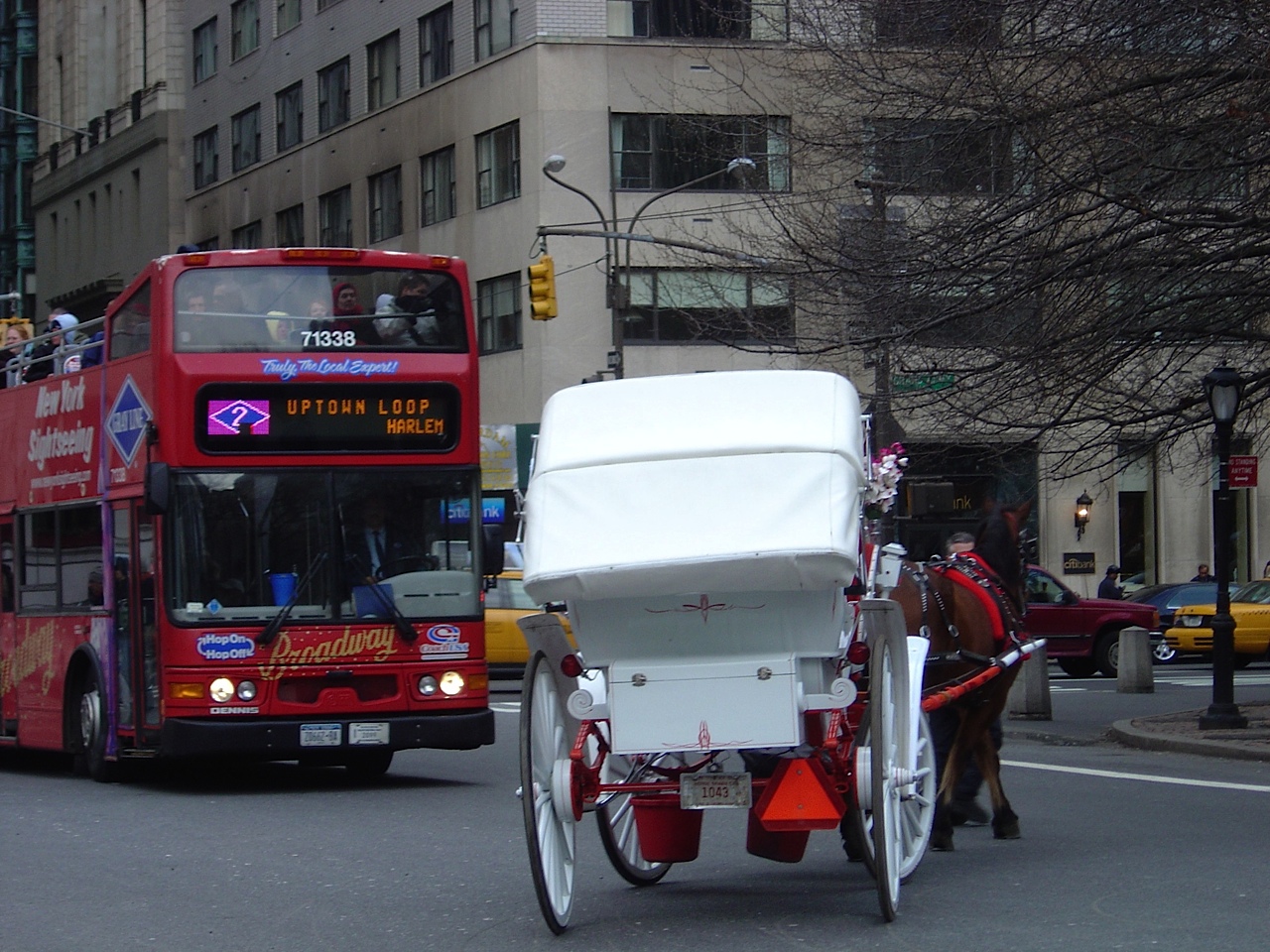
Horse-drawn carriages jeopardize the safety and quality of life of people. Slow-moving contraptions add to traffic congestion; increase the response times of emergency vehicles; and cause accidents. Pedestrians, bicyclists and passengers in motor vehicles have been injured in horse-drawn carriage crashes, as have customers who ride in these open buggies with no seat belts or helmets. Finally, horse manure contaminates the streets and leaves a stench in and around Central Park, where people walk, jog and bike.
Our country was built on the backs of horses. It’s time we reciprocate by taking them out of harm’s way and giving them a humane retirement.


Follow Their Turn