
Their Turn - The Social Justice Movement of Our Time Their Turn - The Social Justice Movement of Our Time

Amid Animal Warehousing Protests, Humane Society of New York Board Member Alexandra Rowley Resigns

May 11, 2022 by Comments are off for this post


The News

Alexandra Rowley has resigned from the Board of Directors of the Humane Society of New York (HSNY) amid protests against animal warehousing at the prominent Manhattan shelter. Her resignation comes five days after animal rights activists staged a second protest at her home on the East Side of Manhattan. She is the third board member to resign since March 2022.
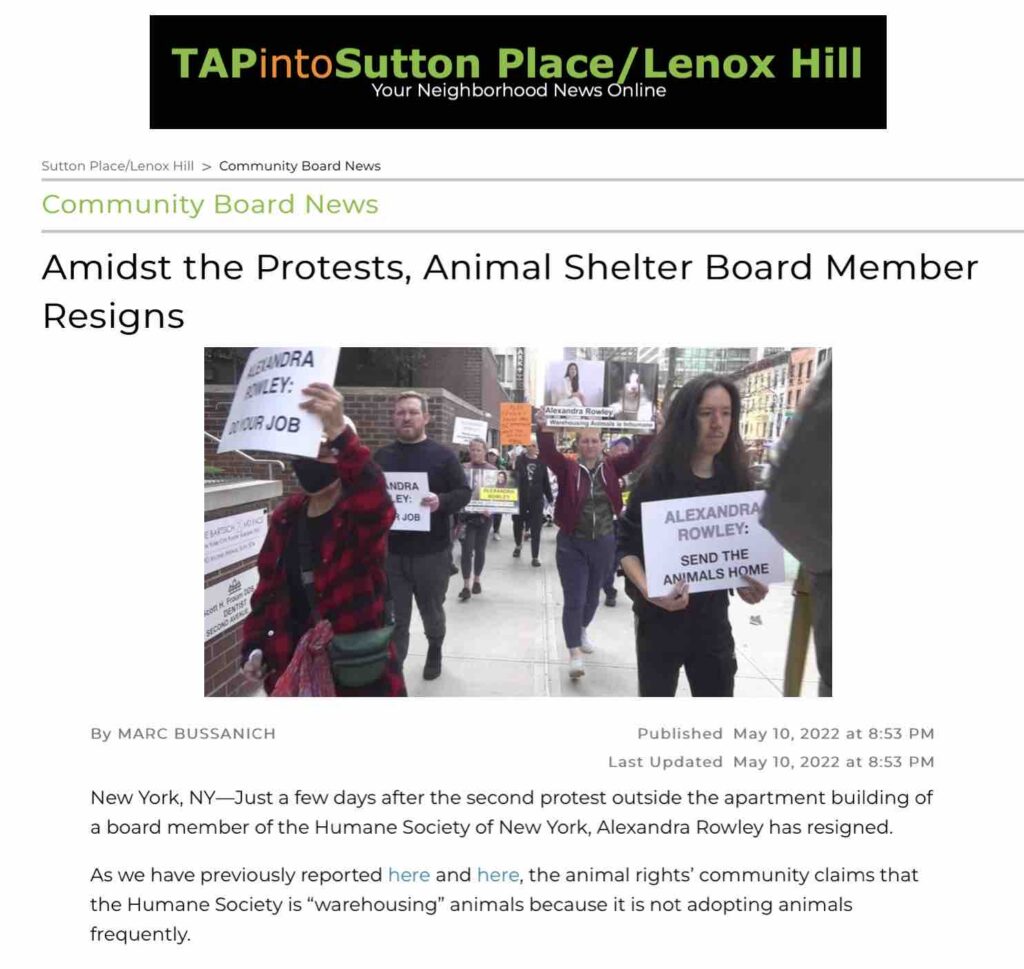
TapInto Sutton Place/Lenox Hill reports that Alexandra Rowley resigned from the Board of Directors of the Humane Society of New York

Between March and May, 348 animal advocates sent letters to Rowley and several of her colleagues on HSNY’s board, calling on them to re-open the building to the public or send the animals to foster homes or other adoption centers. Instead of addressing the concerns raised in the letters, Rowley asked Bonnie Tischler, HSNY’s former Adoption Director of 22 years, to use her influence with the advocates to shut down the letter writing campaign. Tischler said she would comply if Rowley provided proof of adoptions since HSNY closed the building to the public in April 2020. After committing to provide Tischler with that information, Rowley stopped communicating with her.

On April 16th and May 2nd, dozens of animal rights activists staged protests at Rowley’s home, hoping that she would listen if they delivered their message through a bullhorn. During the protests, activists had discussions with and distributed information to dozens of people who live in her building and on her block. While some of Rowley’s neighbors expressed frustration about the noise, others thanked the advocates for speaking out against animal cruelty.
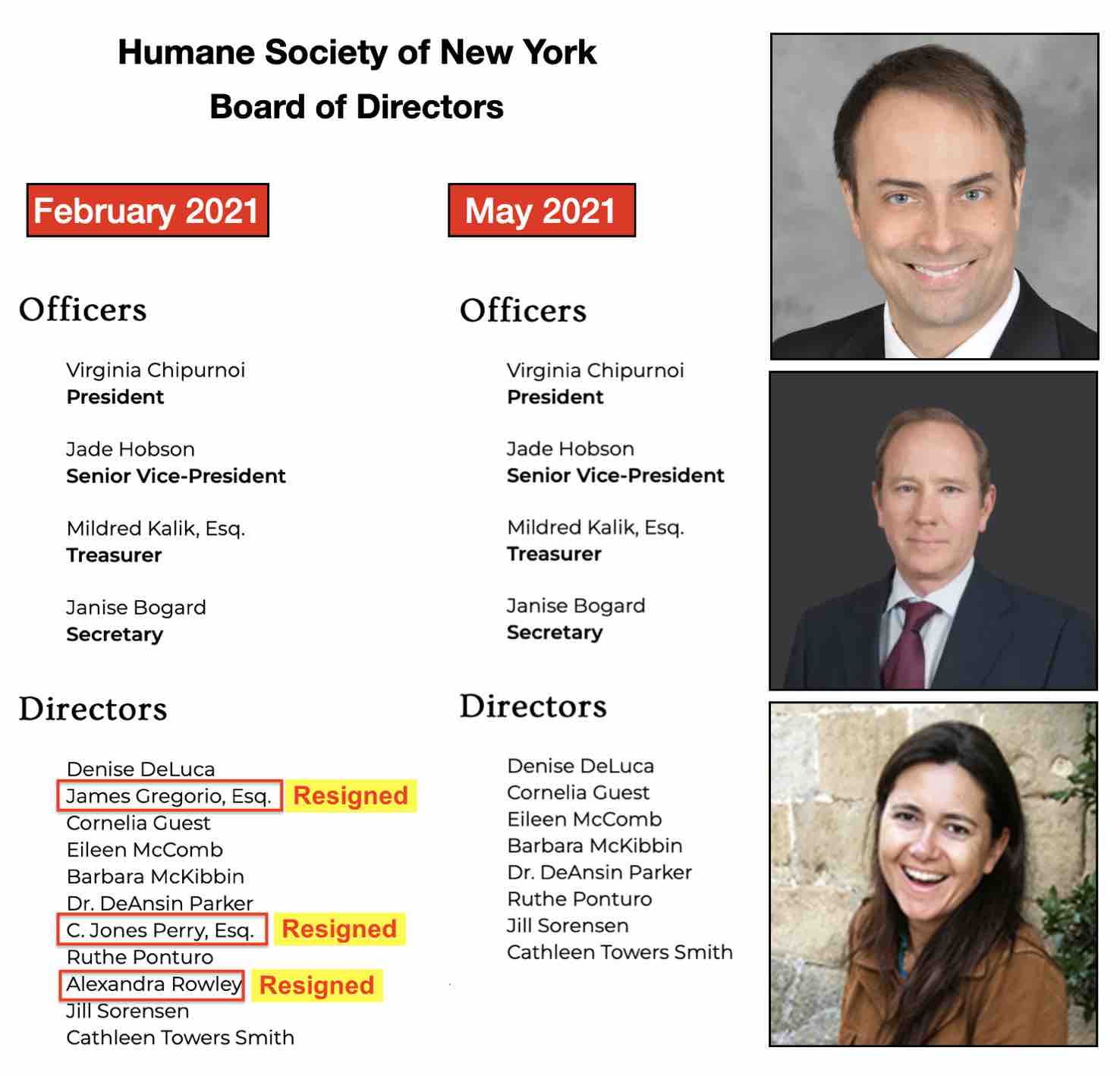
Three members of the Board of Directors of the Humane Society of New York have resigned amid protests against animal warehousing at the prominent Manhattan shelter. (From top to bottom: James Gregorio, C. Jones Perry, Alexandra Rowley)

Given the close proximity of Rowley’s home to HSNY, several of her neighbors told the protesters that they are aware that HSNY is closed to the public because they see people congregating in front of the building, which houses a low-cost vet clinic in addition to the shelter. Unlike adopters, who can meet animals at other shelters, many of the vet clinic clients have no choice but to use HSNY. Some of the neighbors acknowledged that HSNY’s continued use of COVID as an excuse to keep the building closed to the public makes no sense. 
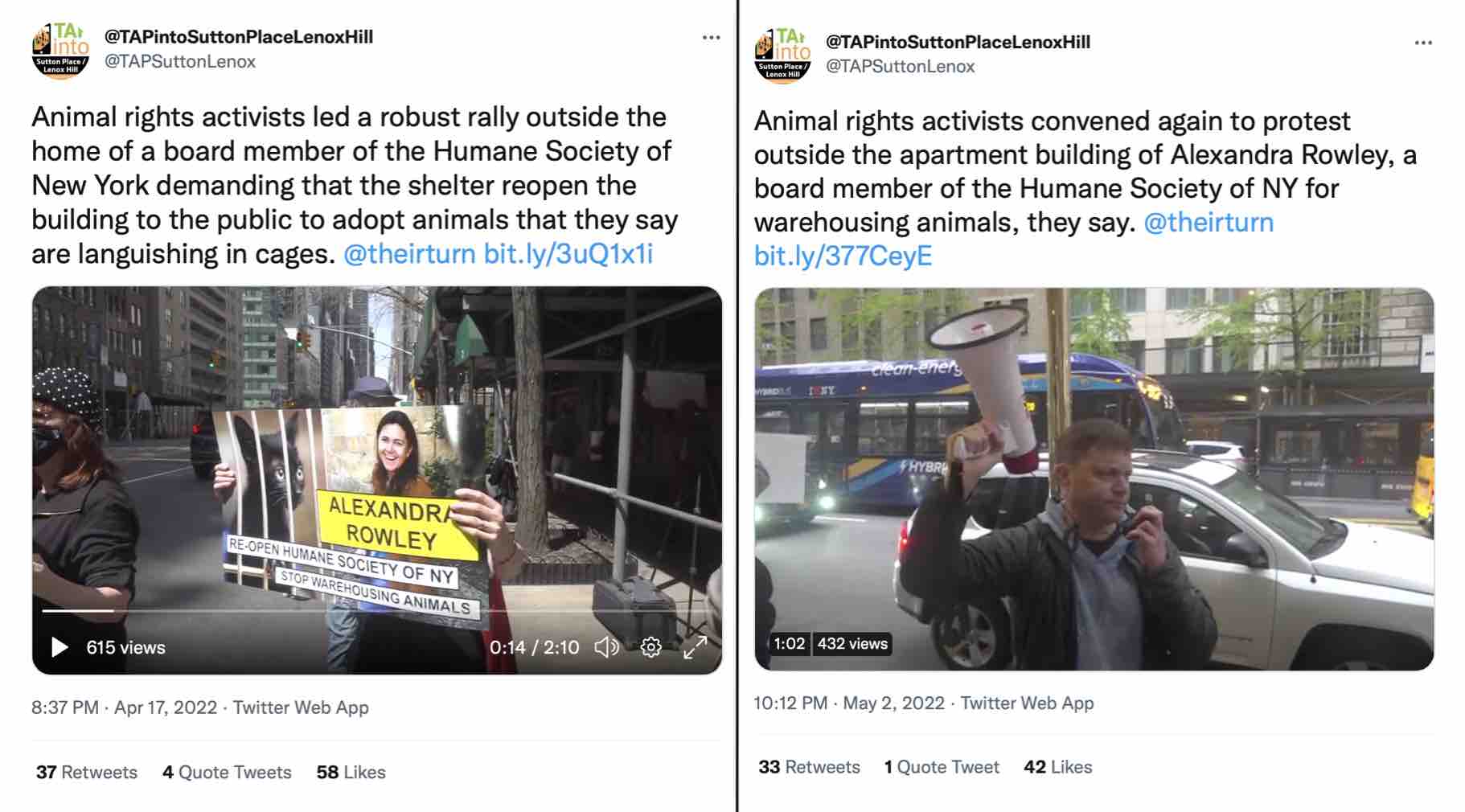
TapInto Sutton Place/Lenox Hill, an local media outlet, has reported on the animal warehousing protests at the home of Humane Society of New York board member Alexandra Rowley

One pedestrian who came upon the protest told Tischler, the former Adoption Director, that she attempted to adopt a cat from HSNY but was told she couldn’t enter the building to find one that would be a good match for her. She said the protest validated her concern that the animals aren’t being seen by potential adopters. 
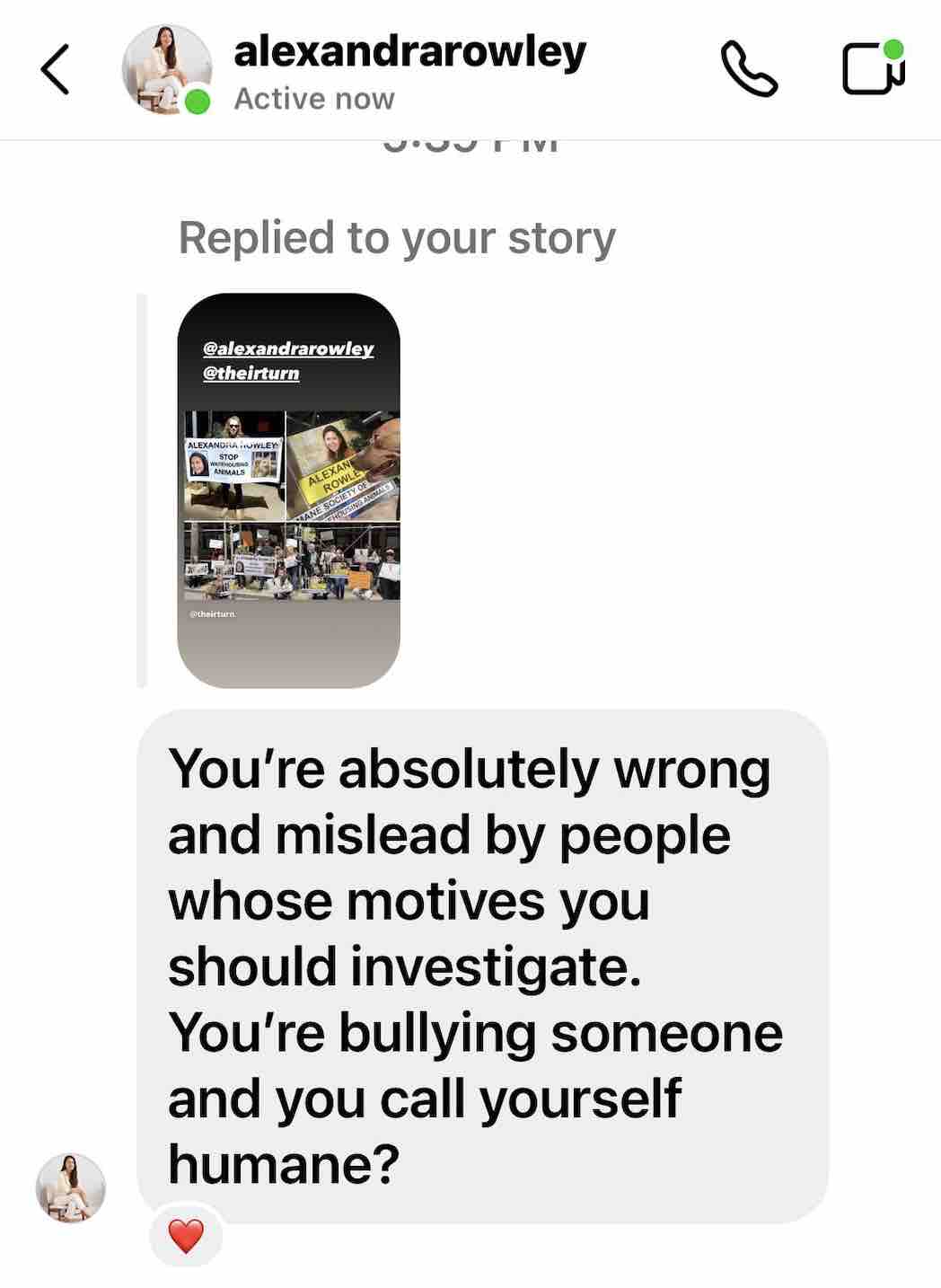
In response to an Instagram post about a protest at her NYC home, Humane Society of New York board member Alexandra Rowley describes activists as “bullies” and suggests that they have ulterior motives

In an apparent effort to shut down the protests, Rowley’s husband, Stephen Wallis, came outside to speak to Tischler. During their exchange, which was caught on camera, Wallis asked Tischler if she believed the protests were “right,” as in appropriate. Tischler responded by telling Wallis to urge his wife to “open the building,” which has been closed for more than two years, so that adopters could meet the animals. 
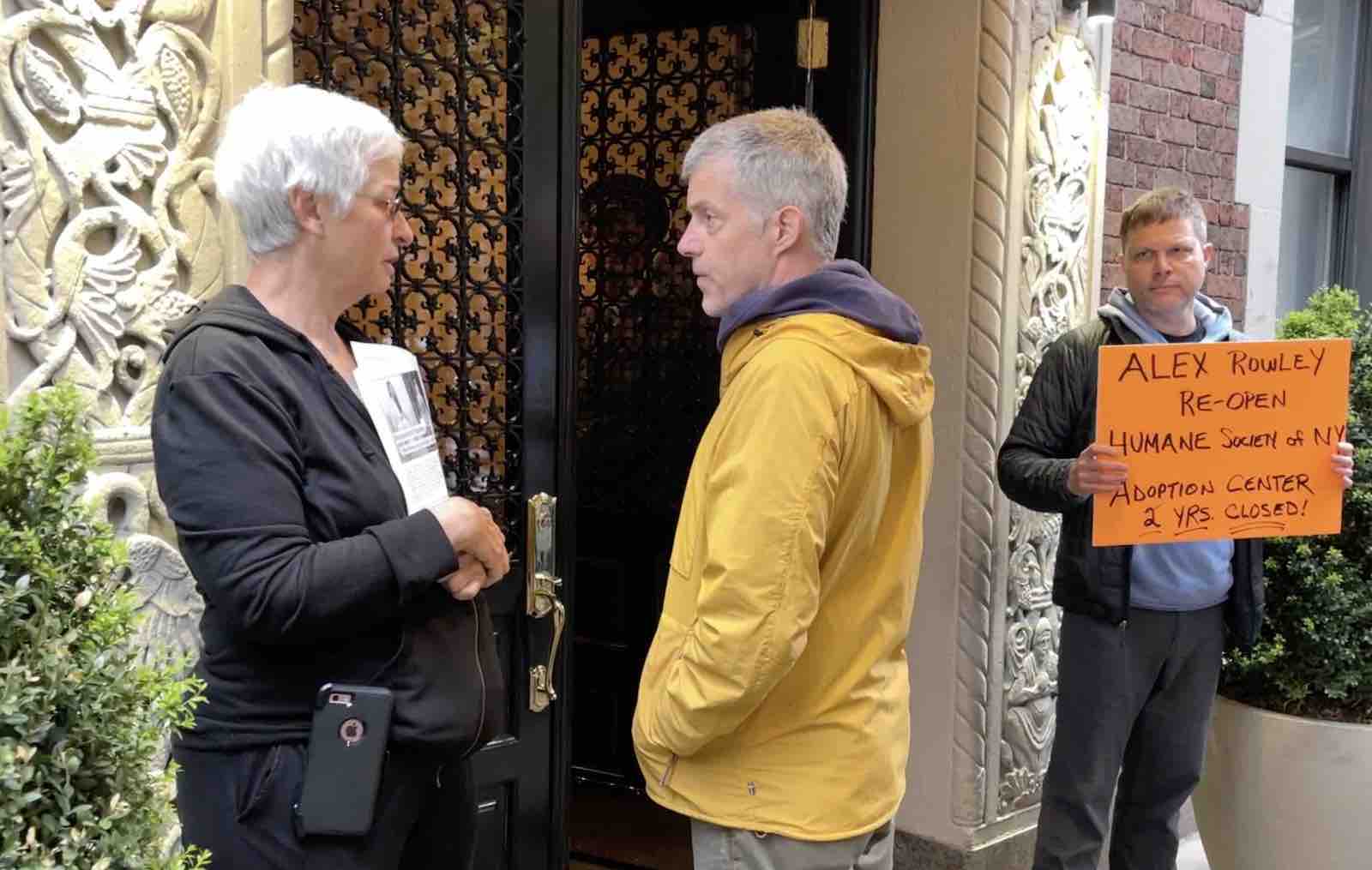
Stephen Wallis, the husband of Humane Society of New York (HSNY) board member Alexandra Rowley, confronts Bonnie Tischler, HSNY's former Adoption Director, about the protest in front of their building

Stephen Wallis, the husband of Humane Society of New York (HSNY) board member Alexandra Rowley, confronts Bonnie Tischler, HSNY’s former Adoption Director, about the protest in front of his building

On May 7th, five days after the protest, Rowley sent a one sentence text message to Tischler, stating, “I am no longer affiliated with the HSNY.” The news did not appease Tischler and the other activists. Her decision to resign, Tischler says, “does nothing to help the animals who she left behind and who were warehoused on her watch.”
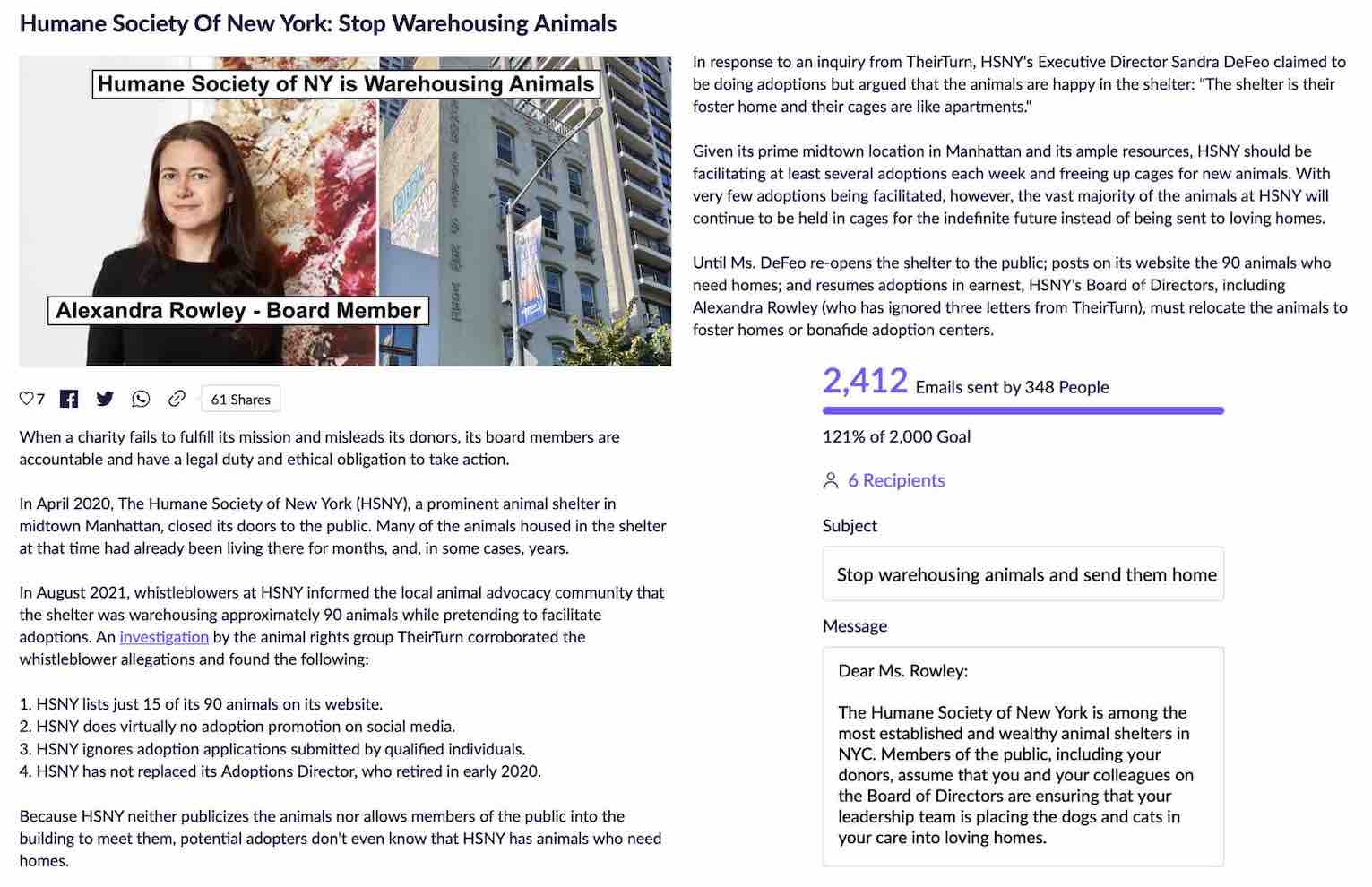
From March to May 2022, 348 people sent letters to Alexandra Rowley and several of her colleagues on the board of the Humane Society of New York calling on them to re-open the building to adopters or send the animals to adoption centers that are open to the public.

Activists launched the campaign to help the warehoused animals in October 2021, after TheirTurn corroborated whistleblower allegations that the shelter was closed to the public under false pretenses; that adoptions had come to a virtual standstill; and that the animals were being warehoused. The Executive Director of the shelter, Sandra DeFeo, has denied the allegations, telling Donny Moss of TheirTurn that HSNY has been “doing adoptions all along” since closing the building to the public. When Moss suggested that she send the animals to foster homes until she re-opens the building, DeFeo told him that “HSNY is their foster home” and that the animals are “well taken care of” in their cages, which she described as “apartments.”
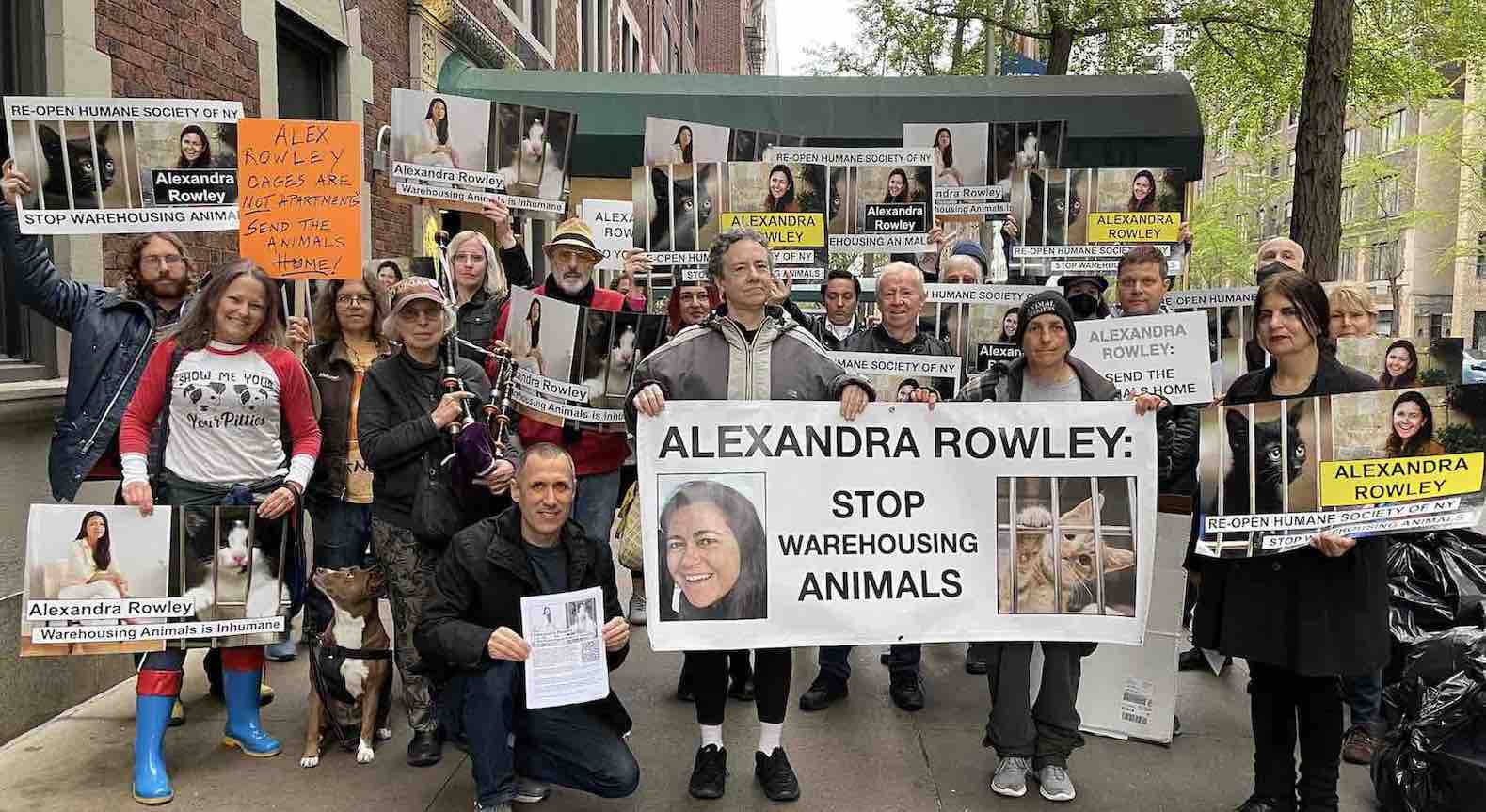
Animal rights activists call on Humane Society of New York board member Alexandra Rowley to stop warehousing animals at the prominent Manhattan shelter

Animal rights activists call on Humane Society of New York board member Alexandra Rowley to stop warehousing animals at the prominent Manhattan shelter

The activists say they intend to continue protesting at Alexandra Rowley’s building until she issues a statement that denounces the animal warehousing and calls on HSNY to either re-open the building to adopters or send the animals to other adoption facilities. The activists are also demanding that HSNY post all photos and bios of their animals online so that people know they exist.
Nonhuman Rights Project Rallies for Captive Elephant in Advance of Landmark Court Hearing 

May 4, 2022 by 2 comments


The News

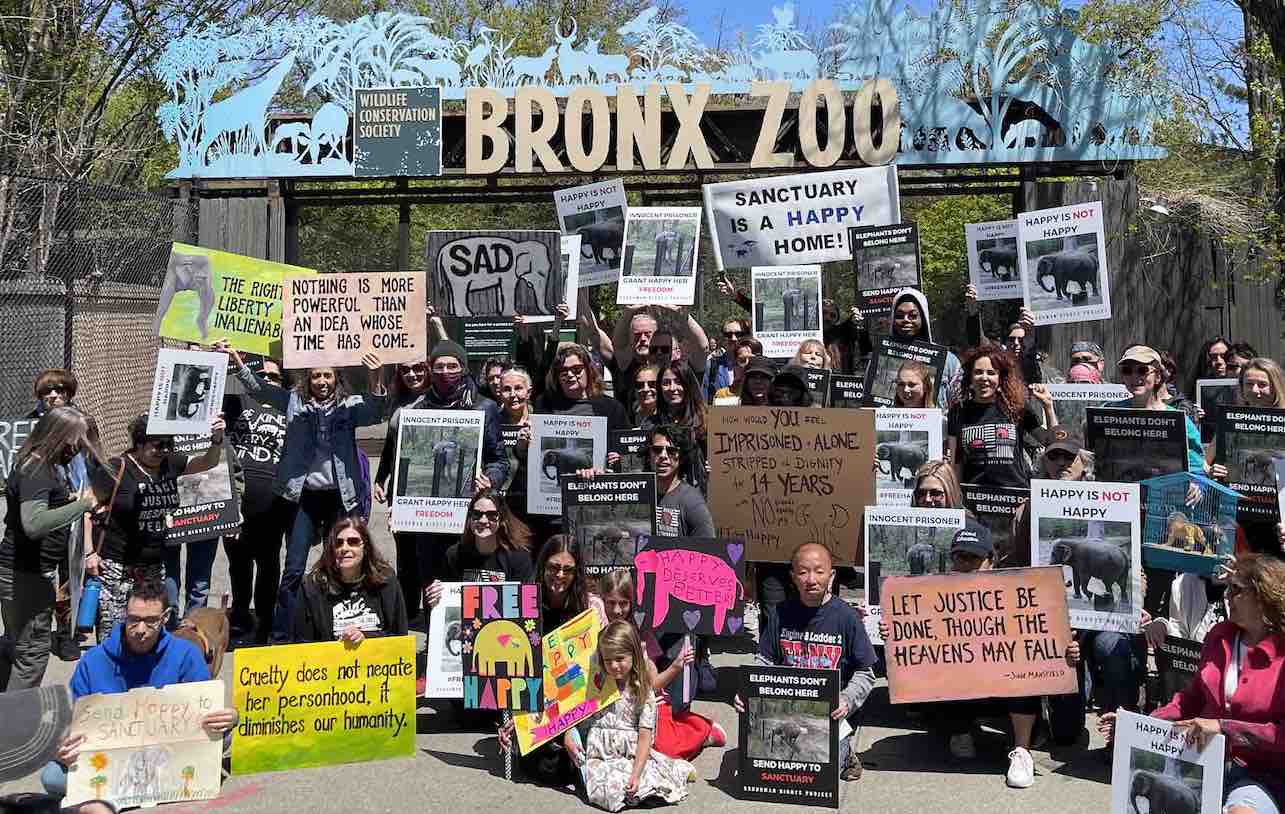
On Saturday, April 30th, dozens of activists with the Nonhuman Rights Project (NhRP) staged a rally at the Bronx Zoo to demand that the Wildlife Conservation Society (WCS), which manages the zoo, release a 51 year old Asian elephant named Happy to a sanctuary after holding her captive in a small enclosure since 1977.

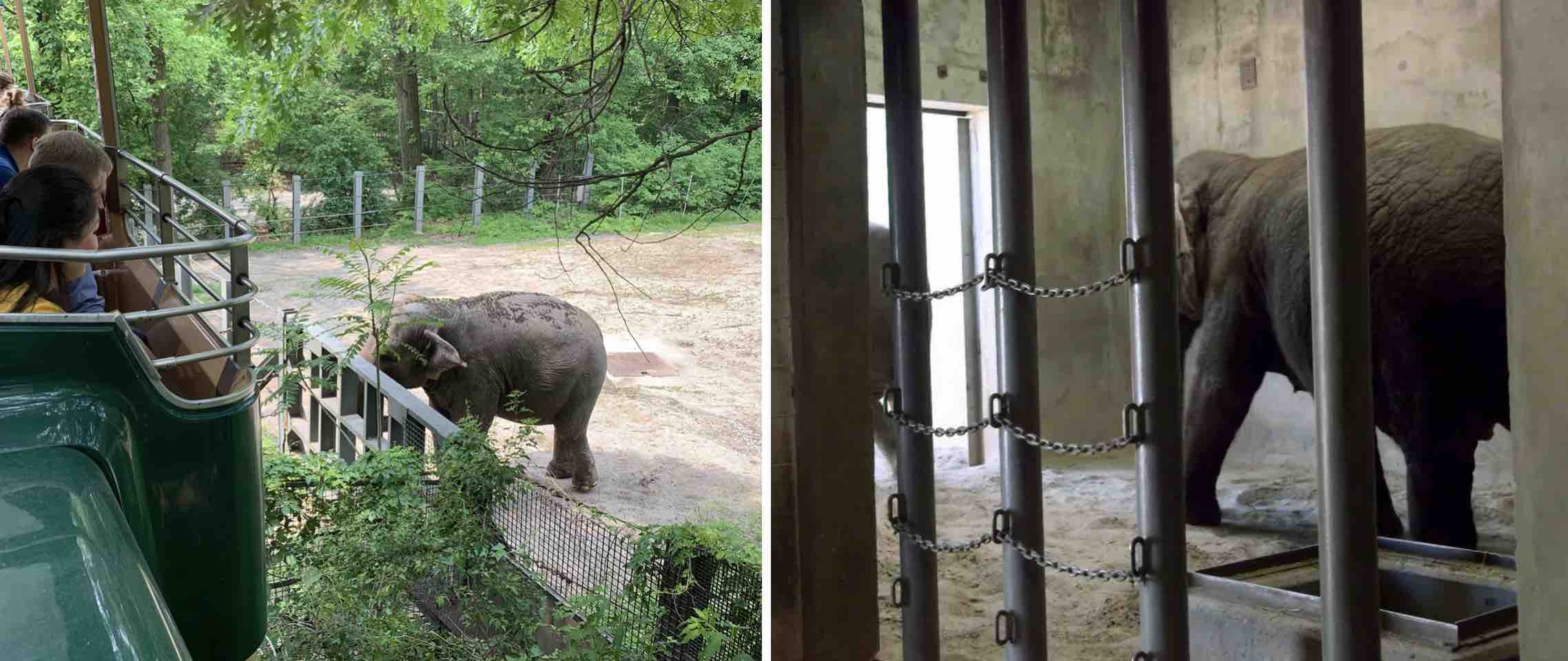
Happy was kidnapped from a forest in Thailand in 1971, and she has lived at the Bronx Zoo for 45 years. Despite the fact that elephants are highly social animals who travel long distances with their herds each day, Happy lives by herself and splits her time between on a one acre plot of land and a windowless, concrete room. 

Happy, who lives alone, splits her time between a windowless concrete room and a one acre plot of land at the Bronx Zoo.

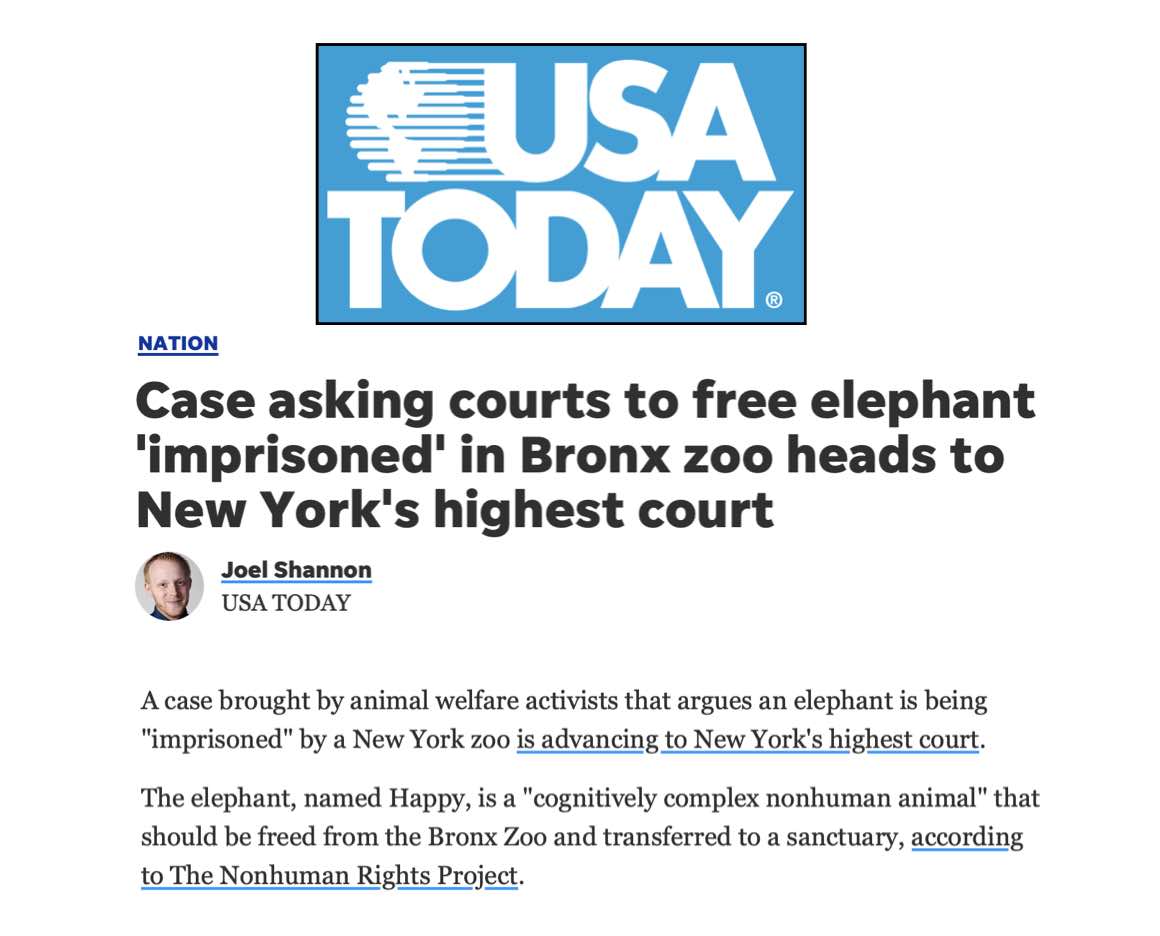
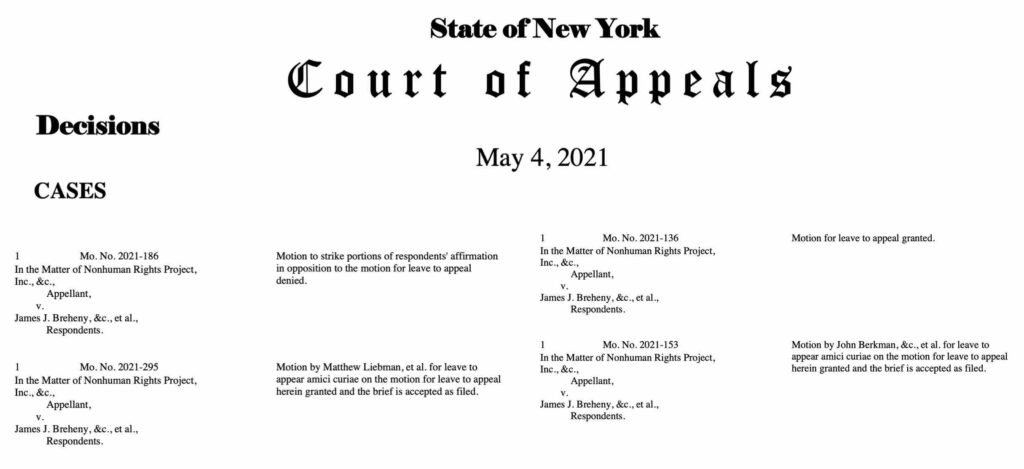
NhRP, a nonprofit legal group that represents captive animals, staged the event in advance of Happy’s upcoming hearing at the Court of Appeals, New York’s highest court. During the hearing, lawyers with NhRP will argue that the Bronx Zoo and the Wildlife Conservation Society “have unlawfully deprived Happy of her freedom, imprisoning her alone in an exhibit that is too small to meet the needs of Happy or any elephant.” If NhRP wins the case at the Court of Appeals, then the WCS would be forced to send her to one of the two elephant sanctuaries in the United States. 

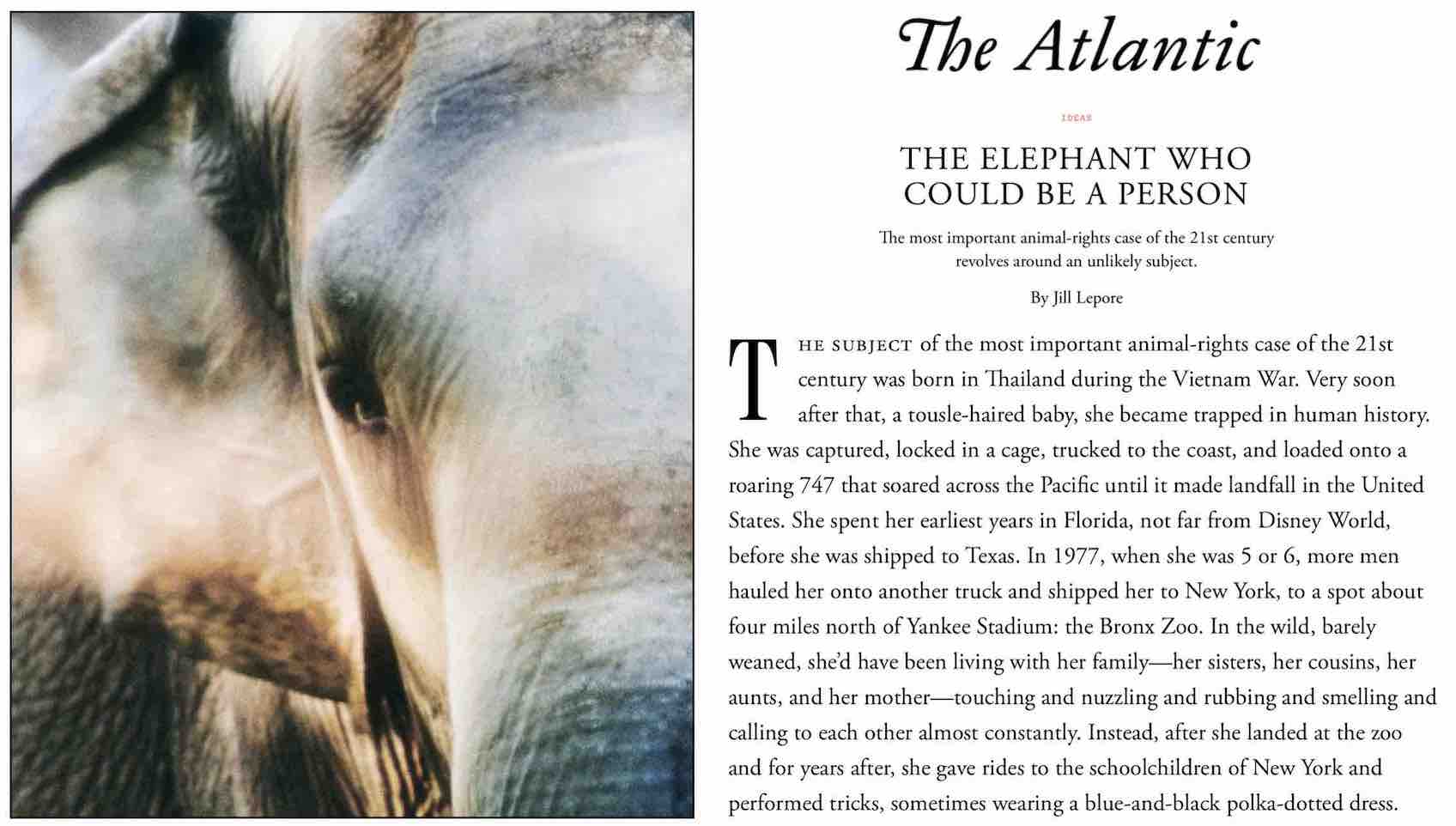
The Atlantic describes the Nonhuman Rights Project’s right to bodily liberty case on behalf of Happy “the most important animal rights case of the 21st century.”

Happy’s case advanced to the Court of Appeals after being heard in two lower courts. According to The Atlantic, it is “the most important animal-rights case of the 21st century.”

New York’s highest court, the Court of Appeals, will be hearing oral arguments in the Nonhuman Right Project’s case to grant bodily liberty to Happy, an elephant held captive at the Bronx Zoo.

Both of the elephant sanctuaries in the United States, the Elephant Sanctuary in Tennessee and the Performing Animal Welfare Society in California, have agreed to take Happy at no cost to the Bronx Zoo, but the WCS has refused to let her go. “The Wildlife Conservation Society acknowledged in 2006 that keeping Happy alone would be inhumane, so we don’t understand why they won’t release her from captivity,” said Kevin Schneider, the Executive Director of NhRP. “They either don’t want to acknowledge that Happy’s captivity and solitary confinement are cruel, or they don’t want to cave into pressure from animal rights advocates.”

The Atlantic called the Nonhuman Rights Project’s Case on behalf of Happy the “most important animal rights case of the 21st century.”

In 2018, the NnRP filed a petition for a common law writ of habeas corpus in New York Supreme Court demanding recognition of Happy’s legal personhood and her fundamental right to bodily liberty. Happy is first elephant in the world to have a habeas corpus hearing to determine the lawfulness of her imprisonment.

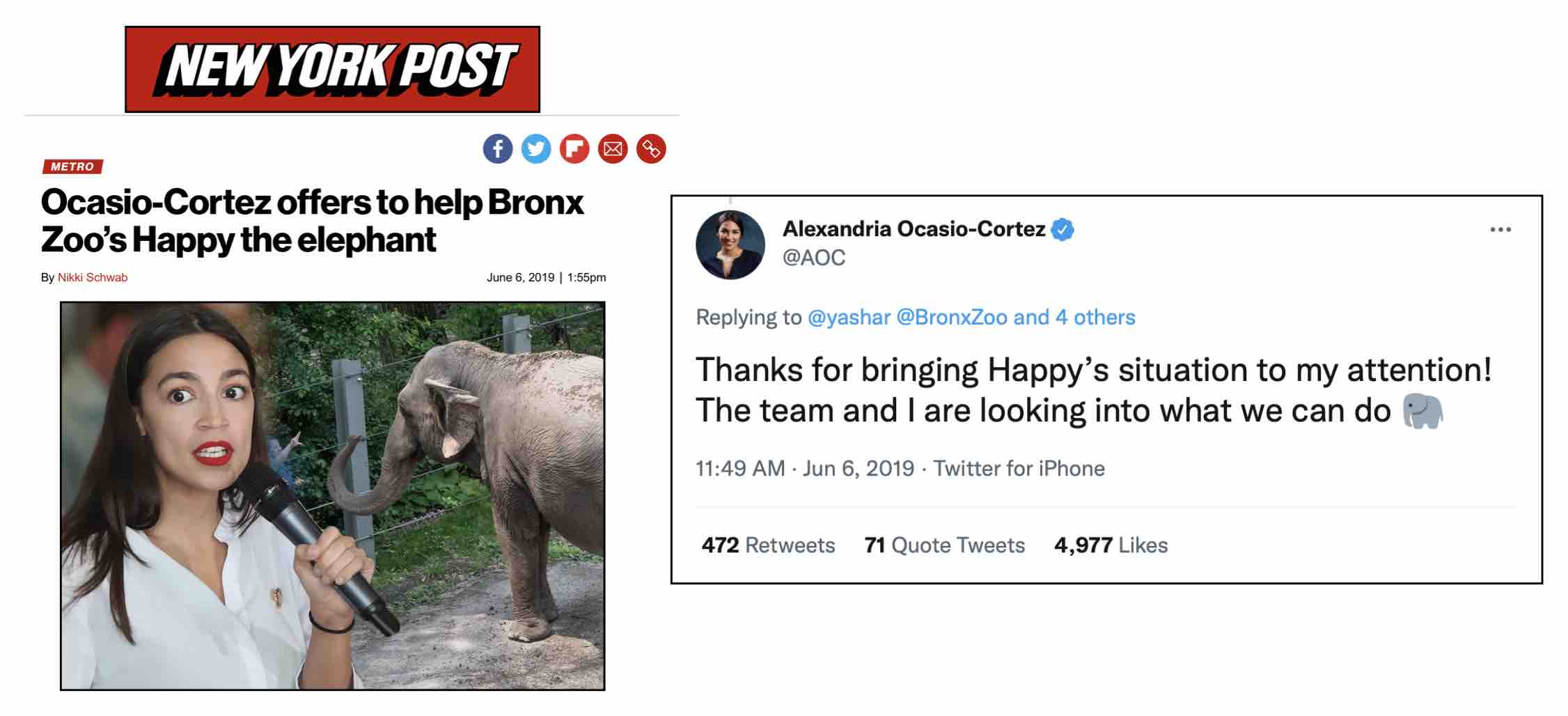
As litigation has proceeded in recent years, public support for Happy’s freedom has grown. In 2019, two elected officials made public statements encouraging the WCS to free Happy. Corey Johnson, the Speaker of the New York City Council at the time, wrote, “Happy and all elephants need more space and resources than the zoo can provide, plain and simple. I urge the Bronx Zoo, which first planned to close the elephant exhibit back in 2006, to finally transfer Happy to one of two recommended sanctuaries so that she can enjoy the company of other elephants and the benefits afforded to a facility specifically designed to meet her needs.” In a tweet, U.S. Representative Alexandria Ocasio-Cortez, who has voiced her opposition to solitary confinement for prison inmates, said that “The team and I are looking into what we can do” to free Happy.

Alexandria Ocasio-Cortez, a U.S. Congress  Member who represents the Bronx, offers her support to the Nonhuman Rights Project in its efforts to liberate Happy, an Asian elephant, from the Bronx Zoo

In 2021, the animal advocacy group In Defense of Animals ranked the Bronx Zoo the fifth worst zoo in the United States for elephants. “There are no good zoos for elephants. All zoos restrain these giant, complex animals through a lack of space and freedom of choice that all far-roaming animals require for their mental and physical health. Even zoos deemed to be the very best are failing elephants’ bodies, minds, and spirits.”

Dozens of animal rights activists participated in a rally organized by the Nonhuman Rights Project (NhRP) calling on the Wildlife Conservation Society (WCS) to release Happy, an Asian elephant, to a sanctuary.

Before NhRP’s rally, the Bronx Zoo shut down the entrance where the activists convened.  The closure appeared to be an effort to reduce the number of zoo visitors who would learn about Happy’s plight. The zoo also sent an employee to document the protest. As lawyers with NhRP delivered remarks to rally participants, this employee approached the group’s unattended bags. TheirTurn caught her in the act and confronted her on camera. NhRP staff members at the rally knew that she was employed by the zoo because they have seen her at court hearings.

A Change.org petition demanding an end to Happy’s solitary confinement has garnered over 1.4 million signatures. The petition targets to James Breheny, the Director of the Bronx Zoo. 


Avian Flu Outbreak Prompts Calls for Suspension of Live Animal Market Operations Near Schools

April 29, 2022 by 3 comments


The News

The outbreak of avian flu has prompted parents in New York City to call on the mayor and governor to suspend the operation live animal markets, particularly those near their children’s schools and playgrounds. In a letter shared with the media, the parents argue that the markets, which sell and slaughter multiple species of birds, potentially expose their children to a host of infectious diseases, including e. Coli, campylobacter and the current strain of avian flu, which has infected people in several countries, including the United States.

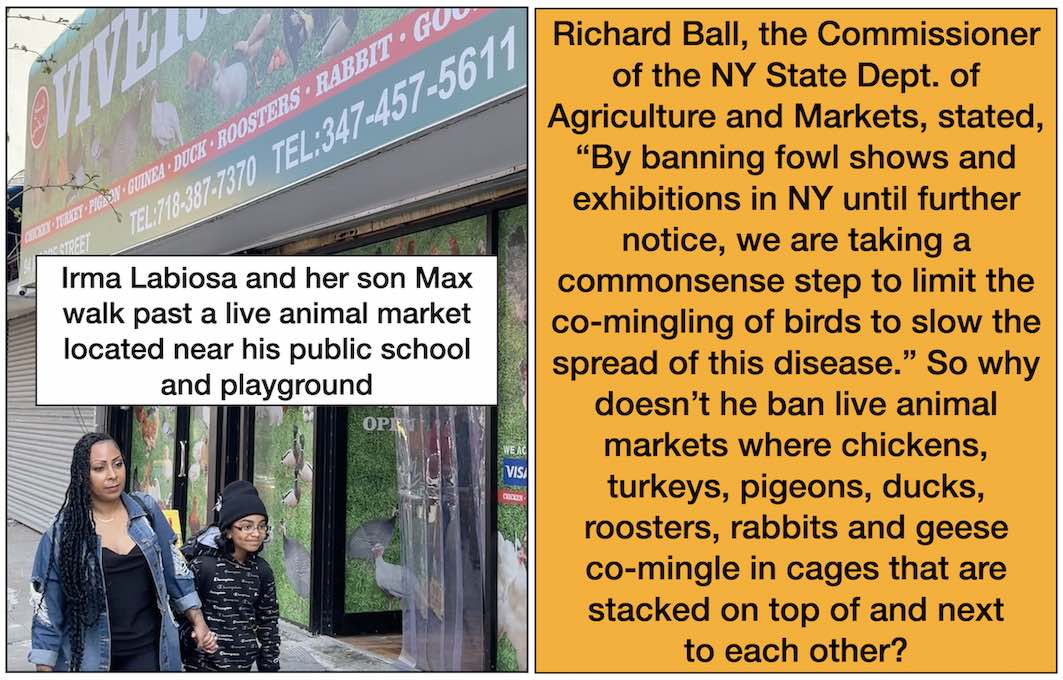
“The sidewalk in front of the live animal market next to my son’s school is often contaminated with chicken feces and blood,” said Irma Labiosa, one of the public school parents who signed the letter to Mayor Adams and Governor Hochul. “He could be tracking this waste into his classroom, onto the subway and into our home.”

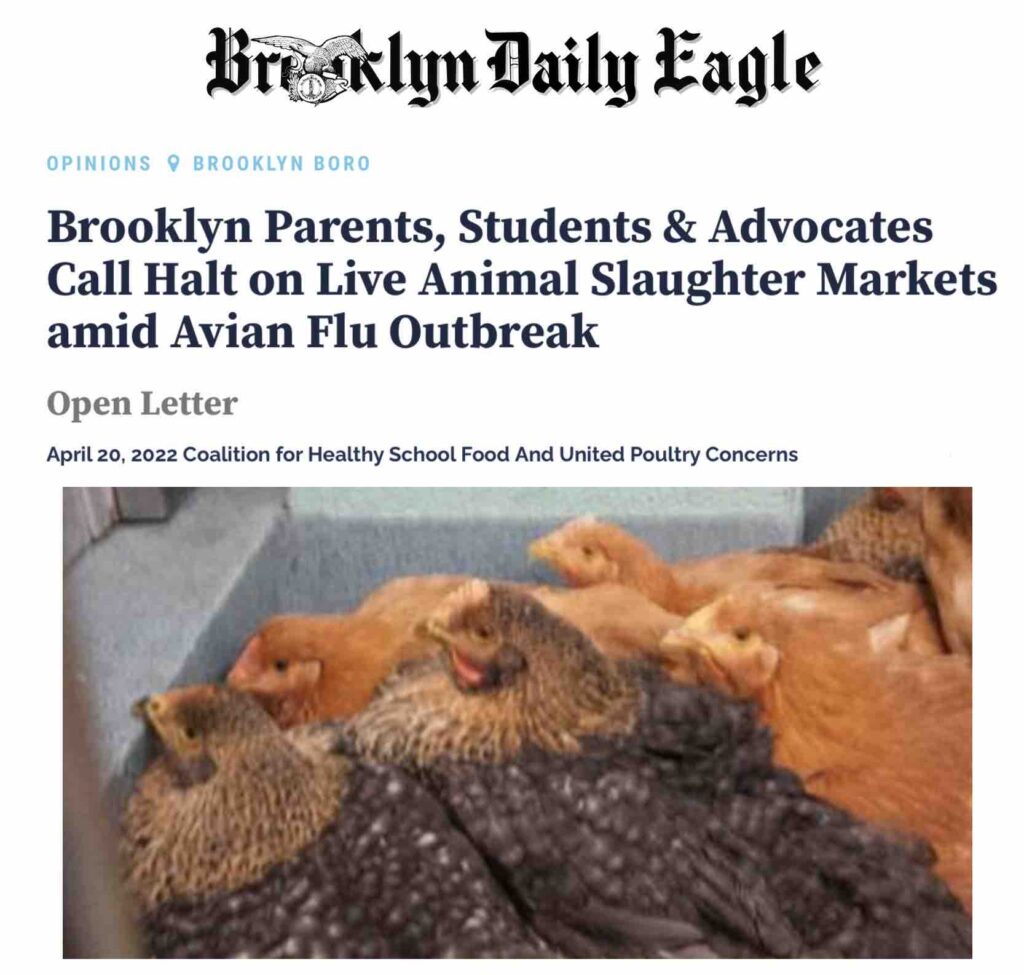
Brooklyn’s leading newspaper, The Brooklyn Eagle, published the letter in full.

The Brooklyn Daily Eagle published a letter sent by parents of NYC schoolchildren calling on Governor Kathy Hochul and Mayor Eric Adams to suspend the operation of live animal markets near schools until an avian flu risk assessment is conducted.

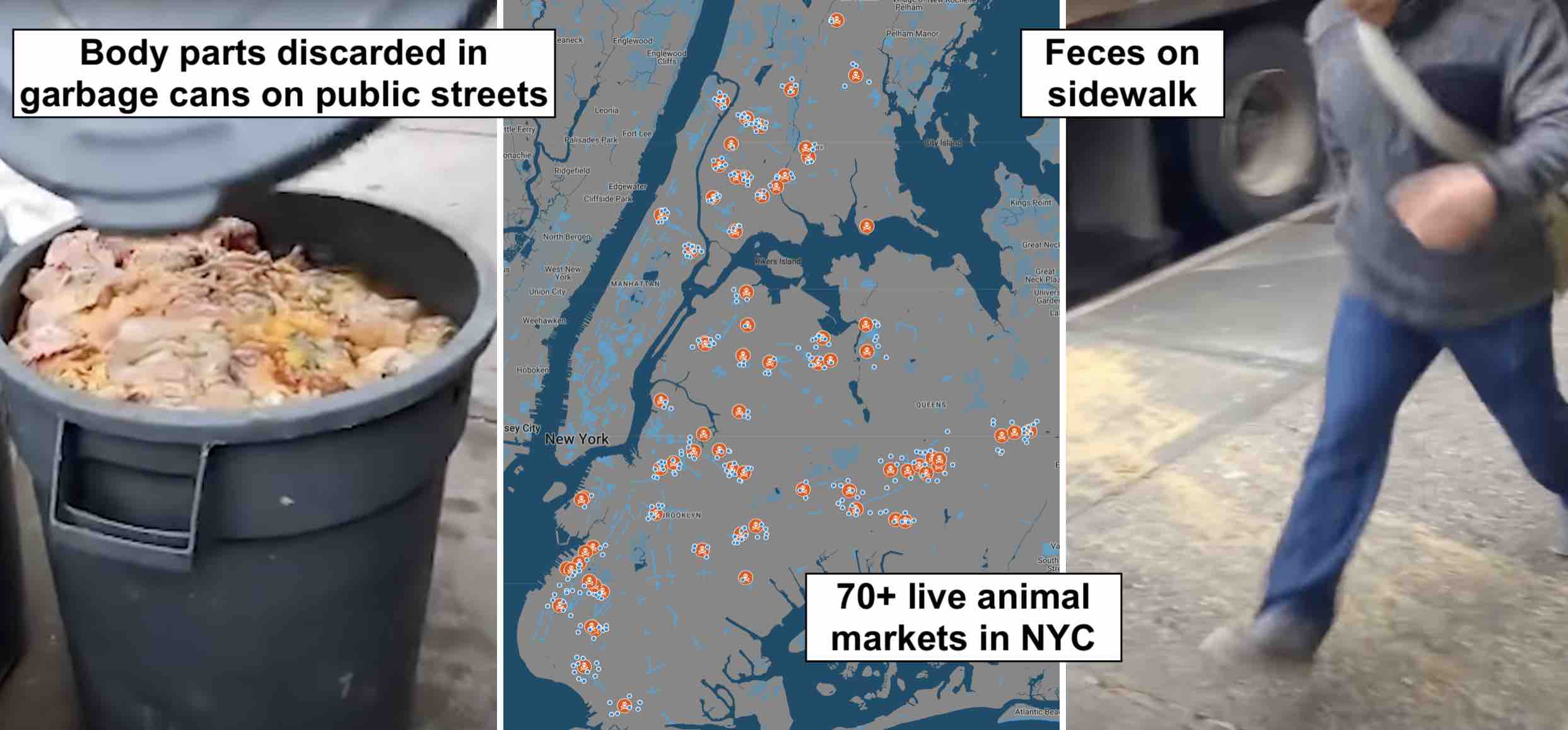
New York City’s 70+ live animal markets, also known as storefront slaughterhouses, are retail businesses that are open to the public. Many operate in densely populated neighborhoods and are located in close proximity to homes, health care facilities, businesses, public transportation, schools and playgrounds. Despite the biohazards, customers are not required to wear PPE to protect themselves and the animals from disease. Among the 10 or more bird species slaughtered in these markets are chickens, turkeys, ducks, geese, pigeons, quails and pheasants. 

“For years, I have been documenting and reporting dead chickens left in open dumpsters and puddles of blood and feces contaminating the sidewalks and streets in front of live animal markets in Queens,” said Edita Birnkrant, the Executive Director of the animal advocacy group NYCLASS. “The filthy sidewalks and putrid odors compromise the quality of life of everyone who lives and works in their vicinity and pose health risks, along with serious animal welfare violations that go ignored. That is why NYCLASS supports passage of state legislation that would prohibit the operation of these neighborhood slaughter markets and create a task force to investigate the public health risks and animal welfare concerns.”

The sidewalks in front of NYC’s live animal slaughter markets, many of which are located near schools and playgrounds, are often contaminated with feces and body parts

In response to the recent avian flu outbreak in New York in March 2022, the NY State Department of Agriculture and Markets banned the operation of fowl shows, auctions and exhibitions. In his announcement about the ban, Richard Ball, the Commissioner, stated, “By banning fowl shows and exhibitions in New York until further notice, we are taking a commonsense step to limit the co-mingling of birds to slow the spread of this disease.” Labiosa, the school parent, believes this ban should apply to New York’s live markets too. “Given how tightly confined the animals are, avian flu could spread like wildfire if an outbreak occurs in a live animal market,” said Labiosa. “They should not be exempt.” 

Irma Labiosa and her son Max walk by a live animal market located one block away from Max’s public school in New York City

Across the street from the live animal market near her son’s school, Labiosa told TheirTurn that she believes that the presence of live animal markets in lower-income areas is a form of environmental racism. “Wealthy New Yorkers would never allow slaughterhouses to operate in their neighborhoods, but lower income communities don’t have the resources to fight back,” said Labiosa. 

Labiosa’s son, Max, is also disturbed by the live animal market near his school, though, while speaking to TheirTurn, he expressed more concern about the mistreatment of animals than getting sick: “I’ve seen trucks stuffed with chickens, ducks and other birds. It makes me sad to see them treated that way.” Neither Labiosa nor Max eat meat anymore.

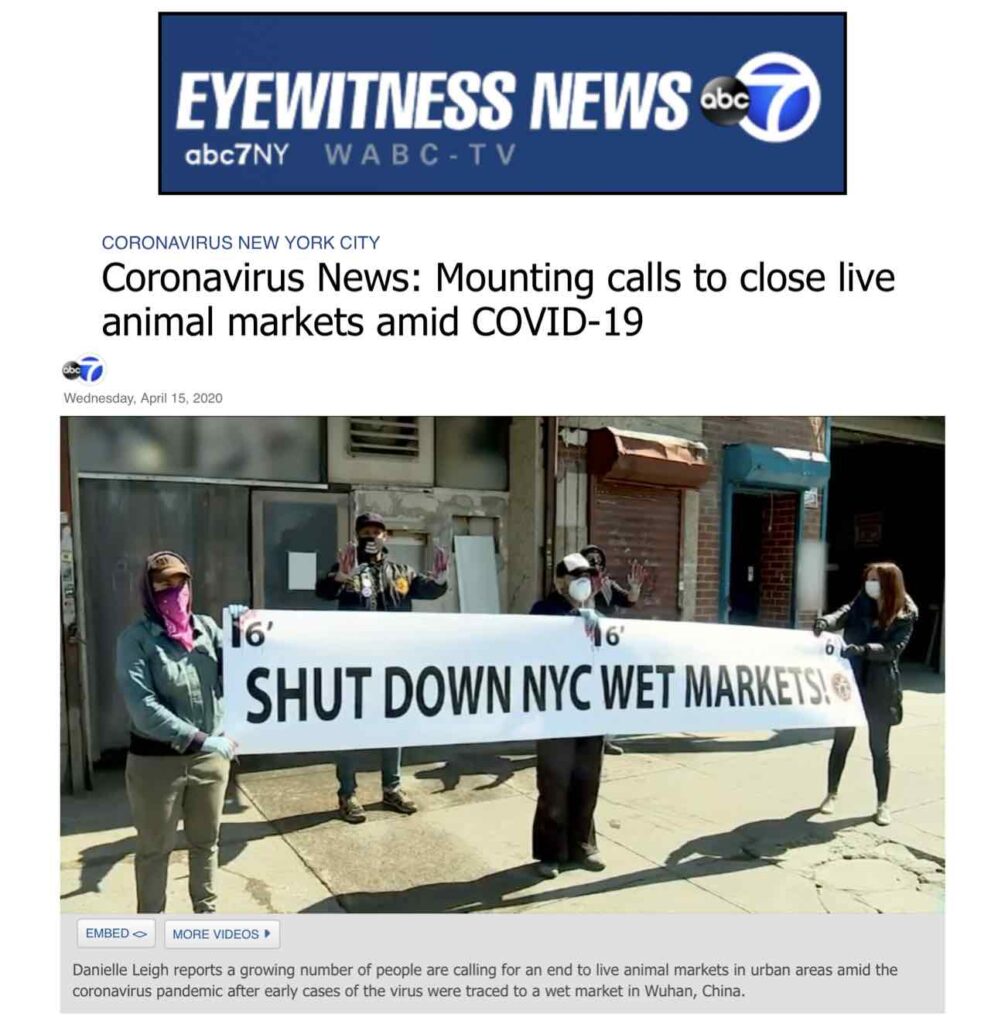
When COVID-19 reached New York, mainstream media outlets reported on the ongoing efforts of the advocacy Slaughter Free NYC to shut down the City’s 70+ live animal markets (click photo to view ABC News story)

Since 2019, Slaughter Free NYC, an advocacy group comprised of public health and animal rights advocates, has been calling on city and state officials to shut down the city’s 70+ live markets until a public health risk assessment is conducted. The group believed that the outbreak of COVID, which is believed to have been transmitted to humans in a live animal market, would trigger them to take its concerns more seriously, but they did not react. In fact, instead of shutting down the live markets, the state designated them as “essential businesses” during the lock down in March 2020.

Despite the government’s decision to ignore the calls of Slaughter Free NYC, the COVID outbreak did generate widespread mainstream media coverage about the risks of live animal markets and the advocacy group’s efforts to shut them down. In July 2020, Now This released a 10 minute documentary film (Here’s What Goes on Inside America’s Wet Markets) that went viral on social media.


Activists Protest Humane Society of NY Board Member Alexandra Rowley Over Animal Warehousing

April 20, 2022 by Comments are off for this post


The News

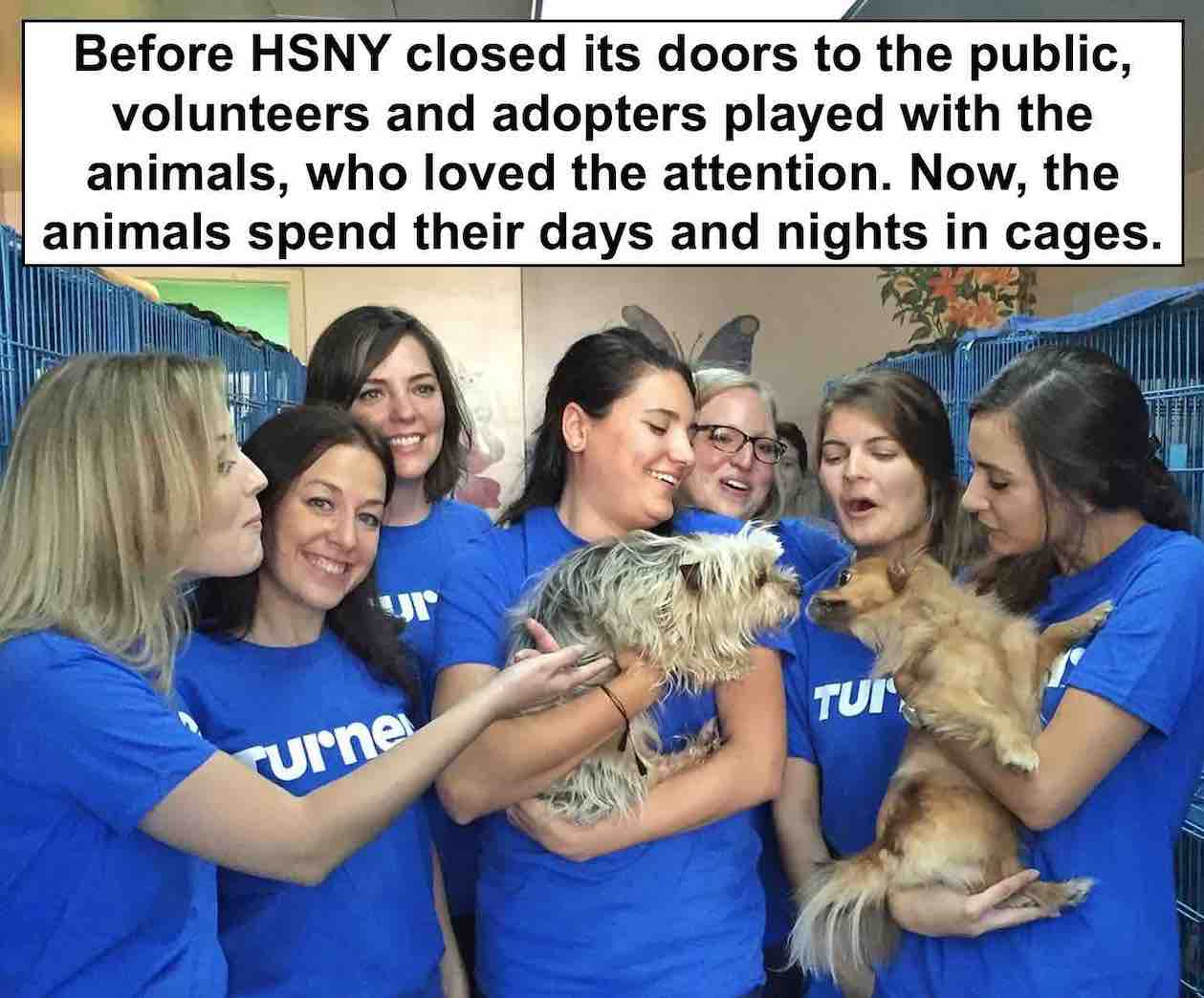
Prompted by verified reports of animal warehousing at the Humane Society of New York (HSNY), approximately 30 animal rights activists staged a protest at the Manhattan home of one of its board members, Alexandra Rowley. While chanting, marching and playing the bagpipes, the activists called on Rowley to re-open the shelter to the public and resume adoptions in earnest or send the animals to other adoption centers. The protest came nine months after a whistleblower at the shelter informed animal advocates that adoptions had come to a virtual standstill and that the animals had been languishing in cages for months, and, in many cases, years.

TAPinto Sutton Place/Lenox Hill, a local media outlet, filmed the activists protesting at Rowley’s home and marching to the shelter, which is two blocks away. It also posted an in-depth story about the protest and the campaign to help the animals.

During a briefing before the protest, Bonnie Tischler, the former Adoption Director of 22 years, spoke to the activists about the plight of the animals and the management culture that enables warehousing to take place. She noted that the shelter features just 14 animals on its website, despite having dozens more who need homes. She also explained that HSNY’s claim that the shelter is closed to the public due to COVID is misleading, as re-opening could subject the organization to another Americans with Disabilities Act (ADA) lawsuit. Before the pandemic, HSNY settled a lawsuit filed by a man who could not safely access the building in a wheelchair. Despite having ample resources, HSNY has neither renovated the building to make it ADA-compliant nor filed permits with the NYC Department of Buildings to do the work.

In January 2022, Tischler sent letters to HSNY’s board members, including the famous socialite Cornelia Guest, pleading with them to re-open the building to the public. During phone calls with board members Alexandra Rowley and James Gregorio, Tischler said she would call off the campaign if they provided evidence that adoptions had been routinely taking place since they closed the building in April 2020, as Executive Director Sandra DeFeo claimed. Rowley and Gregorio promised to follow up with that information, but neither did, despite Tischler’s follow up.

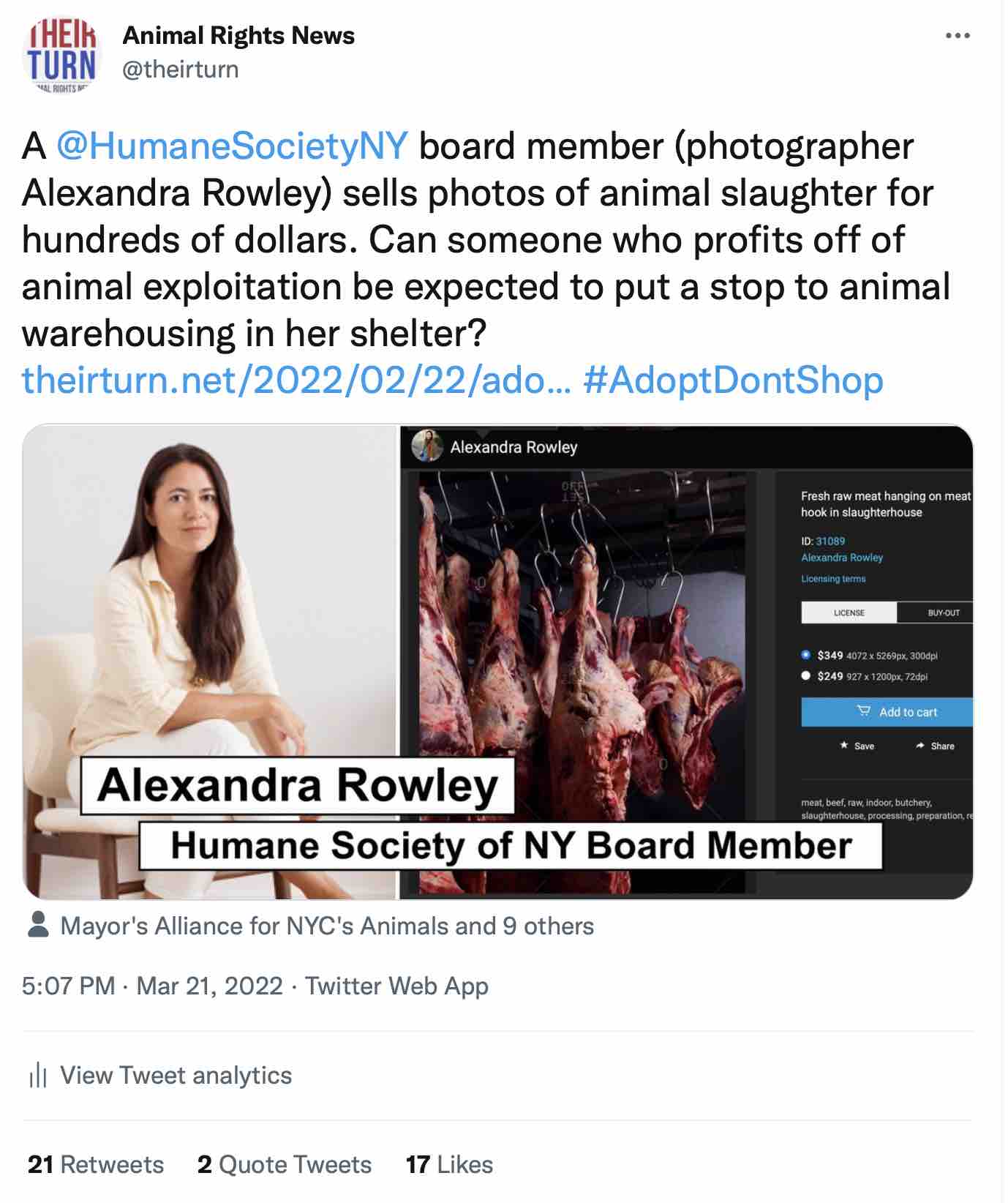
Despite the fact that she sits on the board of an animal shelter, Alexandra Rowley, who is a professional photographer, sells and licenses stock photos of slaughterhouses, fish processing facilities and animal-based meals

Upon learning about the warehousing allegations in August 2021, TheirTurn conducted a two-month investigation and, in October 2021, posted a detailed report. The investigation, which corroborated the whistleblower allegations, revealed that HSNY was ignoring adoption applications; was doing hardly any adoption promotion on social media; and was closed to the public under false pretenses.

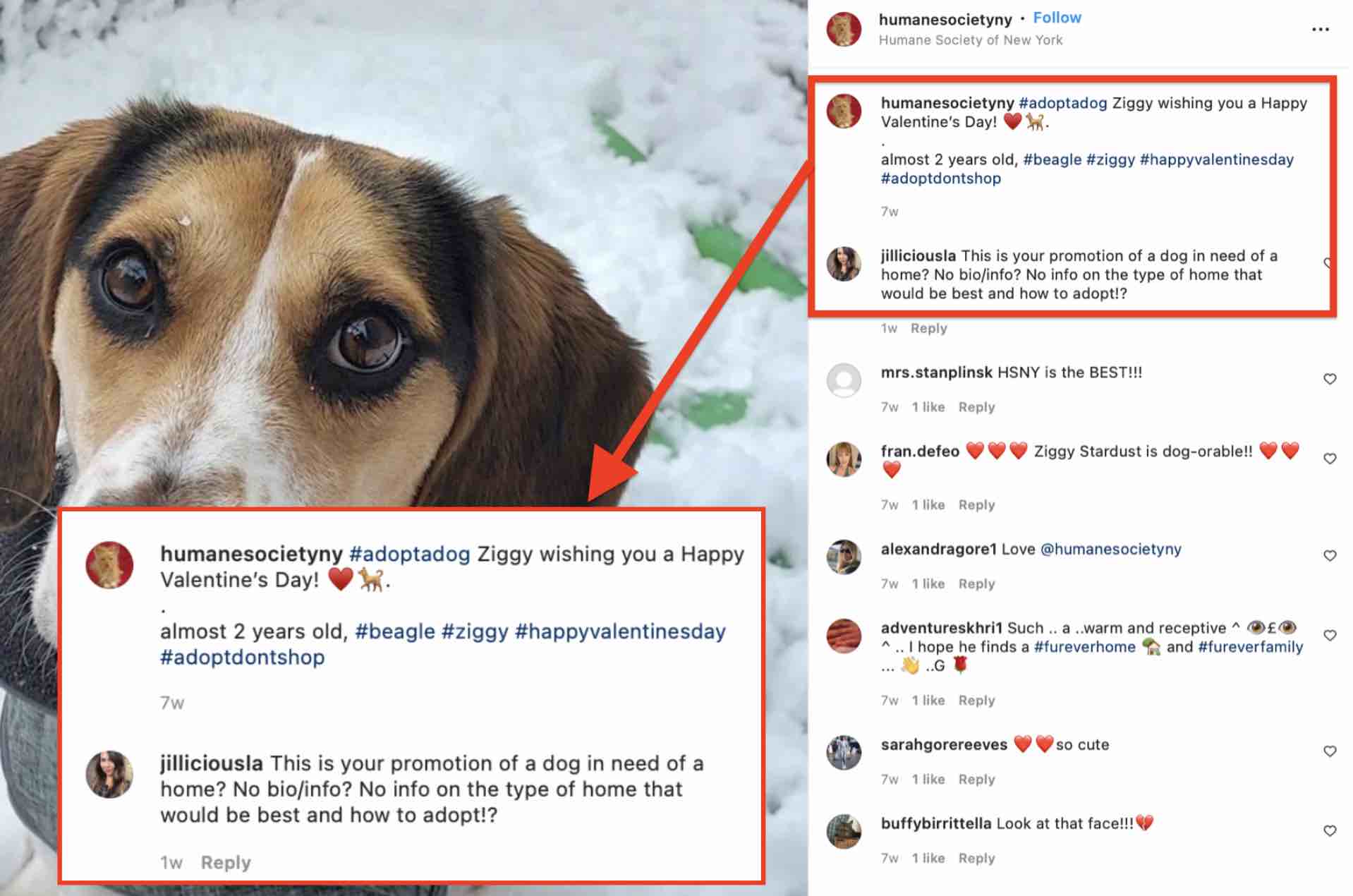
Unlike most shelters, which post photos and bios of animals on their social media pages on a daily basis, the Humane Society of New York makes only an occasional adoption post with virtually no information about the animal and adoptions process

In March 2022, TheirTurn launched a letter writing campaign calling on HSNY’s board members to re-open the building to the public or send the animals to other facilities. Two of the five board members who were targeted in the campaign, C. Jones Perry and James Gregorio, resigned. Both men are attorneys. 

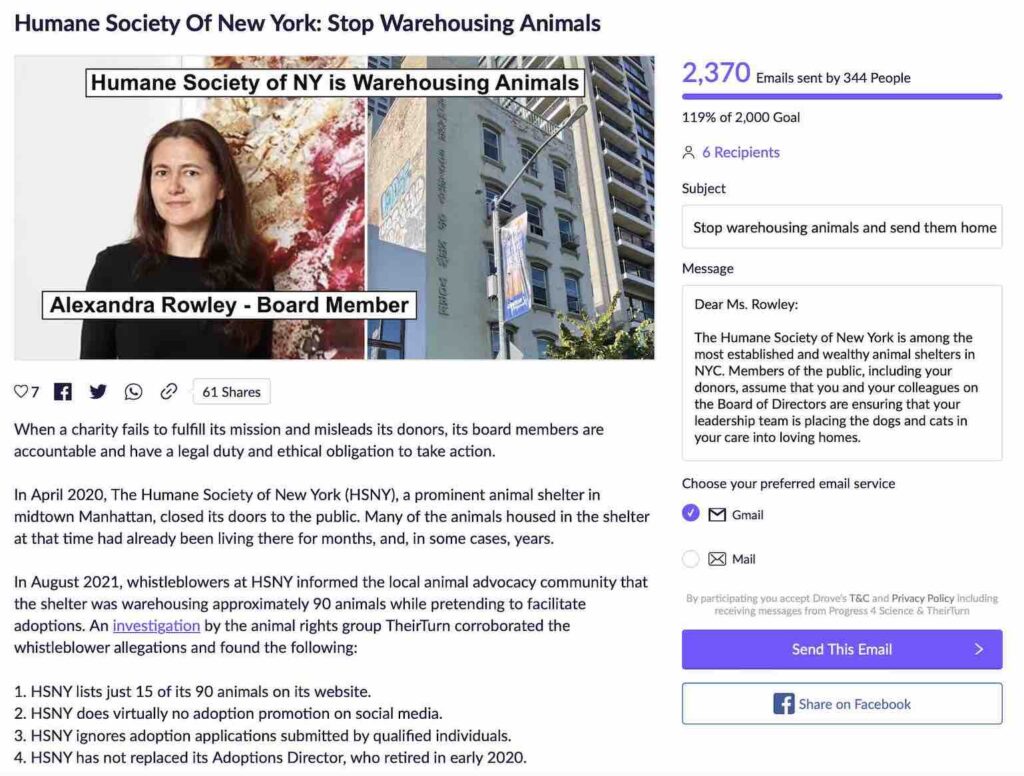
TheirTurn launched a letter writing campaign calling on Alexandra Rowley and her colleagues on the Board of Directors of the Humane Society of New York to re-open their doors to the public and resume adoptions in earnest or send the animals to other adoption centers

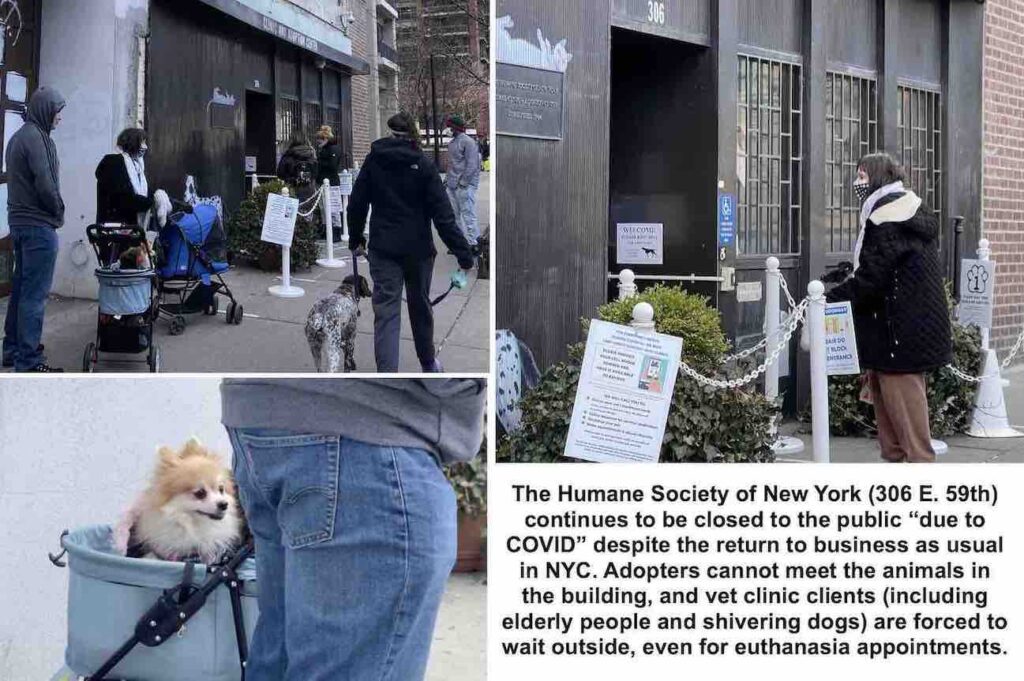
In addition to having an animal adoption center, HSNY has a low-cost vet clinic, which is funded in part by the organization’s donors. Because the building is closed to the public, clients are forced to wait outside in all weather extremes instead of being with their animals during their vet appointments and/or waiting in the lobby. Clients are not even allowed to be with their animals when they are euthanized. In March 2022, a neighbor of HSNY told TheirTurn that she witnessed an employee refuse entry to an 80 year old woman with a walker who asked twice to use the bathroom while she waited outside in the cold for her dog.

The Executive Director of the Humane Society of New York, Sandra DeFeo, claims that the building is closed to the public due to COVID, but labor lawyers have corroborated whistleblower allegations that re-opening the building would subject the organization to another Americans with Disabilities Act (ADA) lawsuit. The building is not accessible, and HSNY has not filed permits with the NYC Department of Buildings to make renovations.

In February 2022, Tischler sat down for an on-camera interview with TheirTurn to speak out about the warehousing taking place at HSNY.  She has come out of retirement to take a leadership role in the campaign to help the animals.

Your Turn

If you’d like to be a voice for the cats and dogs, please take any or all of the following steps:

  1. Follow the the Facebook group, Humane Society of NY: Stop Warehousing Animals, for action alerts
  2. Send an automated letter to the members of the board
  3. Sign the petition

Animal Rights Activists Disrupt Nike’s Flagship Store in NYC over Sale of Kangaroo Skin

March 17, 2022 by 4 comments


The News

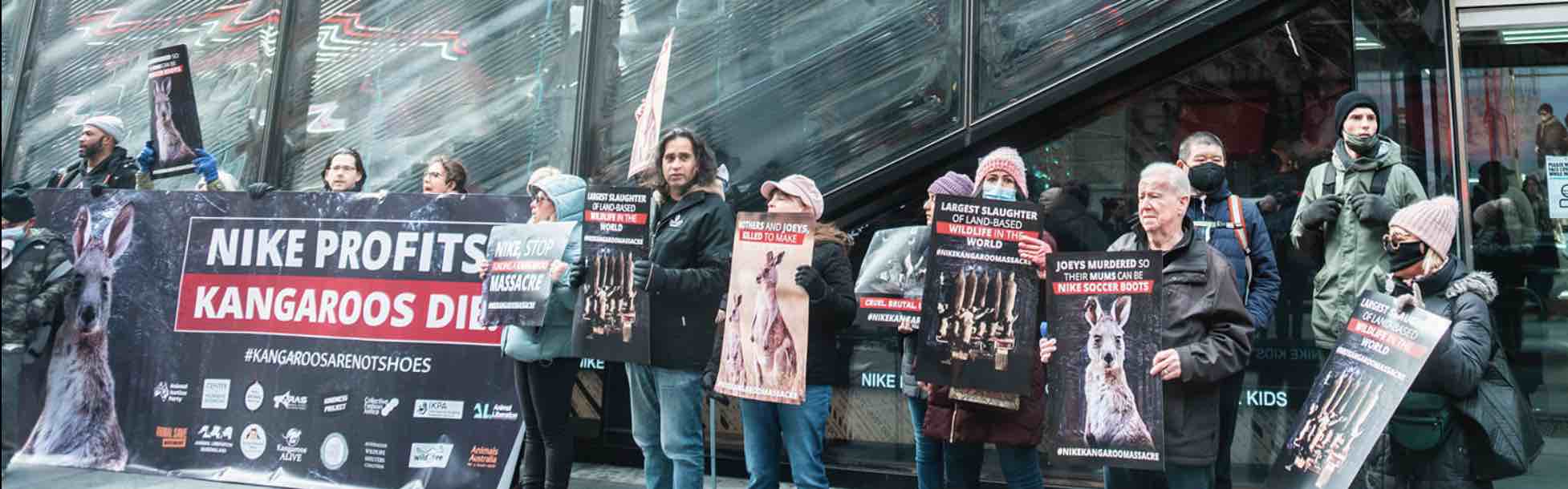
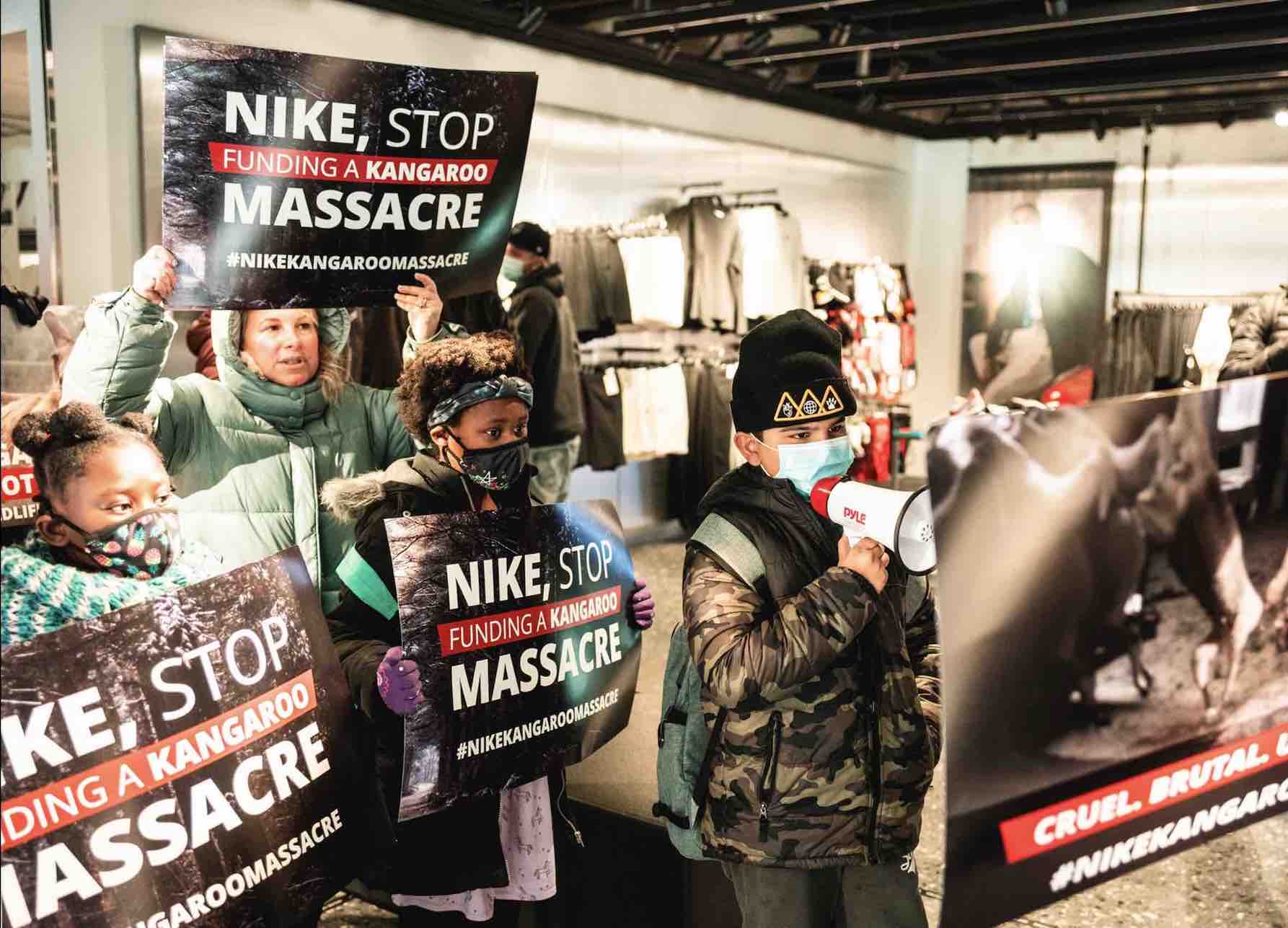
Animal rights activists staged a disruption inside of Nike’s flagship store in New York City as part of a “Global Protest Day” against the company’s support of the mass slaughter of kangaroos for soccer shoes. Organized by the Center for A Humane Economy, a Washington-D.C.-based advocacy group leading a campaign to end the use of kangaroo leather, the protest called on Nike to stop hunting kangaroos and stealing their skin.

After chanting on megaphones for 30 minutes and distributing information to customers, the activists exited the store, with prodding by the NYPD, and unfurled a banner at the entrance – “NIKE PROFITS. KANGAROOS DIE.”  The protest continued on Fifth Avenue, where activists engaged with customers and pedestrians.

Animal rights activists with the Center for a Humane Economy, NYCLASS and TheirTurn protest Nike's use of kangaroo skin at the company's flagship store in Manhattan

Animal rights activists with the Center for a Humane Economy, NYCLASS and TheirTurn protest Nike’s use of kangaroo skin at the company’s flagship store in Manhattan

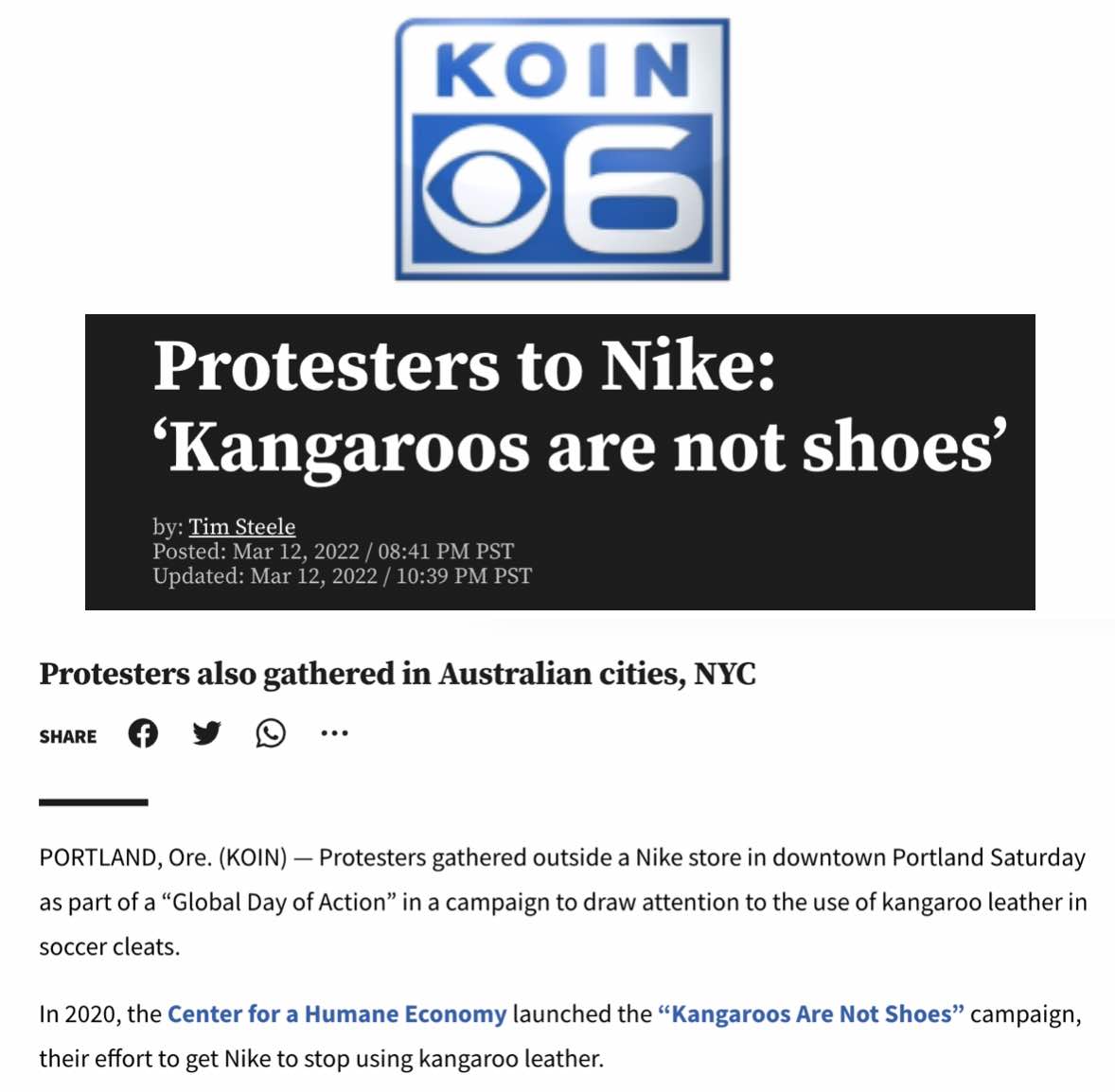
As part of the Global Protest Day, animal rights groups also staged #KangaroosAreNotShoes disruptions in Portland, Oregon, where Nike is headquartered, and in Sydney, Melbourne, Brisbane, Canberra and Adelaide.

As part of the “Global Protest Day” against Nike’s support of the mass slaughter of kangaroos in Australia, animal rights activists in Portland staged a #KangaroosAreNotShoes protest at a Nike store near the company’s global headquarters.

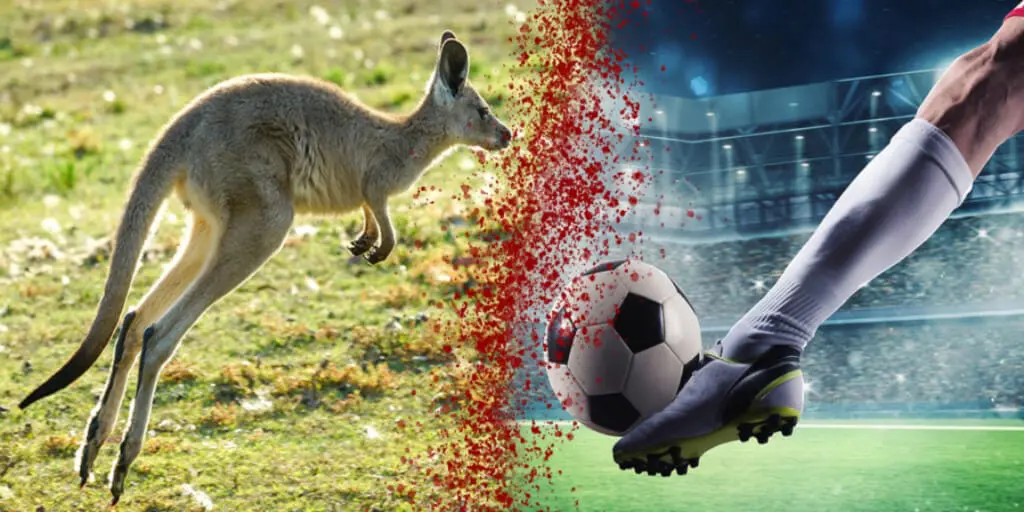
The massacre of kangaroos in Australia represents the largest slaughter of land-based wildlife in the world. According to the Center for a Humane Economy, approximately two million kangaroos are killed each year for commercial purposes. Seventy percent of them are used to make soccer shoes.

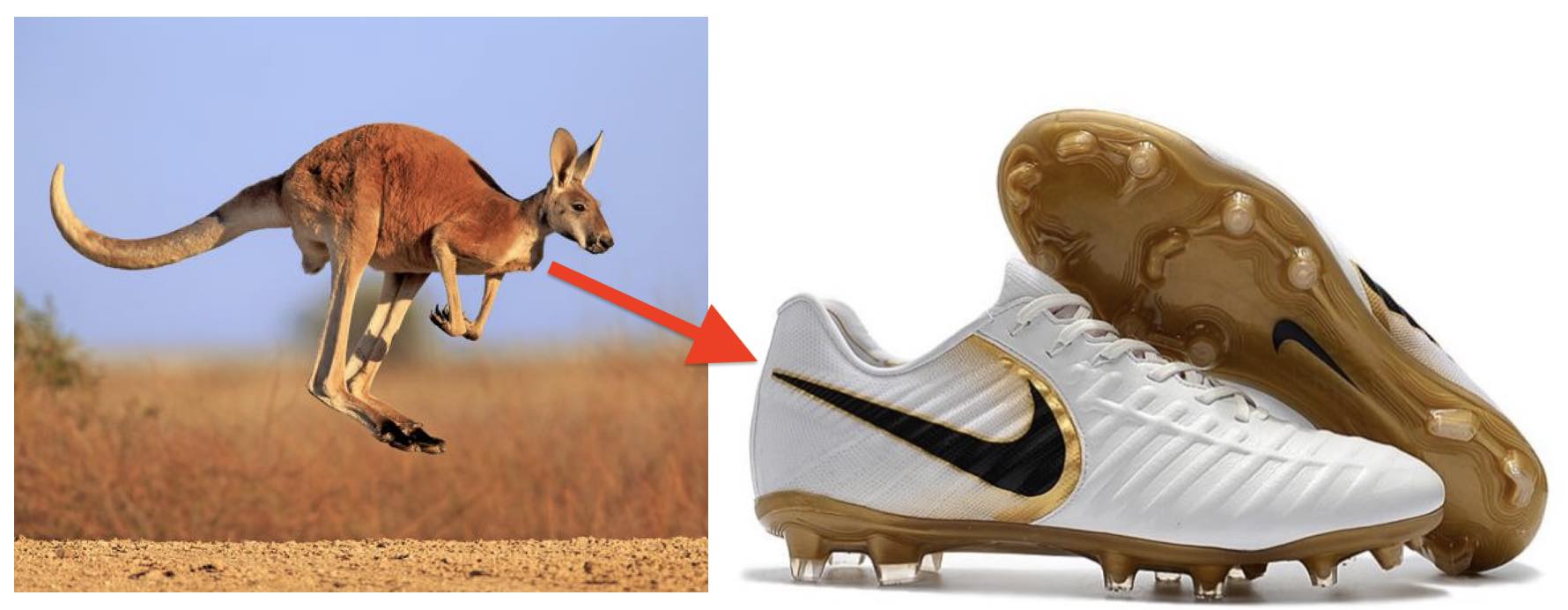
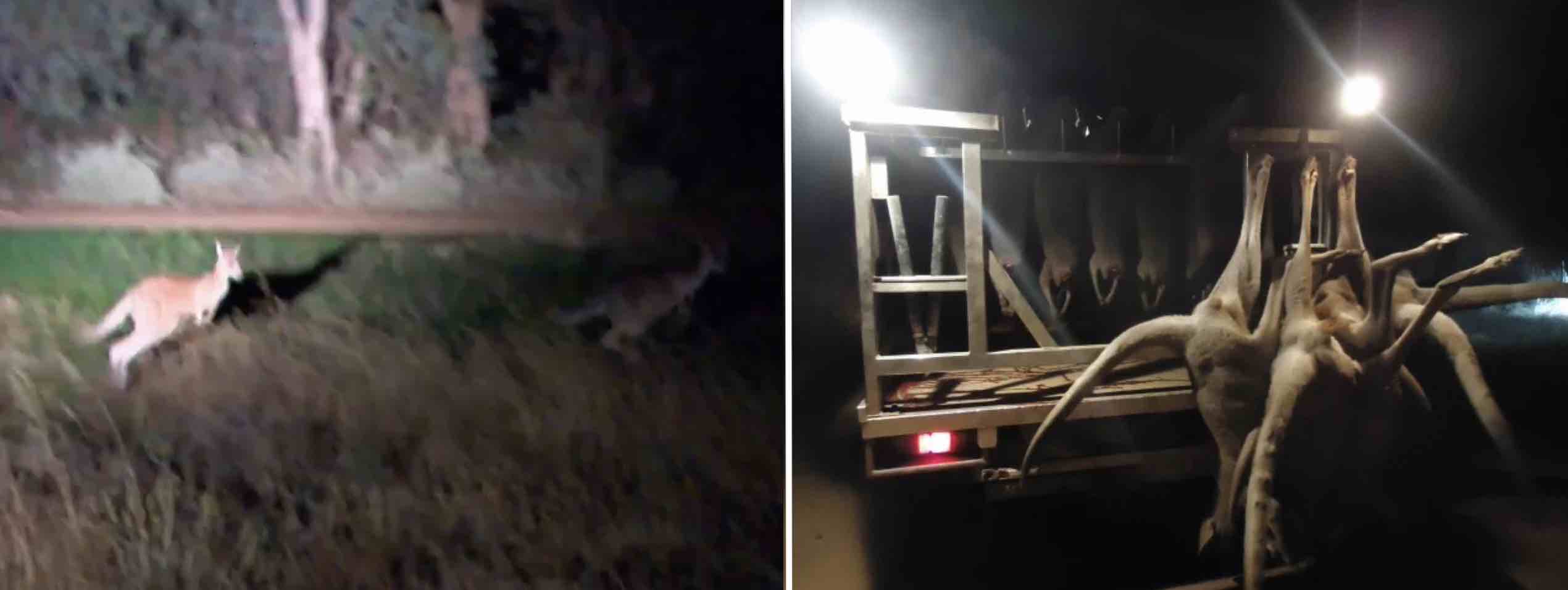
Nike make soccer shoes from the skin of kangaroos in Australia who are hunted down at night and shot in the head

Animal rights groups argue that killing wild kangaroos is especially cruel because an estimated 40% of the victims don’t die instantly. In some cases, the wounded kangaroos escape and die slowly from the gunshot.

Each year, hunters in Australia kill an estimated approximately two million kangaroos for commercial purposes.

The mass killing has secondary victims. When mothers are shot, their babies (joeys) typically don’t die with them. In accordance with government guidelines, the hunters bludgeon them to death. Some of the babies escape, only to die slowly from exposure and predation. Each year, hundreds of thousands of joeys die during the nightly kangaroo hunt.

“Slaughtering mothers and their babies in the dark of night is an atrocity,” said Edita Birnkrant, the Executive Director the animal rights group NYCLASS and an organizer of the NYC disruption. “How do Nike executives sleep at night knowing how much pain and suffering they are causing?”

Nike supports the mass slaughter of wild kangaroos in order to use their skin to make soccer cleats

According to The Center for a Humane Economy, Nike rationalizes the mass slaughter of wild kangaroos by engaging in green washing and humane washing. Nike states, “Suppliers must source animal skins from processors that use sound animal husbandry and humane animal treatment/slaughtering practices whether farmed, domesticated or wild (managed) . . . If wild caught, [kangaroos] must be sourced from actively managed populations with government agency oversight.”

Animal rights activists, including young children and senior citizens, disrupted business in Nike’s flagship store in NYC over the company’s support of the mass slaughter of kangaroos to make soccer cleats

The sale of kangaroo parts is banned in California. The Kangaroo Protection Act, federal legislation introduced in 2021, would ban their sale nationwide. Several retailers, including Nordstrom, Gucci, Prada, and Versace, have stopped selling kangaroo skin products.