
Their Turn - The Social Justice Movement of Our Time Their Turn - The Social Justice Movement of Our Time

Activists Protest Humane Society of New York Over Animal Warehousing

August 10, 2022 by 2 comments


The News

Animal rights activists staged a protest at the Humane Society of New York (HSNY) to sound the alarm about the plight of the animals who have been warehoused at the Manhattan shelter for 28 months. During the 90 minute protest, the activists spoke to dozens of area residents and clients of HSNY’s vet clinic, who are not allowed in the building with their companion animals for exams or euthanasia appointments. They also confronted several employees exiting the building, including staff veterinarians Dr. Ralph Gutierrez and Dr. Shingo Soeda. Many of the interactions were caught on camera. 

The protest comes 13 months after a whistleblower at the HSNY informed local animal rights activists that adoptions had come to a virtual standstill since the HSNY closed its building to the public in April 2020. The whistleblower also reported that the HSNY’s Executive Director, Sandra DeFeo, is keeping the building closed to the public under false pretenses. DeFeo claims that the building is closed due to COVID. However, according to the whistleblower and lawyers advising the activists, she cannot reopen the building because of violations of the Americans with Disabilities Act (ADA). The HSNY already settled one ADA lawsuit and, unless it takes steps to make the building wheelchair accessible according to ADA guidelines, it cannot reopen to the public without subjecting itself to another.  
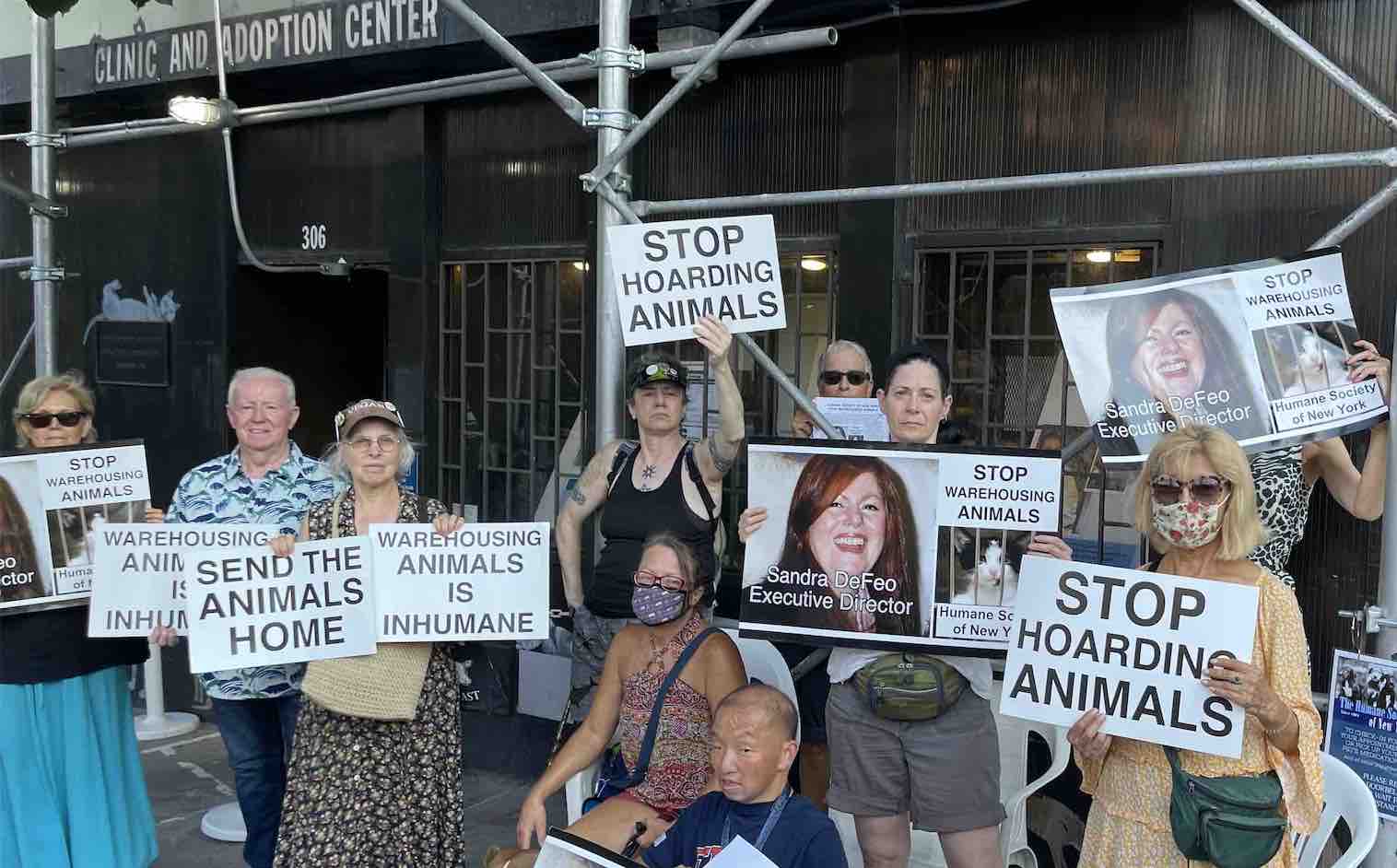
Animal rights activists display posters calling on the Humane Society of New York to stop warehousing animals

Animal rights activists are calling on the Humane Society of New York, which has been closed to the public for 28 months, to send the animals to adoption centers that are open to adopters.

During the protest, activists spoke to several area residents who said that they attempted to adopt from the HSNY in recent months but were either ignored or turned away. These and other neighbors said they were perplexed by the ongoing closure of the building and disturbed to learn that the building is filled with homeless animals who hadn’t been seen by adopters in over two years. Clients of the vet clinic who spoke to the activists expressed frustration about not being able to be with their companion animals during exams and about being forced to wait outside in the extreme heat instead of in the HSNY’s air-conditioned lobby. 
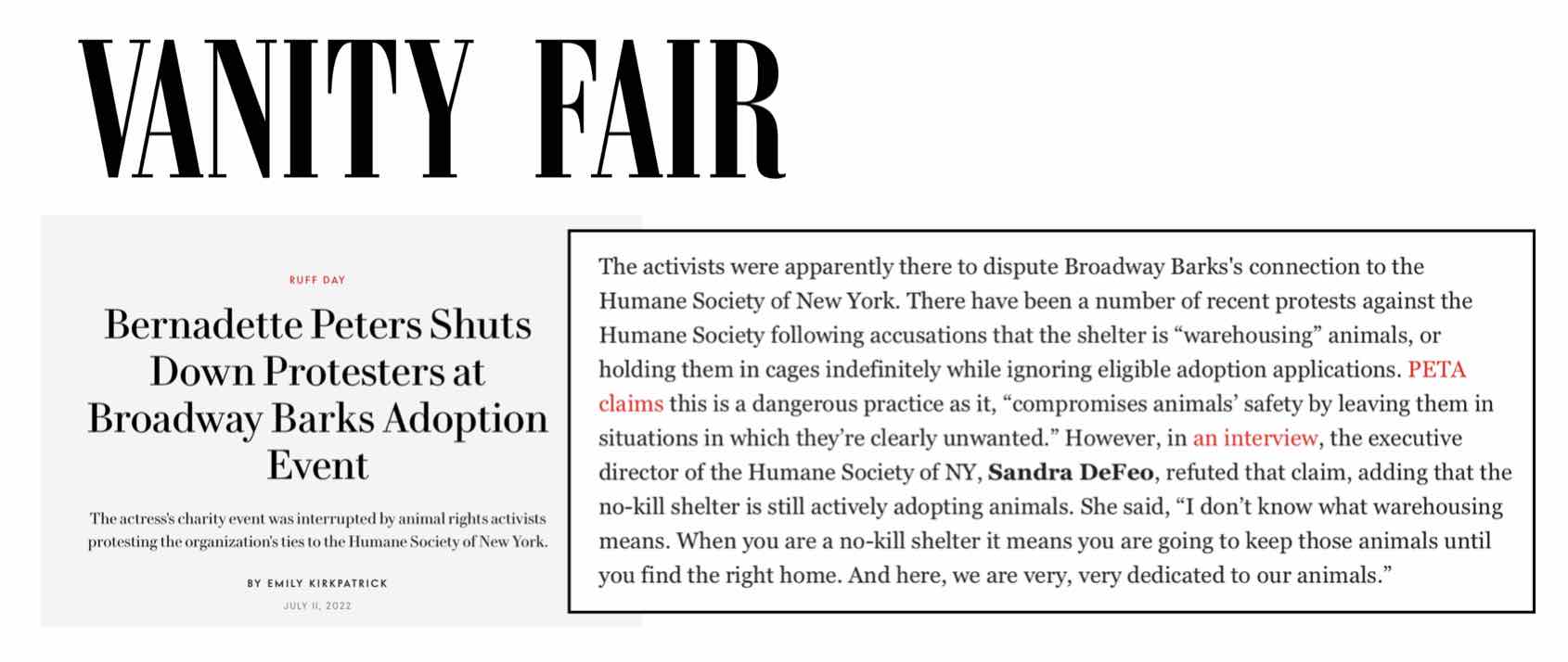
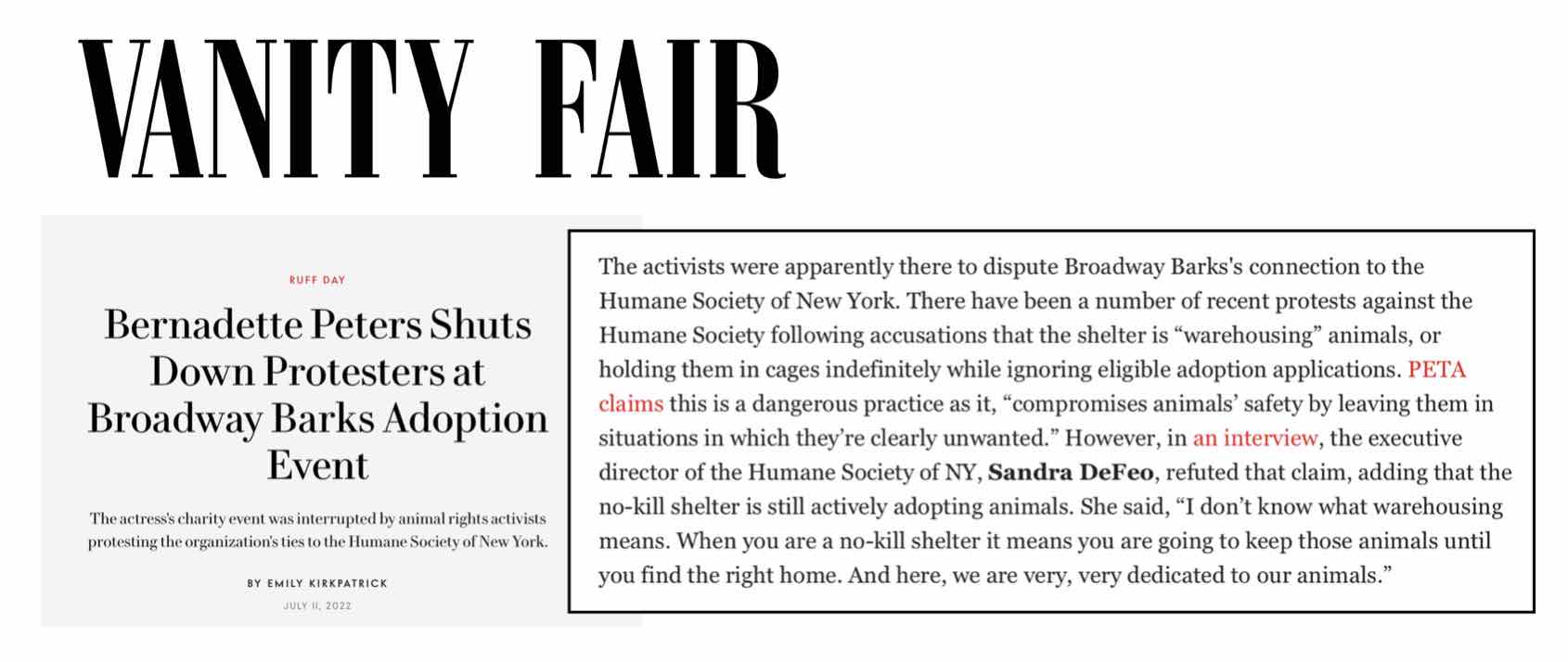
Image is an excerpt fro Vanity Fair Magazine which describes a protest about animal warehousing at an adoption event in the theater district

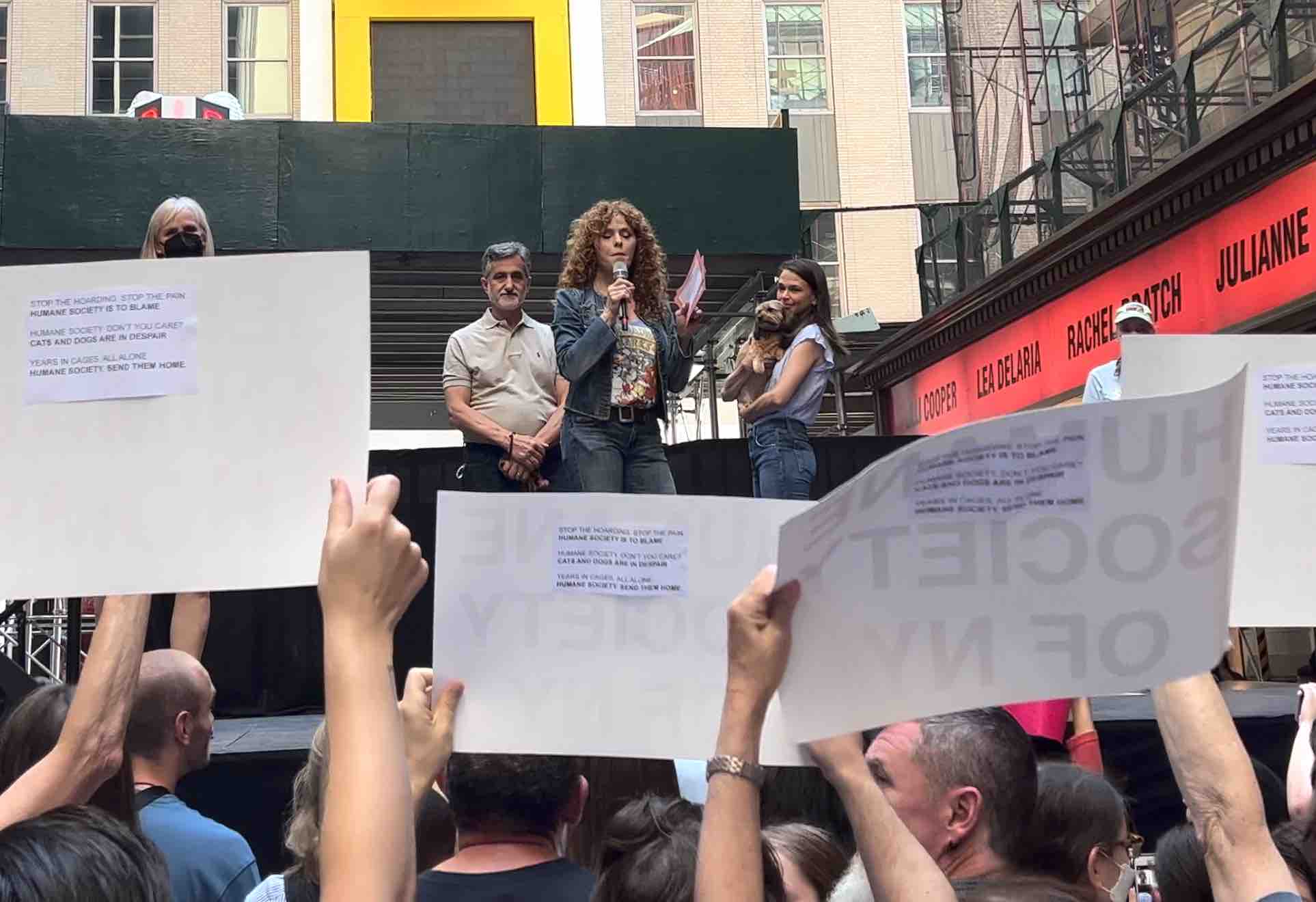
Vanity Fair, the Today Show and several other mainstream media outlets reported on an animal warehousing protest against the Humane Society of New York during Broadway Barks, a star-studded adoption event during which Bill Berloni, the HSNY’s animal trainer, was brought onto the stage.

Activists attempted to speak to two of the HSNY’s staff veterinarians as they exited the building, Dr. Ralph Gutierrez and Dr. Shingo Soeda, but both ignored them. As if swatting away a fly, Dr. Soeda used a hand gesture to dismiss the activists and their concerns about the animals.

“Veterinarians take an oath to relieve animal suffering,” said Christina Fritz, a former client of the HSNY’s vet clinic who joined the activists. “Turning a blind eye to the cats and dogs who have been stuck in cages right under their noses makes them complicit in the cruelty.”
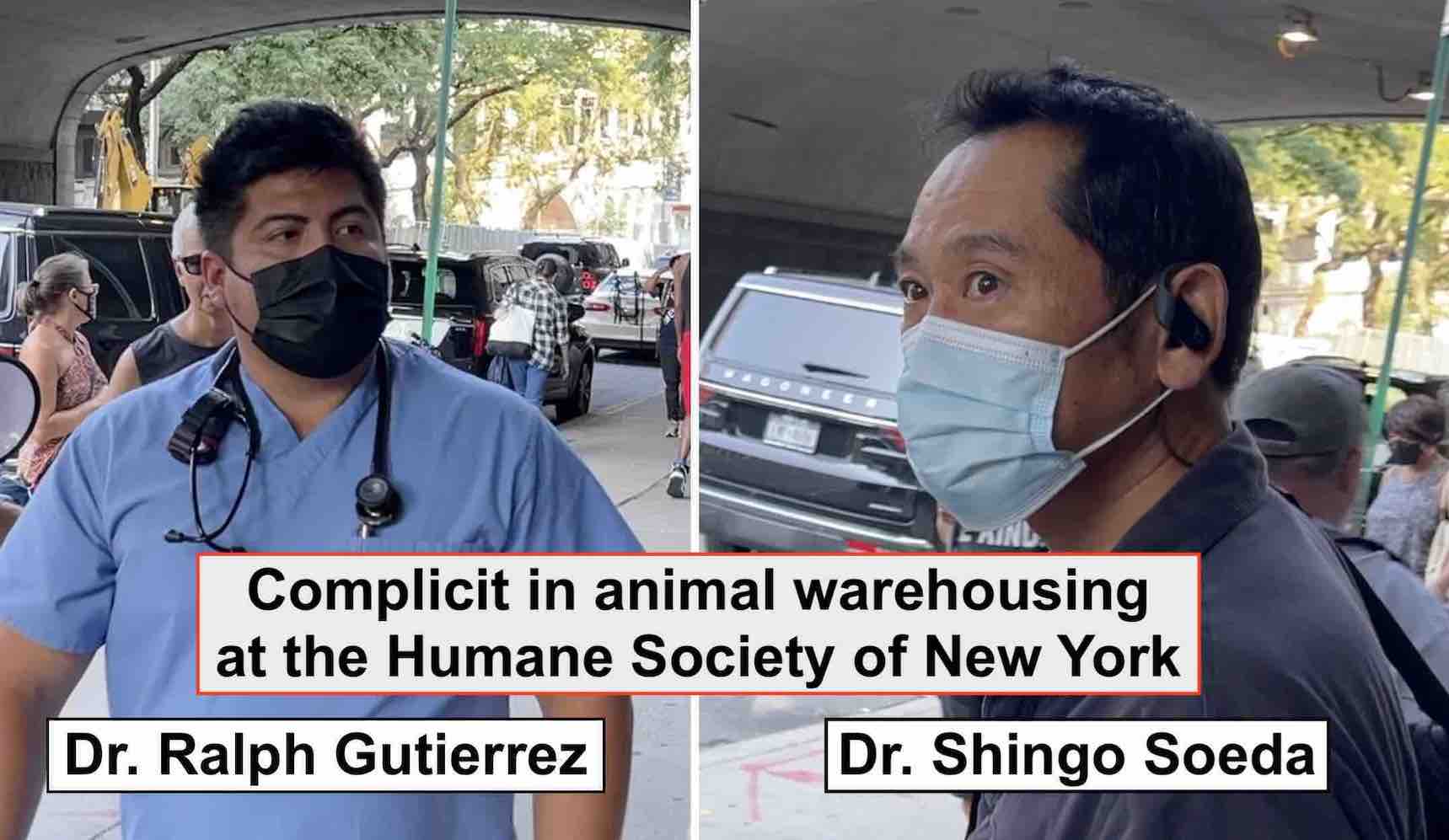
Image shows animal rights activists confronting two veterinarians from the Humane Society of New York about the warehousing of animals at their employer's adoption center

Dr. Shingo Soeda and Dr. Ralph Gutierrez, veterinarians at the Humane Society of New York’s vet clinic, ignore the activists attempting to talk to them about animal warehousing at organization’s adoption center.

During a call in July 2022, DeFeo told Fritz that the HSNY had adopted out about 150 animals since closing its building to the public 27 months earlier — in April 2020. If that number is accurate, which the activists doubt, then the HSNY has sent home an average of 1.4 animals per week, an appalling amount for a large, wealthy shelter in Manhattan that claims on its tax forms to have 125 – 175 animals.
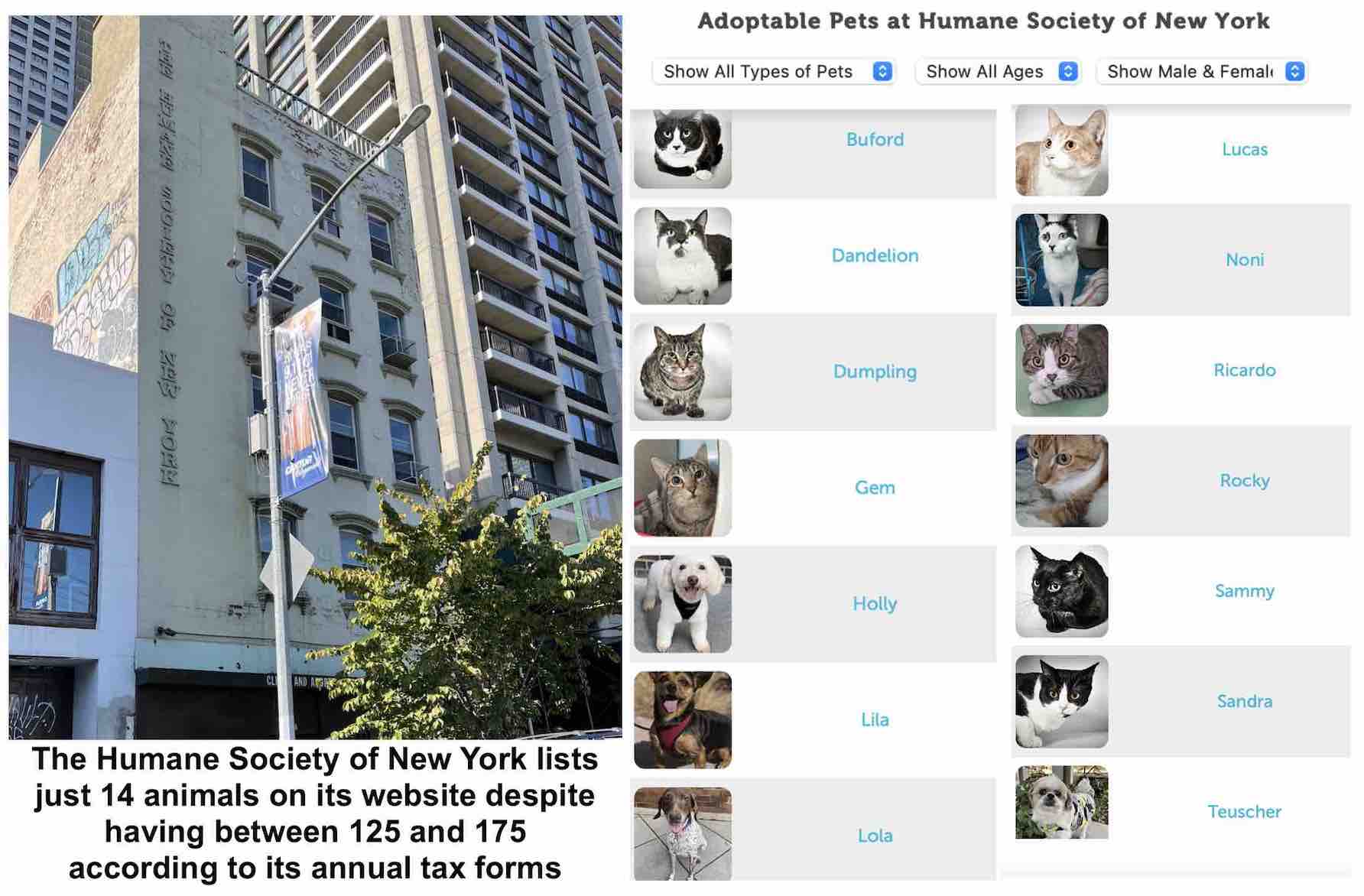
Image of the Humane Society of New York includes a visual of the only 14 animals posted on the shelter's website

In an apparent effort to minimize the number of adoptions she facilitates while keeping the Humane Society of New York closed to the public, Executive Director Sandra DeFeo lists just 14 animals on its website and does virtually no adoption promotion on social media.

“The Humane Society of New York is located in a bustling neighborhood at the crossroads of the Upper East Side and Midtown,” said Matthew Schwartz, a New Yorker whose adoption application was ignored by the HSNY. “A shelter in that location with ample resources should be doing adoptions every day.”
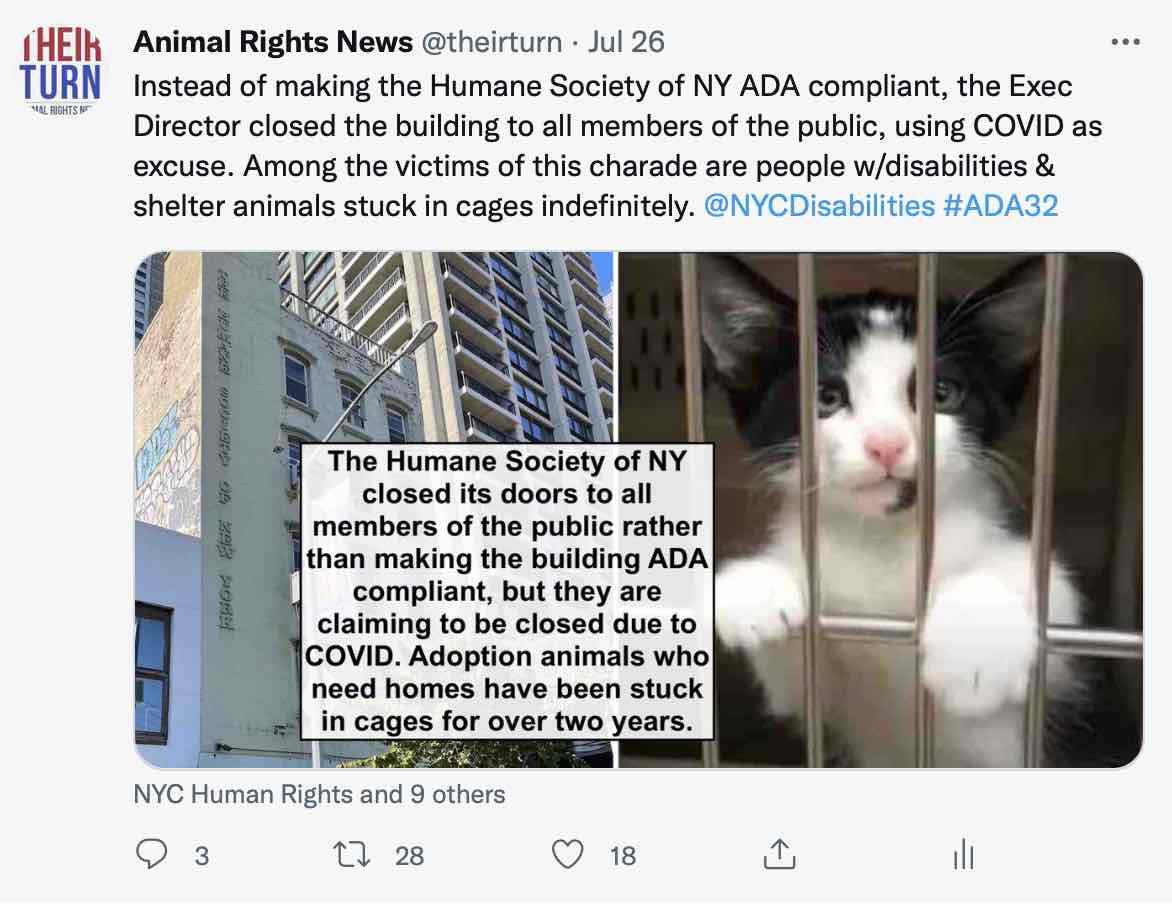
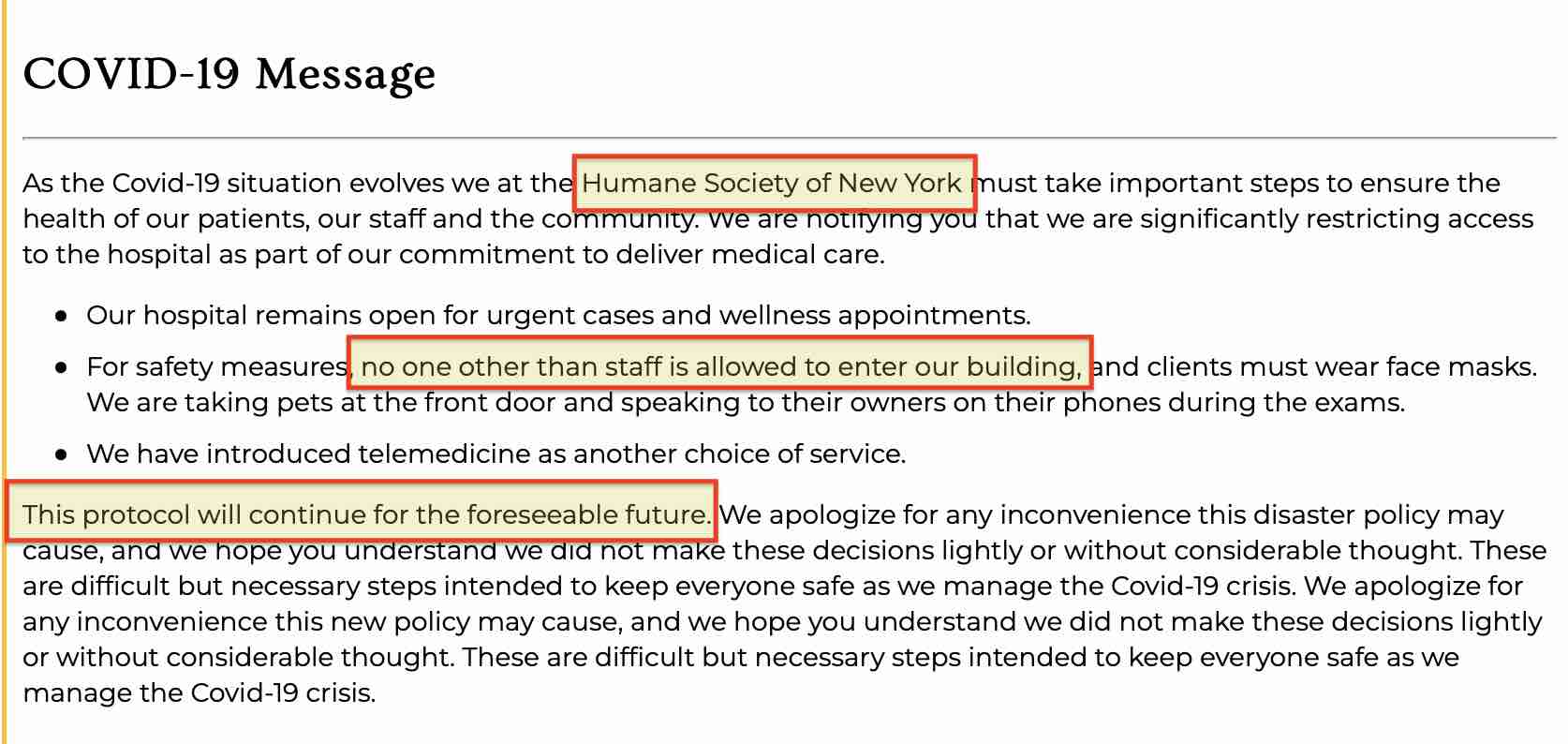
Image shows an animal in a cage with text stating that the Humane Society of New York is closed to the public under false pretenses

For the past 28 months, no adopters have entered the Humane Society of New York to meet the animals who need homes because the Executive Director, Sandra DeFeo, refuses to make the building wheelchair accessible. If she reopens the building without making the renovations, then she would be subjecting the organization to another ADA lawsuit.

In February 2022, HSNY’s Adoption Director of 22 years, Bonnie Tischler, recorded a testimonial about the plight of the animals being warehoused. Tischler, who retired in early 2020, has since joined dozens of animal rights activists in NYC calling on the HSNY to send the animals to foster homes and/or adoption centers where adopters can meet them. 

“Twenty eight months is far too long for homeless animals to not be seen by adopters who would otherwise be rescuing them,” said Tischler. “And, because the HSNY lists just a small fraction of its animals on its website and does little adoption promotion on social media, potential adopters don’t even know that the animals exist.”

During a phone call in August 2021, Donny Moss of TheirTurn asked DeFeo, the Executive Director, to send the adoptable animals to shelters that are open to the public or to foster homes. In response, she claimed that she has been “doing adoptions all along,” which Moss knew to be false based on his own two-month investigation. DeFeo also said that the shelter is the animals’ foster home; that their cages are like “apartments;” and that she would barricade the building if anyone tried to take out the animals.

“My heart sank when I heard the Director of an animal shelter describe cages as ‘apartments,’” said Moss. “Shelters are stressful for animals and are no substitute for loving homes where they can roam freely. Forcing cats and dogs to live in cages indefinitely is animal cruelty.”
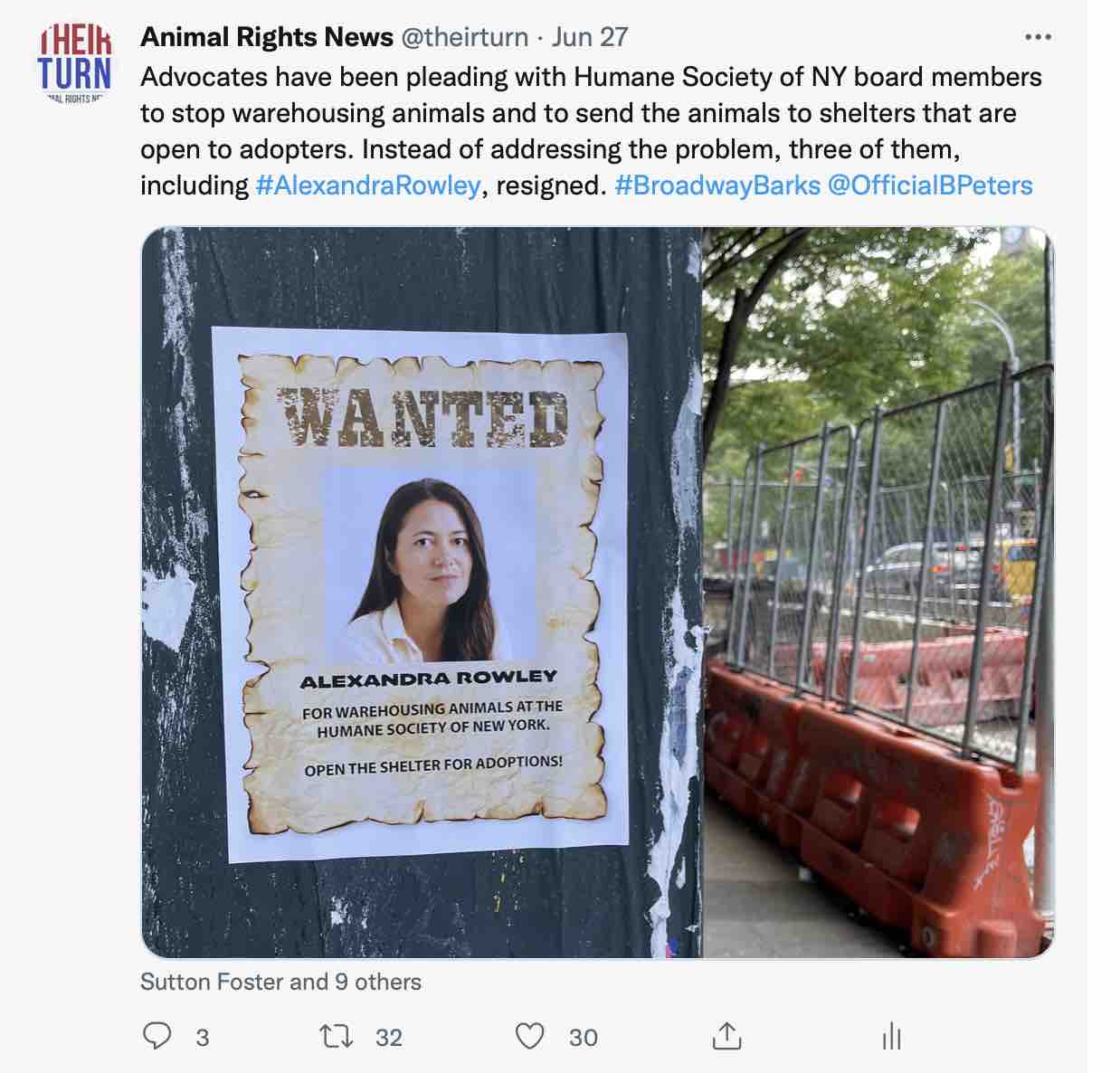
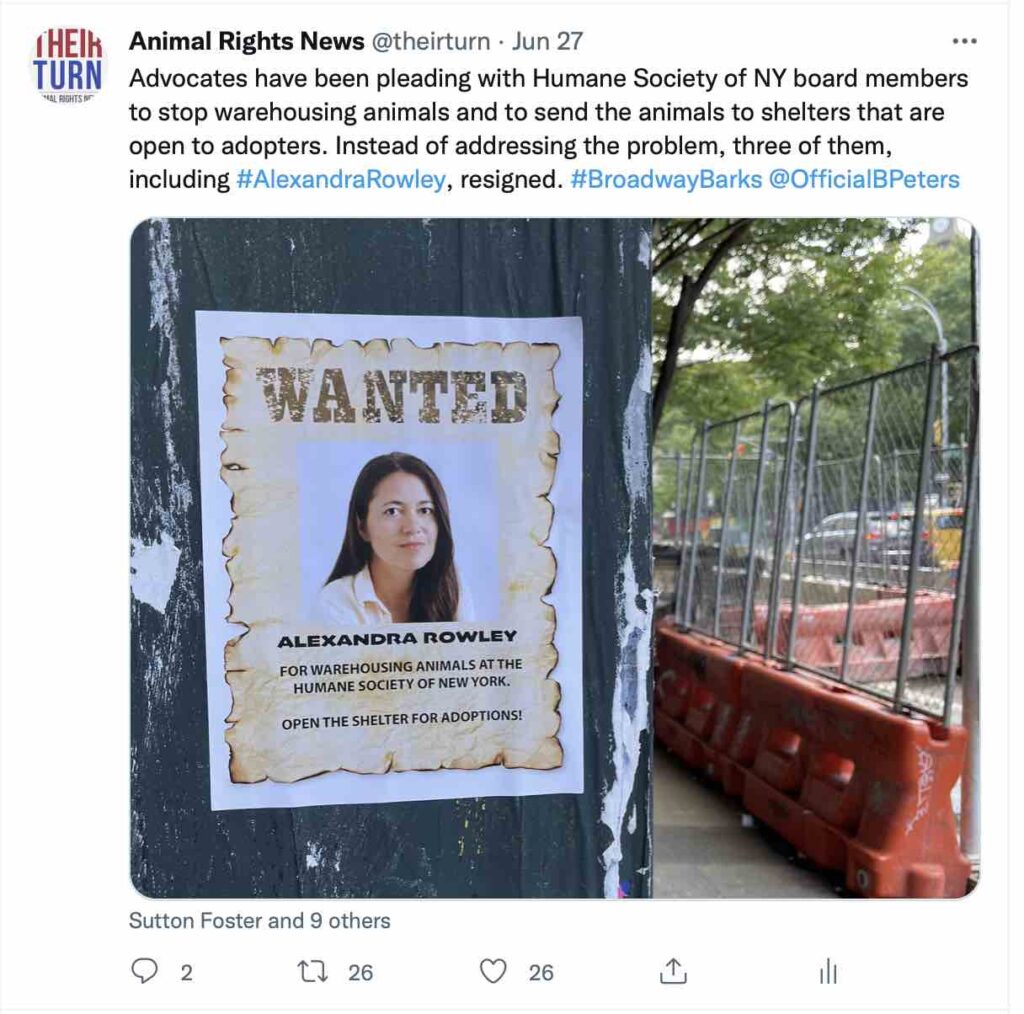
Image is a tweet showing a "Wanted for animal warehousing" poster of Humane Society of New York board member Alexandra Rowley that activists put up around New York City.

Three members of the Board of Directors of the Humane Society of New York have resigned amid the warehousing scandal – photographer Alexandra Rowley and attorneys C. Jones Perry and James Gregorio

Since launching the campaign to help the animals being warehoused at the HSNY, activists have staged seven protests — five at the home of Alexandra Rowley, a board member who resigned amid the protests; one at Broadway Barks, an adoption event in the theater district; and one at the HSNY. Activists say they will continue to protest the HSNY and the individuals enabling the organization’s bad behavior until DeFeo and her board of directors send the adoptable animals to adoption centers that are open to adopters.
Animal Rights Activists Disrupt Nike Flagship Store in NYC

August 5, 2022 by 3 comments


The News

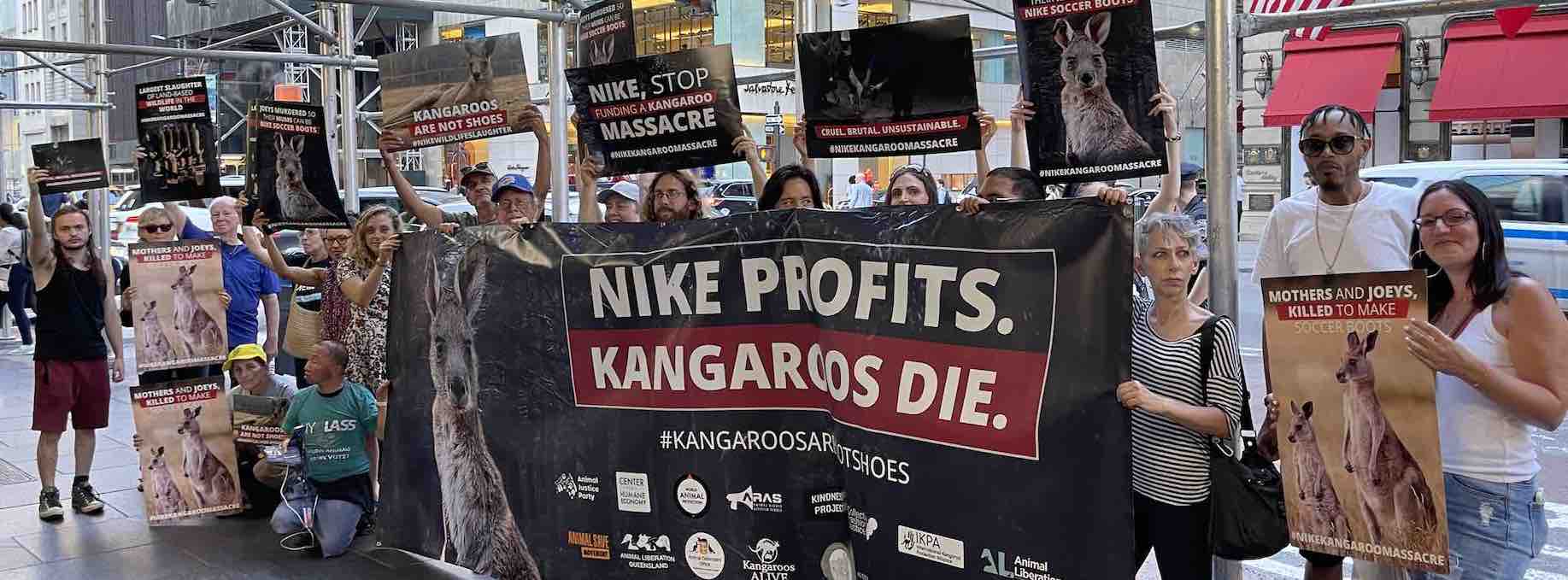
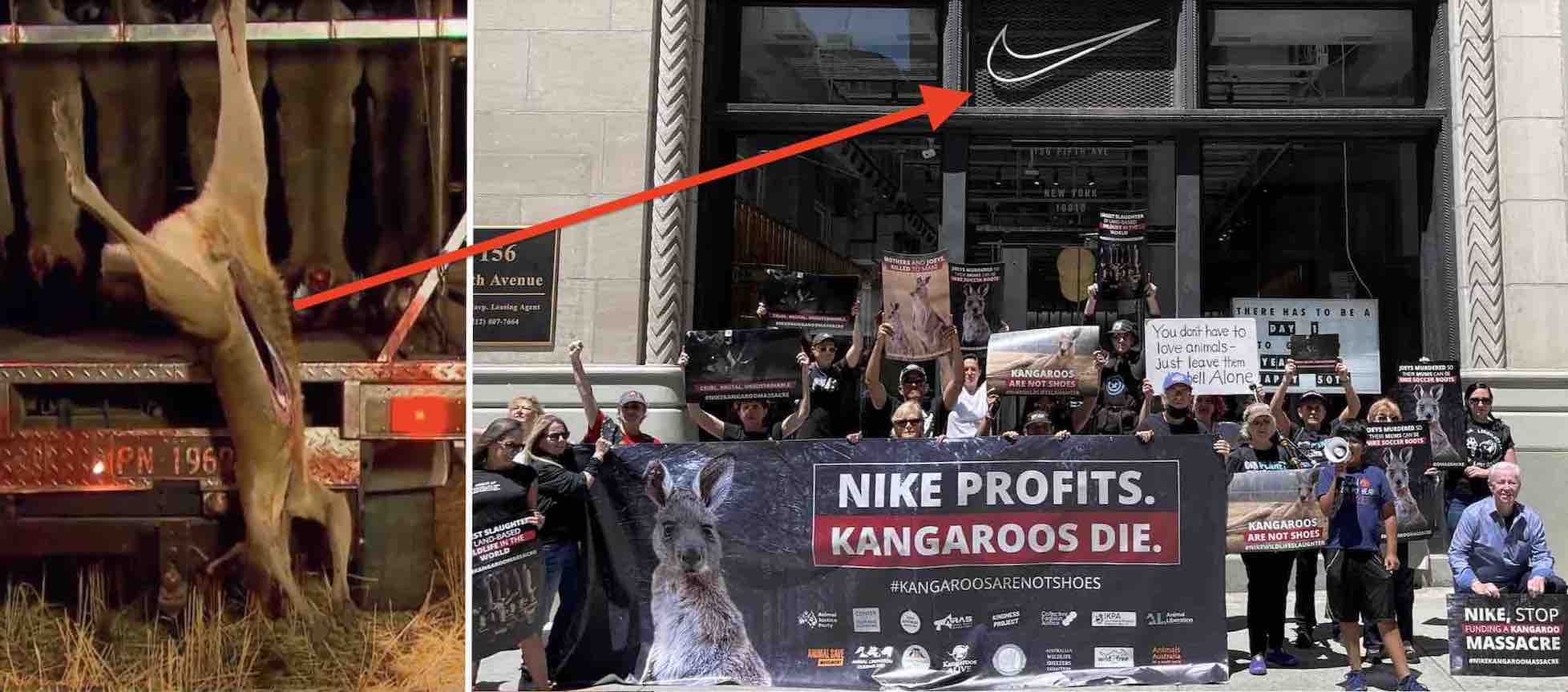
Approximately 20 animal rights activists with NYCLASS and TheirTurn slipped past the four man security team at the entrance of Nike’s flagship store in New York City to protest the company’s ongoing use of kangaroo skin as a soccer shoe fabric. This was the third protest in New York since the Center for a Humane Economy launched the #KangaroosAreNotShoes campaign to pressure Nike into replacing “K leather” with a cruelty-free alternative.  

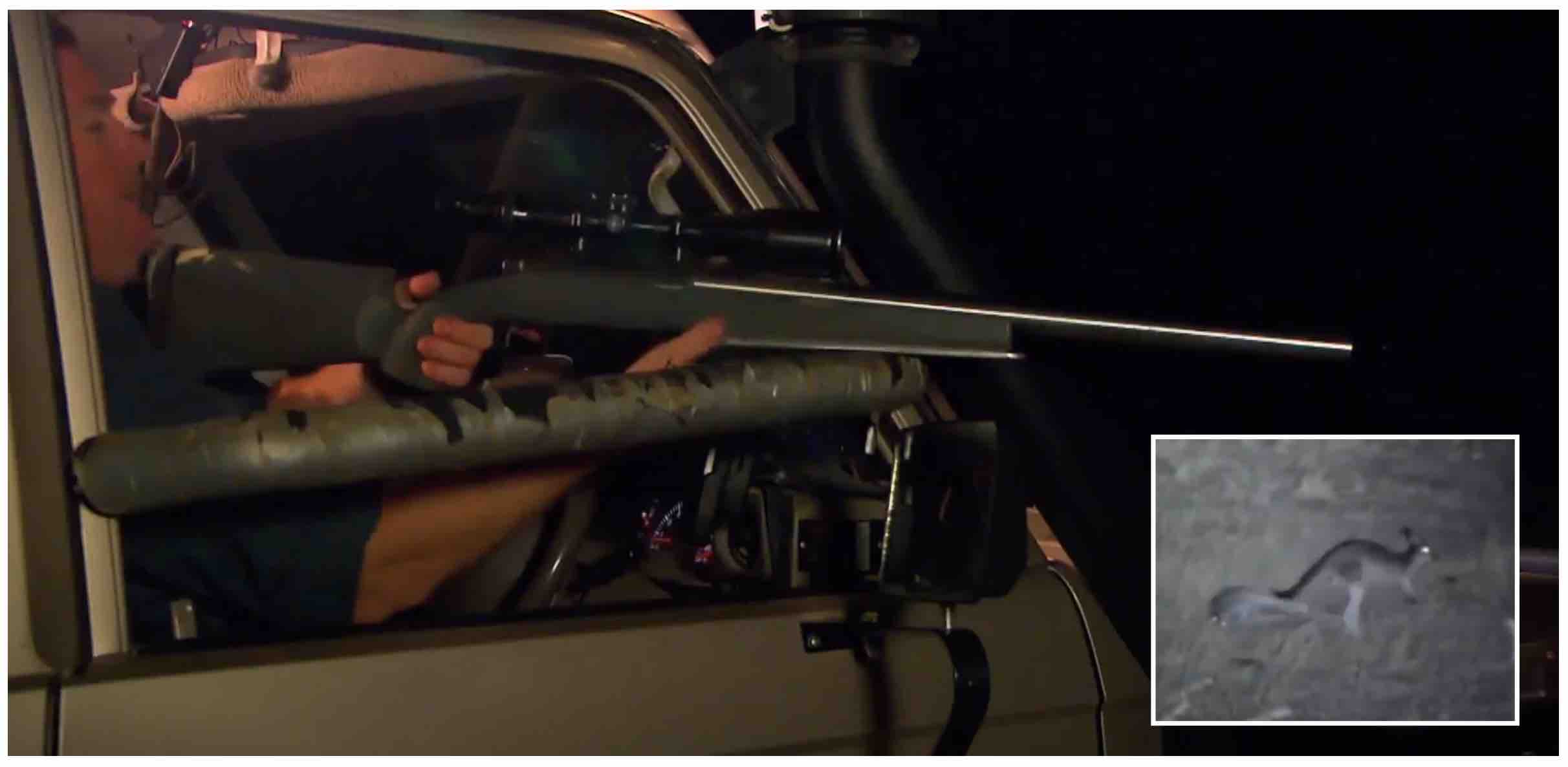
“Shooting wild kangaroos in the head after chasing them down in the dark of night is an act of terror,” said Donny Moss of TheirTurn.net, a NYC-based animal rights group that co-organized the protest. “How do Nike executives sleep at night knowing that they inflict so much pain and suffering on the kangaroos whose skin they steal?”

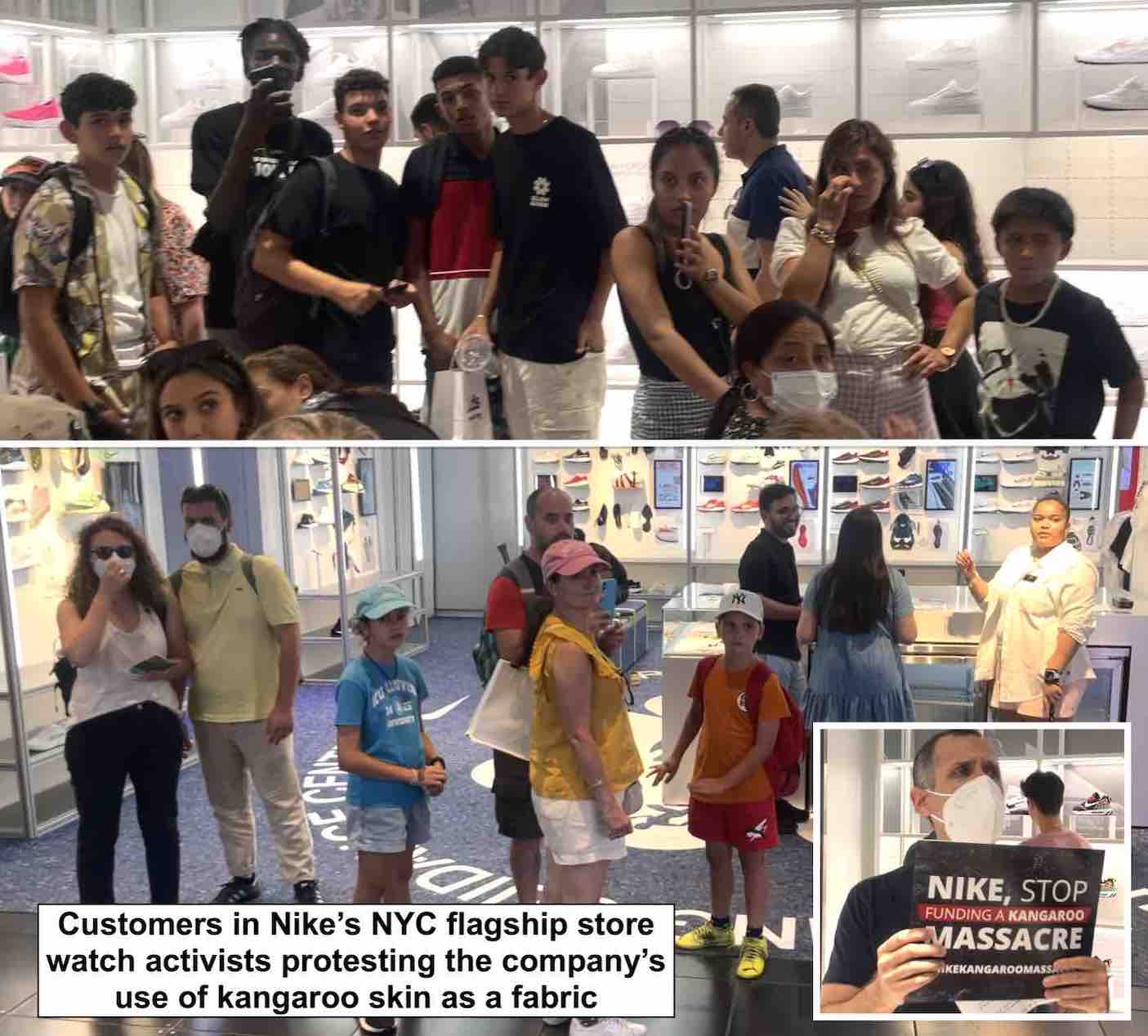
Once inside Nike’s multi-story store, the activists captured the attention of hundreds of shoppers by displaying posters, chanting and conducting speak outs about the massacre. Fearing for their jobs, the security guards who were hired to prevent the activists from entering the building in the first place pled with them to leave.

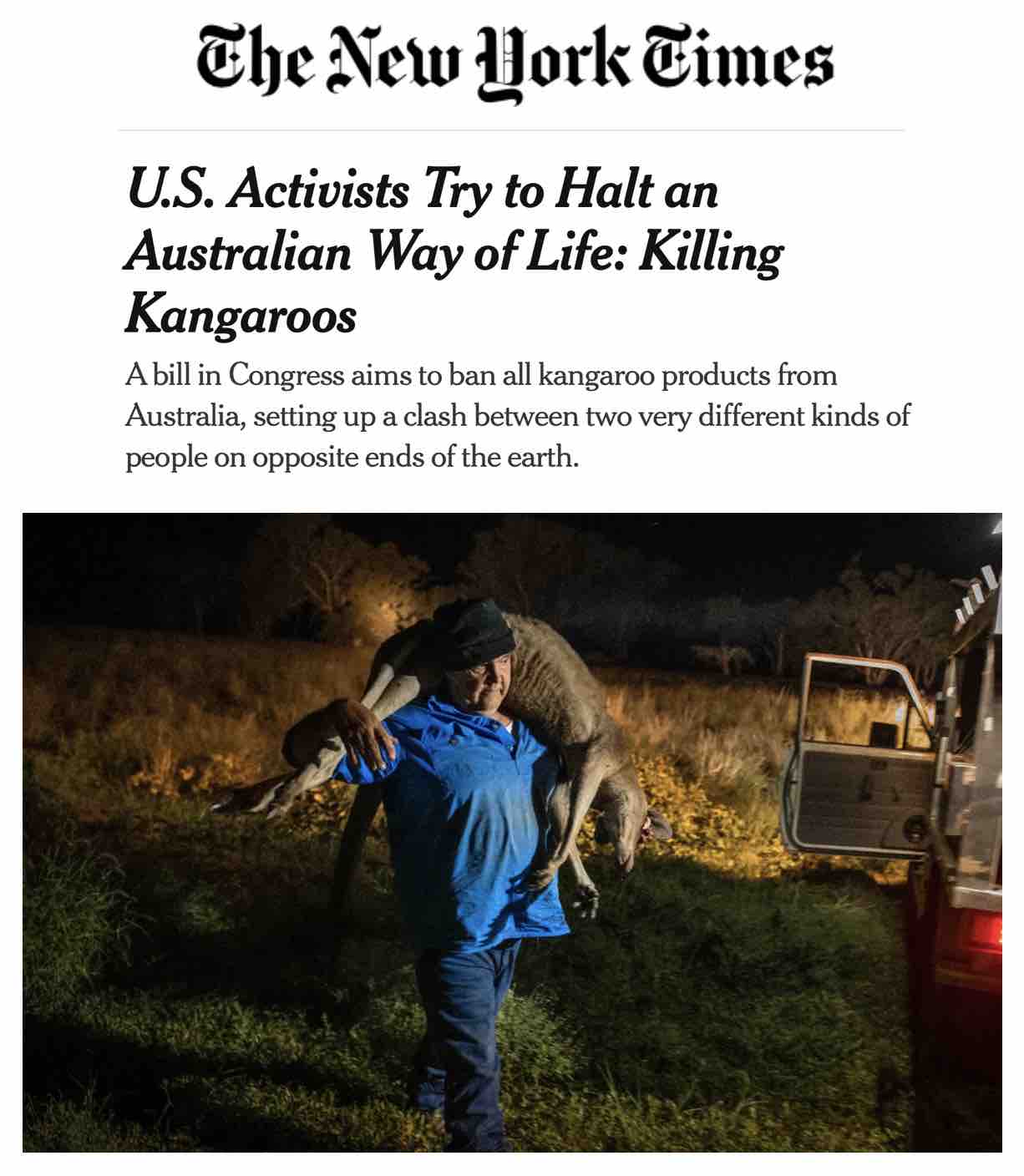
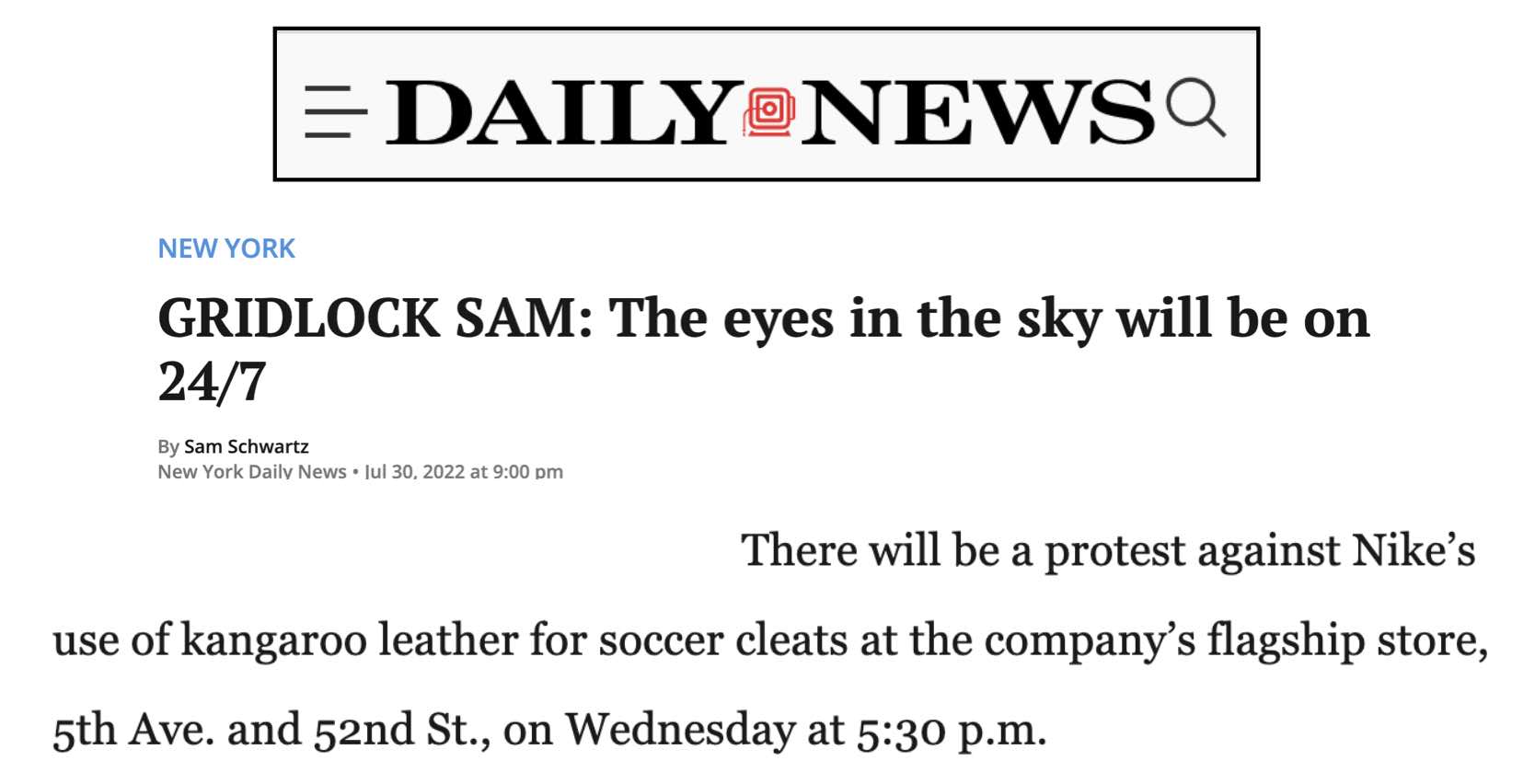
The New York Daily News announced the kangaroo skin protest at Nike

“Instead of hiring extra security in an effort to prevent in-store protests, Nike should stop engaging in the behavior that causes them,” said Edita Birnkrant, the Executive Director of NYCLASS, a NYC-based animal rights group that co-organized the protest. “As long as Nike makes sneakers out of kangaroos, we will keep disrupting business. That’s the least we can do for Nike’s victims.”

Customers inside of Nike’s flagship store in NYC watch as protests demand that Nike discontinue the use of kangaroo skin in its soccer shoes

The massacre of kangaroos in Australia represents the largest slaughter of land-based wildlife in the world. According to the Center for a Humane Economy, 70% of the approximately two million kangaroos killed each year for commercial purposes are used to make soccer shoes for sportswear companies like Nike.

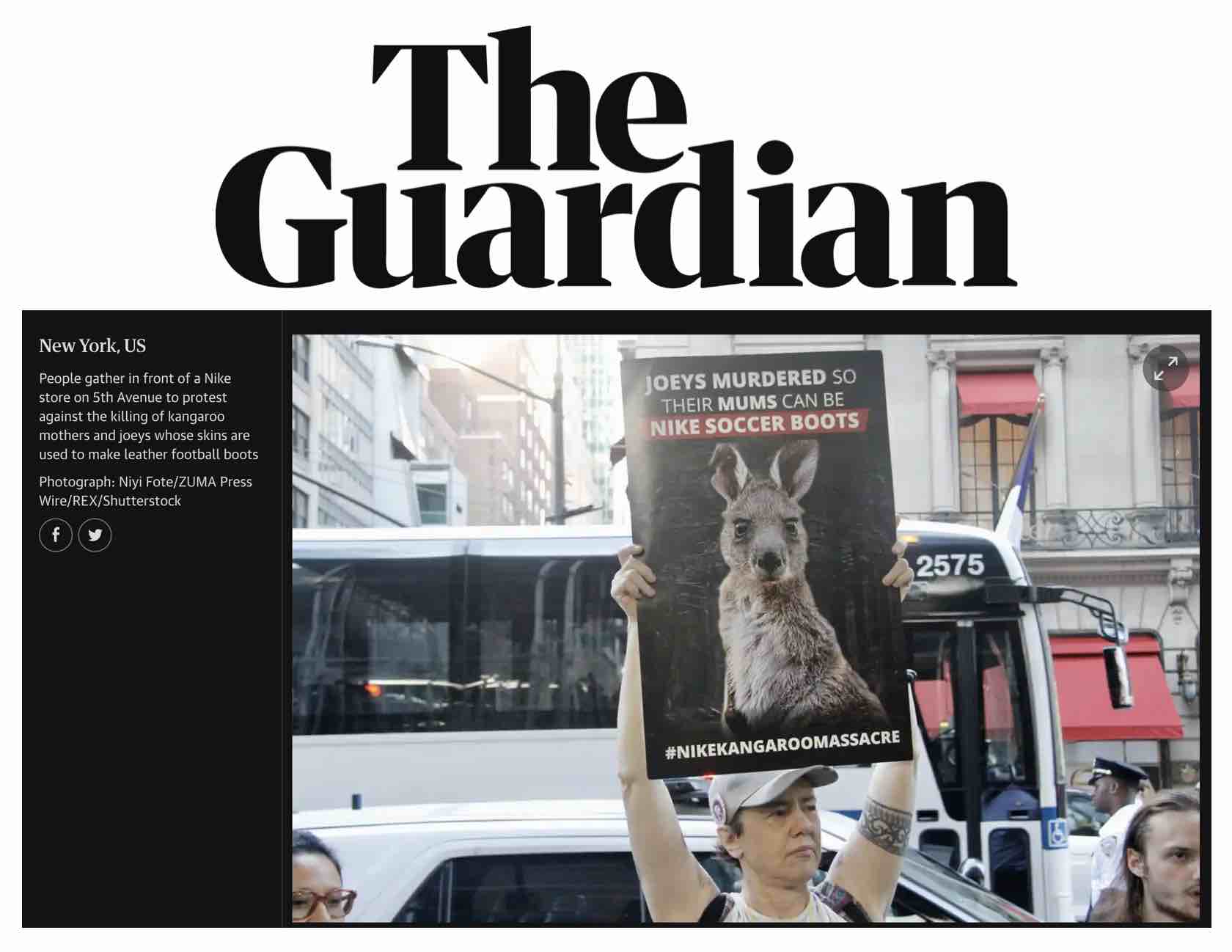
The Guardian selected an image from the kangaroo skin protest at the Nike flagship store in NYC as one of it’s “Photos of the Day”

The Australian National Code of Practice for the Humane Shooting of Kangaroos and Wallabies for Commercial Purposes governs the industry and sanctions this cruelty. An estimated 40% of kangaroos are shot in the neck or body instead of the head, in violation of the federal code, resulting in wounding and non-instantaneous death. Those who escape die slowly from their gunshot wounds. 

Nike kangaroo skin protest

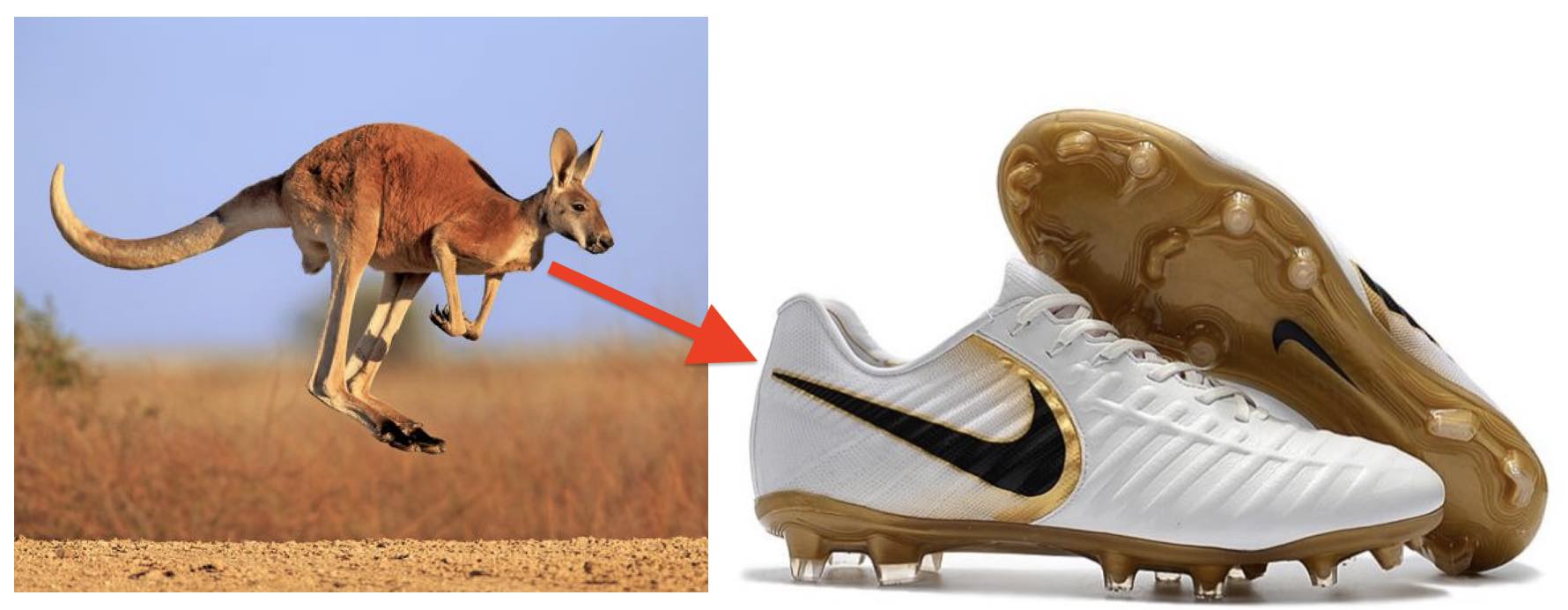
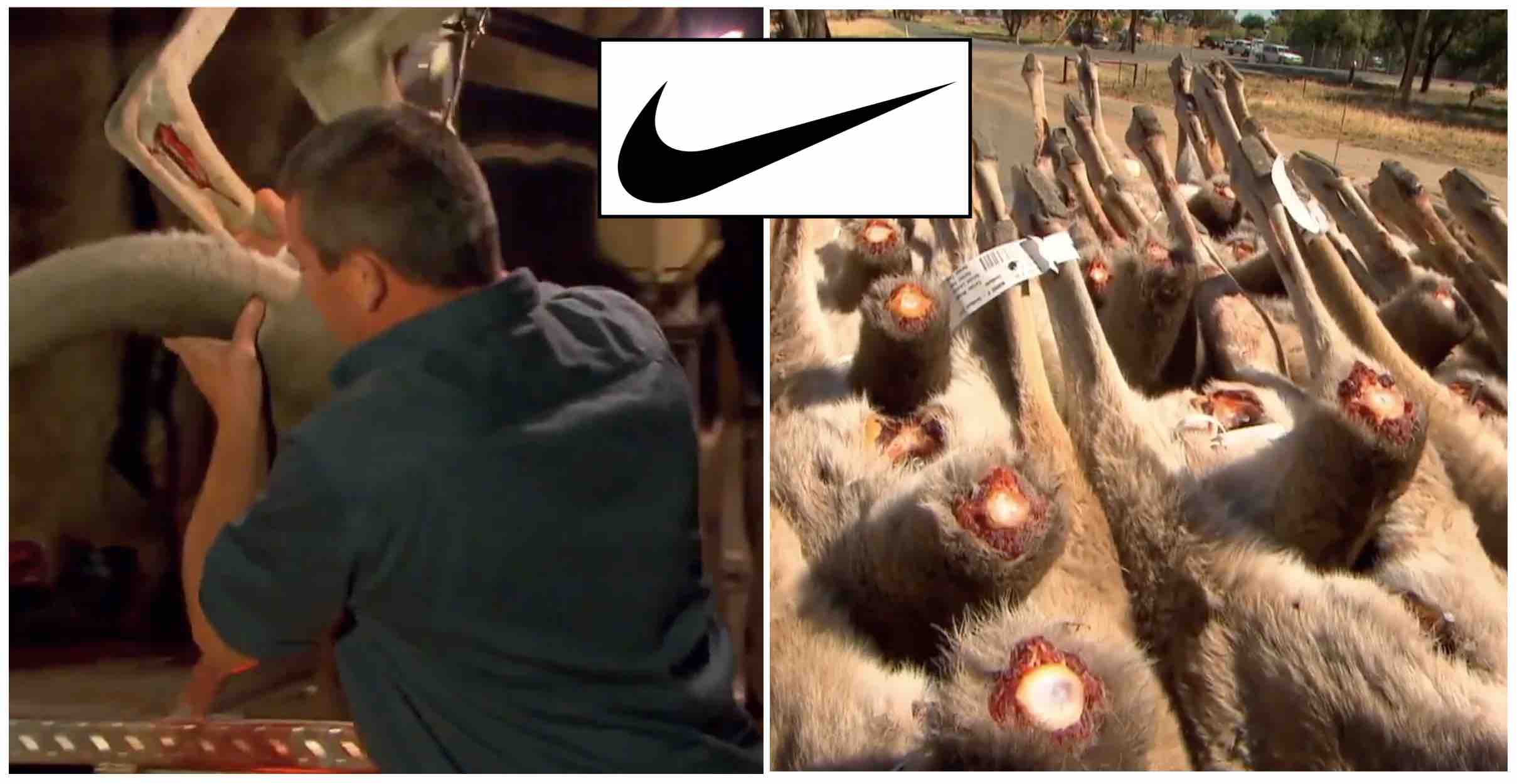
Nike slaughters wild kangaroos to make soccer shoes out of their skin

Some of the females who are shot have babies (joeys) in their pouches or by their sides. Code dictates that hunters either decapitate or bludgeon to death the joeys who are in the pouches. The joeys who are not in their mother’s pouch often die slowly from exposure and predation. Each year, an estimated 500,000 to 800,000 joeys die during the nightly kangaroo hunt.

In Australia, hunters shoot wild kangaroos in the head, steal their skin and sell it to Nike, which uses it to make soccer shoes

The Center for a Humane Economy says that Nike rationalizes the mass slaughter of wild kangaroos by engaging in green washing and humane washing. According to Nike, “Suppliers must source animal skins from processors that use sound animal husbandry and humane animal treatment/slaughtering practices.” Activists say that hunting down wild animals who want to live in peace with their families is inherently inhumane.

After disrupting business inside of Nike’s flagship store in NYC, animal rights activists educated customers and pedestrians on Fifth Avenue about Nike’s massacre of kangaroos to make soccer shoes

The Kangaroo Protection Act, federal legislation introduced in 2021, would ban the importation of kangaroo products into the United States. Several retailers, including Nordstrom, Gucci, Prada, and Versace, have already stopped selling kangaroo skin products. The sale of kangaroo parts is banned in California.

New York City is one of many American and Australian cities participating in the global #KangaroosAreNotShoes campaign.


Disruption of Humane Society of New York at Star-studded Adoption Event Goes Viral

July 15, 2022 by 3 comments


The News

Approximately 30 animal advocates disrupted the Humane Society of New York (HSNY) when actress Bernadette Peters brought the shelter’s animal trainer onto the stage during Broadway Barks, a star-studded adoption event in NYC’s theater district. The trainer, Bill Berloni, has close relationships with many actors and actresses, including Peters, because he provides them with animals for their shows, films and commercials.

During the three months leading up to Broadway Barks, activists sent hand-written letters to Peters, explaining that animals were being warehoused at the prominent shelter and pleading with her to call on HSNY to send the animals to adoption centers that are open or to foster homes. Peters did not acknowledge the letters or social media posts in which she was tagged.

Of the dozens of media outlets that reported on the protest against the Humane Society at Broadway Barks, only Vanity Fair explained why.

In what appeared to be an effort to discredit the activists during the protest, Peters falsely stated twice that HSNY is “open for tours,” the implication being that people can visit the shelter and see for themselves that the animals are not being warehoused. Berloni, who works at HSNY, did not correct her, despite the fact that he remained on stage during the disruption.

As activists protest the warehousing of animals at the Humane Society of New York during a star-studded adoption event, actress Bernadette Peters tells audience that “anybody can take a tour of the Humane Society” despite the fact that the building has been closed to the public for 27 months. Pictured to her left is Bill Berloni, the Humane Society of New York’s animal trainer, who supplies Broadway shows with animals.

As anticipated by the protesters, several of the Broadway Barks attendees tore their posters, pushed them out of the audience and asserted that the disruption did nothing to help their cause. 

“We were not there to make friends or allies,” said Bonnie Tischler, one of the protesters who served as HSNY’s Adoption Director for 22 years before retiring in 2020. “We were there to sound the alarm about the plight of animals living indefinitely at the Humane Society of New York after being ignored for months by stakeholders in the shelter community, including Bernadette Peters.  For over two years, they have prohibited adopters from entering the building to meet the animals, all of whom deserve to find forever, loving homes.”

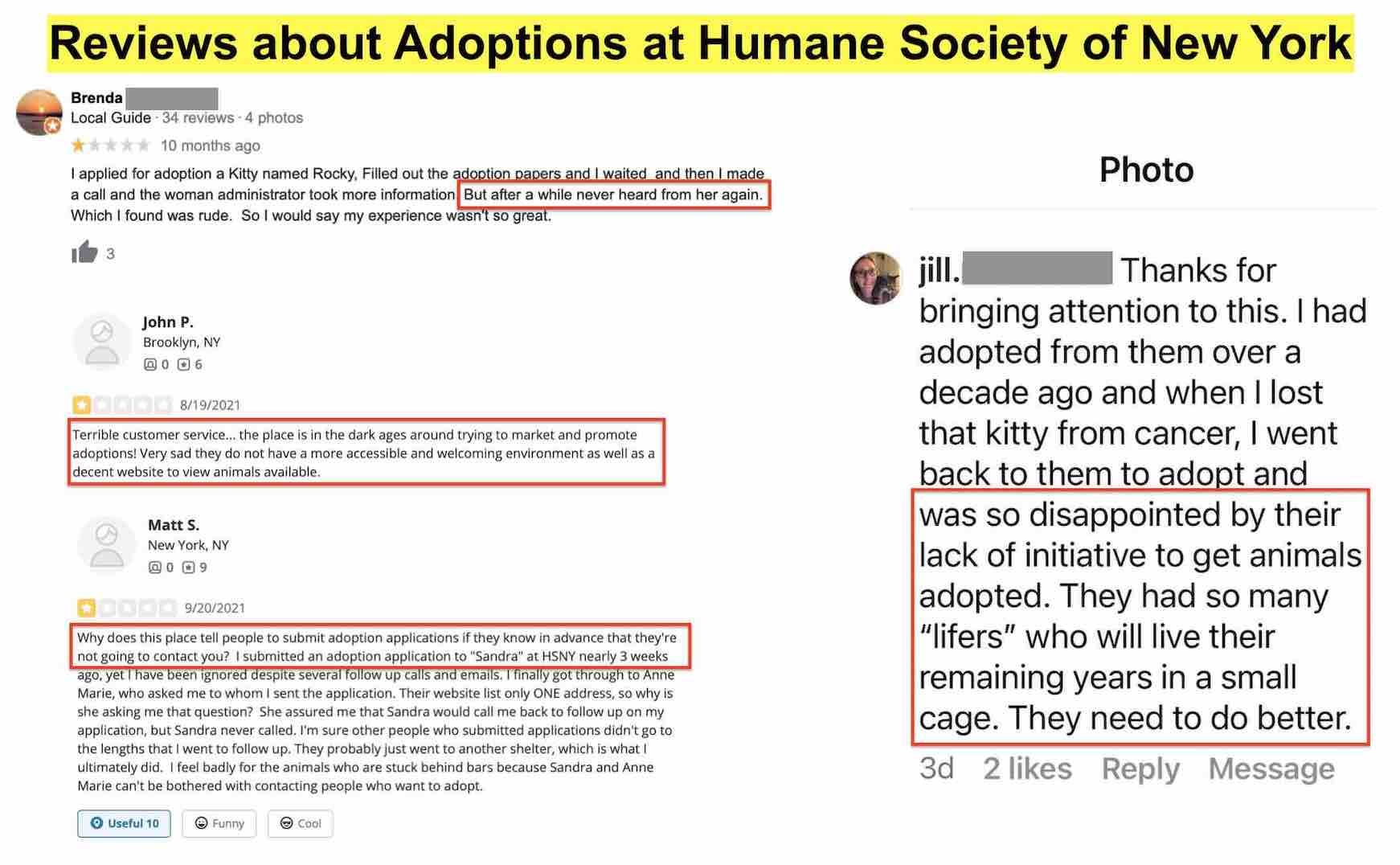
Online reviews and comments posted by people who attempted to rescue animals from the Humane Society of New York

Animal rights activists launched a campaign to help the animals at HSNY in October 2022 when Donny Moss of TheirTurn posted the findings of an investigation he and other advocates conducted that corroborated whistleblower allegations of animal warehousing at the prominent Manhattan shelter.  The investigation found that HSNY ignores adoption applications; lists just 14 animals on its website, despite having dozens more; does virtually no adoption promotion on social media; has no Adoption Director; and keeps the building closed to the public under false pretenses. Sandra DeFeo, the Executive Director, claims to refuse entry to outsiders due to COVID.  However, a lawyer retained by TheirTurn investigated and has determined that that HSNY cannot reopen because of ongoing violations of the ADA (Americans with Disabilities Act) which have never been addressed; HSNY is not wheelchair accessible and has already settled one ADA lawsuit based on this violation.  If it reopens, HSNY would subject itself to another ADA lawsuit.  Notably, HSNY has not taken any steps to make the shelter accessible.

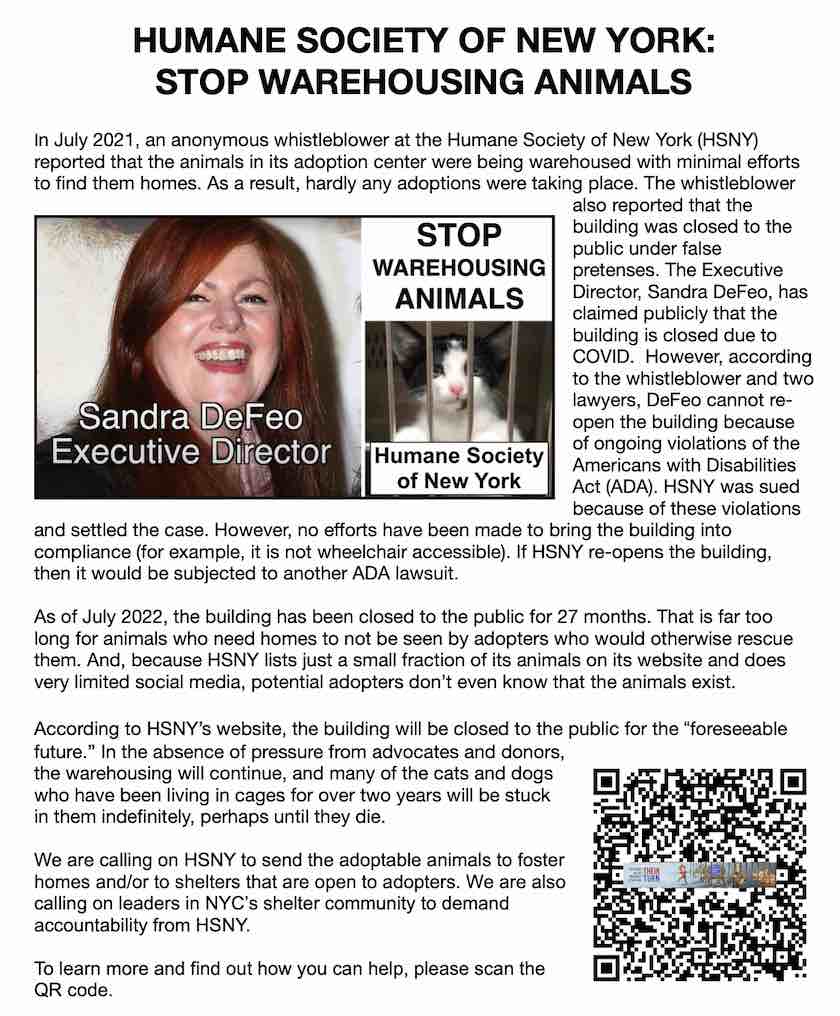
Handout explains why animal rights activists are protesting the Humane Society of New YOrk

During Broadway Barks, activists distributed handouts that provided context for the protest.

In December 2021, activists began sending letters to members of the board of the Humane Society of New York to inform them of their concerns and to ask them to intervene.  James Gregorio, a board member who practices law in North Carolina, told Tischler that he would ask Sandra DeFeo for proof of adoptions. Two weeks later, he resigned from the board without providing the documentation he promised. A second attorney who received the activists’ letters, C. Jones Perry, also resigned.  

In April 2022, the activists began protesting at the home of Alexandra Rowley, another board member who also failed to deliver on her promise to provide proof that adoptions “have continued all along” despite the closure of the building to adopters.  After two protests, Rowley also resigned from the board and informed Tischler by text that she was “no longer affiliated with HSNY.”  The activists have staged three protests at her home since then.  According to Tischler, “her decision to resign did nothing to help the animals she left behind and who were warehoused on her watch for two years.”

When the the protests and the letter writing campaigns failed to have an impact, the activists knew they had to escalate their efforts on behalf of the animals. “We didn’t want to disrupt Broadway Barks, but we had to sound the alarm in a venue where the shelter leaders and supporters who had been ignoring us would be forced to listen,” said Donny Moss of TheirTurn, an organizer of the protest. “The celebrities, event attendees and those who read about the protests in the media are now aware of and talking about the issue.”

The Humane Society of New York has been closed to the public for 27 months and under false pretenses. It’s not closed because of COVID, as HSNY claims. It is  closed due to ADA violations.

For their part, the activists say they will continue to advocate on behalf of the animals with or without the assistance of people who have the power to help.

“While HSNY puts up roadblocks at every turn to prevent people from adopting, the animals continue to languish in cages,” said Matthew Schwartz, an organizer of the protest whose own adoption application was ignored by HSNY. “HSNY must send them to foster homes or shelters that are open to adopters. Until it does, the protests will continue.”
Animal rights activists have protested Humane Society of New York Board member Alexandra Rowley over the warehousing of animals


UnChainedTV Releases First Ever Animal Rights Reality Show, Pig Little Lies

June 18, 2022 by 3 comments


The News

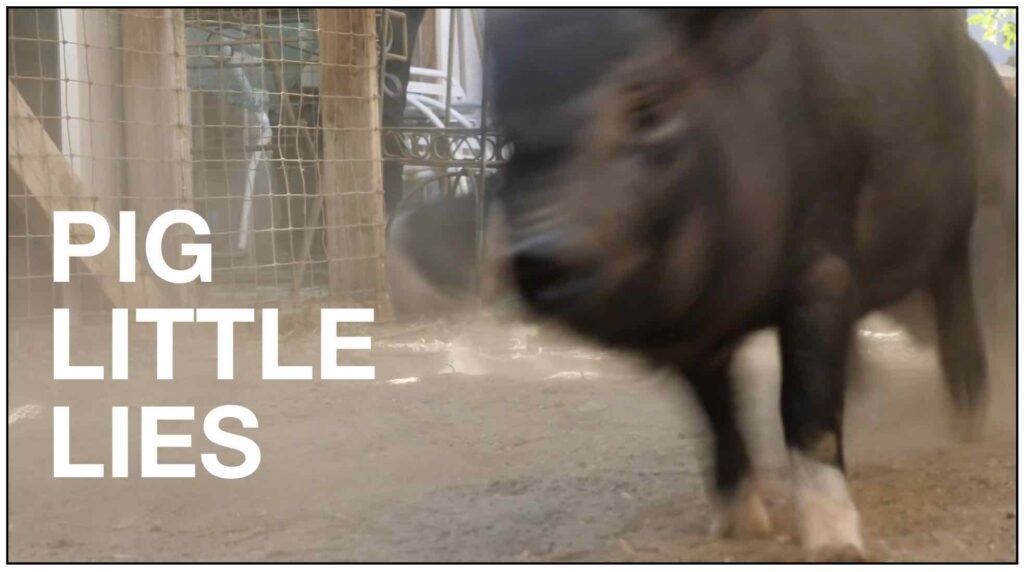
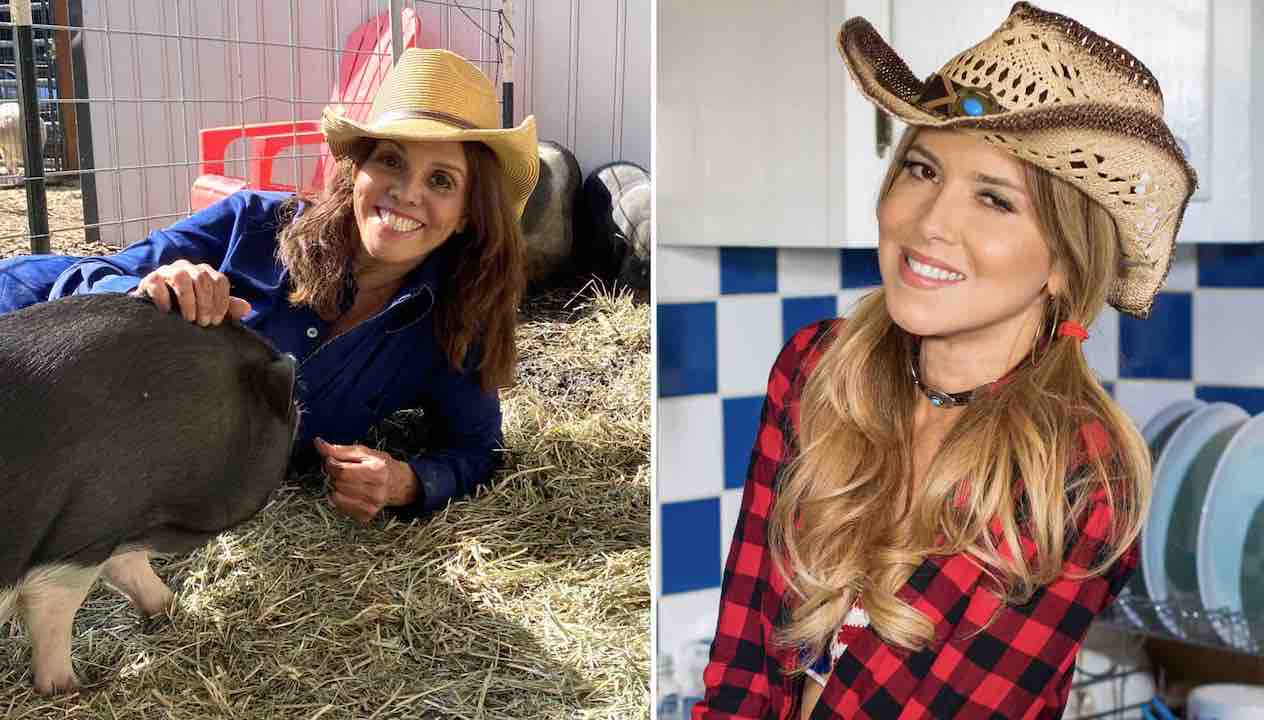
What happens when a country music singer and a TV news journalist receive a phone call about two pigs who will be killed if they’re not rescued within the next 24 hours? Pig Little Lies, a new reality show on UnChainedTV, documents the chaotic – and at times funny – rescue of a bonded pair of potbelly pigs and the bittersweet surprise that transformed the lives of the motley crew of human animals who are caring for them.

Pig Little Lies, a new TV series on UnChainedTV, is the first animal rights themed reality show

Pig Little Lies, a new TV series on UnChainedTV, is the first animal rights themed reality show

Pig Little Lies, the first animal rights-themed reality TV show, stars Los Angeles-based country singer Simone Reyes, TV journalist Jane Velez-Mitchell, wildlife rehabilitation expert Cindy Brady, and Dante and Beatrice, the two pigs who were abandoned at a high kill animal shelter in Southern California. When Reyes received the fateful call about Dante and Beatrice, Velez-Mitchell, who was with her at the time filming another project, decided to turn her attention – and the camera – to what she knew would be a dramatic rescue.

UnchainedTV is a free network with animal rights and vegan content that can be streamed on smart TVs, smart phones, tablets, Amazon’s Fire Stick, AppleTV and Roku.

Pig Little Lies is first original series produced by UnChainedTV. Launched in 2022, UnChained TV is free streaming platform with hundreds of animal rights and vegan-themed documentaries, cooking shows, travelogues, talk shows and music videos. Velez-Mitchell, who founded the platform, describes it as “a portal to a healthier, more environmentally sustainable, and more compassionate lifestyle.”

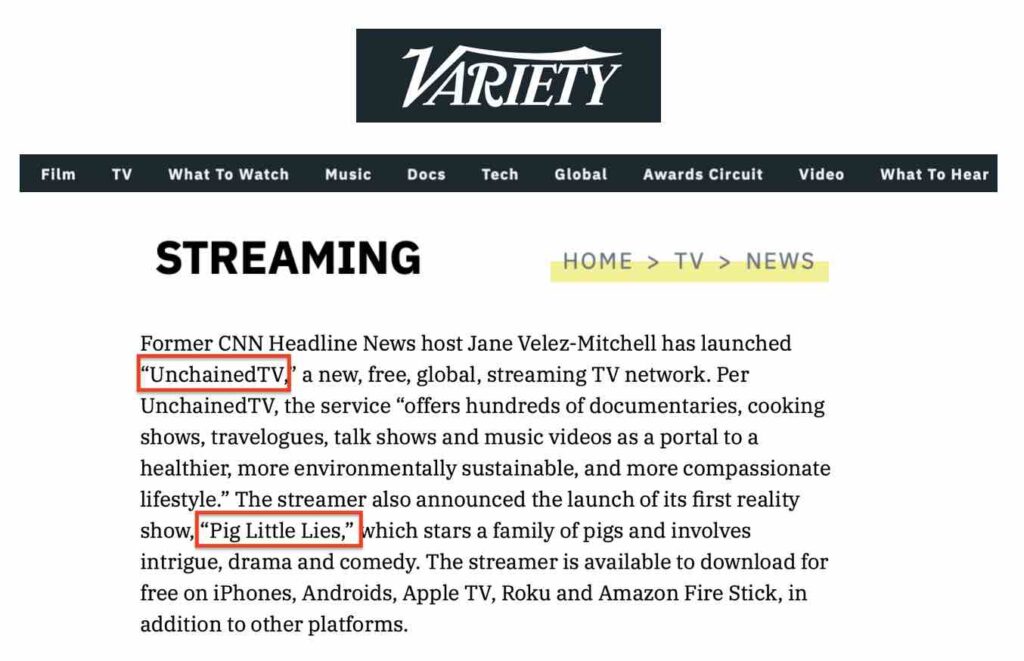
Several mainstream media news outlets, including Variety, have reported on UnChainedTV’s release of Pig Little Lies.

Several mainstream media news outlets, including Variety, have reported on the release of Pig Little Lies, the first original series produced by the new streaming network UnChainedTV 

Several mainstream media news outlets, including Variety, have reported on the release of Pig Little Lies, the first original series produced by the new streaming network UnChainedTV

For Velez-Mitchell, Pig Little Lies is the perfect series for her burgeoning network because it uses an entertaining reality show format to provide viewers with life-saving information that they aren’t getting elsewhere. “Heart disease is a leading killer often caused by cholesterol in pork and animal products,” says Velez-Mitchell. “Do doctors inform you of that? Do they tell you that the World Health Organization warns that processed meat, like hot dogs and bacon, cause cancer?” Velez-Mitchell and Reyes are aiming to help the viewers connect the dots between the animal-based foods on their plate and the diseases that are caused by eating them. They are also hoping to help viewers connect the dots between their pork-based meals and the lovable pigs who they get to know in the series. “Pigs are intelligent, social and gentle animals who value their independence and love their families just like us,” said Reyes. “This UnChainedTV series gives Dante and Beatrice an opportunity to showcase their personalities and introduce themselves to people who would normally eat them.”

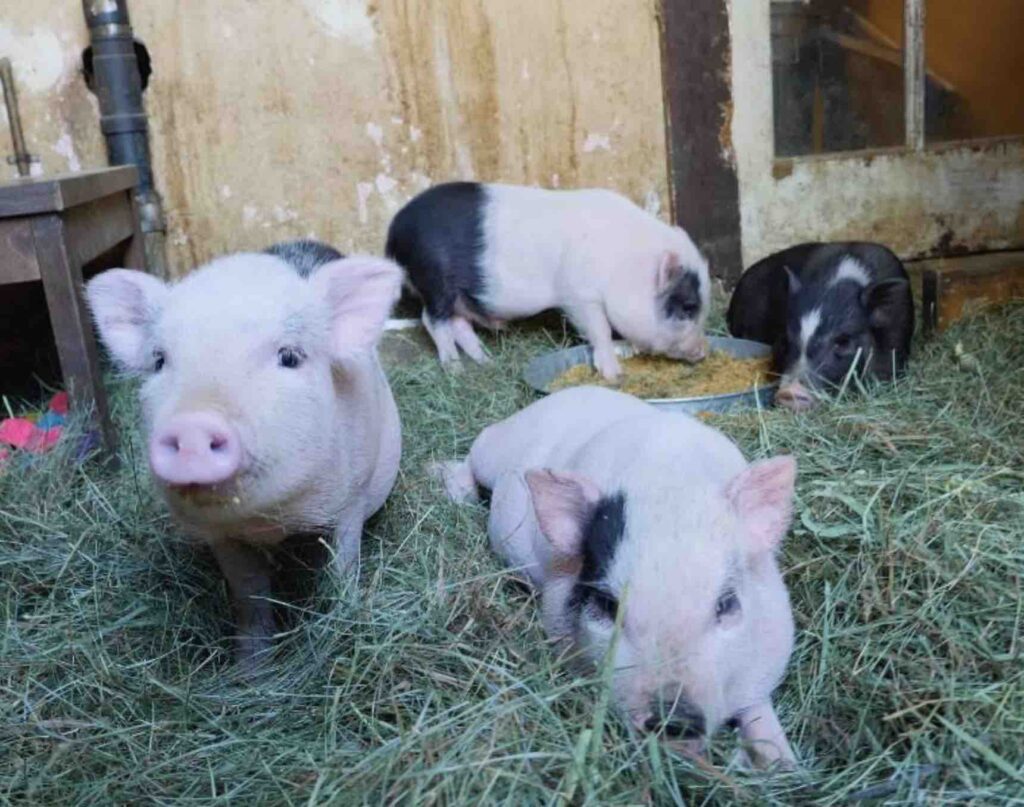
A few of the stars of UnChainedTV's reality show Pig Little Lies

A few of the stars of UnChainedTV’s reality show Pig Little Lies

UnChained TV is also a platform for filmmakers and animal rights activists to feature their work addressing climate change, filling in a major gap left by the mainstream environmental movement, which has largely avoided addressing the impact of animal agriculture on the planet. “You have a few influential climate activists, like Greta Thunberg, promoting an eco-friendly plant-based diet, but the largest environmental groups have dropped the ball on animal agriculture,” said Velez-Mitchell. “In addition to being one of the largest emitters of greenhouse gases, animal agriculture contributes to habitat destruction, wildlife extinction, world hunger, drought, ocean dead zones and widespread water pollution.”

Jane Velez-Mitchell and Simone Reyes star in UnChained TV's new reality show, Pig Little Lies

Jane Velez-Mitchell and Simone Reyes star in UnChainedTV’s new reality show, Pig Little Lies

Velez-Mitchell hopes that Pig Little Lies will be the first of many original series produced by UnChainedTV.  Next up — a mini-series about a chicken named Hope who lives with a family in Southern California and who rules the house!

The Executive Producers of Pig Little Lies are Jim Greenbaum, Cindy Landon, Dr. Sailesh Rao, Eamonn McCrystal and Jane Velez-Mitchell. The show is directed by Emmy-winning Eamonn McCrystal of Inspired. LLC.

UnchainedTV is a free network that can be streamed on smart TVs, smart phones, tablets, Amazon’s Fire Stick, AppleTV and Roku.


Animal Rights Activists Protest Nike Kangaroo Slaughter

June 10, 2022 by 6 comments


The News

Angered by Nike’s refusal to stop slaughtering wild kangaroos for their skin, dozens of animal rights activists disrupted business at the company’s store in New York City’s Flatiron District. During the protest, which took place on June 5th, the activists educated pedestrians about kangaroo slaughter and encouraged Nike customers to purchase cruelty-free alternatives to skin. The protest was organized by the animal rights groups NYCLASS, TheirTurn and The Center for A Humane Economy, a Washington-D.C.-based advocacy group leading the #KangaroosAreNotShoes campaign, a global effort to end the use of kangaroo skin for shoe leather.

The massacre of kangaroos in Australia represents the largest slaughter of land-based wildlife in the world. According to the Center for a Humane Economy, 70% of the approximately two million kangaroos killed each year for commercial purposes are used to make soccer shoes for sportswear companies like Nike.

Nike kangaroo skin soccer shoes

Nike and other sportswear companies hire hunters to slaughter wild kangaroos for their skin, which they use to make soccer shoes.

The Australian National Code of Practice for the Humane Shooting of Kangaroos and Wallabies for Commercial Purposes governs the industry and sanctions this cruelty. An estimated 40% of kangaroos are shot in the neck or body instead of the head, in violation of the federal code, resulting in wounding and non-instantaneous death. Those who escape die slowly from their gunshot wounds. 

Some of the females who are shot have babies (joeys) in their pouches or by their sides. Code dictates that hunters either decapitate or bludgeon to death the joeys who are in the pouches. The joeys who are not in their mother’s pouch often die slowly from exposure and predation. Each year, an estimated 500,000 to 800,000 joeys die during the nightly kangaroo hunt.

Nike kangaroo hunt

According to the Center for a Humane Economy, approximately 70% of the kangaroos who are hunted for commercial purposes are used to make soccer shoes for companies like Nike

The Center for a Humane Economy says that Nike rationalizes the mass slaughter of wild kangaroos by engaging in green washing and humane washing. According to Nike, “Suppliers must source animal skins from processors that use sound animal husbandry and humane animal treatment/slaughtering practices.” Activists say that hunting down wild animals who want to live in peace with their families is inherently inhumane.

Kangaroo skin protest at Nike

Animal rights activists are calling on Nike to use cruelty-free alternatives to kangaroo skin

The Kangaroo Protection Act, federal legislation introduced in 2021, would ban the importation of kangaroo products into the United States. Several retailers, including Nordstrom, Gucci, Prada, and Versace, have already stopped selling kangaroo skin products. The sale of kangaroo parts is banned in California.

Animal rights activists are campaigning to end Nike's use of kangaroo skin as shoe leather

Animal rights activists in the U.S. and Australia are campaigning to end the use of kangaroo skin as shoe leather

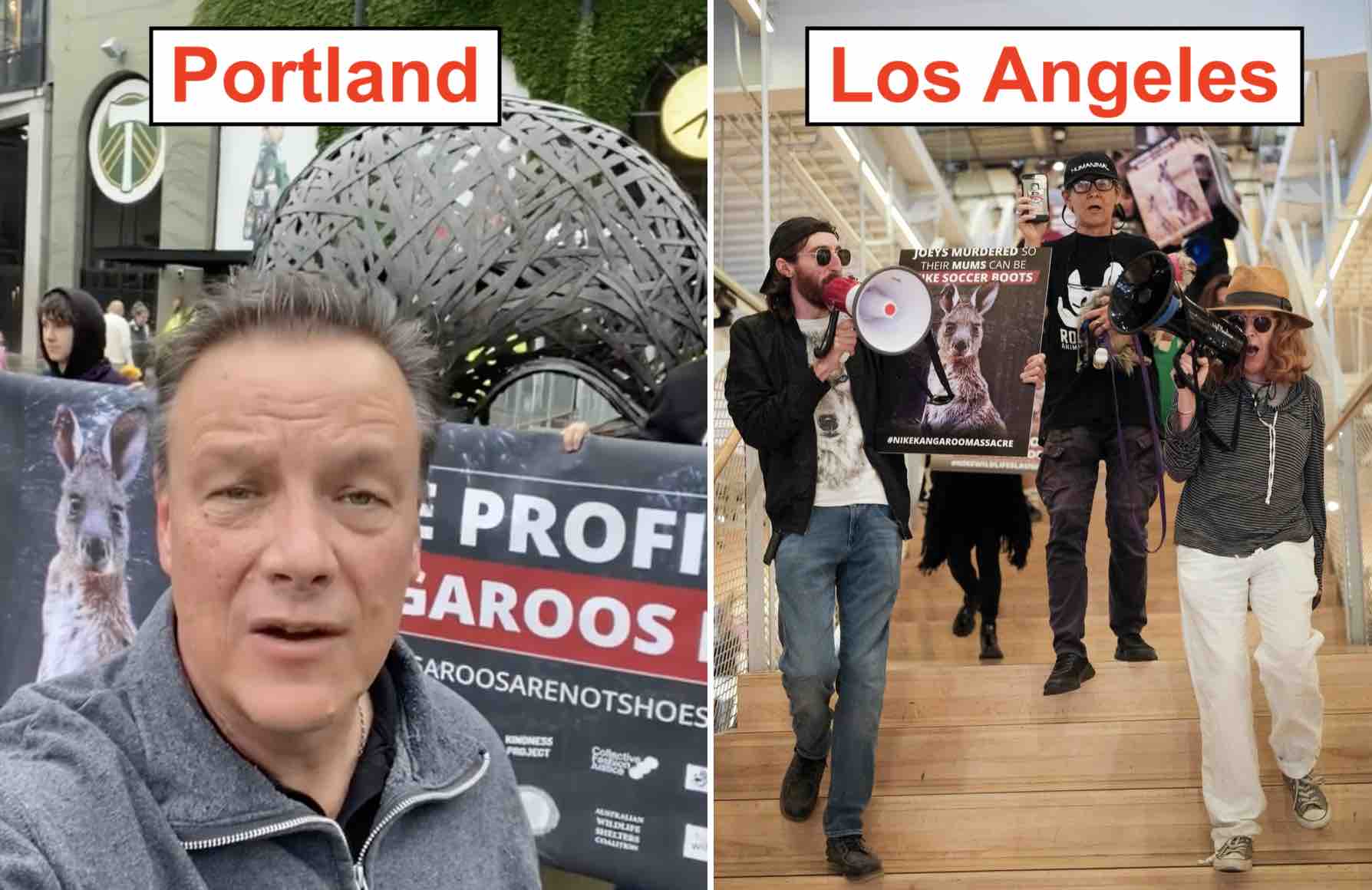
New York City is one of many U.S. and Australian cities participating in the #KangaroosAreNotShoes campaign.  On June 4th, activists in Los Angeles staged a disruption inside of the Nike store in Santa Monica, and activists in Portland protested in front of a sports stadium.

Animal rights activists in Portland, where Nike is headquartered, and Los Angeles protest the company's use of kangaroo skin in its soccer shoes

Animal rights activists in Portland, where Nike is headquartered, and Los Angeles protest the company’s use of kangaroo skin in its soccer shoes