
Their Turn - The Social Justice Movement of Our Time Their Turn - The Social Justice Movement of Our Time

After Flurry of News Stories, McConaughey Distances Himself from Hunting Facility that Listed Him as “Co-Owner” & “Staff” Member

February 4, 2015 by 22 comments


The News

In an attempt to distance himself from the ranch run by his family that sells canned hunts, Matthew McConaughey has said that he sold his share of the company in 2011. Why then did the LP Ranch’s website include, until February 4, 2015,  a photo of McConaughey on its “Meet the Staff” page with a caption that described him as a “co-owner?” Was McConaughey, who is a major celebrity, allowing his brother and nephew to falsely identify him as an owner and staff member to promote the business? After the news spread to major media outlets, LP Ranch removed McConaughey’s photo from its website.
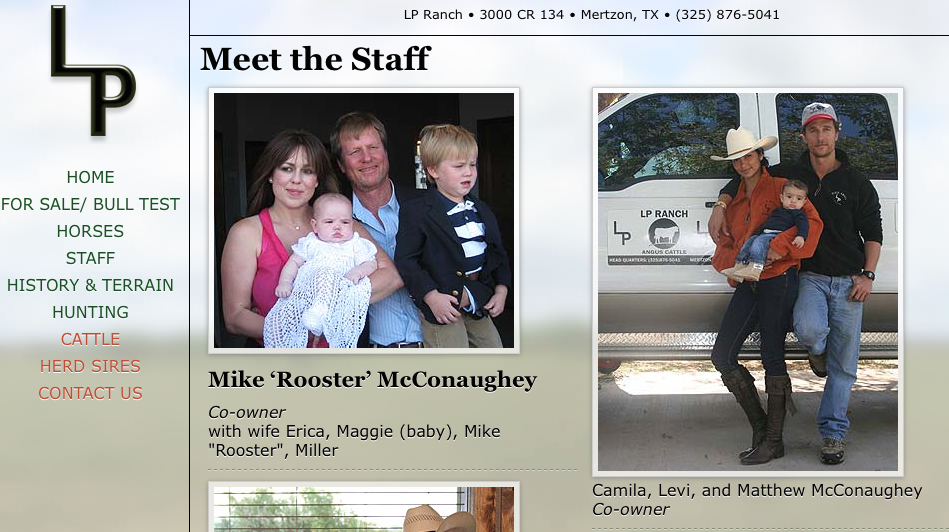
With his brother Mike, actor Matthew McConaughey owns a cattle ranch that sells canned hunts.

On February 4, LP Ranch removed the photo of Matthew McConaughey from its “Meet the Staff” page which described him as a “co-owner.”

After our story about Matthew McConaughey’s hunting business went viral, TheirTurn gave TMZ an “exclusive” on the news, and they posted their story within a couple of hours:  “Matthew McConaughey Ranch Draws Fire Over Trapped Deer Kills.” Once TMZ posted the story, it was picked up by dozens of other media outlets including The Daily News, MSN and The Daily Mail.
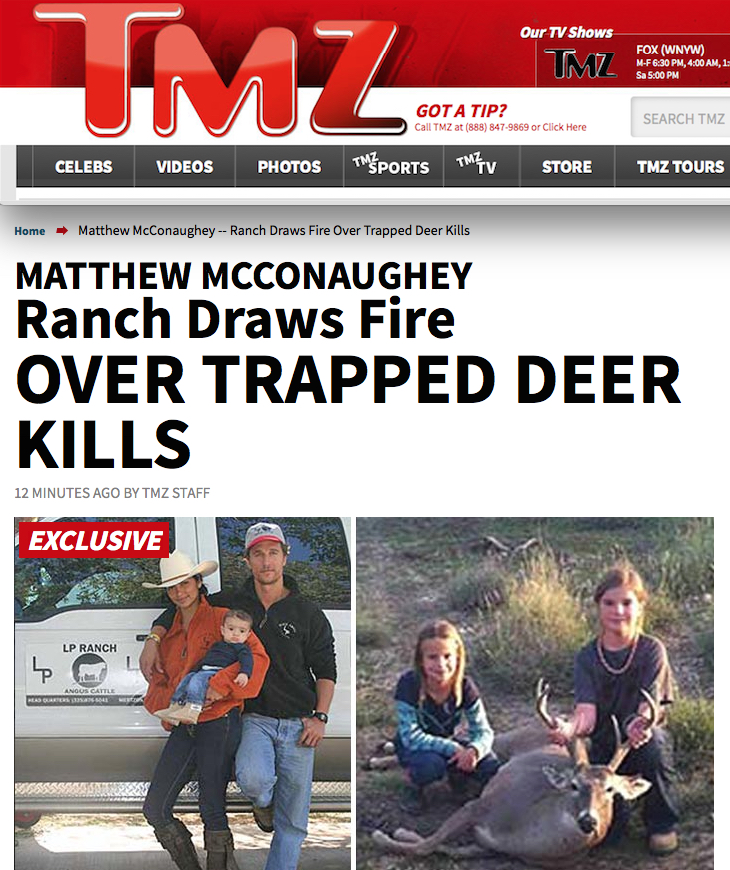
McConaughey_TMZ_hunting

TMZ spoke to McConaughey’s nephew Madison, who runs the ranch:

“We reached out to Matt’s rep … so far no word back. But the actor’s nephew, Madison McConaughey — the ranch cattle manager — tells TMZ they’ve had death threats from people who don’t understand the nature of what they do. He says, ‘People are disgusted with us but we’re disgusted with them.’ Madison adds, people who come there do so for the ‘hunting experience’ and he says ‘We’re proud of what we do.’

The TMZ story includes a video interview with Madison McConaughey.

In canned hunts, animals are confined to a fenced in area with no way to escape. Because canned hunt operators often feed the animals, the animals are unafraid of people. In Zimbabwe and other areas in South Africa, lions are raised from birth by canned hunt operators. Tourists help to finance the operation by paying to interact with the tame lions, who, when fully grown, are transferred to a canned hunt site where tourists pay up to $100,000 to kill a mature male.
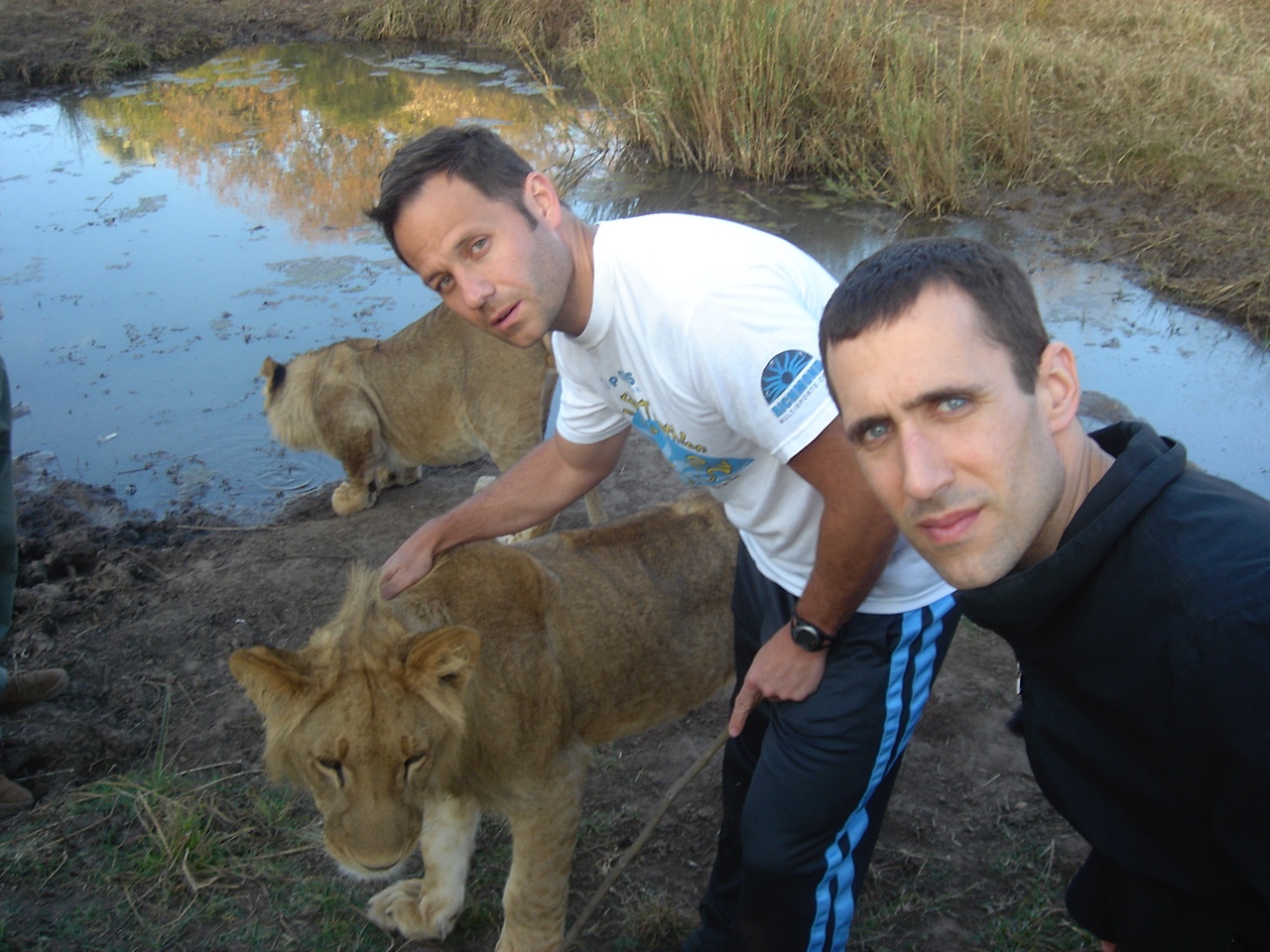
Donny Moss from TheirTurn.net investigates canned hunt operation masquerading as a conservation group in Zimbabwe

Donny Moss from TheirTurn.net (on the right) investigates canned hunt operation masquerading as a conservation group in Zimbabwe

Following is a one minute video explaining and showing a canned lion hunt in Africa:

Matthew McConaughey’s Texas Ranch Sells Canned Hunts

February 2, 2015 by 119 comments


The News

UPDATE (6:00 p.m., February 4) –  Matthew McConaughey’s spokesperson says that he sold his interest in the ranch in 2011, in spite of the fact that LP Ranch’s website described him as a “co-owner” and “staff” member as of February 4th, 2015. His photo was removed from the website on the day the news broke in the mainstream media. Stories about the controversy have been published in The Daily News, TMZ, The Daily Mail and many other media outlets.

—————————————–

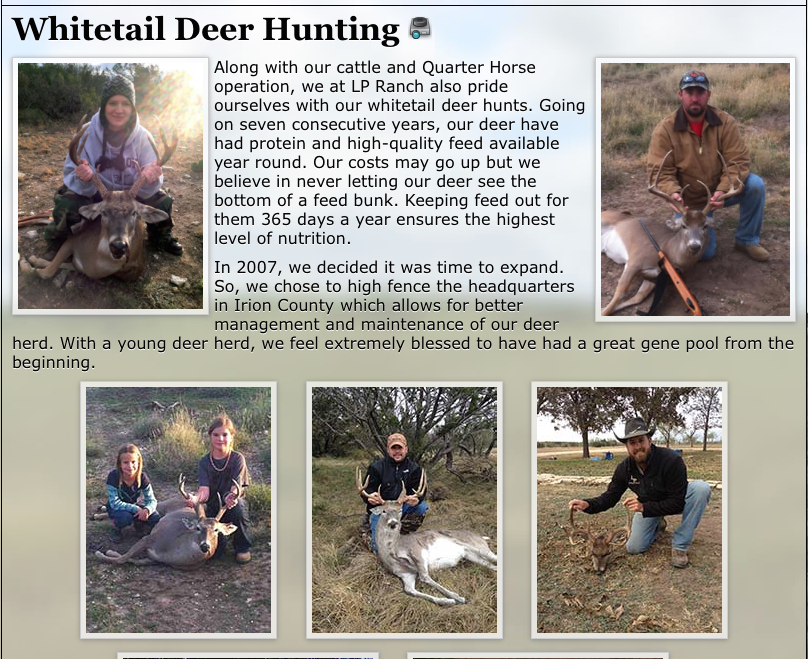
Actor Matthew McConaughey, a former spokesman for the “Beef: It’s What’s For Dinner” ad campaign, co-owns a ranch that sells canned hunts. According to his company’s website, “We at LP Ranch pride ourselves with our whitetail deer hunts.”

With his brother Mike, actor Matthew McConaughey owns a cattle ranch that sells canned hunts.

With his brother Mike, actor Matthew McConaughey owns a cattle ranch that sells canned hunts.

McConaughey purchased the LP Ranch in 2001. Six years later, the ranch “decided it was time to expand” by selling canned hunts. For visitors spending the night, the ranch offers “Old West” accommodations with a “modern touch” so that “after the hunt, our guests can feel assured to eat some great meals and relax in all out comfort” (unlike the animals who they killed for fun that day).

"Relax in all out comfort" after shooting deer at Matthew McConaughey's Ranch

“Relax in all out comfort” after shooting deer at Matthew McConaughey’s Ranch

LP Ranch also sells horses who are “ready for any ranching task that may be asked of them” and cattle who they “treat in a way that will allow them to be ready for any conditions.” According to his nephew Madison who is LP’s “Cattle Manager,” McConaughey is a “big beef man” who “feels it’s important to raise Angus cattle and support the beef industry.” In fact, McConaughey was a beef industry spokesman  in 2010:

Your Turn

Canned hunts are among the cruelest forms of hunting. Not only is the other “team” unarmed and unaware that they are being targeted, but they are also confined to a fenced in area with no possible way to escape. In 2011, HSUS conducted an undercover investigation of canned hunting operations to educate the public about this outrageous “sport.”


Rampant Animal Abuse at U.S. “Meat Research” Center Triggers Outrage . . . and Change

February 2, 2015 by 4 comments


The News

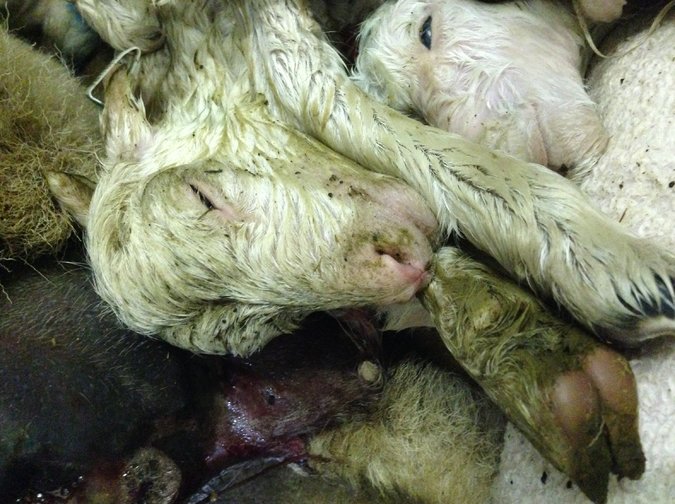
On January 19th, the New York Times ran a front page story about unbridled abuse at the U.S. Meat Research Center, a taxpayer-funded facility in Nebraska where tens of thousands of animals are used in experiments designed to increase profits for factory farmers.

The article, which portrays the U.S. Department of Agriculture (USDA) as more of a trade organization for agribusiness than a consumer protection agency, has sparked so much outrage that the Secretary of USDA has directed his staff to draft an Animal Welfare Strategy plan that will mandate enhanced training and the creation of an independent panel to review animal handling protocols, policies and research practices.

One week after releasing the story, the NY Times published follow-up editorial about the research center, stating, “You don’t have to be a vegan to be repulsed by an account in The Times revealing the moral depths to which the federal government — working as a handmaiden to industrial agriculture — has sunk in pursuit of cheaper meat and fatter corporate profits.”

U.S. Meat Research Center (photo: Michael Moss)

U.S. Meat Research Center (photo: Michael Moss)

Unlike the original news story, which focused on the research center, the editorial also addresses the horrors of industrialized agriculture in general: “The conditions of industrial feedlots and factory farms — the confinement of animals, the rampant use of antibiotics, the manure lagoons — would shock anyone who naïvely imagines farms as bucolic places out of children’s books. Animal-rights advocates have toiled for years exposing things the industry does not want customers to know.”

Jane Velez-Mitchell of JaneUnchained speaks to Nathan Runkle from Mercy For Animals about the New York Times’ investigation:

Your Turn

1. Tell the USDA to shut down the Meat Animal Research Center.

2. Contact the Director of the Meat Animal Research Center, Emil J. Pollak:

  • Email: e.john.pollak@ars.usda.gov
  • Phone: (402) 762-4109

In Germany and New York, Provocative Calls to End Speciesism

January 28, 2015 by 3 comments


The News

Our relationship with animals is based on an ingrained – and misguided – sense of superiority that gives us license to exploit them. By observing the actions of adults, we are taught at a young age that animals exist to serve our needs and desires, not their own, and we are conditioned to regard them as objects — to be consumed with a fork, worn on our backs, viewed in a zoo or used in some other way. It’s called speciesism.

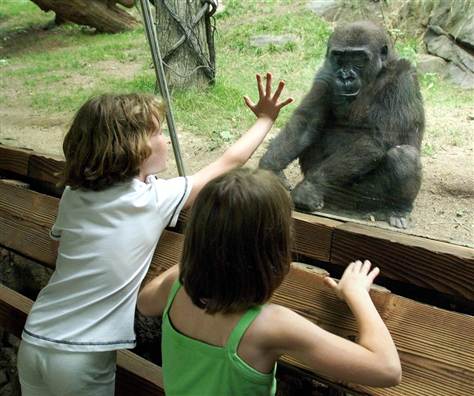
Captive gorilla (photo: Don Emmert /AFP - Getty Images file)

Captive gorilla (photo: Don Emmert /AFP – Getty Images file)

Activists around the world are beginning to use speciesism as a theme for provocative protests in order to jolt people into rethinking our relationship with animals.

In Germany, 24 activists wearing matching jumpsuits and holding the bodies of deceased animals recently staged a somber and powerful ceremony to educate the public about speciesism. In a chilling and inspiring video documenting the event, the narrator says, “Speciesism makes us believe that animals are worth less than humans. We are here to ask why.”

In New York City, Collectively Free recently stunned Whole Foods shoppers by staging an in-store protest during which farm animals slaughtered three humans dressed in flesh-colored costumes and distributed free samples of their “humanely-raised, free range” meat. Not everyone who observed this dramatic performance will reflect on what they saw, but some will.

In 2013, filmmaker Mark Devries made made a critically-acclaimed documentary called Speciesism: The Movie. In the film, Animal Liberation author Peter Singer says, “The fact that animals are not human isn’t a reason to give less consideration to their interests.”

Your Turn

To learn more about and get involved in the campaigns to end speciesism, please visit Direct Action Everywhere and Collectively Free.