
Their Turn - The Social Justice Movement of Our Time Their Turn - The Social Justice Movement of Our Time

Fur Shaming

February 15, 2015 by 13 comments


The News

2015 has been one of the harshest winters on record. And it’s not because of the record snowfall.
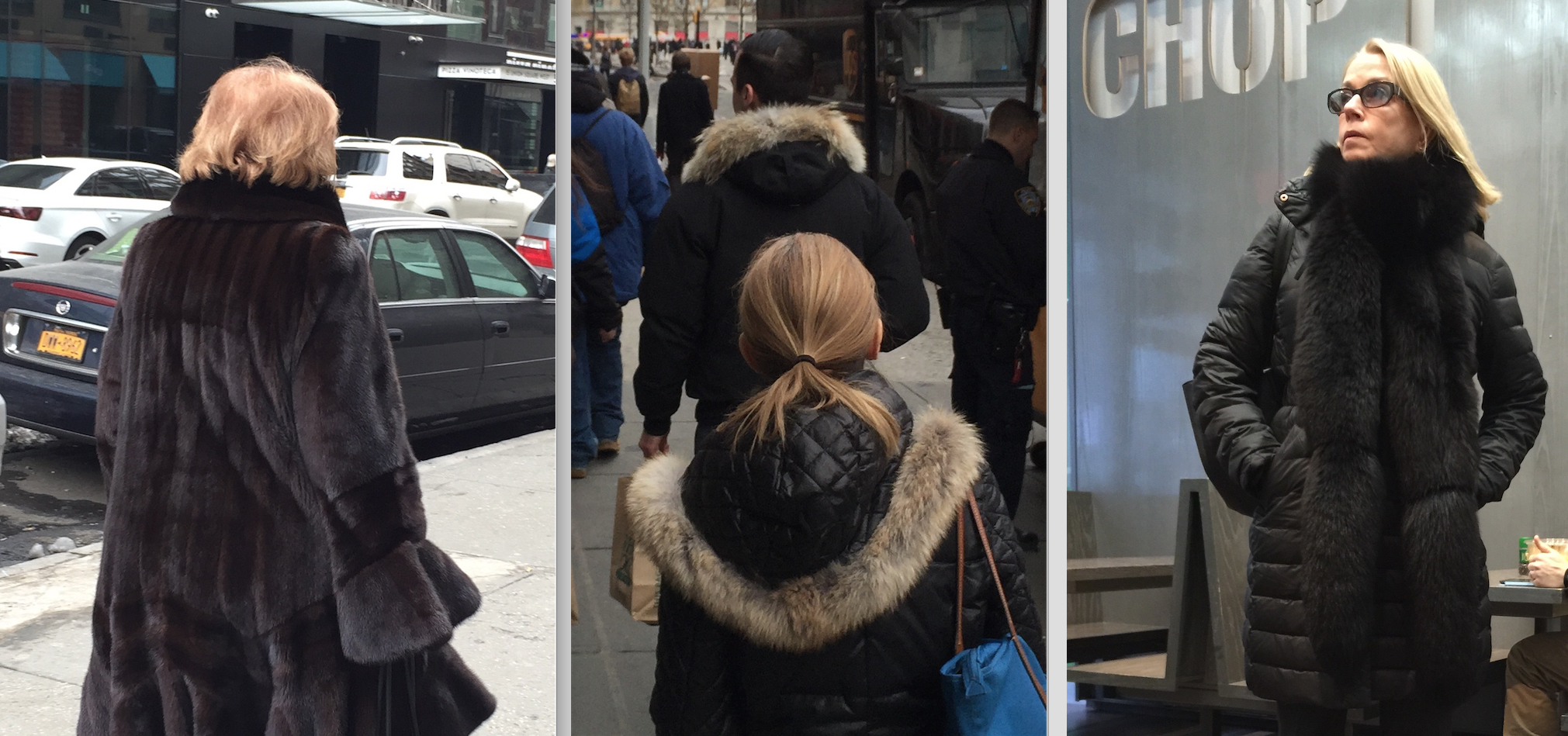
Wearing fur with no shame

Wearing fur with no shame

Fur, it seems, is everywhere — on coats, vests, hats, boots, scarves, collars and hoods. And it’s being worn by not only men and women but also children. For activists, the abundance of fur begs many questions:

  • After decades of anti-fur advocacy, why are people wearing it? Are they unaware of the cruelty, or are they simply indifferent to it?
  • Has a drop in the number of people protesting on the streets from the 1980s and 1990s fostered an environment where people are comfortable wearing fur?
  • Do people wearing fur trim on their collars and hoods know that it’s real? Is it possible that they don’t realize they’re wearing it?
  • Do consumers think fur trim is more acceptable or less cruel than a fur coat?
  • What should the advocacy community do to stop people from wearing – and glamorizing – fur? Does any one approach work better than the others? Street protests? Pamphlets? Billboards? Ad campaigns? Polite interactions?

TheirTurn will explore many of these questions in upcoming articles. In this report, we look at various methods of fur shaming and ask, does it work? And, is it justified, in light of the fact that the discomfort experienced fur consumers is inconsequential relative to the agony endured by the animals they are wearing?

Rob Banks, a NYC-based animal rights activist, regularly takes to the streets to humiliate people wearing fur: “I strongly feel that publicly shaming those who choose to wear fur is one of the most effective ways to target this cruel industry. The goal is to cause extreme embarrassment, in hopes that they’ll rethink wearing the coat in public again. Once the look is off the streets, it then becomes unfashionable to the public eye.”

Fur_coat_activists

Rob Banks photographs fellow activists Michelle (left), Jennifer (middle), and Jaime (right) shaming women in fur

Fur shaming video montage:

Using video footage to publicly shame a fur wearer:

fur_subway

“M’am. This is what happened to those who you are wearing.”

Some activists use a more subtle approach to fur shaming – one that doesn’t use direct confrontation:
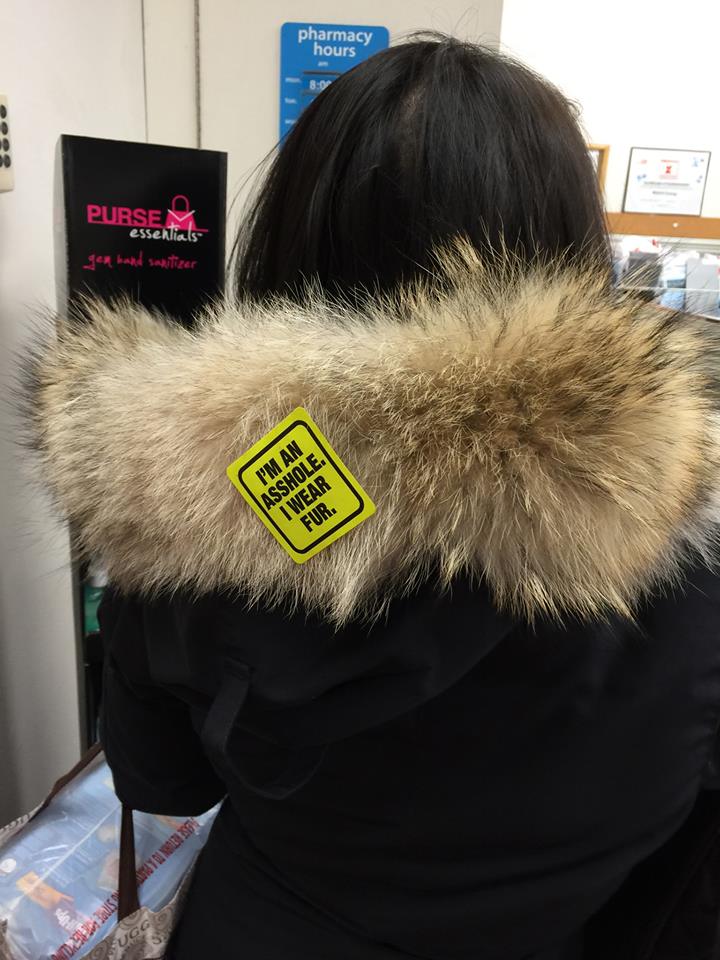
Anti-fur sticker: "I am an asshole. I wear fur."

Anti-fur sticker: “I am an asshole. I wear fur.”


Nosey, Tanya & Mali: Captive Elephants In Crisis

February 12, 2015 by 27 comments


The News

Thanks to Blackfish, the world has awakened to the plight of whales in captivity, and thousands of people are fighting to outlaw it. The “Blackfish effect” also appears to be benefitting imprisoned elephants, who, like whales, are highly social and intelligent mammals who suffer in captivity. In fact, advocates around the world are running campaigns to rescue elephants who are being held alone in horrific conditions:

TANYA IN TARGU: Tanya, a 37 year old female elephant who was captured in the wild in the 1970s, is being held captive in a desolate, indoor, concrete pit at the Targu-Mures Zoo in Romania. And she has been all alone for 20 years, in spite of the fact that the European Association of Zoos and Aquaria requires that zoos house female elephants in groups. Her mental anguish is on display in this video.

Please sign the petition demanding that the Executive Director of European Association of Zoos and Aquaria send Tanya to a sanctuary

NOSEY IN NORTH AMERICA: Nosey, a 30 year old elephant who was captured in Zimbabwe when she was two, has been held captive by the Liebel Family Circus since 1988. In spite of her crippling arthritis which is captured in this video, Nosey is forced to give rides to paying customers at flea markets and fairs across the country. Advocates claim that the circus owner, Tom Liebel, and his employees have beaten Nosey into submission with bullhooks, a sledge hammer and shovel handles and that the USDA has cited Liebel nearly 200 times for violations. In spite of the violations,  abundant evidence of abuse and a veterinary report stating that Nosey is “suffering, permanently disabled and crippled,” the USDA has refused to revoke Liebel’s license to exhibit Nosey and use her for rides.

Simpon's co-creator Sam Simon has used his fortune to liberate animals.

Simpon’s co-creator Sam Simon has used his fortune to liberate animals.

Please urge your member of Congress to take action for Nosey and sign the Change.org petition demanding that the USDA confiscate her and relocate her to a sanctuary. On June  26th, hundreds of activists will descend upon the USDA in Washington, D.C. to protest  the agency’s reckless disregard for Nosey. Robin Jewell, the organizer of the historic Miracle March for Lolita, has announced a March for Nosey that will take place at the USDA office in Raleigh, North Carolina, on October 23rd in 2015.

MALI IN MANILA:  Mali, an elephant captured in Sri Lanka who has been confined to a concrete enclosure at the Manila Zoo for over 35 years, is “so lonely that she holds her own tail,” according to Jolie Nicole Shanoian, an activist who administers the Facebook page about her plight. The Manila Zoo, which is determined to keep Mali in her small, barren pen that has no vegetation or water for bathing, insists that she would not survive the transport to the Boon Lott’s Elephant Sanctuary in Thailand, which is prepared to rescue her.

Please sign the Change.org petition demanding that the Mayor of Manila release Mali to Boon Lott’s Elephant Sanctuary.

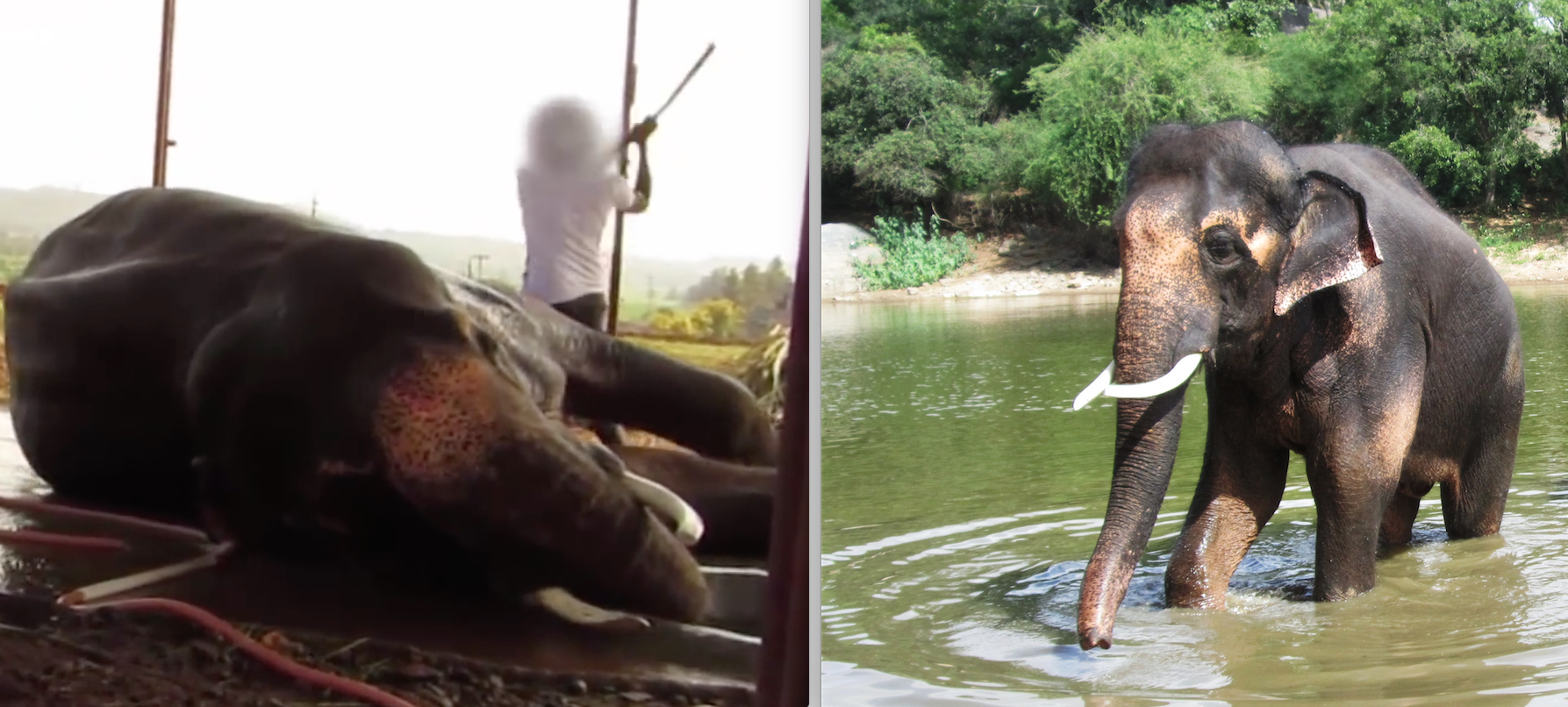
Liberating elephants from captive and exploitive settings is possible. In 2005, the Detroit Zoo relocated Winky and Wanda to a sanctuary (PAWS), saying “despite our best efforts, we saw the unfortunate results of them living in an unnatural physical and social environment.” In 2014, Sunder, an elephant who was severely beaten and chained for 7 years at a temple in India, was taken from his abusers as a result of a court order and transported to a sanctuary.

Sunder: Before & After

Sunder: Before & After


Exiting our Comfort Zone

February 10, 2015 by 4 comments


Opinion

Direct Action Everywhere (DxE), the animal rights group that is conducting protests inside, is challenging activists to “exit their comfort zone” on behalf of the animals:

“We have found that speaking loudly and proudly in defiance of social convention inspires others to do the same. And that is why we encourage activists to step outside of their comfort zones, past the boundaries of tradition and into the stores that are selling the dead bodies of our friends.”

It’s a message that is resonating with many activists who have taken a more traditional approach by peacefully protesting on public property. Indeed, hundreds of activists in cities around the world are, for the first time, staging protests inside of restaurants and grocery stores.

Of course, courageous activists have put themselves in uncomfortable situations on behalf of animals since the earliest days of the movement – liberating animals from fur farms; conducting undercover investigations in factory farms; protesting naked; blocking entrances to laboratories; and storming onto runways during fashion shows.

Protesting at a Donna Karan runway show

Protesting at a Donna Karan runway show

Exiting one’s comfort zone is nothing new in the movement. What has changed, thanks to DxE and Collectively Free, is that it is going mainstream.

Donny Moss of TheirTurn.net took the DxE challenge, (nervously) speaking out during a Collectively Free protest exposing Whole Foods’ fraudulent marketing campaign, which claims that the animals who they sell lived happy lives.

“Pushing my own boundaries was cathartic. I could finally relate to the old saying ‘Life begins at the end of your comfort zone,'” said Donny Moss. “More importantly, stunned customers who might have walked right by me during a street protest paid attention to my message.”

Just imagine how much more we could accomplish for animals if we all exited our comfort zone!


Grieving Mothers

February 9, 2015 by 6 comments


Opinion

There is nowhere on earth where will you find more grieving mothers than the dairy industry. TheirTurn produced a four minute video to explain what happens to them and why we must be their voice. 

Your Turn

The inherent cruelty of the dairy industry is one of many powerful reasons to ditch milk products and become an advocate. Read more.


NYC Lawmaker Who Opposes Carriage Ban Seeks “Regulations to Prevent Horses from Spooking”

February 5, 2015 by Comments are off for this post


The News

As a vote on the historic bill to ban NYC’s horse-drawn carriages approaches, some lawmakers will say just about anything to justify their politically-motivated support of the carriage trade. Here’s what one City Council Member said on January 28th in an email exchange with an advocate following an in-person meeting.

Advocate (in jest): “Do you believe that regulations can be introduced that would prevent a horse from spooking?
Council Member: “We hope that we can find a sufficient regulatory manner that leads to an environment where horses don’t spook, or if for some reason they do, they won’t be a danger to themselves or others.

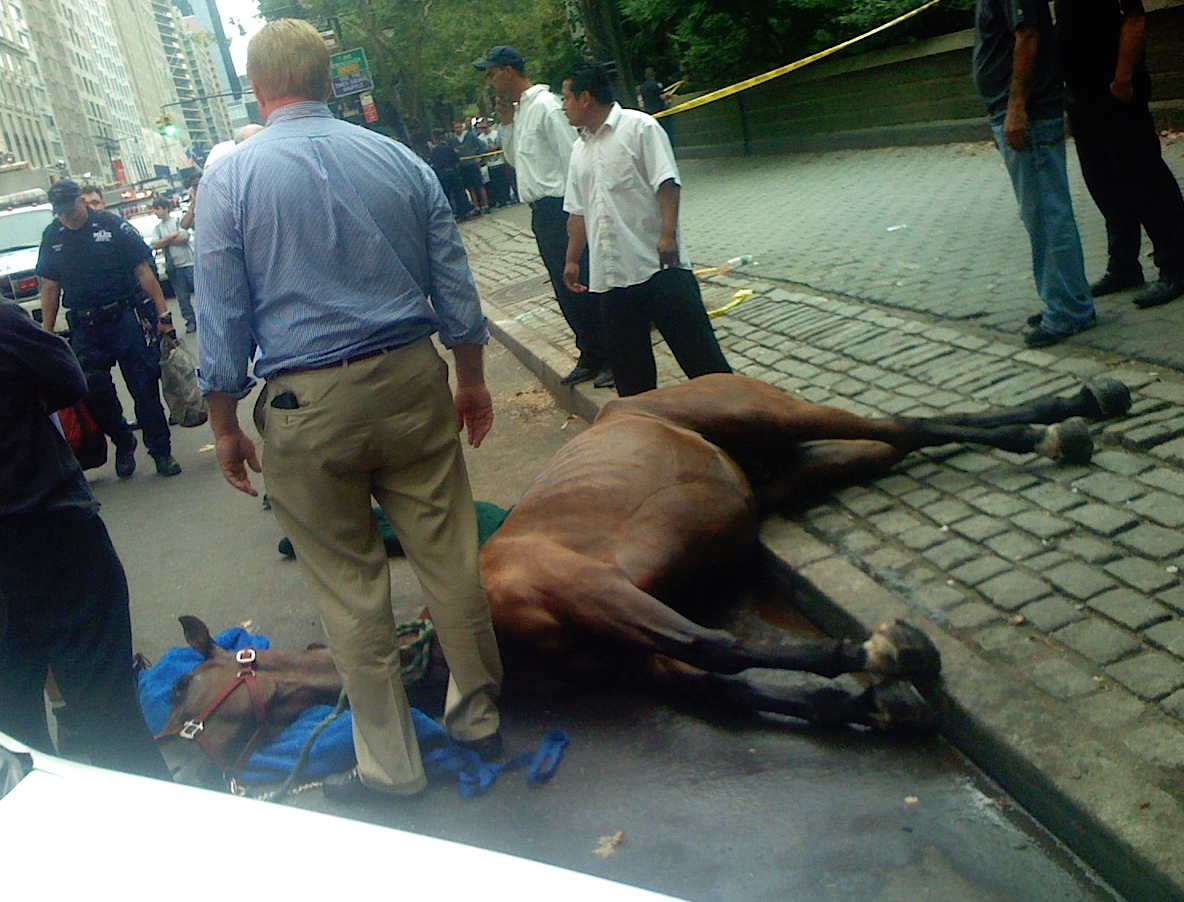
Smoothie crashed into a tree and died after spooking in midtown Manhattan.

A NYC carriage horse crashed into a tree and died after spooking in midtown Manhattan.

The vast majority of lawmakers have not yet declared how they intend to vote on the horse-drawn carriage legislation. That is not because they don’t have a point of view about the issue; they are simply waiting to determine which vote would be more politically beneficial (or less politically harmful) to them. One of the questions many are asking themselves is who they are more afraid to alienate: industry supporters (organized labor & media) or industry opponents (the Mayor and advocates). It is a short-sighted approach because, if self-interest is guiding their decision, then they should ask themselves how history will judge them. Future generations will assuredly look at the images of horse-drawn carriages in midtown traffic and ask, “What were they thinking?” Do these lawmakers really want to be on the wrong side of history?

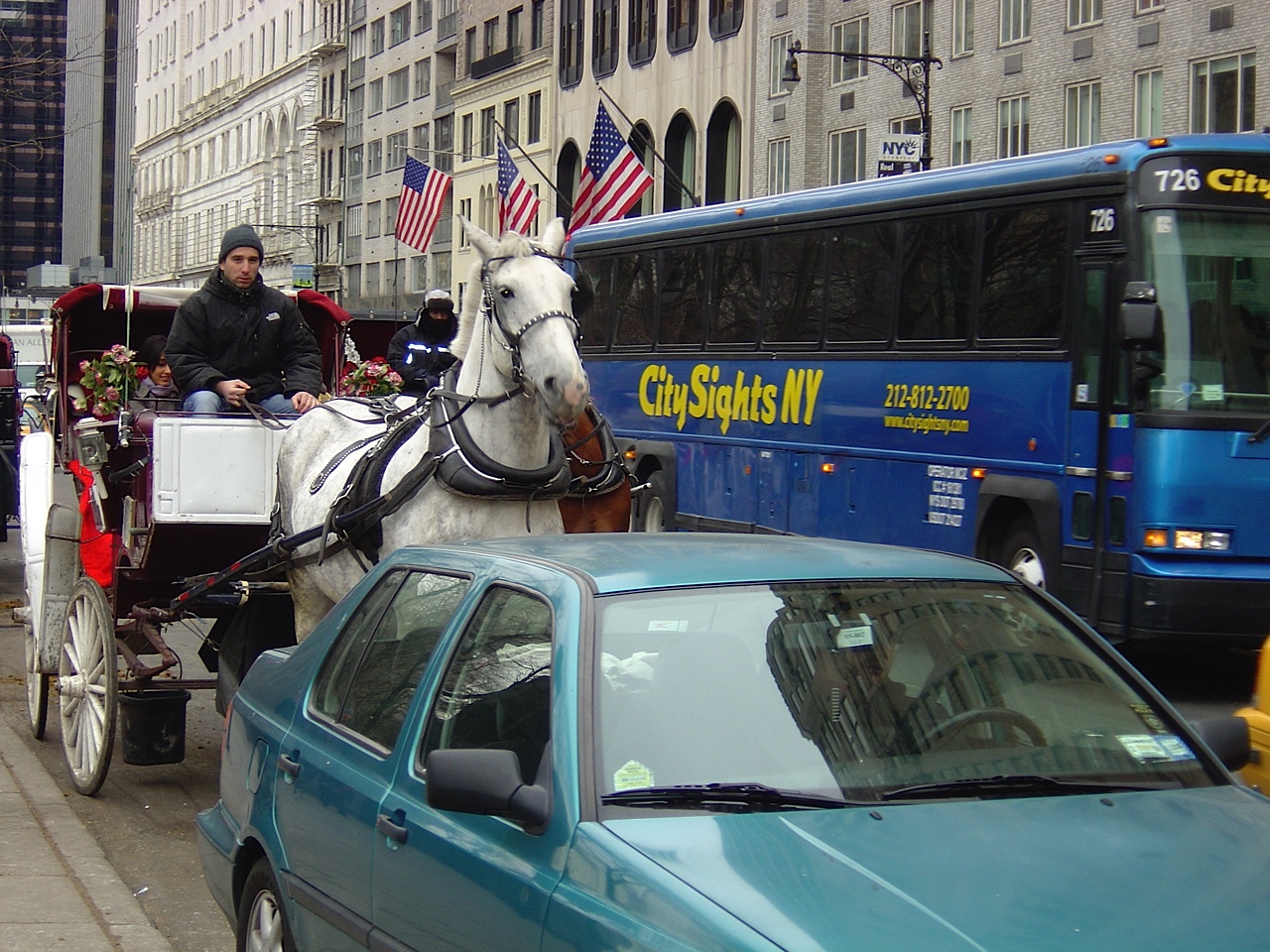
Horse-drawn carriages in midtown traffic?

Horse-drawn carriages in midtown traffic?

The ASPCA is well aware of the fact that politics, and not the merits of the issue, will drive the decision making process, but that has not stopped them from explaining why they unequivocally oppose the use horse-drawn carriages in Manhattan. Following is an excerpt from a CNN opinion piece written by Matt Bershadker, the CEO of the ASPCA:

“There is no better example of an obsolete and unacceptable tradition than NYC’s horse-drawn carriage rides. In the 21st century, using horses to pull heavy loads of tourists through congested city streets is unnatural, unnecessary and an undeniable strain on the horses. And that strain is not restricted to the streets. The stables to which these horses return — former tenement buildings — do not afford horses a paddock for turnout, the ability to graze or the freedom to roll and run. That’s why, as an organization that’s fought for humane treatment of horses since our founding in 1866, we think it’s time to end horse-drawn carriage rides. No counterargument stands up to the sheer absurdity of this antiquated practice, though many who profit from it keep trying.”

How can a Council Member refute that? Not well, if this email exchange with aforementioned Council Member is any indication:

Advocate: “Do you believe that the ASPCA is incorrect in its conclusion that horse-drawn carriages can no longer be operated humanely in NYC?”
Council Member: “We are definitely taking the ASPCA’s statements into consideration as we go forward.”

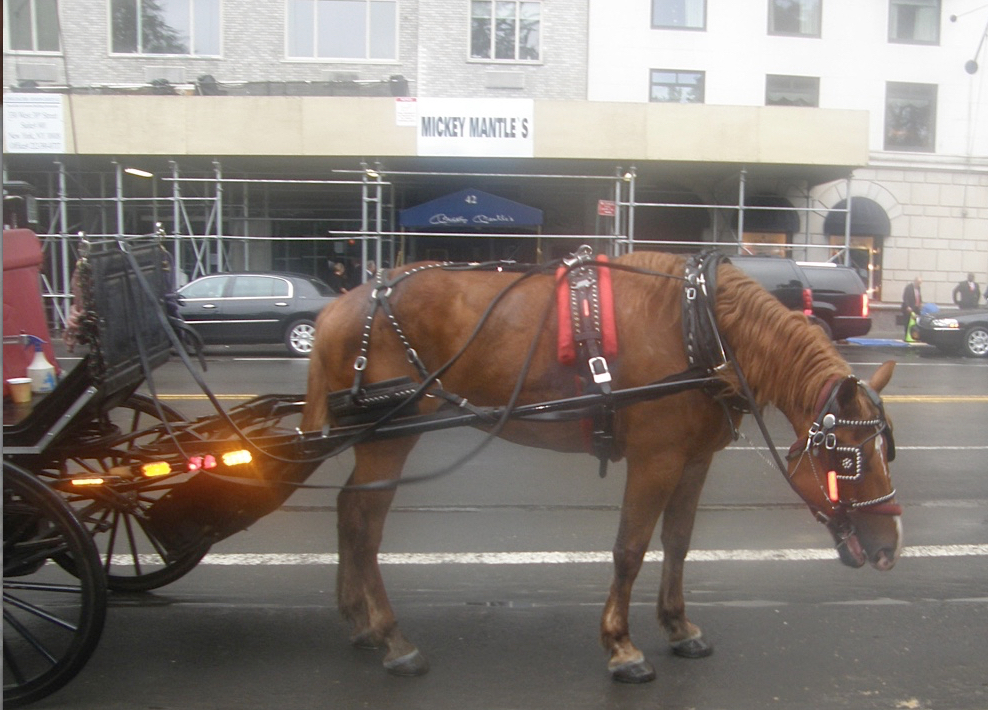
Beast of burden, NYC

Beast of burden, NYC

Your Turn

1. If you live in NYC, please join NY-CLASS in its efforts to rally support among lawmakers for the Mayor’s bill to ban horse-drawn carriages. Otherwise, please sign their petition.

2. To learn more about the issue and keep apprised of news, subscribe to the weekly newsletter of the Coalition to Ban Horse-Drawn Carriages.

3. Watch the award-winning documentary film BLINDERS to see why people have been fighting for years to take the horses out of NYC: