
Their Turn - The Social Justice Movement of Our Time Their Turn - The Social Justice Movement of Our Time

New York Blood Center Blames Animal Welfare Groups for Plight of Abandoned Chimps

August 10, 2015 by 7 comments


The News

One day after activists staged a third protest at the home of its Chairman of the Board on August 4th, the New York Blood Center (NYBC) posted a stunning public statement (Q&A) defending its decision to cut off funding to its former lab chimps (see below).

In the Q&A, which it has since removed from its website, NYBC argues that it neither owns nor has responsibility for the chimps; that the blame for their plight lies with animal welfare organizations who refused to take them; and that their priority is helping humans, not chimpanzees.
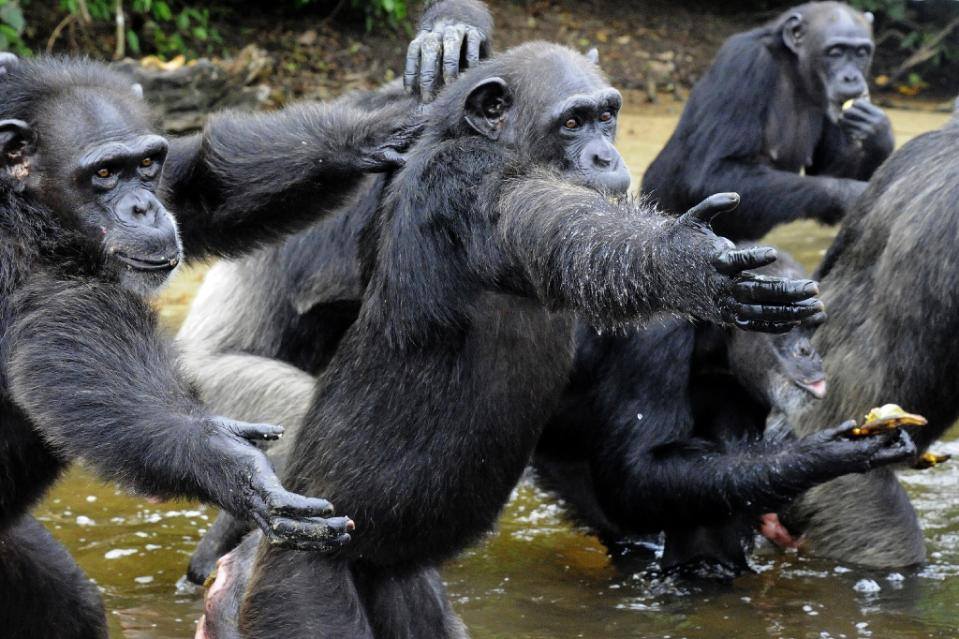
With no natural food on the islands where they were relocated, the chimps eagerly await the delivery of food

With no natural food on the islands where they were relocated, the chimps eagerly await the delivery of food

“We have no obligation to these chimpanzees.”  In an effort to distance itself from its chimps, NYBC asserts that the government of Liberia owns them and is responsible for their care. Nowhere in its statement does NYBC acknowledge that they captured the chimps from the wild; bred them in captivity; conducted experiments on them for 30 years; and dropped them off on islands with no natural food and water, rendering them totally dependent on humans for survival.

Language about ownership in contracts between NYBC and the government of Liberia doesn’t change the fact that NYBC has a moral obligation to pay for their care. In fact, previous executives at NYBC publicly acknowledged this obligation.

new york blood center

In its Q&A, NYBC asserts that Dr. Prince was not authorized to make this statement.

“The animal welfare groups did nothing to help us.” NYBC claims that it attempted to work with animal welfare organizations to find a long term solution for the chimps, but, according to individuals involved in those discussions, NYBC merely attempted to shift the responsibility to these groups without offering to pay for the expenses, such as expanding the sanctuaries to accommodate the chimps and providing them with food and medical care for the remainder of their lives. During these discussions, NYBC was well aware of the fact that great ape sanctuaries in Africa, which are chronically short on space and financial resources, could not assume the millions of dollars in costs associated with caring for its chimps.
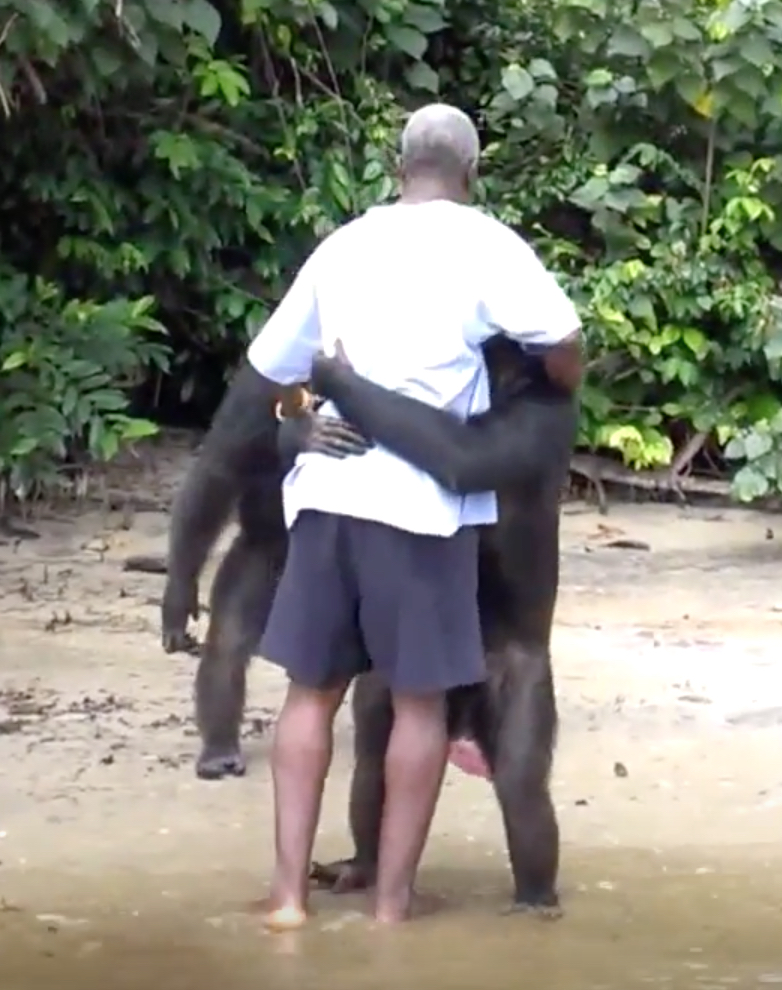
Chimp greet a volunteer who brings them food

Chimp greet a volunteer who brings them food

“Our obligation is to humans. Other organizations better suited to funding and supporting the chimps.” NYBC also justifies its decision to eliminate funding for the chimps on the grounds that humans are a greater priority: “Our mission is to save lives here in the United States. NYBC’s responsibility is to blood donors, hospitals and patients.”

Even if one subscribes to the point of view that humans are more worthy of life than other animals, NYBC doesn’t have to make that choice. The organization, which pays its President over $1.2 million and has $450 million in assets, has earned $500 million in royalties from their chimp research. Even if NYBC was not a wealthy organization backed by some of the biggest corporations in the United States, it would still have a moral obligation to pay for the care of their chimps.
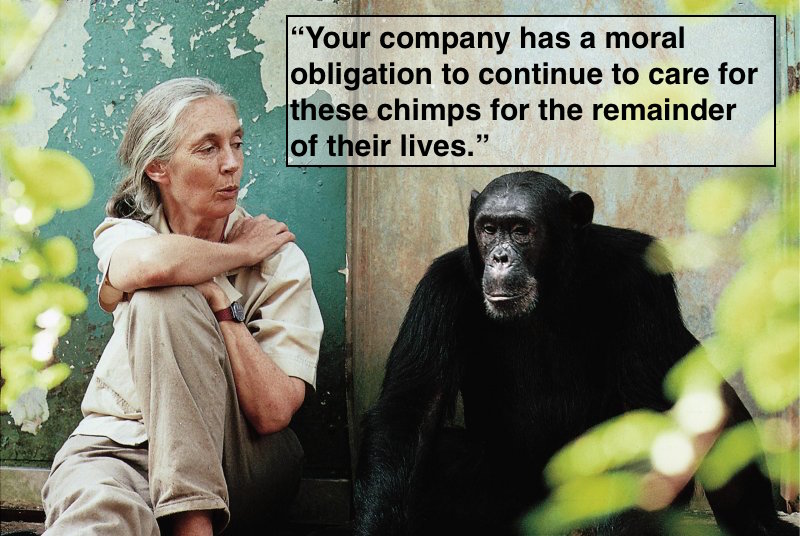
Jane-goodall

Jane Goodall’s letter to the New York Blood Center

In a demonstration of its lack of ethics, NYBC describes the islands to which they relocated the chimps as “sanctuaries,” even though they have no caretakers, facilities or infrastructure. Given that the chimps had no survival skills and were traumatized by decades of experiments, they should have been relocated to accredited sanctuaries where they would have received much needed care as soon as they were released. Instead, they have been struggling to survive on isolated islands, at times going several days without food and water. Over the years, many of the chimps have needlessly died from starvation.

In a statement entitled “Left To Die In Liberia,” the Humane Society of the United States (HSUS) paints a picture of just how difficult the animals’ lives on the islands: “One chimp bargained for food by offering his leg to the caregivers, as he would have done in the lab when being darted.”

chimp-research-liberia-cage

Captive chimp at NYBC’s research facility in Liberia
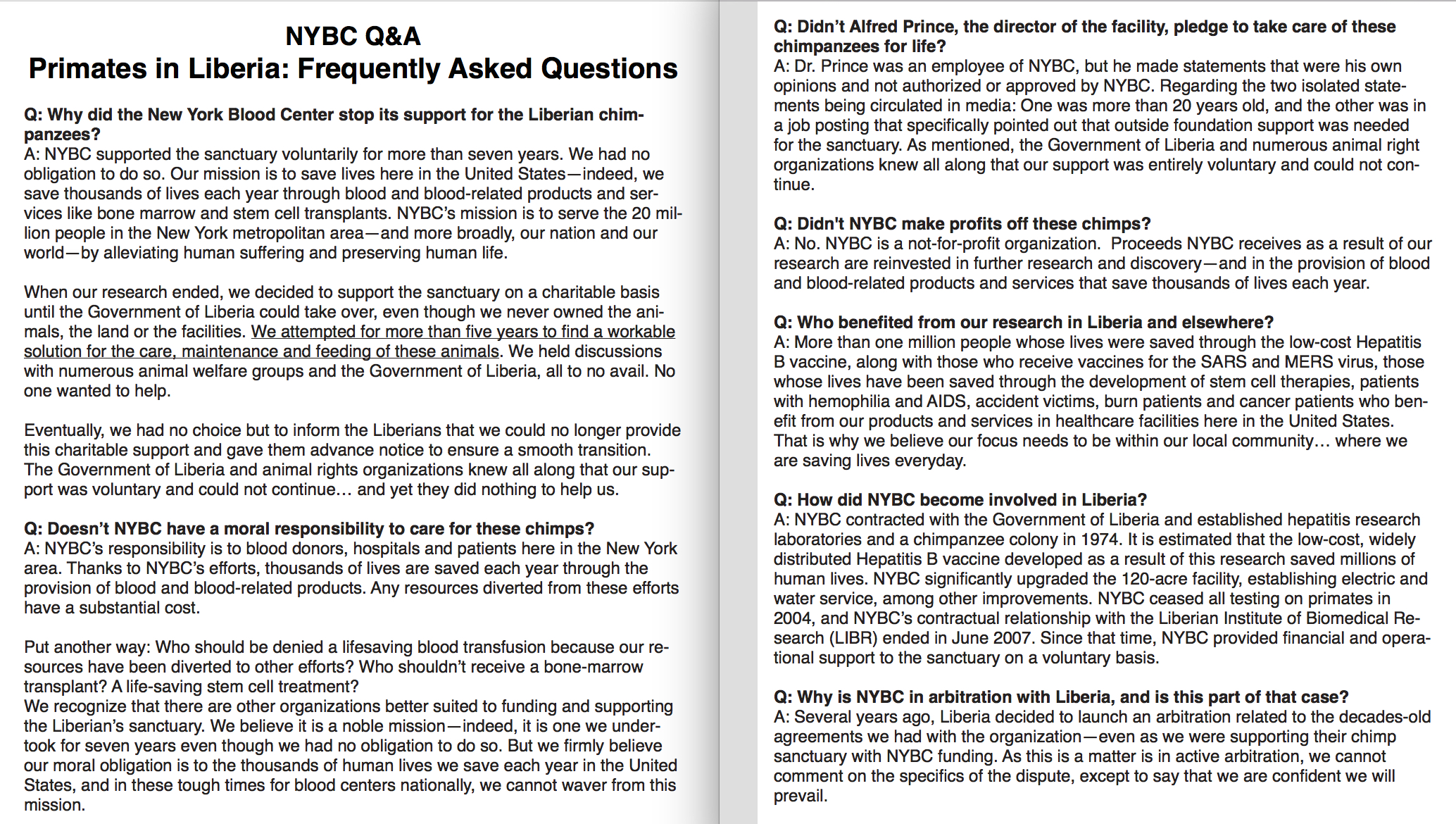
Q&A Posted on NYBC's website on August 6th

Q&A Posted on NYBC’s website on August 6th

Your Turn

Please join the Facebook page New York Blood Center: Do the Right Thing in order to participate in the online actions and keep apprised of the campaign to compel NYBC to reinstate funding for the chimps.
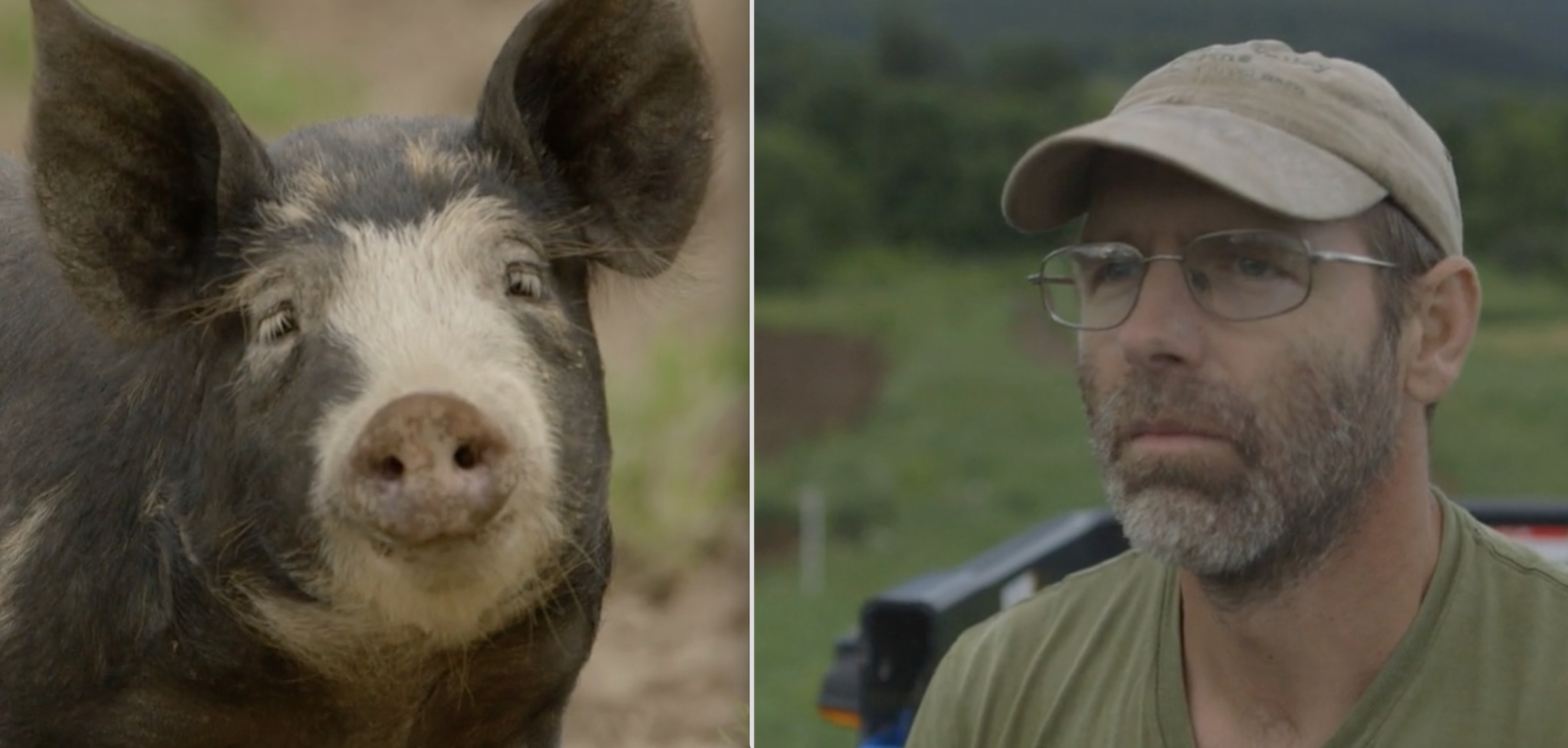
A Farmer Sees The Light in THE LAST PIG

August 4, 2015 by 12 comments


Opinion

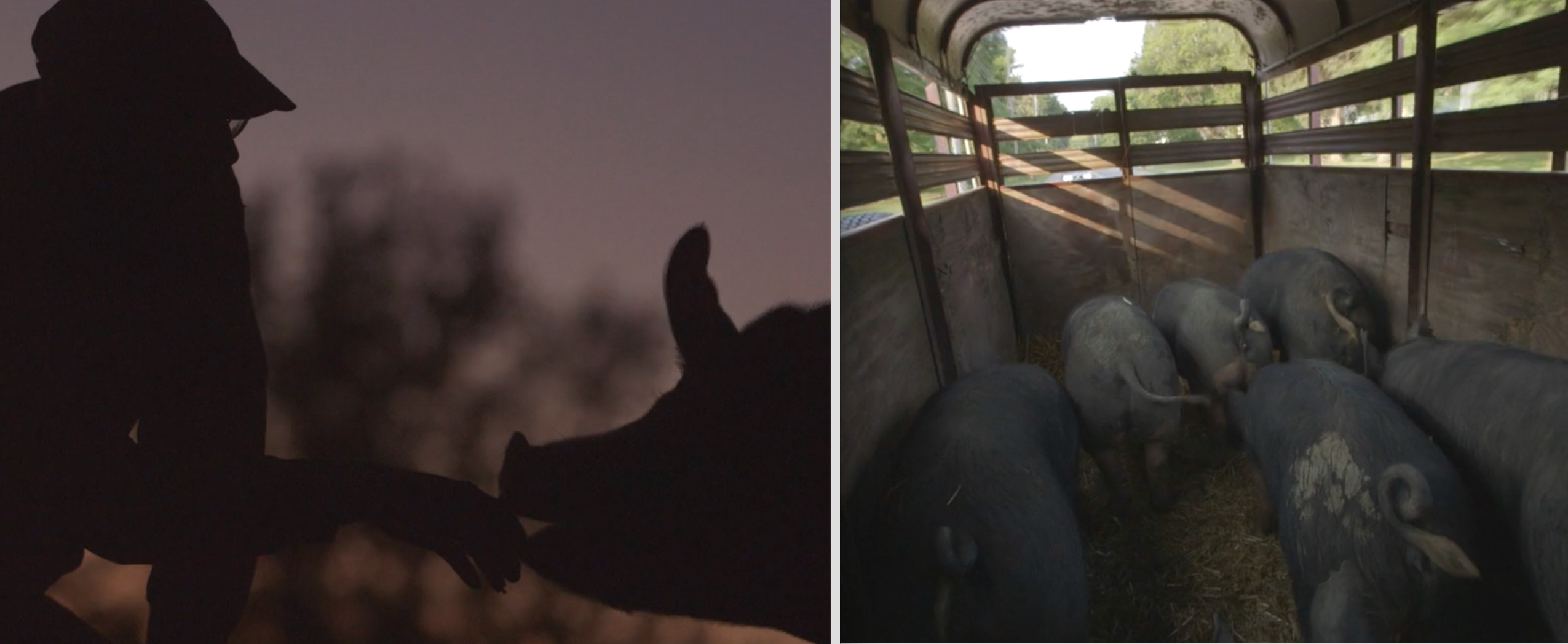
Emmy award winning filmmaker Allison Argo has released the trailer to her highly anticipated documentary. THE LAST PIG, the story of a farmer in upstate New York who struggles to align his livelihood with his principles, chronicles Bob Comis’ final year raising pigs for slaughter, intimately documenting his personal journey from killer to advocate. Watch the extraordinary trailer:

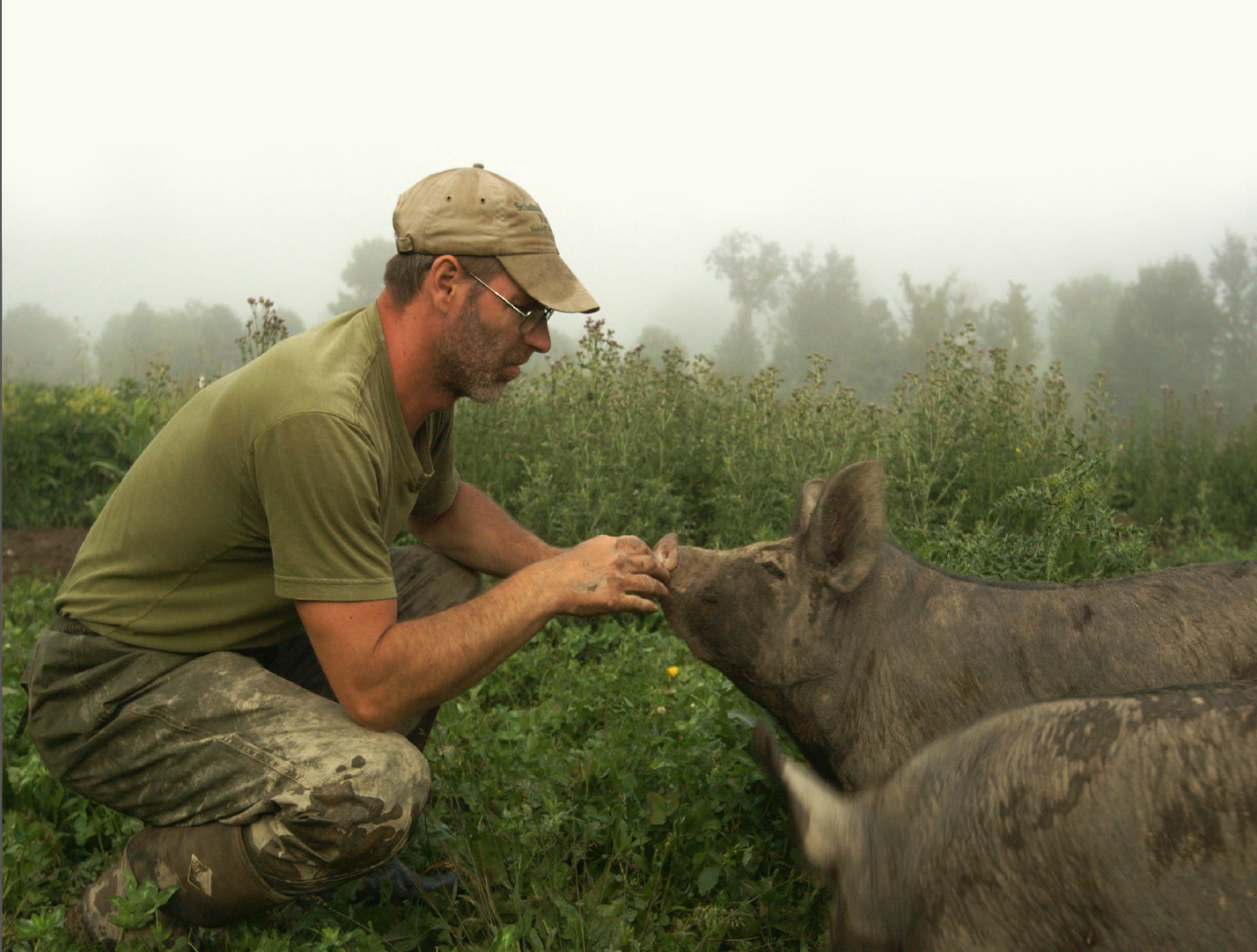
Unlike Howard Lyman, an animal rights activist who once farmed animals on an industrial scale, Mr. Comis became a “humane” pig farmer to offer an alternative to factory farming. According to Argo, he “labored to provide a near-idyllic life for his pigs, digging mud wallows in the summer heat; planting fields of corn where they can feed freely; and providing pigs with acres to roam with their herds.” But after ten years of farming pigs, Mr. Comis reached a tipping point. How could he continue to slaughter the very pigs who follow him around like his beloved dog and who show signs of stress when their friends vanish?

Last-Pig-Comis

“I’ve come to understand that their eyes are never vacant. There’s always somebody looking back at you.”

In the film, we see Comis embrace the feelings that he worked for years to suppress — that pigs are sentient beings who want to live and that slaughter cannot be reconciled with “humane” farming: “I don’t want to have the power to decide who lives or dies anymore.”

Bob Comis at his farm in upstate New York

Bob Comis at his farm in upstate New York

The film delivers subtle, but unmistakable messages about animal rights. Among them is our arbitrary cultural bias – regarding dogs as companions and equally intelligent pigs as commodities. Comis’ dog Monk, who follows him around the farm, serves a constant reminder of this bias, especially when he sits in the front of the truck while the slaughter-bound pigs languish in the back.

"This communion is a lie. I am not their herd mate. I am a pig farmer."

“This communion is a lie. I am not their herd mate. I am a pig farmer.”

Comis’ decision to transition from a pig to a veganic, vegetable farmer did not come easy because of the risk to his financial security: “I have to give up my job, my livelihood, in order to live in line with my ethics. It’s a colossal effort. It’s a terrifying effort. It’s overwhelming. But I’m committed to doing it.”

Your Turn

THE LAST PIG will be released in spring of 2016. Thus far, filmmaker Allison Argo and cinematographer Joe Brunette have funded production from their own pockets, but they need support with finishing funds. Please contribute, if you can. Follow the progress on Facebook.


“I am Cecil.”

July 29, 2015 by 11 comments


Opinion

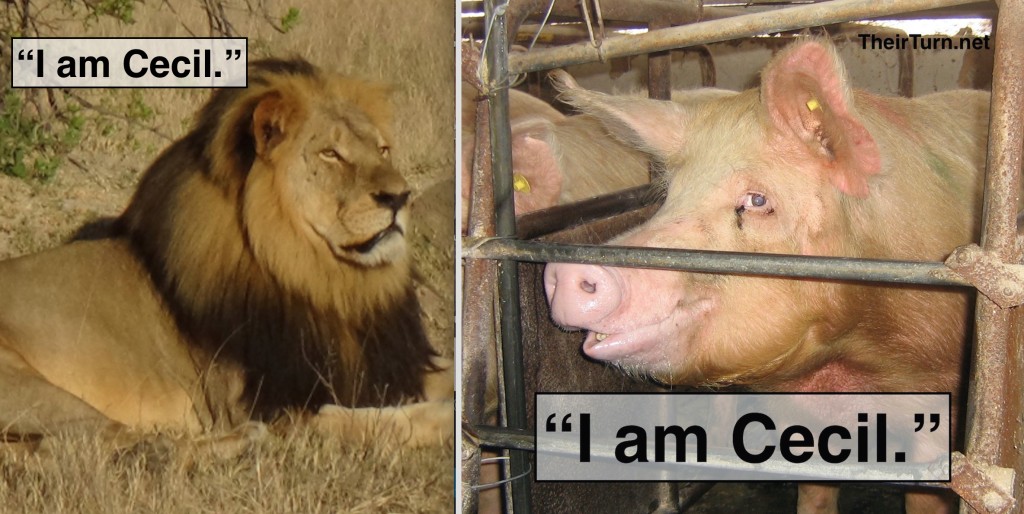
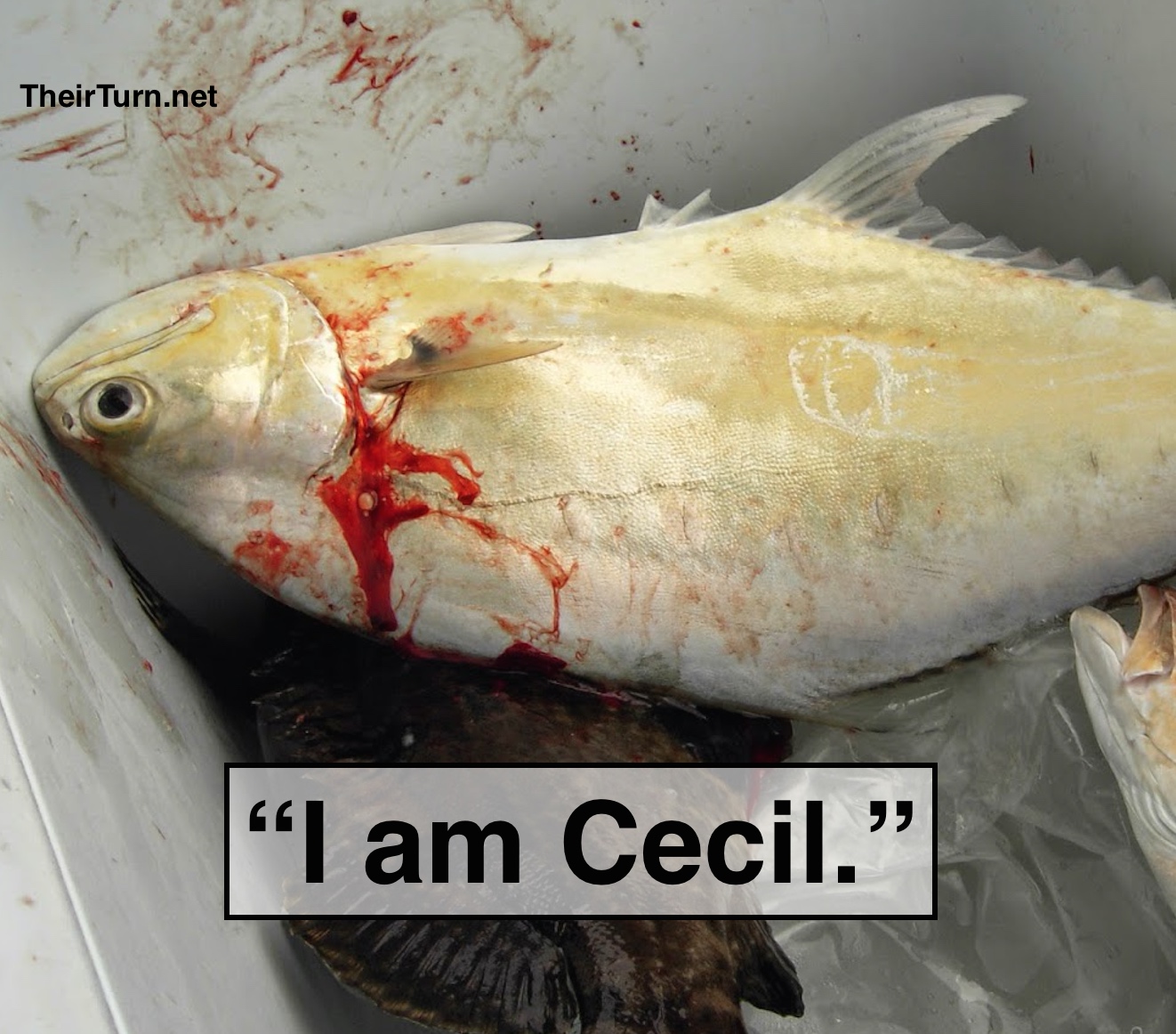
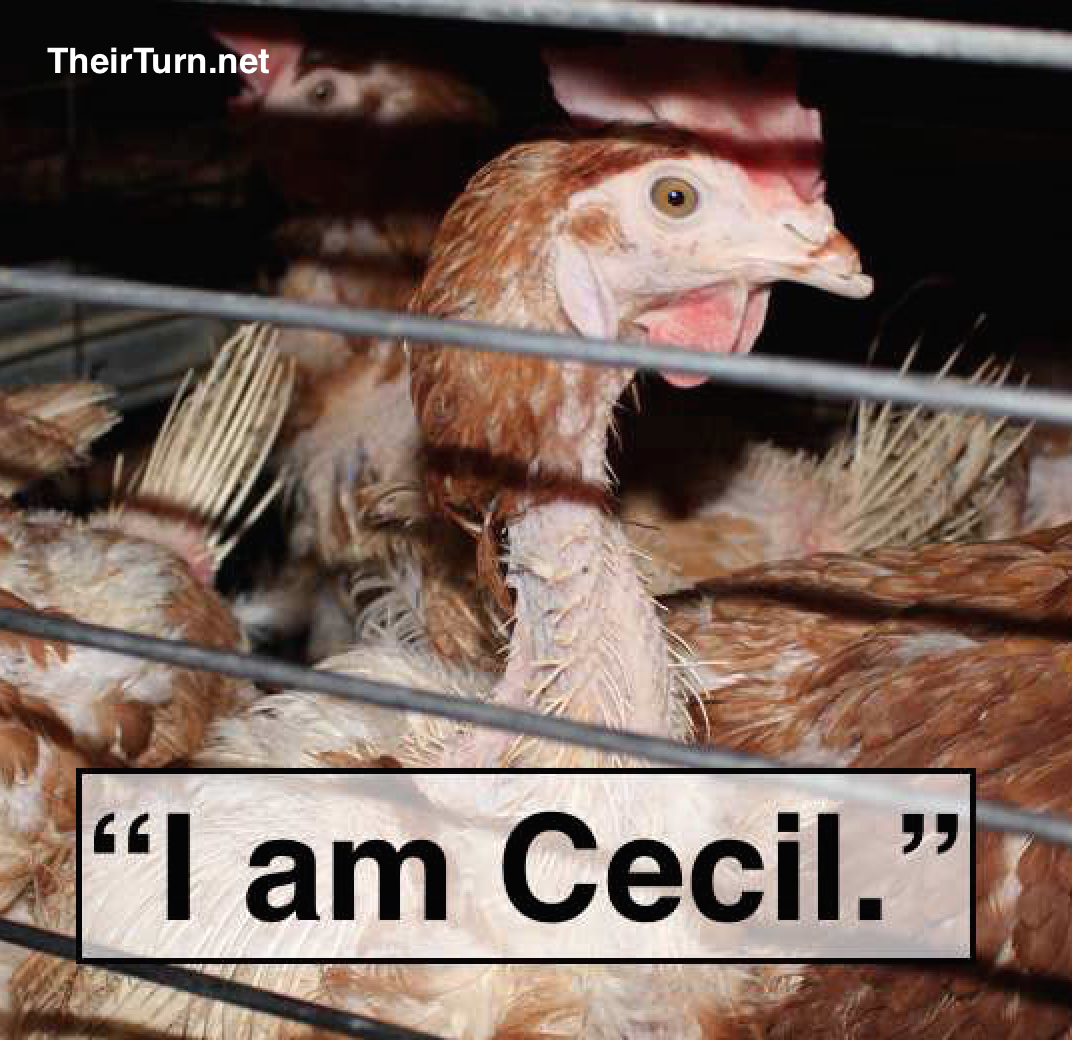
In the past couple of days, millions of people on social media, who don’t normally address animal cruelty, have expressed sorrow and outrage about the murder of Cecil, the beloved lion in Zimbabwe. While we have people’s attention, how can we tap into these powerful emotions to awaken them to the plight of other animals who are equally deserving of a life free from harm? How can we help people connect the dots between Cecil, who endured 40 hours of agony, and the billions of farm animals whose entire lives are consumed by suffering?

I-am-cecil

Please use this rare moment in time when the world is paying attention to ensure that Cecil did not die in vain and that his murder is wake-up call to the millions of people who have not made the connection between the animals we love – like lions, whales and dogs – and the animals we consume. They are all the same.

One easy way to help people make the connection is to share these images on Facebook and convey your thoughts about why farm animals deserve to live in peace just as much as Cecil.

Cecil4

Cecil5

cecil3


Activists Stage Dramatic Protests at Home of NY Blood Center Chairman Howard Milstein (Video)

July 25, 2015 by 7 comments


The News

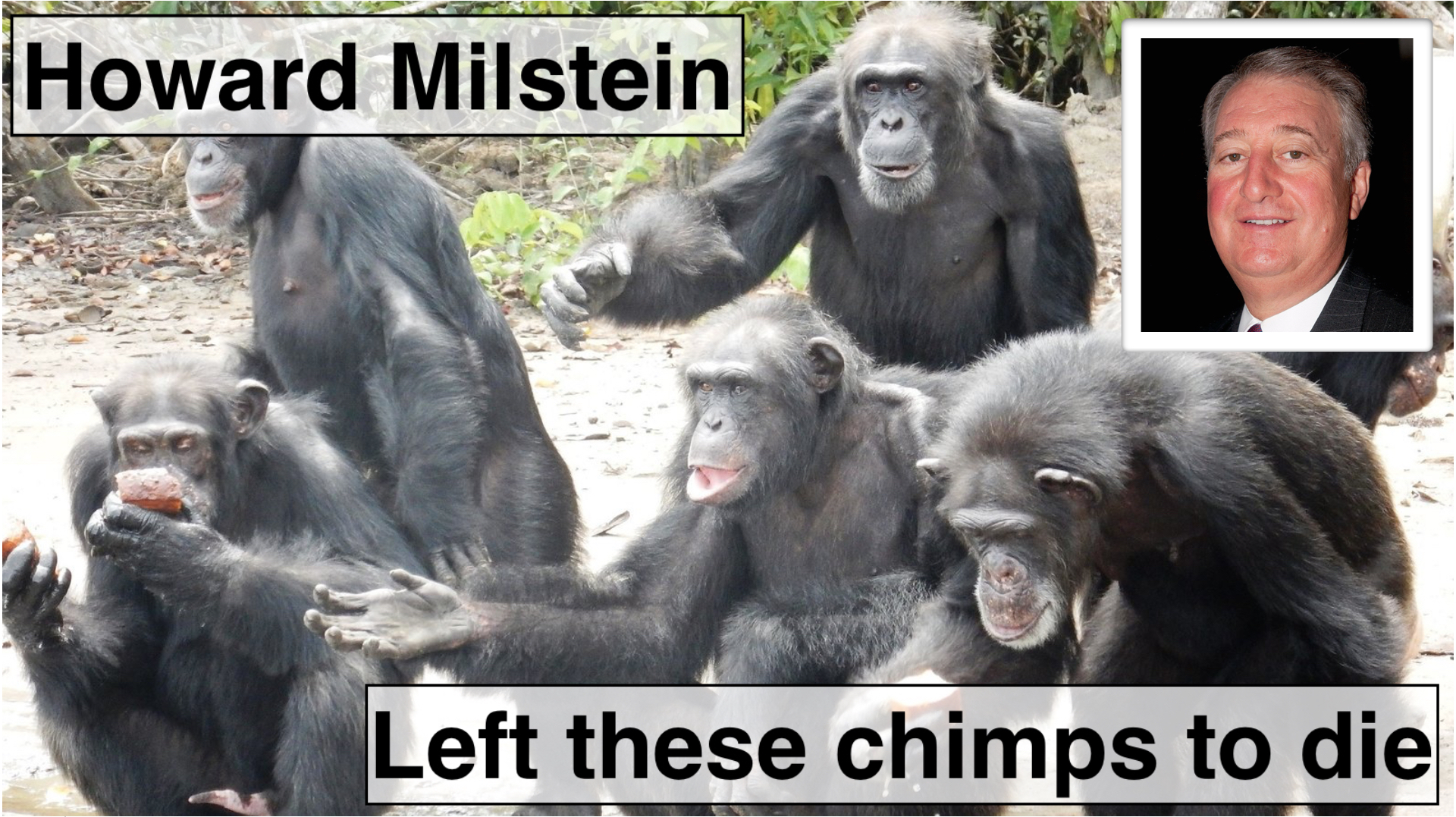
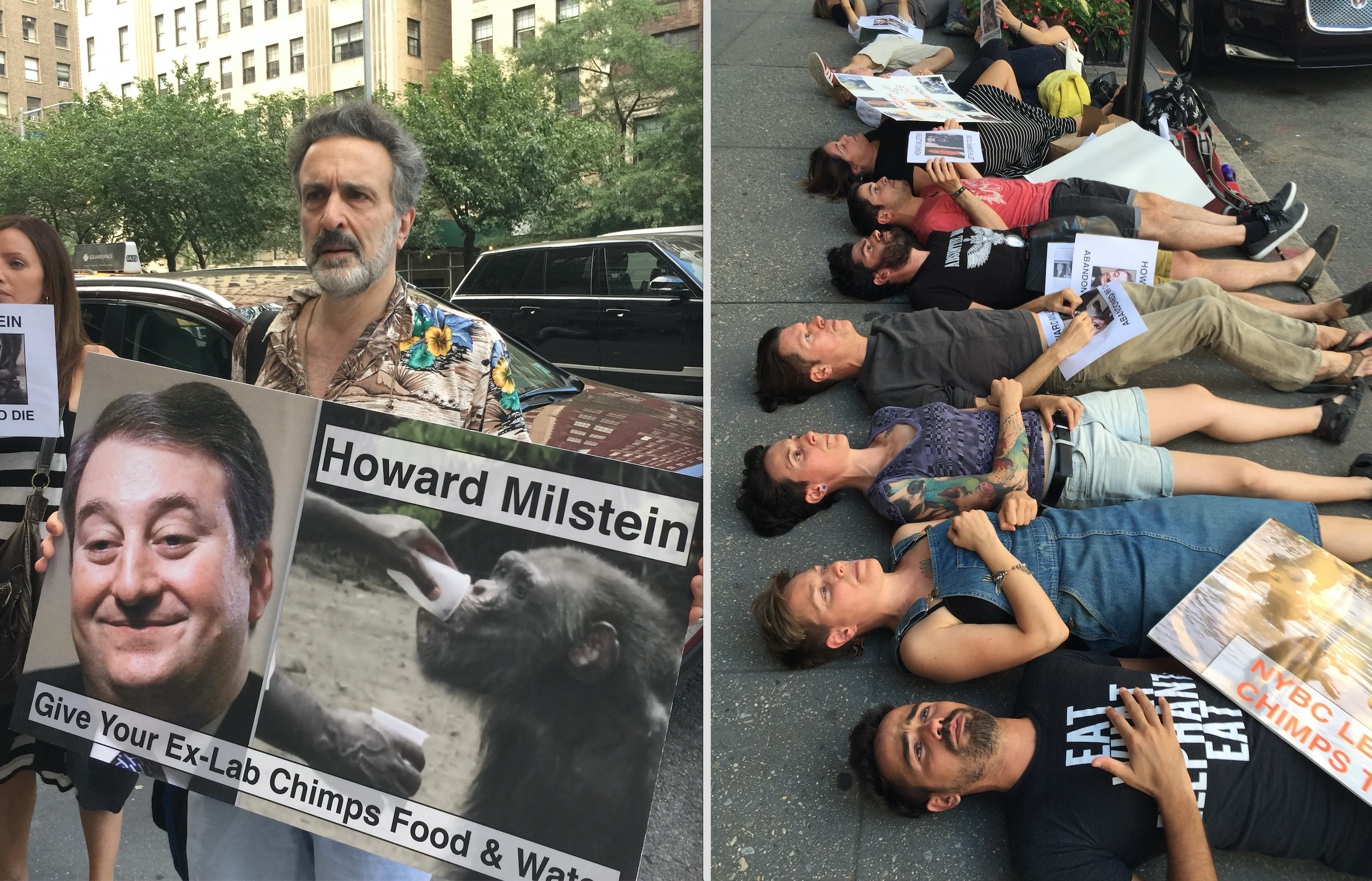
As Chairman of the New York Blood Center, real estate magnate Howard Milstein bears responsibility for the organization’s decision to cut funding for its former lab chimps who are living on six islands in Liberia. In an effort to convince him to fulfill his promise to provide lifelong care for the 67 surviving apes, New Yorkers have begun staging dramatic protests in front of the billionaire’s Park Avenue apartment building.

In spite of global pressure to reinstate the funding for the chimps, the NY Blood Center is digging in its heels, stating that it doesn’t own the them and that the government of Liberia is responsible for their care. They do not acknowledge that NYBC captured the chimps in the wild; bred them in captivity: held them prisoner in cages; experimented on them for 30 years; earned $500 million off the research; moved them to islands with no natural source of food and water; and made multiple promises to provide them with lifelong care.

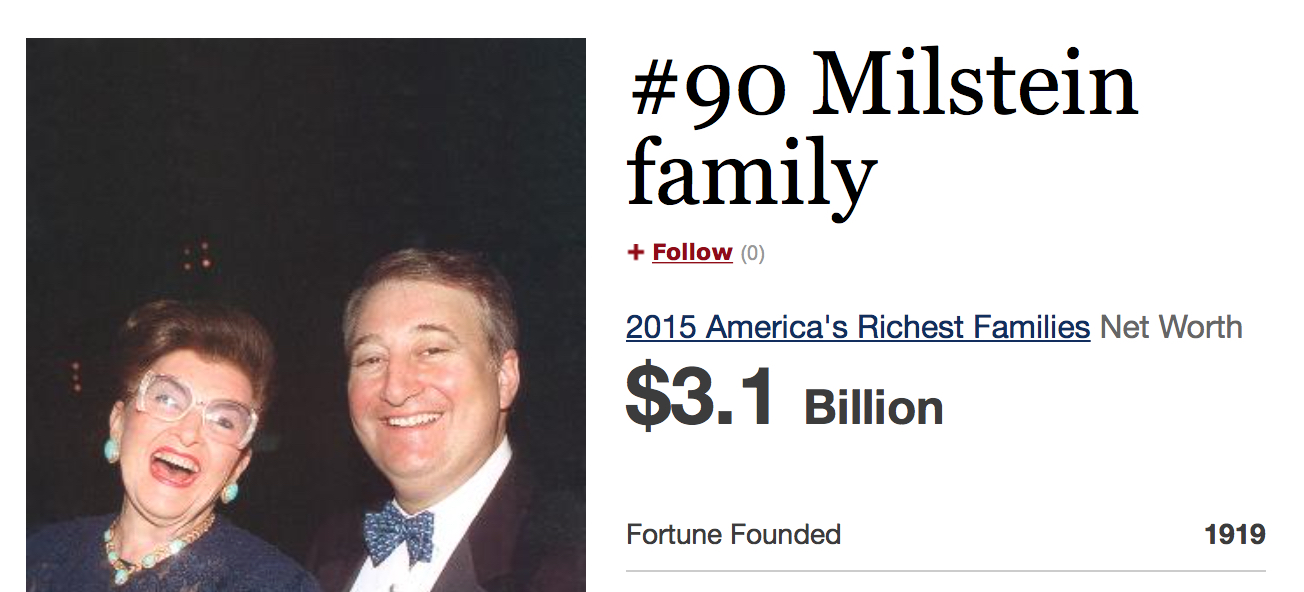
Real estate tycoon Howard Milstein is Chairma of the Board of the NY Blood Center

Real estate tycoon Howard Milstein is Chairma of the Board of the NY Blood Center

TV journalist Jane Velez-Mitchell of Jane UnChained attended the first protest at Mr. Milstein’s home and filed this report:

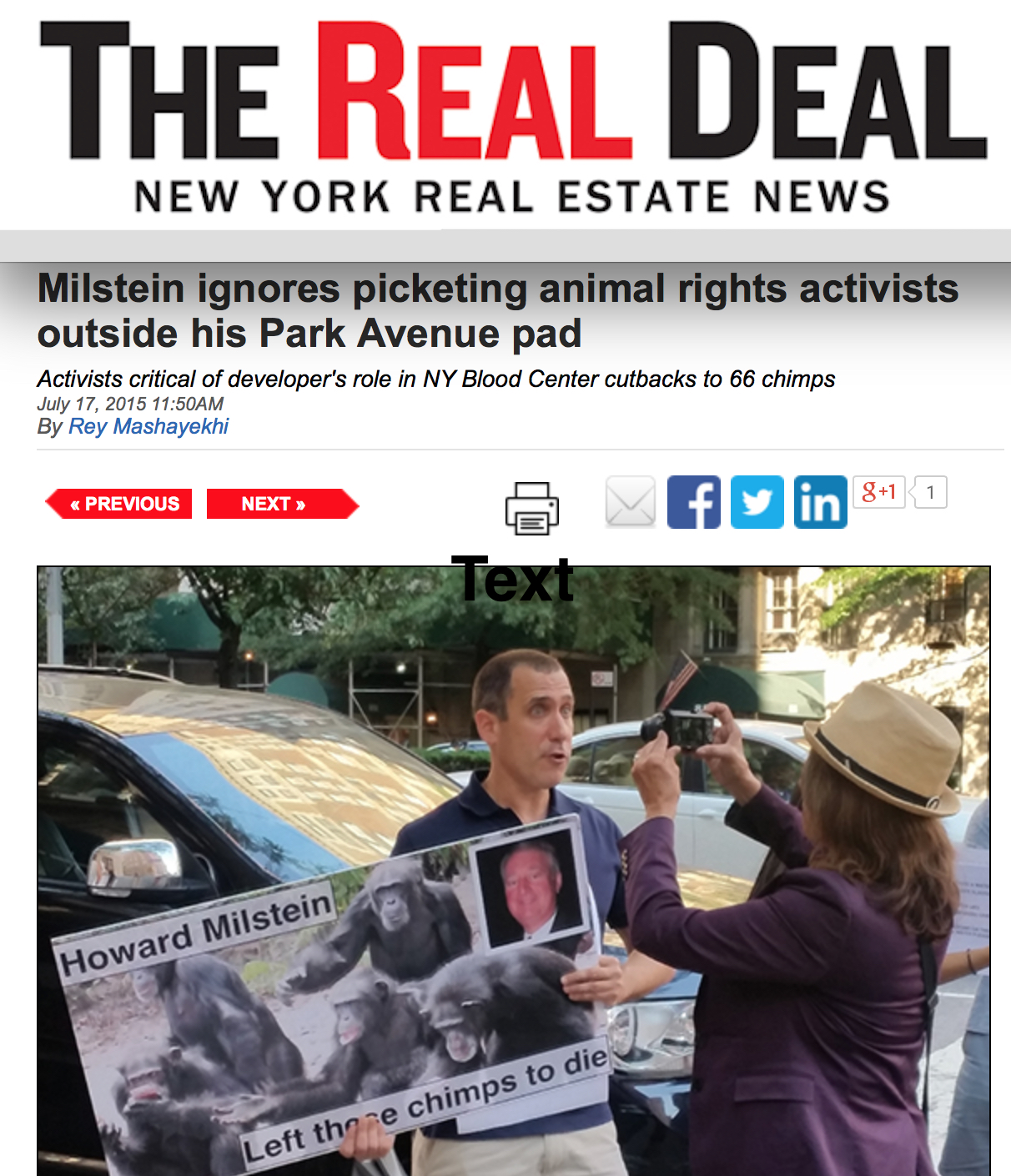
The Real Deal, a real estate publication read by Howard Milstein’s peers, also has also reported on the grass roots campaign against him and the NYBC.

real deal

As New Yorkers prepare to expand the protests to the homes other NYBC board members, hundreds, if not thousands, of advocates in other parts of the world are taking action against the the Blood Center by participating in a grass roots campaign organized by the Facebook group, New York Blood Center: Do the Right Thing.

New Yorkers protest outside the home of Howard Milstein

New Yorkers protest outside the home of Howard Milstein

In the streets, online and in the media, the NY Blood Center is being pressured to resume funding for the chimps’ care. On July 24th, the Daily Mail – one of the most widely circulated news publications in the world – posted a story that went viral: “Battle to Save the Hugging Chimps: Heartbreaking Story of 66 Apes and a Baby ‘Abandoned’ on Island by Medical Firm after They Finished Experimenting on Them.”

NYBC Chairman Howard Milstein cut funding to provide food and water to the organization's lab chimps after earning $500 million in royalties off of the research.

NYBC Chairman Howard Milstein cut funding to provide food and water to the organization’s lab chimps after earning $500 million in royalties off of the research.

Your Turn

Please join the Facebook group New York Blood Center: Do the Right Thing and the Facebook page Take Action: Save New York Blood Center Chimps to see how you can help.


In Historic Ceremony, Activists Worldwide to Shine a Light on the Path to Animal Liberation

July 22, 2015 by 4 comments


The News

The treatment of animals is a great disconnect in the world today. We oppose animal cruelty in theory, but we support it in practice. We know that our daily choices contribute to animal abuse, but we find ways to rationalize them in order to maintain our behavior. We turn a blind eye to cruelty because bearing witness would force us to take action. In short, the human desire to maintain the status quo is more powerful than the desire to do what is right — treat animals humanely.

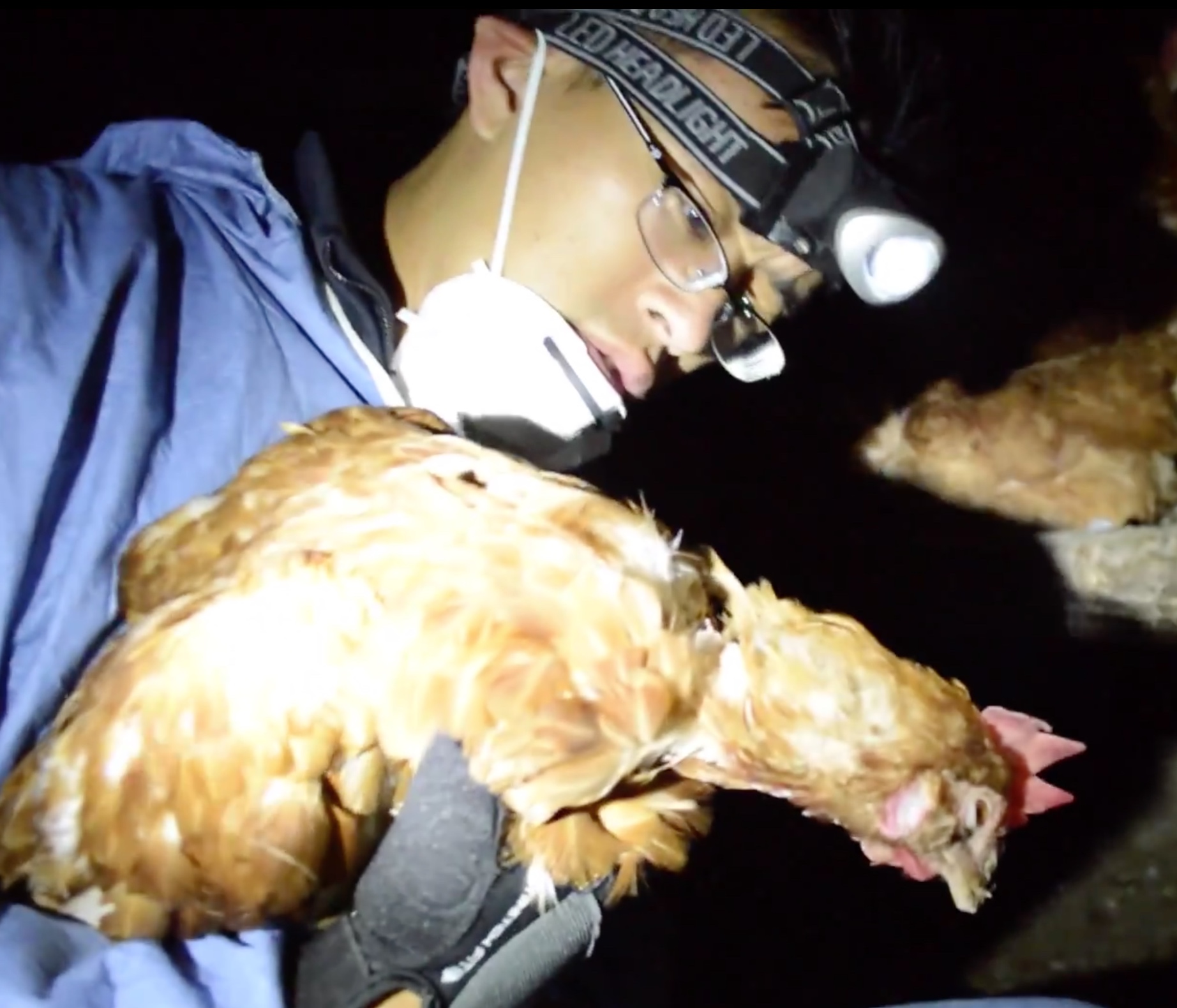
Wayne Hsiung shines a light on cruelty of "humanely raised" hens in a factory farm

Wayne Hsiung shines a light on cruelty of “humanely raised” hens in a factory farm

But there is hope. Every individual who has adopted a cruelty-free lifestyle was, at one point, a part of the complicit majority. But someone or something before us – a friend, a protest, a documentary – helped us to see the light.

On Saturday, July 25th, activists around the world will, in an effort to awaken the masses, symbolically shine a spotlight on animal cruelty and the path to liberation. Wearing blue shirts and holding candles, activists in 130 countries will take photographs in front of a places that represent violence toward animals and post them on Facebook, Twitter and Instagram. According to the organizers, a large coalition of animal rights groups, participants will “stand in solidarity with a promise to the animals that we will continue to expose the violence against them and light a path towards a better world.”

Ellen Ericksen of San Diego works to help consumers see the light

Ellen Ericksen of San Diego works to help consumers see the light

The path to animal liberation is dark and long, but it has been paved. On Saturday, let us all shine the light on the path and encourage people around the world to join us on the journey.

Your Turn

Please join the Facebook event #LIGHTTHEPATH and join activists around the world in being a voice for the animals.