Their Turn - The Social Justice Movement of Our Time Their Turn - The Social Justice Movement of Our Time

Victory: U.S. Military Surrenders to PETA

December 16, 2014 by Leave a Comment


The News

In a major victory for animals, the U.S. military will stop using live animals for various military training purposes as of January 1st. The new policy, which was instituted as a result of many years of advocacy by PETA and the Physicians Committee for Responsible Medicine (PCRM), will eliminate some of the worst abuses, from cutting apart pigs to forcing tubes down live the throats of live cats and ferrets as a component of pediatric training. Wherever possible, lifelike human simulators will be used.
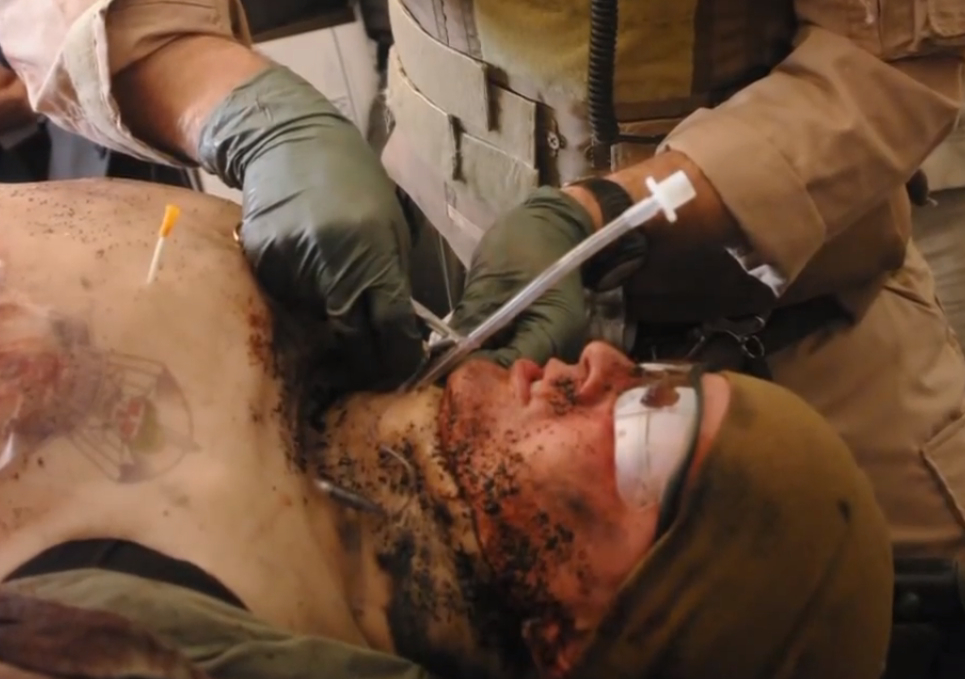
Human simulator

Human simulator

Jane Velez-Mitchell of Jane Unchained interviews Justin Goodman, PETA’s Director of Laboratory Investigations, to learn more about the victory.

According to Mr. Goodman, “institutional inertia” and resistance to change in the military make this astonishing victory truly historic. But much change is still needed, as the government continues to use live animals to replicate battlefield trauma. While this has been reduced in recent years, PCRM estimated several years ago that the military shoots, blows up and dismembers at least 8,500 live goats, pigs and other animals each year in these training exercises.

On the bright side, the U.S. Secretary of Defense wrote in a letter to PETA that the Pentagon will work to identify ways to phase out this testing too. If the will is there, then that shouldn’t be too big a challenge, as studies show that those who learn trauma treatment on human simulators are better equipped to treat injured patients than those who are trained on live animals.
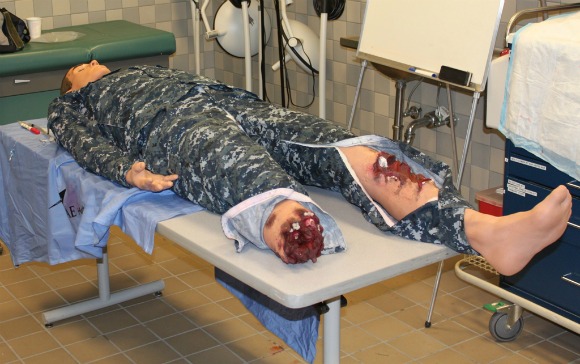
Studies show human simulators more useful than live animals in trauma training

Studies show lifelike human simulators are more useful than live animals in trauma training

Your Turn

The use of any animals in military training begs the question as to why they have to pay the price for human warfare. If countries choose to attack each other, an activity unique to humans, then what right do we have to bring animals into it?

Please use PETA’s email action alert to ask U.S. Department of Defense and Department of Homeland Security officials to replace animals in military trauma training with superior non-animal training methods.


Filed under: Experimentation, Victories
Tagged with: , , ,

Lawsuit Claims Florida County Kept Monkey Breeding Facility a Secret

November 12, 2014 by Leave a Comment


The News

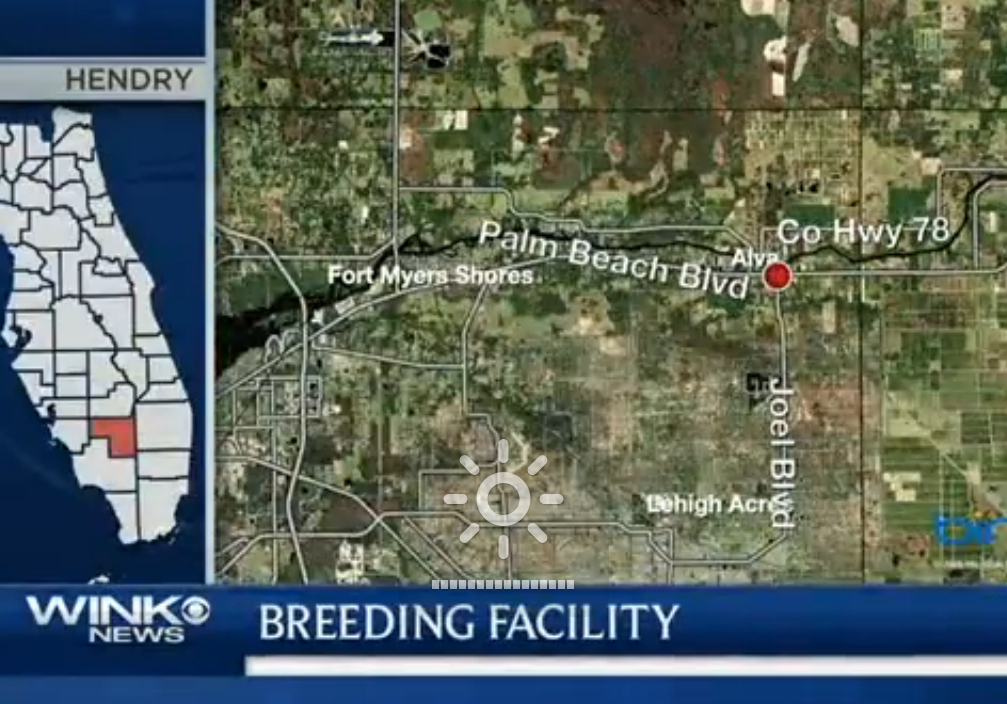
The Animal Legal Defense Fund (ALDF) has filed a lawsuit against a county in Central Florida for failing to hold a public hearing about the construction of a 32 acre monkey breeding facility.

Hendry County, FL

Hendry County, FL

In a statement to the press, Hendry County claims that seeking public input for an “agriculture” facility is not required by law. Some locals suspect that the County intentionally kept the project a secret, knowing that members of the public would oppose the presence of monkeys who could carry infectious diseases in residential area. Florida already has a population over 1,000 non-native wild macaques, many of whom carry the hepatitis B virus, according to published reports.

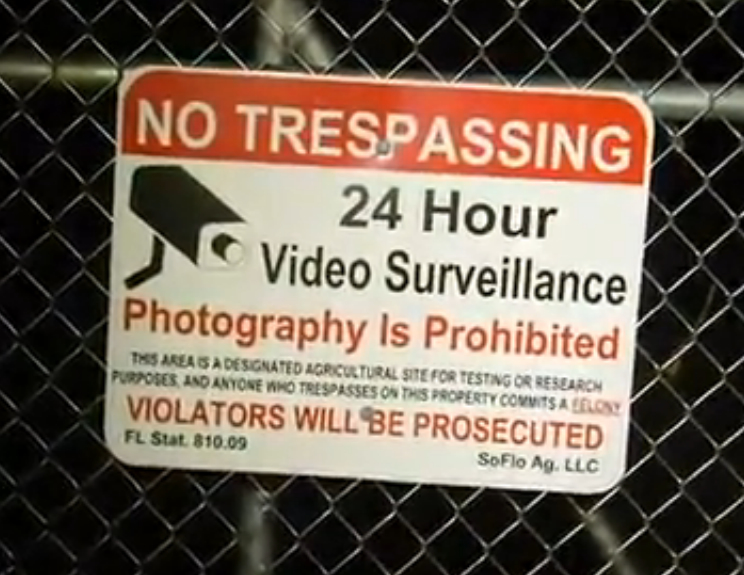
Primera and SoFlo Ag cannot be reached

Primera and SoFlo Ag cannot be reached

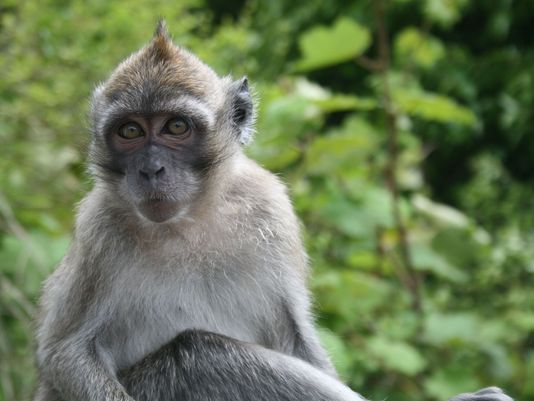
Primera Science Center, the company building the breeding center, reportedly intends to transport 3,200 macaque monkeys from Mauritius, an island off the coast of Africa, to Florida, where they will be bred and sold to laboratories for use in experiments. The macaques, who will presumably have direct contact with workers, can carry infectious diseases like tuberculosis and hepatitis.

Photo: buav.org

Photo: buav.org

Dwight Bullard, the State Senator who represents the area, has called for the project to be delayed until Primera and Hendry County provide more information about how public safety will be protected: “We are calling on Primera to hold a public meeting with the state and federal agencies that will be involved in the safety and care of these primates during their time at this facility. If primates get loose, what does that mean to the surrounding counties in terms of potential outbreaks?”

In a statement to the press, Primera says it “is in full compliance with the rules, guidelines and laws at the local, state and federal levels” and that it “is committed to meeting the highest standards with the utmost respect for the safety and preservation of the surrounding environment and its residents.”

To see the lawsuit in its entirety and the statement released by Hendry County in response to the suit, please visit news-press.com.

Your Turn

Please ask Hendry County officials to halt the construction of Primera’s monkey breeding facility until the County and company provide the public with an answers to its questions and gives local residents the opportunity to provide input at a public hearing.

Phone: 863-675-5220

Email: welcome@hendryfla.net


Filed under: Experimentation
Tagged with: , , , , ,

Chimp Researcher of 30 Years Says, “Animal Activists Were Right.”

October 17, 2014 by Leave a Comment


The News

In the short documentary film The Real Planet of the Apes, Betsy Brotman, an American researcher who spent 30 years conducting tests on chimps, says, “The animal rights activists were right. Chimpanzees really shouldn’t be used in experiments. I really do feel this way.” (see 13:30 in video below) From 1974 – 2005, Ms. Brotman ran a research institute in Liberia that conducted experiments on more than 100 chimps.

Chimpanzee Research Center in Liberia

Chimpanzee Research Center in Liberia

In her interview, Ms. Brotman says, “There are certain instances where it would be very difficult to do the research without chimps unless you use humans.” She is referring to the development of a hepatitis B vaccine, which her colleague says could only be tested on chimps, as no other species is susceptible to the virus.

Betsy Brotman Studied Chimps in Liberia for 30 years

Betsy Brotman Studied Chimps in Liberia for 30 years

Since this research was conducted, science has advanced, eliminating any scientific rationale for using chimps. But Steve Wise, the founder of the Nonhuman Rights Project, isn’t taking any chances. In an effort to free all captive chimps, he is leading the legal battle to classify chimps as persons – instead of inanimate objects – on the grounds that they, like people, they desire things, act in an intentional manner to acquire those things, and have a sense of self. If Mr. Wise is successful, holding chimps captive in any setting will be illegal.

Here’s a short NY Times documentary about his quest to reclassify chimps as “persons” instead of “things.”

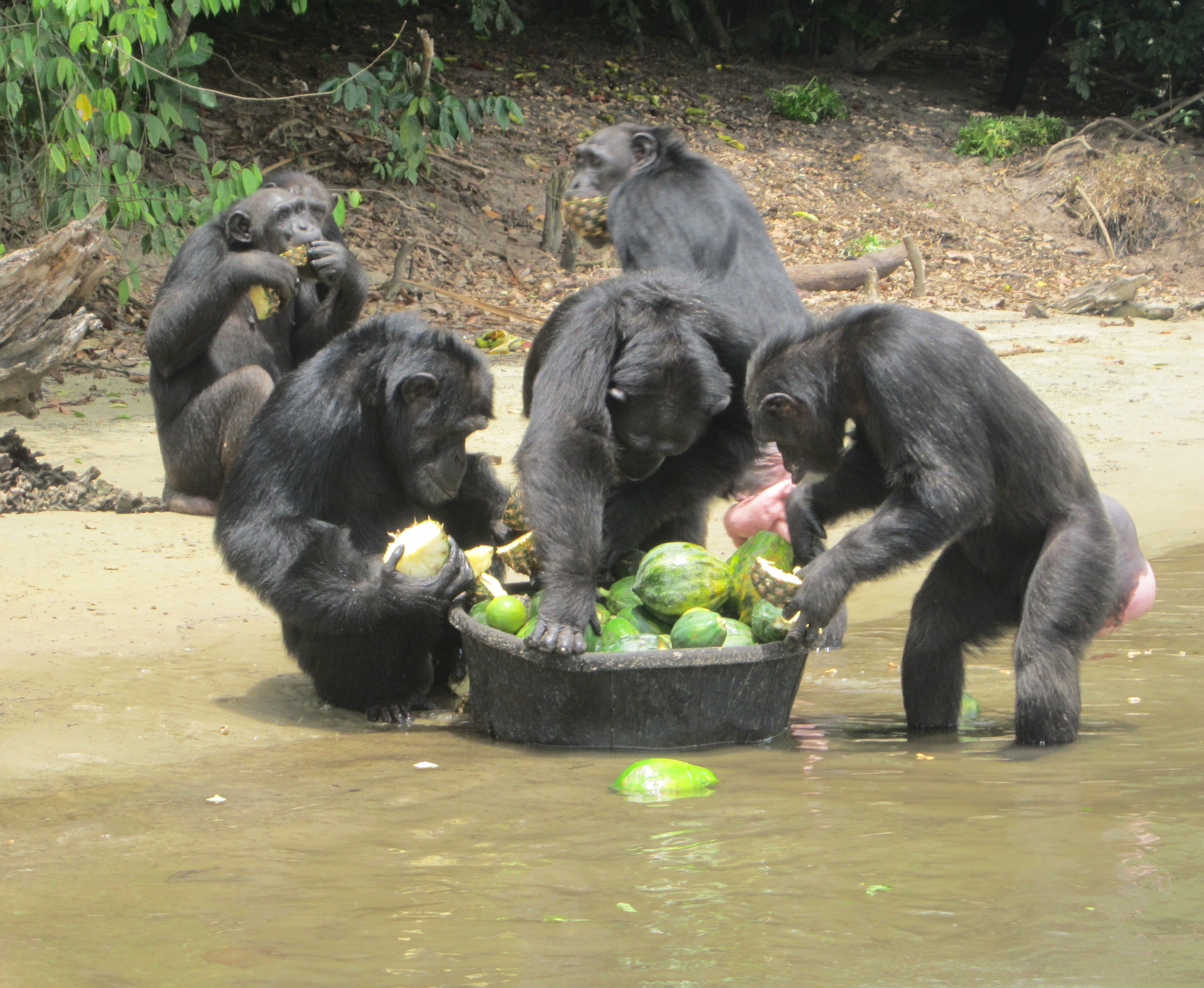
Today, sixty chimps, most of whom recovered from the diseases with which they were infected at the research center, live on “Monkey Island” near Monrovia, Liberia’s capital.  The chimps live freely in a somewhat natural habitat, and The New York Blood Center pays for their care.

Former lab monkeys, Monkey Island (photo: liberiana.wordpress.com)

Former lab monkeys, Monkey Island (photo: liberiana.wordpress.com)


Filed under: Experimentation, WIldlife
Tagged with: , , ,

In Just One Week, Group Exposes Illegal Abuse at Three University Labs

October 10, 2014 by Leave a Comment


The News

In the past week,  the organization Stop Animal Exploitation Now (SAEN) has uncovered egregious acts of violence against animals by lab workers at three different universities. In all three cases, SAEN has filed complaints with the U.S. Department of Agriculture asking for penalties and/or for the studies to be terminated.

SAEN animal testing

Here’s what SAEN’s uncovered by combing through records:

At The University of South Florida (USF), lab workers deprived monkeys of water, leading to at least one death.

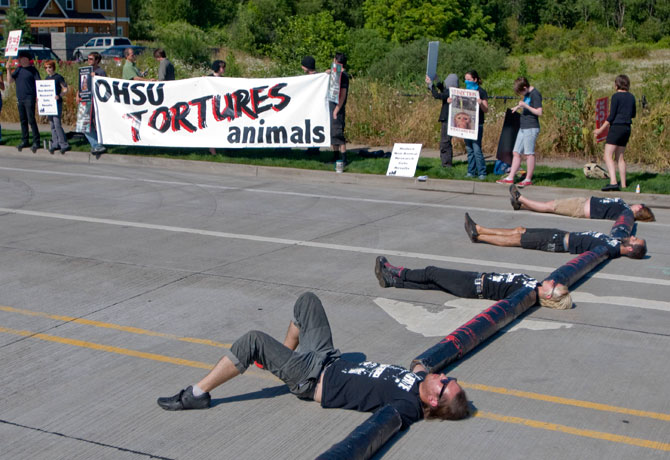
At Oregon Health & Science Univsersity (OHSU), an animal caretaker was exposed for repeatedly punching a pig in her face, drawing blood. Within a week of her arrival, the pig was killed in a “terminal procedure.”

Protesters block OHSU animal research site in 2010 (photo: Brent Wojahn/The Oregonian)

Protesters block OHSU animal research site in 2010 (photo: Brent Wojahn/The Oregonian)

At Washington University in St. Louis, a lab technician with “a history of rough handling of animals” was exposed for punching a dog with “a closed fist.”

After a busy week exposing the lab abuse and filing complaints, SAEN’s Executive Director Michael Budkie reflected on the individuals for whom he is fighting: “As if being caged in a lab and subjected to painful experiments isn’t bad enough, these animals are often victims of gratuitous abuse — abuse that is rarely exposed because of the extreme measures taken to hide the truth. But SAEN will continue to use all tools available to us to shine a spotlight on these abusive facilities until they’re shut down for good.”

SAEN's recent victories

SAEN’s recent victories

As expected, all three of the universities issued statements claiming that they “place a high priority on the proper care and treatment of research animals” and that “mistreatment of any research animal is not tolerated.”

Your Turn

In 2012, In Defense of Animals (IDA), another organization that works to end laboratory abuses, released the findings of a two year undercover investigation at OHSU. Here’s what they exposed then is consistent with the abuses that continue today:

Please visit www.SAENonline.org to learn more about these incidents and find out what small steps you can take to be a voice for animals who are held captive and used in painful, unethical, redundant and unnecessary laboratory experiments.


Filed under: Experimentation
Tagged with: , , , , , , , , , ,

Video Shows Experimenters Attacking Peaceful Protesters

September 28, 2014 by Leave a Comment


Opinion

Animal rights activists are accustomed to being harassed and threatened during protests, but the worst abuses are rarely caught on camera because they are usually random acts – a punch thrown; a shove; someone spitting, etc.

From left to right: Peaceful protesters, UCLA researcher

From left to right: Vigil participant, UCLA researcher

On January 18th, however, activists with Progress for Science recorded several harrowing minutes of bullying and physical intimidation — by academic researchers, no less. On that day, 11 activists holding a peaceful vigil to honor 11 monkeys being abused for redundant and needless government-funded research in UCLA labs were met with viscous attacks by counter-protesters.

Your Turn

This video, which has been seen by only 11,100 people, should have gone viral when it was first posted – not only because of the shocking behavior of the UCLA researchers, but also because of the bravery of the activists. They courageously put themselves in harm’s way – on behalf of the animals who were being harmed.

The video also inadvertently teaches an important lesson: As activists, we must keep our rage in check because outbursts and aggression, shown by the experimenters in this case, shift attention away from the animals, which is where the spotlight should shine.

Please visit Progress for Science to help bring an end to the archaic animal experiments being conducted at UCLA.


Filed under: Experimentation, Opinion
Tagged with: , , , ,