Their Turn - The Social Justice Movement of Our Time Their Turn - The Social Justice Movement of Our Time

Maker of Hellman’s Mayonnaise Attempts to Crush Cruelty-free Alternative

November 10, 2014 by Leave a Comment


The News

Unilever, the $60 billion dollar corporation that makes Hellman’s mayonnaise, is attempting to cripple Hampton Creek, a start up company that makes Just Mayo, an egg-free alternative that is growing in popularity. Claiming that mayonnaise, by definition, contains eggs, Unilever is arguing in federal court that Hampton Creek must either add eggs to its recipe or remove Just Mayo from grocery store shelves.
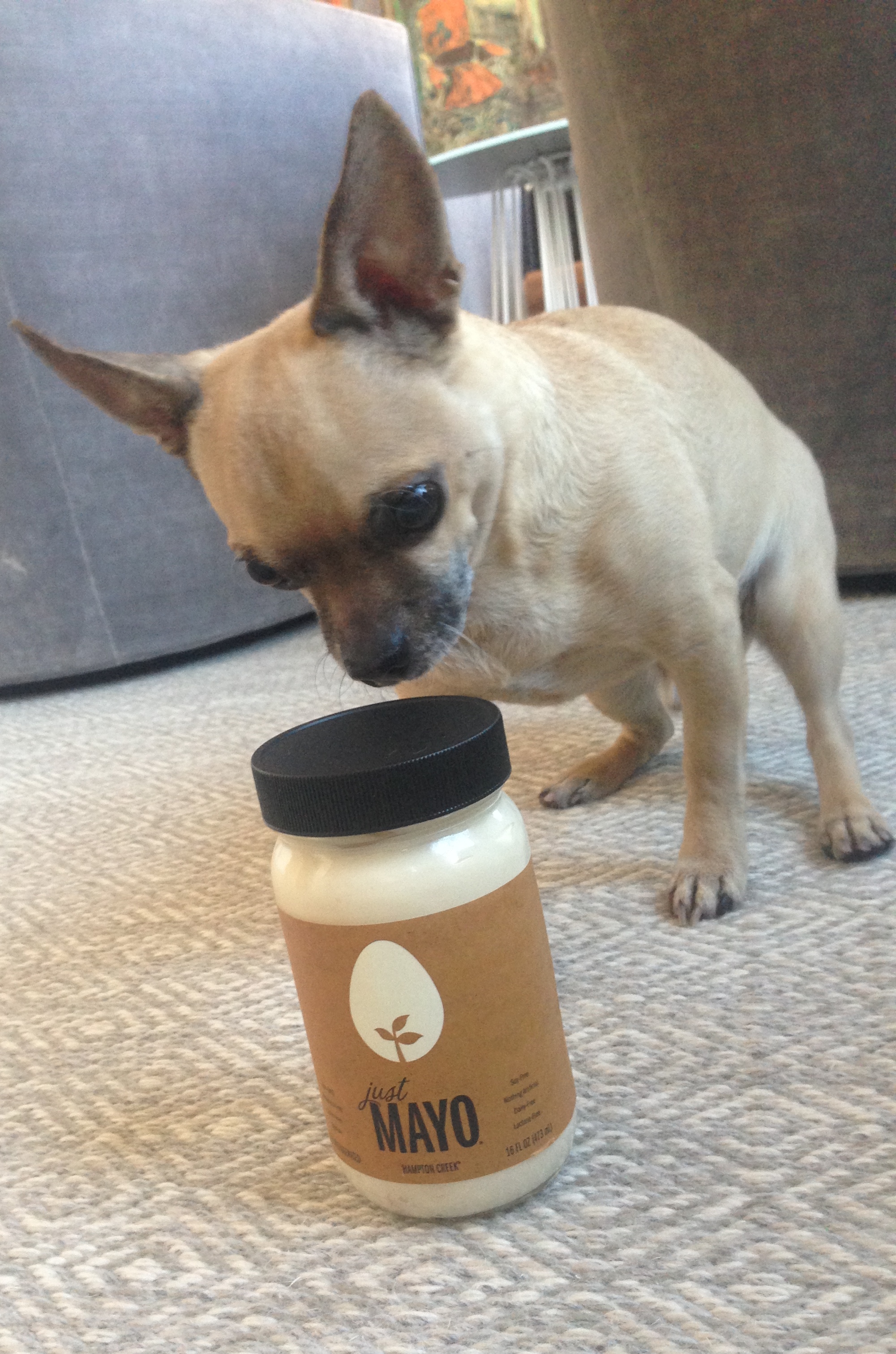
"Relax, Max. It's Just Mayo."

“Relax, Max. It’s Just Mayo.”

Unilever has reasons for concern — and not just because Just Mayo is stealing market share from Hellmann’s. The CEO of Hampton Creek, Josh Tetrick, is aiming to “create a whole new model” that “takes animals out of the equation.”  He elaborates in his interview with Jane Velez-Mitchell:

In his 2013 TED Talk, Tetrick points out that eliminating animal agriculture could dramatically reduce greenhouse gasses, hunger and inefficiency, not to mention the inhumane treatment of animals.

While Tetrick describes eggs as “the end result of a hen’s ovulation cycle,” he does acknowledge their “important role” in recipes. They cause cookies to bind; they hold oil and water together in mayonnaise; and they make cakes rise.  He argues, however, that plants can do the same thing if we harness their potential, With Beyond Mayo, Tetrick has proven that plant-based foods can both satisfy our palates and feed people in a way that doesn’t destroy the environment or “misalign our values.”

Josh Tetrick, Hampton Creek CEO (photo: ALDF)

Josh Tetrick, Hampton Creek CEO (photo: ALDF)

Your Turn

Please sign the Change.org petition telling Unilever “to stop bullying sustainable food companies.”


Filed under: Food
Tagged with: , , , ,

Australia To Double Number of Live Cattle Exported

November 9, 2014 by Leave a Comment


The News

In defiance of growing public demand to end live exports due to animal cruelty, Australia plans to significantly expand the trade by shipping an estimated one million cattle to China each year. If the $1 billion deal is signed, the number of cattle exported to countries in Asia and the Middle East would double from its current levels.

live export cows

Andrew Wilkie, one of the few members of the Australian Parliament who publicly opposes live exports, described the new deal with China as a “dreadful development” and that the federal government is “a pack of sadists when it comes to animal welfare.”

Photo: Animals Australia

Photo: Animals Australia

The agreement with China comes just two weeks after Australian media aired footage of Australian cows and sheep being tortured in several countries where the group Animals Australia stationed undercover investigators. While the damning footage once again angered the Australian public, it did not have the effect of curbing the booming live export industry.

Live export supporters, including the Australian government, insist that the incidents documented in undercover videos are the exception. Opponents, on the other hand, say that abuses are routine and that Australia’s regulations fail to protect the animals in countries that have few, if any, animal protection laws. They also argue that the millions of sheep and cattle exported annually from Australia cannot be tracked to their final destinations within the countries to which they are shipped.

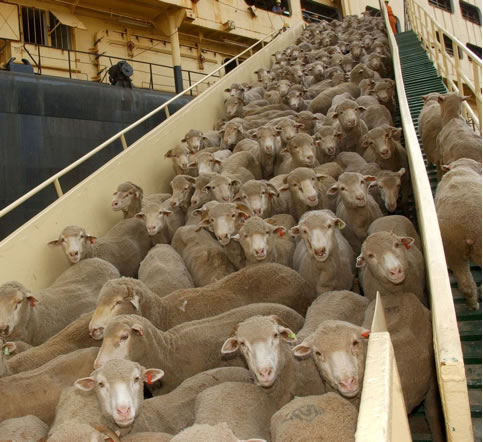
live-export-sheep

Unloaded from live export ship

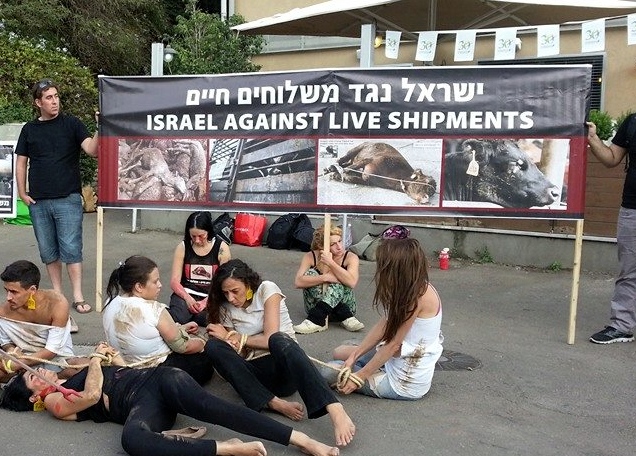
Of all of the countries where Australia ships live animals, only one of them has citizens who are attempting to stop it — Israel. Over the past couple of years, Israeli activists have taken undercover footage which has aired on national television, and they have used street theater to educate the public about the cruelty both on the transport ships and within the country after the animals are unloaded.

Photo: ישראל נגד משלוחים חיים (Against Live Transports)

Photo: ישראל נגד משלוחים חיים (Against Live Transports)

Photo: Against Live Transports

Photo:  Against Live Transports

Your Turn

Send an instant message to the Australian Embassy in Washington, D.C.

Visit Animals Australia to take action.

Tourist dollars are vital to Australia’s economy. Until live exports are terminated, boycott Australia.


Filed under: Food
Tagged with: , , , , ,

Class Action Lawsuit Shines Spotlight on Australia’s Live Export Atrocities

November 2, 2014 by Leave a Comment


The News

The animals aren’t filing a class action lawsuit against the Australia government, even though they are the real victims. It is the cattle farmers who are doing it.

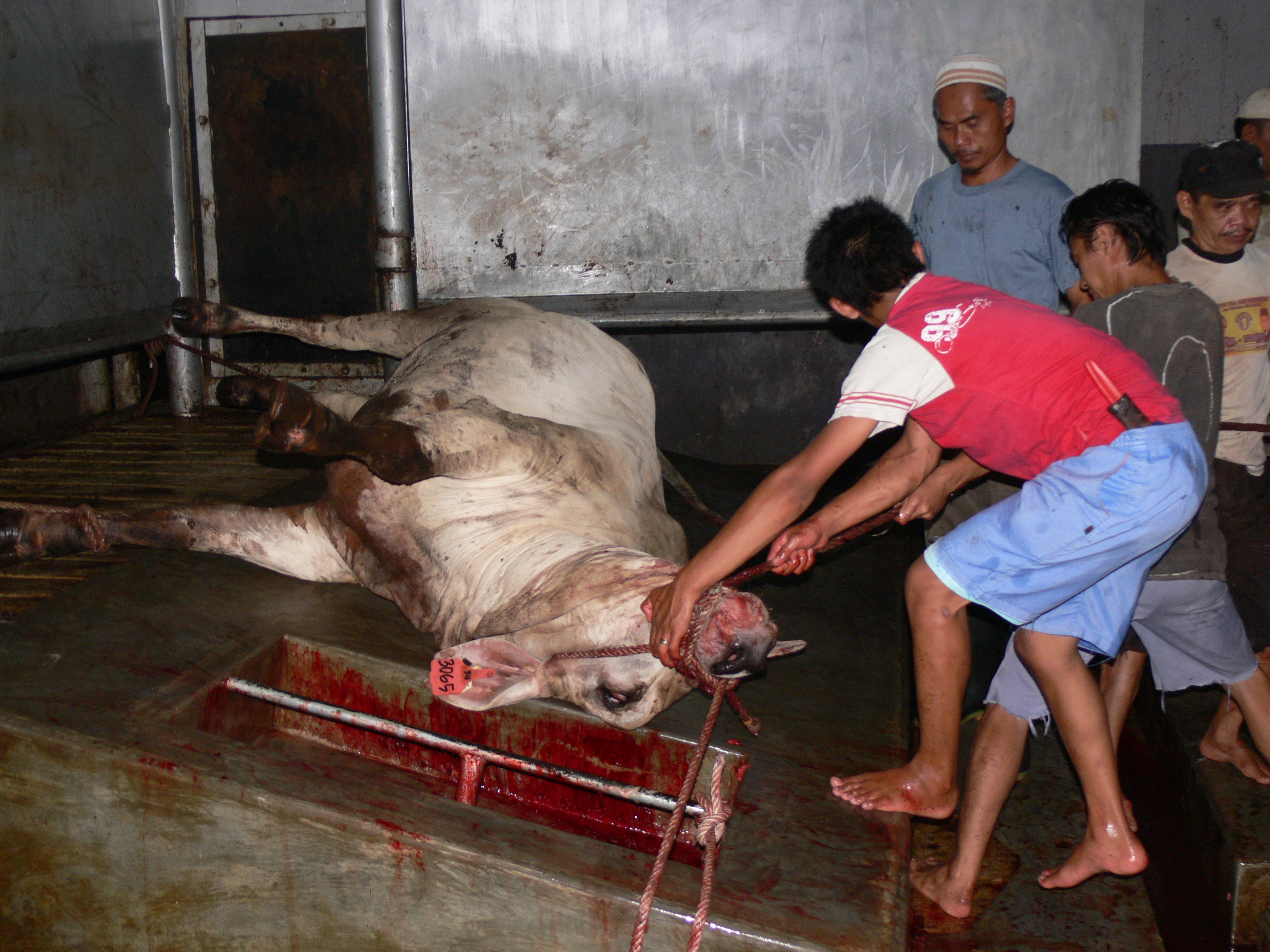
The Australian government is the live export industry’s most powerful ally, but cattle farmers are suing them anyway in an attempt to recoup the money they lost after a temporary live export ban to Indonesia in 2011. At that time, activists exposed abuses at Indonesian slaughterhouses that were so horrific that public pressure forced the government to take swift action.

Photo: Animals Australia

Photo: Animals Australia

Now, the farmers want the government to pay them back for their financial losses, even if it means shining yet another spotlight on the torture inflicted on their animals overseas. The class action was filed just days after Australian media stunned the country with new undercover footage of similar abuses in three Middle Eastern countries.

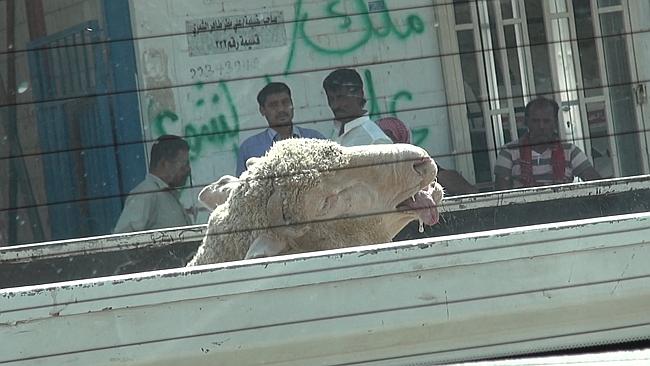
live export to Kuwait

The new footage, taken by Animals Australia, combined with the cattle farmers’ lawsuit have amplified the battle over live exports, and both sides are digging in their heels. After the damning footage was released, Bill Shorten, a member of Parliament and one the country’s most prominent live export supporters, said “We are seeing that it is possible for increased animal welfare to coincide with increasing export volumes. We see an industry that enjoys more public confidence because we have the best animal welfare system in the world.”

Photo: Animals Australia

Photo: Animals Australia

The ruling Labor party is also a staunch advocate and justifies live exports on the grounds that new regulations -, The Exporter Supply Chain Assurance System (ESCAS) – protect the animals by tracing them. Activists, however, say that the regulations are window dressing, as tracing millions of Australian animals from the docks where they are unloaded to their final destinations in the Middle East and Asia is impossible.

On October 30th, one of the few members of Parliament who opposes live exports said that the government protections are an “illusion.”

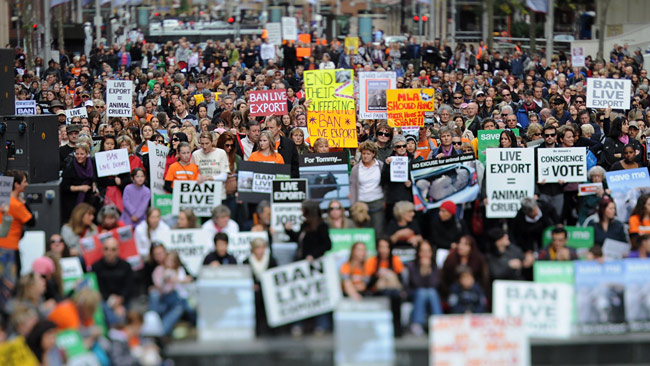
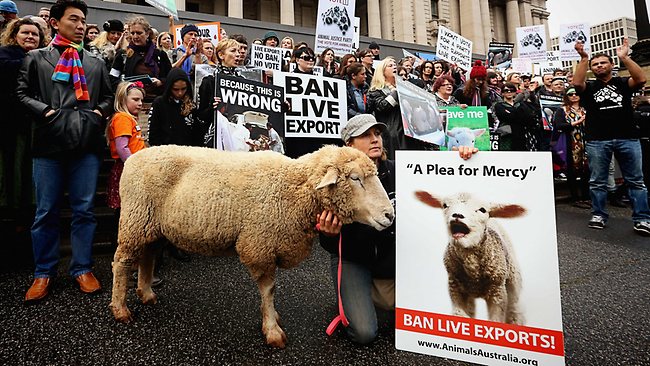
As the industry and government continue to defend, promote and grow live exports, protests over the past several years have reached a fever pitch.

Live export protest in Sydney (photo: James Morgan)

Sydney, 2011 (photo: James Morgan)

live export protest

Parliament building in Melbourne, 2013

Because the live export industry is protected at the highest levels of government by both major political parties, ending it is an uphill battle that will only be won when the Australian Labor Party calls for a ban. One Australian activist, who asked to remain anonymous, called for a tourist boycott: “The only thing that will get the attention of the power brokers here is money. A boycott by tourists could make a difference.”

Australia is the world’s largest exporters of live animals, sending hundreds of thousands of cattle and millions of sheep to markets in Asia and the Middle East each year.

Your Turn

Visit Animals Australia to take action.

Send an instant message to the Australian Embassy in Washington, D.C.


Filed under: Food
Tagged with: , , ,

Will Pig Gestation Crates Be Banned in NJ?

October 28, 2014 by Leave a Comment


The News

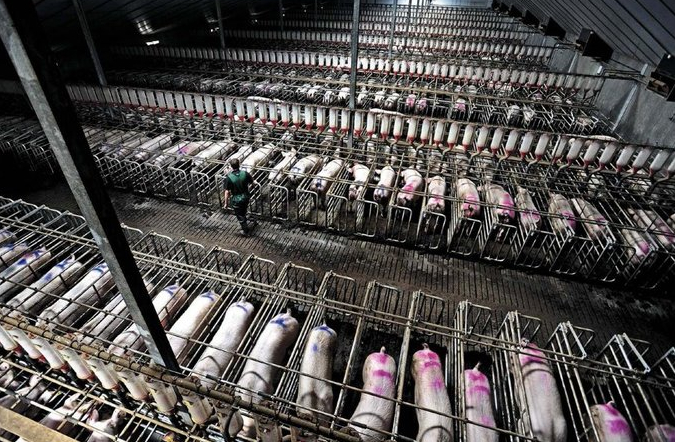
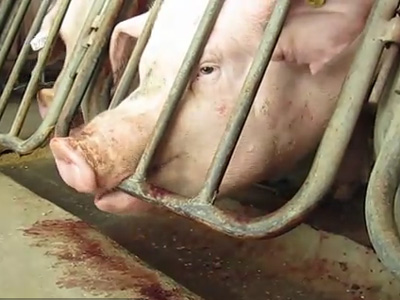
NJ Governor Chris Christie has until early December to sign a bill banning gestation crates, the small cages that house sows (female breeding pigs) for most of their adult lives. According to the National Pork Producers Council, nine out of 10 sows in America are held in gestation crates.

gestation crates factory farm

Governor Christie vetoed a similar bill in 2013, claiming that pig farmers made a more persuasive argument than the activists. HSUS’ Matt Dominguez said his decision could have been based on political expedience: “The governor’s veto last year had more to do with presidential politics given that Iowa, the nation’s biggest pork production state, hosts the Republican caucuses come 2016.” The landscape, however, has changed. According to Dominguez, polls in Iowa show that voters “would think more highly, not less, of Christie if he signs this bill.”

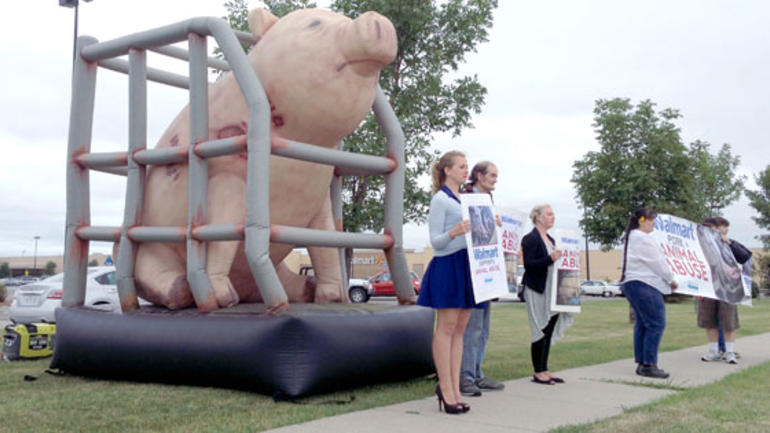
Mercy For Animals Protest at Walmart

Mercy For Animals Protest at Walmart

Jane Velez-Mitchell reports on the status of the gestation crate bill in NJ:

Several public figures have spoken out in support of a ban. In 2013, lifestyle maven Martha Stewart sent a letter to NJ lawmakers asking them to override Christie’s veto: “These animals have committed no crime, yet they’re treated worse than even the most violent criminals would be treated.” In a recent NY Times op-ed, political commentator Bill Maher makes a public appeal to Christie to pass the new bill: “Would you cram a dog into a crate for her entire life, never letting her out, until you took her to the pound to kill her?”

gestation crates

What agribusiness doesn’t want consumers to see

In a NY Times op-ed in February, writer Nicholas Kristof said, “These are tiny stalls that are barely bigger than the pigs, who don’t even have enough room to turn around. They live out their adult lives without exercise or meaningful social interaction; it’s like a life sentence of solitary confinement in a coffin, punctuated by artificial insemination and birth.”

In August, a bill to ban the crates failed to pass in Massachusetts. In an industry journal, local hog farmer Lisa Colby declared a victory for “the rights of local farmers” and for “farmers’ choices in taking care of their animals.” Agribusiness justifies the use of crates by claiming that they “allow for individualized care and eliminate aggression from other sows.”

Your Turn

Gestation crates are being phased out in several states, and major pork customers like McDonalds are requiring their suppliers to phase them out. However, far more work needs to be done to eliminate these crates in the U.S. and worldwide. To help ensure a victory in New Jersey, please take the following steps:
1. Sign the Change.org petition
2. Tweet  Governor Christie (@GovChristie) in support of the bill and use the hashtag #signS998
3. Call the Governor’s office 609-292-6000

Filed under: Food, Investigations
Tagged with: , , , , , ,

Activists Use Provocative & Controversial Tactics to Shine Spotlight on Speciesism

October 26, 2014 by Leave a Comment


The News

By observing the actions of adults, we are taught as children that animals exist to serve our needs and desires, not their own. Our sense of superiority to other animals is so ingrained that society gives virtually no thought at all to imprisoning them in zoos, labs and factory farms, thereby stripping them of the freedom that they instinctually desire just as much as we do.

Our behavior can best be described as speciesist. As a word and as a concept, speciesism is not yet a part of the public discourse. In an effort to help animals, however, social justice groups are working to change that, employing creative methods from provocative street theater to dramatic protests.

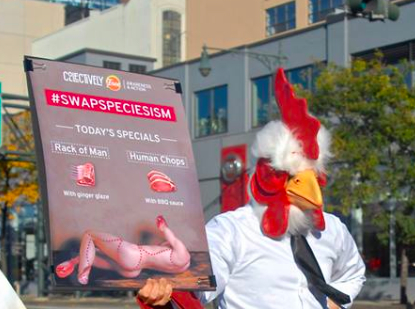
Launched just two months ago, a NYC-based organization called Collectively Free has been stopping people in their tracks with their “Swap Speciesism” events. At Meatopia, a carnivore festival where whole animals were cooked, Collectively Free turned the tables – and turned many heads – by serving samples from a whole human.

free sample meatopia


On the menu: Rack of Man, Human Chops

On the menu: Rack of Man, Human Chops

Wearing a pig mask, Kate Skwire, a Collectively Free performer, used humor to capture the attention of passing carnivores:

“You look like you’d like a piece, m’am. Are you hungry?”

“These are humanely raised, grass fed, local, happy humans.”

“Now tell me that isn’t delicious.”

“This one had a very good life. You don’t have to feel bad about eating this meat.”

The execution (of the event, not the human), was so creative that some Meatopia attendees stopped to give them props. Robert Jensen, one of the participants, said, “A few people said things like ‘I’m not vegetarian, but this is really creative.’ Others said, ‘that’s sick!’ to which we responded ‘it’s sick the other way around too.’ Then they became lost in thought.'”

Collectively Free Meatopia Reactions

Photo: Collectively Free

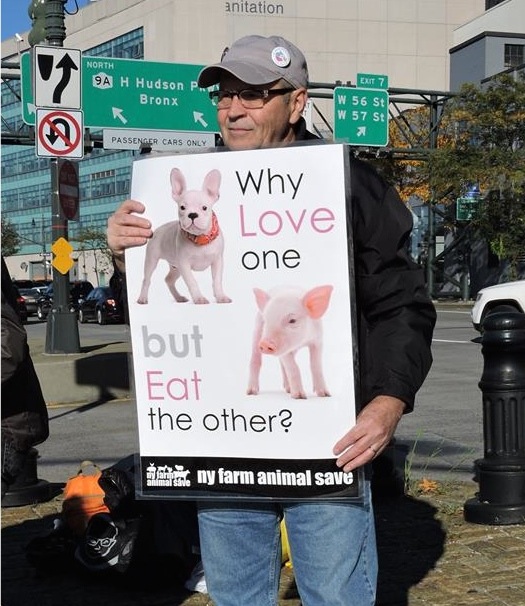
Another participant, Miriam Lucille, said, “I was holding a sign that says ‘Why love one but eat the other’ showing a dog and a pig, and one man looked at the sign, nodded and said, ‘That’s very true.'” A lot of people took photos because it was eye-catching, and that’s always a good thing.”

photo: Collectively Free

photo: Collectively Free

A San Francisco based group, Direct Action Everywhere, is also aiming to “Disrupt Speciesism” through dramatic and controversial actions inside of and in front of restaurants and grocery stores around the world. A video of one such protest not only went viral but also made national news. In the video, activist Kelly Atlas enters a restaurant and delivers an emotional account of her baby girl Snow, who is an injured chicken rescued from a battery cage.

https://youtu.be/LmfRMeU6pQ8

In 2013, filmmaker Mark Devries made made a critically-acclaimed documentary about the issue. In Speciesism: The Movie, Animal Liberation author Peter Singer sums it up nicely: “The fact that animals are not human isn’t a reason to give less consideration to their interests.”

Humans might be more powerful than other species, but we are far from superior. In fact, because we are the only species that is destroying the planet, some might argue that we are inferior.

Your Turn

To learn more about and get involved in the provocative #DisruptSpeciesism and #SwapSpeciesism campaigns, please visit Direct Action Everywhere and Collectively Free.


Filed under: Food, Opinion
Tagged with: , , , , , , ,