Their Turn - The Social Justice Movement of Our Time Their Turn - The Social Justice Movement of Our Time

In Battle to Save America’s Wild Horses, Activists Engage in Disruption

January 26, 2015 by Leave a Comment


The News

The U.S. government is waging a war on America’s wild horses, and Friends of Animals (FOA) is getting increasingly aggressive in its efforts to stop it.

FOA asserts that the Bureau of Land Management (BLM) – the federal agency charged with protecting wild horses – is wiping them out on behalf of powerful ranchers who want the public land to graze their cattle. The government either sterilizes the horses with PZP or uses low-flying helicopters to chase them into fenced-in traps which bring them – and their freedom – to a screeching halt.

Helicopters chase terrified horses into traps (photo: returntofreedom.org)

Helicopters chase terrified horses into traps (photo: returntofreedom.org)

“The BLM is exterminating wild horses because cattle ranchers regard them as pests,” said Edita Birnkrant, Director of Campaigns for Friends of Animals. “But we’ve reach a tipping point. To save those who remain, we must disrupt business as usual.”

At a recent BLM meeting in Nevada, Ms. Birnkrant seized control of the microphone and announced that the “BLM is managing wild horses to extinction through roundups and PZP” and “pimping our land out to ranchers.” Within minutes, she and her colleague Nicole Rivard, who filmed the protest, were escorted out of the conference room and expelled from the hotel, in spite of the fact that they were paying guests.

https://youtu.be/MtqD7nykDbs

The Nevada disruption was not FOA’s first act of civil disobedience. In September, 15 protesters with FOA occupied the BLM’s Wyoming office and temporarily blocked the entrance to a nearby holding pen for wild horses.
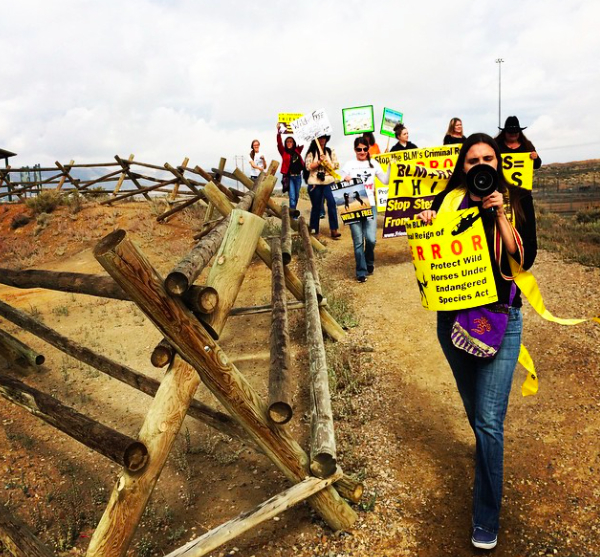
Activists block entrance to horse holding pen

Activists block entrance to horse holding pen

In an effort to protect the remaining horses, FOA isn’t just relying on provocative protests. In June 2014, the organization filed a petition it with the U.S. Fish & Wildlife Service to list North American wild horses as endangered under the Federal Endangered Species Act. They expect an answer within the next five months.

The BLM vehemently denies allegations by horse advocates and claims that it works to “ensure that healthy herds thrive on healthy rangelands.” But the “smaller print” on its website reveals the conflict of interest that FOA and other groups describe: “The BLM monitors rangeland conditions . . . to determine the number of animals, including livestock and wildlife, that the land can support.” Why does federal government allow privately-owned “livestock” on public land in the first place? Also, isn’t the BLM’s use of tax dollars to round up wild horses on behalf of cattle ranchers really just a meat subsidy covered in horse blood?
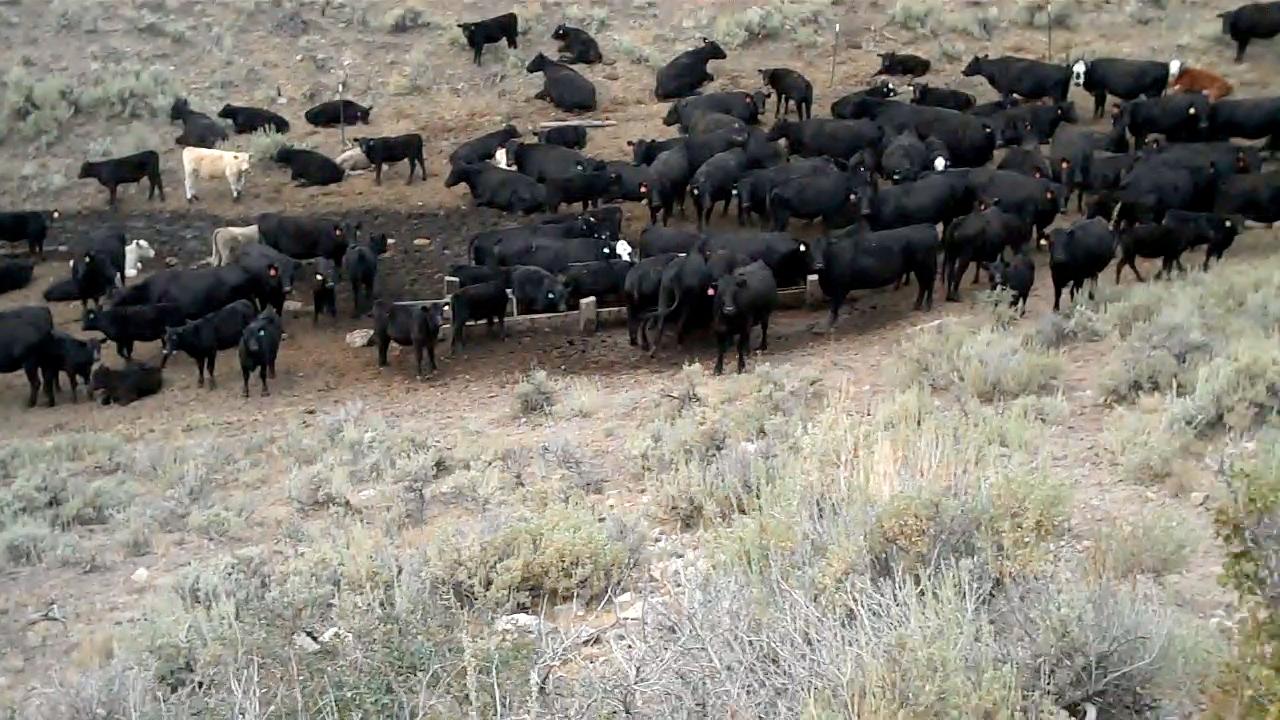
Cattle graze on public land (photo: thewildlifenews.com)

Cattle graze on public land (photo: thewildlifenews.com)

On it’s website, the BLM also states that it “gathers excess wild horses and burros from areas where vegetation and water could become scarce if too many animals use the area.” What it fails to mention, of course, is that private cattle who are brought onto the public land consume far more water and vegetation than the wild horses.

Before Ms. Birnkrant disrupted the BLM meeting in Nevada, she heard a cattle rancher tell a BLM representative that he “wants to open a horse butcher shop.” The two of them, she said, had a big laugh.

Wild horses in BLM trap (photo: equineink.com)

Wild horses in BLM trap (photo: equineink.com)

Your Turn

Please ask U.S. Secretary of the Interior Sally Jewell to list North American wild horses on public lands as “threatened” or “endangered” under the Endangered Species Act (ESA). This designation represents their best hope for the survival. We can also help the horses by going vegan. If we put the cattle ranchers out of business, then they will no longer steal public land inhabited by the wild horses.


Filed under: Food, WIldlife
Tagged with: , , , , ,

Activist’s Harsh Sentence Shines Spotlight on England’s “Medieval” Badger Cull

January 21, 2015 by Leave a Comment


News & Opinion

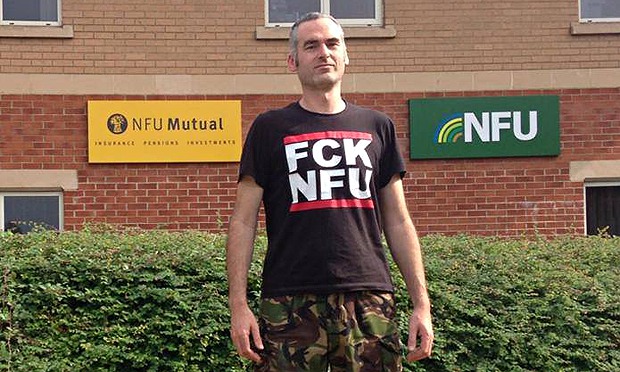
Jay Tiernan, a leader in the fight to stop the killing of wild badgers in England, has received a six month suspended jail sentence and up to $83,000 in fines for breaching a court order brought by cattle farmers who support the “badger cull.”  According to The Guardinan, “the breaches ranged from filming someone involved in the cull” to “protesting outside an National Farmers’ Union (NFU) office wearing a FCK NFU T-shirt” to “failing to pass on details of the injunction to other protesters.” Notably, the judge said that Mr. Tiernan is “a man of good character” and that his “breaches did not involve any violence or damage to property.”

Activist Jay Tiernan has a strong message for the National Farmers' Union (photo: The Guardian)

Activist Jay Tiernan has a strong message for the National Farmers’ Union (photo: The Guardian)

While the ruling represents a serious infringement on free speech and imposes an insurmountable financial burden on Mr. Teirnan, it does shine a much-needed international spotlight on the badger cull and is serving to unify the large community of people who oppose the killing.

European badger

European badger

Supporters of the badger cull claim that the extermination is necessary to control bovine tuberculosis (TB), which, they say, threatens their cattle.

Opponents of the cull argue that killing is the wrong approach for many reasons:

  • A large, scientific study has demonstrated that killing badgers makes “no meaningful contribution to the control of bovine TB.”
  • Wildlife should not have to pay the price for cheap food produced through environmentally destructive factory farming, which is how TB was introduced to wildlife.
  • More frequent testing of cattle and cattle movement controls are addressing the problem in neighboring Wales.
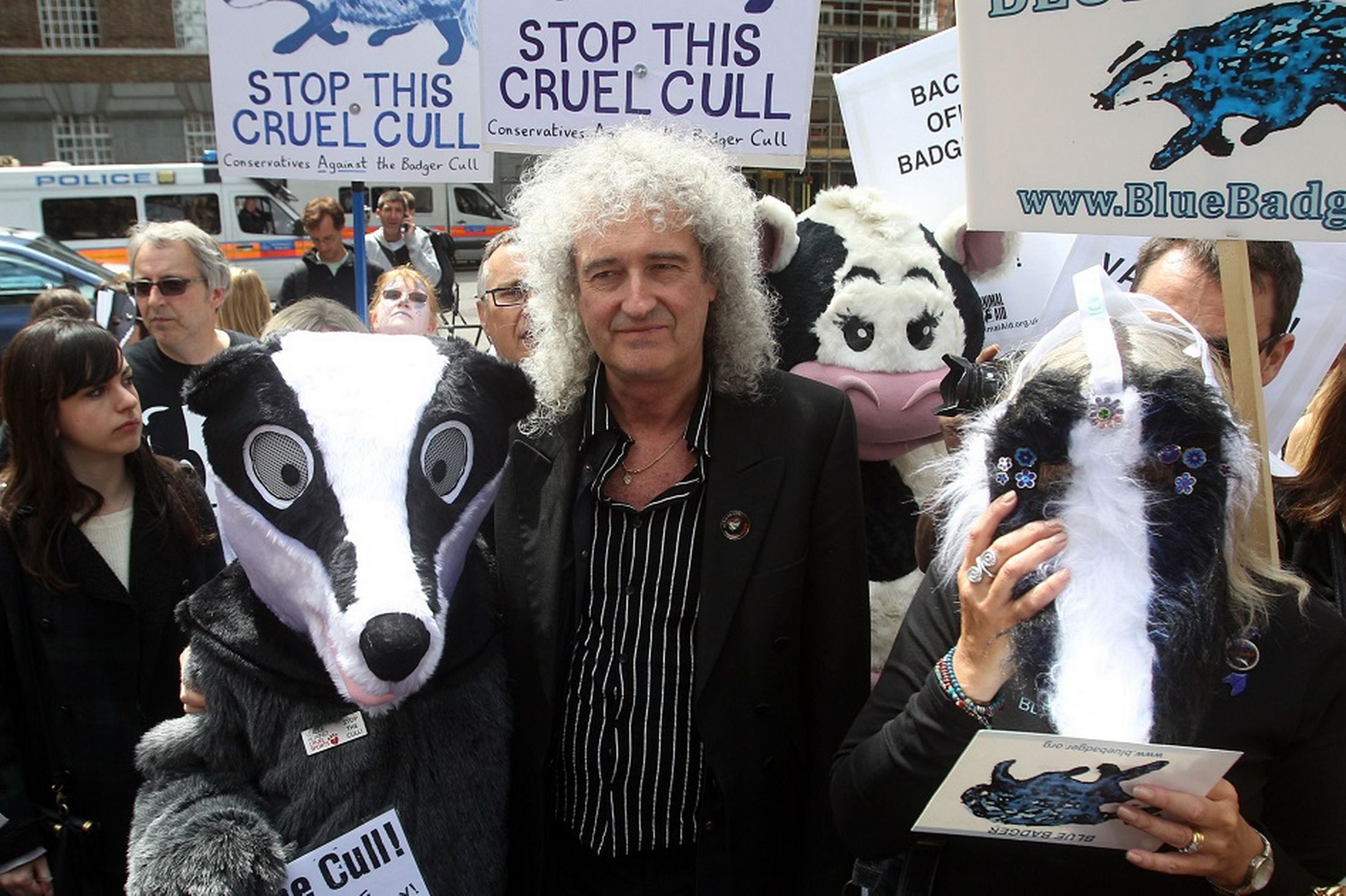
Brian May of the band Queen protests the badger cull in 2013 (photo: The Mirror)

Brian May of the band Queen protests the badger cull in 2013 (photo: The Mirror)

Badgers are a protected species in England, and the government-sanctioned campaign to slaughter them in certain areas has generated backlash not only from veteran animal rights activists and “hunt saboteurs” but also from people who live in or near the killing zones.

In 2013, a reporter with the Guardian filmed Mr. Tiernan “engaging in guerrilla-style tactics” to prevent marksmen from shooting badgers. He also speaks to less confrontational protesters who are stunned by the high level of secrecy surrounding the cull.

Your Turn

Please consider supporting Jay Tiernan.


Filed under: Food
Tagged with: , ,

Caught on Video: Pedestrian Goes Ballistic on Activists During Foie Gras Protest

January 20, 2015 by Leave a Comment


The News

Tensions are running high in California, where a judge recently ruled that foie gras – “torture in a tin” – can once again be sold in restaurants and stores after being outlawed in 2012. Activists have not taken the bad news sitting down and are staging protests at restaurants across the state.

In San Francisco, a pedestrian claiming to be a vegetarian launched a vicious attack on activists protesting outside a restaurant called 4505 Burgers & BBQ. Thankfully, demonstrators caught the outburst on camera. A reader from San Francisco contacted TheirTurn to say that the woman’s name is Monique, but he did not provide a last name.

Shani Campbell, the organizer of the protest, said “We found it odd that the woman who verbally and physically assaulted us was more angry about a peaceful protest than the restaurant serving the remains of animals who lived unimaginably miserable lives.

foie gras counter protest

Woman attacks peaceful foie gras protesters in San Francisco

“People invoke ‘freedom of choice’ when defending what they eat, but, when your choice means someone else’s immense suffering and death, it’s no longer about ‘your freedom.’ Rather, it’s about the lack of freedom and rights of the ones you are oppressing.”

"No. Not again."

“Foie Gras: Delicacy of Despair”

Your Turn

Please contact 4505 Burgers & BBQ via email, FacebookTwitter and/or phone (415-231-6993) to let them know what you think of their decision to put the “delicacy of despair” back on the menu.


Filed under: Food
Tagged with: , ,

Oddly, The NY Times Describes Return of Foie Gras to California as Insignificant

January 14, 2015 by Leave a Comment


Opinion

The NY Times regularly publishes substantive stories about the cruelty of industrialized animal agriculture, giving readers a disturbing peak over the high walls and into the windowless sheds that house the 10 billion farm animals slaughtered for food each year in the U.S. And, while the NY Times will never go far enough to satisfy those who espouse an entirely cruelty-free diet, its coverage of the horrors of factory farming is most welcome and appreciated by advocates.

Factory farm sheds where animals are held prisoner for their entire lives

Factory farms have no windows so that people cannot see where their meals are raised.

Today, the Times published a lengthy story by op-ed writer Mark Bittman arguing that the recent return of foie gras in California is insignificant because it affects only 600,000 animals nationwide, which is less than the number of chickens killed each hour in the U.S: “The lifting of the California ban against selling foie gras is pretty much a nonissue, except to point out that as a nation we have little perspective on animal welfare. To single out the tiniest fraction of meat production and label it ‘cruel’ is to miss the big picture, and the big picture is this: Almost all meat production in the United States is cruel.”

"No. Not again."

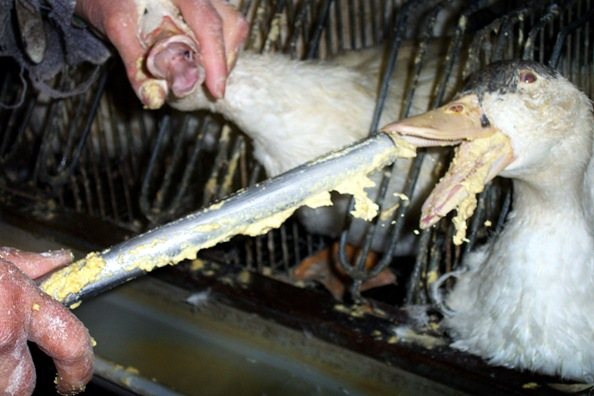
Ducks and geese are force fed through a metal pipe 3X daily in the weeks before slaughter.

While Mr. Bittman’s references to the cruelty of animal farming and his use of graphic words like “torturous” are praiseworthy, his suggestion that the return of foie gras is insignificant is perplexing. Why dismiss as irrelevant the reversal of much-needed protections that advocates worked tirelessly to achieve? Mr. Bittman might believe that “foie gras itself just isn’t that important,” but the ducks and geese who are throat-raped with a metal pipe three times a day would probably beg to differ.

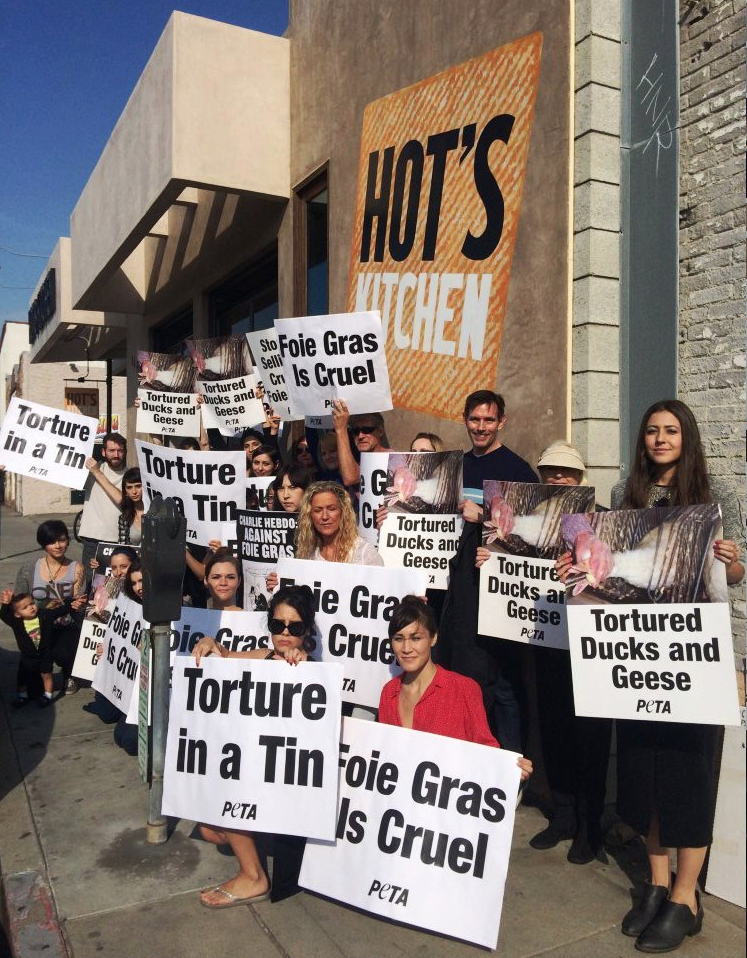
Activists with PETA protest the return of foie gras in California (photo: PETA)

Activists with PETA protest the return of foie gras in California at Hot’s Kitchen in Los Angeles (photo: PETA)

Greedy, Heartless Owner of Hot's Kitchen, Sean Chaney, Sued to Legalize Foie Gras (photo: easyreadernews.com)

Greedy, Heartless Owner of Hot’s Kitchen, Sean Chaney, Sued to Legalize Foie Gras in CA (photo: easyreadernews.com)

Mr. Bittman: Is it too late to reframe the story by saying, “We must advocate to reinstate California’s foie gras ban AND work to help the billions of abused chickens, pigs, cows and fish who have been left behind.”

Ironically, the return of foie gras to California comes at a time when this “delicacy of despair” is coming under fire in the foie gras capital of the world — France.

Your Turn

Please sign the petition to re-instate the law banning foie gras in the state of California.


Filed under: Food, Opinion
Tagged with: , , ,

Activism 2.0 – Entering, Agitating & Disrupting

January 11, 2015 by Leave a Comment


Opinion

All ethical vegans fighting for animal rights want the same thing — total animal liberation — but our paths to achieving it take us in different directions. In the past two years, a new and confrontational approach has gone mainstream in the U.S. and is spreading globally. Does the approach reflect the natural evolution of all social justice movements? Does it stem from the desire to expedite change for animals? Did it emerge to help activists stand out in an era of information overload? Whatever the motive, the approach is breathing new life into the animal rights movement, jolting  consumers where they least expect it; capturing the attention of the media; and triggering activists to exit their comfort zones on behalf of animals.

DxE protests Chipotle's for marketing animal farming & slaughter as humane.

DxE protests Chipotle’s for marketing animal farming & slaughter as humane. (Photo: DxE)

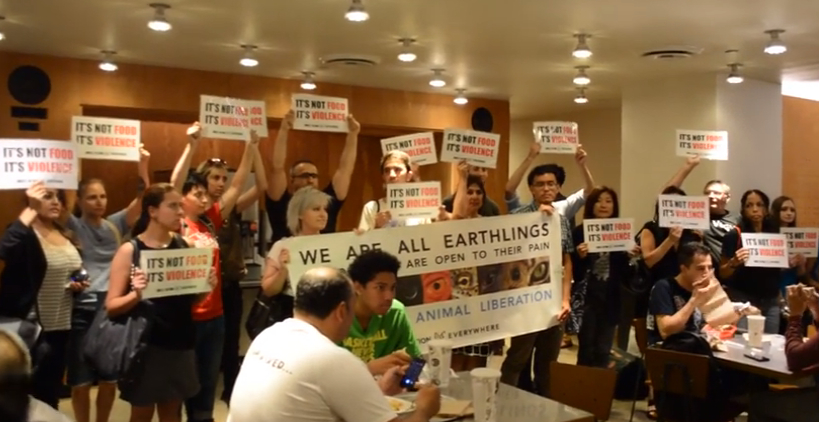
The big change, propagated by the global organization Direct Action Everywhere (DxE) and embraced by NYC-based Collectively Free, is taking the protests inside of businesses that exploit animals. Let’s face it: many people pay no attention to activists demonstrating on a sidewalk, but they are a captive audience when seated in a restaurant or waiting in line at the grocery store. It’s an approach that, on the surface, appears ineffective or even counterproductive to some people. But in a compelling article about the approach, DxE’s founder, Wayne Hsiung, explains why disrupting and agitating inside are key ingredients in any successful social justice movement.

In his blog, Hsiung writes that Naomi Wolf, the pioneering feminist who studied dissent and protest in America, argues that, throughout history, activists have succeeded only when they disrupted “business as usual” and that today’s protests have become so “bureaucratized, institutionalized, and integrated into the fabric of ordinary life” that they are no longer disruptive.

Rosa Parks agitated by illegally sitting at the front of this bus, which is now a symbol of the Civil Rights movement.

Rosa Parks agitated by illegally sitting at the front of this bus, which is now a symbol of the Civil Rights movement.

Following are a few short excerpts from Hsiung’s blog:

“Dissent is vital to achieving social change, and that dissent is only effective if it is powerful, confident, and . . . disruptive.”

“Passersby, customers, and even multinational corporations can easily dismiss and write us off, if we do not push our message in the places where it is most unwelcome. But when we transform a space where violence has been normalized into a space of dissent, we can jolt, not just individual people, but our entire society into change.”

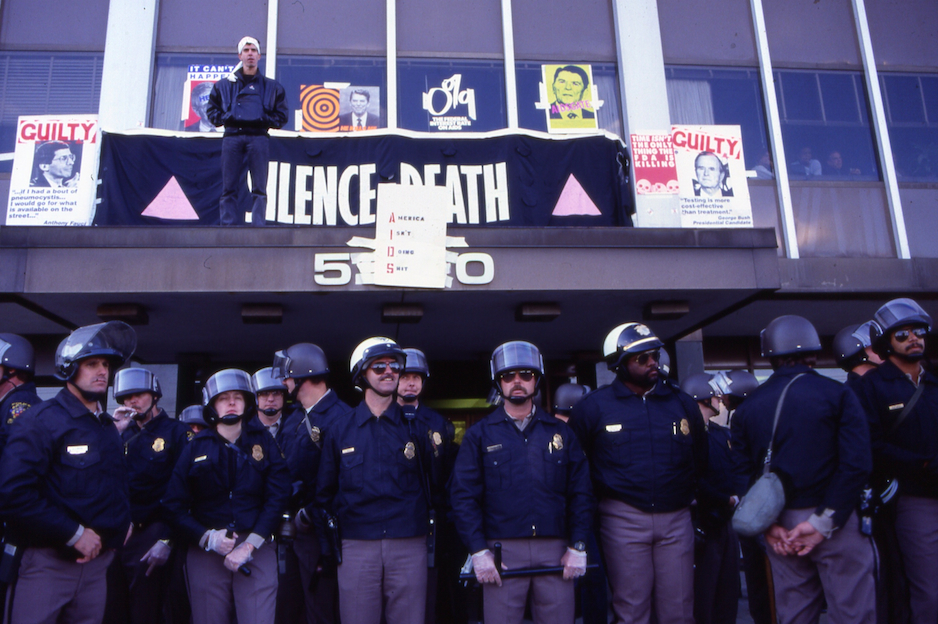
The AIDS activist group ACT-UP, which was comprised mostly of gay men in the 1990s, would have been ignored if they didn't stop traffic, chain themselves to fences and climb onto rooftops.

ACT-UP, an AIDS activist group, would have been ignored in the 1990s if they didn’t stop traffic, chain themselves to fences and climb onto rooftops. (pictured at the NIH)

“Because we have expressed that our cause is important enough to violate a powerful social norm [dining], we leave a mark on people: “Wow, what the heck was that! They’re so outraged by something that they felt the need to come into the store to register their complaint.”

animal rights protest at Chipotle

DxE breaks with the tradition of letting customers dine in peace.

“Speaking loudly and proudly in defiance of social convention . . . inspires others to do the same. And that is why we encourage our activists to step outside of their comfort zones . . . and into the stores that are selling the dead bodies of our friends.”

Your Turn

Please visit Direct Action Everywhere and Collectively Free to learn about, support and/or join their provocative campaigns to expose the truth about animal farming and promote a cruelty-free lifestyle.


Filed under: Food, Opinion
Tagged with: , , , , ,