

Their Turn - The Social Justice Movement of Our Time Their Turn - The Social Justice Movement of Our Time

Class Action Lawsuit Shines Spotlight on Australia’s Live Export Atrocities

November 2, 2014 by 4 comments


The News

The animals aren’t filing a class action lawsuit against the Australia government, even though they are the real victims. It is the cattle farmers who are doing it.

The Australian government is the live export industry’s most powerful ally, but cattle farmers are suing them anyway in an attempt to recoup the money they lost after a temporary live export ban to Indonesia in 2011. At that time, activists exposed abuses at Indonesian slaughterhouses that were so horrific that public pressure forced the government to take swift action.
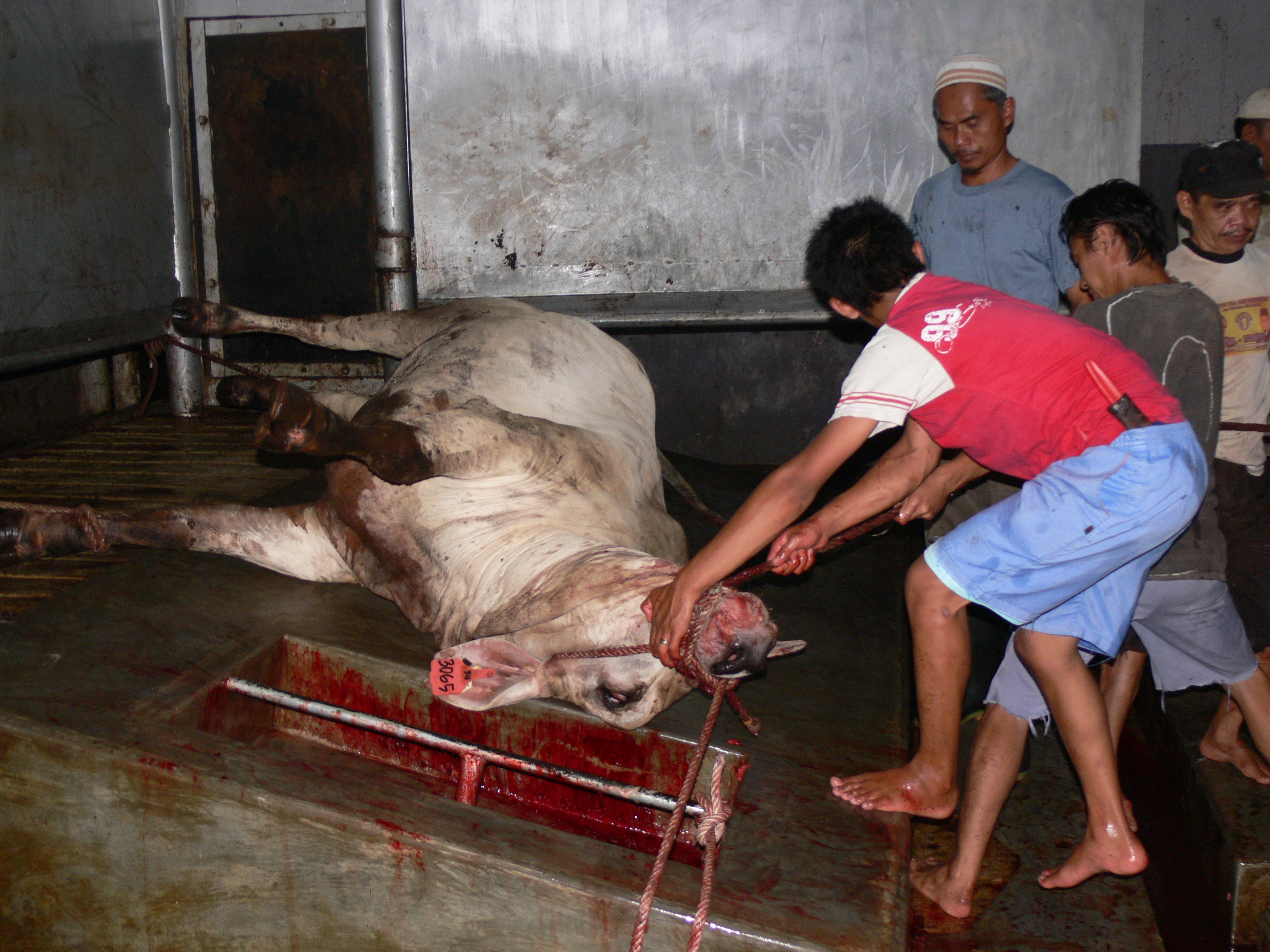
Photo: Animals Australia

Photo: Animals Australia

Now, the farmers want the government to pay them back for their financial losses, even if it means shining yet another spotlight on the torture inflicted on their animals overseas. The class action was filed just days after Australian media stunned the country with new undercover footage of similar abuses in three Middle Eastern countries.
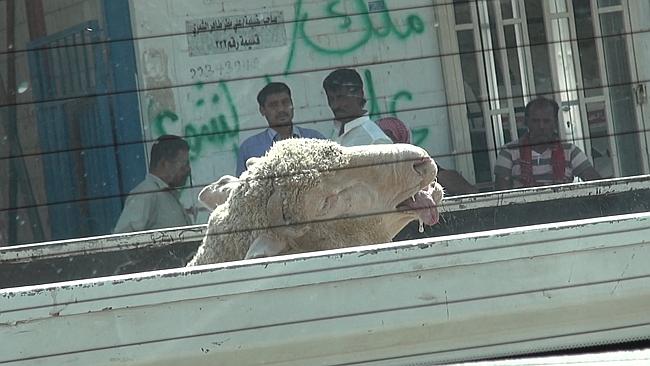
live export to Kuwait

The new footage, taken by Animals Australia, combined with the cattle farmers’ lawsuit have amplified the battle over live exports, and both sides are digging in their heels. After the damning footage was released, Bill Shorten, a member of Parliament and one the country’s most prominent live export supporters, said “We are seeing that it is possible for increased animal welfare to coincide with increasing export volumes. We see an industry that enjoys more public confidence because we have the best animal welfare system in the world.”
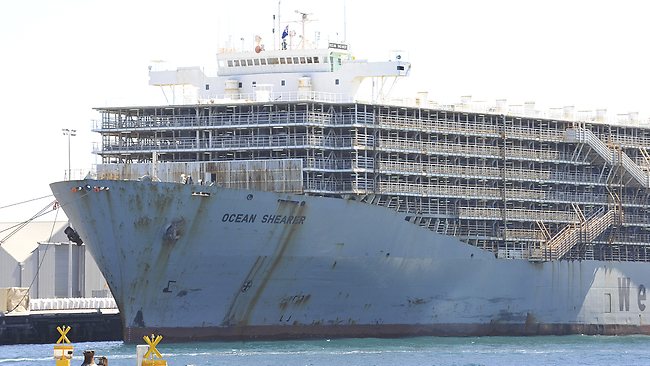
Photo: Animals Australia

Photo: Animals Australia

The ruling Labor party is also a staunch advocate and justifies live exports on the grounds that new regulations -, The Exporter Supply Chain Assurance System (ESCAS) – protect the animals by tracing them. Activists, however, say that the regulations are window dressing, as tracing millions of Australian animals from the docks where they are unloaded to their final destinations in the Middle East and Asia is impossible.

On October 30th, one of the few members of Parliament who opposes live exports said that the government protections are an “illusion.”

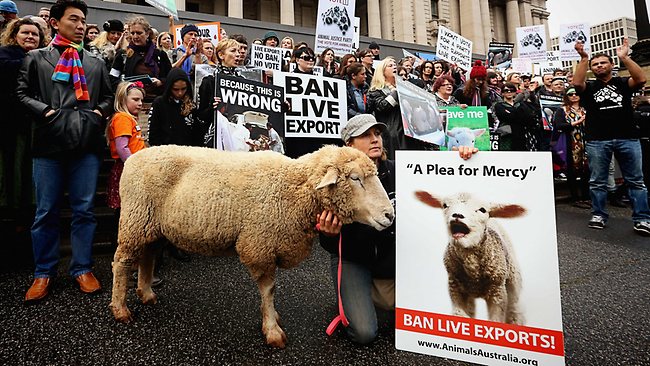
As the industry and government continue to defend, promote and grow live exports, protests over the past several years have reached a fever pitch.
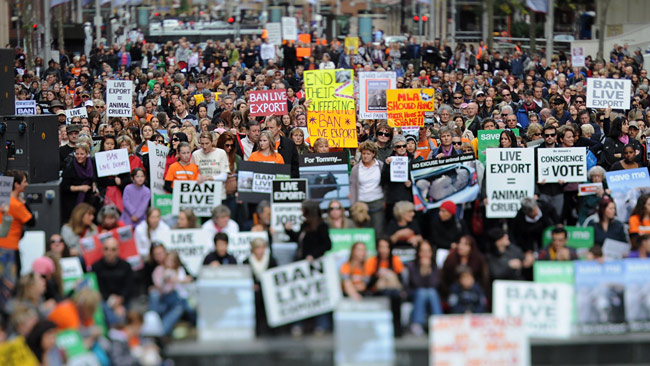
Live export protest in Sydney (photo: James Morgan)

Sydney, 2011 (photo: James Morgan)

live export protest

Parliament building in Melbourne, 2013

Because the live export industry is protected at the highest levels of government by both major political parties, ending it is an uphill battle that will only be won when the Australian Labor Party calls for a ban. One Australian activist, who asked to remain anonymous, called for a tourist boycott: “The only thing that will get the attention of the power brokers here is money. A boycott by tourists could make a difference.”

Australia is the world’s largest exporters of live animals, sending hundreds of thousands of cattle and millions of sheep to markets in Asia and the Middle East each year.

Your Turn

Visit Animals Australia to take action.

Send an instant message to the Australian Embassy in Washington, D.C.

Unmuzzled: Former Thoroughbred Breeder Exposes Horse Racing Abuse In Tell-All Book

October 30, 2014 by 9 comments


The News

When Michigan native Jo Anne Normile entered a granddaughter of Secretariat into racing in 1995, she thought the “Sport of Kings” was all about custom hats, mint juleps, shiny trophies and a blanket of red roses thrown over a gleaming horse. Soon after, however, she learned the truth – that racing is $40 billion gambling industry disguised as a sport – an industry that discards spent horses the way a casino trashes a bent deck of cards.

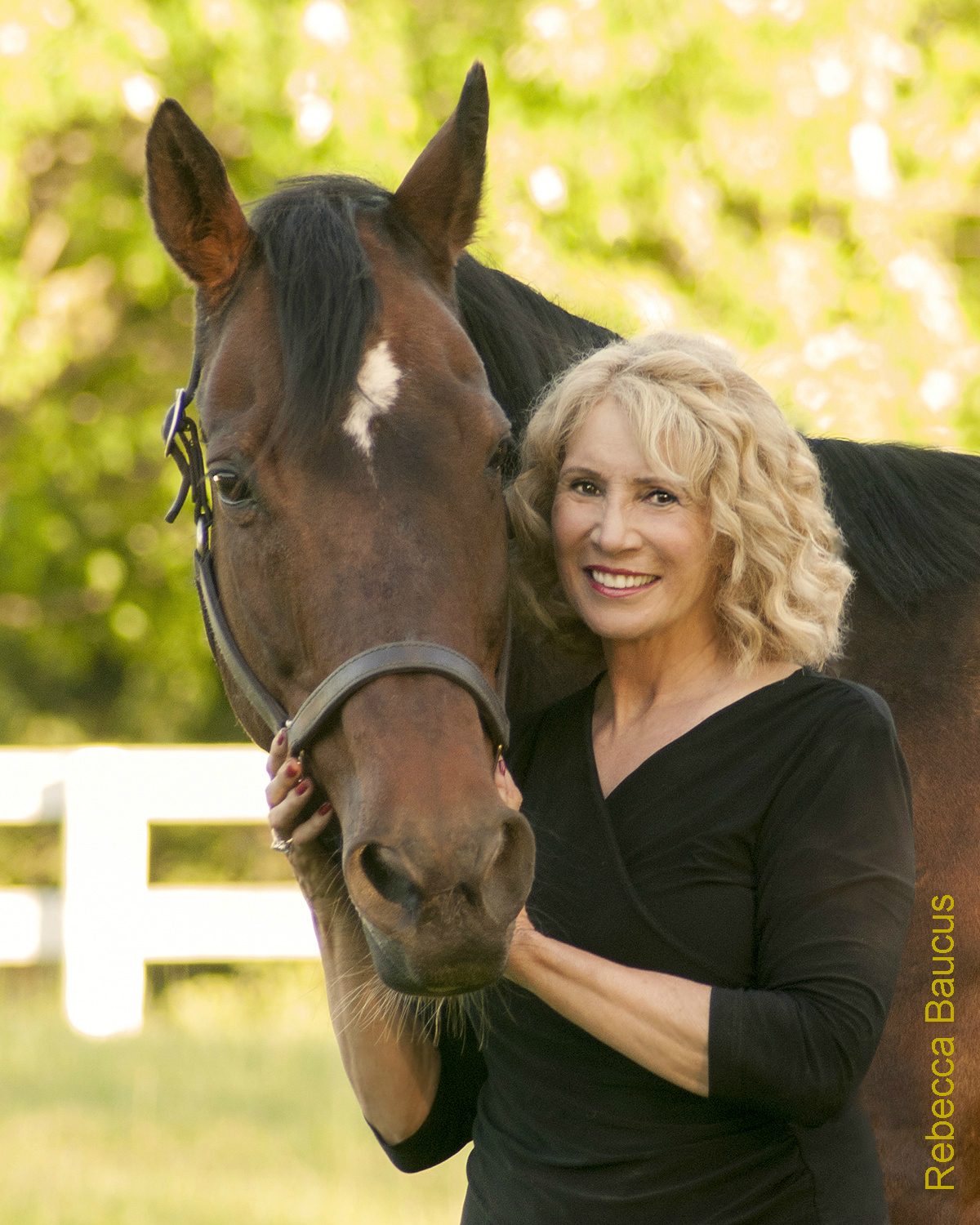
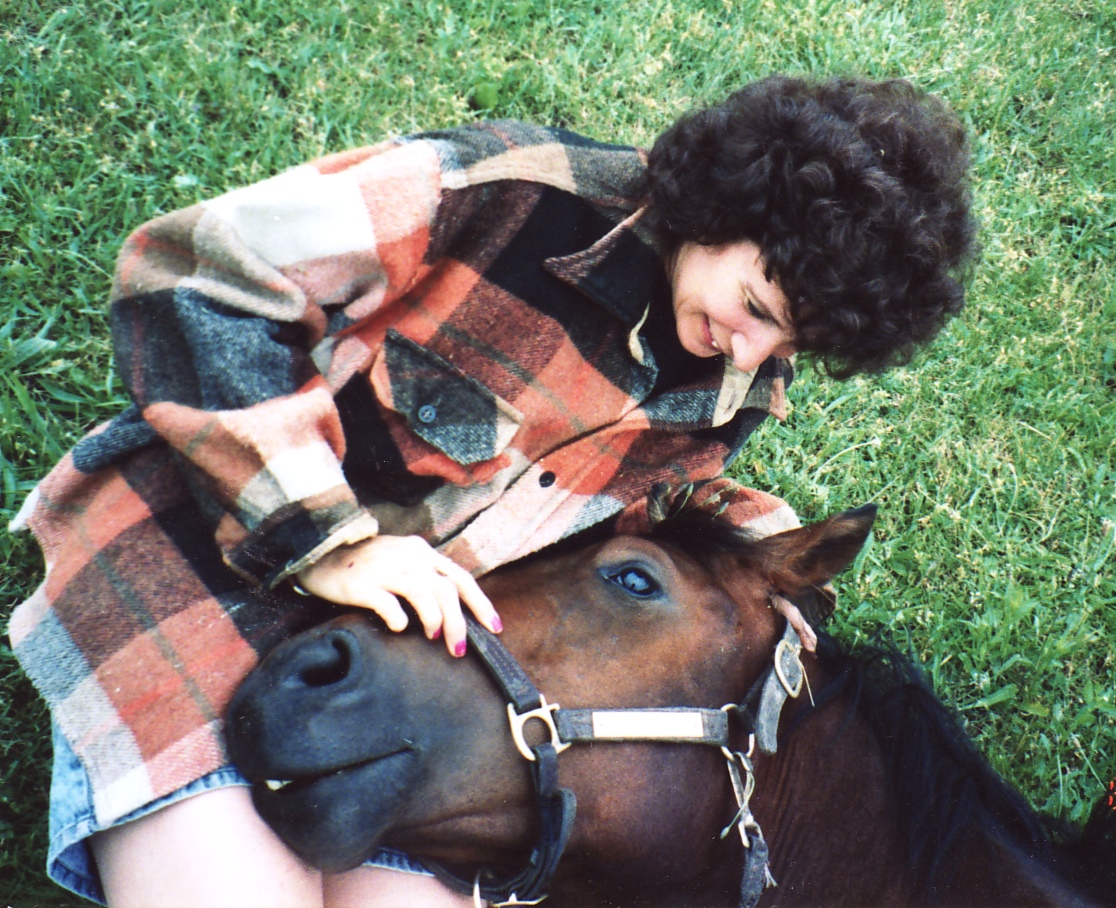
Jo Anne with Baby at one year old

Jo Anne with Baby at one year old

In 1991, before she became a racehorse breeder and owner, Normile was looking after a horse for a breeder. When the horse gave birth in her barn, Normile had to resuscitate the newborn, who wasn’t breathing. The life-affirming experience moved her to adopt the foal and name him Baby. A year later, Scarlett – the granddaughter of Secretariat – was born in the same barn stall. Both were sent to the track.

Three years later, after Baby shattered his leg on a racetrack due to negligence of the track owners, Normile came to a harsh realization: “When you mix animals and money, the animals will always lose.” And she asked herself, “How I can support racing? The horses spend 23 hours a day in their stalls. Injured horses are forced to run. Drugging and death are rampant. And the finish line is too often a slaughterhouse!” She immediately pulled Scarlett off the track – forever. She says that 15,000 to 20,000 Thoroughbreds are sent to slaughter every year, and many of them are loaded into trailers by kill buyers right behind the tracks.

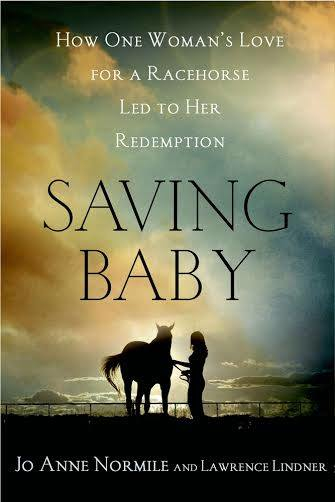
In her book, SAVING BABY, Normile gives an uncensored account of what happens behind the scenes at the track and chronicles her journey from race to rescue. “When I learned that the abuse and neglect at my own track were endemic to the industry and watched owners sell their supposedly beloved horses for pennies on the pound, I decided to take my fight into the halls of government. After much stonewalling, I resolved to take it to the streets with this book. I want people to know the fate of the horses they watch race.”

Saving Baby

In addition to writing SAVING BABY and lobbying government officials, Normile, as part of her about-face, founded CANTER, a rescue group that, under her leadership, collected more than 4,000 “used up” thoroughbreds at the tracks and transported them to save havens. Today, she gives speeches on the truth about racing at equine events across the country. And she co-founded a new rescue, Saving Baby Equine Charity that rescues all equines at risk.

Jo Anne and Scarlett

Jo Anne and Scarlett

Your Turn

Now available in hardcover, Saving Baby can be purchased at bookstores and online. Readers contribute to the rescue of horses because a portion of proceeds from the sale of every book goes to her new rescue, SAVING BABY EQUINE CHARITY.

To stay apprised of efforts to expose and end horse racing in the United States, please “like” Horseracing Wrongs on Facebook.


ALDF Reveals Carriage Driver “Hit & Runs” and Other Unreported Crashes

October 29, 2014 by 3 comments


The News

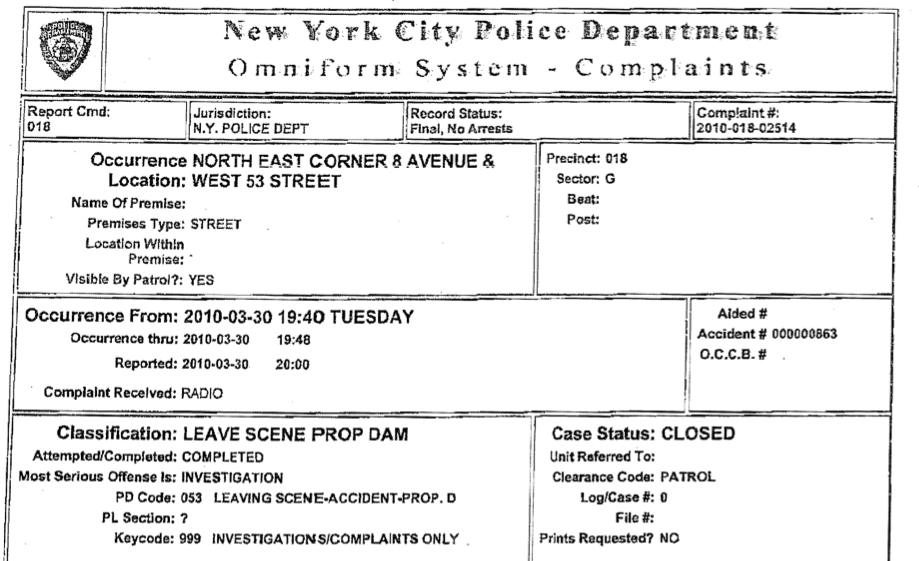
NYC carriage drivers have committed more than a dozen “hit & runs” over the past five years, according to allegations in police records that the Animal Legal Defense Fund (ALDF) obtained by court order from the City of New York. Jane Velez-Mitchell speaks to Chris Green, Legislative Director of ALDF, about the news:

One of 14 "hit & run" complaints filed with NYPD

One of 14 “hit & run” complaints filed with NYPD

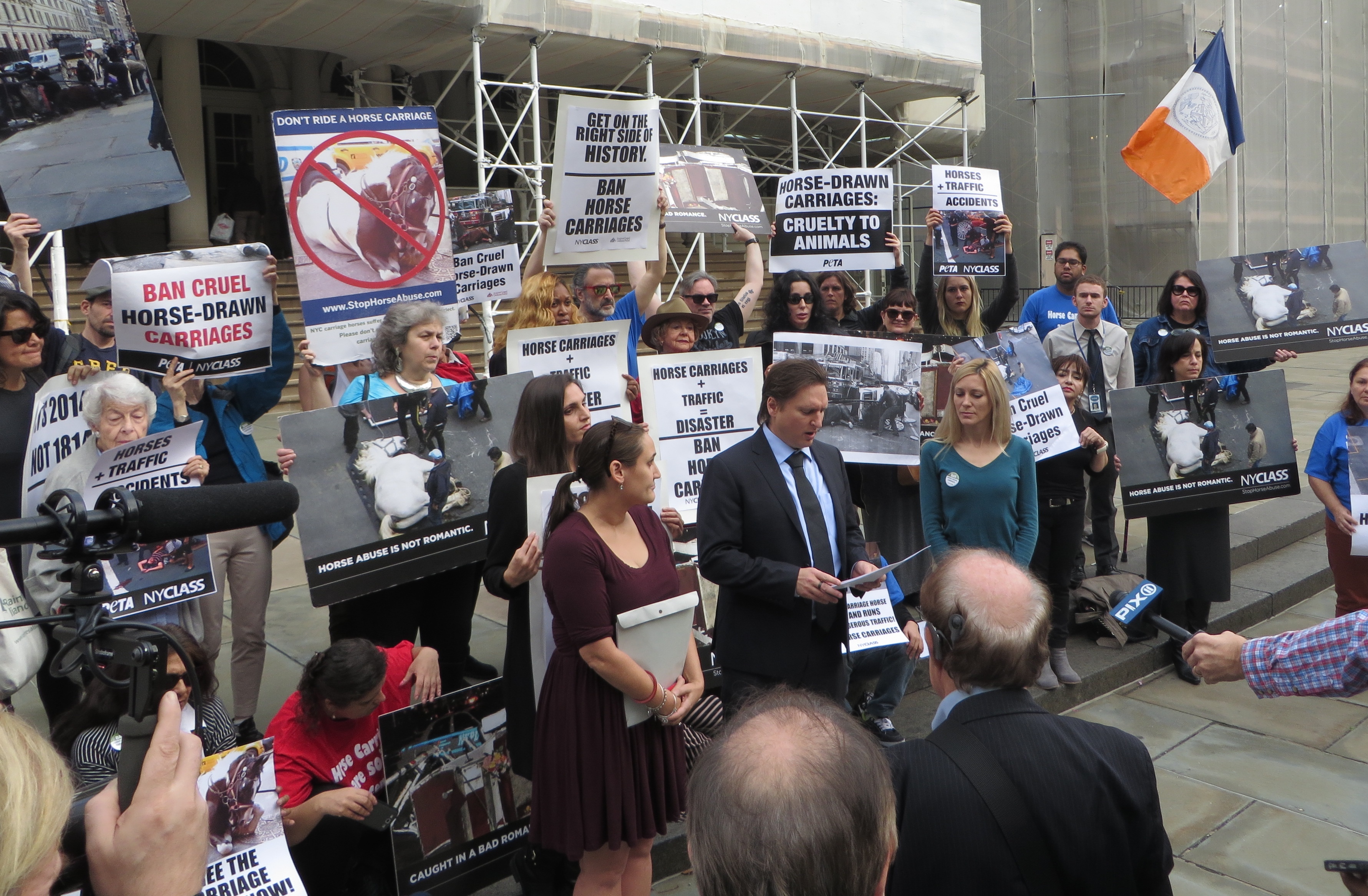
At a NYCLASS press conference at City Hall announcing the reported “hit & runs,” ALDF’s Legislative Director Chris Green said that the group also discovered “several alarming incidents” that had not been publicly reported. In one instance, a child was rushed to the hospital after falling out of a carriage and being run over by a wheel. The police report stated that the victim “suffered injuries to stomach, chest and head.”

Animal Legal Defense Fund (ALDF) announces "hit & runs"

Animal Legal Defense Fund (ALDF) announces “hit & runs” at NYC press conference

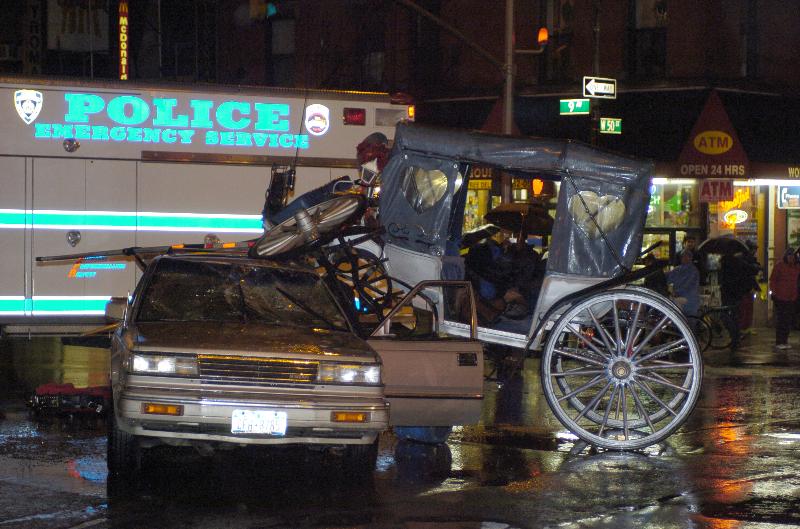
In another incident, a carriage driver “was thrown to the ground” and found by police “laying in the street, not moving.” In the photo below, a  driver was ejected from carriage and hospitalized in a coma when his horse spooked and collided with a station wagon. Unlike many other accidents, this one was reported because witnesses took photos and informed the press and local advocacy groups.

Dead carriage horse

Crash in midtown shows danger of mixing horses and cars (photo: Catherine Nance)

With the help of the Coalition to Ban Horse-Drawn Carriages and the local office of Friends of Animals, the ALDF filed a successful lawsuit against the City of New York to release the “hit & run” and other records, which show that “children, cyclists, pedestrians, carriage drivers passengers and NYPD officers have been physically injured by accidents involving New York’s horse carriages.”

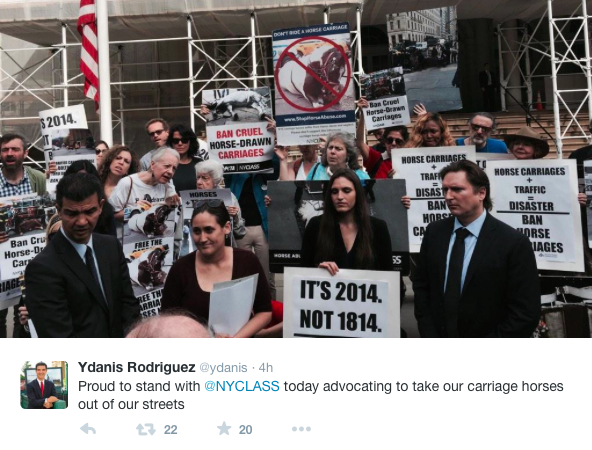
Tensions ran high at the press conference, as members of the opposition, including reporters who favor the industry, asked hostile questions of the speakers, including NYC Council Member Ydanis Rodriguez, who spoke in favor of removing carriages from the streets.

NYC Council Member Tweets Support of Horse-drawn Carriage Ban

NYC Council Member Tweets Support of Horse-drawn Carriage Ban

The effort to ban horse-drawn carriages has been an uphill battle, in part because the NY Times, NY Post and Daily News have published editorials in support of the trade. Nonetheless, local and national animal rights groups continue to advocate relentlessly on behalf of the horses. Mayor Bill de Blasio, who agrees that carriages do not belong on NYC streets, has stated on multiple occasions that he intends to “end carriage rides” in NYC.

Your Turn

If you live in NYC, ask your Council Member to support the Mayor’s plan to end carriage rides in NYC

Sign the two petitions to ban horse-drawn carriages: Coalition to Ban Horse-Drawn CarriagesNYCLASS

To keep apprised of developments, subscribe to the weekly newsletter of the Coalition to Ban Horse-Drawn Carriages by sending an email to coalition@banhdc.org

Watch the award-winning documentary film BLINDERS: The Truth Behind the Tradition that exposes the truth behind the tradition of NYC’s infamous horse-drawn carriage trade:


Will Pig Gestation Crates Be Banned in NJ?

October 28, 2014 by 12 comments


The News

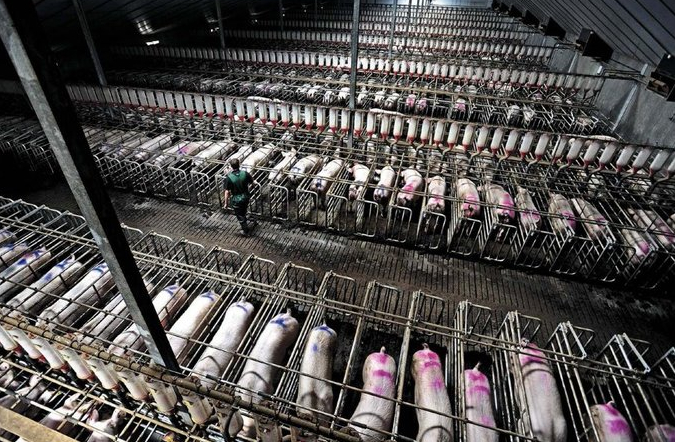
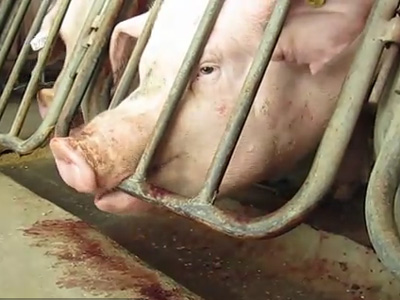
NJ Governor Chris Christie has until early December to sign a bill banning gestation crates, the small cages that house sows (female breeding pigs) for most of their adult lives. According to the National Pork Producers Council, nine out of 10 sows in America are held in gestation crates.

gestation crates factory farm

Governor Christie vetoed a similar bill in 2013, claiming that pig farmers made a more persuasive argument than the activists. HSUS’ Matt Dominguez said his decision could have been based on political expedience: “The governor’s veto last year had more to do with presidential politics given that Iowa, the nation’s biggest pork production state, hosts the Republican caucuses come 2016.” The landscape, however, has changed. According to Dominguez, polls in Iowa show that voters “would think more highly, not less, of Christie if he signs this bill.”

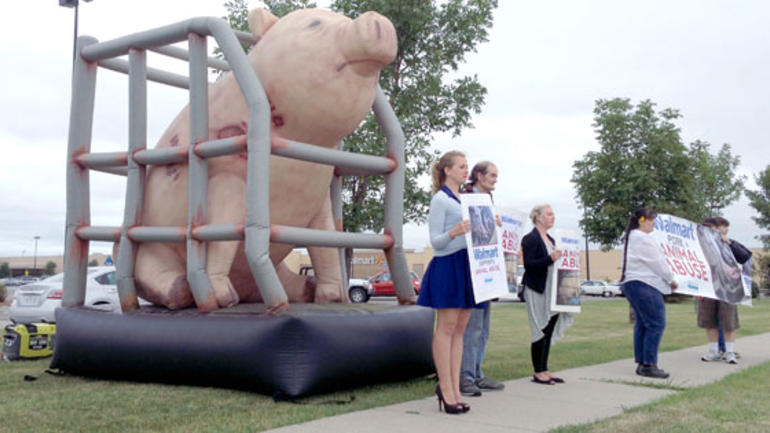
Mercy For Animals Protest at Walmart

Mercy For Animals Protest at Walmart

Jane Velez-Mitchell reports on the status of the gestation crate bill in NJ:

Several public figures have spoken out in support of a ban. In 2013, lifestyle maven Martha Stewart sent a letter to NJ lawmakers asking them to override Christie’s veto: “These animals have committed no crime, yet they’re treated worse than even the most violent criminals would be treated.” In a recent NY Times op-ed, political commentator Bill Maher makes a public appeal to Christie to pass the new bill: “Would you cram a dog into a crate for her entire life, never letting her out, until you took her to the pound to kill her?”

gestation crates

What agribusiness doesn’t want consumers to see

In a NY Times op-ed in February, writer Nicholas Kristof said, “These are tiny stalls that are barely bigger than the pigs, who don’t even have enough room to turn around. They live out their adult lives without exercise or meaningful social interaction; it’s like a life sentence of solitary confinement in a coffin, punctuated by artificial insemination and birth.”

In August, a bill to ban the crates failed to pass in Massachusetts. In an industry journal, local hog farmer Lisa Colby declared a victory for “the rights of local farmers” and for “farmers’ choices in taking care of their animals.” Agribusiness justifies the use of crates by claiming that they “allow for individualized care and eliminate aggression from other sows.”

Your Turn

Gestation crates are being phased out in several states, and major pork customers like McDonalds are requiring their suppliers to phase them out. However, far more work needs to be done to eliminate these crates in the U.S. and worldwide. To help ensure a victory in New Jersey, please take the following steps:
1. Sign the Change.org petition
2. Tweet  Governor Christie (@GovChristie) in support of the bill and use the hashtag #signS998
3. Call the Governor’s office 609-292-6000

Aquarium Has Been Hiding Two Captured Orcas in Temporary Tanks For Ten Months

October 27, 2014 by 10 comments


The News

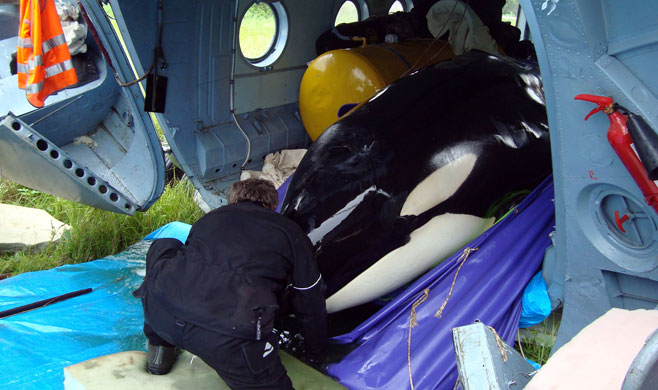
In December 2013, the Russian company VDNKh Park packed two killer whales into crates at the East end of the country and flew them 10 hours to Moscow to be displayed in an aquarium being built in the city.

In 2012, Namia is transported after being captured(photo: Russianorca.com)

In 2012, Namia is transported after being captured (photo: Russianorca.com)

More than 10 months later, the five and seven year old orcas are languishing in a temporary holding tank that are only 82 feet in diameter because the aquarium’s orca enclosure is still under construction and isn’t expected to be completed until early 2015. According to the Moscow Times, Russian police have refused to open a case on behalf of the orcas because the tank doesn’t meet the country’s definition of cruelty to animals.

Rusty temporary holding tank

Rusty temporary holding tank

Inflatable bubble covers tanks

Inflatable bubble covers tanks

The Russian animal rights group VITA says that guards and customers of a nearby exhibition center have, for months, reported “horrible sounds” and “cries” of killer whales. In spite of substantive evidence and a police report stating that the orcas are being held at this location, the aquarium has denied their presence — until yesterday, when video was released. Now, they are stating that the orcas were held secretly to that Muscovites would be surprised when they arrived at the aquarium.

The Director of the Far East Orca Russia Project (FEROP) says that holding killer whales in these circumstances is “completely abnormal” and that “we have no setting in Russia for keeping killer whales in captivity.” Other experts say that holding orcas captive can shorten their life and make them dangerous, as demonstrated in the documentary film Blackfish.

Your Turn

In light of the fact that an orca enclosure is being built at the new Moscow aquarium, Russia isn’t going to return these animals to their pod in the wild unless the world unites behind these orcas. Please sign the Take Part petition and PETA’s form letter to the Russian Ambassador to the UK asking for the orcas to be released back into the wild.

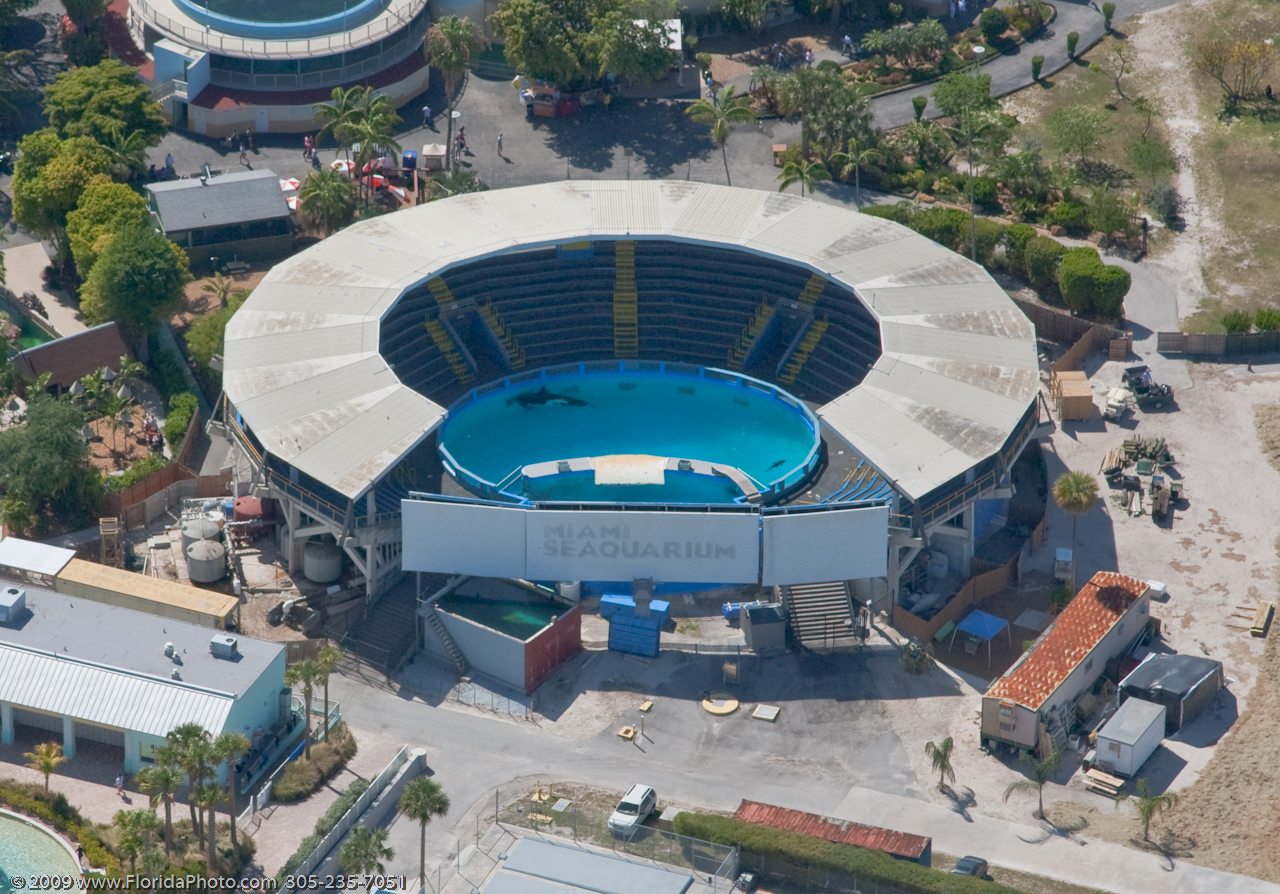
For the past 44 years, an orca named Lolita has been held captive at the Miami Seaquarium in a 60′ by 80′ pool, the smallest orca enclosure in the United States. For the first ten years of her captivity, Lolita had an orca companion named Hugo. In 1980, Hugo repeatedly smashed his head against the wall until he died. Lolita has been alone for 34 years.

Seaquarium-Lolita

Lolita has lived in a small, barren tank for 44 years

A massive march to free Lolita and return her to her to the wild will take place next to the Seaquarium on January 17th. Please share this information with your friends in Florida.