
Their Turn - The Social Justice Movement of Our Time Their Turn - The Social Justice Movement of Our Time

Miami Seaquarium is a “Crime Scene”

January 19, 2015 by 1 comment


The News

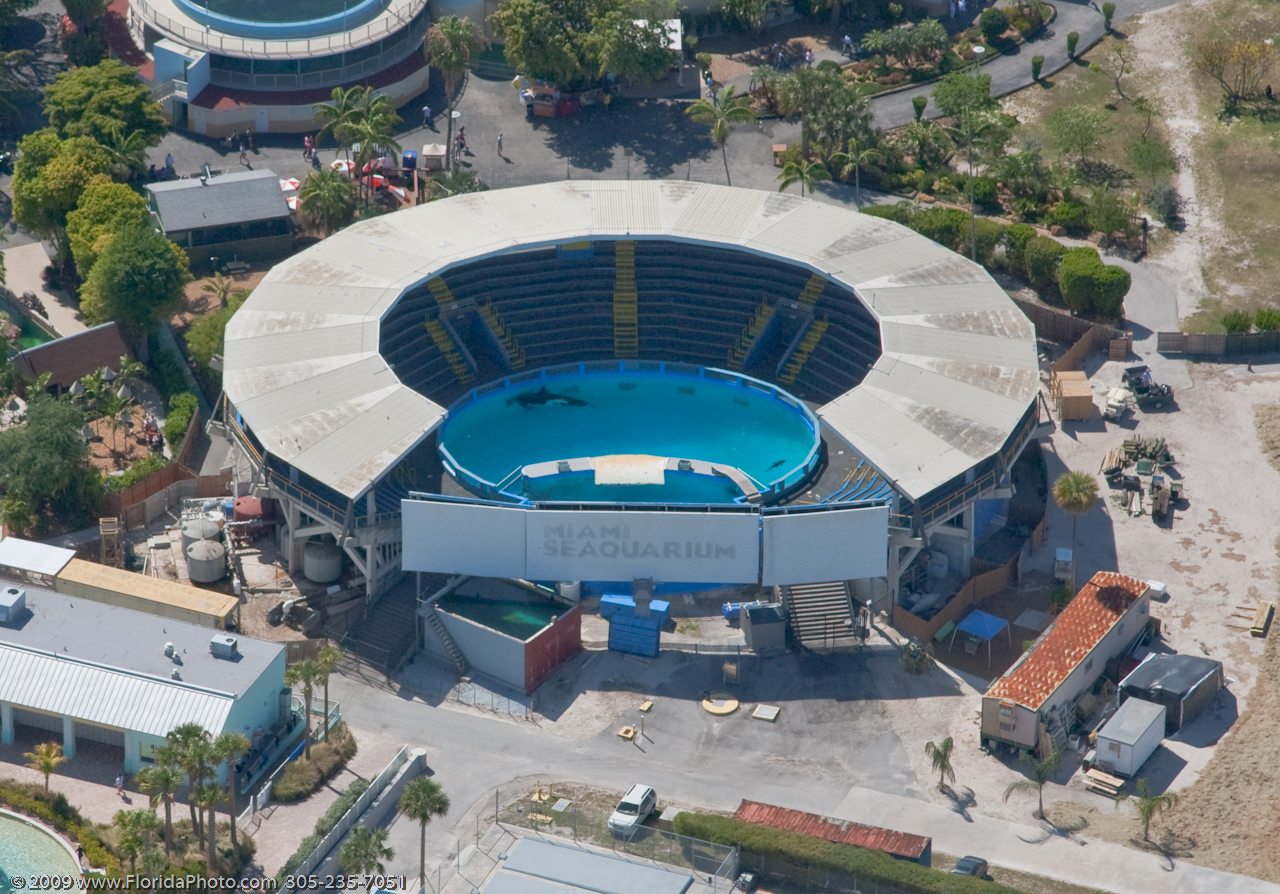
During an impassioned speech at the Miracle March for Lolita, the largest protest in history for a captive whale, Jane Velez-Mitchell of JaneUnchained.com called the Miami Seaquarium a “crime scene” to the thunderous applause of over a thousand people from around the world who descended upon Key Biscayne, Florida, to demand her freedom.

In an effort to discredit the March participants and continue making millions off Lolita’s back, Seaquarium spokesperson Robert Rose misled reporters, stating unequivocally that Lolita will die if released from her tank into the ocean. He made no mention of the fact that she would first be rehabilitated in a coastal sanctuary near her pod and would only be released if she is deemed capable of surviving. The seaside pen would provide her with space to swim, dive and be near or with other orcas, all of which have been denied to her for the past 44 years. It would also bring an end to her exploitation — being held captive and forced to perform tricks in exchange for food.
Seaquarium-Lolita

Among the many highlights of the Miracle March for Lolita was a ceremony during supermodel Joanna Krupa symbolically released Lolita from a tank created by a human chain.
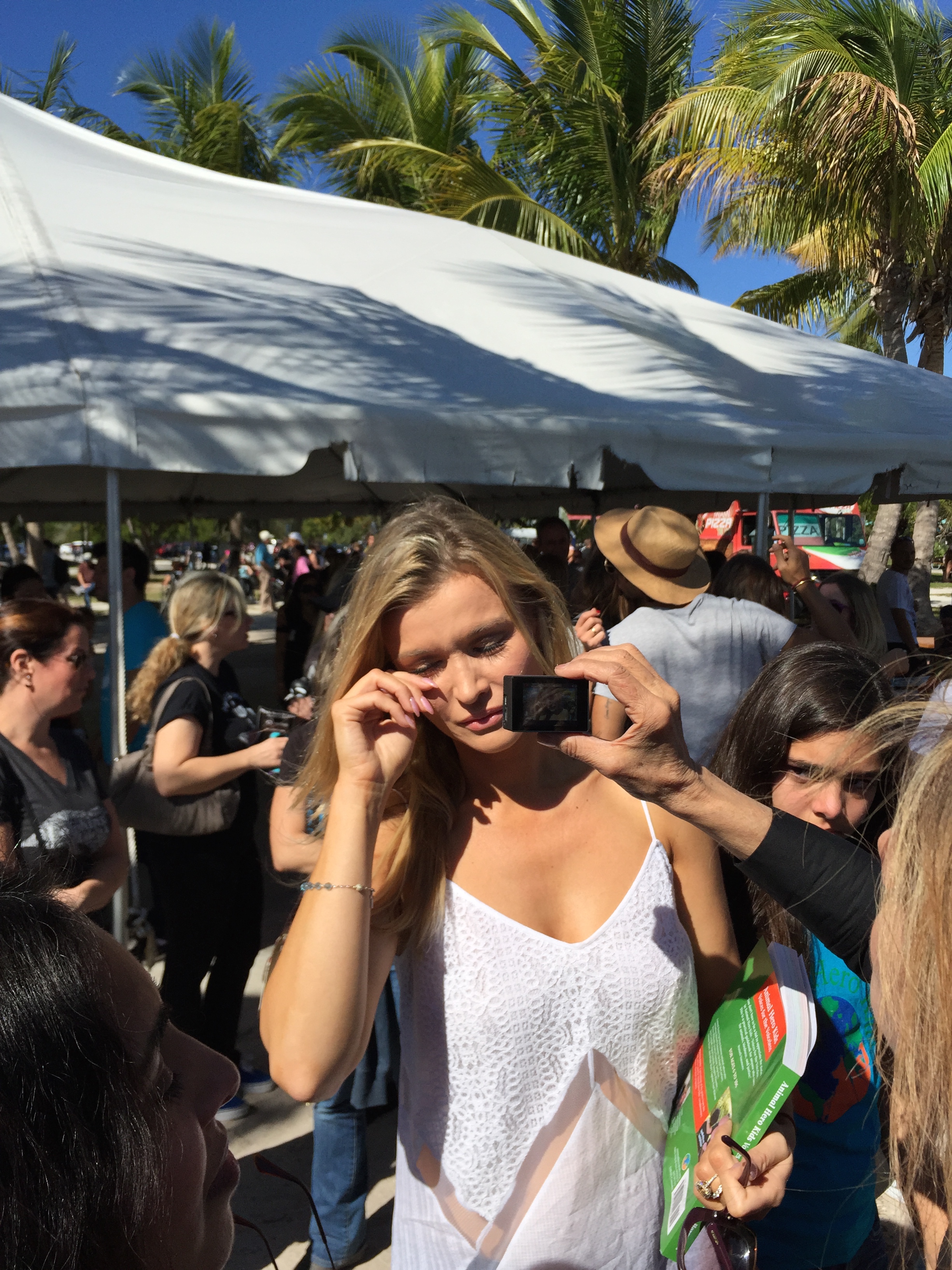
Supermodel Joanna Krupa wipes away tears after participating in ceremony for Lolita

Supermodel Joanna Krupa wipes away tears after participating in ceremony for Lolita

Events around the world were held in solidarity.

Lolita Protest in Seattle (photo: Jeff Widmer)

Lolita Protest in Seattle (photo: Jeff Widmer)

Orca conservation and animal rights groups will continue to fight for Lolita’s release. Jared Goodman, PETA’s Director of Animal Law, says that, by the end of January, the National Oceanic and Atmospheric Administration (NOAA) will decide whether or not to designate Lolita a member of an endangered group of whales. That decision could determine her fate.

The miracle March for Lolita was the brainchild of Robin Jewell, an activist from Michigan with a hole in her heart and a vision for Lolita. On a shoe string budget, Ms Jewell produced the entire event — securing the permits, managing promotion and publicity, liaising with law enforcement, recruiting speakers for the rally and coordinating the parade route, food and entertainment. The flawless execution of the event was one of many miracles of the Miracle March for Lolita.

Photo: Christina Estrada

Miracle March for Lolita in Miami, FL (Photo: Christina Estrada)

Your Turn

Please sign Robin Jewell’s Change.org petition to free Lolita and ensure talk to your friends about why they should boycott aquariums, zoos, circuses and other forms of entertainment where animals are held captive.
Club At Center of Rhino Hunting Controversy To Auction Off More Rare Animal Hunts

January 16, 2015 by 5 comments


The News

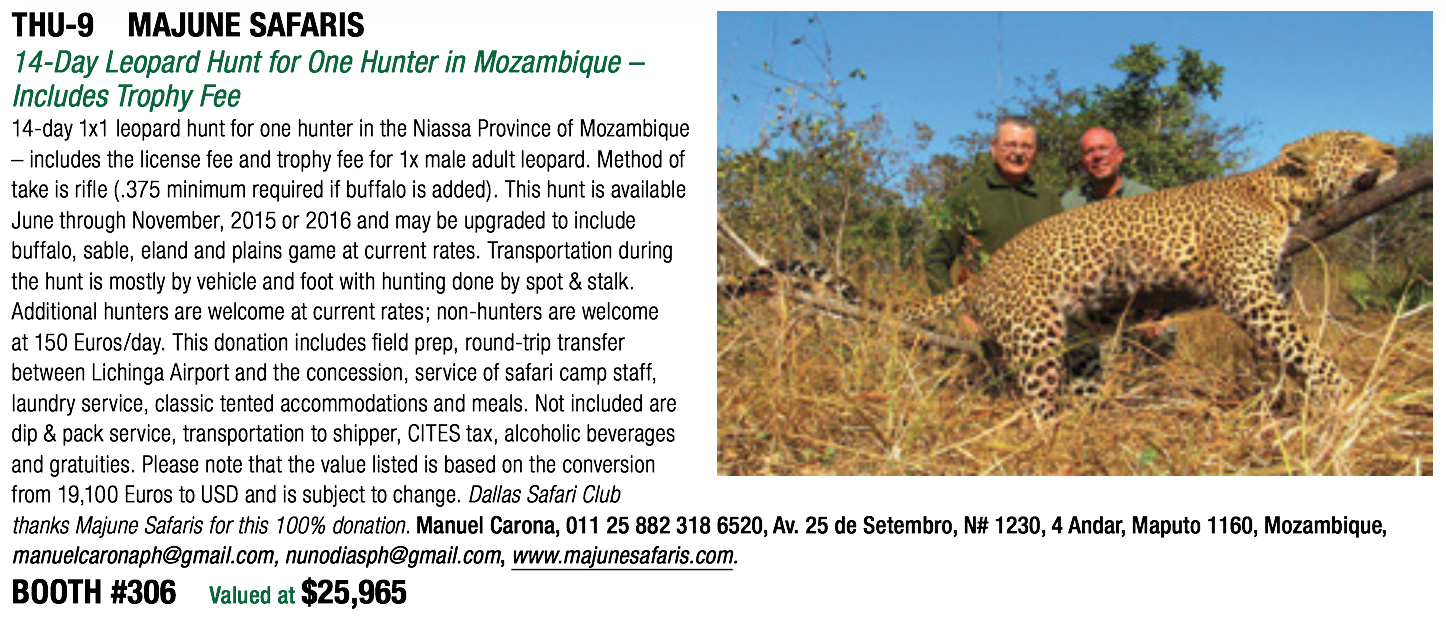
The 6,000 member Dallas Safari Club will auction off rare animal hunts this weekend during the banquet at its annual convention, which is a “showcase of hunting, sporting and outdoor adventure,” according to the Club’s website. During the auction, “bidders of any age or gender” will have the chance to bid on “amazing items,” including “youth hunts in New Zealand and Texas, a challenging Mid-Asian ibex hunt in Russia, and a bongo hunt in Cameroon.”

One of dozens of animal hunts at Dallas Safari Club Auction

One of dozens of animal hunts at Dallas Safari Club Auction

The 2014 convention made international headlines when one attendee, Corey Knowlton, paid $350,000 to shoot an endangered black rhino in Namibia. Mr. Knowlton, who has purportedly received death threats, tells critics that he is motivated by “conservation.” Specifically, he claims that his substantial contribution will be allocated to rhino conservation efforts and that killing the rhino in question would actually benefit other rhinos in the area who he has been attacking.

But, if conservation is really Mr. Knowlton’s motivation, then why doesn’t he allocate a small part of his winning bid to relocate him?  And, if he’s concerned that the menacing rhino is harming the others, then why hasn’t he  shot him down hasn’t he done it in the 12 months since he won the bid?  Could it be because the U.S. Fish & Wildlife Service has not yet issued a permit to import the rhino’s body and that Mr. Knowlton has no intention of returning from Africa without his “trophy.”

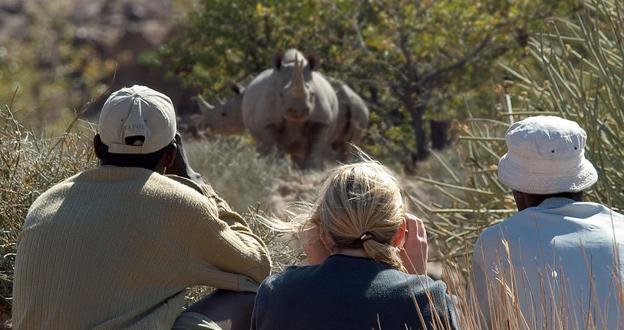
In an interview with Jane Velez-Mitchell on JaneUnchained.com, Christopher Gervais, the director of the Wildlife Conservation Film Festival & Biodiversity Conference, says that killing animals is not the way to preserve them: “You do not hunt a vulnerable species in the name of conservation. Other organizations are conserving without hunting and killing.” Conservation funds. he says, can be raised through photography safaris during which animals are shot with cameras instead of guns.

Shooting rhinos with cameras

Shooting rhinos with cameras

Your Turn

Please let the Dallas Safari Club know what you think of selling trophy hunts by contacting them through Facebook or its website.


In Epic Battle to Ban NYC’s Horse-Drawn Carriages, Activists Leave No Stone Unturned

January 15, 2015 by 7 comments


The News

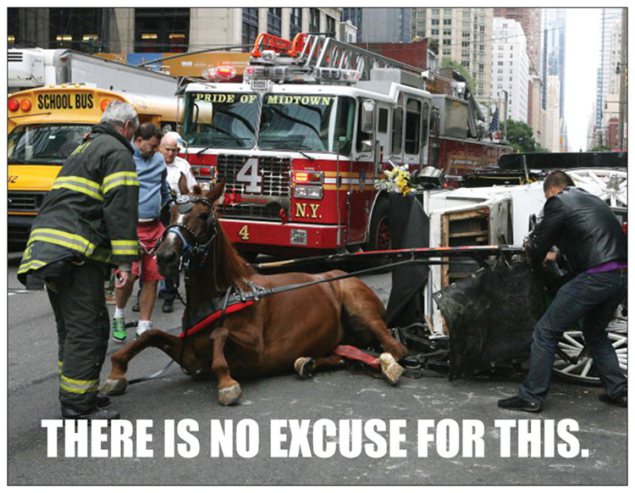
In the highly charged effort to ban horse-drawn carriages from the streets of NYC, activists can rarely anticipate the unseemly events that lurk around the corner  – from false accusations by elected officials and hostile media outlets to physical and verbal attacks by carriage operators. What they can – and are – doing, however, is moving mountains to help pass the Mayor’s historic bill to ban the city’s inhumane, unsafe and archaic horse-drawn carriage trade.

Following are some of the most compelling tactics being employed by NYCLASS, the animal rights group leading the lobbying effort, and the Coalition to Ban Horse-Drawn Carriages, which started the movement in 2006.

1. TV Commercial: With the help of a pro-animal TV production company, NYCLASS created a commercial that has aired and will air again on local television in the months leading up to a vote.

2. Postcard Campaign: The NY Observer reports that NYCLASS “is turning up the heat on lawmakers by mailing graphic postcards to all 51 Council Members every day until the carriage-banning legislation is passed.” Each of the 7,000 postcards is signed by a NYC voter and will be sent to his or her Council Member.

One of many postcards being sent by NYCLASS to NYC lawmakers

One of many postcards being sent by NYCLASS to NYC lawmakers

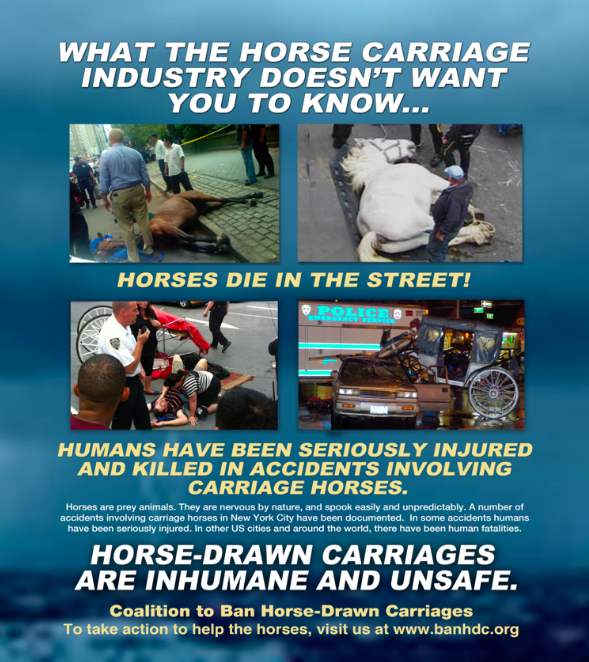
3. Subway ads: In February, the Coalition to Ban Horse-Drawn Carriages is rolling out this provocative ad campaign in NYC subway stations. Since 2007, the Coalition, which is the go-to group for information about the issue, has been staging regular protests against the industry and producing a weekly newsletter sent to advocates around the world.

Subway ad campaign

Subway ad campaign

4. An army of activists: Hundreds of NYC voters feel passionately enough about the plight of the horses to dedicate their free time to educating voters in the streets and lobbying lawmakers at City Hall. This week, activists with NYCLASS conducting outreach in front of the offices of two “undecided” NYC Council Members were unexpectedly invited inside to make their case for a ban.

Councilmember unexpectedly invites picketers in for meeting

Councilmember unexpectedly invites picketers in for meeting

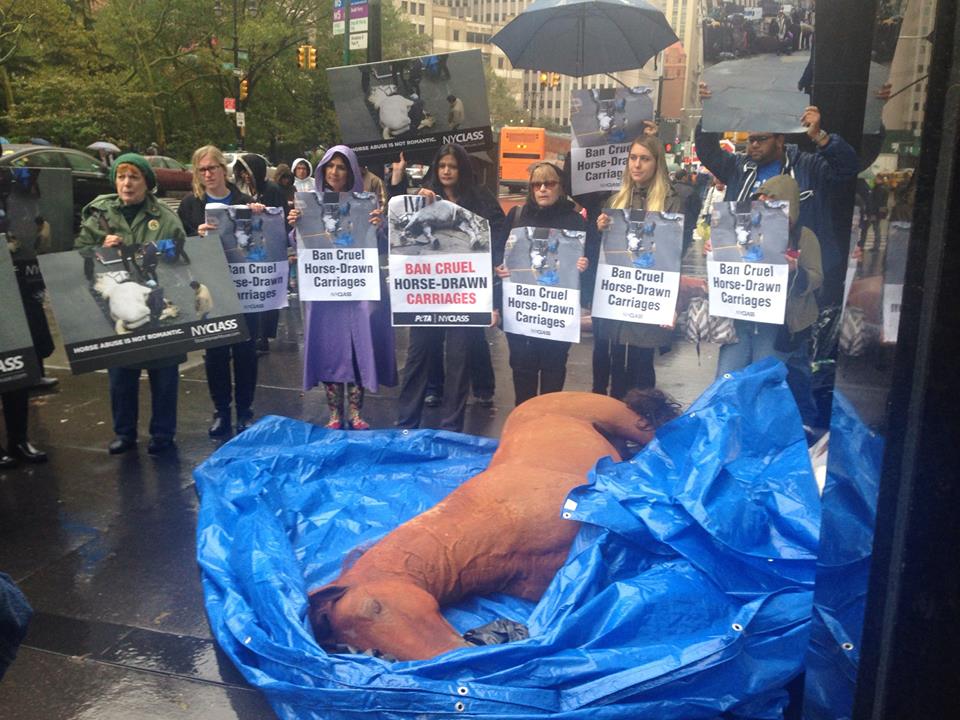
Luckily, the activists were not carrying the dead horse replica that they sometimes use to attract attention in neighborhoods where local Council Members opposes the ban.

City Hall in Manhattan (Photo: NYCLASS)

City Hall in Manhattan (Photo: NYCLASS)

NYCLASS and The Coalition to Ban Horse-Drawn Carriages are leading the fight locally, but they are not working alone. Representatives from national advocacy groups, including PETA, HSUS, FOA, the ASPCA and Last Chance for Animals, are also lobbying Council Members and/or running educational campaigns.

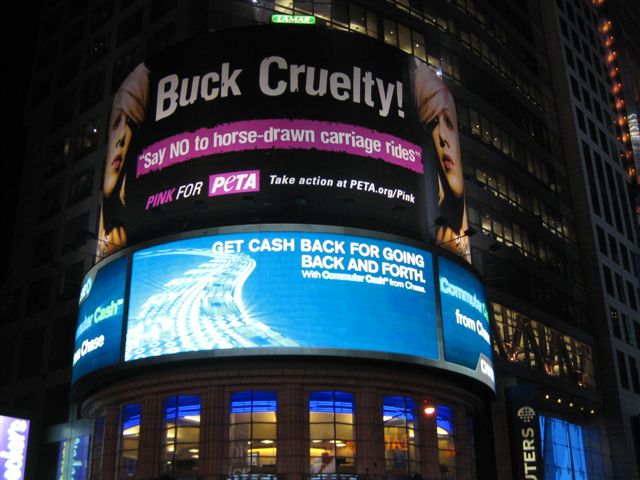
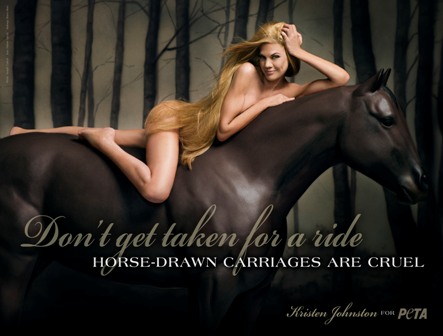
Since 2008, PETA has also lent major star power to the effort, rolling out billboards and videos with pro-animal celebrities like Pink, Lea Michele, Kathy Najimy and Kristen Johnston.

PETA billboard in Times Square

PETA billboard in Times Square

Actress Kristen Johnston

Actress Kristen Johnston

To date, the majority of Council Members have not publicly stated whether they plan to vote in favor of or against the horse-drawn carriage ban. Like most politicians, they will make their decision based on political expedience — not on the merits of the issue. In the unlikely event that the bill to ban horse-drawn carriages is voted down, it won’t be for a lack of effort by the advocacy community. But perish the thought!

Your Turn

1. If you live in NYC, please join NY-CLASS in its efforts to rally support among lawmakers for the Mayor’s bill to ban horse-drawn carriages. If you live elsewhere, please sign their petition.

2. To learn more about the issue and keep apprised of news, subscribe to the weekly newsletter of the Coalition to Ban Horse-Drawn Carriages.

3. Watch the award-winning documentary film BLINDERS to see why people have been fighting for years to take the horses out of NYC:


Oddly, The NY Times Describes Return of Foie Gras to California as Insignificant

January 14, 2015 by 8 comments


Opinion

The NY Times regularly publishes substantive stories about the cruelty of industrialized animal agriculture, giving readers a disturbing peak over the high walls and into the windowless sheds that house the 10 billion farm animals slaughtered for food each year in the U.S. And, while the NY Times will never go far enough to satisfy those who espouse an entirely cruelty-free diet, its coverage of the horrors of factory farming is most welcome and appreciated by advocates.

Factory farm sheds where animals are held prisoner for their entire lives

Factory farms have no windows so that people cannot see where their meals are raised.

Today, the Times published a lengthy story by op-ed writer Mark Bittman arguing that the recent return of foie gras in California is insignificant because it affects only 600,000 animals nationwide, which is less than the number of chickens killed each hour in the U.S: “The lifting of the California ban against selling foie gras is pretty much a nonissue, except to point out that as a nation we have little perspective on animal welfare. To single out the tiniest fraction of meat production and label it ‘cruel’ is to miss the big picture, and the big picture is this: Almost all meat production in the United States is cruel.”

"No. Not again."

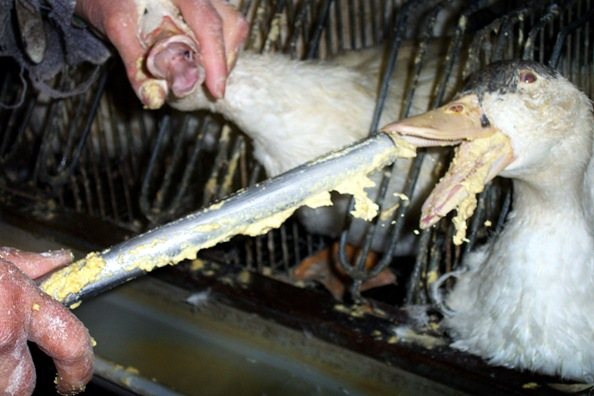
Ducks and geese are force fed through a metal pipe 3X daily in the weeks before slaughter.

While Mr. Bittman’s references to the cruelty of animal farming and his use of graphic words like “torturous” are praiseworthy, his suggestion that the return of foie gras is insignificant is perplexing. Why dismiss as irrelevant the reversal of much-needed protections that advocates worked tirelessly to achieve? Mr. Bittman might believe that “foie gras itself just isn’t that important,” but the ducks and geese who are throat-raped with a metal pipe three times a day would probably beg to differ.

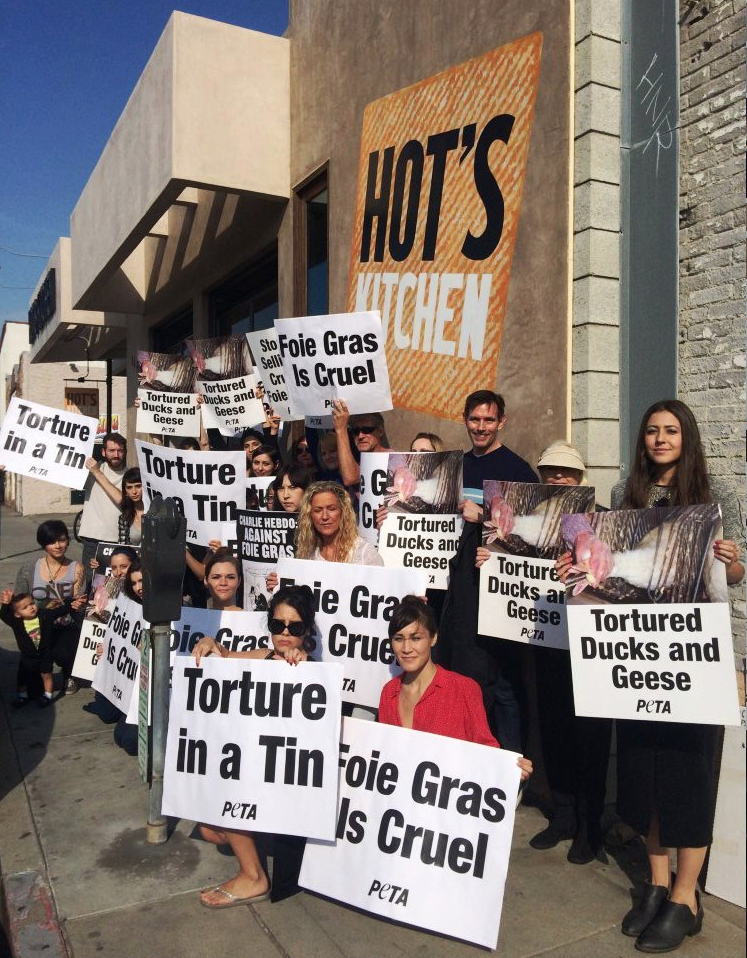
Activists with PETA protest the return of foie gras in California (photo: PETA)

Activists with PETA protest the return of foie gras in California at Hot’s Kitchen in Los Angeles (photo: PETA)

Greedy, Heartless Owner of Hot's Kitchen, Sean Chaney, Sued to Legalize Foie Gras (photo: easyreadernews.com)

Greedy, Heartless Owner of Hot’s Kitchen, Sean Chaney, Sued to Legalize Foie Gras in CA (photo: easyreadernews.com)

Mr. Bittman: Is it too late to reframe the story by saying, “We must advocate to reinstate California’s foie gras ban AND work to help the billions of abused chickens, pigs, cows and fish who have been left behind.”

Ironically, the return of foie gras to California comes at a time when this “delicacy of despair” is coming under fire in the foie gras capital of the world — France.

Your Turn

Please sign the petition to re-instate the law banning foie gras in the state of California.


Pressure Mounts on NIH to Discontinue Barbaric Maternal Deprivation Studies

January 13, 2015 by 16 comments


The News

Video obtained by PETA of NIH researchers conducting maternal deprivation and other psychological studies on infant monkeys revealed such extreme abuse and terror that four members of Congress sent a strongly-worded letter to the NIH demanding an explanation.

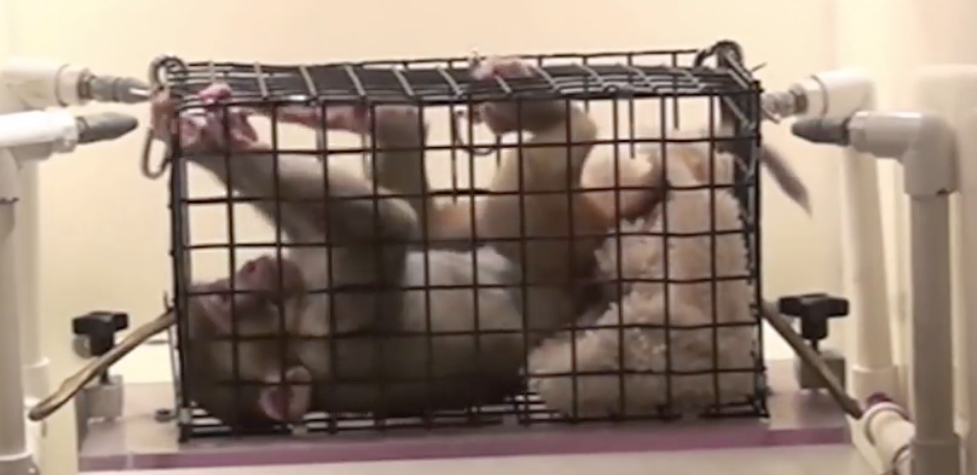
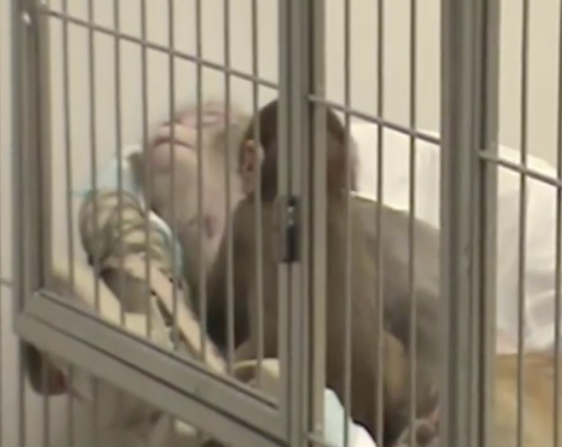
Among the many heart-breaking video clips are a babies frantically attempting to awaken their sedated mothers, who appeared to be dead, and infant monkeys being subjected to loud noises while being held in the dark in what the researchers themselves describe as “pits of despair,” cages so small that the terrified monkeys cannot stand up.

NIH researchers terrorize infant monkeys in psychological experiments

NIH researchers terrorize infant monkeys in psychological experiments

In a fascinating interview with Justin Goodman, PETA’s Director of Laboratory Investigations, Jane Velez Mitchell shines a spotlight on the studies and the deception that has enabled NIH researchers to spend tens of millions of U.S. tax dollars on these experiments for over 30 years.

These infant monkey studies are funded through 2017, but circumstances have emerged which could bring them to an end before the money runs out. First, the NIH researchers will be unable to justify to Congress the continuation of this research, which after 30 years, haven’t yielded any information useful to human mental health. In fact, the researchers have already acknowledged that the tests are irrelevant to humans. As PETA’s Justin Goodman explains, the scientists have created a “cottage industry,” collecting millions of dollars from Congress year-after-year while remaining under the public radar. Secondly, video of the experiments, which are now in the public domain in spite of NIH’s efforts to keep them confidential, has triggered over 160,000 to take action.

Infant monkey attempts to awaken her mother during maternal deprivation study.

Infant monkey attempts to awaken her mother during maternal deprivation study.

Your Turn

The NIH researchers who have taken tens of millions of U.S. tax dollars over the past 30 years to perform these useless and cruel experiments are being exposed for what they are — thieves and terrorists. Please speak up for these infant monkeys by demanding that NIH permanently discontinue these barbaric experiments.