

Their Turn - The Social Justice Movement of Our Time Their Turn - The Social Justice Movement of Our Time

Animal Rights Activists Protest Humane Society of New York Veterinarians Over Animal Warehousing

November 14, 2022 by 1 comment


The News

Despite pleas from animal shelter advocates, the six veterinarians who work in the Humane Society of New York’s (HSNY) clinic refuse to address the long-term warehousing of animals at the organization’s adoption center. Adoptions at the prominent Manhattan shelter came to a virtual standstill in April 2020 when their boss, Executive Director Sandra DeFeo, closed the building to the public.  According to the New York City Department of Health (DOH), which conducted an inspection in October 2022, the HSNY facilitated an average of one adoption per week between March and October, an exceptionally low number for a shelter that can accommodate up to 175 animals, according to its annual tax statements. Activists have submitted a Freedom of Information Act request to the DOH for the inspection report.

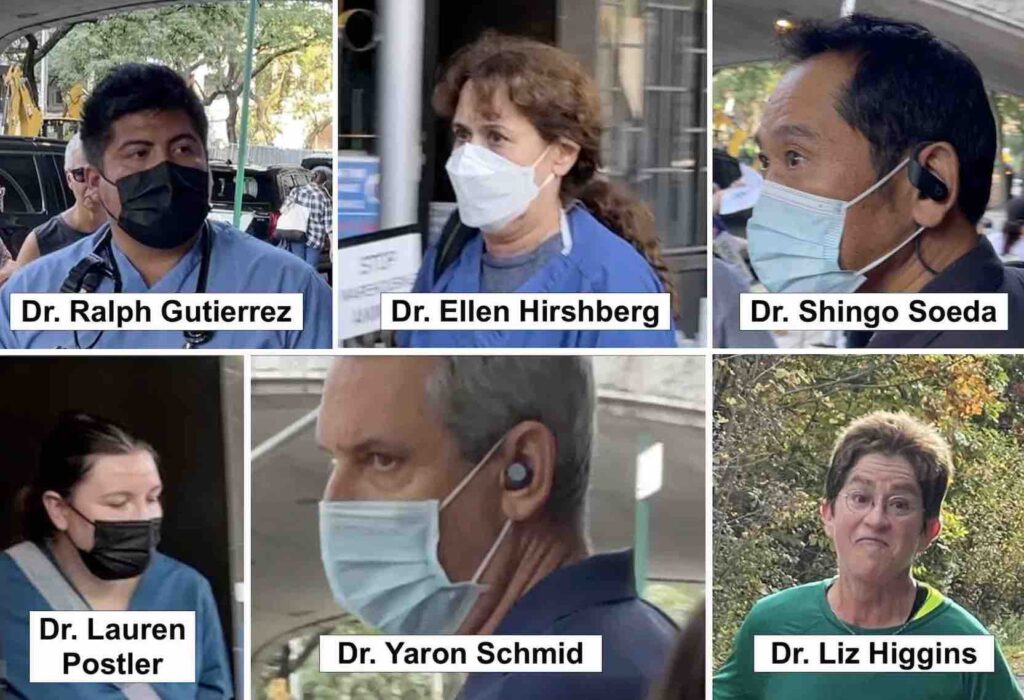
During the first two protests at the HSNY, the advocates attempted to speak to the veterinarians about the plight of the dogs and cats, but all of them refused to engage, choosing instead to ignore them as they exited the building. Since then, the activists have become increasingly provocative, stepping up their demand that the vets use their influence to relocate the animals to adoption centers that are open to adopters or to foster homes. Former HSNY employees suspect that the veterinarians, Drs. Lauren Postler, Shingo Soeda, Ellen Hirshberg, Yaron Schmid, Ralph Gutierrez and Liz Higgins, are turning a blind eye to the animal warehousing because they would like to keep the building closed to the public, as keeping their clients out of the exam room makes their job easier.
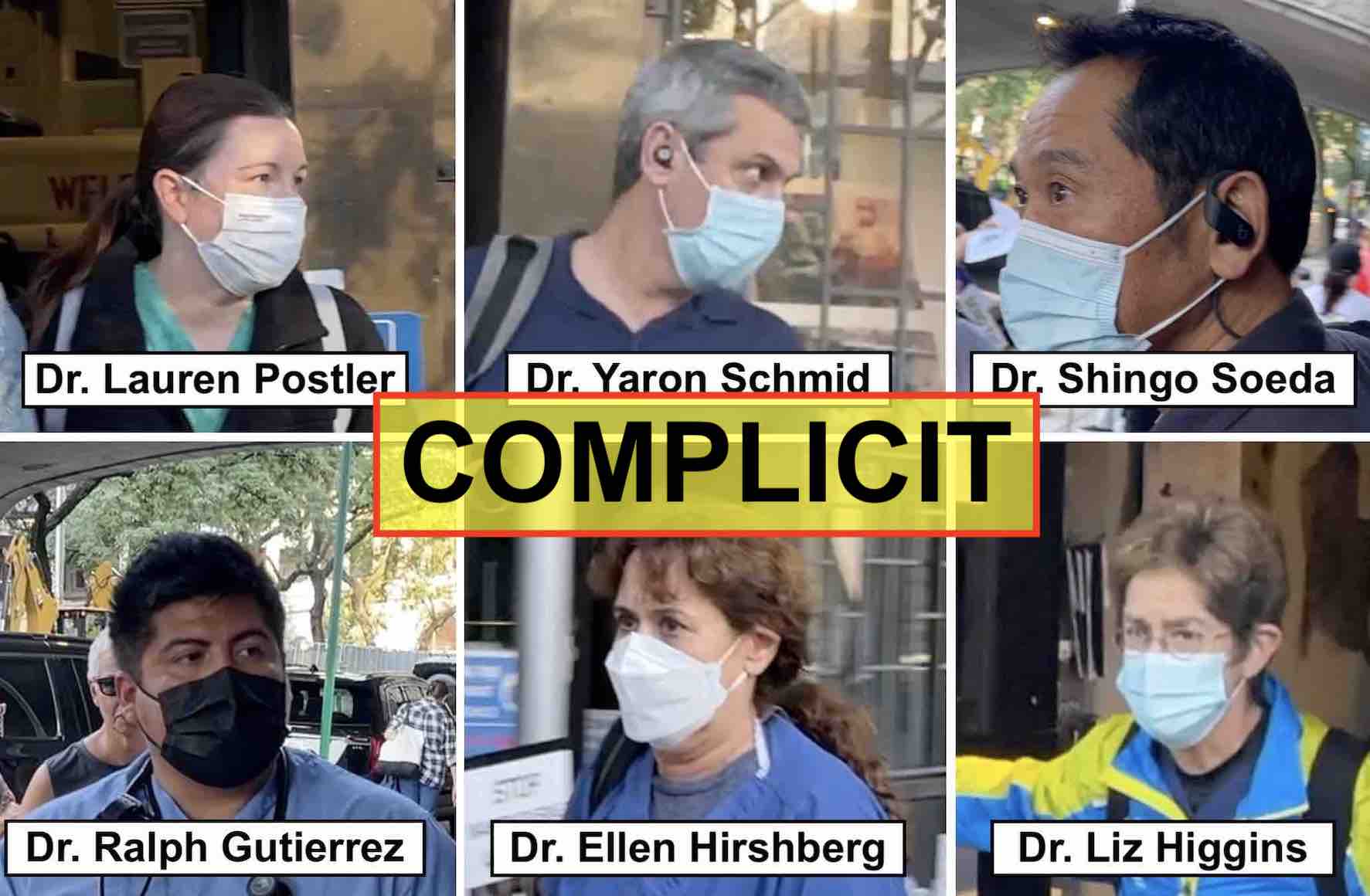
Photo of Humane Society of New York veterinarians Lauren Postler, Yaron Schmid, Shingo Soeda, Ralph Gutierrez, Ellen Hirshberg and Liz Higgins

Shelter advocates say that the veterinarians who work in the Humane Society of New York’s clinic are turning a blind eye to the warehousing of animals in the organization’s adoption center. (From left to right: Lauren Postler, Yaron Schmid, Shingo Soeda, Ralph Gutierrez, Ellen Hirshberg and Liz Higgins)

Before attempting to engage the veterinarians, the advocates sent letters and emails to members of the HSNY’s Board of Directors to inform them that adoptions had come to a virtual standstill and ask them to intervene. The once active board president, Virginia Chipurnoi, ignored hand-written letters, emails and text messages about the issue. Former HSNY employees who worked with Chipurnoi speculate that, at 88, she is no longer able to perform her duties. Two board members, Alexandra Rowley and James Gregorio, said they would provide the advocates with proof of adoptions. Instead, they and one other board member, C. Jones Perry, resigned, walking away from the problem created on their watch. The remaining board members, including the socialite Cornelia Guest, are inactive, elderly and/or live in other states.

“The past and present board members and the veterinarians are complicit in animal cruelty,” said Christina Fritz, a neighbor of the HSNY whose application was ignored when she attempted to adopt a cat and who was turned away when she attempted to volunteer. “The Humane Society of New York isn’t the adoption center they claim it is.”
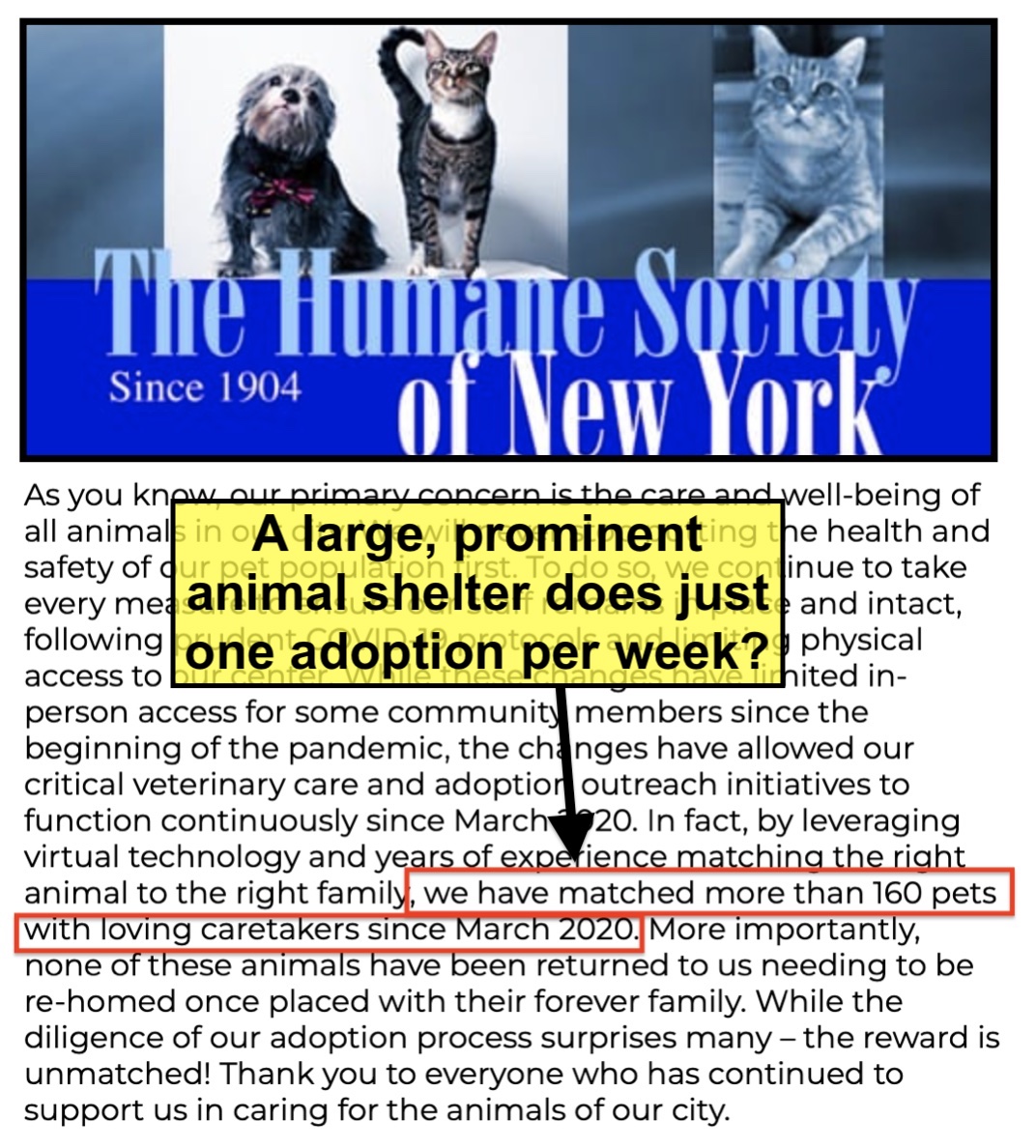
Humane Society of New York adoptions

By its own account, the Humane Society of New York, a large shelter in a bustling residential neighborhood that receives several million dollars a year in donations, has facilitated an average of about one adoption per week since March 2020. Protesters believe that the number is even lower.

Bonnie Tischler, the HSNY’s former Adoption Director who retired in early 2020 after working at the shelter for 22 years, describes the situation as a perfect storm. “In the absence of supervision and accountability, Executive Director Sandra DeFeo, who describes the animals’ cages as ‘apartments,’ is acting as though the shelter is their forever home. That’s why the veterinarians, who have leverage and influence, need to intervene.” 
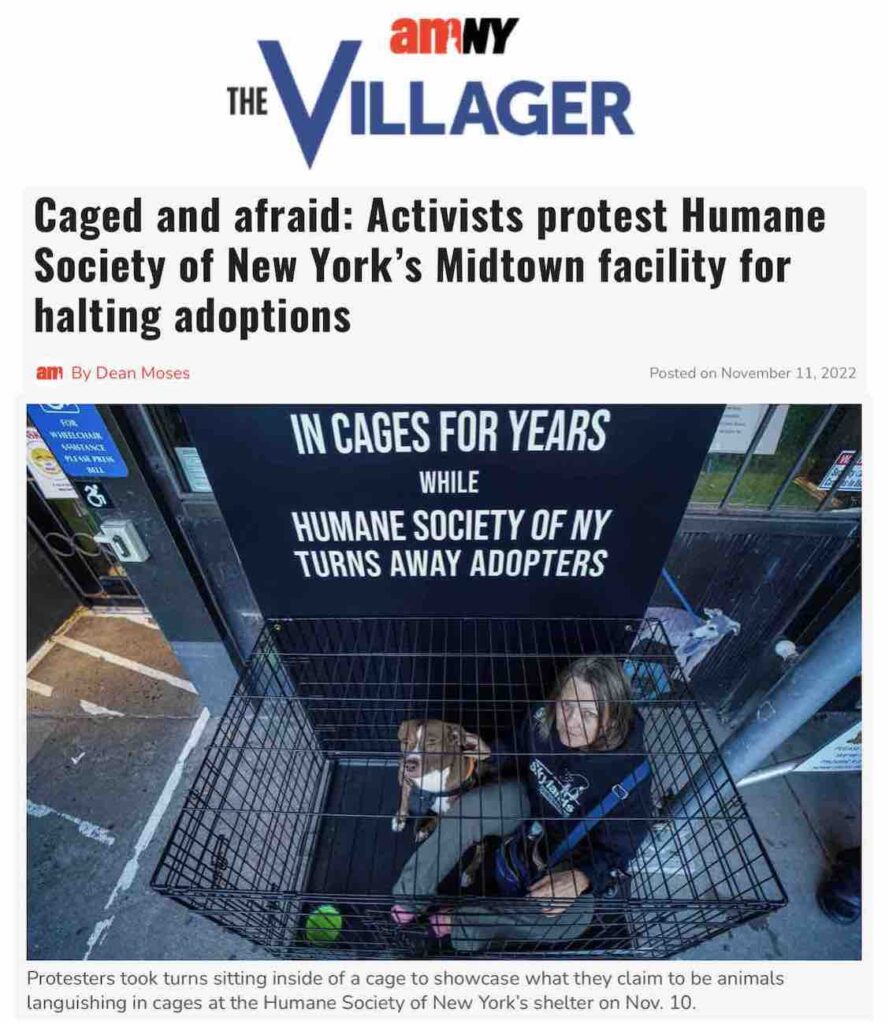
Media coverage of protest at the Humane Society of New York

AM New York, a daily newspaper in New York City, published a story about the campaign to help the cats and dogs being warehoused at the Humane Society of New York.

Animal rights activists in New York became aware that animals were being warehoused in July 2021 when a whistleblower sent a letter to a prominent shelter advocate informing her that adoptions had come to a virtual standstill 15 months earlier and that DeFeo was keeping the building closed to the public under false pretenses, using COVID as an excuse to cover up for violations of the Americans with Disabilities Act. 
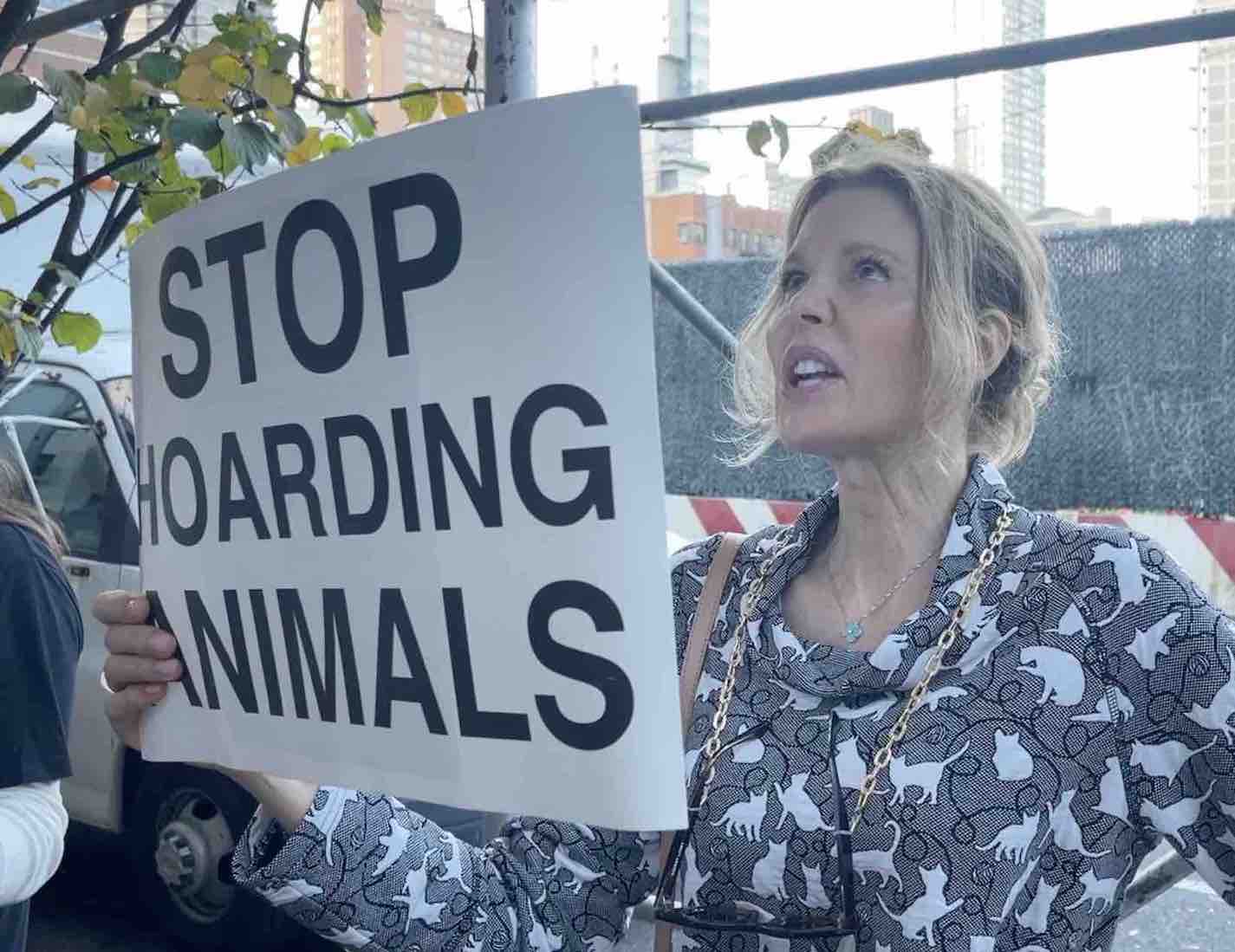
Protest at the Humane Society of New York

Animal rights activists in NYC are calling on the Humane Society of New York, which has been closed to the public for 2.5 years, to send the animals to shelters that are open to adopters or to foster homes.

A two-month investigation conducted by TheirTurn corroborated the whistleblower allegations and uncovered other disturbing information. The HSNY ignores adoption applications. As part of TheirTurn’s investigation, thirteen well qualified adopters submitted applications, and not one received a response. At any given time, the HSNY lists just 11 or 12 animals on its website.  With the building closed to the public, adopters have no way of knowing that the other animals exist. In addition, the HSNY does hardly any promotion on social media. Instead of making daily adoption posts across multiple social media platforms, as other shelters do, the HSNY makes just two or three posts each month, and the posts contain no information about the adoptions process. 
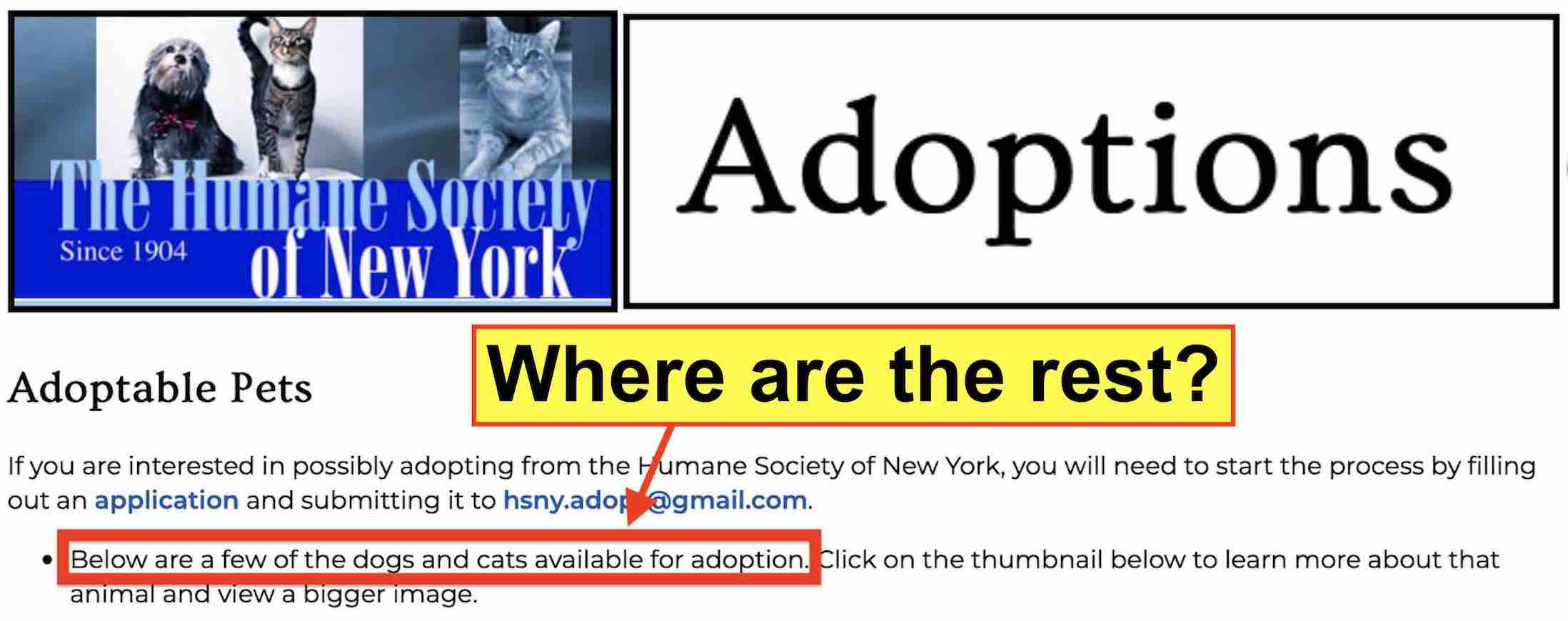
Adoptions at the Humane Society of New York have come to a virtual standstill

Despite having dozens more, the Humane Society of New York lists between 11 – 13 animals on its website. With the building closed to the public, adopters have no way of knowing that many other animals in the shelter need to be rescued.

The HSNY has been closed to the public for 2.5 years and has no plans to re-open. According to two lawyers contacted by TheirTurn, the HSNY cannot open its doors to the public due to violations of the Americans with Disabilities Act. It has already settled one lawsuit and would open itself up to another if it re-opened before making the building wheelchair accessible under ADA guidelines. 

Since April 2022, advocates have staged approximately 12 protests targeting the HSNY. In response to the protests, the HSNY posted a statement on its homepage. In it, DeFeo attributes the low number of adoptions to “diligence.” That explanation doesn’t resonate with the activists. 

“There’s a big difference between diligence and negligence,” said Tischler. “Sandra lists just a fraction of the animals online, does virtually no adoption promotion on social media, ignores adoption applications, has no Adoption Director, has no practical way of introducing people to the animals, refuses to allow fostering, and has no mobile adoption van, which the HSNY can easily afford. So what exactly are the ‘adoption outreach initiatives’ to which she refers in the statement?” 
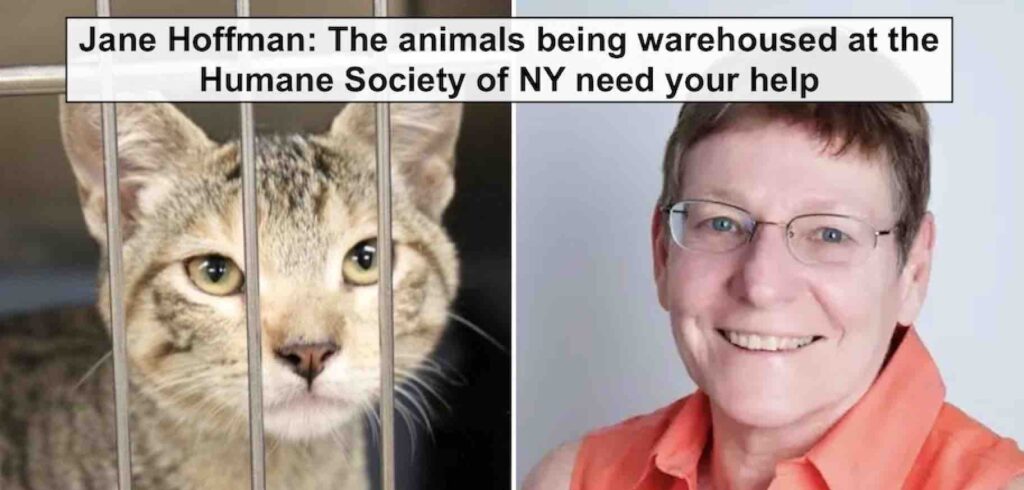
Photo of Jane Hoffman, the President of the Mayor's Alliance for NYC's Animals

Jane Hoffman, the President of the Mayor’s Alliance for NYC’s animals, has refused to intervene on behalf of the animals being warehoused at the Humane Society of New York (HSNY). Sandra DeFeo, the Executive Director of the HSNY, sits on Hoffman’s board.

The activists say they intend to continue protesting the Humane Society of New York until the animals have been transferred to shelters or foster homes where they have a chance of finding a forever home. 

Will Campylobacter Outbreak Spell the End of Chicken Kaporos in Brooklyn?

November 2, 2022 by 5 comments


The News

On October 23rd, an Hasidic Jewish man from Brooklyn contacted TheirTurn to report that an infectious disease called campylobacter that “originated from Kaporos” was “going around” and that the city’s Department of Health (DOH) is “very aware of it” and “wants to be contacted by reporters.” The source, who asked not to be identified for fear of retaliation in the Hasidic community, contacted TheirTurn because, for the past seven years, we have been reporting on the health risks associated with Kaporos and the DOH’s refusal to acknowledge and address them. Campylobacter, which can be transmitted from animals to humans and causes fever, nausea, severe abdominal pain and diarrhea, can be fatal among young children, the elderly and people with compromised immune systems.

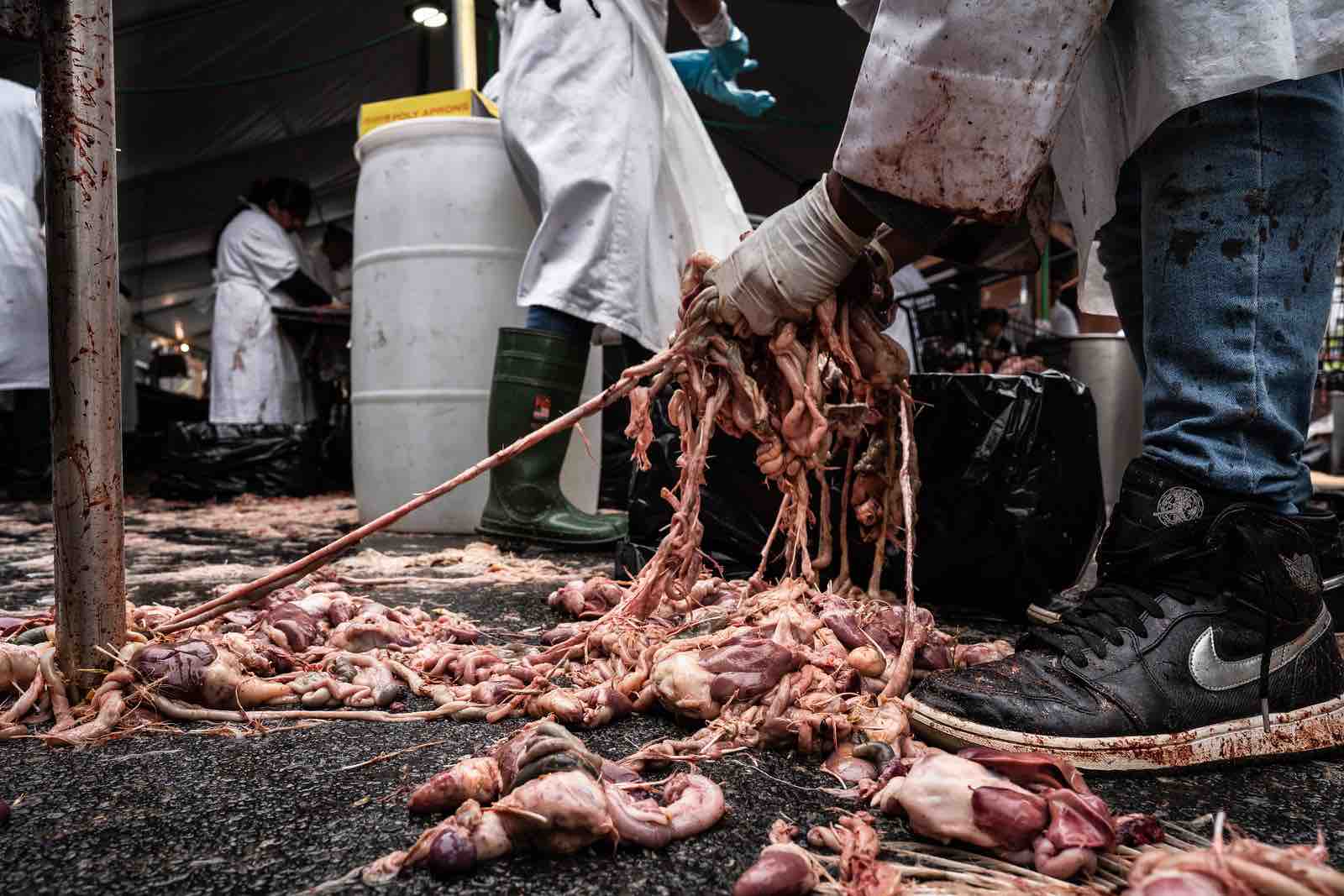
Photo of chicken parts on a public street in Brooklyn during Kaporos, an annual ritual animal sacrifice

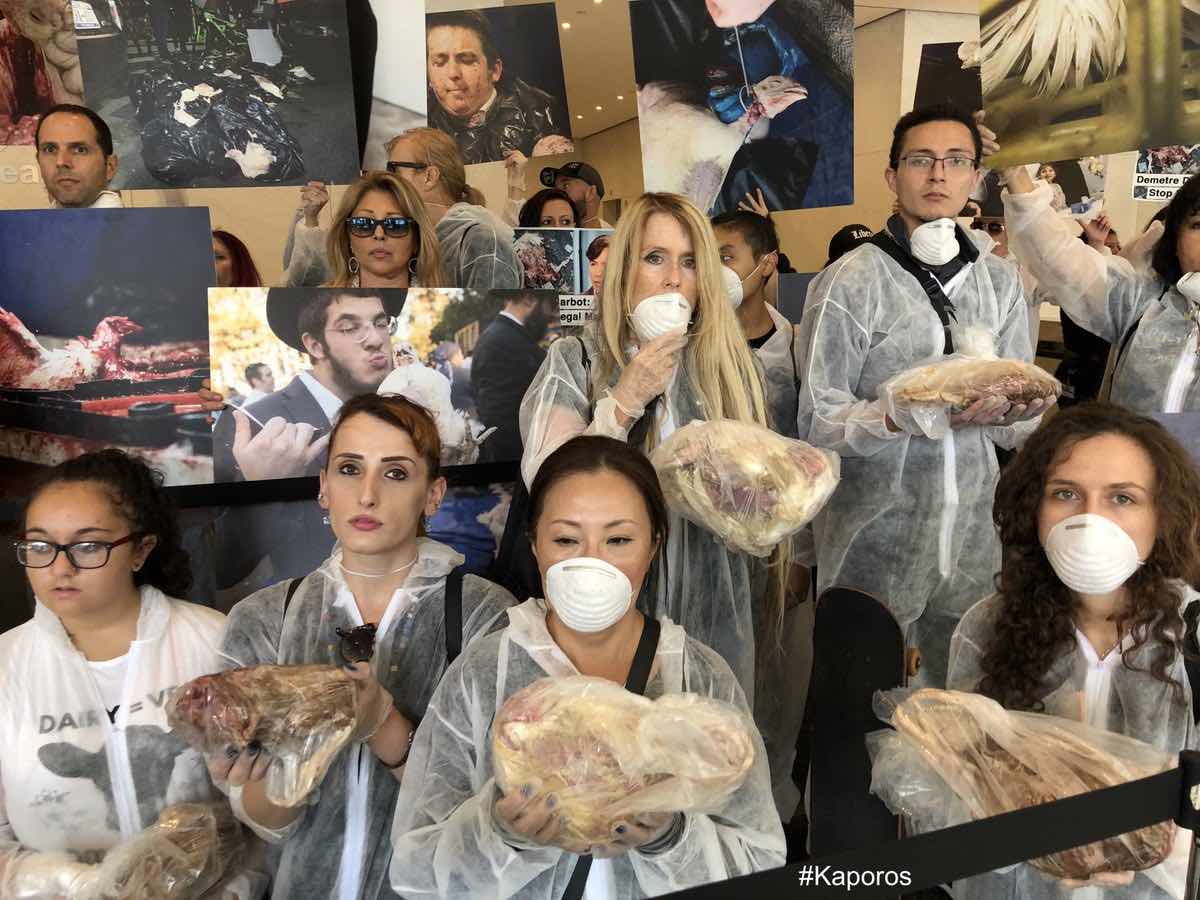
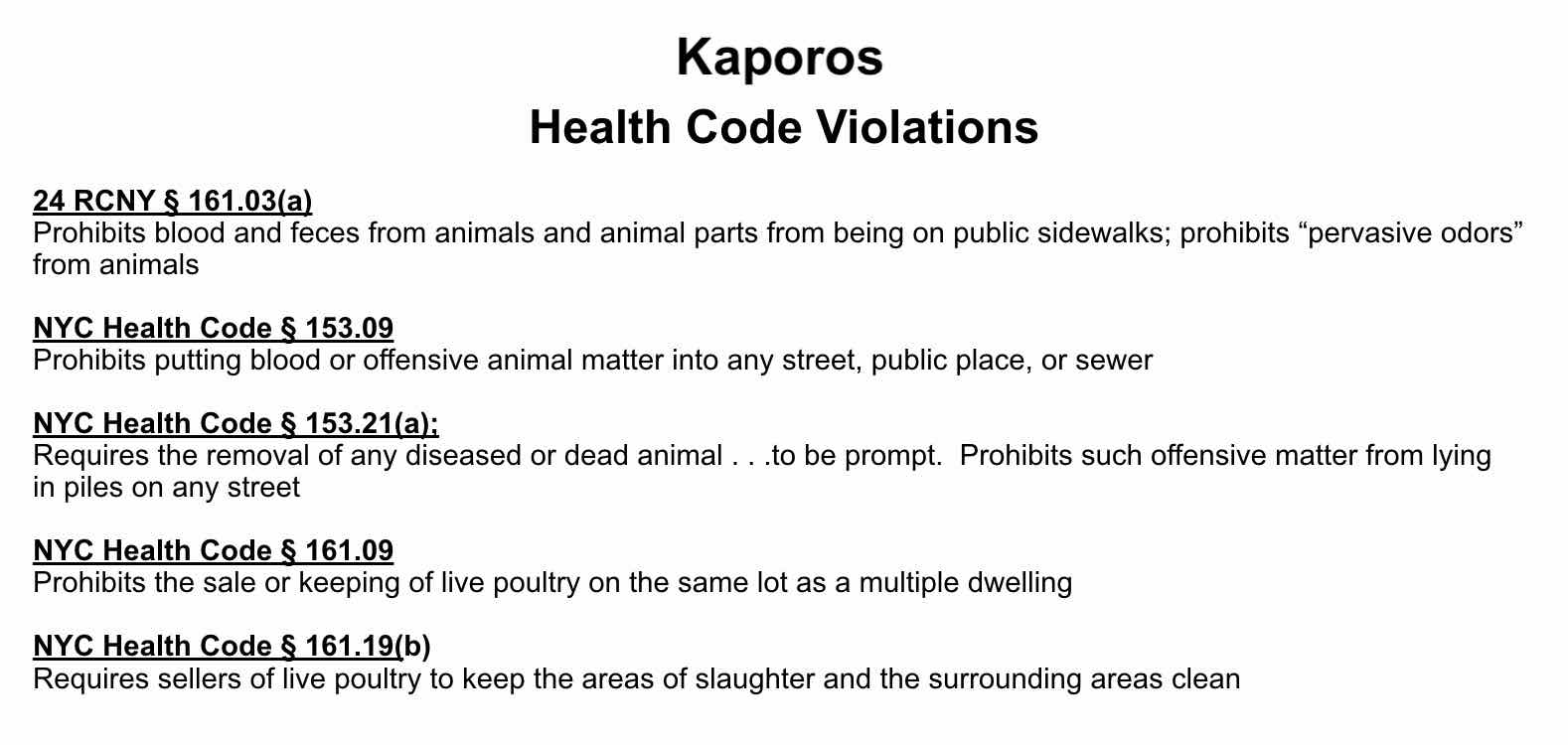
During Kaporos, the blood and body parts of thousands of chickens who are killed in makeshift slaughterhouses contaminate the public streets and sidewalks in violation of seven New York City Health codes.

On October 25th, the DOH issued a public statement about the outbreak, but it has not yet publicly linked the campylobacter infections to Kaporos. “We are currently investigating an increase in campylobacteriosis cases in Brooklyn. We do not yet know the cause of the increase. While our data is still preliminary, there are approximately 50 cases reported in the affected areas in Brooklyn since the beginning of October.” In its statement, the DOH does not disclose that the “affected areas” are Hasidic neighborhoods, and it does not acknowledge that the “beginning of October” is when tens of thousands of Hasidim came into physical contact with live chickens.

Experts suspect that the number of campylobacter cases is much higher than 50. An underestimation is especially likely in Hasidic neighborhoods where family physicians are reluctant to report campylobacter cases, as required by law, for fear of shining a spotlight on the religious ritual that led to the outbreak.

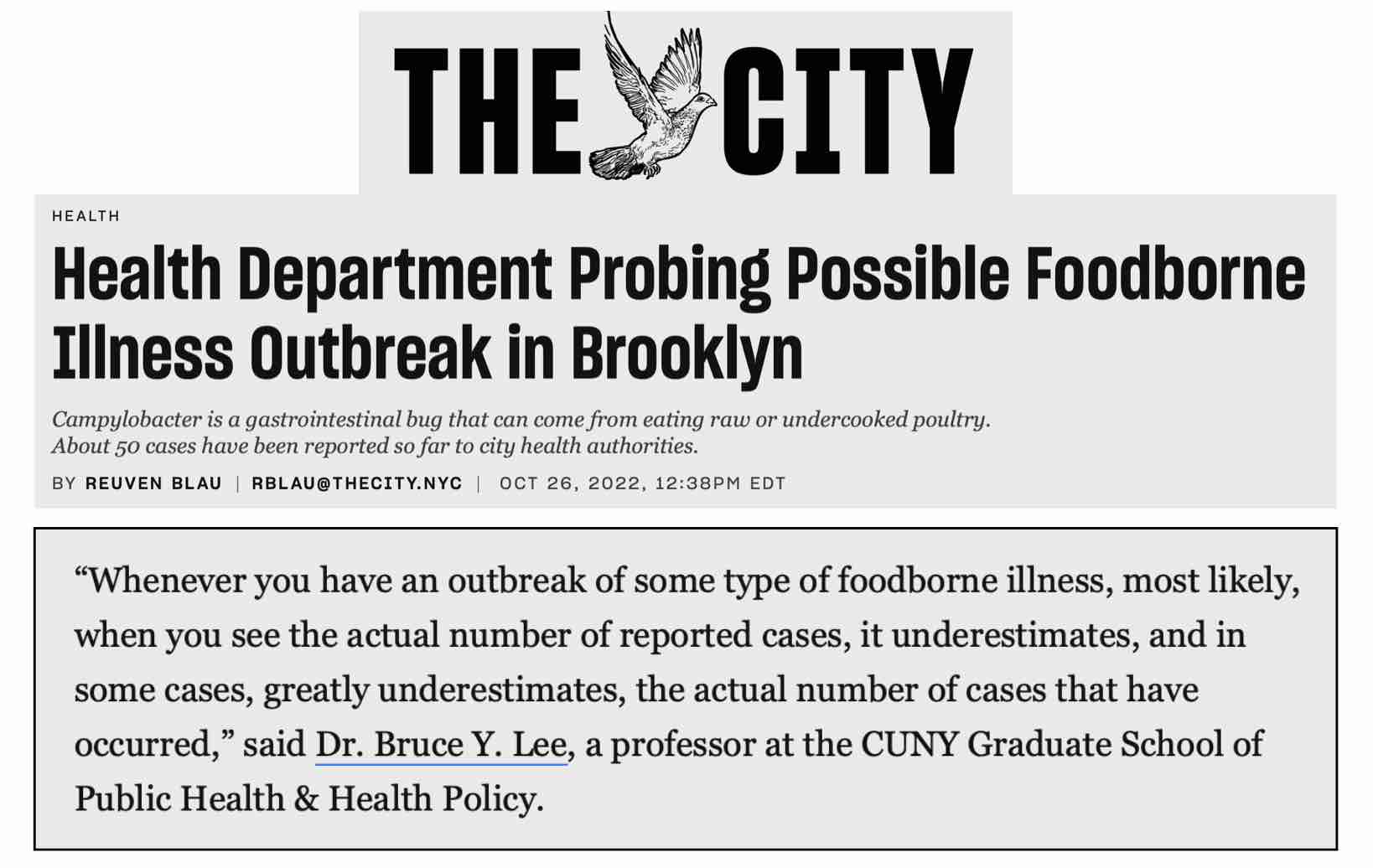
Photo of article about campylobacter outbreak in Brooklyn during Kaporos

The NYC Dept. of Health is “still investigating” the link between the outbreak of campylobacter and Kaporos, but health officials are aware that the outbreak occurred in Hasidic neighborhoods when the ritual sacrifice took place

Reporters have asked the DOH how many of the people infected with campylobacter are – or were – hospitalized and how many died, but the DOH has not yet answered these questions. It also hasn’t disclosed the neighborhoods where the outbreaks occurred. Instead, it states that it is “still investigating.” 

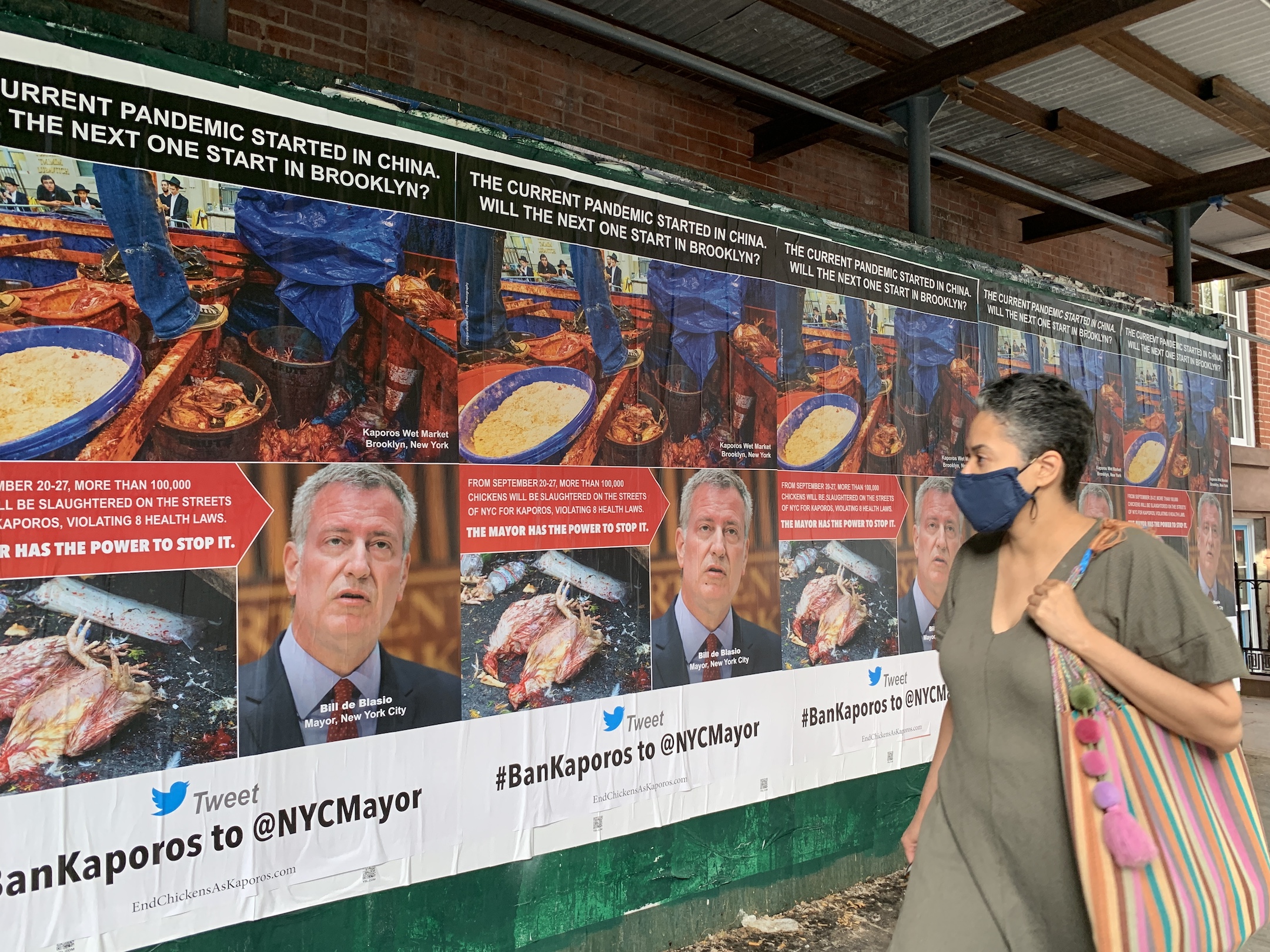
Poster showing health risks of Kaporos

In 2020, advocacy groups plastered NYC with posters highlighting the risk of zoonotic disease transmission during Kaporos

Kaporos is a ritual slaughter during which participants swing live chickens around their heads while saying a prayer to atone for their sins before Yom Kippur, the Jewish day of atonement. In order to facilitate the ritual, vendors purchase an estimated 100,000 chickens, sell them to people who partake in the ritual and kill them in makeshift slaughterhouses erected on residential streets in violation of seven NYC health codes. The birds are held in cramped cages on public streets where they are deprived of food, water and protection from weather extremes for up to several days before being slaughtered. Many die from illness and exposure in the crates before being used in the ritual.

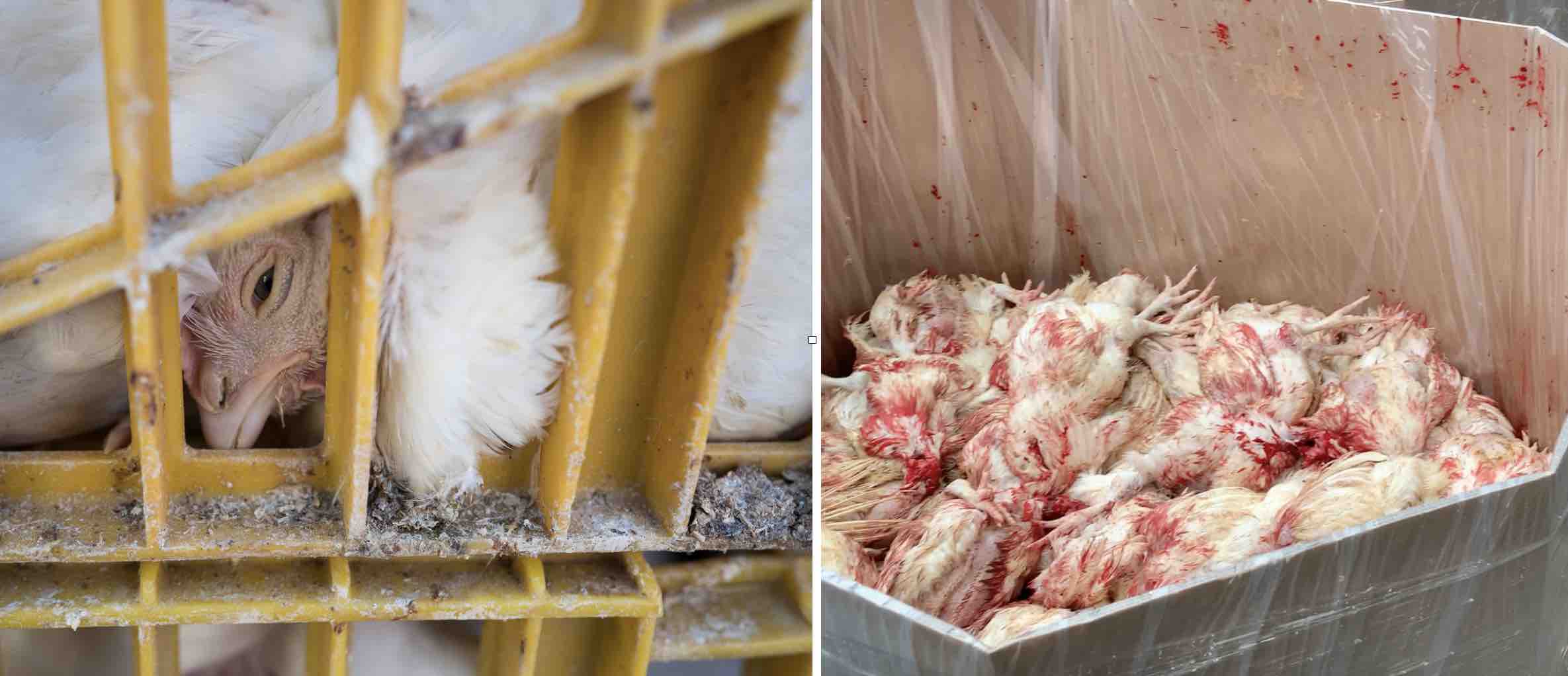
Photo of chickens used in Kaporos ritual where participants were infected with campylobacter

The NYC Department of Health has preliminarily reported that 50 people contracted campylobacter in Brooklyn in early October. It has not yet disclosed that the cases are tied to Kaporos, the ritual swinging and slaughter of an estimated 100,000 chickens

The chicken vendors don’t have permits, but, at the direction of the Mayor, the NYPD assists in the ritual by providing barricades, floodlights and a security presence at an estimated 30 Kaporos sites in Brooklyn.

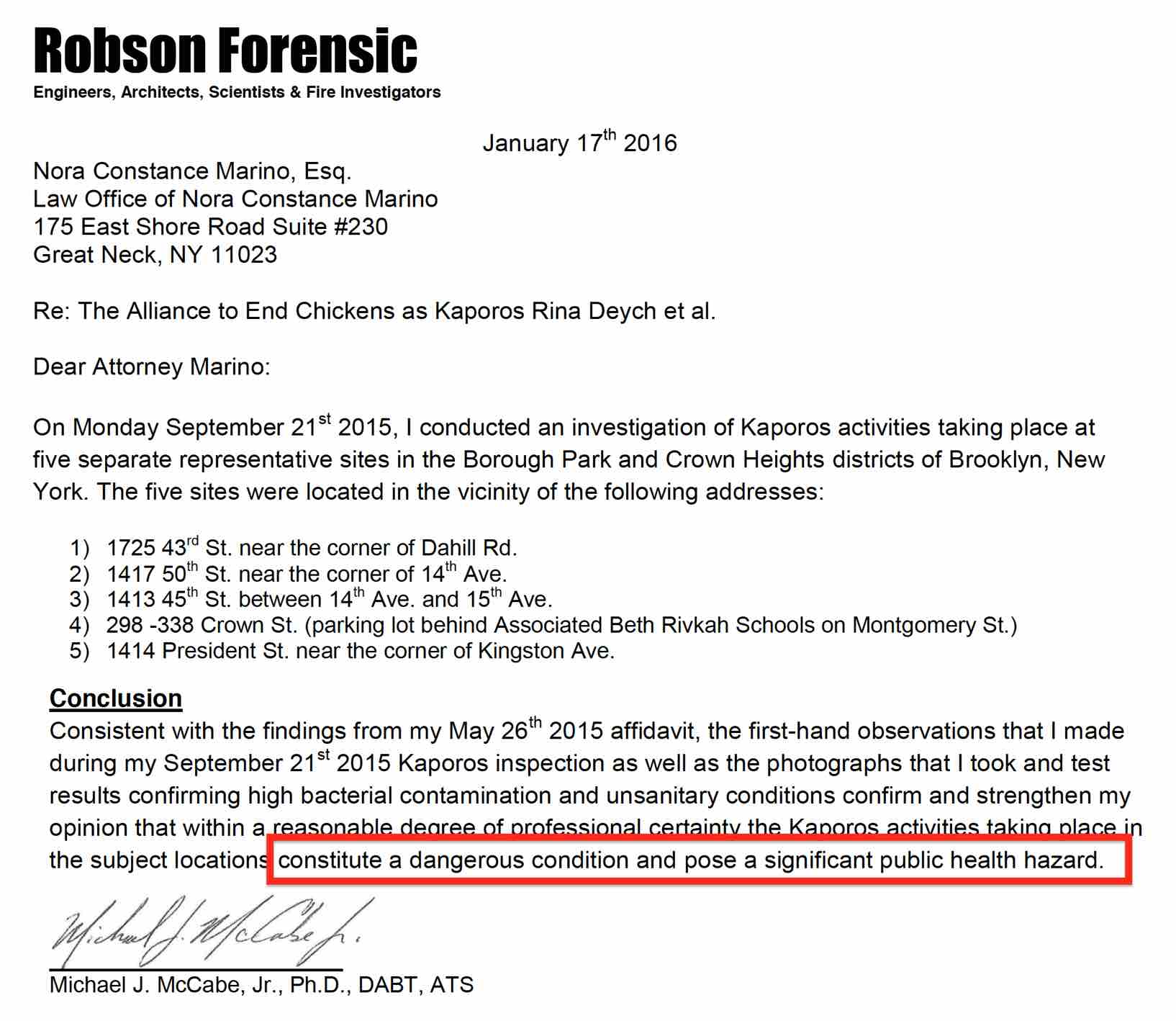
Over the years, animal welfare and public health advocates have sounded the alarm about the health risks, but the DOH has dismissed their concerns and refused to enforce the health codes on the grounds that “no disease signals have been associated with the practice.” That rationale, however, is a smokescreen. Because the Kaporos practitioners represent a voting bloc that often impacts the outcome of city and state elections, the Health Commissioner, who reports to the Mayor, has turned a blind eye to the obvious health risks; the previous reports of campylobacter; and a toxicology report that describes Kaporos as “dangerous condition” that “poses a significant public health hazard.”

Photos of toxicology report outlining the risks Kaporos poses to the public health

The Mayor’s Health Commissioners have refused to address a toxicology report that outlines the public health risks posed by the slaughter of over 100,000 chickens on public streets during Kaporos.

If the Health Commissioner does, in fact, “want to be contacted by reporters” about the outbreak, then he has probably determined that burying the health risks associated with Kaporos now puts him in greater political and legal jeopardy than disclosing them, in defiance of the Mayor. Here’s why:

  1. Because the toxicology report and other warnings have been in the public domain for many years, the Health Commissioner knows that the public, the media and even elected officials would accuse the Health Commissioner of having “blood on his hands” if people die from an infectious disease outbreak tied to Kaporos. 
  2. Kaporos practitioners and animal rescuers have contracted campylobacter in previous years, but, with 50 or more cases reported in just one year, the DOH can no longer be on record with its statement that “no disease signals have been associated with the practice.”
  3. When COVID began to spread globally, the public learned that infectious diseases can emerge from live animal markets. If a deadly infectious disease emerged from one of the estimated 30 makeshift markets that sell live chickens for Kaporos, then the public would wonder why the DOH didn’t shut it down. The Health Commissioner knows that he, and not the Mayor, would be held accountable, despite the fact that the Mayor instructs the DOH to allow Kaporos. (Note: Kaporos is potentially more dangerous than other live animal markets because the customers themselves physically handle the live animals, and most are not wearing protective gear. In addition, many of the animals are visibly sick and dying.)
  4. New Yorkers are frustrated by the Health Department’s failure to curb behaviors in the Hasidic community that jeopardize the public health. During the first several months of COVID, for instance, Hasidim held large events during which tens of thousands of people came together indoors without masks or social distancing. New Yorkers were infuriated by the reckless behavior, which put the public and health care workers at great risk, and by the City’s refusal to hold the perpetrators accountable. 
  5. Highly-publicized measles and polio outbreaks in 2019 and 2022 shined a spotlight on the need for the DOH to take authoritative steps to prevent disease outbreaks in Hasidic Jewish communities. 
  6. Given the prevalence of avian flu, the DOH knows that some of the estimated 100,000 chickens who are trucked into the city could carry the virus.
Photos of chickens killed during Kaporos in Brooklyn, NY

In 2018, animal rights activists brought dead Kaporos chickens left on the streets of Brooklyn into the NYC Department of Health to call attention to the health risks associated with the ritual slaughter

In 2017, animal rights and public health advocates launched a campaign to compel the Health Commissioner at the time, Dr. Mary Bassett, to enforce the health codes violated during Kaporos. After being subjected to ten months of protests, Dr. Bassett resigned just one year into a four year term. In a speech at the Boston University School of Public Health during which she anticipated a protest, Dr. Bassett acknowledged that politics interfered with her ability to address the health risks associated with Kaporos: “Those of us who work in government face the reality of the fact that the people who appoint us have to go back to the public and back to the ballot box to be reappointed, so there’s always going to be a need for advocacy from people outside of government. For someone who is passionately committed to many issues embraced by advocates, it can be difficult to acknowledge the role that I play as a political appointee. I can’t always be at the barricades.”

Photo of NYC health codes violated during Kaporos, a ritual chicken slaughter that takes place before Yom Kippur, the Jewish day of atonement

NYC health codes violated during Kaporos, a ritual chicken slaughter that takes place before Yom Kippur, the Jewish day of atonement

With the outbreak of campylobacter, which is undoubtedly causing the victims a great deal of pain and suffering, the current Health Commissioner could very well want to join the advocates at the barricades because allowing Kaporos to take place in the future subjects him and the DOH to legal liability and public relations backlash in the event of the outbreak of a more serious infectious disease.


Animal Rights Activists Disrupt Foie Gras Tasting Event at David Burke Tavern

October 29, 2022 by Comments are off for this post


The News

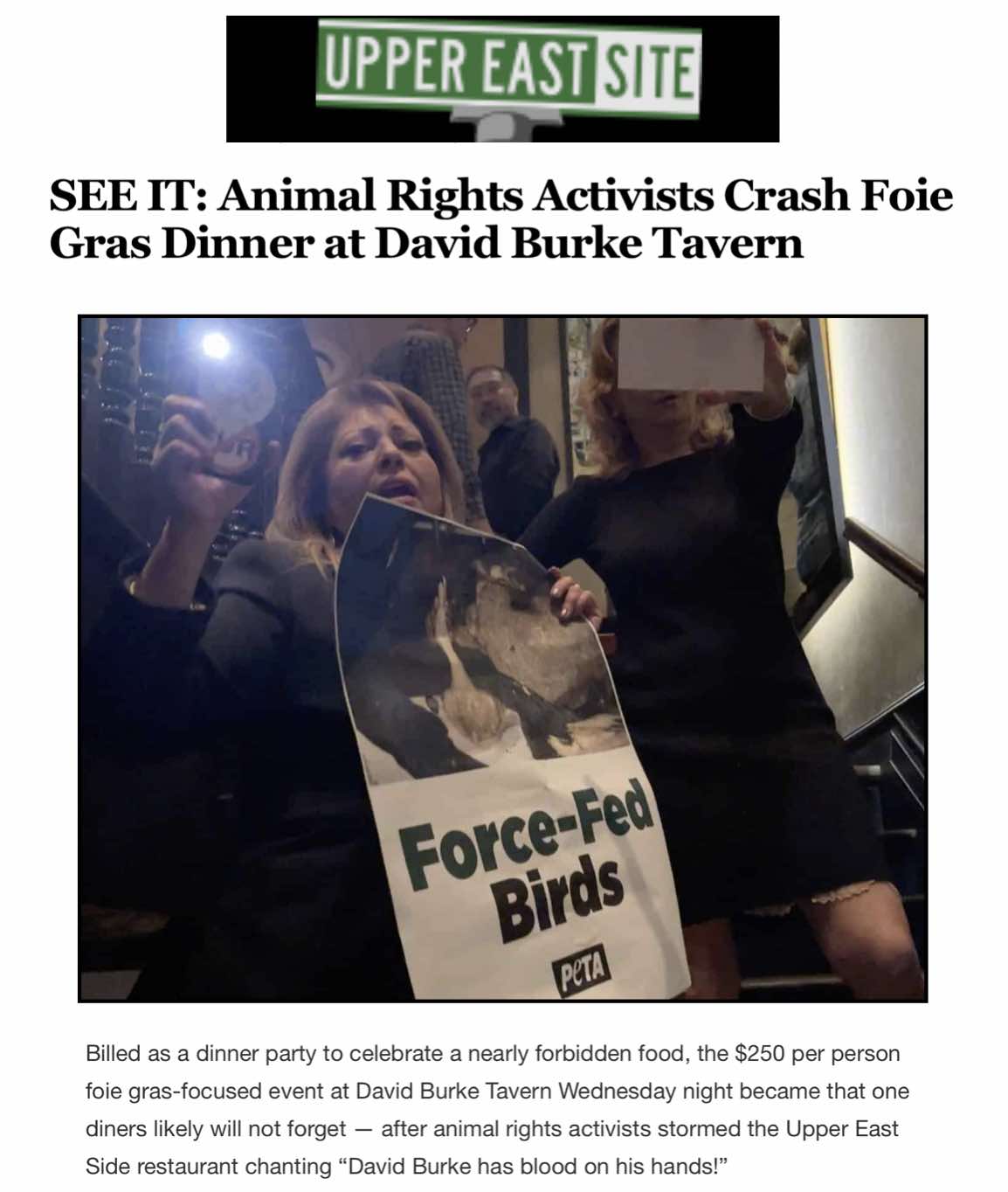
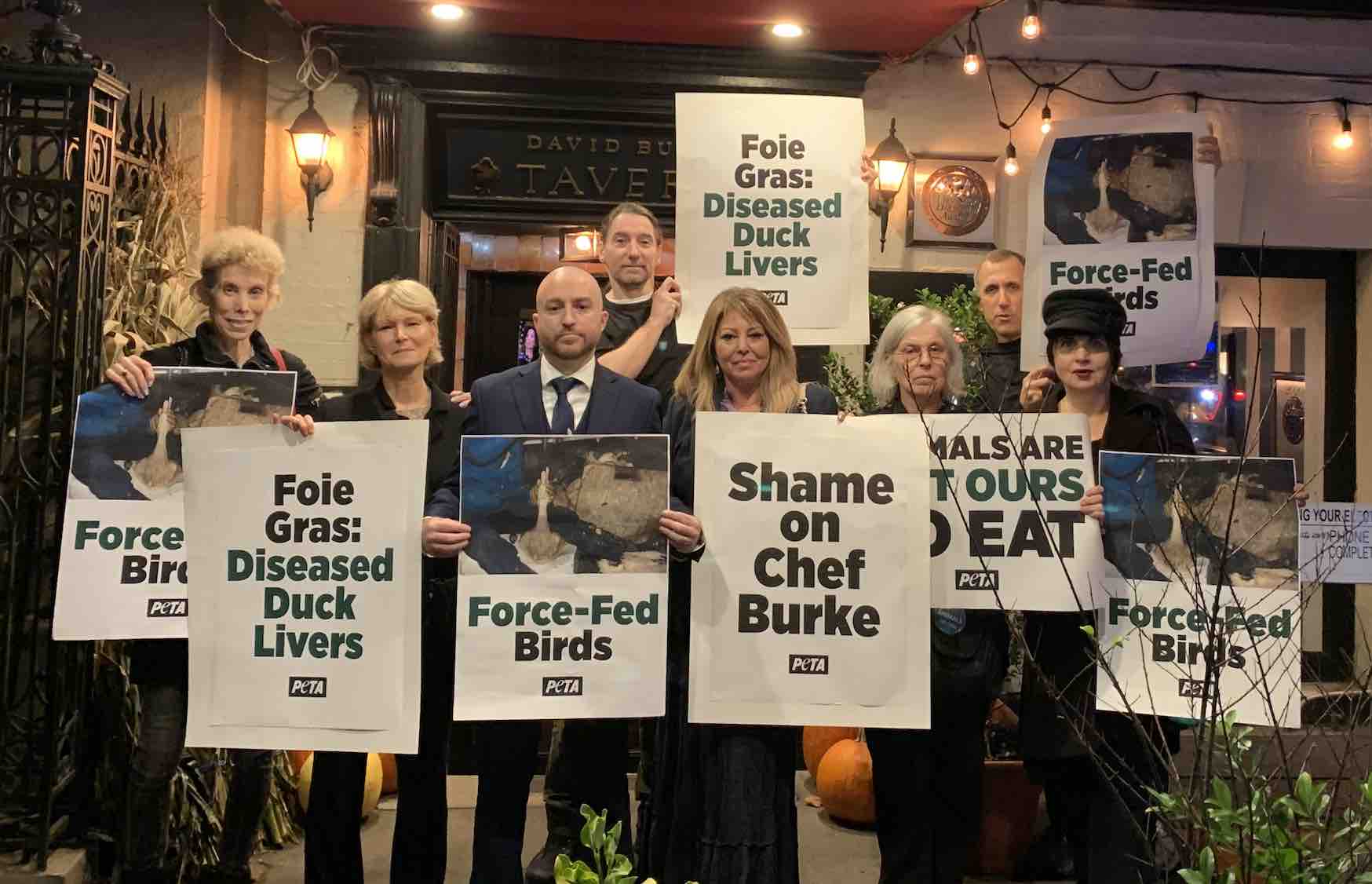
Animal rights activists with PETA and Humane Long Island’s Duck Defenders project  disrupted a foie gras tasting event at David Burke Tavern, an American restaurant on the Upper East Side of New York. The owner, David Burke, dubbed the $250 per person event “FoieGone,” a reference to the upcoming ban on the sale of the fatty liver product in New York City.

The activists chanted “David Burke has Blood on His Hands” and “Foie Gras is Animal Cruelty” while walking through the restaurant and halfway up the stairs, where restaurant employees blocked their passage. While some patrons were disturbed by the protest, several asked questions during the disruption and expressed their support of the message as they exited the restaurant. (Activists suspect that the individuals who expressed their support did not partake in the foie gras tasting event, which was held in one section of the restaurant).

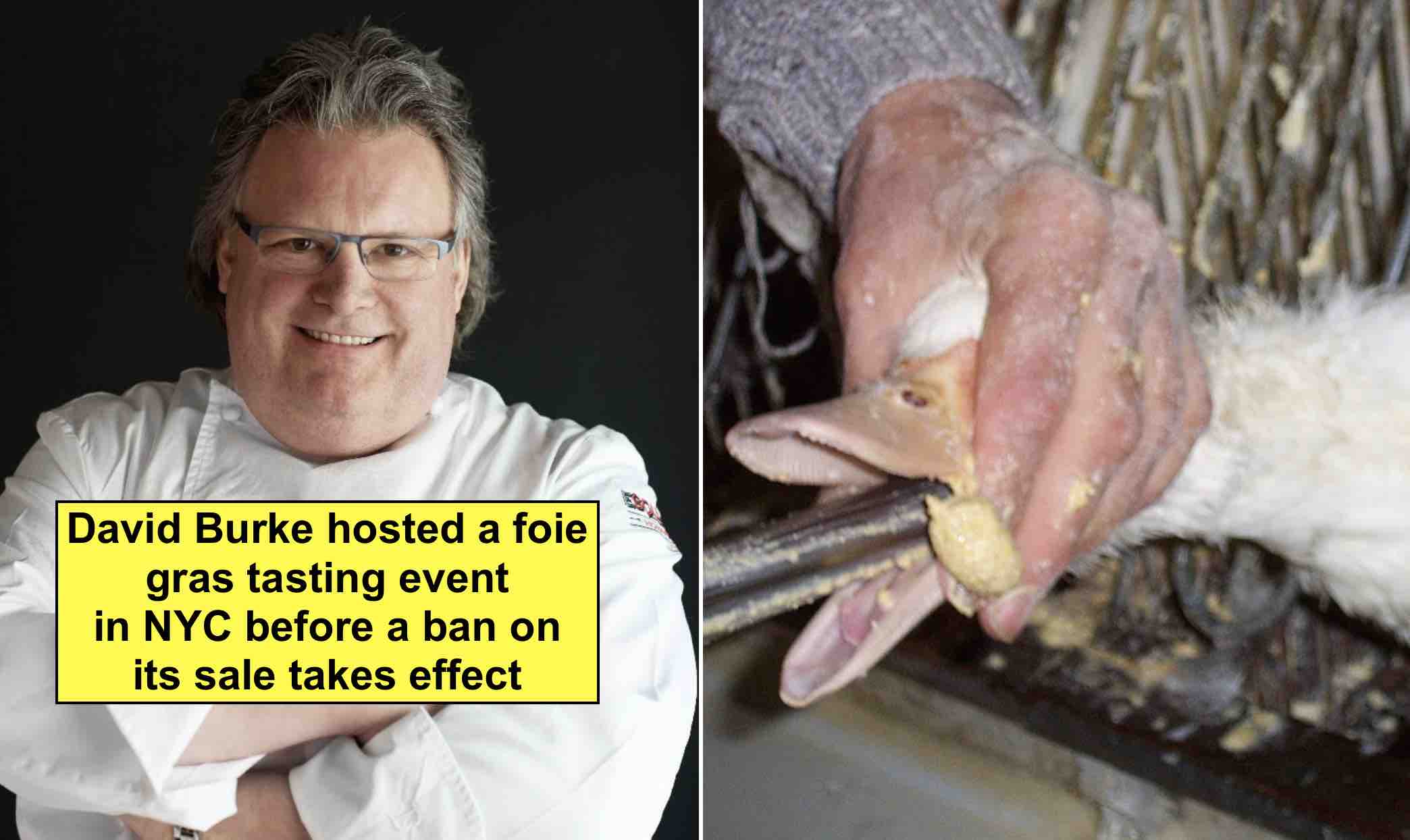
Photo of Chef David Burke and duck force fed for foie gras

Animal rights activists protested a $250/person foie gras tasting event hosted by David Burke at David Burke Tavern in NYC

Foie gras, or fatty liver, is produced by inserting pipes down the throats of geese and ducks and force feeding them until their livers expand to ten times their normal size. The ducks and geese, who are aquatic animals, spend their lives inside of factory farms.

Photo of news coverage of PETA foie gras protest

A neighborhood media outlet reported on the foie gras protest at David Burke Tavern, an Upper East Side restaurant that hosted a foie gras tasting event

In 2019, New York City lawmakers voted to ban the sale of foie gras. At the time, an estimated 1,000 restaurants sold foie gras in New York City, according to the NY Times. The bill was passed and signed into law despite criticism from prominent chefs and the media. The historic foie gras bill would not have been introduced, much less passed, by the City Council, were it not for a two year campaign waged by Voters for Animal Rights (VFAR), a group that advocates for animal rights legislation in NYC. With the support of hundreds of grass roots animal rights activists, VFAR partnered with animal rights groups, veterinarians, and restaurants to create a coalition of supporters who lobbied City Council members and educated the public about the cruelty associated with foie gras production.

Photo of Foie Gras tasting event

David Burke Tavern hosted a $250/person foie gras tasting menu in advance of a ban on the sale of foie gras in NYC.

The ban of the sale of foie gras was supposed to take effect on November 25th, 2022. On September 15th, a New York State Supreme Court judge issued an injunction, ruling that La Belle Farm and Hudson Valley Foie Gras can continue to sell the fatty livers to NYC restaurants while the case makes its way through the judicial system. The foie gras producers sued the city, citing economic hardship and claiming that the City Council exceeded its authority by making law about farming practices outside the city.

Photo of animal rights activists protesting foie gras

Animal rights activists with PETA and Humane Long Island (aka Duck Defenders) protested a foie gras tasting event at David Burke Tavern in NYC

If the courts overturn the law banning on the sale of foie gras, animal rights groups will continue to protest the restaurants that sell it until they remove the “delicacy of despair” from their menus.


Why is the Humane Society of New York Warehousing Animals?

October 24, 2022 by 7 comments


The News

In April 2020, adoptions at the Humane Society of New York (HSNY), large and prominent animal shelter in Manhattan, came to a virtual standstill because the Executive Director, Sandra DeFeo, closed the building to adopters. Almost 2.5 years have elapsed, and nothing has changed. In response to a viral video about the plight of the animals, hundreds of TikTokers posted comments asking why.

DeFeo claims that she is keeping the building closed due to COVID, but, according to whistleblowers and lawyers who corroborated their allegations, she cannot re-open because of violations of the Americans with Disabilities Act (ADA). The building is not wheelchair accessible under ADA guidelines, and allowing members of the public inside without making the required renovations would subject the HSNY to another costly ADA lawsuit. 

Based on feedback from whistleblowers and former employees, activists working on the campaign to help the animals believe that DeFeo is warehousing the animals for one or both of the following reasons: 

1.Facilitating adoptions while the building is closed to adopters is more labor intensive, and DeFeo can’t be bothered.

2. DeFeo is not motivated to do adoptions because she believes the animals are content in their cages, which she describes as “their apartments.” 

Photo of Lila and Teuscher, dogs at the Humane Society of New York

Lila and Teuscher, adoptable dogs, have been living in cages at the Humane Society of New York for over five years

Advocates believe that a lack of accountability has enabled DeFeo to warehouse the homeless animals in her care. When COVID shut down New York City in 2020, the HSNY’s once active Board President, Virginia Chipurnoi, left New York. Since then, she has not responded to letters, phone calls or texts from people with whom she has – or had – personal relationships.  Chipurnoi is 88 years old and is reportedly incapable of supervising DeFeo, much less serving as the HSNY’s Board President. Advocates attempted to contact her two daughters, Alexandra Chipurnoi and Sarah Gore Reeves, both of whom have been a presence at the Humane Society.  Neither has responded to emails or letters sent through regular mail. 

Three of the HSNY’s other board members resigned amid the reports of animal warehousing — Alexandra Rowley, James Gregorio and C. Jones Perry. The other board members are inactive, disinterested and/or elderly. 

Photo of Dr. Ralph Gutierrez, Dr. Ellen Hirshberg, Dr. Shingo Soeda, Dr. Lauren Postler, Dr. Yaron Scmid and Dr. Liz Higgins

Animal rights activists say that the veterinarians who work in the clinic at the Humane Society of New York are complicit in the warehousing of animals at the organization’s adoption center. (From Left to right Ralph Gutierrez, Ellen Hirshberg, Shingo Soeda, Lauren Postler, Yaron Schmid, Liz Higgins)

In addition to an adoption center, the HSNY operates a low-cost vet clinic, thanks to its generous donors. Six veterinarians work in the clinic, and none of them have addressed the animal warehousing. In a letter to TheirTurn, a whistleblower indicated that the veterinarians are turning a blind eye because they are content to keep the building closed so that clients can’t enter the exam rooms with their animal companions. Whatever the reason, their silence amounts to complicity. Advocates intend to hold Shingo Soeda, Ralph Gutierrez, Ellen Hirshberg, Lauren Postler, Yaron Schmid and Liz Higgins accountable until they use their leverage as veterinarians to compel DeFeo to send the animals to shelters that are open to adopters or to foster homes. 

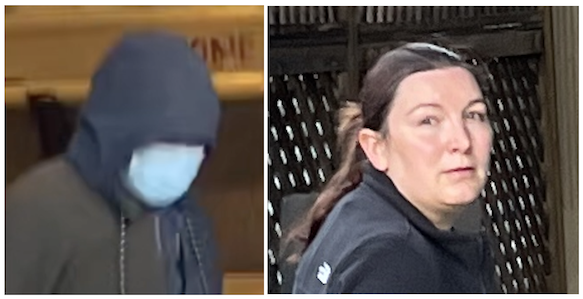
Photo shows Dr. Lauren Postler, a veterinarian with the Humane Society of New York, hiding her face as she exits the building during a protest in October 2022

Instead of addressing the activists’ concerns, the veterinarians at the Humane Society of New York attempt to hide their faces as they exit the building when protests are taking place (pictured: Dr. Lauren Postler)

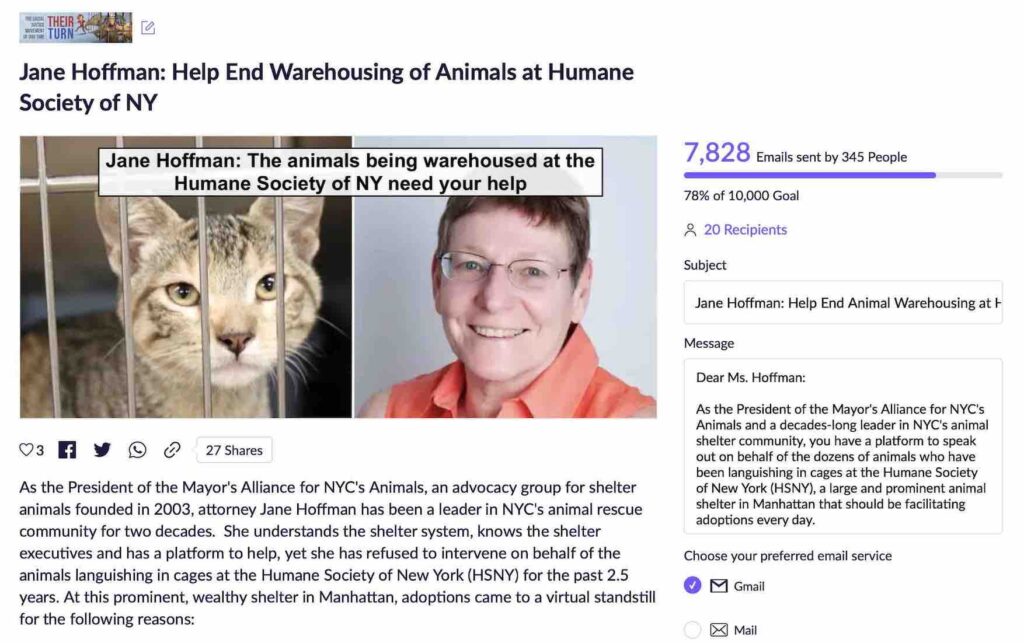
Advocates are also holding accountable the Mayor’s Alliance for NYC’s Animals, an organization that has been advocating for NYC’s homeless animals since 2003. The President of the Mayor’s Alliance, attorney Jane Hoffman, has been a leader in NYC’s rescue community for decades, yet she has refused to intervene on behalf of the animals, claiming that she no longer has influence: “I believe I explained what the Alliance was and is now, how my leadership role in the shelter community has changed considerably since we transferred several initiatives to other animal welfare organizations in 2019, and finally, that Sandra DeFeo’s presence as an Alliance Board member does not give me the authority to dictate the internal operations of HSNY.” In response to Hoffman’s refusal to help, advocates launched a petition.

Petition targeting Jane Hoffman, the President of the Mayor's Alliance for NYC's Animals

Petition calling on Jane Hoffman, the President of the Mayor’s Alliance for NYC’s Animals, to intervene on behalf of the cats and dogs being warehoused at the Humane Society of New York

In response to a viral TikTok video that thrust the HSNY into the spotlight, DeFeo posted a statement on the shelter’s Instagram page in which she claims to have facilitated approximately 160 adoptions since March 2020. If that is true (and we believe the number to be much lower), then a large shelter in a busy residential neighborhood that should be adopting out animals every day has facilitated an average of just over one animal per week since closing its doors to adopters.

Photo of TikTok video about animal warehousing at the Humane Society of New York

A TikTok video about an animal warehousing protest at the Humane Society of New York went viral, leading the shelter to post a statement on its Instagram page

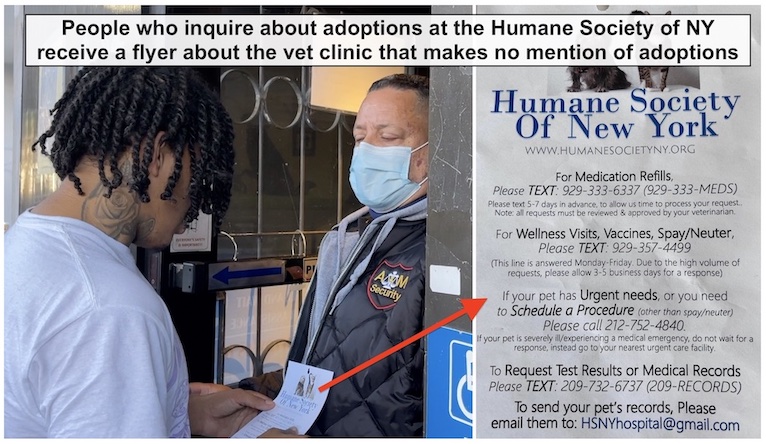
In the carefully worded statement, DeFeo attempts to justify the small number of adoptions by claiming to be “diligent,” but advocates argue that there is a big difference between being diligent and making it virtually impossible to adopt. That difference is perhaps best illustrated by what happens when people ring the HSNY’s doorbell to inquire about adoptions and to ask to see the animals. Instead of inviting them inside, a security guard at the entrance gives them a handout about the HSNY’s vet clinic that contains no information about adoptions.

Photo of a Humane Society of New York security guard giving a man who is interested in adoption an animal a handout about the organization's vet clinic

A security guard at the Humane Society of New York gives a man who is interested in adopting an animal a handout about the organization’s vet clinic


Thousands of Chickens Die of Hypothermia During Kaporos in Brooklyn

October 9, 2022 by 12 comments


The News

Thousands of chickens stacked in crates on the streets of Brooklyn died of hypothermia over the course of two days during Kaporos, a ritual animal slaughter that takes place each year in the days leading up to Yom Kippur, the Jewish day of atonement. After being delivered to Hasidic neighborhoods in Williamsburg, Borough Park, Crown Heights and Midwood, hundreds of crates filled with chickens were left outside in the rain, soaking tens of thousands of chickens who were being stored without shelter on public streets. 

According to Michael Dolling, who rescues and rehabilitates farm animals, young chickens have difficulty regulating their body temperature. When they are exposed to cold temperatures, wind and rain, they quickly become hypothermic. Upon seeing the wet and shivering animals at several Kaporos sites in Williamsburg, Dolling said that thousands of chickens at those sites alone would be dead within hours. In fact, many of the chickens were already dead — before even being used in the ritual. “In past years, when Kaporos took place in September, thousands of chickens slowly roasted in the crates. This year, they froze to death.”  

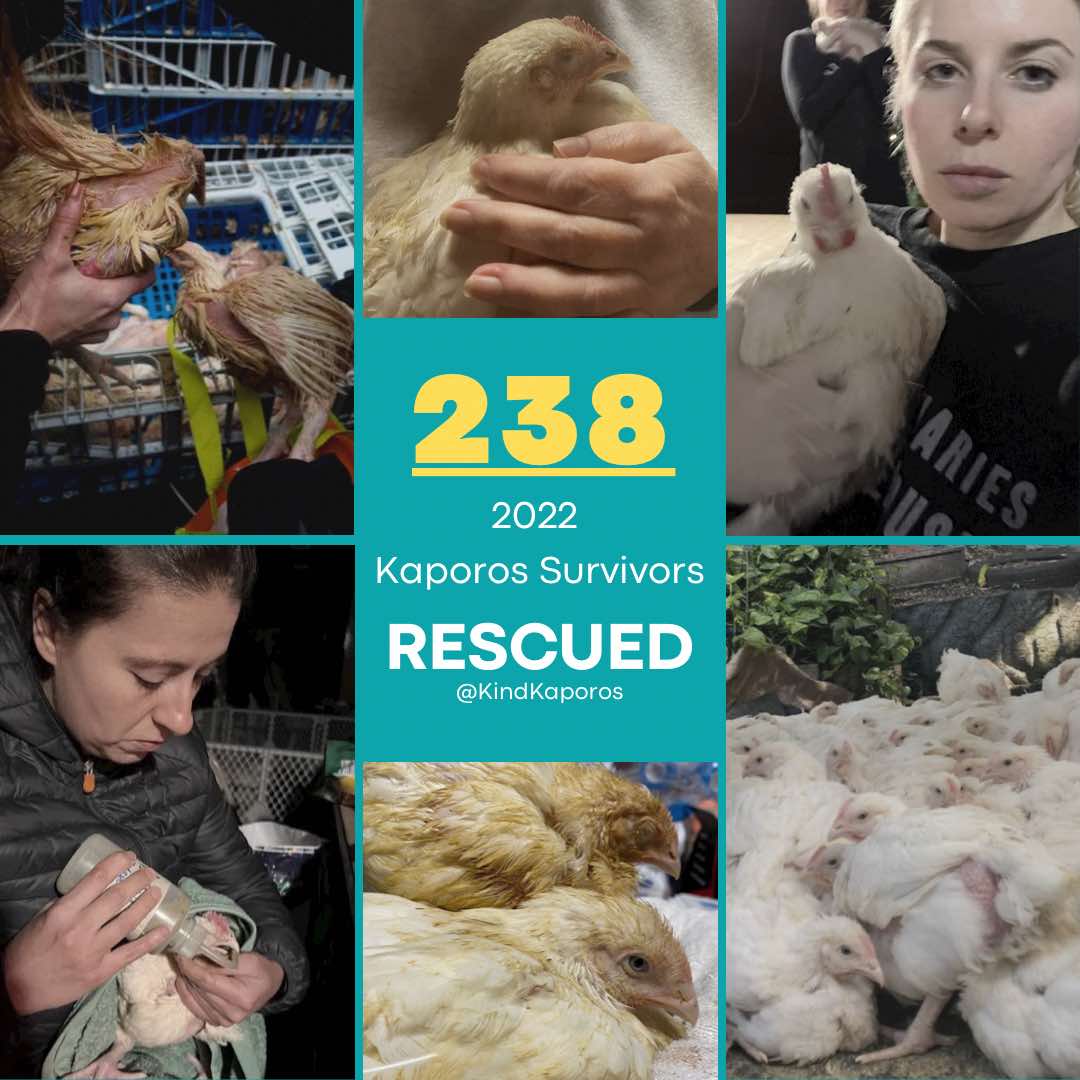
Over the course of six days, advocates rescued and saved the lives of 238 chickens who would have otherwise died of exposure or been killed during the Kaporos ritual.  The rescuers used car heaters, towels and blankets to warm the shivering birds while rushing them to a triage center for first aid. There, they used heat lamps, heat plates, hair dryers and warm water bottles to raise their body temperature while administering subcutaneous fluids and medicines to stabilize them.

Photo of some of the chickens rescued during Kaporos in 2022

During Kaporos in 2022, animal rights activists in Brooklyn rescued and saved the lives of 238 chickens who would otherwise have died of hypothermia or been slaughtered.

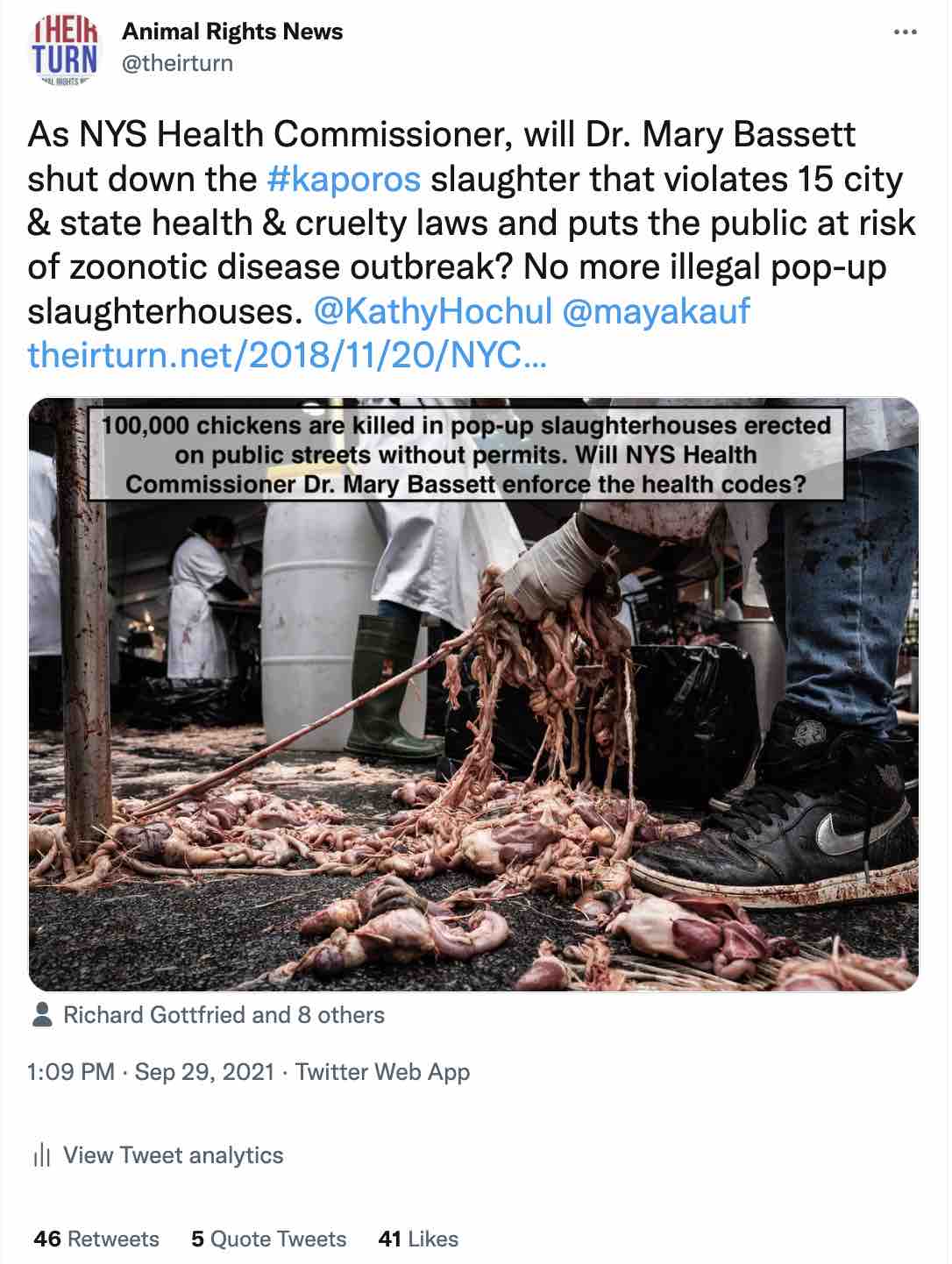
During Kaporos, ultra-Orthodox, or Hasidic, Jews twirl a live chicken around their head while reciting a prayer asking for forgiveness for their sins. After the ritual, the chickens are killed in one of dozens of makeshift slaughterhouses erected on public streets without permits in violation of 15 city and state health and animal cruelty laws.

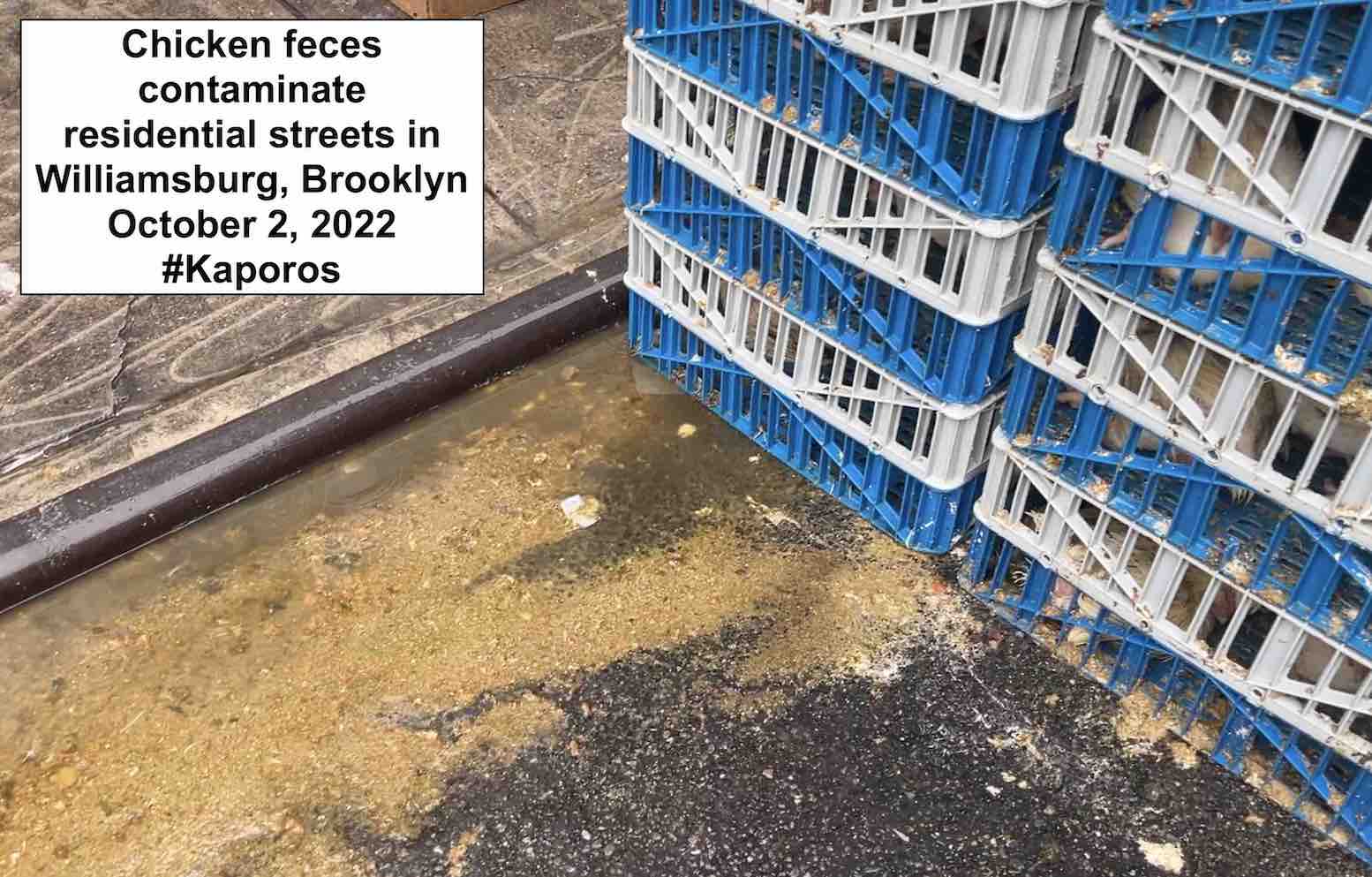
Photo of chicken feces on public streets during Kaporos

During Kaporos, a ritual slaughter of chickens before Yom Kippur, residential streets in several Hasidic neighborhoods in Brooklyn are contaminated with chicken feces in violation of multiple city and state health codes.

Instead of shutting down the slaughterhouses and issuing fines, the NYPD provides the Kaporos vendors with barricades, floodlights and a police presence to help facilitate the ritual killing. At some of the Kaporos sites, the NYPD closes down entire public streets. Despite the health code and animal cruelty violations and the lack of permits, the city government subsidizes Kaporos because the Hasidic communities in Brooklyn are a powerful voting bloc. 

Photos of chickens killed during Kaporos in Brooklyn, NY

In 2018, animal rights activists brought dead Kaporos chickens left on the streets of Brooklyn into the NYC Department of Health.

For many years, animal rights activists with the Alliance to End Chickens as Kaporos protested Kaporos, calling on practitioners to perform the ritual using coins, a commonly used alternative to chickens. Over time, however, the protests, which did not appear to be effecting change, morphed into “chicken care vigils” during which activists provide food and water to the chickens in the crates.

@theirturn

Look how hungry they are. See 5th link in bio. #kaporos #yomkippur #animalcruelty #hasidimofbrooklyn #animalsacrifice @nychealthy

♬ original sound – Donny Moss

In 2017 and 2018, animal rights activists in New York City ran a campaign to compel the Health Commissioner at the time, Dr. Mary Bassett, to enforce the health codes violated during Kaporos. In a meeting with Dr. Bassett and other Health Department officials, the advocates presented her with a toxicology report which concluded that  Kaporos poses a “significant public health hazard” based on fecal and blood samples taken from the streets. Indeed, several advocates who have rescued abandoned and sick chickens have contracted e. Coli and campylobacter. Dr. Bassett refused to curb Kaporos, telling the advocates that “no disease signals” had been associated with the practice.

After being subjected to ten months of increasingly provocative protests during her public appearances, Dr. Bassett resigned from her position as Health Commissioner with over three years left in her term and moved to Boston. In anticipation of a protest during a talk that she was giving at the Boston University School of Public Health, Dr. Bassett attempted to defend her inaction on the grounds that her boss at the time, Mayor Bill de Blasio, would not allow it:  “Those of us who work in government face the reality of the fact that the people who appoint us have to go back to the public and back to the ballot box to be reappointed, so there’s always going to be a need for advocacy from people outside of government. For someone who is passionately committed to many issues embraced by advocates, it can be difficult to acknowledge the role that I play as a political appointee. I can’t always be at the barricades.”

Photo of chicken body parts on the sidewalk

Animal rights activists say that, as NYS Health Commissioner, Dr. Mary Bassett has an obligation to enforce the health codes and protect the public from another zoonotic disease outbreak

After spending three years in Boston, Dr. Bassett returned to New York in 2021, when Governor Kathy Hochul appointed her State Health Commissioner, a position that gives her more power than before to shut down Kaporos. Activists hoped that the COVID pandemic, which is believed to have originated in a live animal market, would compel Dr. Bassett to curb the practice, as tens of thousands of people without PPE physically handle live animals, many of whom are visibly sick and show signs of respiratory distress.

Photos of toxicology report outlining the risks Kaporos poses to the public health

Mayor de Blasio’s Health Commissioners have refused to address a toxicology report that outlines the public health risks posed by the slaughter of over 100,000 chickens on public streets during Kaporos.

In 2015, an advocacy group called the Alliance to End Chickens as Kaporos and 19 NYC residents who live in neighborhoods that are contaminated by the mass slaughter sued the City of New York, the NYC Department of Health and the NYPD for failing to enforce the 15 public health, sanitation and anti-cruelty laws and regulations that are violated during Kaporos. Nora Constance Marino, the attorney for the plaintiffs, called on the court to issue a “Writ of Mandamus,” which would compel city agencies to enforce the laws. After two lower courts ruled against the plaintiffs, Marino argued her case in front of the Court of Appeals, which ruled that city agencies have discretion over which laws to enforce.

Activists estimate that at least 100,000 chickens are slaughtered in the streets of Brooklyn each year during Kaporos.