Update (Feb 3): While the animal rights community supports a ban on horse-drawn carriages, activists are divided on how to achieve it, with some supporting and others opposing a compromise bill which is scheduled for a vote on Friday, February 5th. If passed, the law would, among other things, reduce the number horses by almost half and move their staging area into the Park. The changes would provide some relief for the remaining horses and weaken the politically connected and inexplicably powerful industry. The carriage operators vehemently oppose the compromise and insist on having free reign throughout the streets of midtown. The media, big labor and park advocates (who want to minimize the presence of horses in the park) are backing the carriage operators in opposition to the bill. If the Mayor accepts defeat, walks away from the issue altogether and says, “time to move on,” then where does that leave the 200+ horses and the grass roots movement?
————————————————-
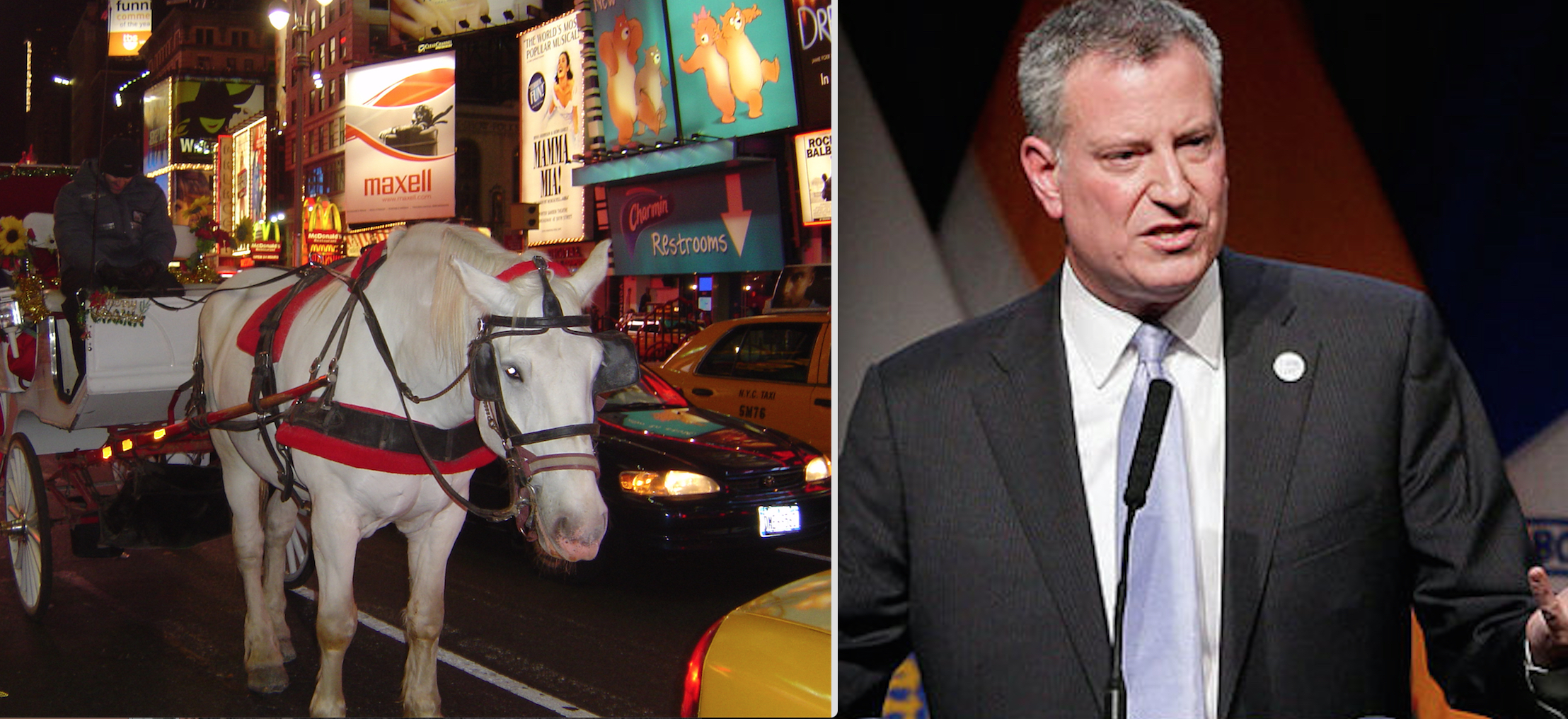
In an effort to liberate himself from an issue that has plagued him since taking office, NYC Mayor Bill de Blasio, who promised to ban horse-drawn carriages from Manhattan in early 2014, announced that his administration struck a compromise with the Teamsters, the union that represents the horse-drawn carriage trade in its negotiations with the city. The deal, which must be approved by the City Council, would move the horses into a stable in Central Park and cut their number in half – to 95 – by 2018. The public has not seen a draft bill, so many questions regarding the quality of life of the horses remain unanswered.
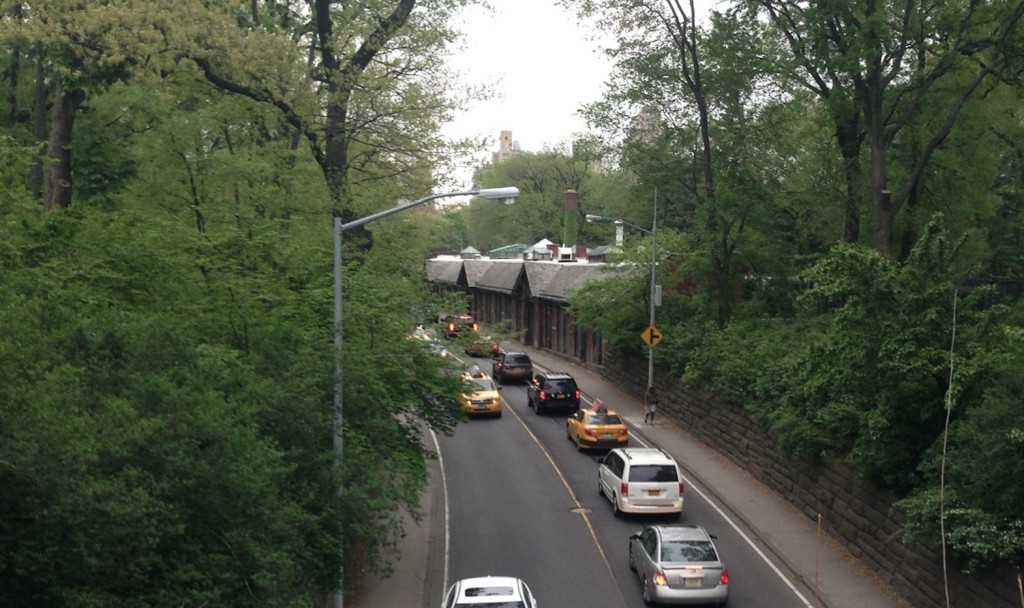
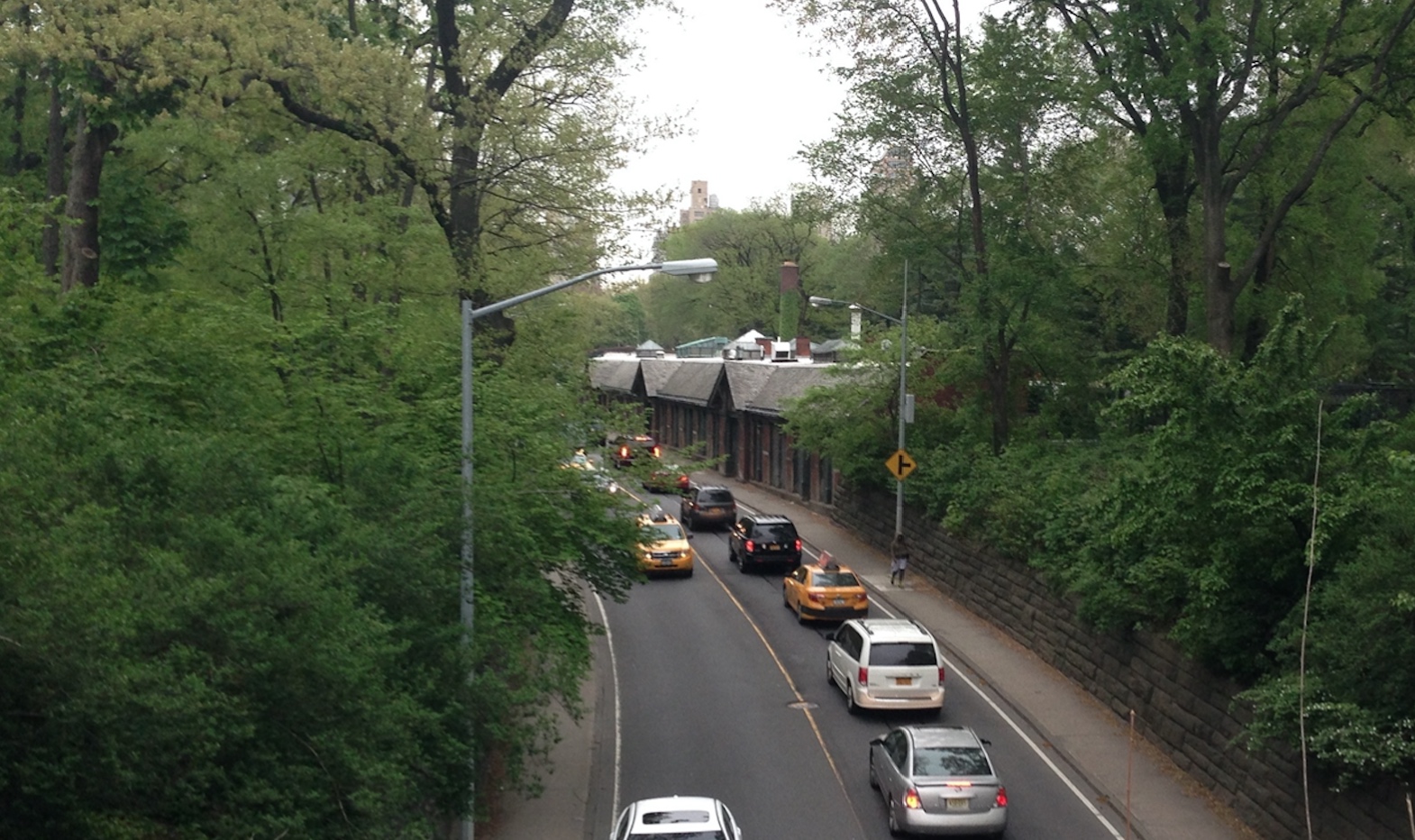
An small building on 85th Street in Central Park that was used as a stable in the past is being considered as a location for the new stable.
The compromise would improve the lives of the remaining horses, as they will no longer be forced to compete with aggressive drivers in the congested streets of midtown for most of the day. However, many of the conditions that make the operation of horse-drawn carriages inhumane and unsafe in NYC will not be addressed by moving the horses into the park. Following are several examples:
- In his statement about the compromise, the Mayor made no mention of setting aside land for a pasture on which the horses can graze, run, roll and interact physically, as herd animals do. They could be surrounded by open spaces but deprived of the opportunity to use them.
- Moving the horses into the Central Park won’t stop them from spooking and potentially harming themselves and others when they bolt. Over the years, many horses have spooked in the park, and people have been seriously injured.
- Unless otherwise stated in the bill, the horses will continue to share the road with motor vehicles in Central Park, where cars are permitted on the streets at certain times of the day.
- The number of horses in the park at any given time will be limited to 75 (the other 20 will be on rotation outside of the City), but the number of carriages will remain the same — 68. If the medallion owners intend to use their carriages two shifts per day, then they would need to have at least 136 horses in the park. In the continued absence of humane law enforcement, will the carriage drivers simply double-shift their horses, as they have been caught doing in the past?
- Through the use of weapons and fear, the horses will continue to be “broken” when they are being trained to work in NYC.
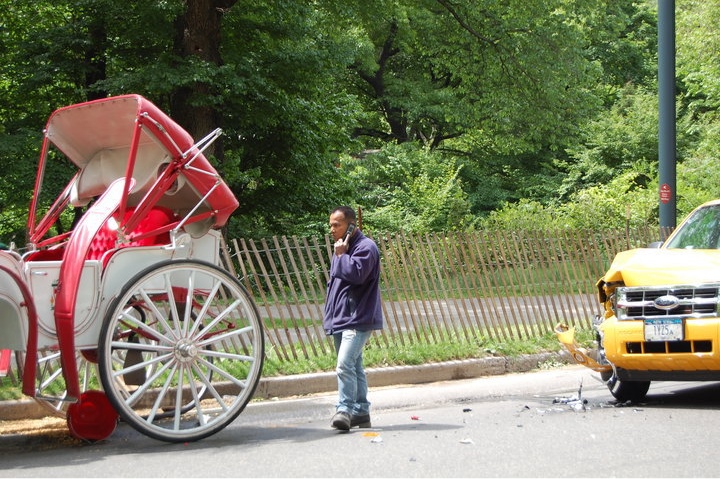
A taxi crashes into a horse-drawn carriage in Central Park
Members of the public will oppose the bill for reasons unrelated to the humane issues, including the following:
- In the draft bill, the pedicab drivers would be prohibited from working in the park south of 85th street, thereby giving the carriage drivers exclusive access to tourist customers. If the main reason to keep the carriage trade afloat is to preserve jobs, then how does putting the pedicab drivers out of work accomplish that goal?
- According to Section 383 of the NYC Charter, “the rights of the City to its park” are “inalienable.” Building a stable for a commercial enterprise on public land could therefore be challenged in court by park advocates. That said, the administration has probably sorted out the legality of leasing a stable to the carriage trade.
- The City will be using public funds to pay for the construction of a stable for a private, all cash business.
- The horses will be staged just inside of the park, which will add to congestion in areas that are already crowded with pedestrians, joggers and bicyclists.
For the animal rights activists who have been working for many years to ban horse-drawn carriages from Manhattan, one of the most distressing aspects of this compromise is that the erection of a stable in the park could keep the industry afloat indefinitely. However, many doubt that a stable will be built.
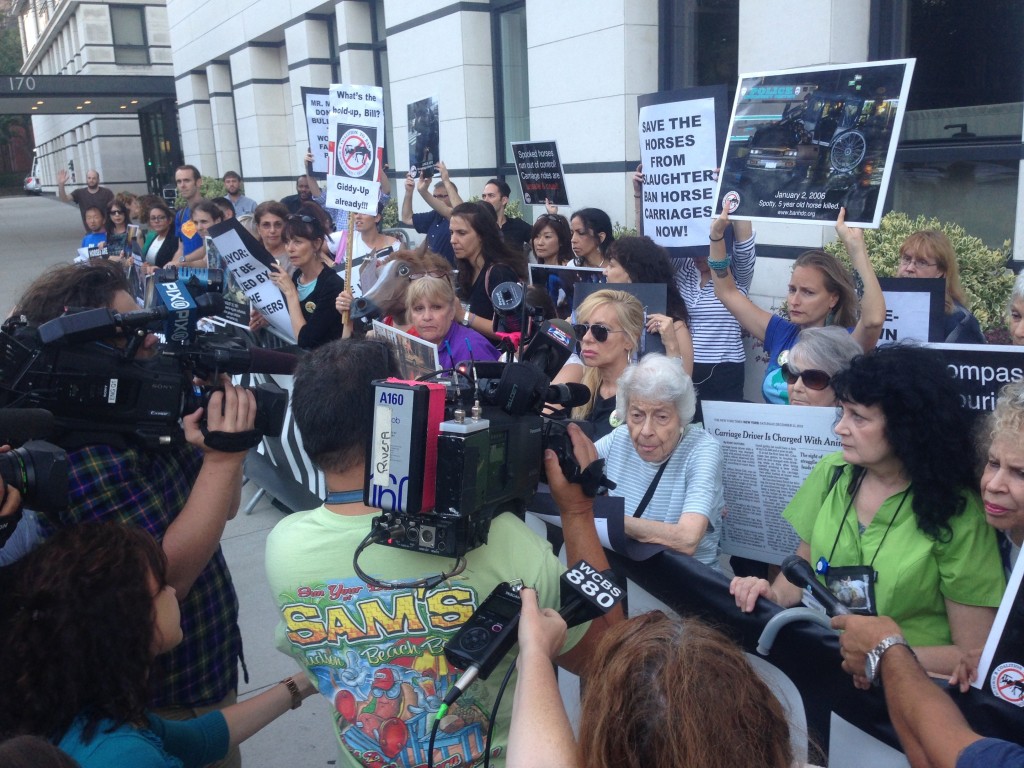
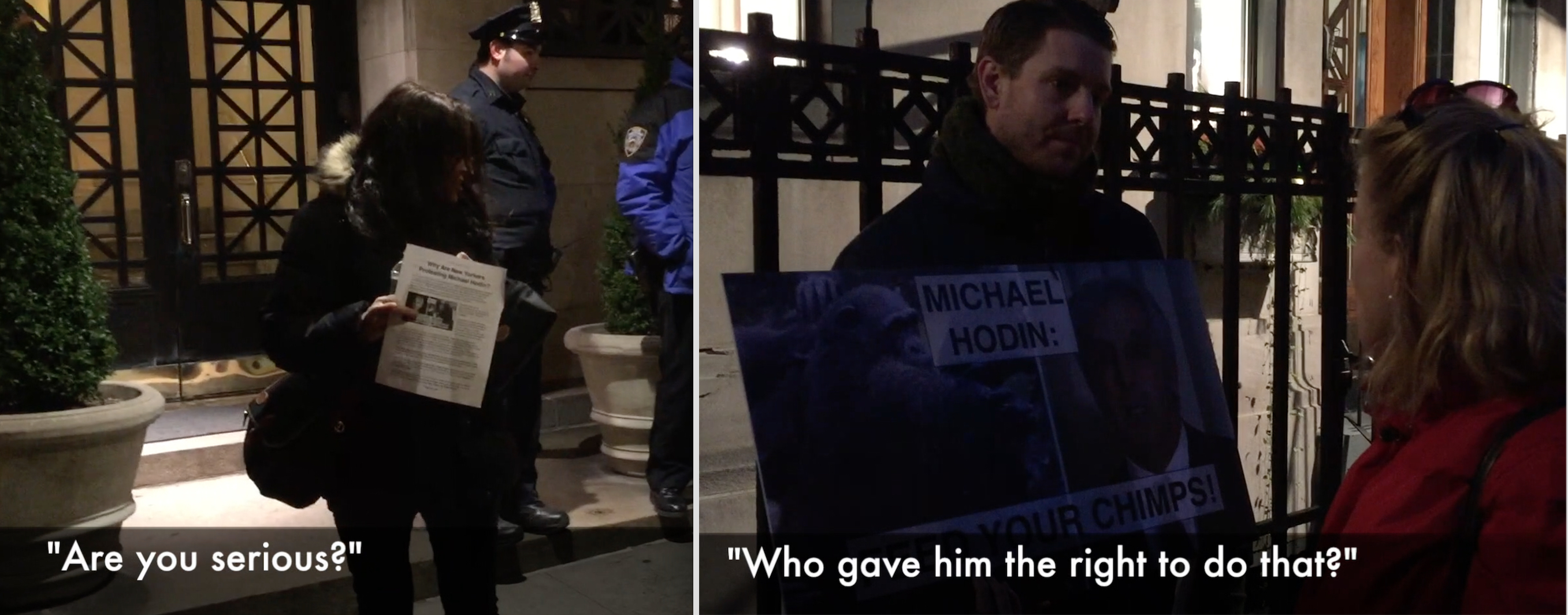
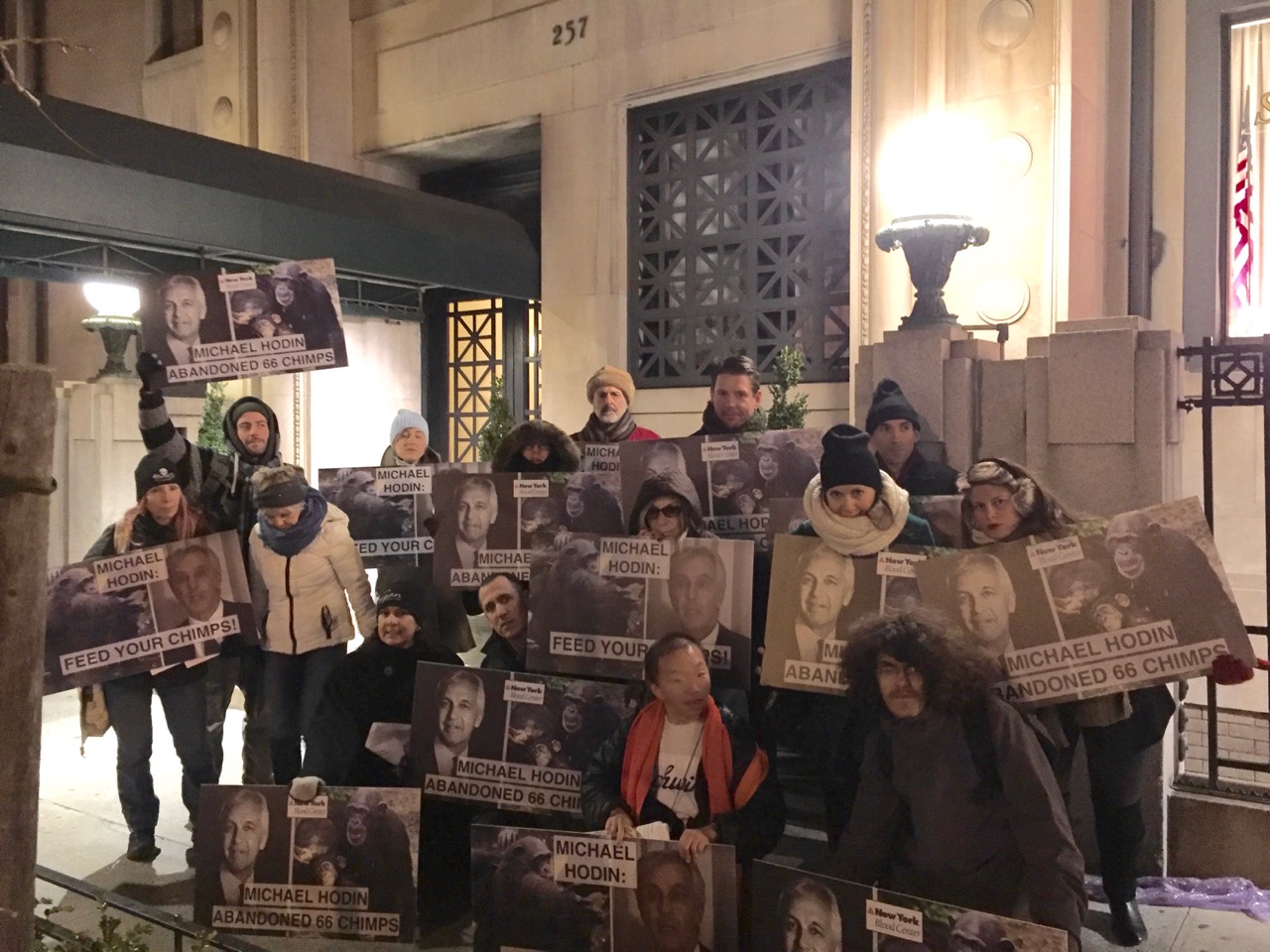
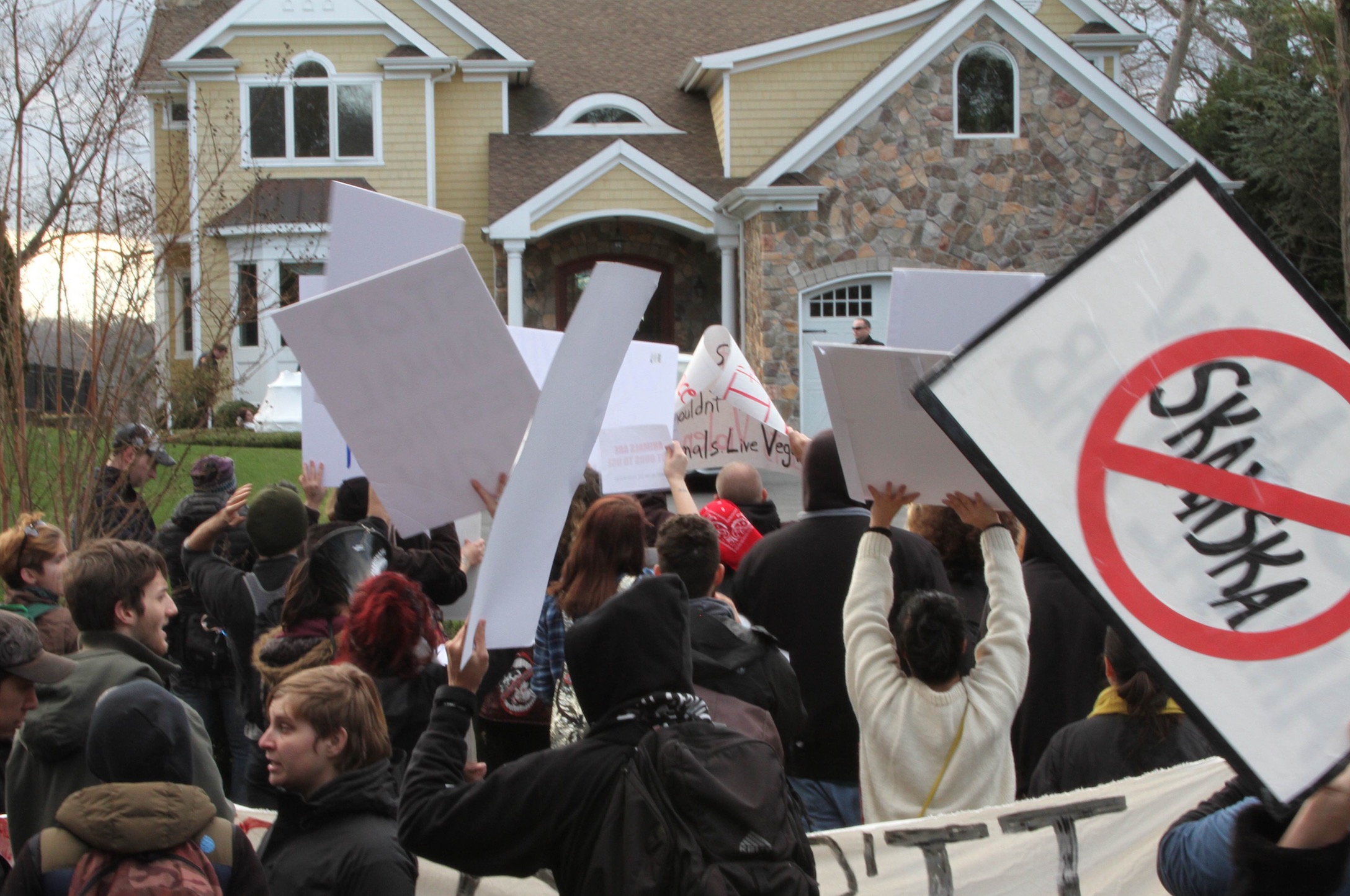
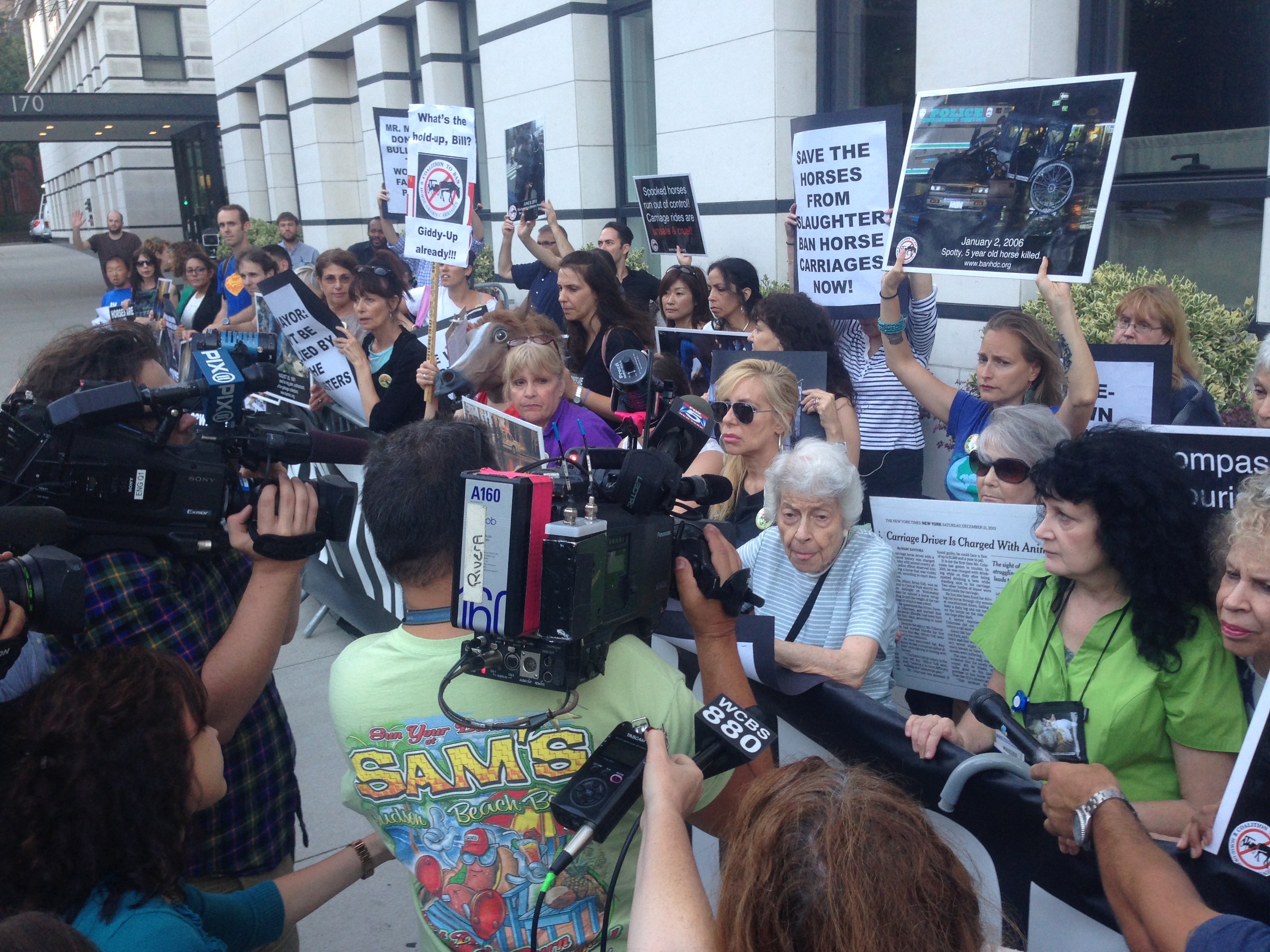
In 2014, activists staged a rally at Gracie Mansion to “remind” Mayor de Blasio to fulfill his promise
The media has reported that the Mayor resorted to a compromise because he didn’t have support in the City Council for a bill to ban horse-drawn carriages. What the media has failed to report is that he never made a serious attempt to garner support from lawmakers. In fact, the Mayor remained virtually silent on the issue for two years while the opposition ran an aggressive (and dishonest) campaign to preserve the industry. The Mayor didn’t even speak out when highly publicized carriage accidents occurred, in spite of the fact that advocates plead with him to do so.
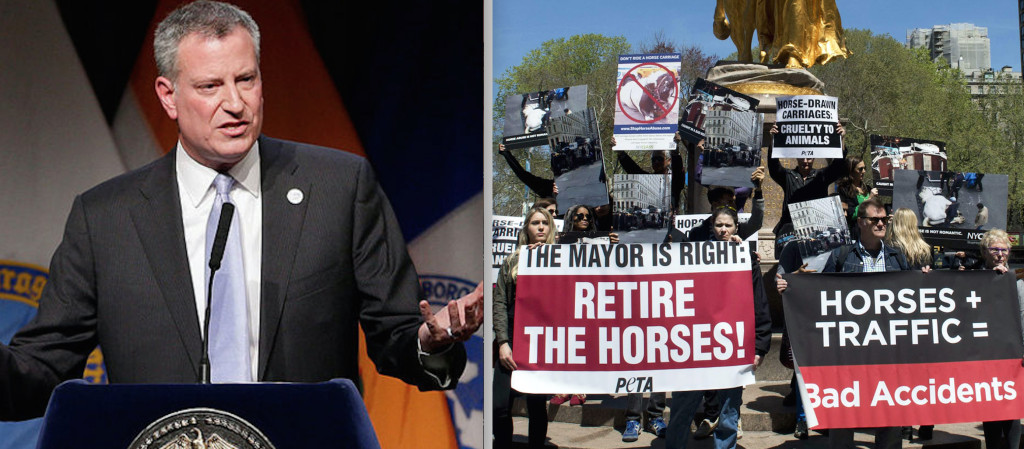
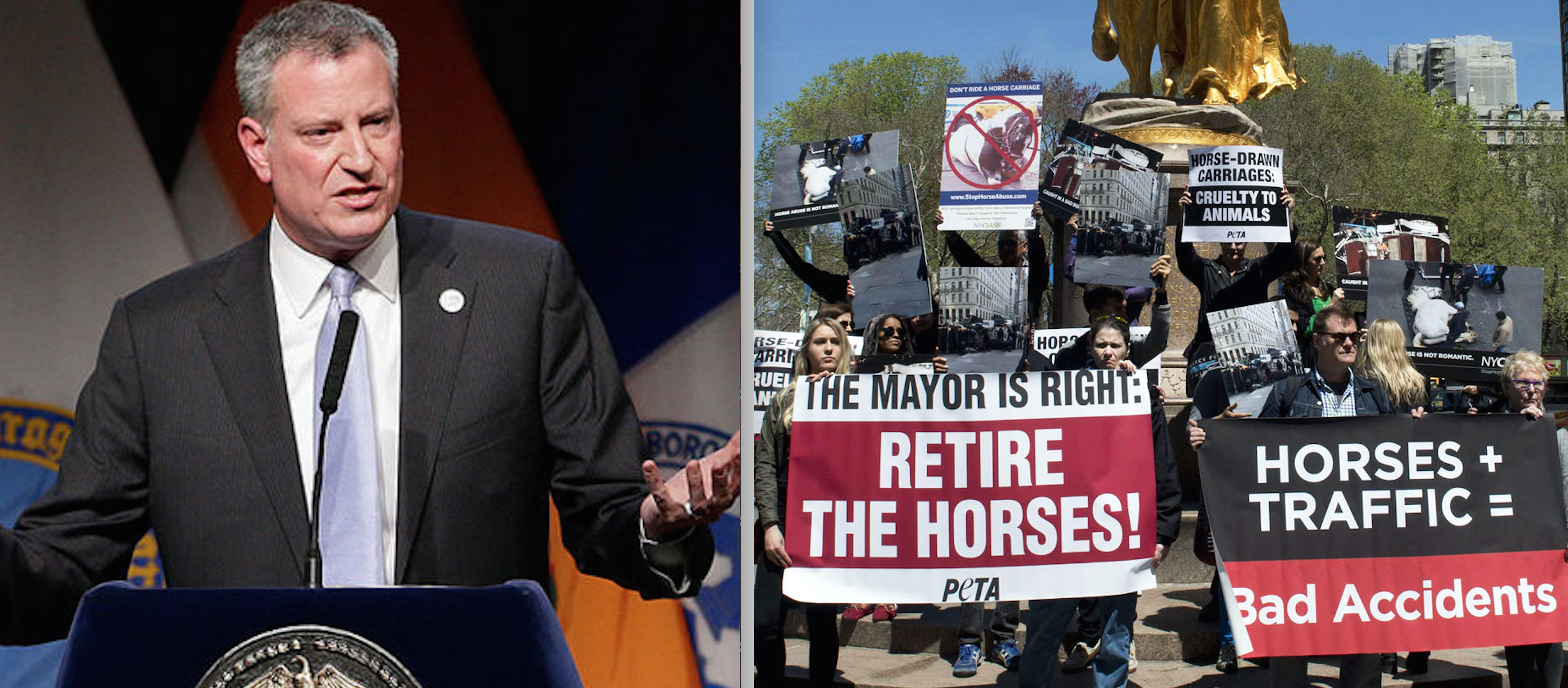
A prominent component of Bill de Blasio’s campaign platform was banning horse-drawn carriages
While mistakes were made over the years by grass roots activists and advocacy groups fighting to end NYC’s anachronistic horse-drawn carriage trade, the blame for this compromise lies with the Mayor, as no amount of advocacy could have led to a ban without his leadership, which he failed to provide in spite of his promises.
In the midst of much ongoing uncertainty, one thing is certain — NYC activists will continue to be a voice for the horses until their shafts are lifted for good. In the meantime, with many stakeholders affected by this bill, including animal rights activists, the carriage trade, the pedicab industry and Central Park conservationists, the horse-drawn carriage controversy will likely continue to take center stage for the indefinite future.
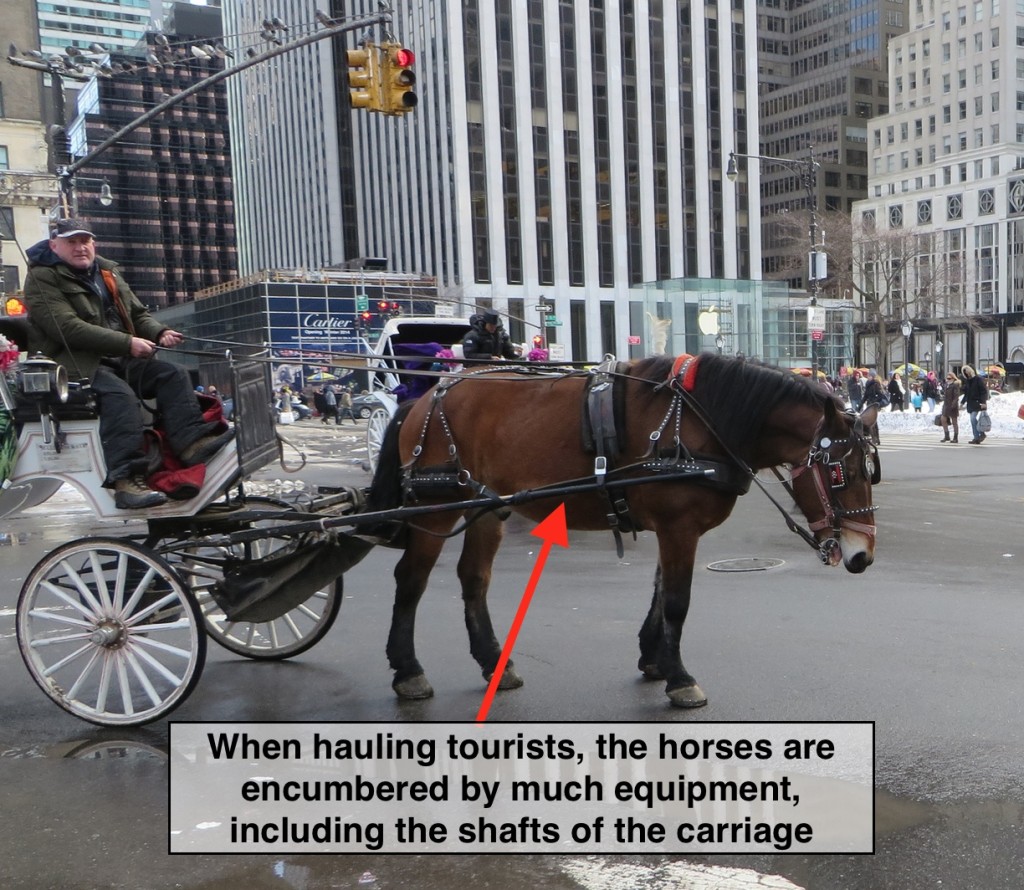
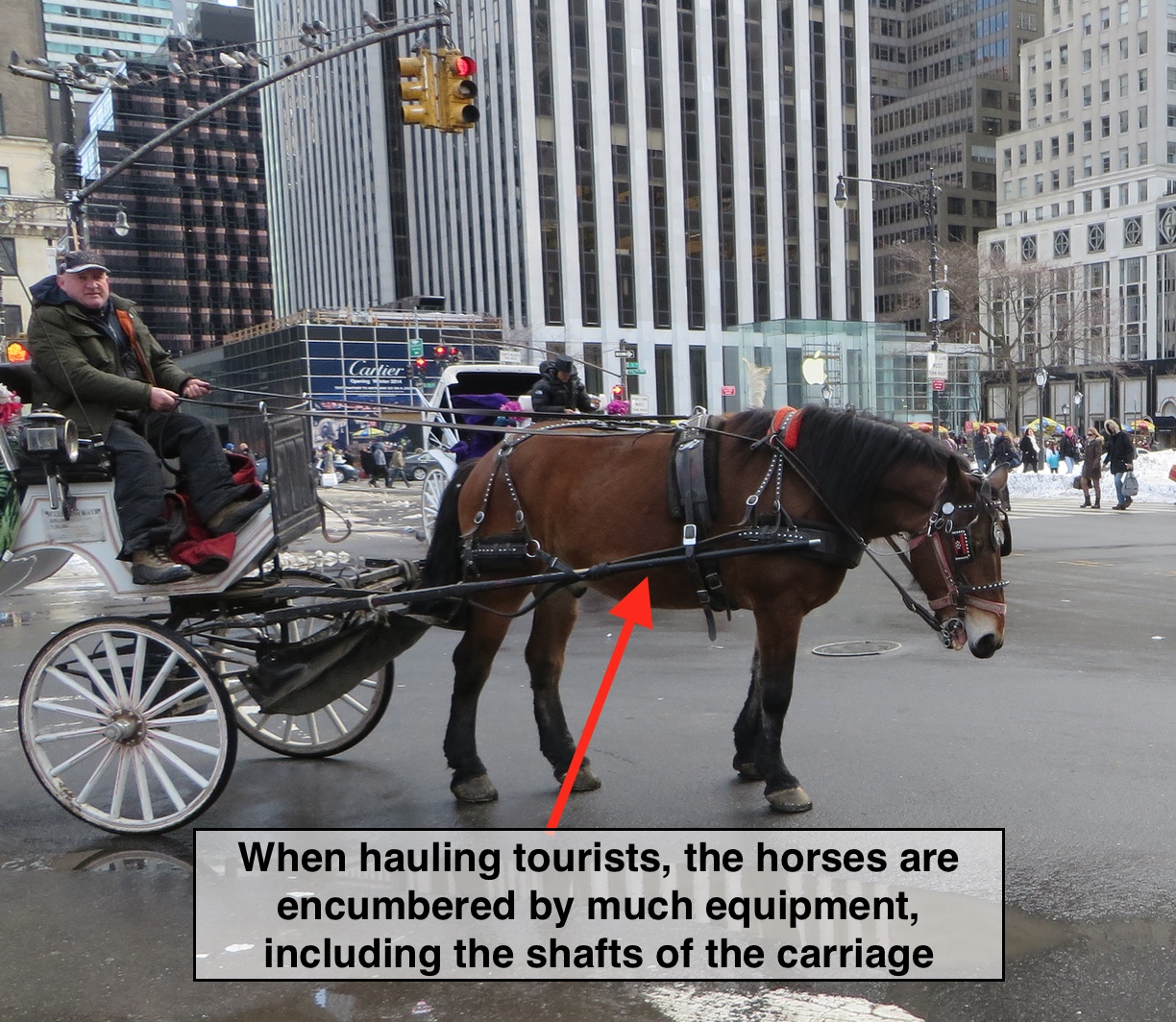
Horses are confined between the shafts of the carriage for over nine hours/day





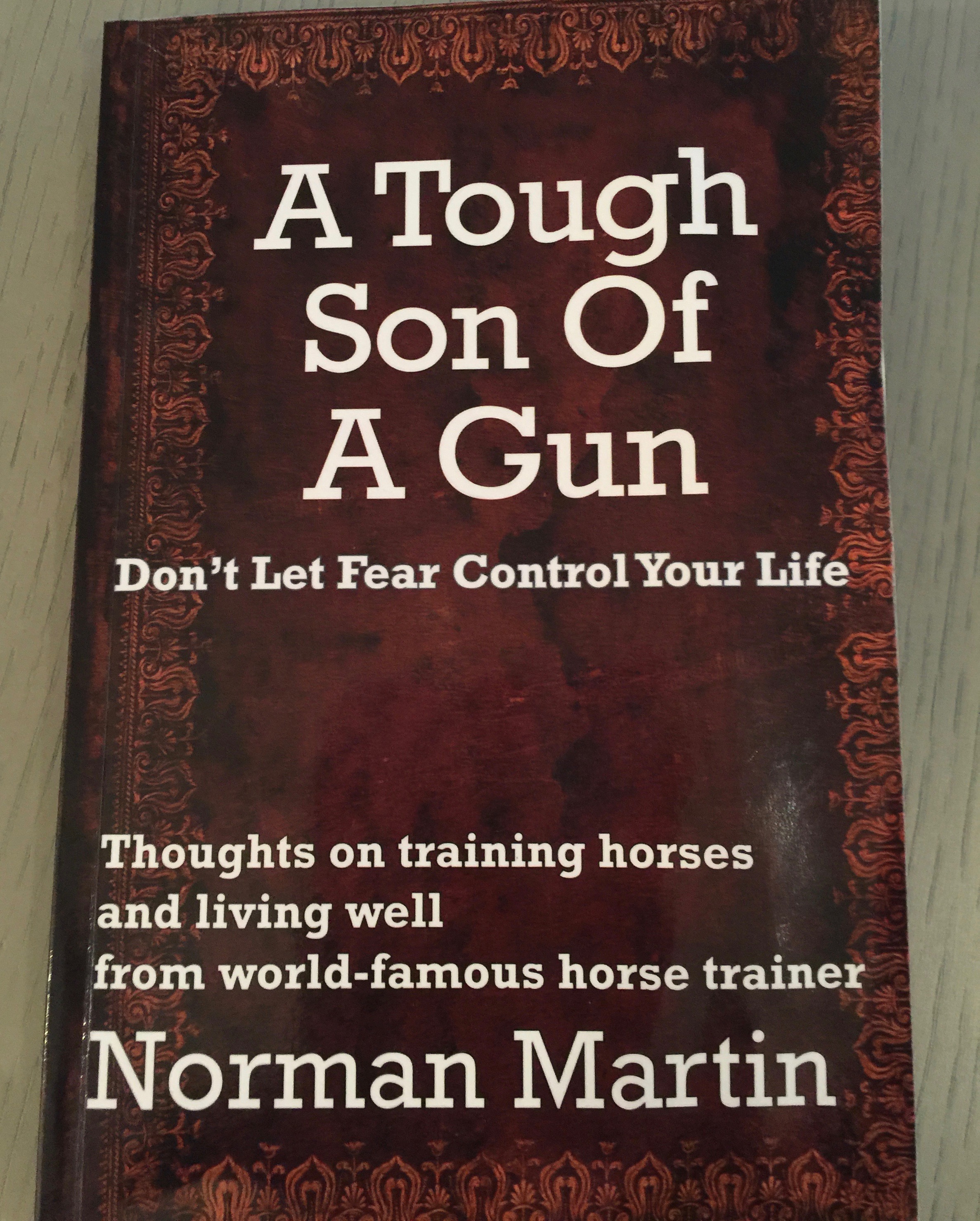
![Norman Martin tells a Daily News reporter that "God has made them [horses] for the service of mankind.”](https://theirturn.net/wp-content/uploads/2016/01/Norman-Martin.jpg)