
Their Turn - The Social Justice Movement of Our Time Their Turn - The Social Justice Movement of Our Time

Unlocking The Cage Premieres in New York City

June 7, 2016 by 2 comments


The News

Unlocking the Cage, a highly-anticipated new film that documents the historic battle by the Nonhuman Rights Project (NhRP) to win legal rights for nonhuman animals, premiered in New York City on May 25th.

The film’s directors, D A Pennebaker and Chris Hedegus, who, according to the New York Times, have made the “most memorable documentaries of the past half-century,” followed their subject, Steven Wise, for four years to record his effort to achieve personhood for several chimpanzees in New York being held captive in laboratories and roadside zoos.

“We are grateful to Pennebaker and Hegedus not only for making such an excellent film about the groundbreaking legal work of Steven Wise and the NhRP but also because their involvement will expand the reach of the film to mainstream audiences worldwide,” said Kevin Schneider, Executive Director of the Nonhuman Rights Project.
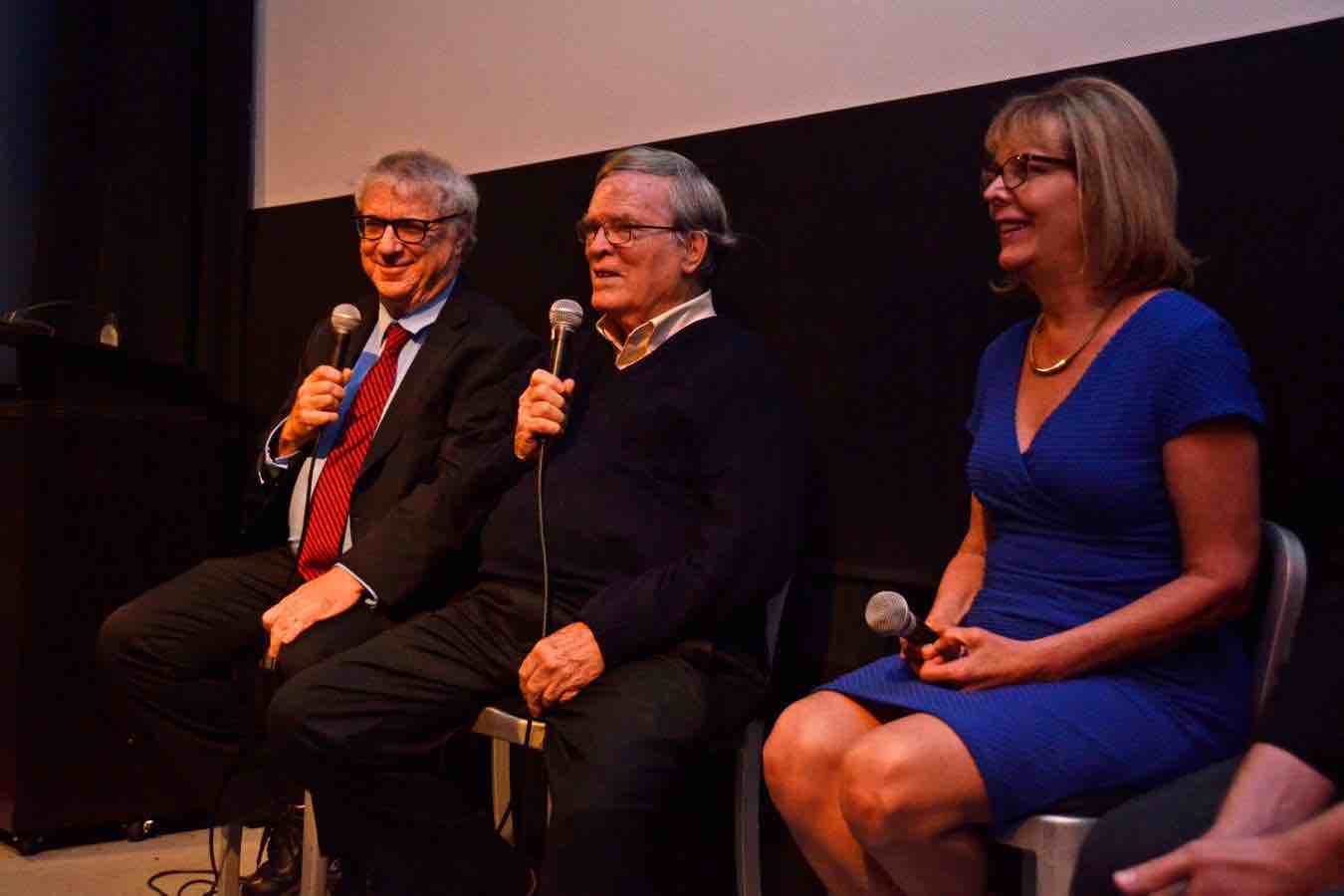
From left to right: NhRP President Steven Wise and Unlocking The Cage filmmakers D.A. Pennebaker and Chris Hegedus

From left to right: NhRP President Steven Wise and Unlocking The Cage filmmakers D.A. Pennebaker and Chris Hegedus (photo: Lukas Maverick Greyson)

On the day before the worldwide premiere at the Film Forum in Greenwich Village, the New York Times gave the film a favorable review:

“It is hard to watch Unlocking the Cage without being somewhat swayed by the arguments — or at least impressed by the sincerity — of Steven Wise, a leading animal-rights lawyer. . . Mr. Wise has argued that animals should have the legal status of persons. What this means is not that they should be classified as human, but rather that their rights should be acknowledged and protected under the law.”

The review contains a strong pro-animal rights message: “It is also possible that practices and attitudes now widely taken as natural will look arbitrary and cruel to future generations, and that the future will arrive sooner than many of us expect. It wouldn’t be the first time.”
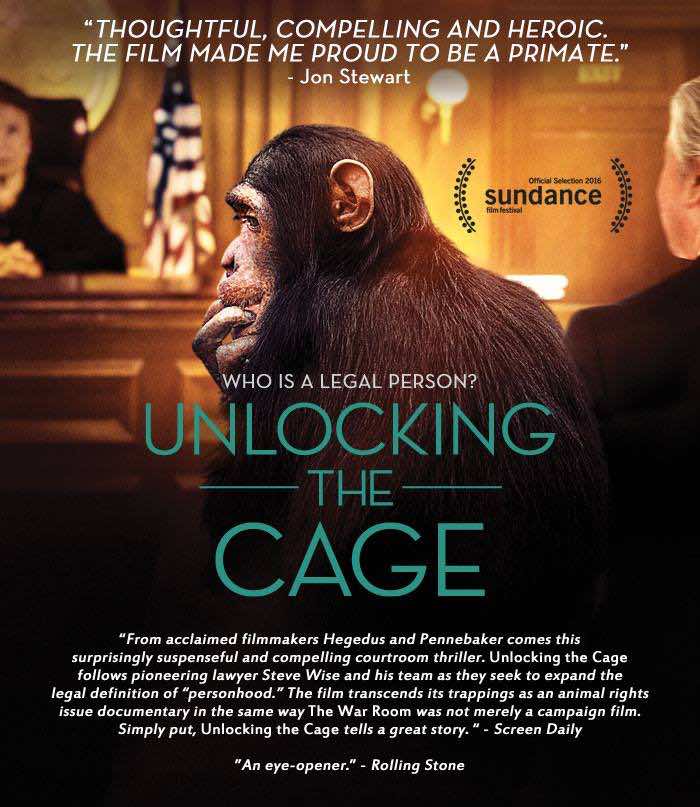
Unlocking The Cage premiered in NYC on June 25th.

Unlocking The Cage premiered in NYC on May 25th.

Your Turn

To stay apprised of developments with Unlocking the Cage, please follow the film’s Facebook page.

To learn more about the groundbreaking work of the Nonhuman Rights Project, please visit the organization’s website.

Animal Protection Group Files USDA Complaint Regarding Multiple Violations at Cincinnati Zoo

June 3, 2016 by 8 comments


The News

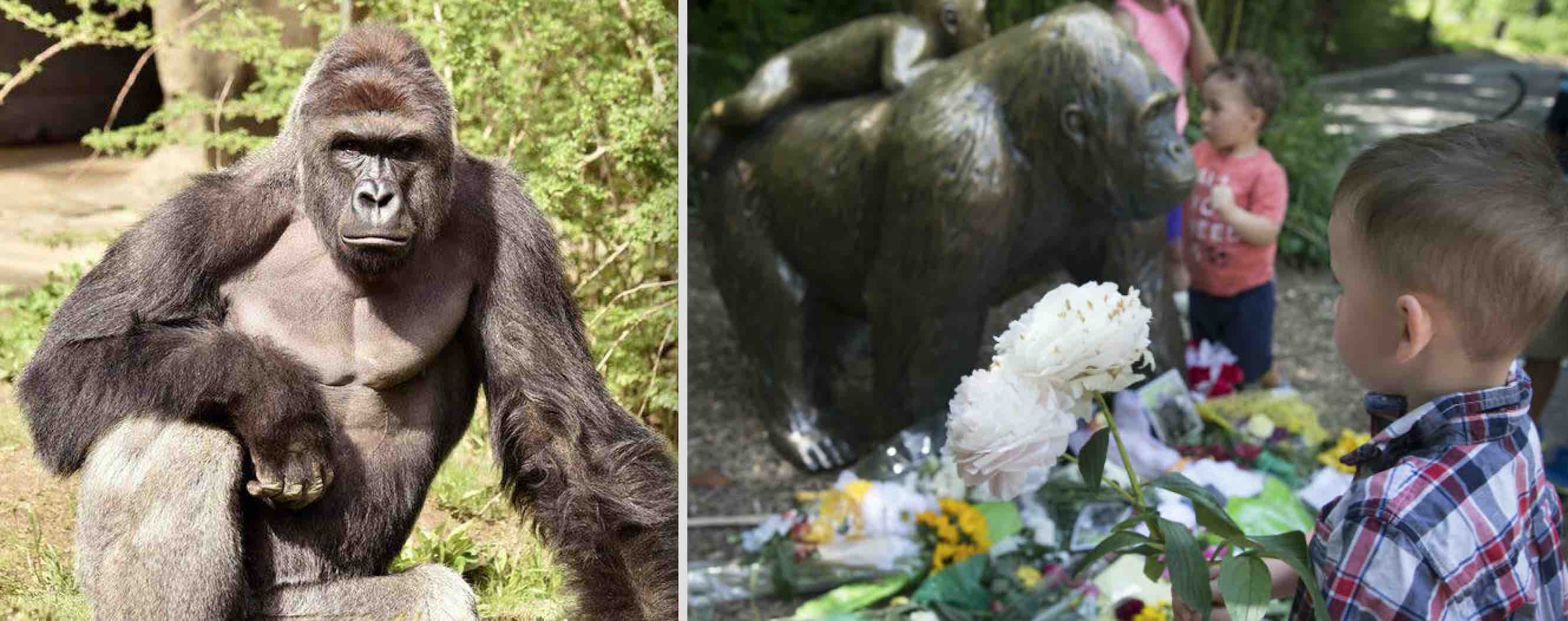
On May 31st, Stop Animal Exploitation Now (SAEN), an international animal protection group, filed a complaint with the U.S. Department of Agriculture (USDA) alleging that the Cincinnati Zoo is responsible for the incident in which zoo personnel shot and killed the gorilla Harambe after a child fell into his enclosure. In the complaint, SAEN alleges that the zoo violated section 3.77 of the Animal Welfare Act (AWA), which states that a primate enclosure must be surrounded by a physical barrier that prevents unauthorized humans from interacting with the animals.

Cincinnati Zoo gorilla enclosure

Cincinnati Zoo gorilla enclosure

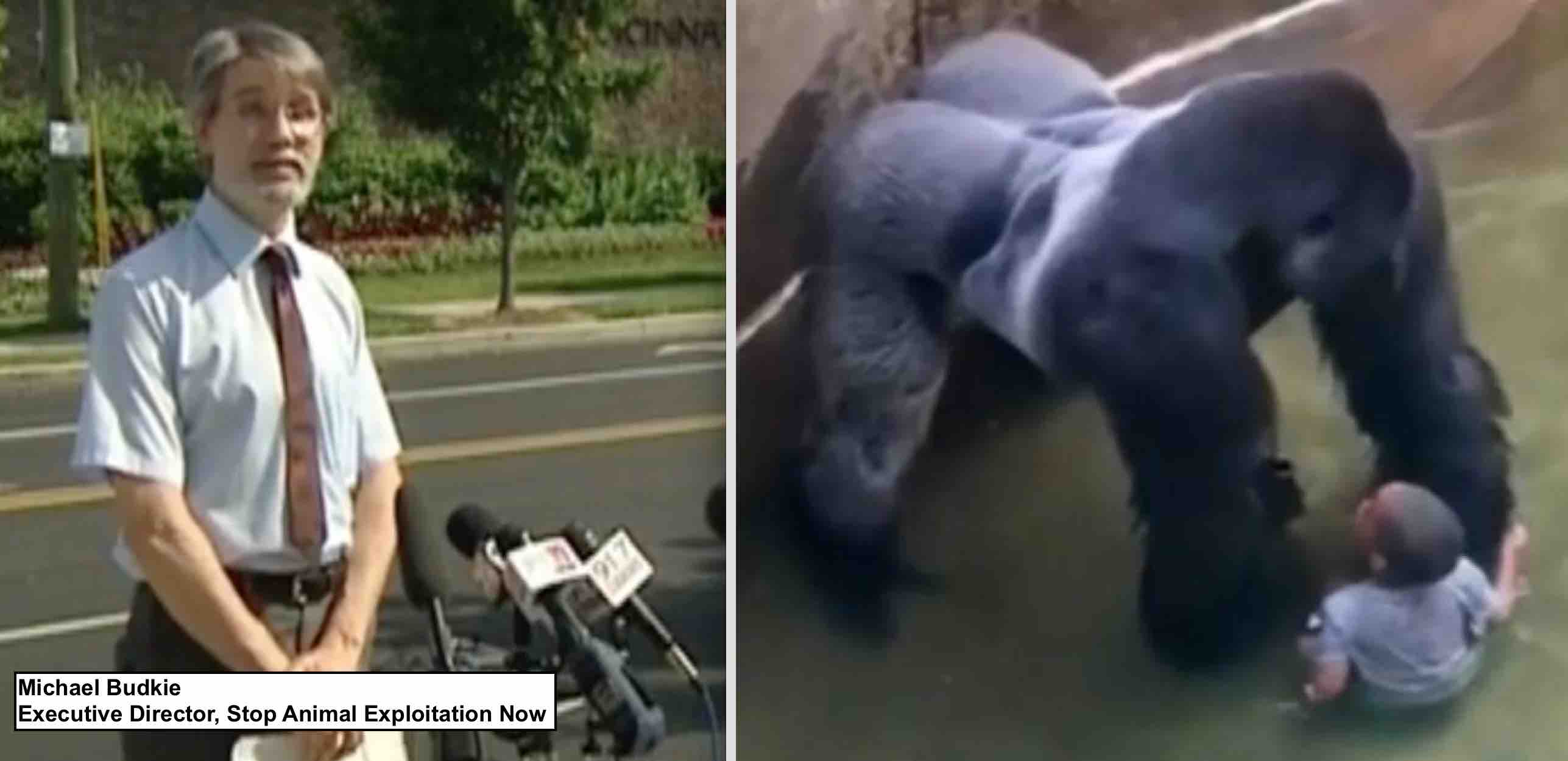
At a press conference held outside the Cincinnati Zoo on May 31st to announce the complaint, Michael Budkie, SAEN’s executive director, stated, “Since a four year old child managed to enter the enclosure within a matter of minutes, these conditions were obviously not met.”

Michael Budkie announces USDA complaint at a press conference held outside the Cincinnati Zoo.

Michael Budkie announces USDA complaint at a press conference held outside the Cincinnati Zoo.

On June 2nd, the zoo announced that it is modifying the public barrier prior to reopening “Gorilla World” on June 7th. In response, Budkie stated, “The announcement essentially confirms the faulty nature of the previous barrier.It is entirely possible that if this barrier had been in place by Saturday, May 28th, Harambe might be alive today.”

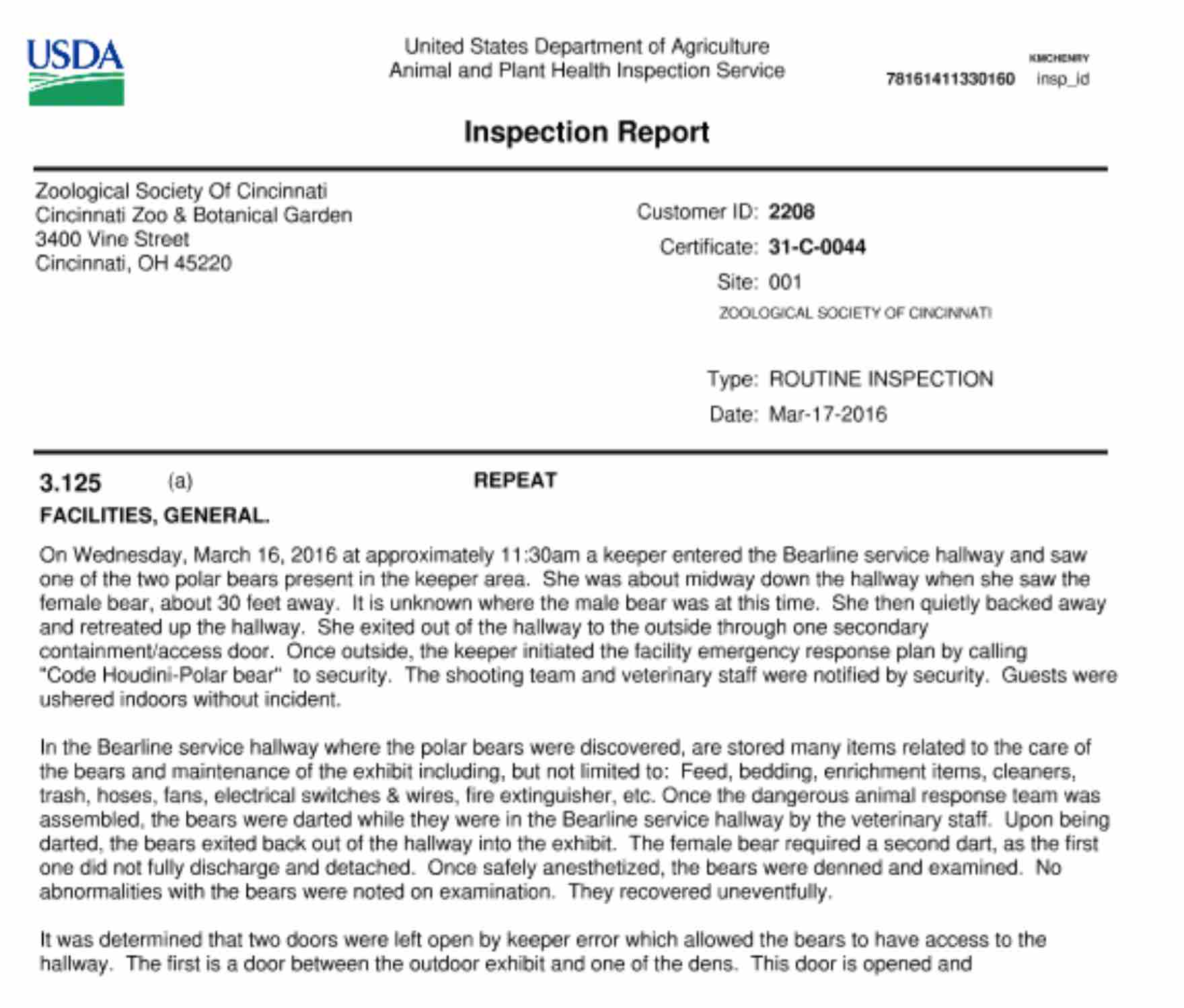
At the press conference, Budkie also disclosed that the zoo violated the AWA on several other occasions. A 2014 USDA inspection found deteriorating wooden boards in colobus monkey and Przewalski’s horse enclosures, violating sections 3.80 and 3.125. In addition, two polar bears escaped from their enclosure on March 16, 2016, into the zookeeper area due to negligence — a repeat violation of section 3.125. The USDA inspection report states: “. . .had the bears gained outside access, the public would have been at great risk for injury, harm or death.” SAEN believes that, because of this track record, the USDA will likely impose the maximum penalty of $10,000 per infraction/animal on the zoo.

USDA inspection report regarding the escape of two polar bears at the Cincinnati Zoo.

USDA inspection report regarding the escape of two polar bears at the Cincinnati Zoo.

For Budkie, however, this incident is about much more than AWA violations and the killing of Harambe. Rather, it calls into question whether or not zoos should exist at all. “At the end of the day, zoos are money-making businesses masquerading as conservation groups. True conservation focuses on the preservation of natural habitats, not holding wild animals captive in small enclosures where many go insane from lack of stimulation, stress and the frustration of confinement.”

Harembe memorial

Children pay their respects to Harambe outside of the Cincinnati Zoo

On May 28th, a four year old child fell into Harambe’s enclosure after crawling through a fence leading to it. While the gorilla did not attack the boy, the zoo decided to shoot him as a safety precaution.

Your Turn

For more information, please visit Stop Animal Exploitation Now.


New York Blood Center Employees Assault Chimp Advocates

June 1, 2016 by 2 comments


The News

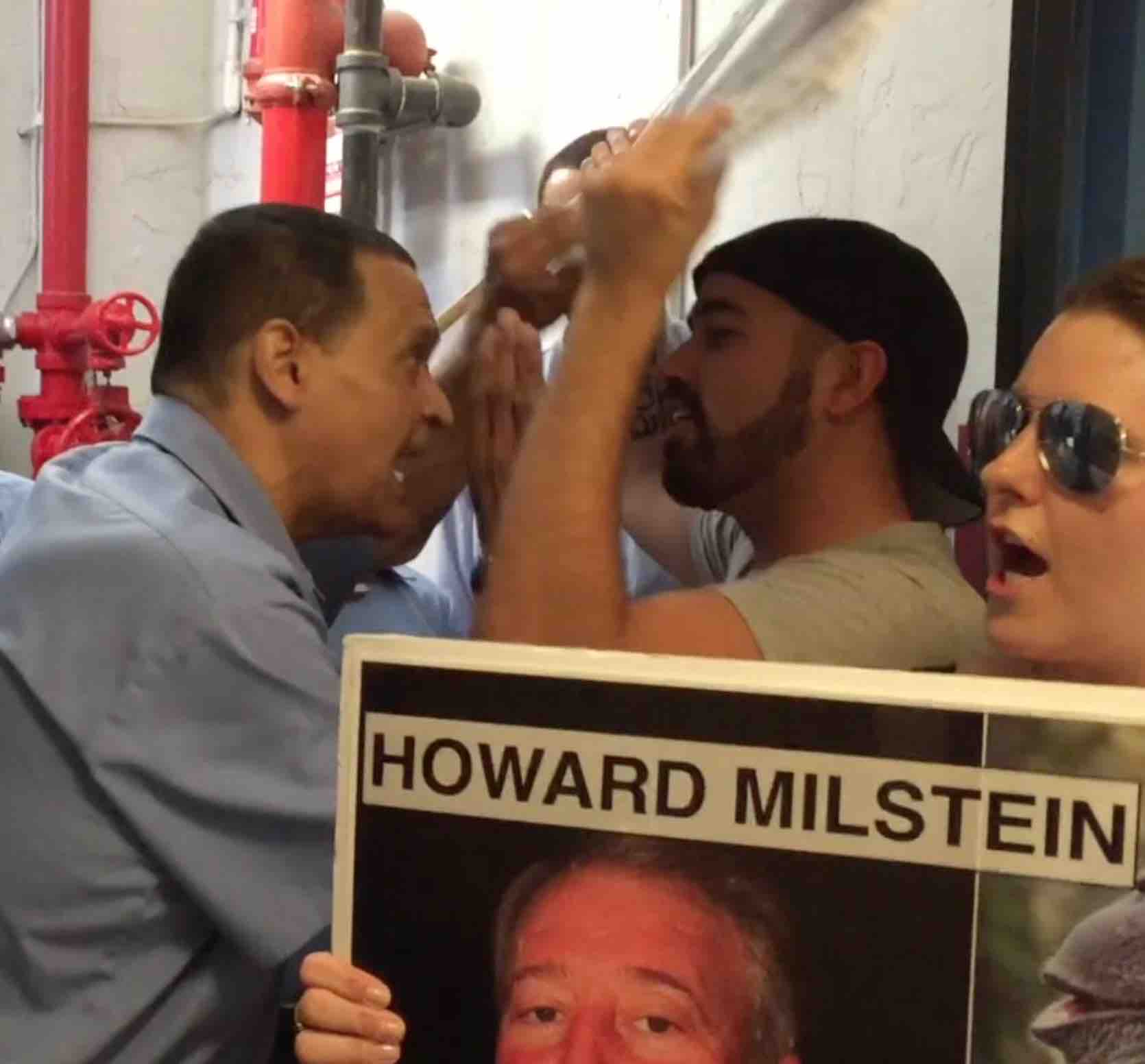
On May 26, several employees of the New York Blood Center (NYBC) assaulted advocates protesting the organization’s decision to abandon 66 chimpanzees with no food or water on islands in Liberia. One man wearing a maintenance uniform, who punched and shoved protesters for several minutes, pulled out a switch blade. Video shows NYBC’s security team restraining him twice during the confrontation.

The protest lasted approximately 30 minutes and culminated with the arrival of police. Advocates continued to protest for another hour at the entrance to educate NYBC employees as they left the building for the day. Most either ignored the advocates or commented that humans are more important than chimps, as if to suggest that NYBC shouldn’t spend money to feed them.

New York Blood Center employees confront chimp advocates.

New York Blood Center employees confront chimp advocates.

For a thirty year period starting in the mid-1970s, NYBC conducted experiments on over 400 hundred chimpanzees in Liberia, where they could capture, breed and experiment on them with little regulatory oversight. After the research was conducted, NYBC moved the survivors onto six islands with no natural food or water and made a public commitment to provide them with lifelong care.

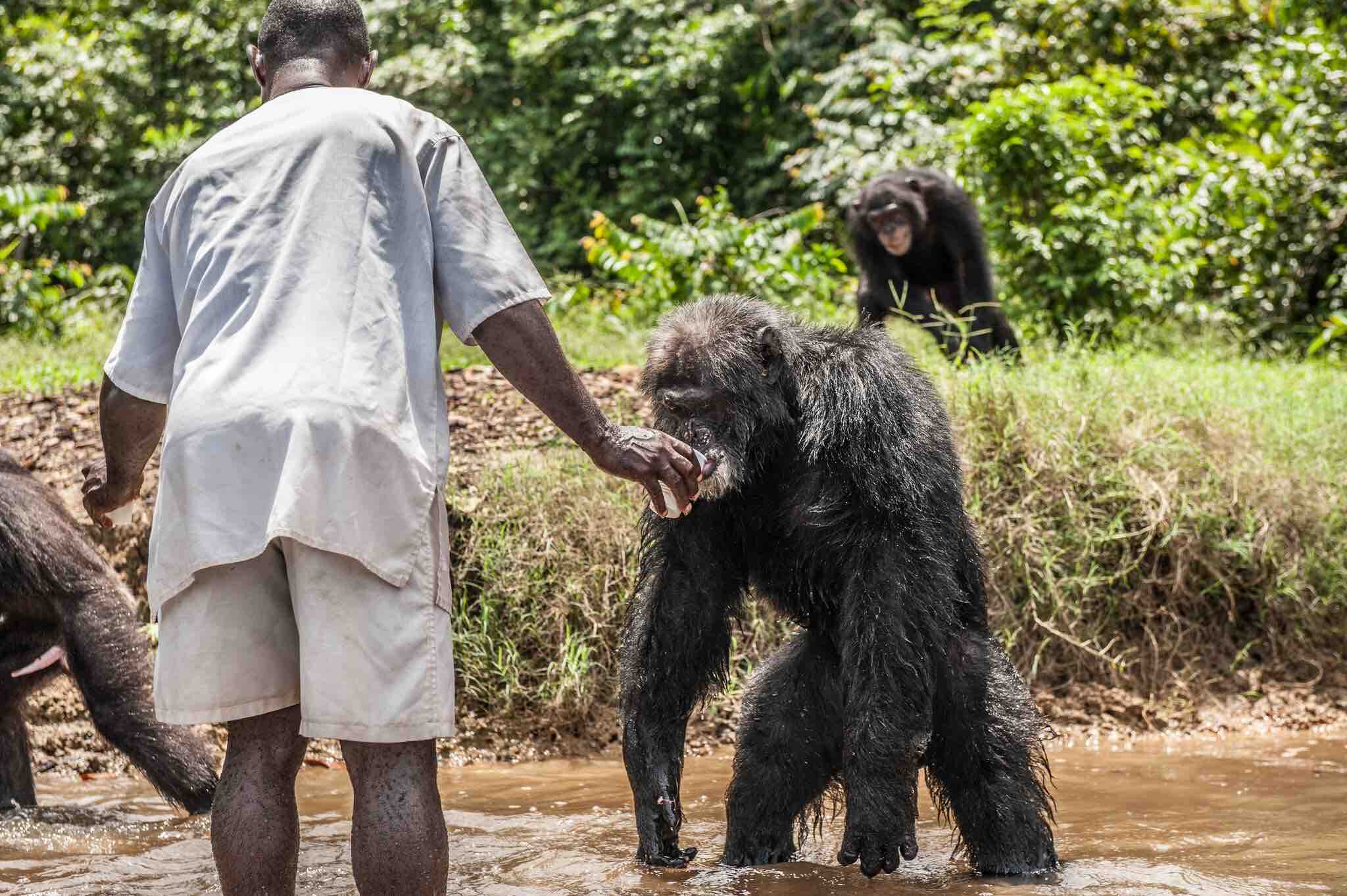
Liberians hired by HSUS feed the chimps abandoned by the New York Blood Center

Liberians hired by HSUS feed the chimps abandoned by the New York Blood Center

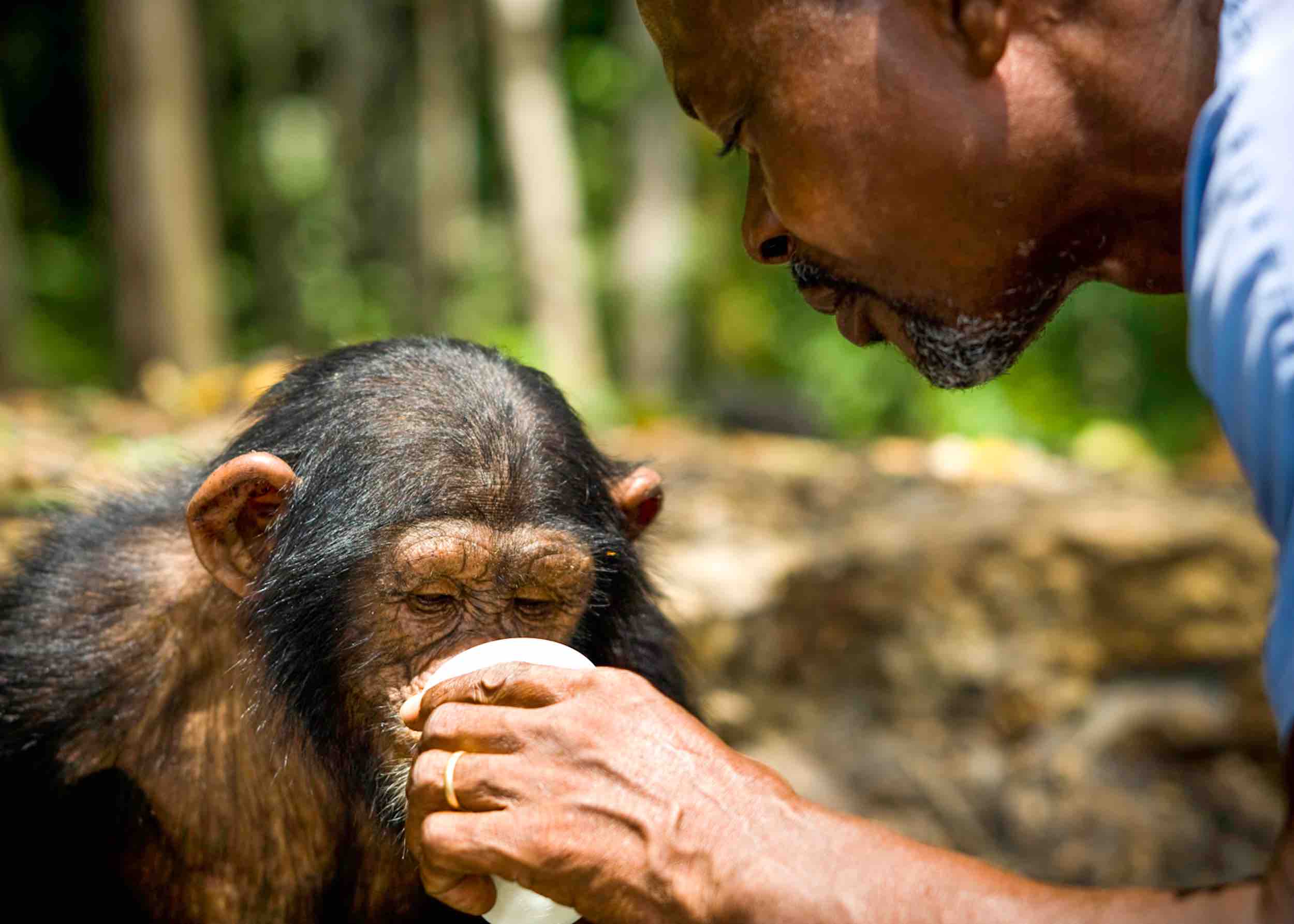
In May, 2015, the NY Times reported that NYBC had “withdrawn all funding,” leaving the chimps to die of starvation and thirst. In order to keep the chimps alive, Liberians who had been employed by NYBC to deliver food and water, began to care for them on a volunteer basis. With virtually no resources and burdened by the Ebola outbreak in Liberia, these volunteers kept the chimpanzees alive until a coalition of over 30 animal conservation groups, led by the Humane Society of the United States (HSUS), raised funds from the public to pay for the chimps’ care on an emergency basis.

Caregiver hired by HSUS with money donated by the public (photo: Jeff Topham)

Caregiver hired by HSUS with money donated by the public (photo: Jeff Topham)

The campaign to compel NYBC to reinstate funding for the chimps has escalated with activists targeting the organization’s major corporate donors. One former donor, Citigroup, contributed $50,000 toward the care of the chimps and stated that “the situation is not tolerable.” MetLife, on the other hand, has refused to make a public statement or meet with the community in spite of the fact that it is NYBC’s largest corporate donor and partner.

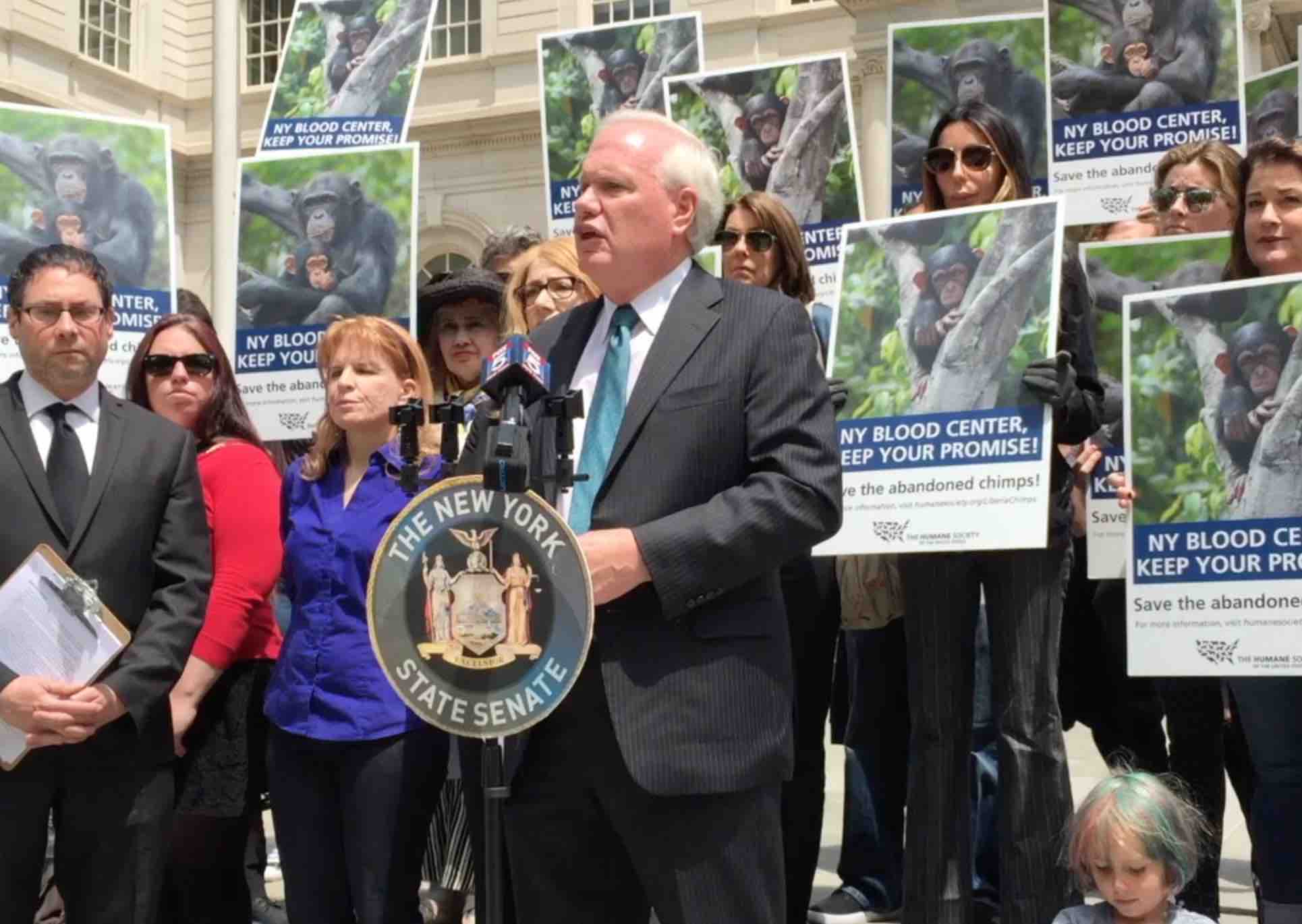
NY State Senator Tony Avella Demands that NY Blood Center reinstates funding for the 66 chimps who they abandoned.

NY State Senator Tony Avella Demands that NY Blood Center reinstates funding for the 66 chimps who they abandoned.

At a press conference organized by HSUS, NY State Senator Tony Avella and NY State Assembly Member Linda Rosenthal condemned NYBC’s actions and demanded that the group resume funding for the chimps

Your Turn

Sign the Care2 petition to MetLife, NYBC’s largest corporate donor.

Join the Facebook page: New York Blood Center: Do the Right Thing to stay apprised of news and to participate in online actions to pressure NYBC board members to fulfill their promise to provide lifelong care to their laboratory chimps.

Use the tweet sheet to contact MetLife, NYBC and their stakeholders.

Follow TheirTurn on Twitter, and follow “Save NYBC Chimps” on Instagram and Twitter.


Elected Officials Demand That NY Blood Center Reinstate Funding for Abandoned Chimps (VIDEO)

May 23, 2016 by 1 comment


The News

Elected officials in New York held a press conference at City Hall to demand that the New York Blood Center fulfill its promise to provide lifelong care for the 66 ex-lab chimpanzees who the group abandoned on islands in Liberia with no food or water. The press conference was organized by the Humane Society of the United States (HSUS), which has stepped in on an emergency basis to feed the chimps using money raised through a GoFundMe campaign.

After demanding that NYBC resumes the funding, New York State Assembly Member Linda Rosenthal said, “This isn’t a scene out of Lost,” referring to the TV series in which airplane crash survivors are stranded on a desert island. “This is real life for these chimpanzees.”

New York State Senator Tony Avella also condemned NYBC’s decision to abandon the chimpanzees: “They used them for 30 years, and now they just dump them on this island. So we stand here today to tell the New York Blood Center to do the right thing and follow through on your commitment.”

During the press conference, Joyce Friedman, the NYC Coordinator for HSUS, announced that ten New York City Council Members wrote an open letter to the NYBC demanding that the organization resumes funding:

Letter from NYC Council Members to NYBC

Letter from NYC Council Members to NYBC

For a thirty year period starting in the mid-1970s, NYBC conducted experiments on over 400 hundred chimpanzees in Liberia, where they could capture, breed and experiment on them with little regulatory oversight. After the research was conducted, NYBC moved the survivors onto six islands with no natural food or water and made a public commitment to provide them with lifelong care.

Liberians hired by HSUS feed the chimps abandoned by the New York Blood Center

Liberians hired by HSUS feed the chimps abandoned by the New York Blood Center (photo: Jeff Topham)

In May, 2015, the NY Times reported that NYBC had “withdrawn all funding,” leaving the chimps to die of starvation and thirst. In order to keep the chimps alive, Liberians who had been employed by NYBC to deliver food and water, began to care for them on a volunteer basis. With virtually no resources and burdened by the Ebola outbreak in Liberia, these volunteers kept the chimpanzees alive until an HSUS-led coalition of over 30 animal conservation groups raised funds from the public to pay for the chimps’ care on an emergency basis.

Daily food delivery (photo: Jeff Topham)

Daily food delivery (photo: Jeff Topham)

Your Turn

Sign the Care2 petition to MetLife, NYBC’s largest corporate donor.

Join the Facebook page: New York Blood Center: Do the Right Thing to stay apprised of news and to participate in online actions to pressure NYBC board members to fulfill their promise to provide lifelong care to their laboratory chimps.

Use the tweet sheet to contact MetLife, NYBC and their stakeholders.

Follow TheirTurn on Twitter, and follow “Save NYBC Chimps” on Instagram and Twitter.


Animal Rights Activists Protest Live Pigeon Light Show (VIDEO)

May 20, 2016 by Comments are off for this post


The News

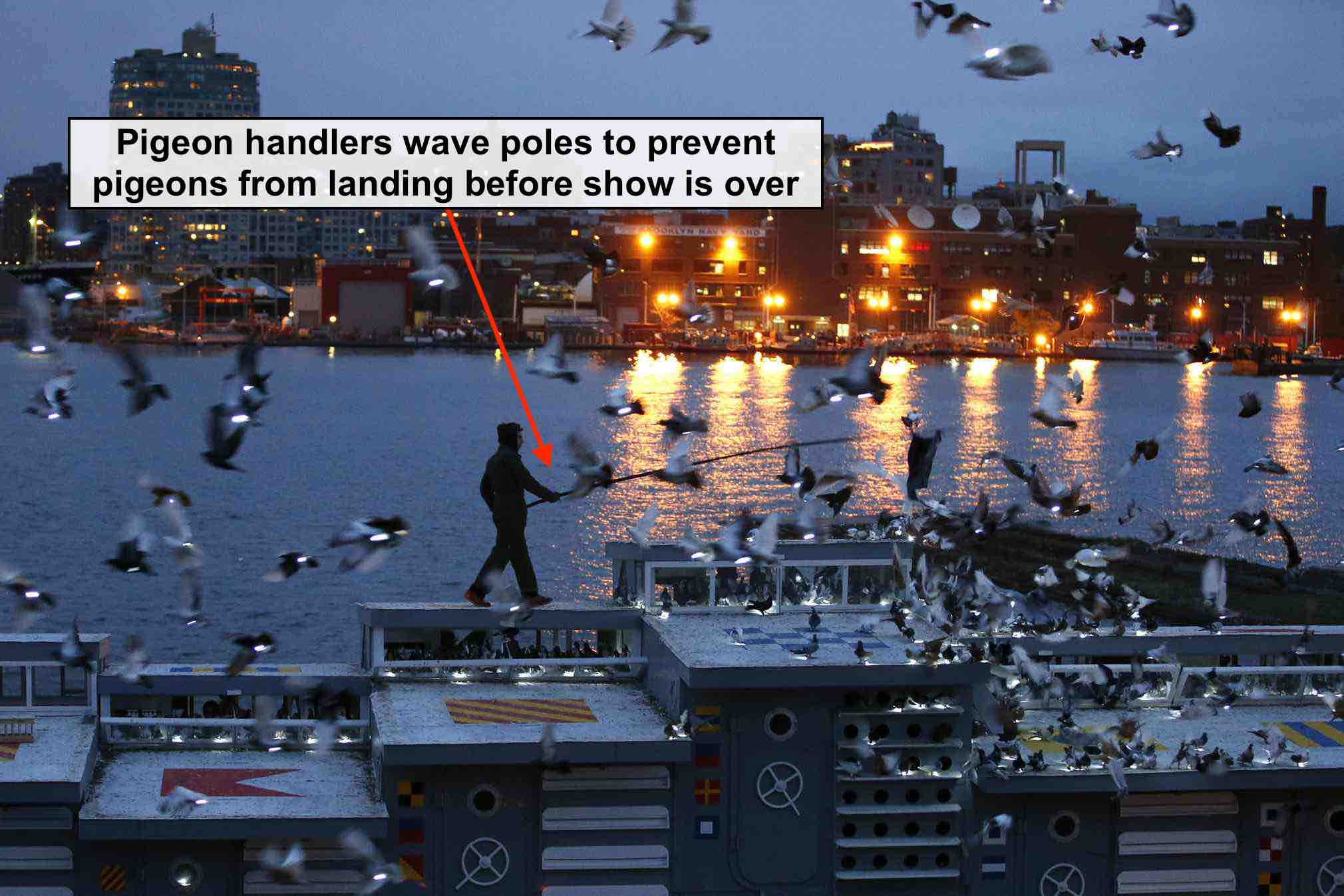
Citing animal exploitation and cruelty, at least two dozen activists in NYC staged a protest at “Fly By Night,” a month-long art exhibit during which 2,000 pigeons wearing LED lights are forced to fly in the dark over the East River, potentially subjecting them to stress, disorientation and drowning in the frigid water below. Pigeons, who have poor night vision, only fly during daylight hours.

Protest organizer Nora Constance Marino, President of the Animal Cruelty Exposure Fund, told TheirTurn that the group’s message is very clear: “Animals are not art exhibits.” Marino’s efforts resulted in a New York Times article about the protest, which opens with a strong animal rights message: ‘No one asked 2,000 pigeons if they wanted to have lights strapped to their legs in the name of art. Nor did anyone ask the birds how they felt about being shooed from their homes at dusk and sent flying up to illuminate the Brooklyn sky.”

Pigeons have limited vision in the dark, but they are forced to "Fly By Night" for art exhibit

Pigeons have limited vision in the dark, but they are forced to “Fly By Night” for art exhibit

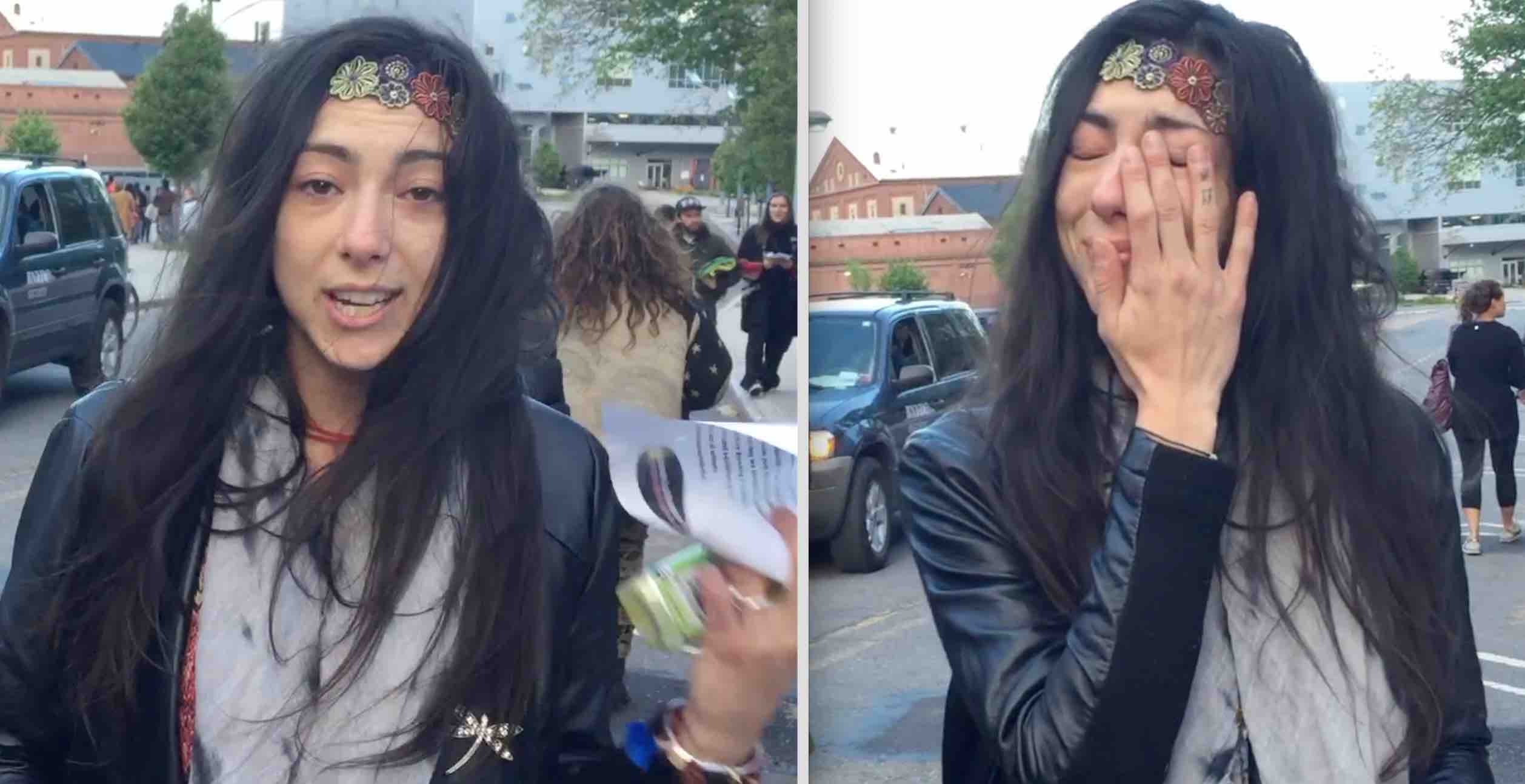
Protester Elena Natale said that several ticket-holders decided to boycott the event after activists explained why using live animals in  art exhibits is inhumane: “While most attendees put on their blinders as they walked past us, several open-minded people wanted to understand why we were protesting.”

"Fly By Night" Ticket holder breaks into tears after speaking to activists

“Fly By Night” Ticket holder breaks into tears after speaking to activists

In a post on the Facebook page of Creative Time, the arts organization that is funding the pigeon show, Karen Davis, President of the national avian advocacy group United Poultry Concerns, condemned the event: “Perhaps what strikes me most significantly about this Fly By Night exhibit is the part where the pigeons are trying to land and get rest, but are forced to fly even though they are bewildered, scared and exhausted. . . No one who respects pigeons and empathizes with them as fellow creatures would dream of mistreating them so meanly, strapping gadgetry to them, and putting them in danger.”

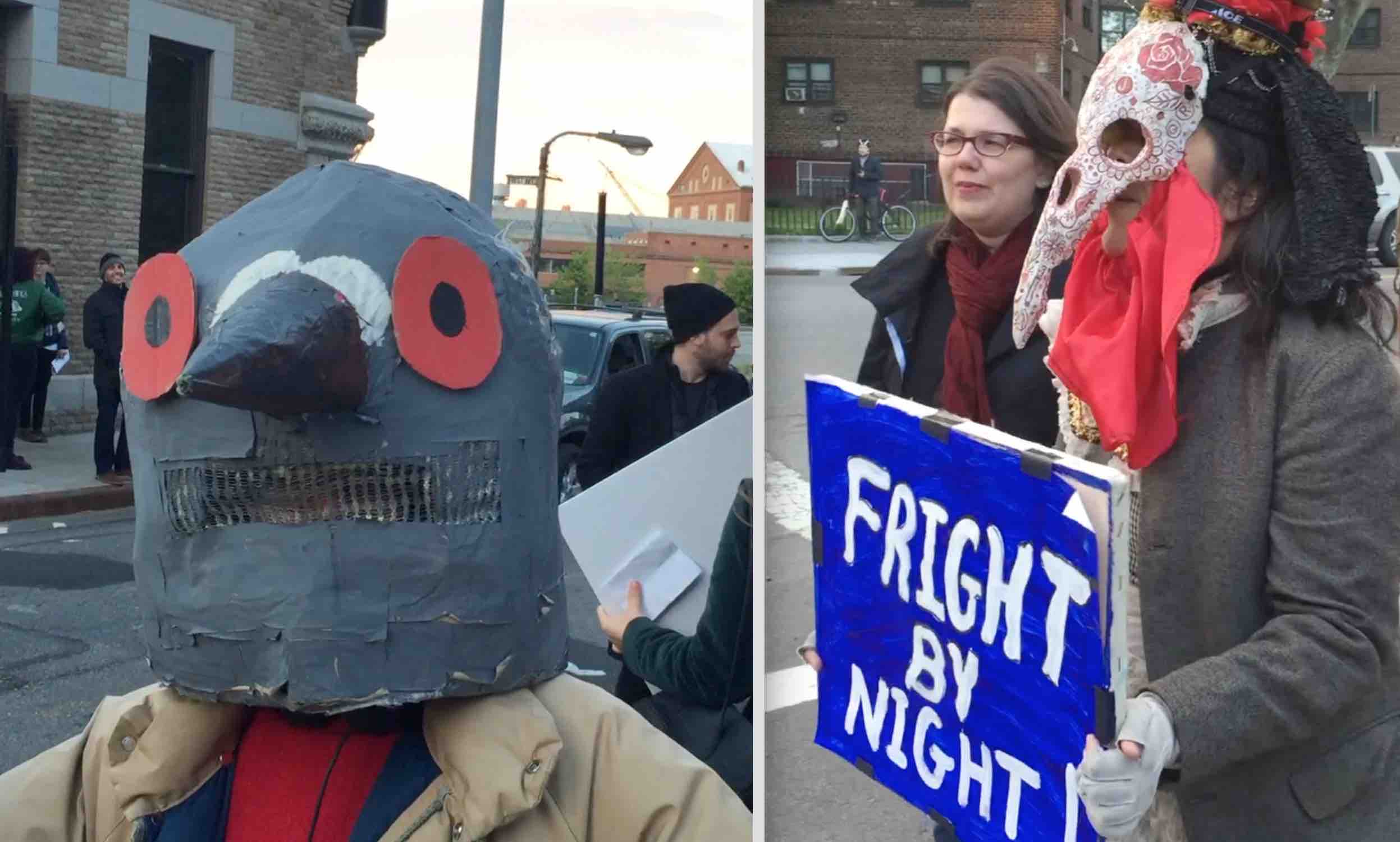
From left to right: Disgruntled pigeon, pigeon advocate Tina Trachtenburg

From left to right: Disgruntled pigeon, pigeon advocate Tina Trachtenburg

The use of live animals in art exhibits was recently addressed in a CounterPunch article critical of the practice written by Elliot Sperber, a New York-based writer and lawyer.

Your Turn

Sign the petition to end “Fly By Night.”

Post a comment on Creative Time’s Facebook page.

Tweet the organization that is producing the event, Creative Time, and the artist, Duke Riley.