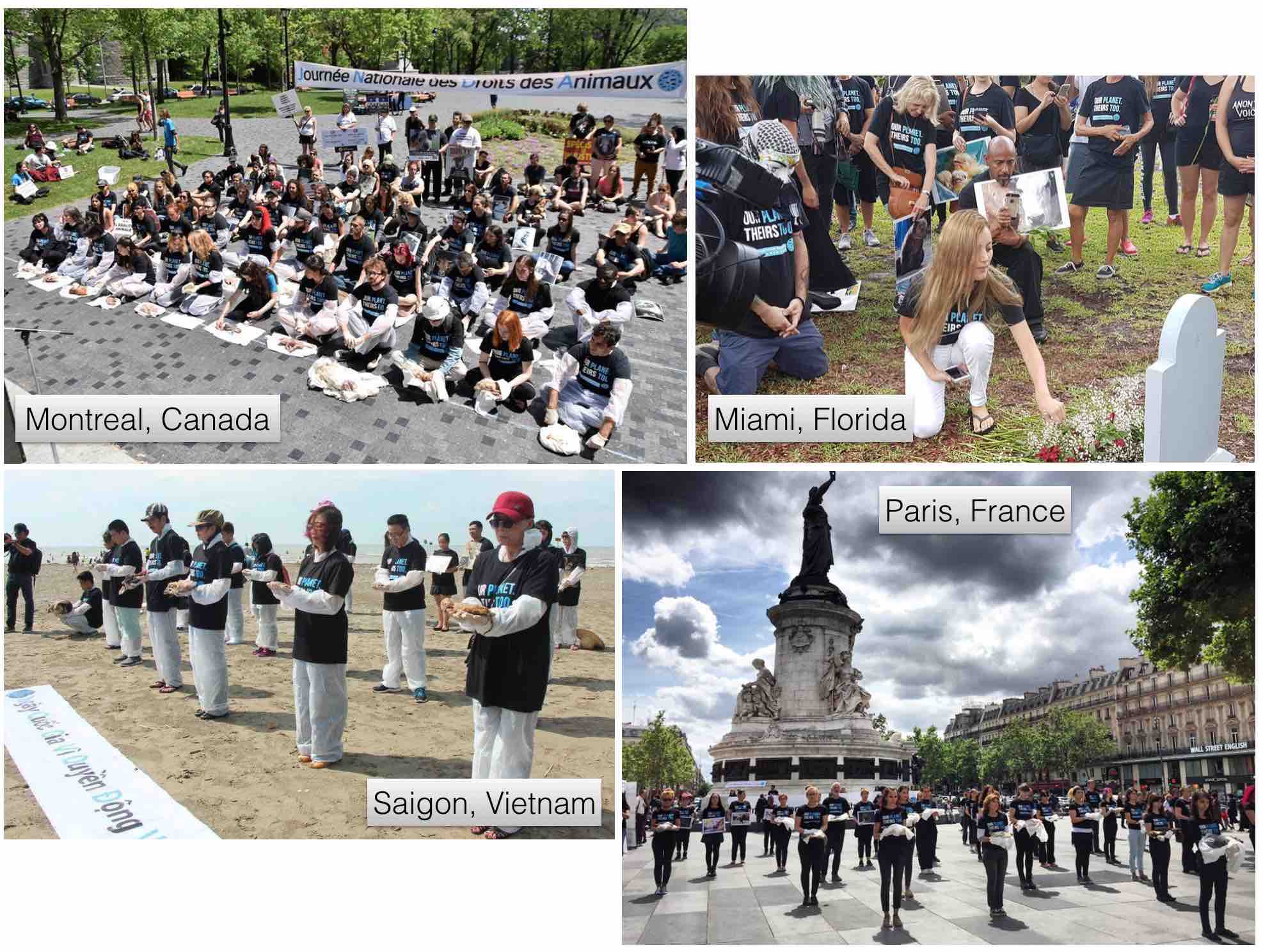
On June 4th, animal rights activists in 22 cities around the world took to the streets to participate in the 7th annual National Animal Rights Day (NARD).
Animal rights activists in North America, Europe, Asia and Australia participated in 2017 National Animal Rights Day
According to the organizer, the non-profit organization Our Planet. Theirs Too., NARD “gives a voice to all animals” and will continue to do so “until all animals are free from enslavement and their rights are established and protected by law.”
TheirTurn documented the ceremony in New York City, which attracted hundreds of participants and onlookers.
NARD events consist of a memorial ceremony for the billions of animals killed each year by humans; the reading and signing of a Declaration of Animal Rights; and a rally with speakers covering topics from animal rights advocacy to making the switch to a cruelty-free lifestyle.
Participants in NARD’s NYC used deceased animals during the memorial service
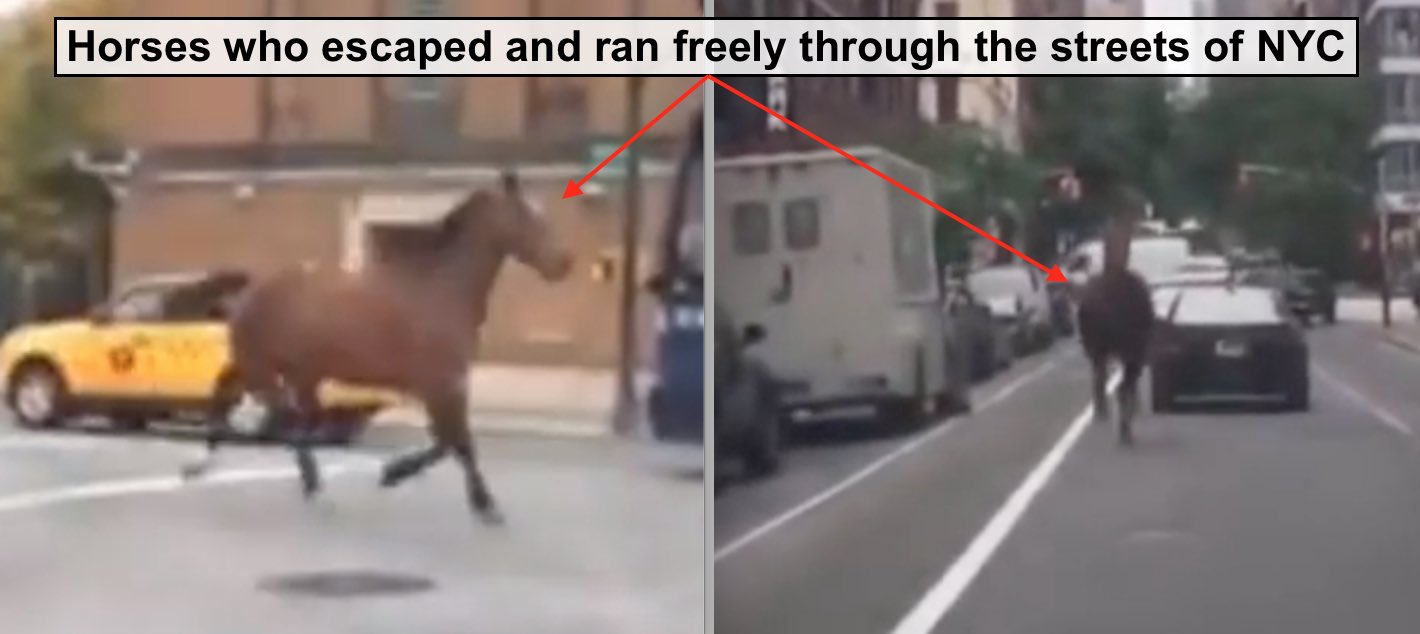
Just days after an untethered carriage horse ran wildly through the streets of midtown Manhattan and a whistleblower released a photo to the media of another horse living in squalor, animal rights activists held a press conference at one of the stables demanding an investigation from city officials and justice for the horses.
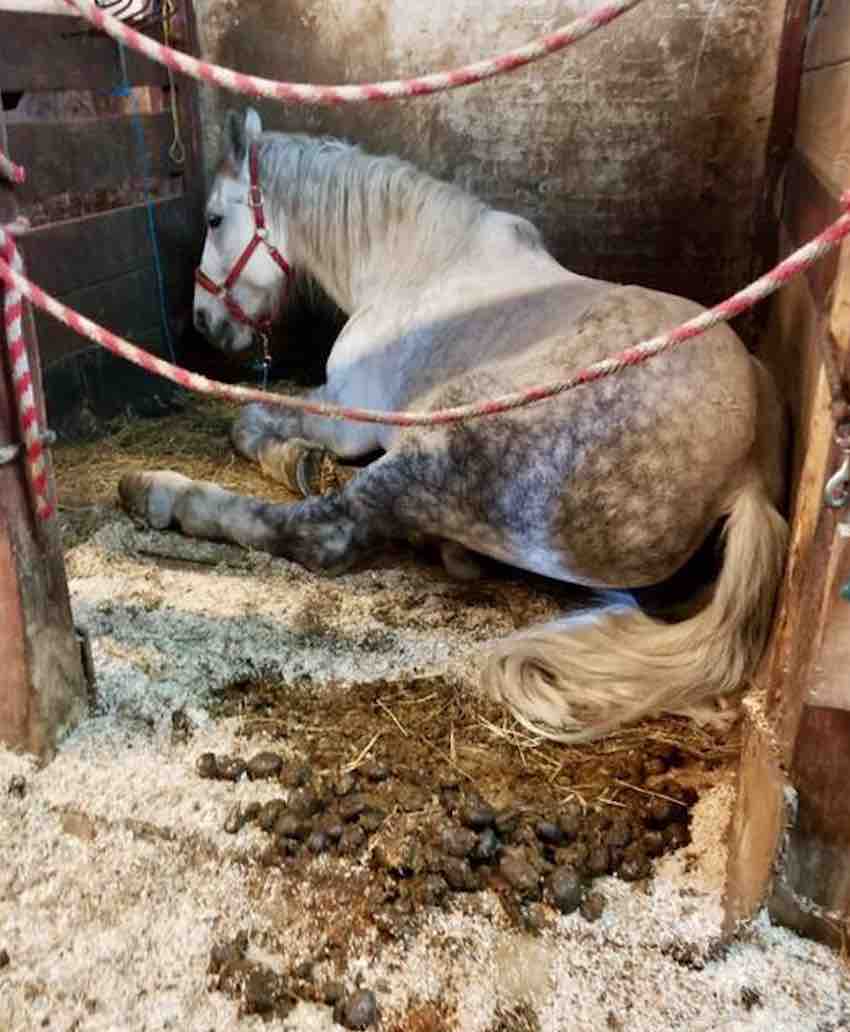
In reaction to the photo (below), which was taken surreptitiously by a city employee, NYCLASS Campaigns Director Jill Carnegie told reporters, “If horses are living in their own excrement, then the Department of Health, which is supposed to regulate this industry, is asleep at the wheel.” Edita Birnkrant, NYCLASS’ Executive Director, added, “The stall in this photograph is so small that the horse doesn’t have enough space to spread out or turn around. What’s worse is that these horses, who are herd animals, can’t graze, roam freely or interact with other horses because NYC has no pasture.”
A city employee employee took this photo of a horse living in squalor at the West Side Livery, a carriage horse stable in Manhattan
Since 2007, animal rights activists in NYC have been campaigning to ban horse-drawn carriages from NYC, arguing that nervous prey animals who have a tendency to spook should not be forced to pull carriages in the congested streets of midtown Manhattan.
Animal rights activists argue that animals who spook and bolt should not be working in city streets.
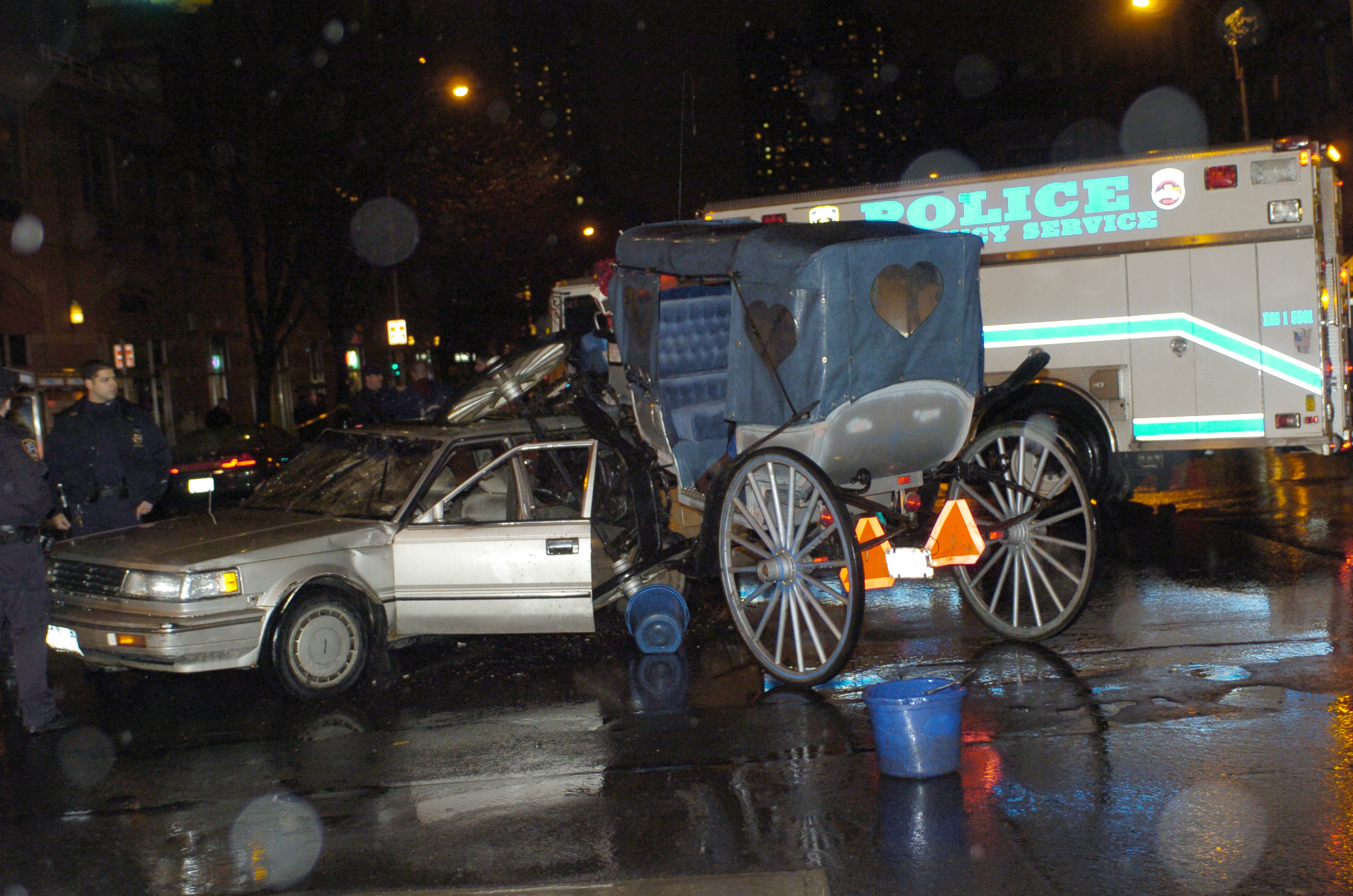
This 2006 accident in which a spooked horse named Spotty died after bolting and crashing sparked the movement to ban horse-drawn carriages from Manhattan (photo: Catherine Nance)
In 2013, NYC Mayoral candidate Bill de Blasio ran for office on a campaign promise to ban horse-drawn carriages if elected. To the dismay of the activists who helped him get elected, his “Watch me do it!” pledge has since been replaced with, “Take it up with the City Council.”
Your Turn
Please join NYCLASS in it effort to compel the Mayor and City Council to take horse-drawn carriages off the streets of NYC.
After being targeted by animal rights activists for two years over its decision to abandon 66 chimpanzees on islands in Liberia, the New York Blood Center (NYBC) caved in to pressure, making a $6 million contribution toward their lifelong care. The decision represents a major victory not only for the chimps but also for animal protection advocates in NYC and around the world who participated in online actions, staged protests and signed Care2 petitions. Here’s a short video from what turned out to be the final protest:
“When I realized that NYBC was prepared to let their chimps die of starvation and thirst on deserted islands after holding them captive in cages for 30 years and conducting hundreds of painful experiments on them, I decided to rally caring people around the world to demand accountability and take action,” said Wally Baldwin, who serves of the Board of the Center for Great Apes and runs the Facebook page, NYBC: Do The Right Thing. “I am gratified that our efforts paid off.”
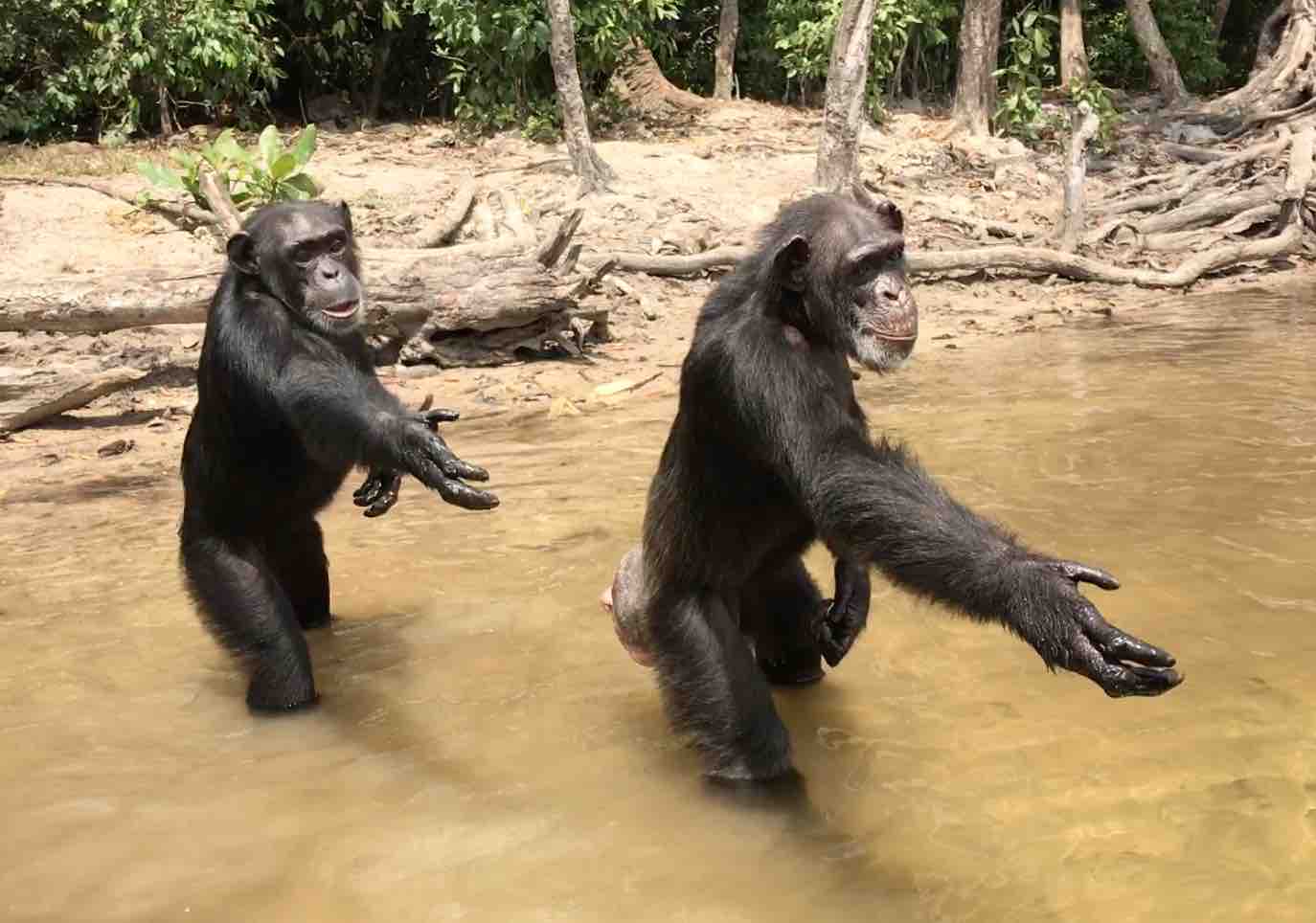
Chimps abandoned by the New York Blood Center on islands in Liberia await their daily delivery of food and water.
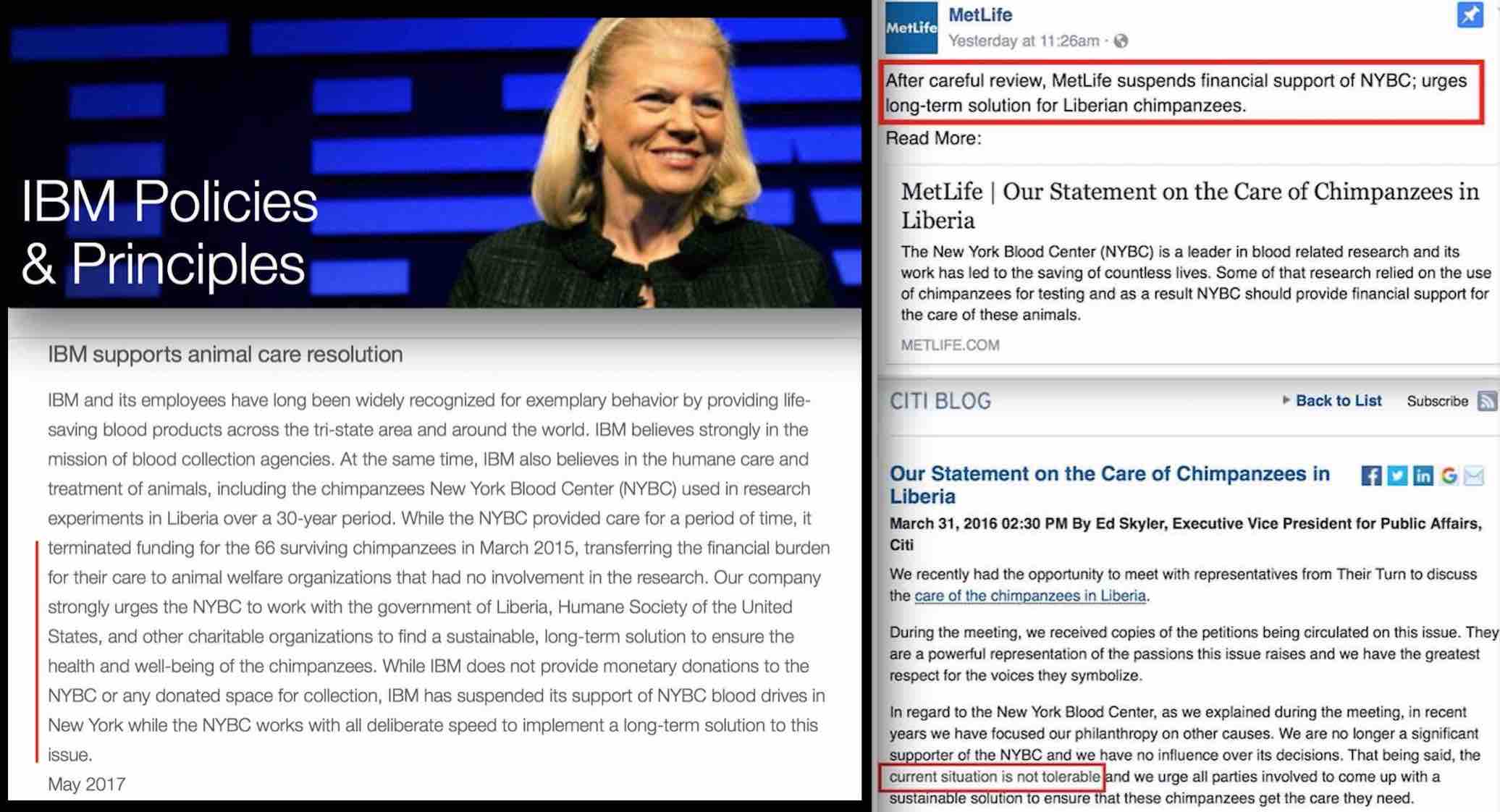
When the New York Times reported in May, 2015, that NYBC cut off all funding for the 66 remaining survivors of its research experiments and for the Liberians who took care of them, grass roots activists in NYC launched a protest campaign that targeted not only NYBC but also its top three corporate partners, IBM, MetLife, and Citigroup. After meeting with the activists and/or being subjected to protests, all three companies issued public statements severing ties with NYBC, and Citigroup made an unsolicited contribution of $50,000 toward the care of the chimps.
“Our ability to compel multinational corporations to take the bold and unusual step of speaking out publicly against an organization with which they had a decades-long relationship demonstrates that grass roots advocacy can effect meaningful change,” said Donny Moss, one of the campaign organizers.
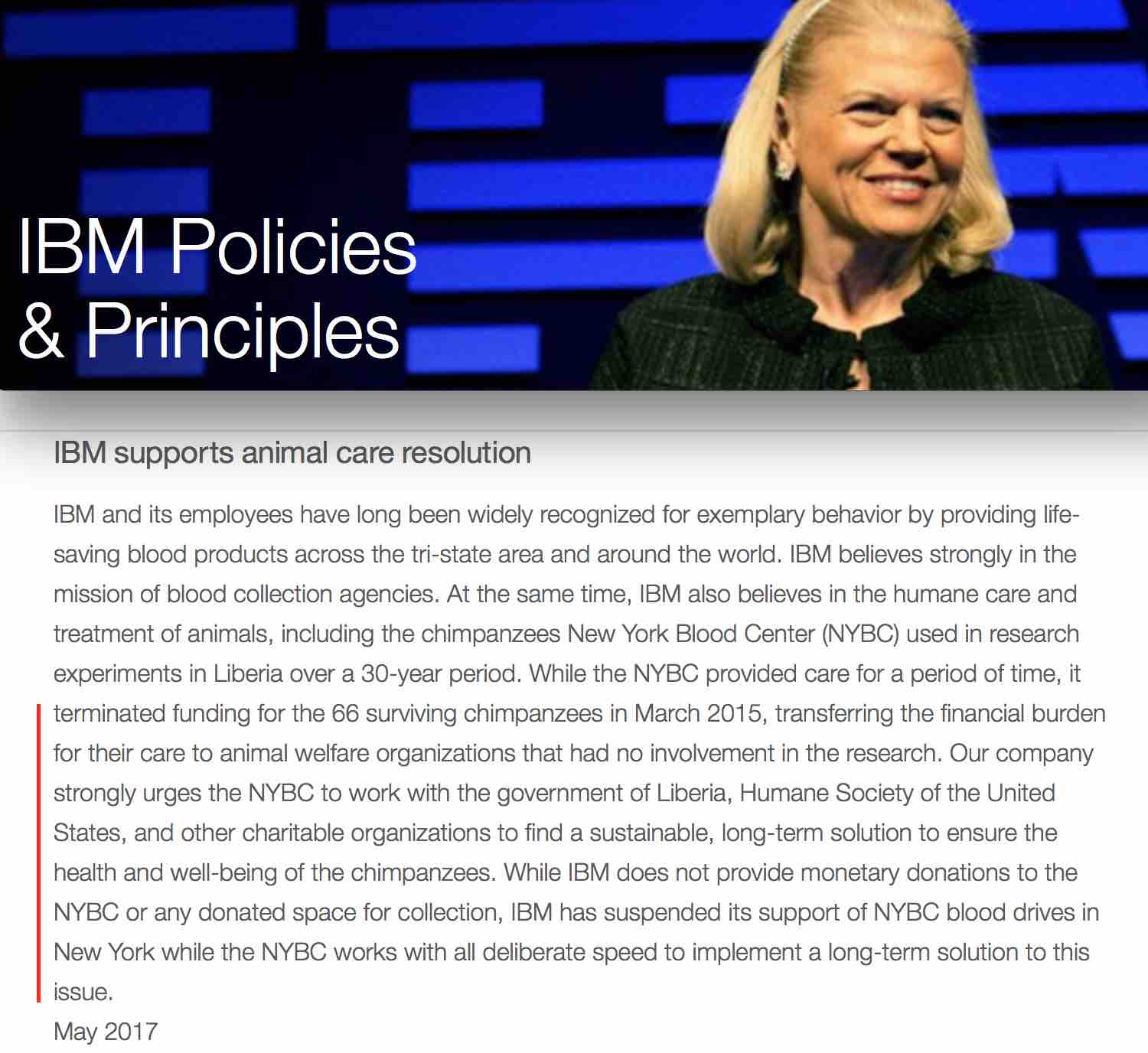
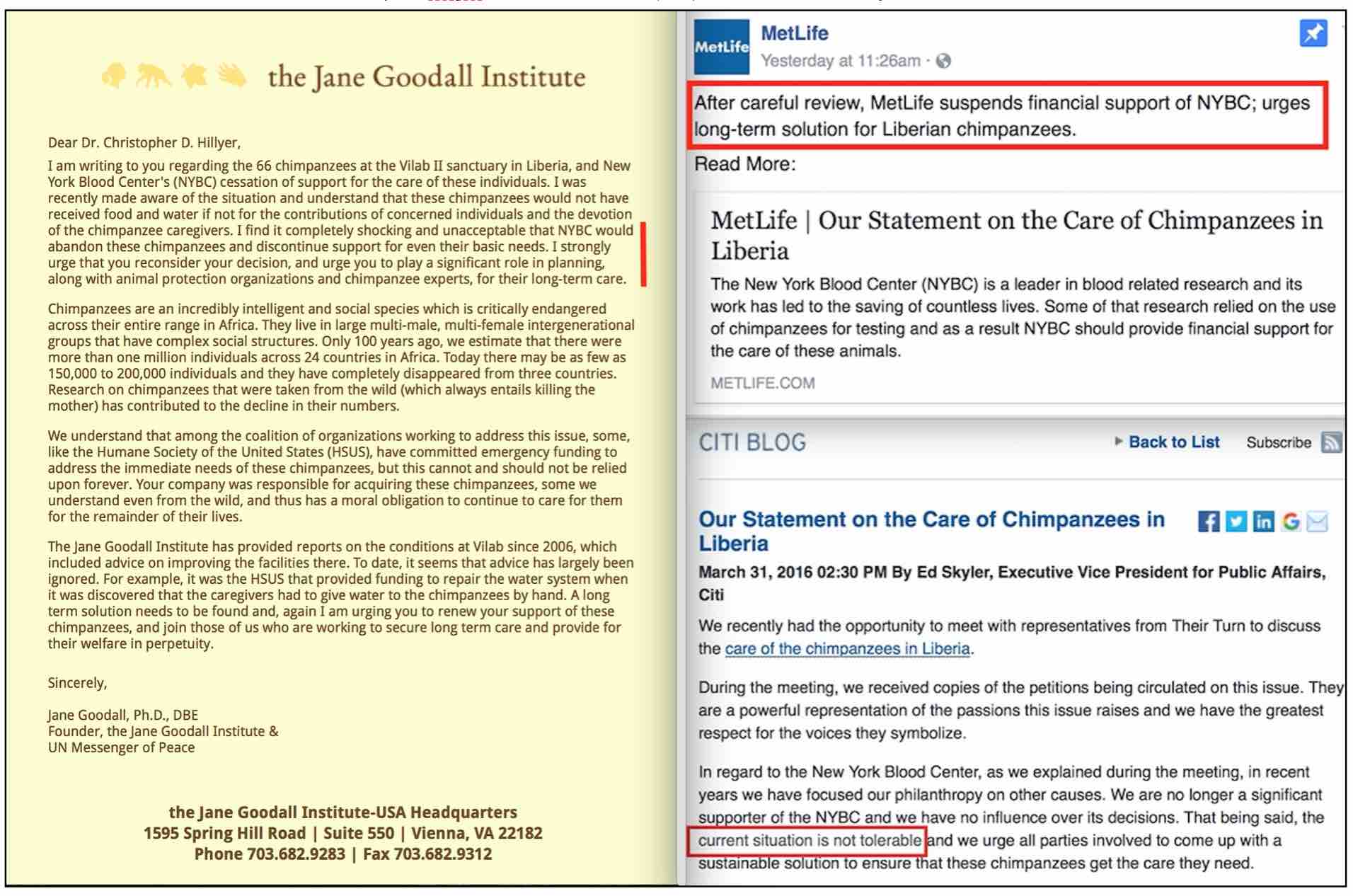
Public statements about the abandoned chimps posted by IBM, Citigroup and MetLife
Other significant milestones in the campaign were the resignations of two of the four NYBC board members targeted by the activists, Owen Garrick, who is based in Oakland, California, and Laurie Glimcher, who also quit her job as Dean of Cornell Medicine and moved to Boston after months of being targeted with protests.
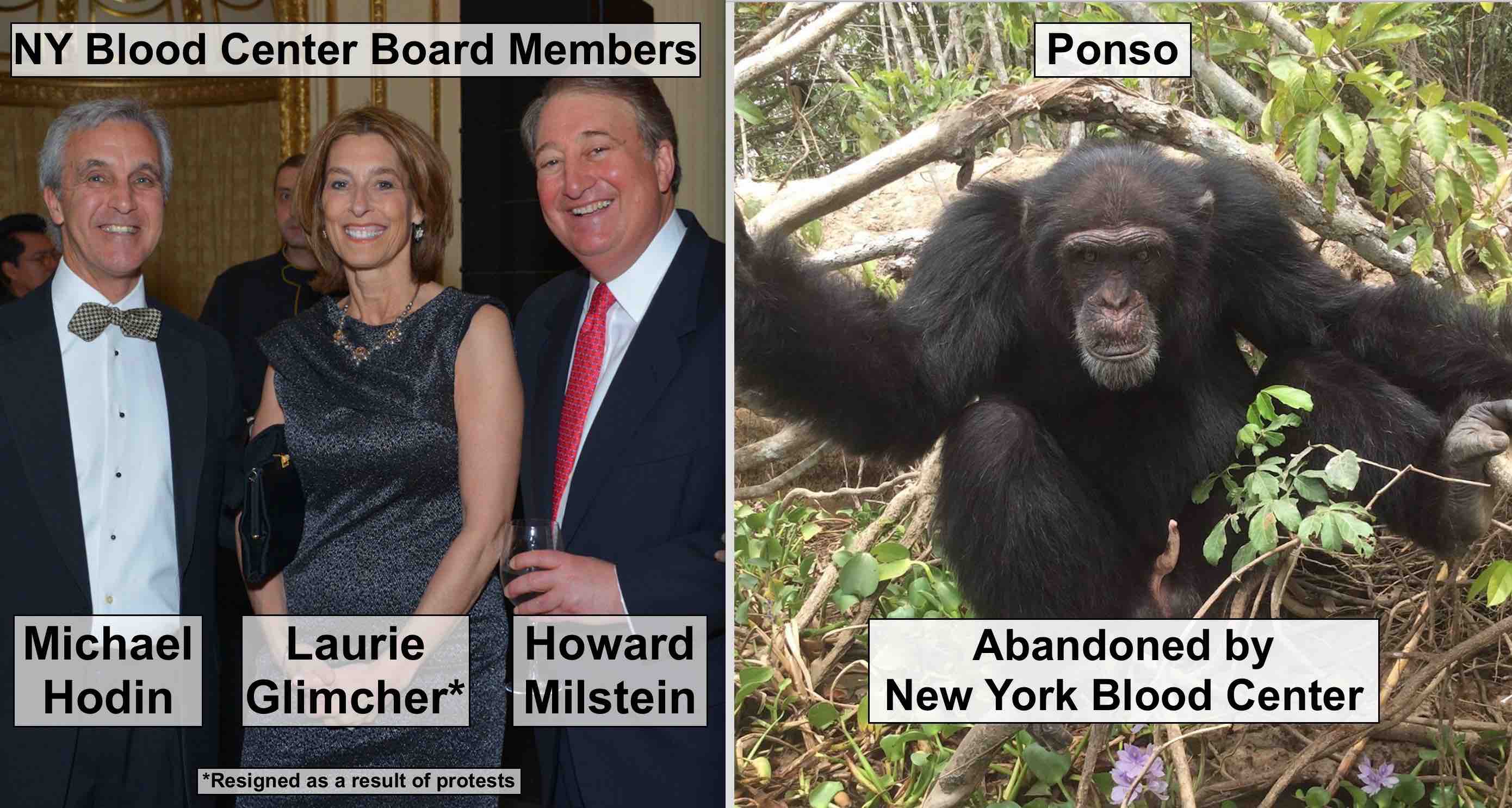
From left to right: Michael Hodin, Laurie Glimcher and Chairman Howard Milstein were three of the four NYBC board members targeted by activists in NYC; Ponso is the sole survivor of a colony of 20 chimps abandoned by the NY Blood Center in the Ivory Coast. Advocates are working with authorities to move him across the border into Liberia so he is not alone and can receive optimal care.
The $6 million contributed by NYBC is expected to cover half of the cost of the lifelong care of the chimps. The Humane Society of the United States (HSUS), which stepped in to take care of the chimps when NYBC abandoned them, will pay for the other half using contributions to its GoFundMe Campaign, which has raised $363,000 since 2015. For more details about the agreement between HSUS and NYBC, please see this press release issued by HSUS.
In August, 2015, HSUS hired Jenny and Jim Desmond, an American couple with experience in great ape rescue, to oversee the care of the chimps. With funds donated to HSUS, the Desmonds were able to not only hire back almost all of the Liberians who lost their jobs when NYBC cut the funding but also make dramatic improvements to the care of the chimps, including daily feedings (instead of every other day); an improved diet that takes their nutritional needs into account; and birth control.
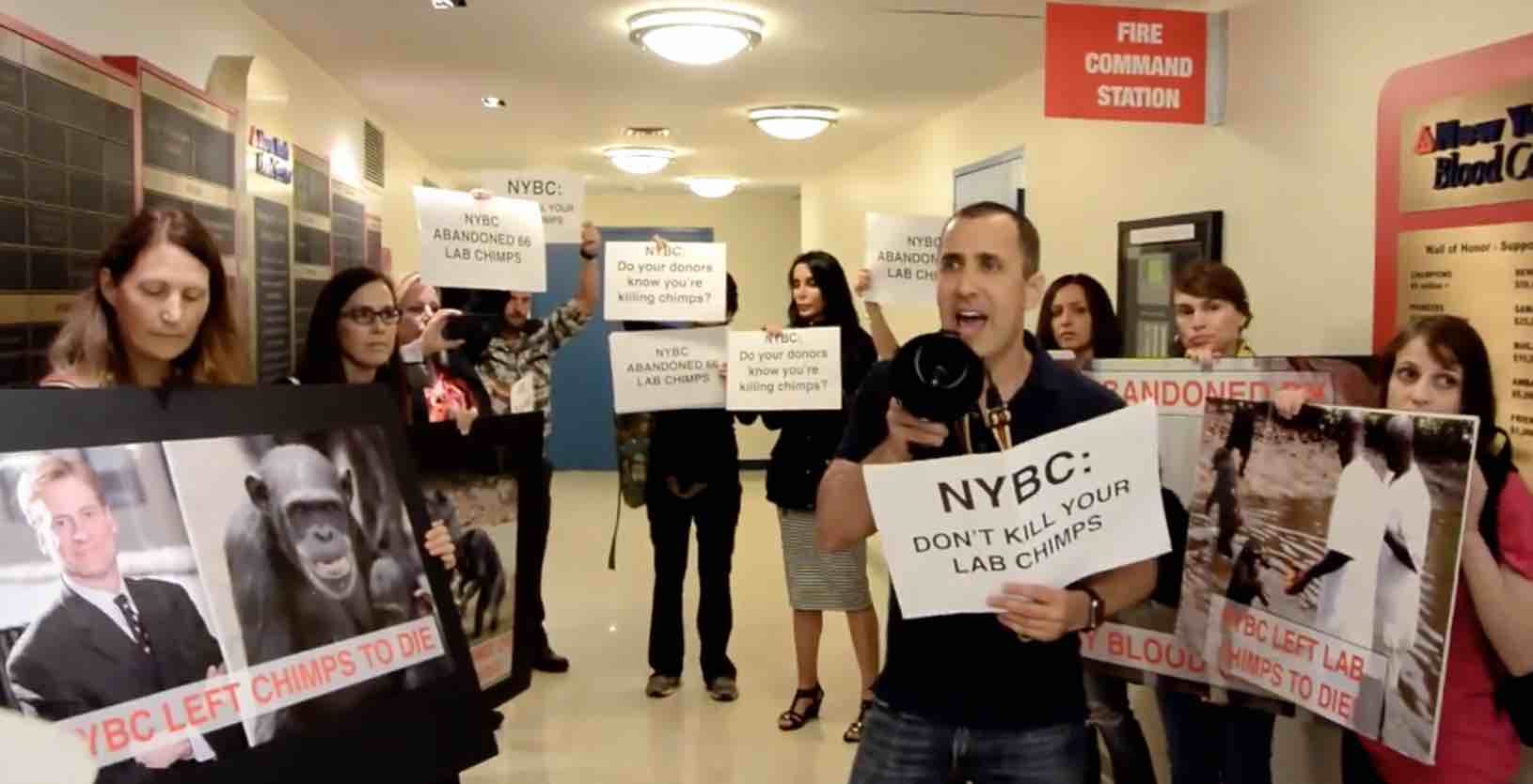
Activists stage protest inside the lobby of the New York Blood Center
In addition to taking care of the chimps, HSUS has worked to raise awareness of their plight by staging a massive protest at NYBC and making public statements in conjunction with Dr. Jane Goodall, former U.S. Ambassador to the United Nations Bill Richardson, primatologist Dr. Brian Hare, and actresses Kate and Rooney Mara who traveled to Liberia to visit the islands.
Your Turn
Thank you to all of the activists around the world who have spoken out on behalf of the abandoned chimps. Together, we did this!
Activists from as far as California and Nevada traveled to New York to say “Good Riddance” to “The Cruelest Show of Earth” during Ringling’s last-ever performance.
Organized by PETA, LION and CompassionWorks International, the final protest, which took place at the Nassau Coliseum in Long Island, was not only a celebration but also an opportunity to encourage Ringling fans to abstain from patronizing other traveling circuses that beat wild animals into submission.
Animal rights activists celebrate the last-ever performance of Ringling Bros.
PETA began protesting Ringling when the organization was formed in the early 1980s. Since then, the animal rights group has staged protests at thousands of performances around the country, at times following the circus from city to city in a “Ringling Beats Elephants” van.
PETA followed Ringling around the country in a van in an effort to educate patrons
As undercover videos of circus trainers terrorizing animals emerged, many local animal rights groups around the country began to protest the circus and lobby their lawmakers in support of restrictions on the use of animals in performances.
In recent years, several municipalities in the U.S. banned the use of bull hooks, the weapons used by “trainers” to beat elephants into submission. Without bull hooks, Ringling could not use elephants in their shows. These bans, coupled with increasing public discomfort about the use of elephants, triggered Ringling to remove them from the show starting in 2016. This victory, celebrated by activists worldwide, was overshadowed by an even bigger victory – Ringling’s announcement in 2017 that it was shutting down the circus altogether. A representative from the Circus Fans Association of America told TheirTurn that the Ringling decided to end its 146 year run because of a substantial drop in revenues following the removal of elephants. Animal rights groups say that ticket sales declined because of the public’s increasing discomfort with the use of any animals in circuses.
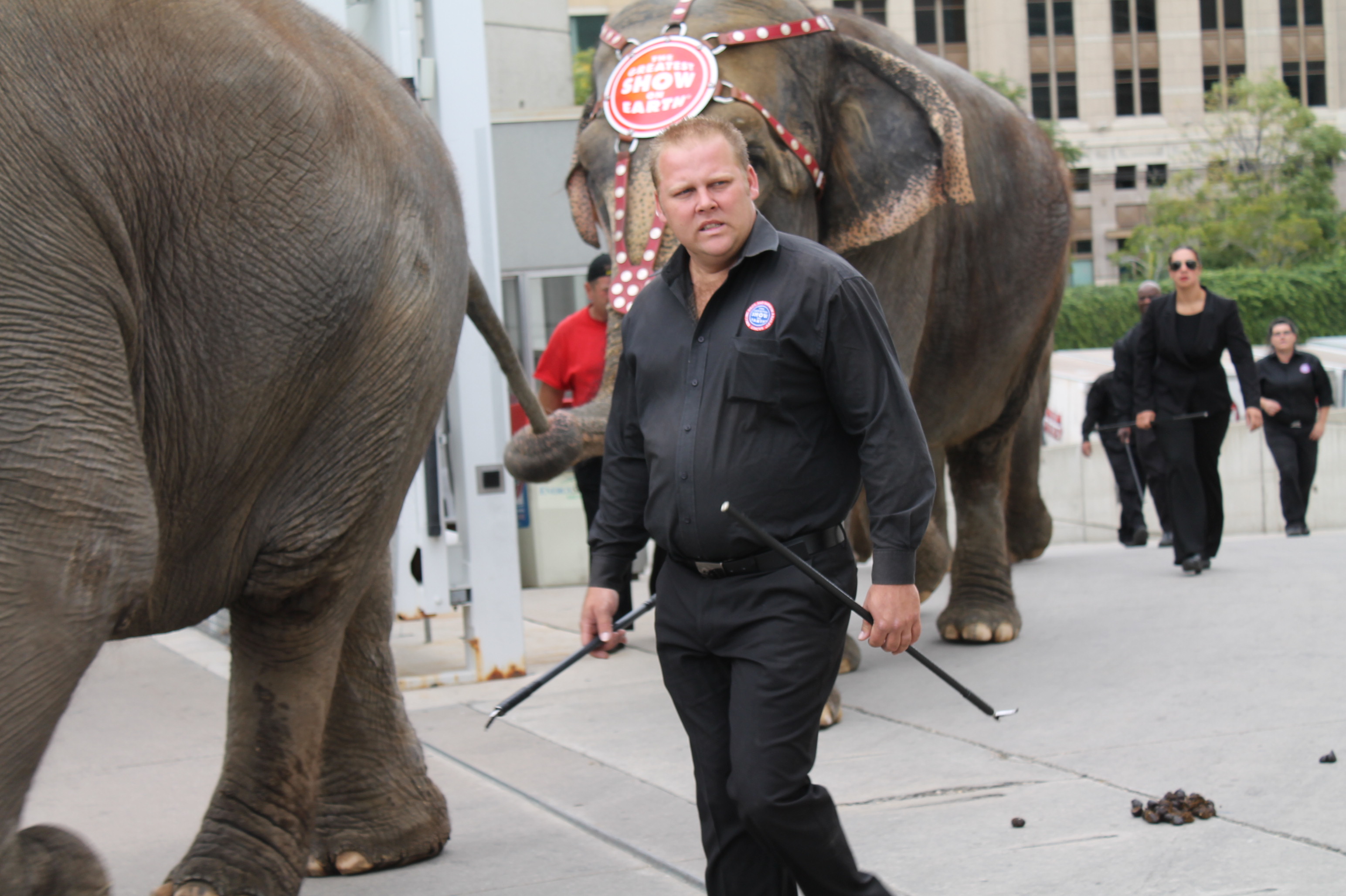
Elephant “trainer” with Ringling carries bull hooks to scare animals into submission
The 100+ activists at Ringling’s final performance were greeted with hostility by some patrons, as expected. Parents were the angriest, as they don’t want their children’s circus experience to be tainted by the presence of activists wielding “Ringling Beats Animals” posters. While some patrons gave protesters the middle finger or shouted “Snowflake” or “Go Trump” while driving past the protesters, most just laughed nervously.
In a statement posted on its website, IBM announced that it has severed all ties with the NY Blood Center on account of the organization’s decision to abandon 66 chimpanzees with no food or water on islands in Liberia. IBM joins NYBC’s other long term corporate partners, MetLife and Citigroup, in demanding accountability from the organization.
IBM severs ties with NY Blood Center over chimp abandonment
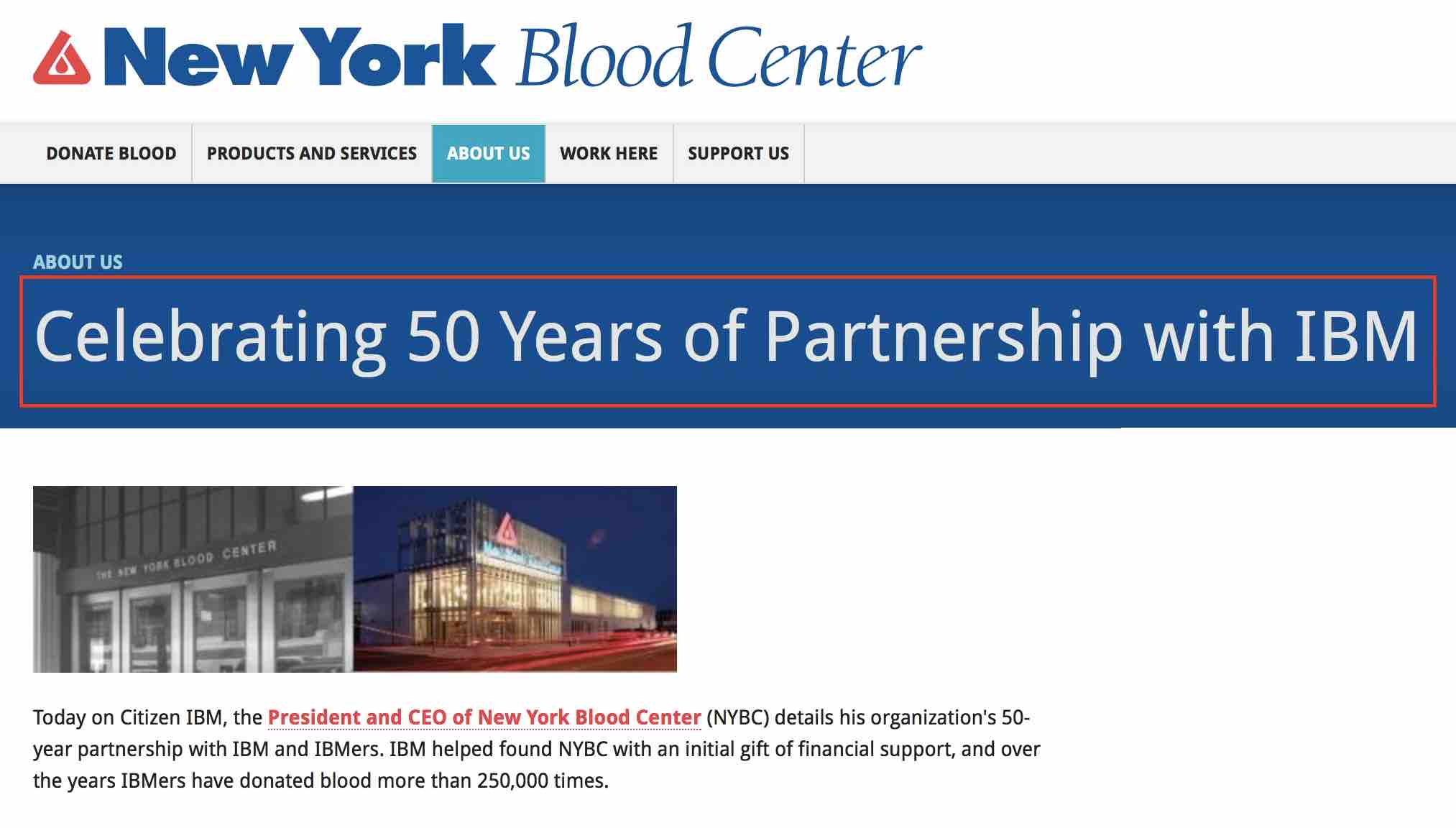
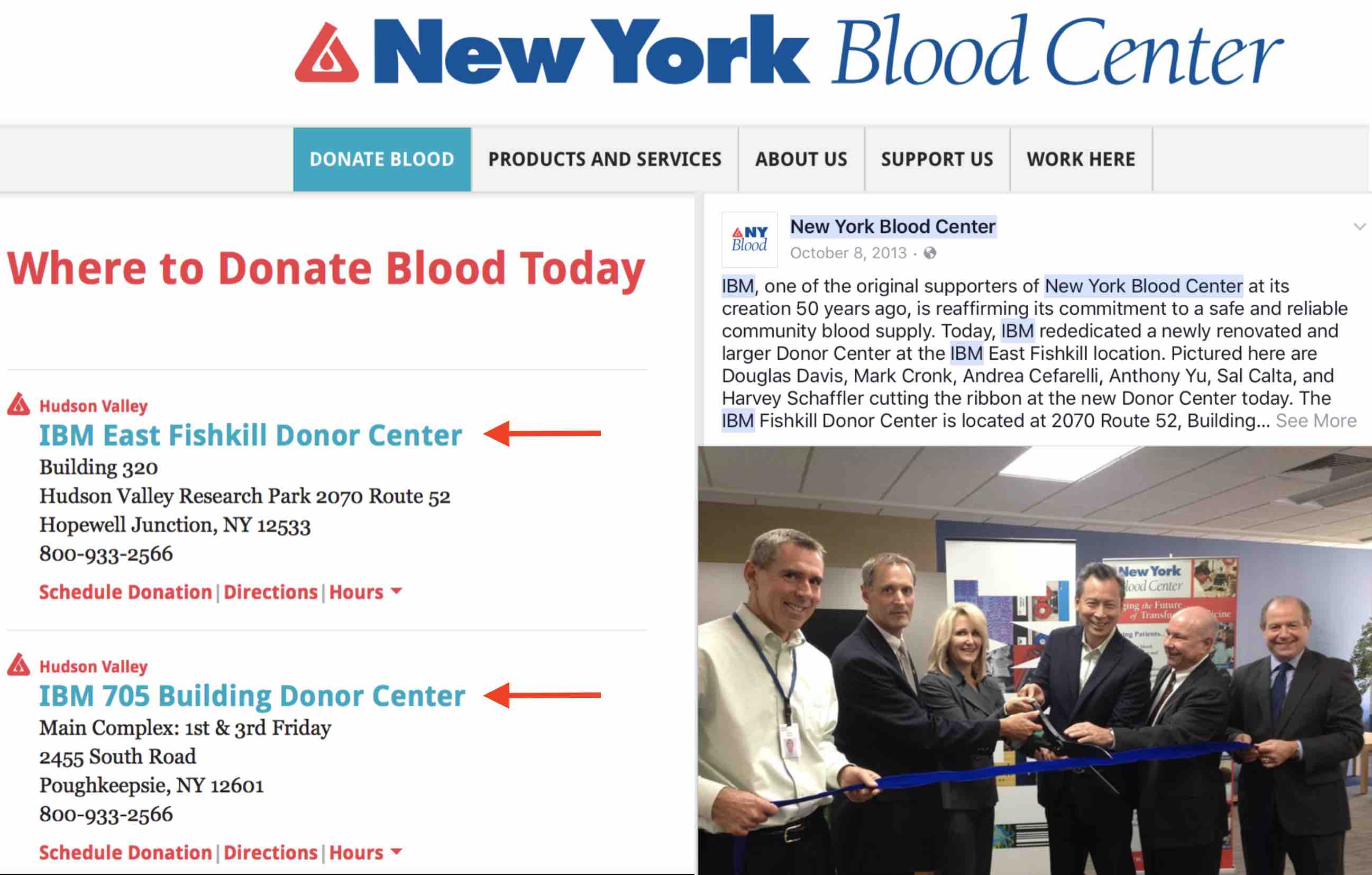
The announcement, which states that IBM has suspended its blood drives, marks the end of a 54 year relationship between IBM and NYBC.
IBM has terminated its 54 year partnership with IBM on account of the abandoned chimps
IBM donated space to the New York Blood Center for blood drives.
IBM’s decision to sever ties with the NY Blood Center marks the end of a 54 relationship.
The news comes after a protest at IBM and months of discussions with animal welfare advocates who have been working to convince NYBC’s corporate parters to demand accountability from the organization.
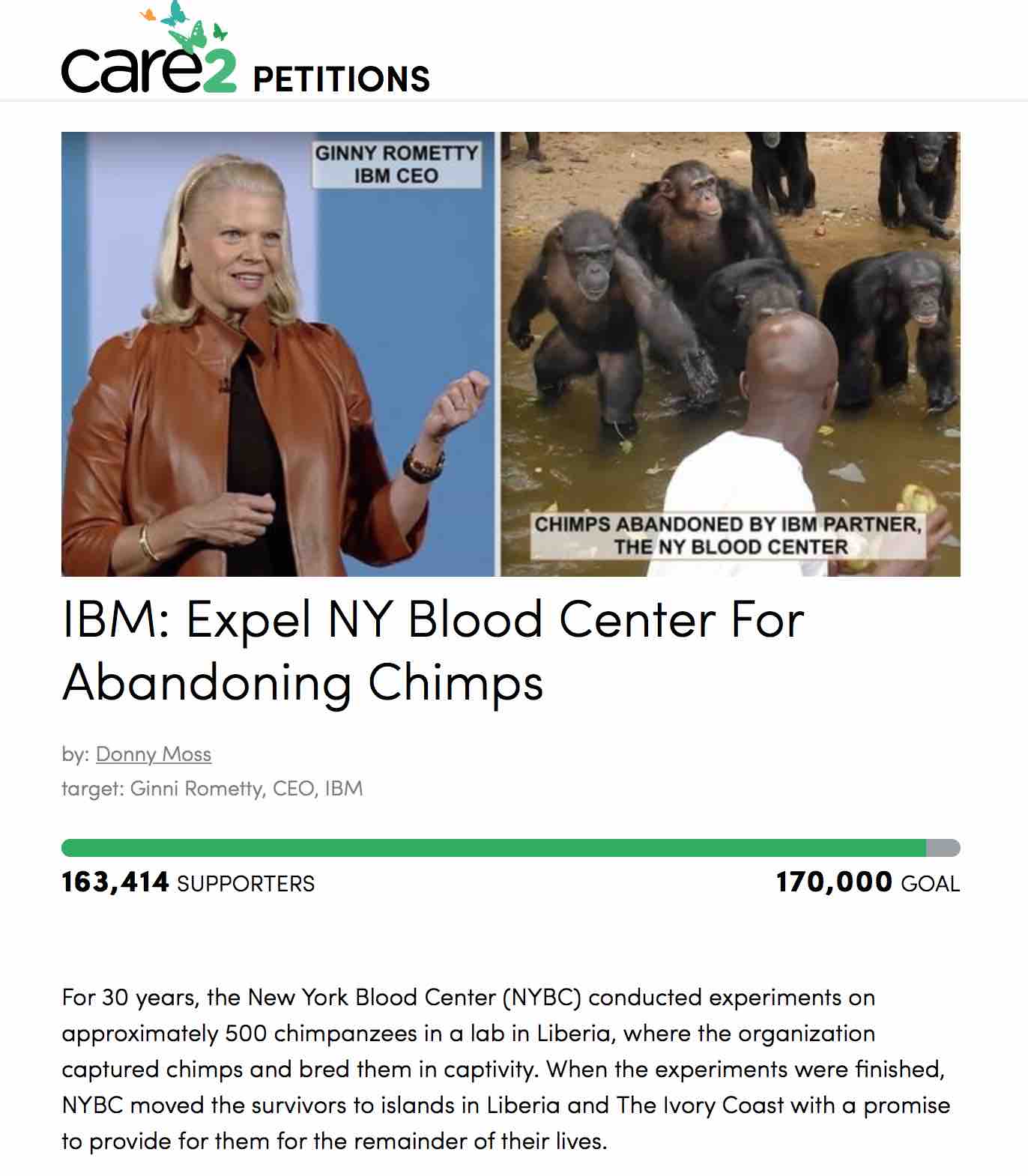
The Care2 petition asking IBM to demand accountability from NYBC was signed by over 163,000 people.
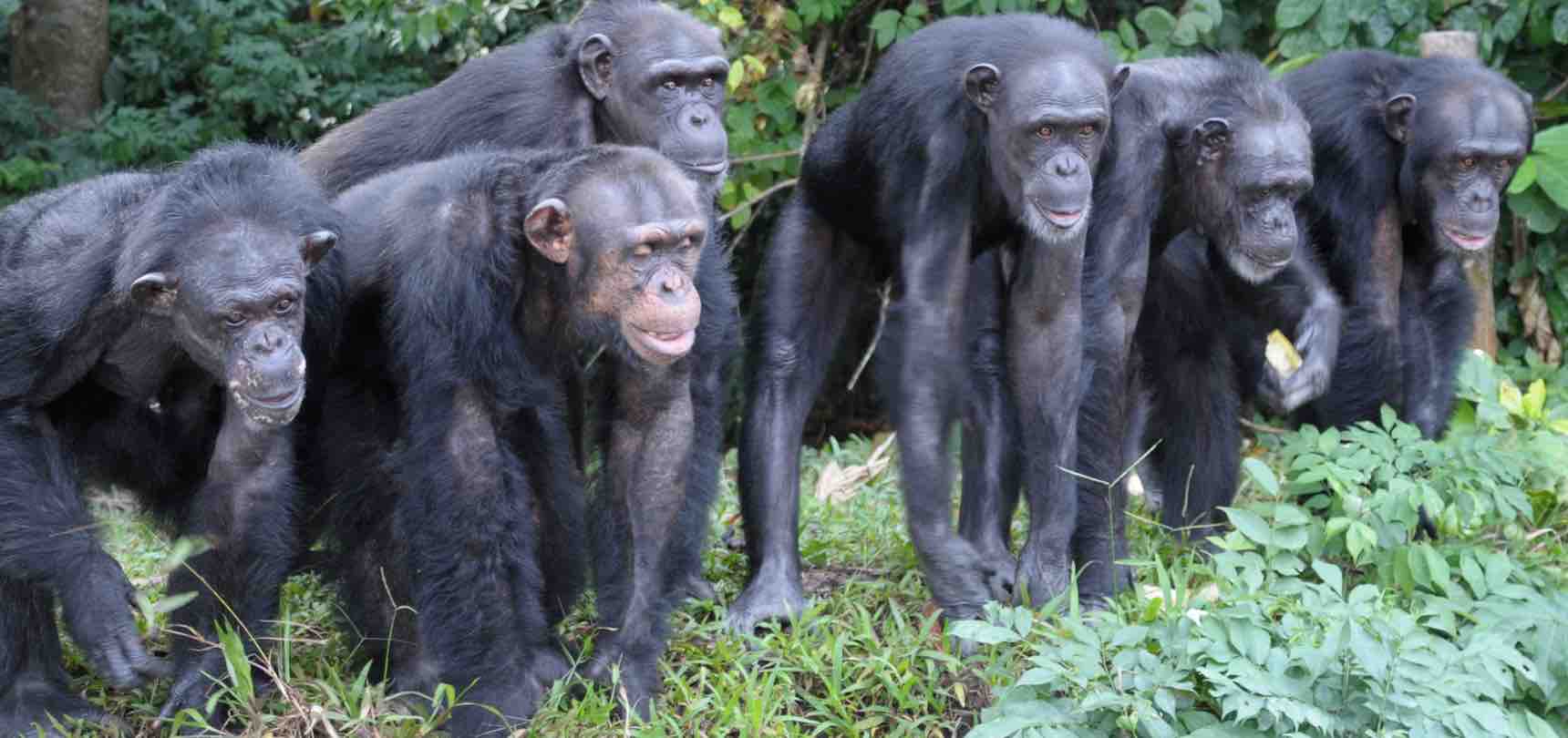
The NY Blood Center abandoned 66 chimps on islands with no natural food or water and cut all funding for their care. Here, the chimps await the daily delivery of food and water. (Photo: Jenny Desmond for HSUS)
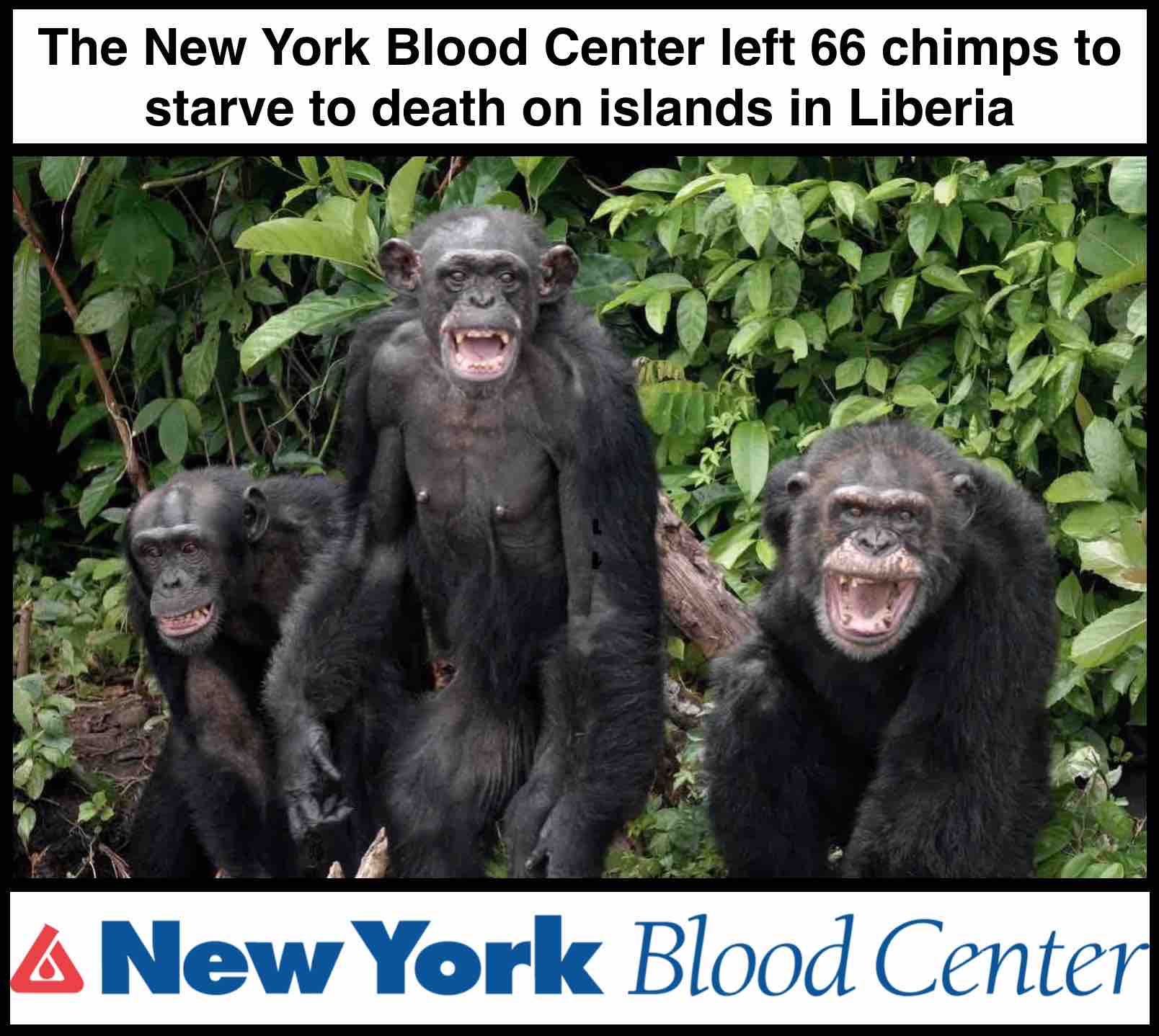
After NYBC abandoned the chimps, the animals went a week with no food or water.
After conducting research experiments on approximately 500 chimpanzees for 30 years and promising to provide the survivors with lifelong care, NYBC decided to abandon the 66 surviving chimps with no food or water on islands in Liberia, leaving them to die of starvation and thirst. Using money donated by the public, the Humane Society of the United States (HSUS) has stepped in on an emergency basis to cover the monthly costs associated with feeding the chimps.
Among the many organizations that have spoken out against the New York Blood Center are Citigroup, MetLife and the Jane Goodall Institute
Dr. Jane Goodall, one of many leaders in the animal welfare community who have spoken out against NYBC’s decision to starve their chimps, wrote the following in a letter to the organization’s CEO, Christopher Hillyer, “I find it completely shocking and unacceptable that NYBC would abandon these chimpanzees and discontinue support for even their basic needs. Your company was responsible for acquiring these chimpanzees and thus has a moral obligation to continue to care for them for the remainder of their lives.”
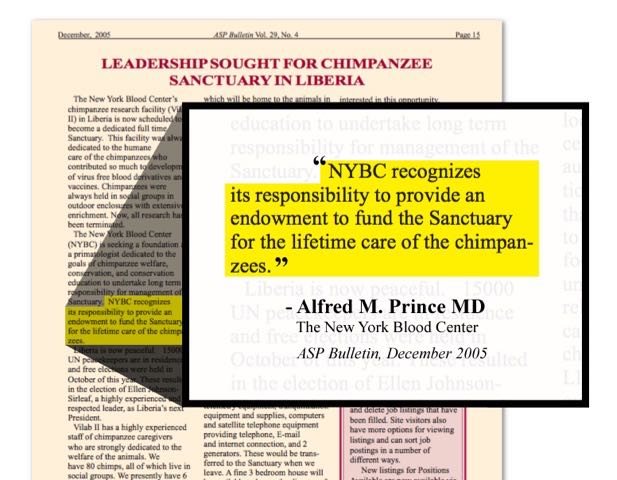
The NY Blood Center made a promise to provide their chimpanzees with lifelong care.
In February, TheirTurn’s Donny Moss traveled to Liberia to visit and document the abandoned chimps; the Liberians who stepped in on a voluntary basis to save their lives; and Jenny and Jim Desmond, the American couple contracted by HSUS to oversee the care of the chimps.
Your Turn
Please thank IBM for taking a principled stand against the New York Blood Center by retweeting this tweet.
Please join the Facebook page, New York Blood Center: Do the Right Thing, to stay apprised of the campaign to hold NYBC accountable and to participate in online actions on behalf of the abandoned chimps.
Chimps abandoned by the New York Blood Center on islands in Liberia await their daily delivery of food and water.