Their Turn - The Social Justice Movement of Our Time Their Turn - The Social Justice Movement of Our Time

SeaWorld’s Attempt to Silence “Radical” Professor Backfires

March 12, 2015 by Leave a Comment


The News

Those who exploit animals for profit – and their publicists – routinely describe animal rights activists as extremists, radicals and terrorists in an effort to discredit, marginalize and disempower them. Through campaign contributions, they also recruit elected officials, who have the public’s ear, to use the same incendiary language. Sadly, it’s an approach that works, with members of the public often embracing those terms when referring to animal rights activists.
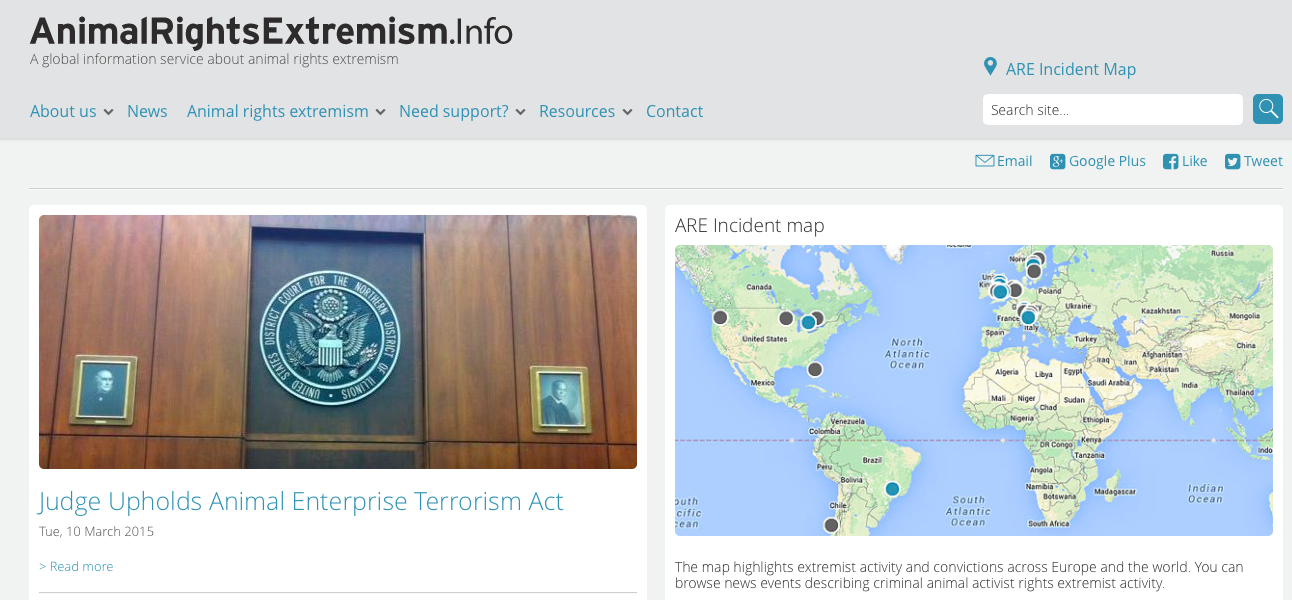
Those who exploit animals for profit often characterize activists as "extremists" to discredit them

Exploiters often characterize activists as “extremists” to discredit them

But what happens when an exploitive company uses this tactic to discredit and silence an authority figure, who is not perceived by the public to be a “radical extremist?”

In November, The American Cetacean Society invited Dr. Thomas White – a reputed university professor; the author of In Defense of Dolphins, and a critic of cetacean captivity – to participate in a panel discussion on orca captivity at its annual conference. Before the session, SeaWorld, which was also represented on the panel, successfully requested that it not be recorded – a move that is highly unusual and unethical at a scientific conference where presentations are made available to the public.
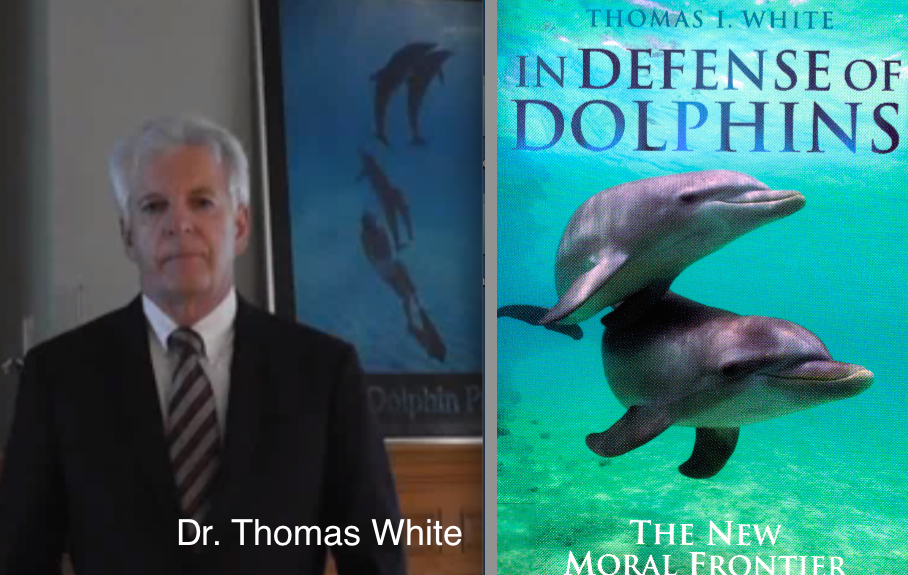
Dr. Thomas White silenced by SeaWorld at a scientific conference

Dr. Thomas White silenced by SeaWorld at a scientific conference

In a video he made about the incident, Dr. White said that SeaWorld’s request was based on the company’s desire to  silence a presenter who they could not portray as a “radical” once his remarks were made available publicly: “They characterize us as radicals, not serious researchers. And, it’s easier to maintain that picture of their critics if there’s no evidence to the contrary.”

In addition to making a public statement about SeaWorld’s effort to marginalize and silence him, Dr. White posted his presentation from the conference on YouTube video, which will likely reach more people than it would have if SeaWorld didn’t muzzle him in the first place.

This is not SeaWorld’s first attempt to tamper with science. In 2014, an Orca Research Trust investigation of SeaWorld’s 52 scientific papers demonstrated, among other things, that the company was using vitamin supplement and artificial insemination studies to justify captivity even though these studies are “unlikely to be useful to wild populations.”
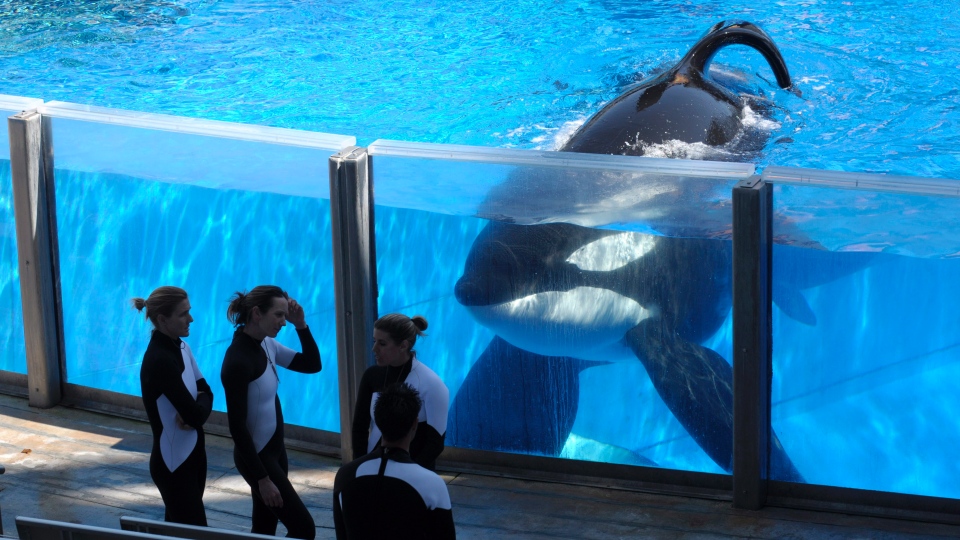
Photo: CTV News

SeaWorld uses research irrelevant to wild orcas to justify captivity (Photo: CTV News)

SeaWorld’s attempts to silence scientists, misrepresent research and spin cruelty into conservation will only motivate “radicals” and “non-radicals” to continue waging a war against the company until it empties the tanks. It will also motivate activists to ensure that public knows that the real extremists and radicals are those who terrorize animals for profit.


Filed under: Entertainment, Opinion
Tagged with: , , , , ,

The Monster Minister

February 22, 2015 by Leave a Comment


Opinion

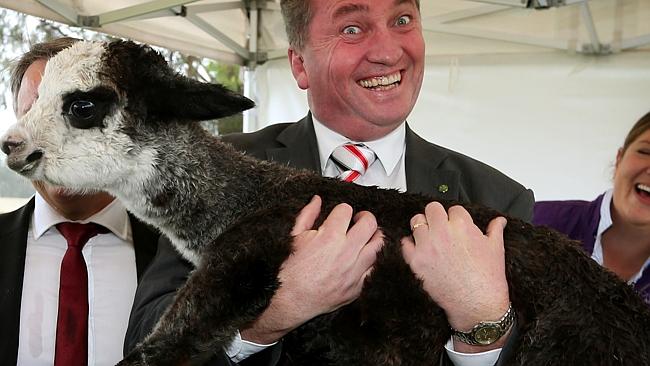
Don’t be fooled by his childish smile and cheerful name. Barnaby Joyce, Australia’s Minister of Agriculture, is one of the most dangerous men on the planet.

Barnaby Joyce, Australia's Minister of Agriculture

Barnaby Joyce, Australia’s Minister of Agriculture (photo: weeklytimesnow.com.au)

In recent years, Australian animal advocacy groups have released footage from dozens of undercover investigations showing thousands of animals being terrorized by industries regulated by Mr. Joyce. Instead of punishing the culprits, Mr. Joyce uses the news as a PR opportunity to portray Australia as a world leader in the humane treatment of animals. Instead of condemning the crimes, he denounces the advocates who document them. And instead of working to eliminate the abuses, he advocates for “ag gag” laws to prevent them from being exposed.

LIVE EXPORTS

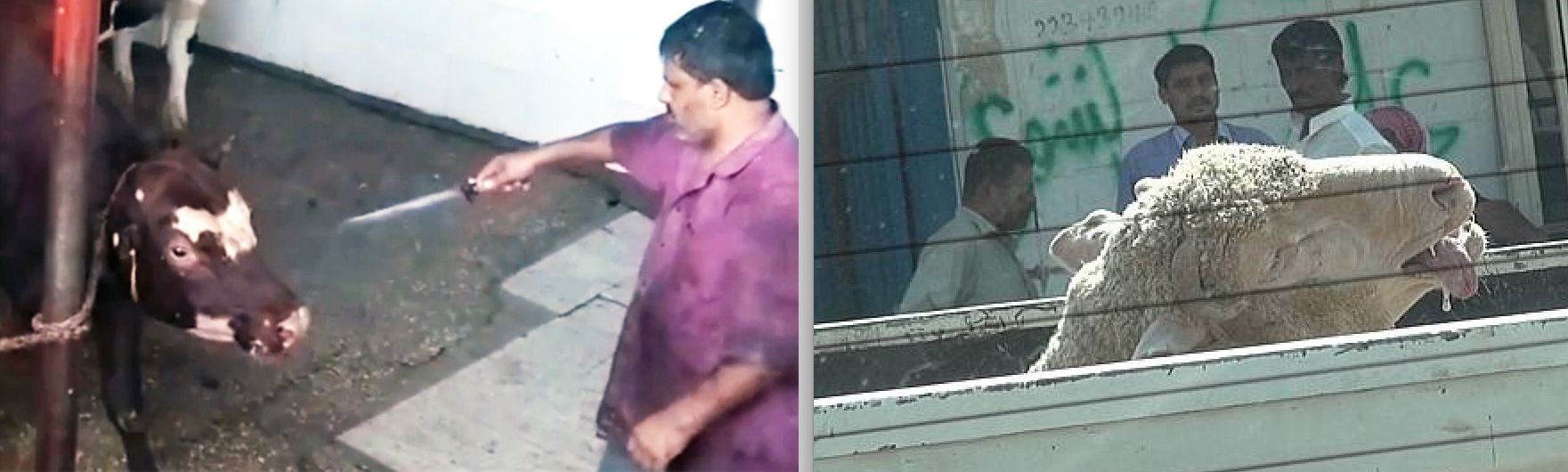
Each year, Australia loads millions of live sheep and cattle onto ships and transports them to countries in the Middle East and Asia that have few, if any, laws governing the humane treatment of animals. Undercover investigations consistently expose atrocities during every leg of the journey. Thousands of animals have died from heat exhaustion and disease on the ships and have been butchered while still alive in their destination countries.

live exports Australia

Australian animals meet their fate in the Middle East (photos: Animals Australia)

In spite of abundant evidence demonstrating that live animals cannot be exported humanely, Joyce defends the trade and works to expand it. And he routinely uses Australia’s unenforceable and ineffective animal welfare regulations – the Exporter Supply Chain Assurance Program (ESCAS) – to not only justify his promotion of the live export trade but also portray it as a model for the humane treatment of animals. In January, Joyce stated that a review of ESCAS “demonstrates that Australian livestock exported overseas are treated humanely in almost every instance” and that “only 12,958 animals (0.16%) had experienced a potentially adverse animal welfare outcome since 2011.”

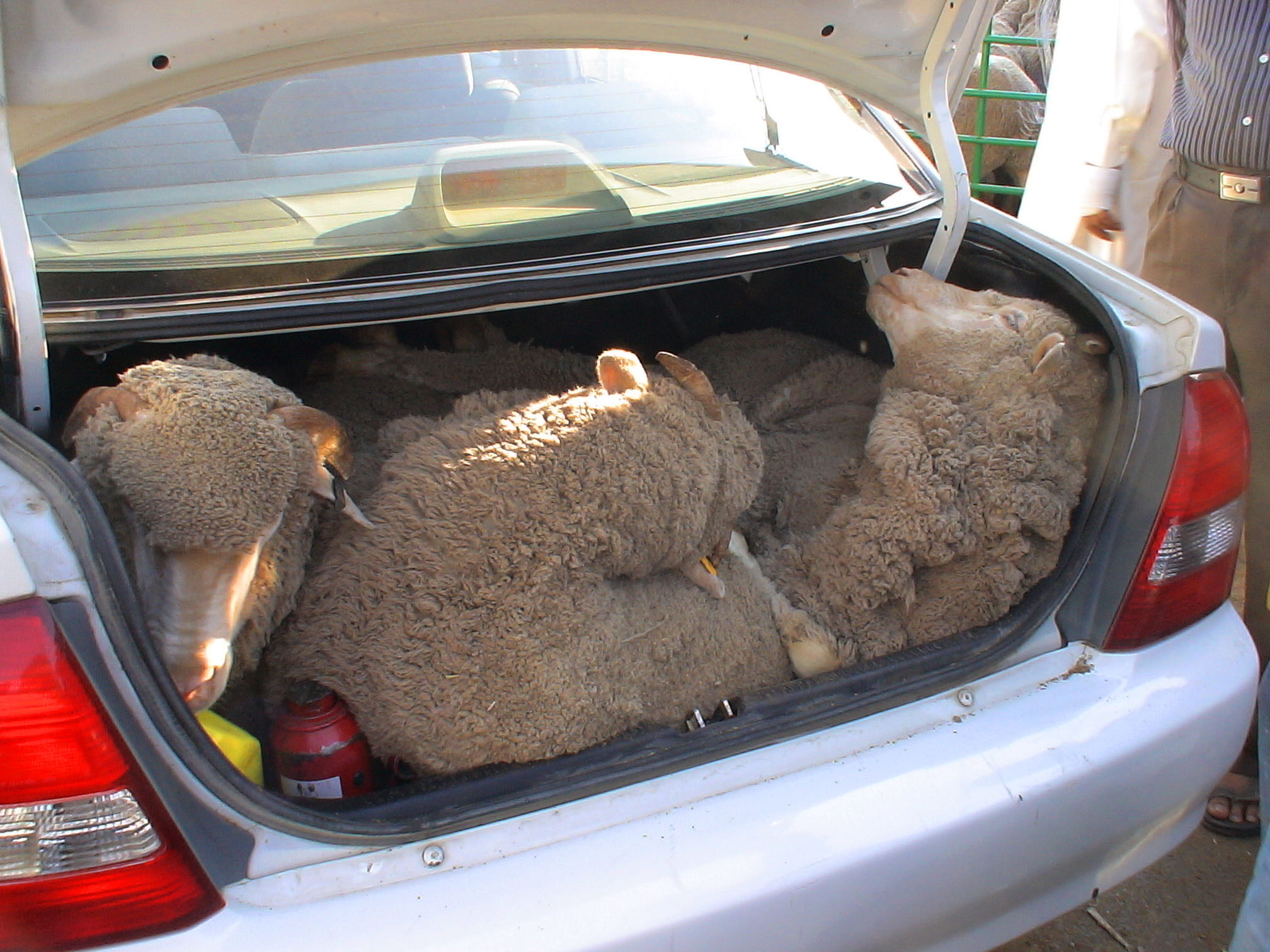
Live sheep exported from Australia

Live sheep from Australia are stuffed into a trunk in Kuwait (photo: Animals Australia)

Adolph Hitler said, “make the lie big, make it simple, keep saying it and eventually they will believe it.” This appears to be Joyce’s strategy to convince the world that the millions of animals who are abused and tortured in the live export trade are treated “humanely in almost every instance.”

Barnaby Joyce (photo: 2gb.com)

Barnaby Joyce (photo: 2gb.com)

LIVE ANIMAL BAIT

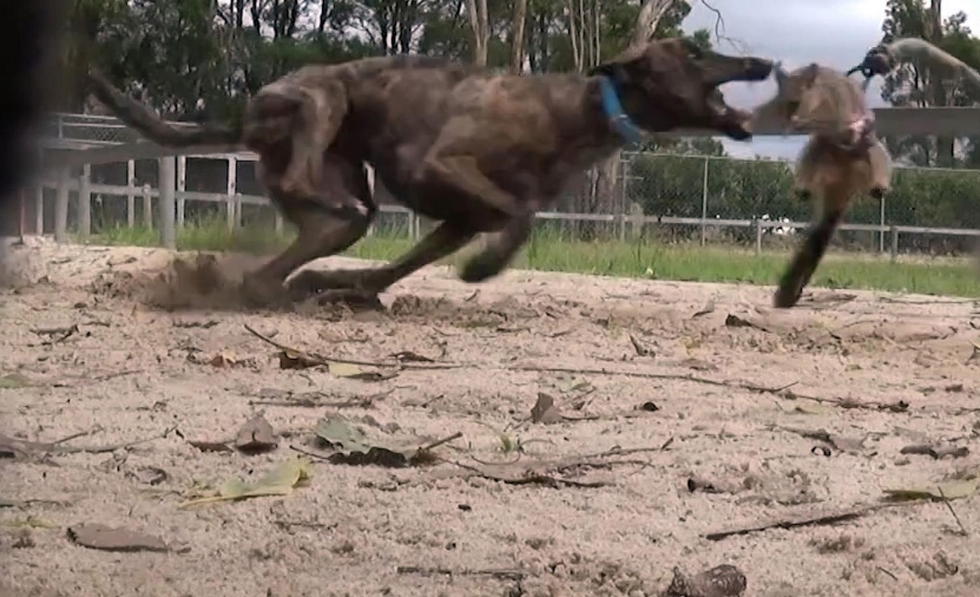
In mid-February, Animals Australia released footage of greyhounds ripping apart live animals who were being used as bait to train the dogs to run faster. The revelation that dog racers were using rabbits, possums and piglets as “live bait” and the footage itself were so disturbing that the dog racing industry was compelled to publicly condemn the practice and cancel its annual awards ceremony.

Greyhound in training chases live possum being used as bait (photo: AFP)

Greyhound in training chases live possum being used as bait (photo: AFP)

Instead of denouncing the illegal, pervasive and horrific use of live bait when the news broke, Barnaby Joyce, true to form, criticized the activists for using hidden cameras and reiterated the need for legislation that would outlaw their use. Time and again, Joyce has made his objective clear: fine and imprison those who dare to document crimes against animals while protecting those who commit them.


Filed under: Entertainment, Food, Opinion
Tagged with: , , , ,

Exiting our Comfort Zone

February 10, 2015 by Leave a Comment


Opinion

Direct Action Everywhere (DxE), the animal rights group that is conducting protests inside, is challenging activists to “exit their comfort zone” on behalf of the animals:

“We have found that speaking loudly and proudly in defiance of social convention inspires others to do the same. And that is why we encourage activists to step outside of their comfort zones, past the boundaries of tradition and into the stores that are selling the dead bodies of our friends.”

It’s a message that is resonating with many activists who have taken a more traditional approach by peacefully protesting on public property. Indeed, hundreds of activists in cities around the world are, for the first time, staging protests inside of restaurants and grocery stores.

Of course, courageous activists have put themselves in uncomfortable situations on behalf of animals since the earliest days of the movement – liberating animals from fur farms; conducting undercover investigations in factory farms; protesting naked; blocking entrances to laboratories; and storming onto runways during fashion shows.

Protesting at a Donna Karan runway show

Protesting at a Donna Karan runway show

Exiting one’s comfort zone is nothing new in the movement. What has changed, thanks to DxE and Collectively Free, is that it is going mainstream.

Donny Moss of TheirTurn.net took the DxE challenge, (nervously) speaking out during a Collectively Free protest exposing Whole Foods’ fraudulent marketing campaign, which claims that the animals who they sell lived happy lives.

“Pushing my own boundaries was cathartic. I could finally relate to the old saying ‘Life begins at the end of your comfort zone,'” said Donny Moss. “More importantly, stunned customers who might have walked right by me during a street protest paid attention to my message.”

Just imagine how much more we could accomplish for animals if we all exited our comfort zone!


Filed under: Food, Opinion
Tagged with: ,

Oddly, The NY Times Describes Return of Foie Gras to California as Insignificant

January 14, 2015 by Leave a Comment


Opinion

The NY Times regularly publishes substantive stories about the cruelty of industrialized animal agriculture, giving readers a disturbing peak over the high walls and into the windowless sheds that house the 10 billion farm animals slaughtered for food each year in the U.S. And, while the NY Times will never go far enough to satisfy those who espouse an entirely cruelty-free diet, its coverage of the horrors of factory farming is most welcome and appreciated by advocates.

Factory farm sheds where animals are held prisoner for their entire lives

Factory farms have no windows so that people cannot see where their meals are raised.

Today, the Times published a lengthy story by op-ed writer Mark Bittman arguing that the recent return of foie gras in California is insignificant because it affects only 600,000 animals nationwide, which is less than the number of chickens killed each hour in the U.S: “The lifting of the California ban against selling foie gras is pretty much a nonissue, except to point out that as a nation we have little perspective on animal welfare. To single out the tiniest fraction of meat production and label it ‘cruel’ is to miss the big picture, and the big picture is this: Almost all meat production in the United States is cruel.”

"No. Not again."

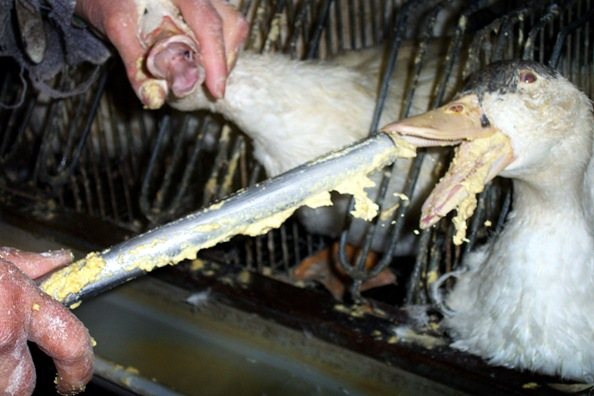
Ducks and geese are force fed through a metal pipe 3X daily in the weeks before slaughter.

While Mr. Bittman’s references to the cruelty of animal farming and his use of graphic words like “torturous” are praiseworthy, his suggestion that the return of foie gras is insignificant is perplexing. Why dismiss as irrelevant the reversal of much-needed protections that advocates worked tirelessly to achieve? Mr. Bittman might believe that “foie gras itself just isn’t that important,” but the ducks and geese who are throat-raped with a metal pipe three times a day would probably beg to differ.

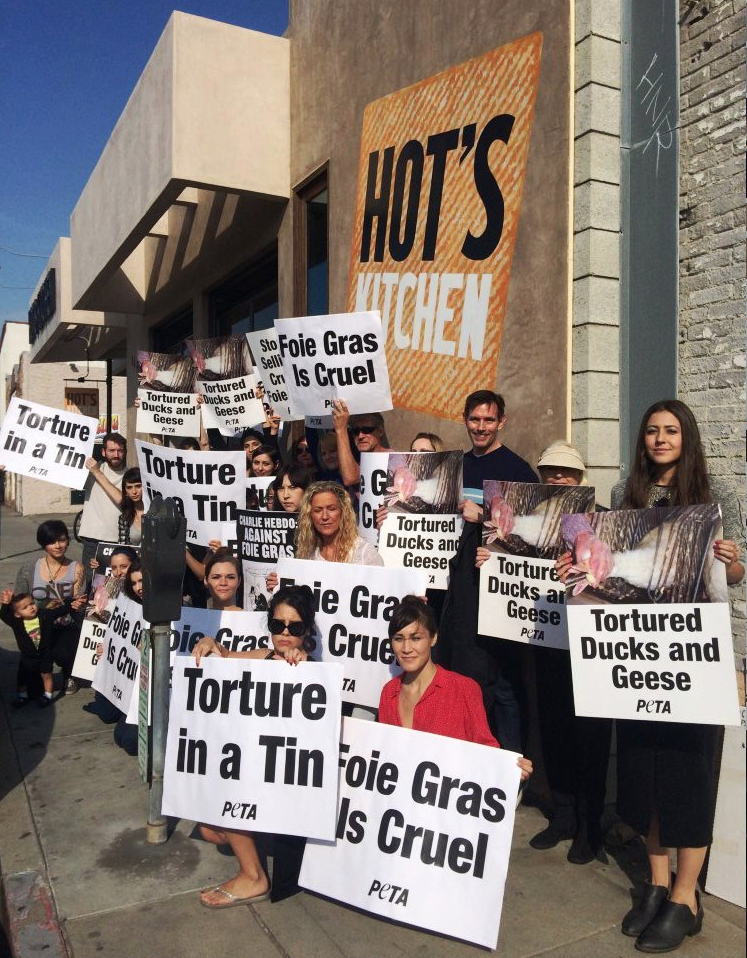
Activists with PETA protest the return of foie gras in California (photo: PETA)

Activists with PETA protest the return of foie gras in California at Hot’s Kitchen in Los Angeles (photo: PETA)

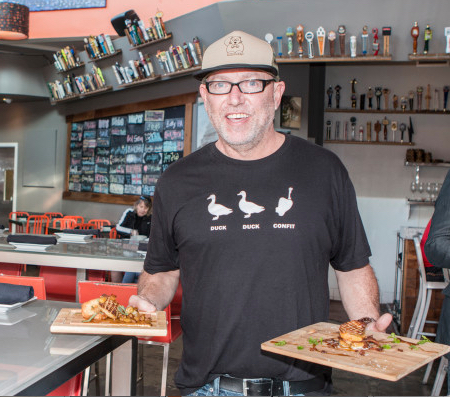
Greedy, Heartless Owner of Hot's Kitchen, Sean Chaney, Sued to Legalize Foie Gras (photo: easyreadernews.com)

Greedy, Heartless Owner of Hot’s Kitchen, Sean Chaney, Sued to Legalize Foie Gras in CA (photo: easyreadernews.com)

Mr. Bittman: Is it too late to reframe the story by saying, “We must advocate to reinstate California’s foie gras ban AND work to help the billions of abused chickens, pigs, cows and fish who have been left behind.”

Ironically, the return of foie gras to California comes at a time when this “delicacy of despair” is coming under fire in the foie gras capital of the world — France.

Your Turn

Please sign the petition to re-instate the law banning foie gras in the state of California.


Filed under: Food, Opinion
Tagged with: , , ,

Activism 2.0 – Entering, Agitating & Disrupting

January 11, 2015 by Leave a Comment


Opinion

All ethical vegans fighting for animal rights want the same thing — total animal liberation — but our paths to achieving it take us in different directions. In the past two years, a new and confrontational approach has gone mainstream in the U.S. and is spreading globally. Does the approach reflect the natural evolution of all social justice movements? Does it stem from the desire to expedite change for animals? Did it emerge to help activists stand out in an era of information overload? Whatever the motive, the approach is breathing new life into the animal rights movement, jolting  consumers where they least expect it; capturing the attention of the media; and triggering activists to exit their comfort zones on behalf of animals.

DxE protests Chipotle's for marketing animal farming & slaughter as humane.

DxE protests Chipotle’s for marketing animal farming & slaughter as humane. (Photo: DxE)

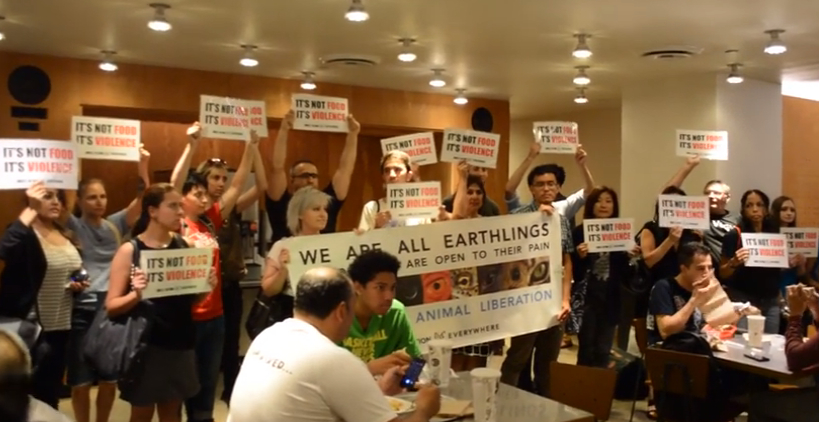
The big change, propagated by the global organization Direct Action Everywhere (DxE) and embraced by NYC-based Collectively Free, is taking the protests inside of businesses that exploit animals. Let’s face it: many people pay no attention to activists demonstrating on a sidewalk, but they are a captive audience when seated in a restaurant or waiting in line at the grocery store. It’s an approach that, on the surface, appears ineffective or even counterproductive to some people. But in a compelling article about the approach, DxE’s founder, Wayne Hsiung, explains why disrupting and agitating inside are key ingredients in any successful social justice movement.

In his blog, Hsiung writes that Naomi Wolf, the pioneering feminist who studied dissent and protest in America, argues that, throughout history, activists have succeeded only when they disrupted “business as usual” and that today’s protests have become so “bureaucratized, institutionalized, and integrated into the fabric of ordinary life” that they are no longer disruptive.

Rosa Parks agitated by illegally sitting at the front of this bus, which is now a symbol of the Civil Rights movement.

Rosa Parks agitated by illegally sitting at the front of this bus, which is now a symbol of the Civil Rights movement.

Following are a few short excerpts from Hsiung’s blog:

“Dissent is vital to achieving social change, and that dissent is only effective if it is powerful, confident, and . . . disruptive.”

“Passersby, customers, and even multinational corporations can easily dismiss and write us off, if we do not push our message in the places where it is most unwelcome. But when we transform a space where violence has been normalized into a space of dissent, we can jolt, not just individual people, but our entire society into change.”

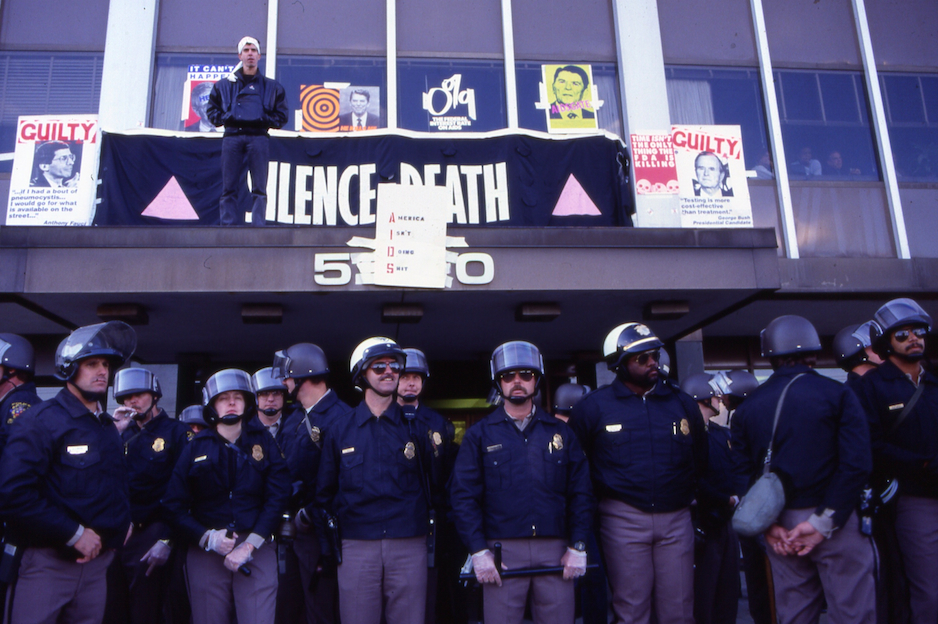
The AIDS activist group ACT-UP, which was comprised mostly of gay men in the 1990s, would have been ignored if they didn't stop traffic, chain themselves to fences and climb onto rooftops.

ACT-UP, an AIDS activist group, would have been ignored in the 1990s if they didn’t stop traffic, chain themselves to fences and climb onto rooftops. (pictured at the NIH)

“Because we have expressed that our cause is important enough to violate a powerful social norm [dining], we leave a mark on people: “Wow, what the heck was that! They’re so outraged by something that they felt the need to come into the store to register their complaint.”

animal rights protest at Chipotle

DxE breaks with the tradition of letting customers dine in peace.

“Speaking loudly and proudly in defiance of social convention . . . inspires others to do the same. And that is why we encourage our activists to step outside of their comfort zones . . . and into the stores that are selling the dead bodies of our friends.”

Your Turn

Please visit Direct Action Everywhere and Collectively Free to learn about, support and/or join their provocative campaigns to expose the truth about animal farming and promote a cruelty-free lifestyle.


Filed under: Food, Opinion
Tagged with: , , , , ,