Their Turn - The Social Justice Movement of Our Time Their Turn - The Social Justice Movement of Our Time

Miami Seaquarium is a “Crime Scene”

January 19, 2015 by Leave a Comment


The News

During an impassioned speech at the Miracle March for Lolita, the largest protest in history for a captive whale, Jane Velez-Mitchell of JaneUnchained.com called the Miami Seaquarium a “crime scene” to the thunderous applause of over a thousand people from around the world who descended upon Key Biscayne, Florida, to demand her freedom.

In an effort to discredit the March participants and continue making millions off Lolita’s back, Seaquarium spokesperson Robert Rose misled reporters, stating unequivocally that Lolita will die if released from her tank into the ocean. He made no mention of the fact that she would first be rehabilitated in a coastal sanctuary near her pod and would only be released if she is deemed capable of surviving. The seaside pen would provide her with space to swim, dive and be near or with other orcas, all of which have been denied to her for the past 44 years. It would also bring an end to her exploitation — being held captive and forced to perform tricks in exchange for food.
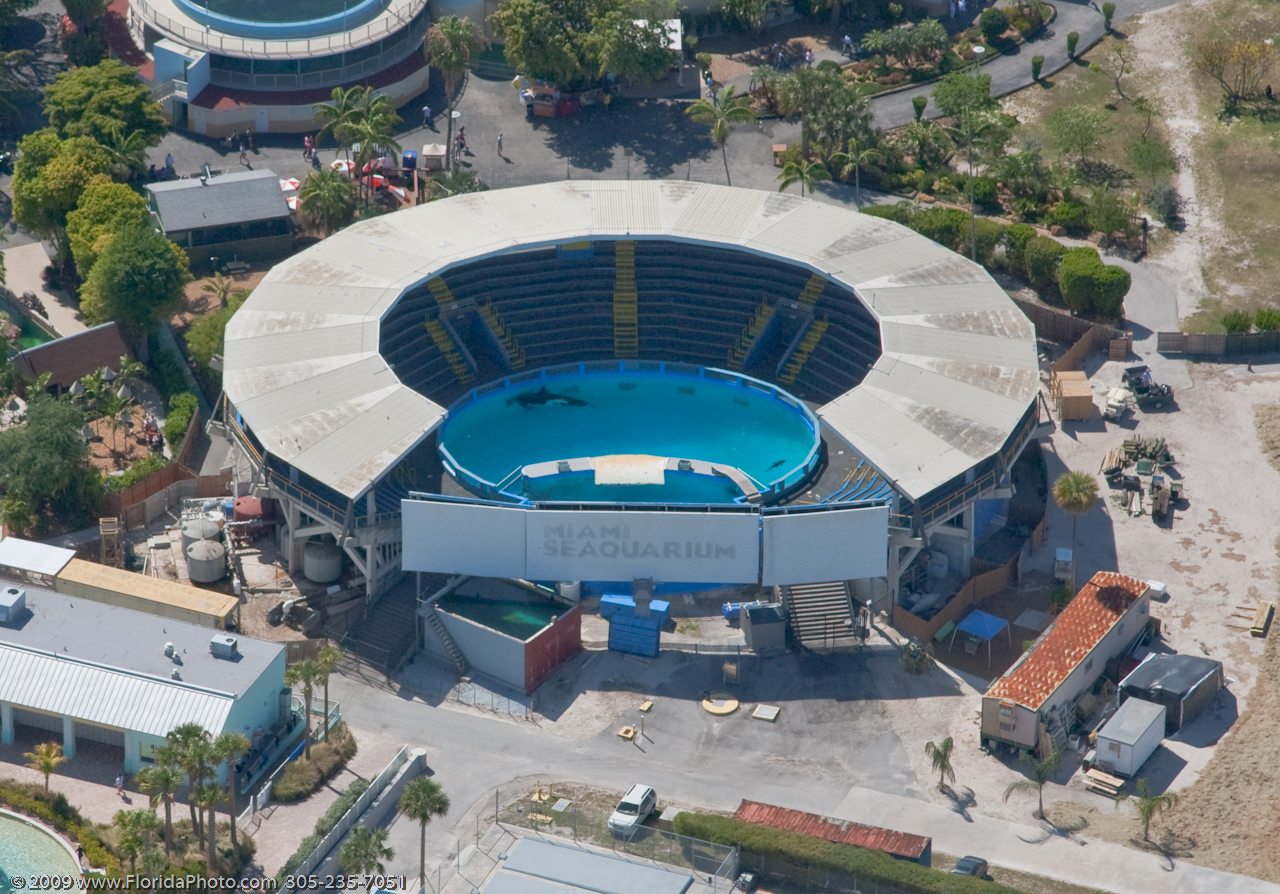
Seaquarium-Lolita

Among the many highlights of the Miracle March for Lolita was a ceremony during supermodel Joanna Krupa symbolically released Lolita from a tank created by a human chain.
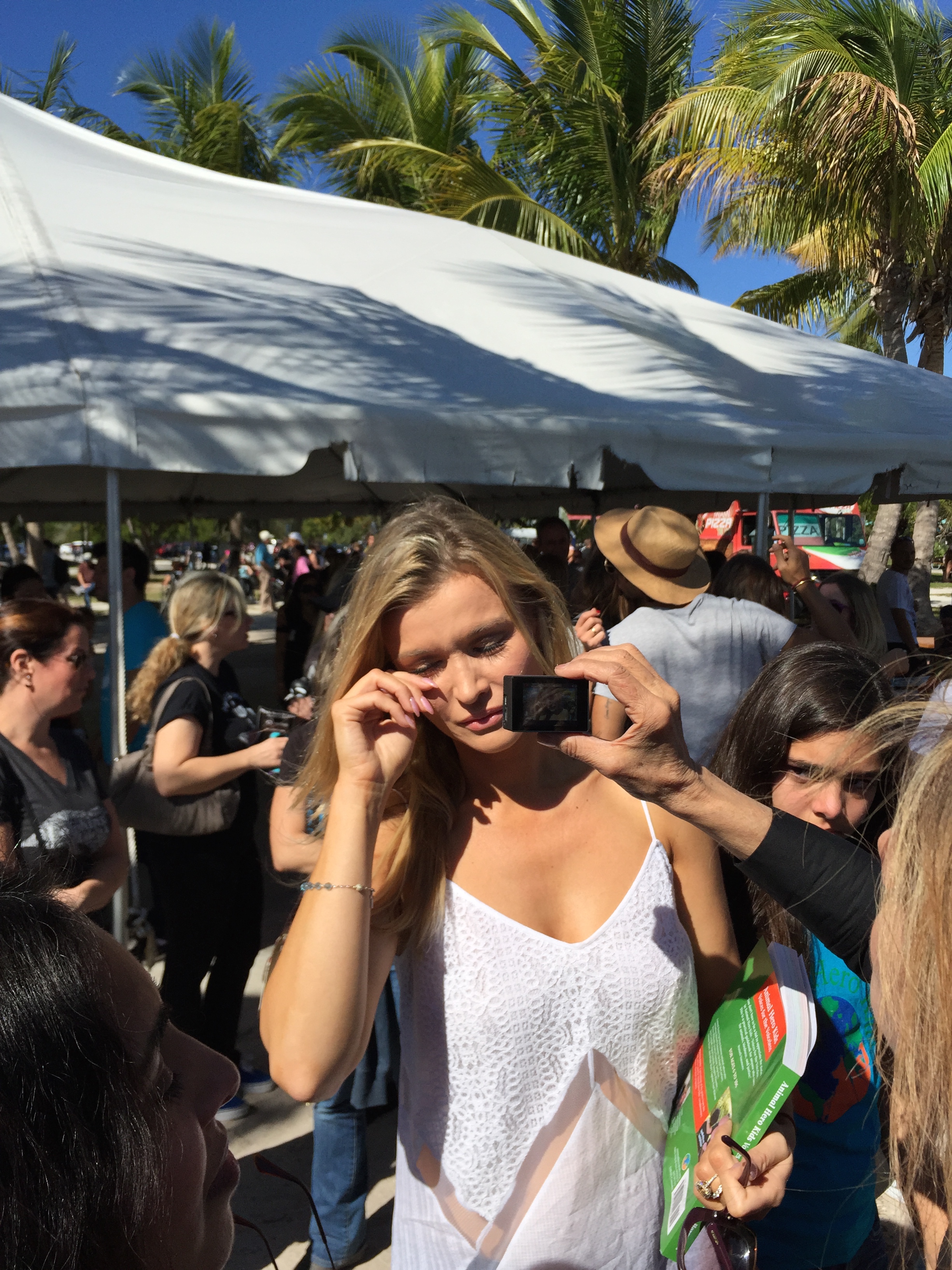
Supermodel Joanna Krupa wipes away tears after participating in ceremony for Lolita

Supermodel Joanna Krupa wipes away tears after participating in ceremony for Lolita

Events around the world were held in solidarity.
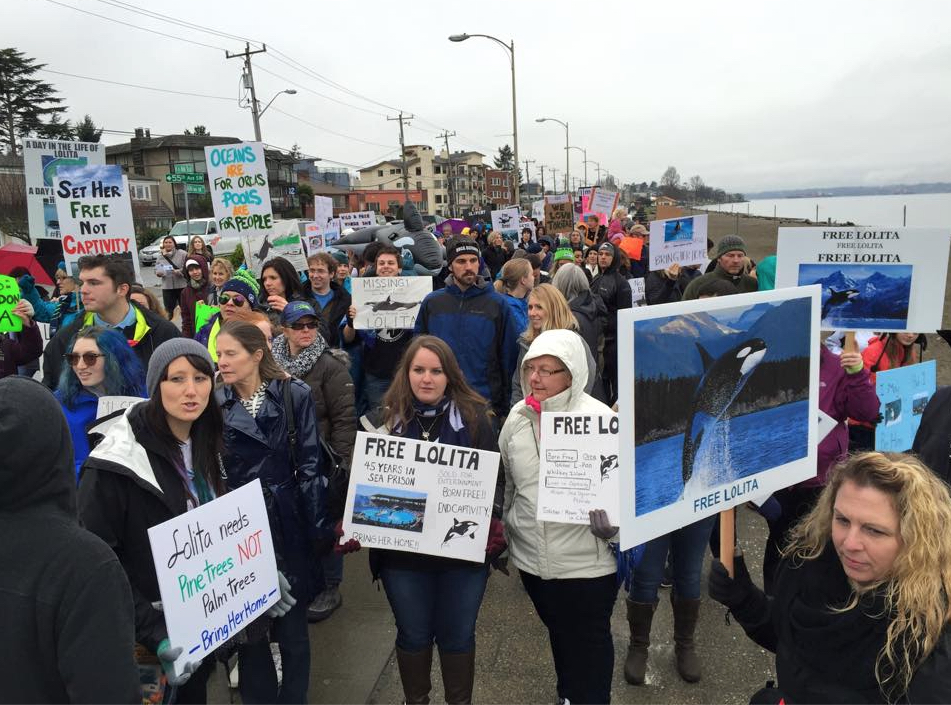
Lolita Protest in Seattle (photo: Jeff Widmer)

Lolita Protest in Seattle (photo: Jeff Widmer)

Orca conservation and animal rights groups will continue to fight for Lolita’s release. Jared Goodman, PETA’s Director of Animal Law, says that, by the end of January, the National Oceanic and Atmospheric Administration (NOAA) will decide whether or not to designate Lolita a member of an endangered group of whales. That decision could determine her fate.

The miracle March for Lolita was the brainchild of Robin Jewell, an activist from Michigan with a hole in her heart and a vision for Lolita. On a shoe string budget, Ms Jewell produced the entire event — securing the permits, managing promotion and publicity, liaising with law enforcement, recruiting speakers for the rally and coordinating the parade route, food and entertainment. The flawless execution of the event was one of many miracles of the Miracle March for Lolita.

Photo: Christina Estrada

Miracle March for Lolita in Miami, FL (Photo: Christina Estrada)

Your Turn

Please sign Robin Jewell’s Change.org petition to free Lolita and ensure talk to your friends about why they should boycott aquariums, zoos, circuses and other forms of entertainment where animals are held captive.


Filed under: Entertainment
Tagged with: , , , ,

Club At Center of Rhino Hunting Controversy To Auction Off More Rare Animal Hunts

January 16, 2015 by Leave a Comment


The News

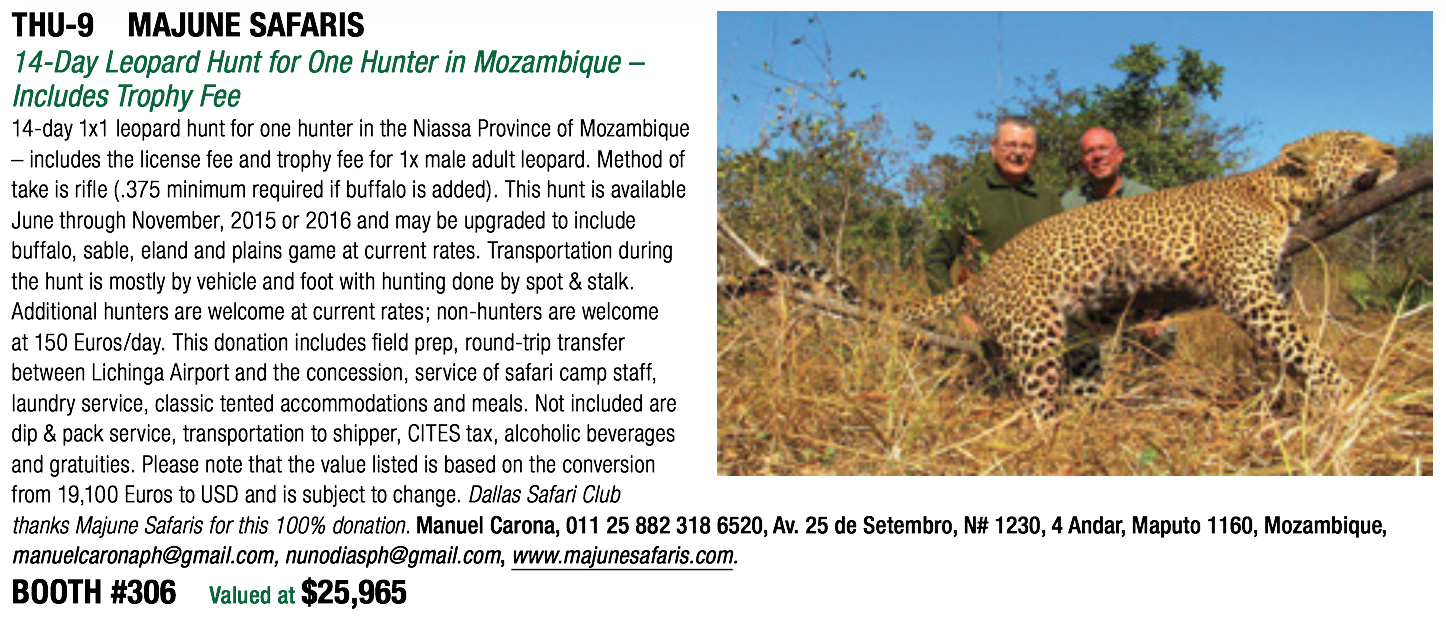
The 6,000 member Dallas Safari Club will auction off rare animal hunts this weekend during the banquet at its annual convention, which is a “showcase of hunting, sporting and outdoor adventure,” according to the Club’s website. During the auction, “bidders of any age or gender” will have the chance to bid on “amazing items,” including “youth hunts in New Zealand and Texas, a challenging Mid-Asian ibex hunt in Russia, and a bongo hunt in Cameroon.”

One of dozens of animal hunts at Dallas Safari Club Auction

One of dozens of animal hunts at Dallas Safari Club Auction

The 2014 convention made international headlines when one attendee, Corey Knowlton, paid $350,000 to shoot an endangered black rhino in Namibia. Mr. Knowlton, who has purportedly received death threats, tells critics that he is motivated by “conservation.” Specifically, he claims that his substantial contribution will be allocated to rhino conservation efforts and that killing the rhino in question would actually benefit other rhinos in the area who he has been attacking.

But, if conservation is really Mr. Knowlton’s motivation, then why doesn’t he allocate a small part of his winning bid to relocate him?  And, if he’s concerned that the menacing rhino is harming the others, then why hasn’t he  shot him down hasn’t he done it in the 12 months since he won the bid?  Could it be because the U.S. Fish & Wildlife Service has not yet issued a permit to import the rhino’s body and that Mr. Knowlton has no intention of returning from Africa without his “trophy.”

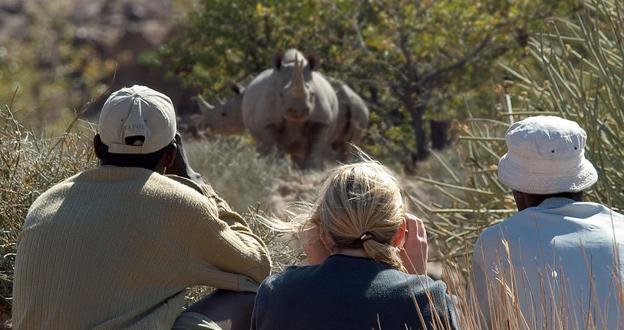
In an interview with Jane Velez-Mitchell on JaneUnchained.com, Christopher Gervais, the director of the Wildlife Conservation Film Festival & Biodiversity Conference, says that killing animals is not the way to preserve them: “You do not hunt a vulnerable species in the name of conservation. Other organizations are conserving without hunting and killing.” Conservation funds. he says, can be raised through photography safaris during which animals are shot with cameras instead of guns.

Shooting rhinos with cameras

Shooting rhinos with cameras

Your Turn

Please let the Dallas Safari Club know what you think of selling trophy hunts by contacting them through Facebook or its website.


Filed under: Entertainment, WIldlife
Tagged with: , , , ,

In Epic Battle to Ban NYC’s Horse-Drawn Carriages, Activists Leave No Stone Unturned

January 15, 2015 by Leave a Comment


The News

In the highly charged effort to ban horse-drawn carriages from the streets of NYC, activists can rarely anticipate the unseemly events that lurk around the corner  – from false accusations by elected officials and hostile media outlets to physical and verbal attacks by carriage operators. What they can – and are – doing, however, is moving mountains to help pass the Mayor’s historic bill to ban the city’s inhumane, unsafe and archaic horse-drawn carriage trade.

Following are some of the most compelling tactics being employed by NYCLASS, the animal rights group leading the lobbying effort, and the Coalition to Ban Horse-Drawn Carriages, which started the movement in 2006.

1. TV Commercial: With the help of a pro-animal TV production company, NYCLASS created a commercial that has aired and will air again on local television in the months leading up to a vote.

2. Postcard Campaign: The NY Observer reports that NYCLASS “is turning up the heat on lawmakers by mailing graphic postcards to all 51 Council Members every day until the carriage-banning legislation is passed.” Each of the 7,000 postcards is signed by a NYC voter and will be sent to his or her Council Member.

One of many postcards being sent by NYCLASS to NYC lawmakers

One of many postcards being sent by NYCLASS to NYC lawmakers

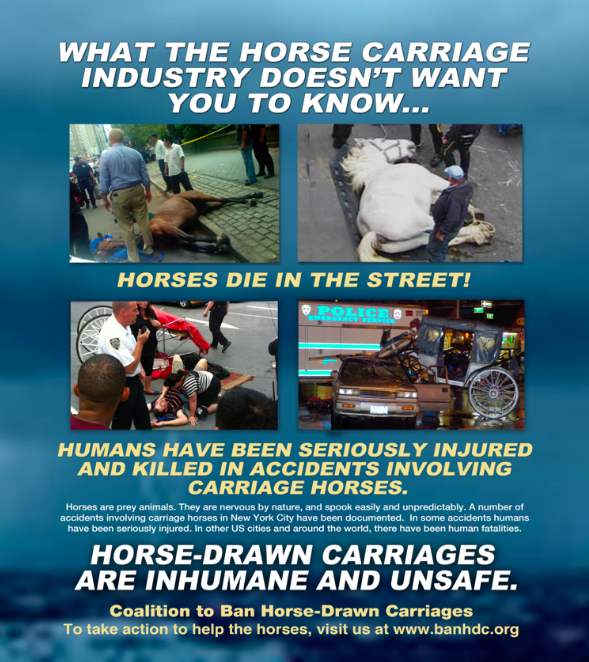
3. Subway ads: In February, the Coalition to Ban Horse-Drawn Carriages is rolling out this provocative ad campaign in NYC subway stations. Since 2007, the Coalition, which is the go-to group for information about the issue, has been staging regular protests against the industry and producing a weekly newsletter sent to advocates around the world.

Subway ad campaign

Subway ad campaign

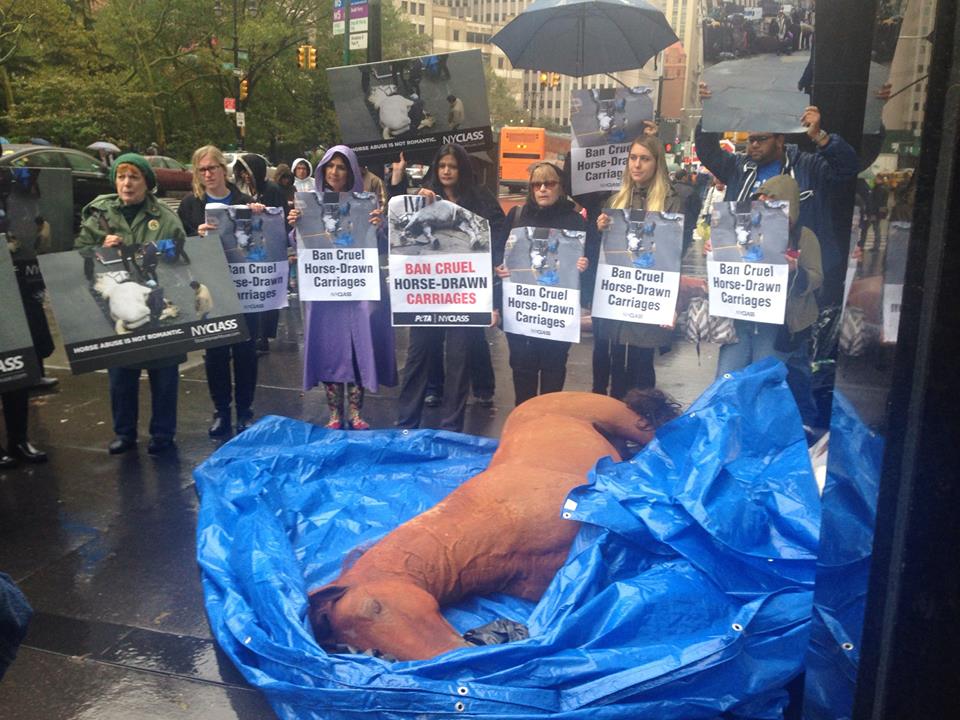
4. An army of activists: Hundreds of NYC voters feel passionately enough about the plight of the horses to dedicate their free time to educating voters in the streets and lobbying lawmakers at City Hall. This week, activists with NYCLASS conducting outreach in front of the offices of two “undecided” NYC Council Members were unexpectedly invited inside to make their case for a ban.

Councilmember unexpectedly invites picketers in for meeting

Councilmember unexpectedly invites picketers in for meeting

Luckily, the activists were not carrying the dead horse replica that they sometimes use to attract attention in neighborhoods where local Council Members opposes the ban.

City Hall in Manhattan (Photo: NYCLASS)

City Hall in Manhattan (Photo: NYCLASS)

NYCLASS and The Coalition to Ban Horse-Drawn Carriages are leading the fight locally, but they are not working alone. Representatives from national advocacy groups, including PETA, HSUS, FOA, the ASPCA and Last Chance for Animals, are also lobbying Council Members and/or running educational campaigns.

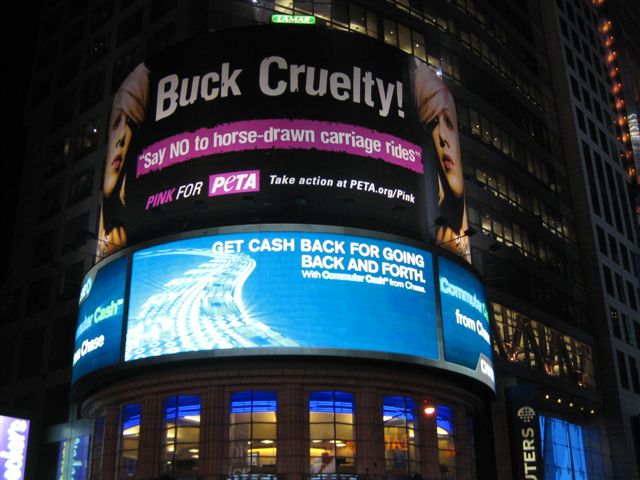
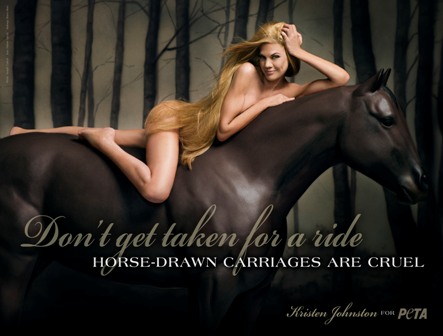
Since 2008, PETA has also lent major star power to the effort, rolling out billboards and videos with pro-animal celebrities like Pink, Lea Michele, Kathy Najimy and Kristen Johnston.

PETA billboard in Times Square

PETA billboard in Times Square

Actress Kristen Johnston

Actress Kristen Johnston

To date, the majority of Council Members have not publicly stated whether they plan to vote in favor of or against the horse-drawn carriage ban. Like most politicians, they will make their decision based on political expedience — not on the merits of the issue. In the unlikely event that the bill to ban horse-drawn carriages is voted down, it won’t be for a lack of effort by the advocacy community. But perish the thought!

Your Turn

1. If you live in NYC, please join NY-CLASS in its efforts to rally support among lawmakers for the Mayor’s bill to ban horse-drawn carriages. If you live elsewhere, please sign their petition.

2. To learn more about the issue and keep apprised of news, subscribe to the weekly newsletter of the Coalition to Ban Horse-Drawn Carriages.

3. Watch the award-winning documentary film BLINDERS to see why people have been fighting for years to take the horses out of NYC:


Filed under: Entertainment
Tagged with: , , , ,

Video Captures Dozens Attacking Injured Bull

January 7, 2015 by Leave a Comment


The News

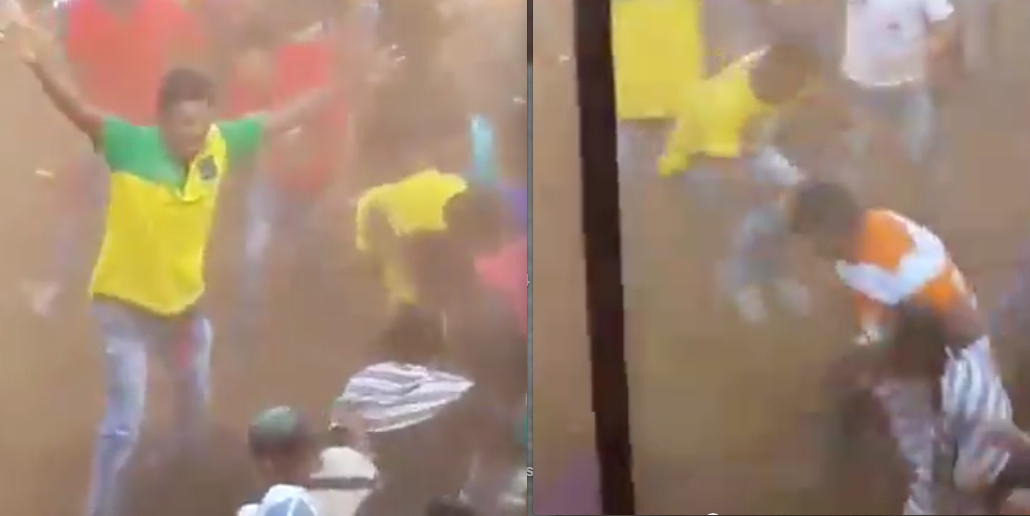
Dozens of people in Southern Colombia attacked and killed a bull who was lying injured on the ground in a arena during the annual “corraleja,” an amateur bullfighting festival held each year in several towns in Colombia. During corralejas, spectators are invited into the arena to fight the bull.

Two shots of spectators jumping onto the bull

Two shots of spectators jumping onto the bull

Video of the incident, which shows dozens of people kicking, stoning and slashing the helpless bull, has generated outrage in Colombia. In response to the outcry, the country’s Ministry of Culture issued a statement describing the ritual as “barbaric” and calling for the attackers to be punished. He has also called for a public debate about whether the festival should be allowed to continue.

The Mayor of Turbaco, the town in which the incident was filmed, defended the attack: “In ‘corraleja’ festivals, there are always injuries, there are always animals beaten and horses killed. These are the kinds of incidents that form part of the traditions and customs of such festivals.”

As more and more people become exposed to the barbarity of bullfights, governments are being pressured to curb the tradition. In Bogota, Colombia’s capital, the Mayor banned bullfighting in 2012, declaring that the city’s arena is for “activities of life, not death.” Bullfight supporters are fighting back in the courts and in the streets.

Hundreds attend pro-bullfight rally in Bogota, Colombia

Hundreds attend pro-bullfight rally in Bogota, Colombia

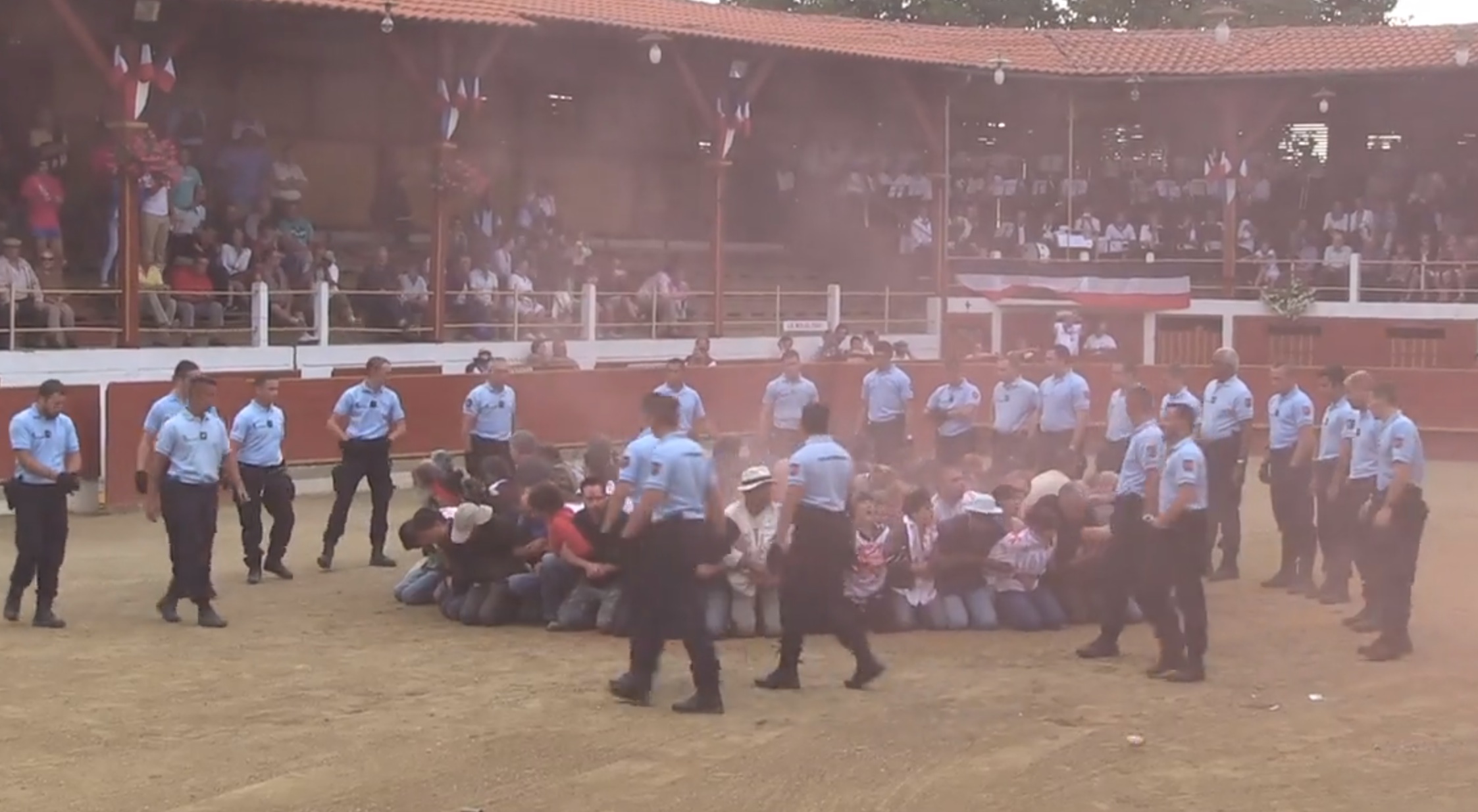
Barcelona banned bullfighting in 2012. Over the border in France, however, the bloodsport is still legal. In 2014, dozens of animal rights activists stormed a bullfight arena in Southwest France and were dragged away one by one by police officers. In an unexpected development, bullfight fans violently attacked the protesters.

bullfight

Bullfight protesters in France


Filed under: Entertainment
Tagged with: , ,

8 Reasons Why Horse-Drawn Carriages Cannot Be Operated Humanely or Safely in NYC

January 5, 2015 by Leave a Comment


Opinion

Following are eight reasons why horse-drawn carriages cannot be operated humanely or safely in NYC. No amount of regulation or enforcement can fix these issues:

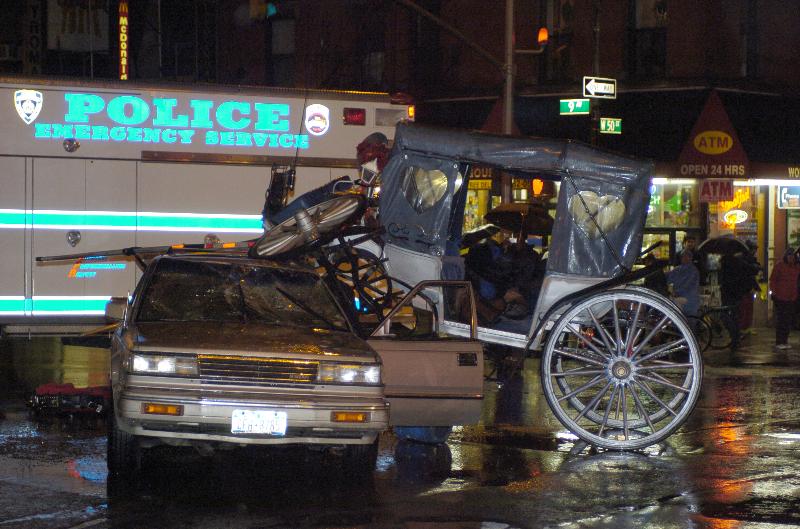
1. Horses spook: Horses are prey animals who can be spooked by sirens, potholes, barking dogs and many other stimuli. When spooked horses bolt down congested city streets, they become weapons. Many horse-drawn carriages crashes in NYC have been caused by spooked horses.

Spotty died after spooking and crashing into a car, sending 3 people to the hospital.

Spotty died after spooking and crashing into a car, sending 3 people to the hospital.

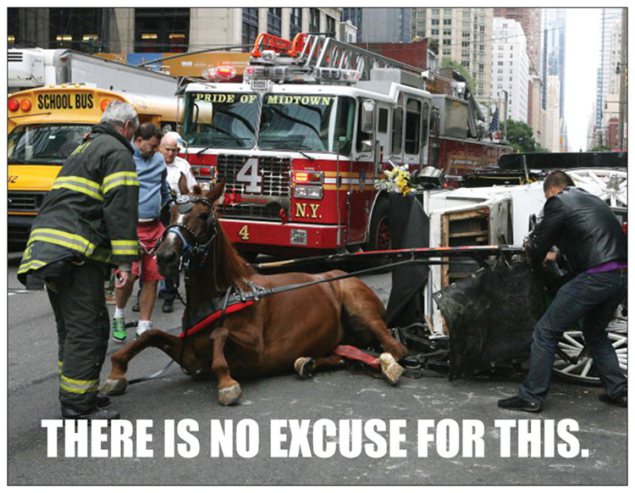
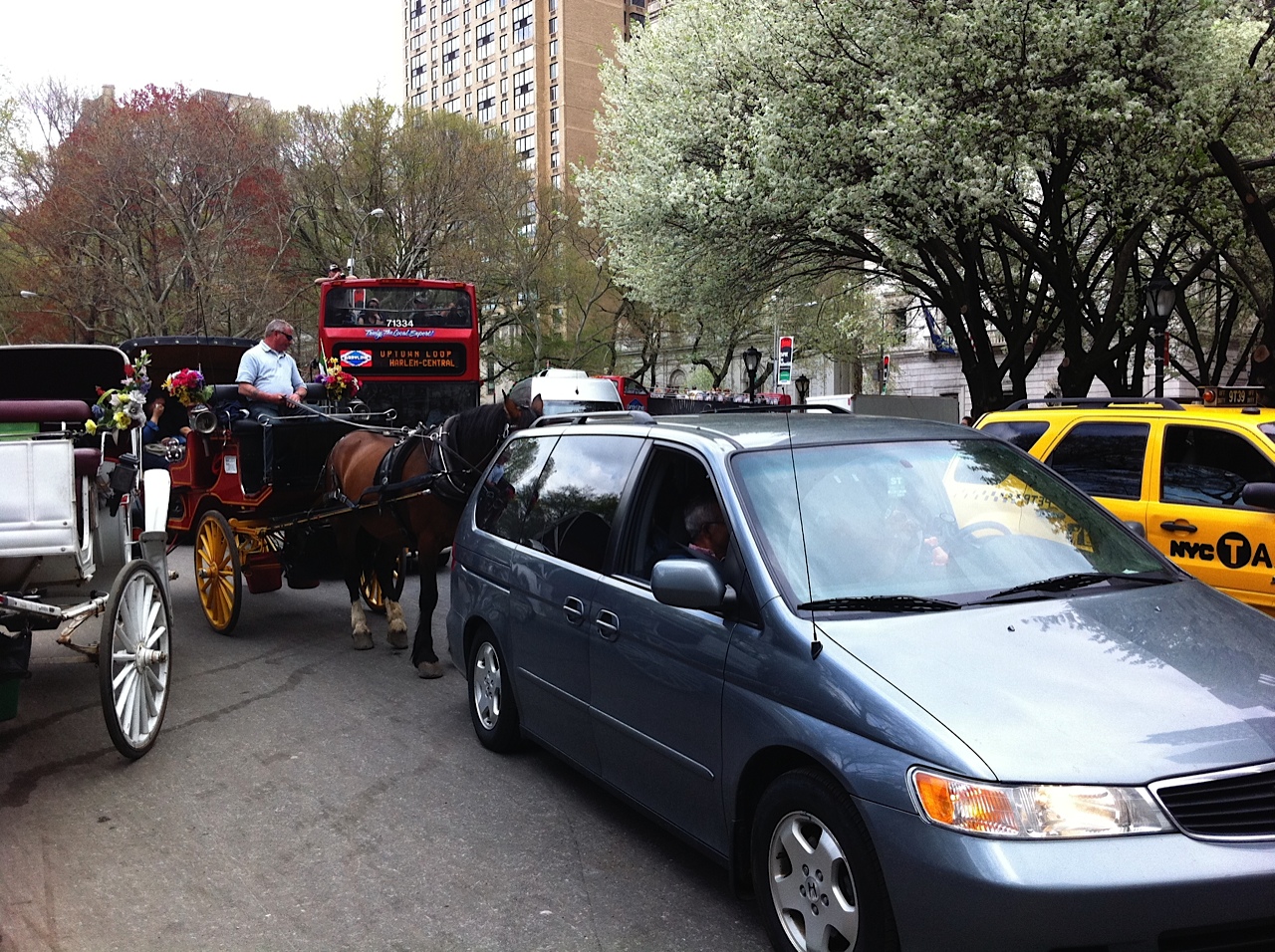
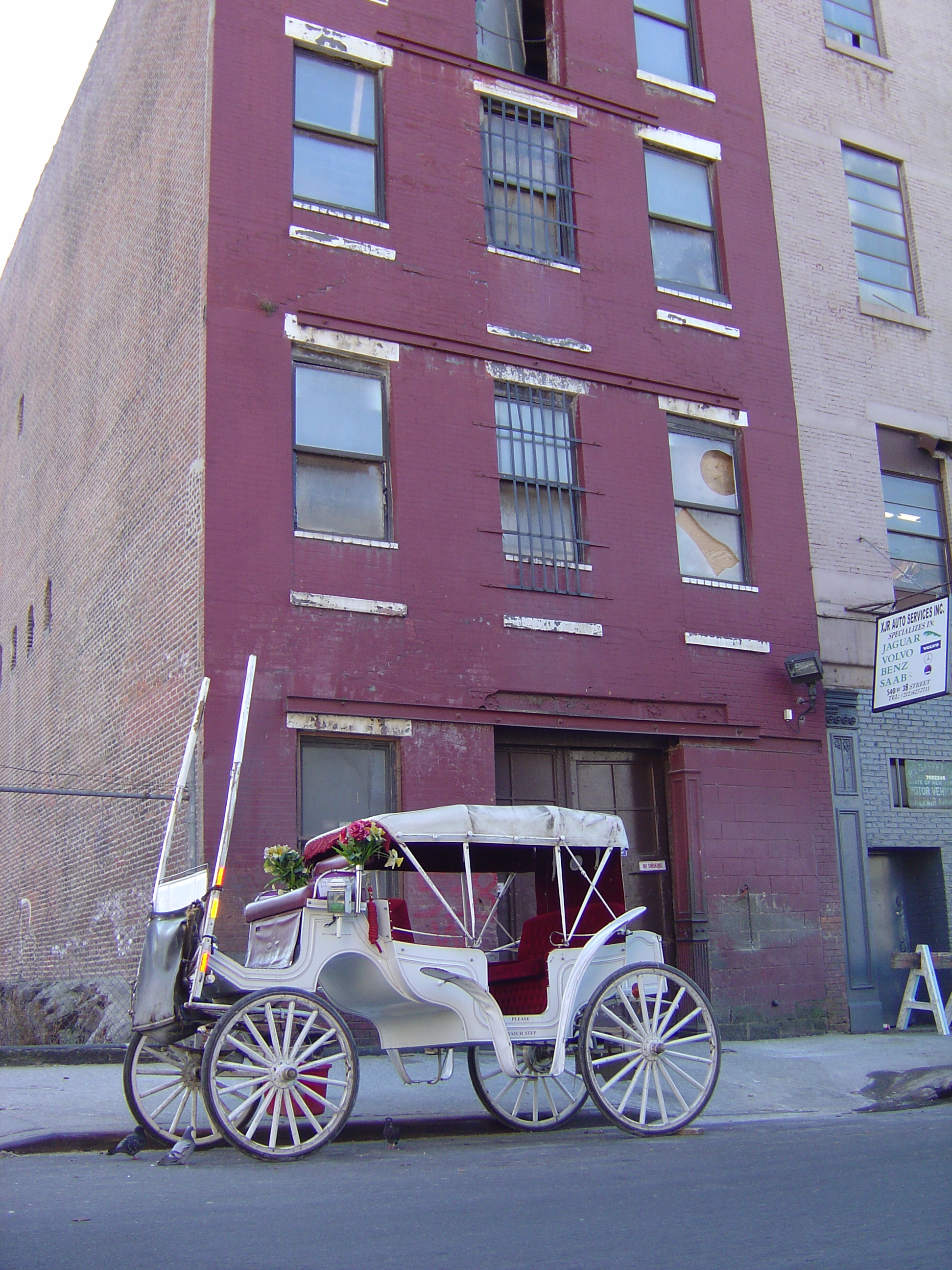
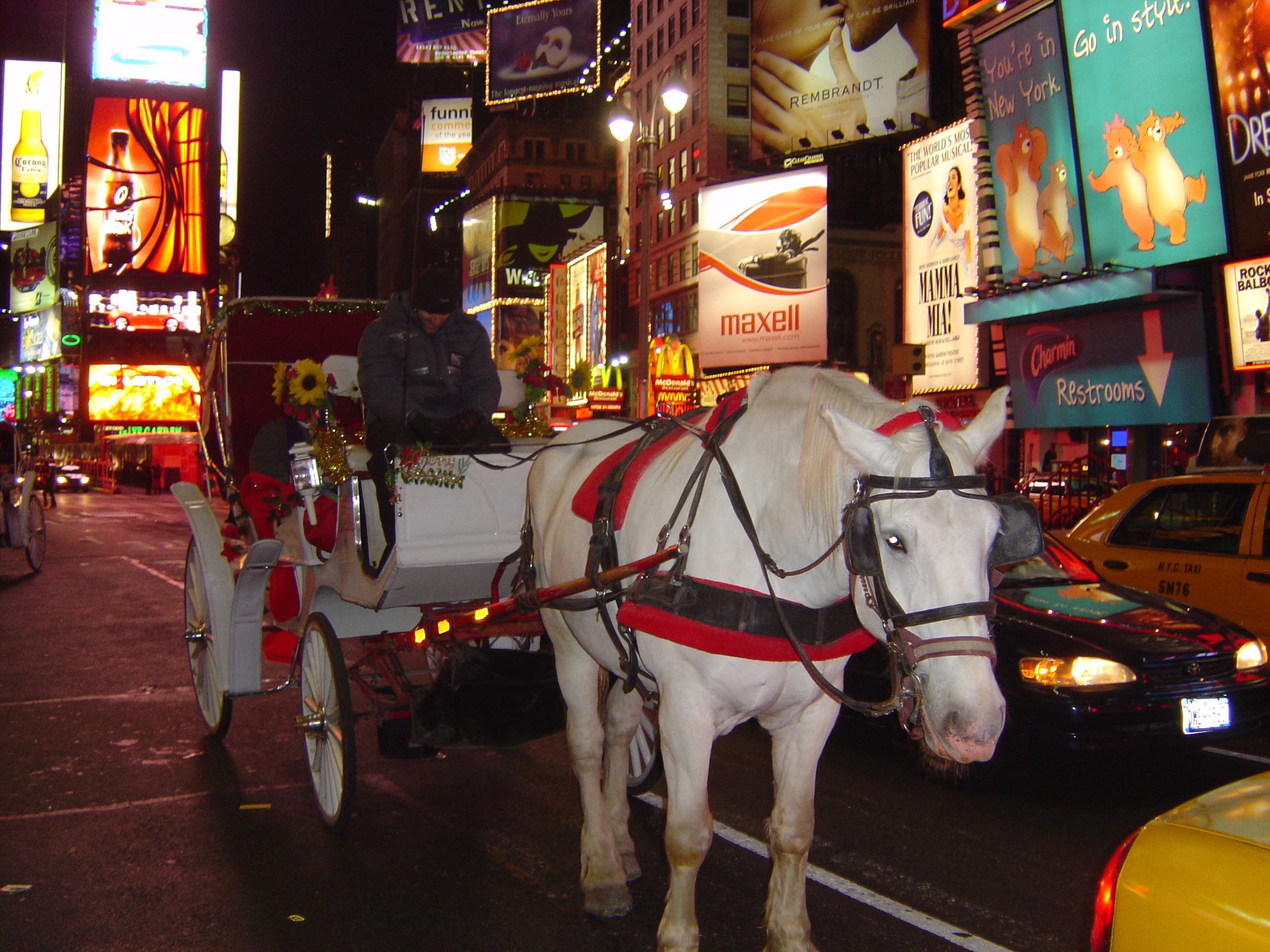
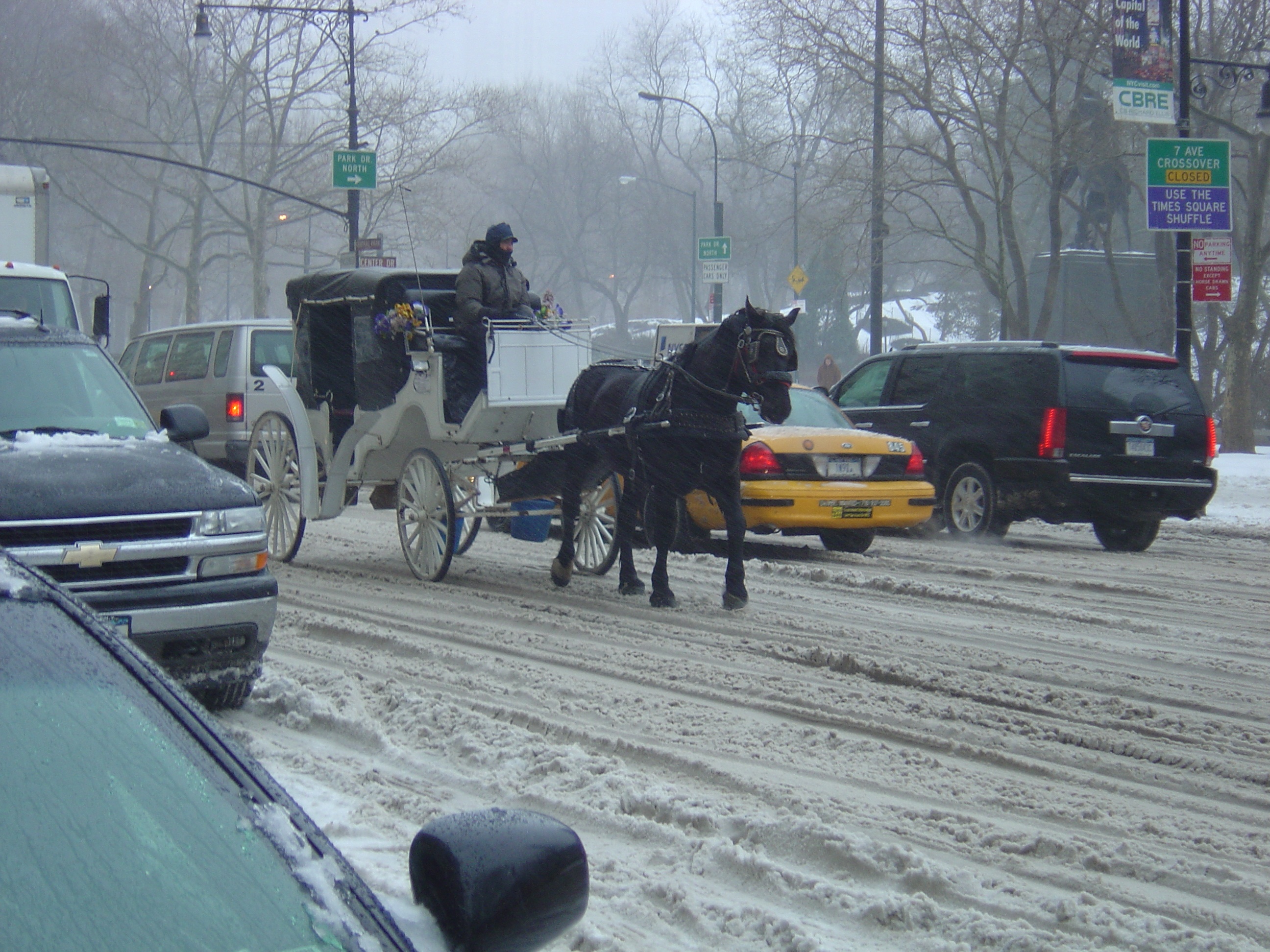
2. Urban environment: Horses are living animals, but, by forcing them to work in the streets with aggressive taxi drivers, tour buses and emergency vehicles, the carriage operators are treating them like motor vehicles. They simply do not belong in the busy streets of NYC.

Who does not belong in this picture?

Who does not belong in this picture?

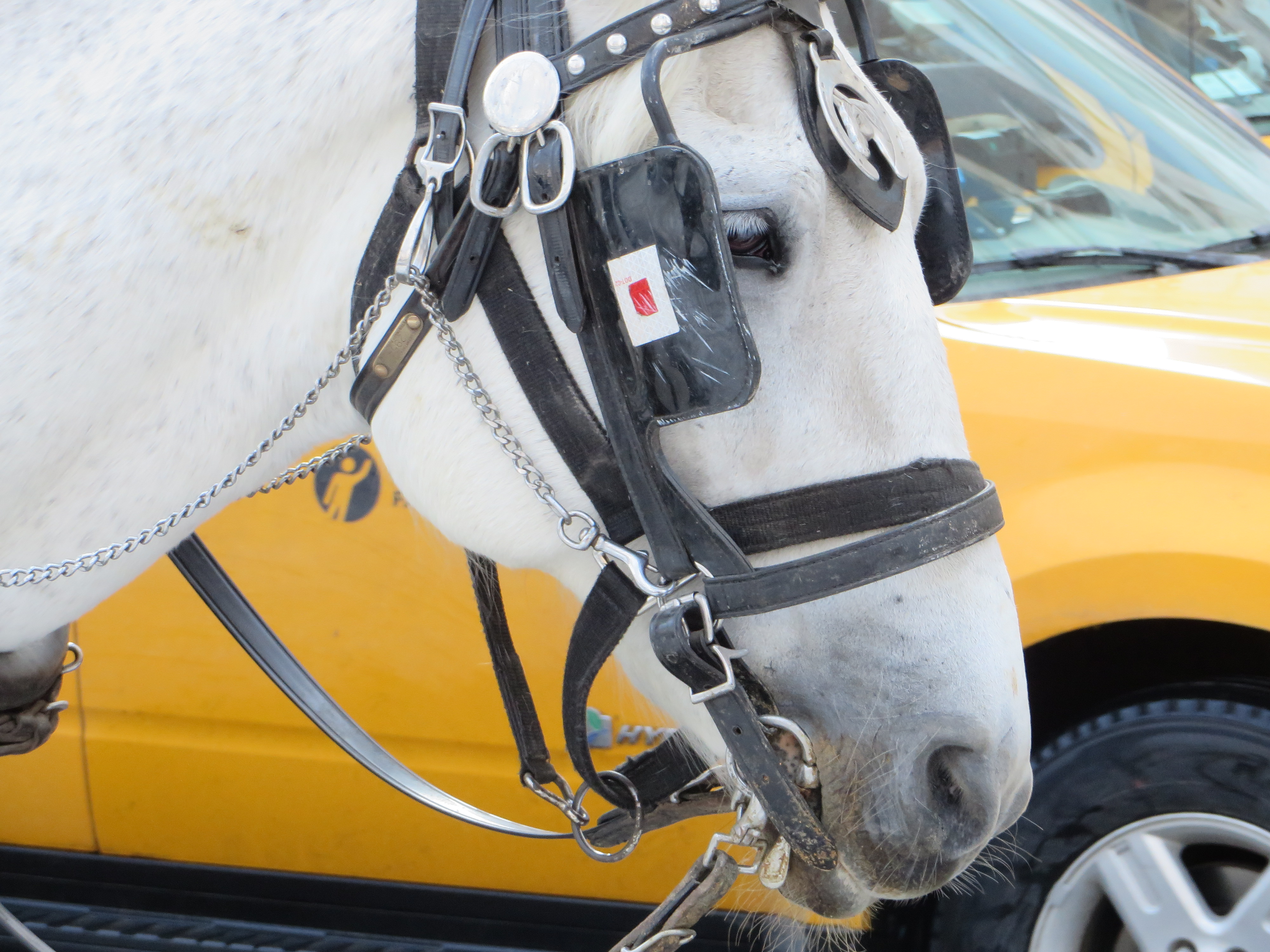
3. No pastures: Horses are grazing animals, but NYC has no pasture where they can graze, run, roll and interact physically, as herd animals do. They are either confined between the shafts of their carriages, encumbered by equipment, or kept in stalls.

horse-blinders

In addition to blinders, which curb their vision, the horses eat with a cold metal bit in their mouths.

4. Housing: The horses are housed on the second and third floors of four stables on the far West Side of Manhattan. If a fire broke out in one of these buildings, where highly flammable hay is stored, the panicked horses would be unable to escape down the narrow ramps, even if someone opened their stalls one-by-one to let them out. In 2011, NYC’s Department of Health recommended that the City prohibit new stables from having stalls above the ground floor, but that change, if implemented, would have done nothing to help horses trapped in the current stables.

West side livery front

After working in the streets, the horses aren’t turned out into a pasture. They come to this and other stables in Hell’s Kitchen.

5. Car exhaust: Ingesting car exhaust can cause lung disease in horses who live a nose-to-tailpipe existence – even in Central Park, where cars are permitted at certain times of day.

Nose-to-tailpipe for nine hours a day

Nose-to-tailipe for up to nine hours each day

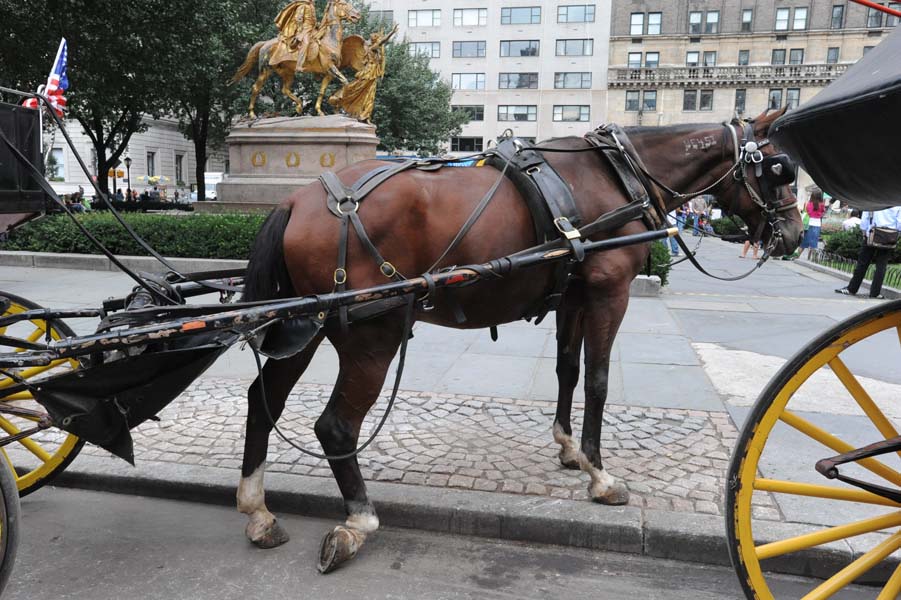
6. Hard surfaces: Hard surfaces can cause concussive injury to horses’ legs and feet, which were designed to walk on soft surfaces.

horse surface

Horses legs were designed to walk on soft surfaces, like grass or dirt.

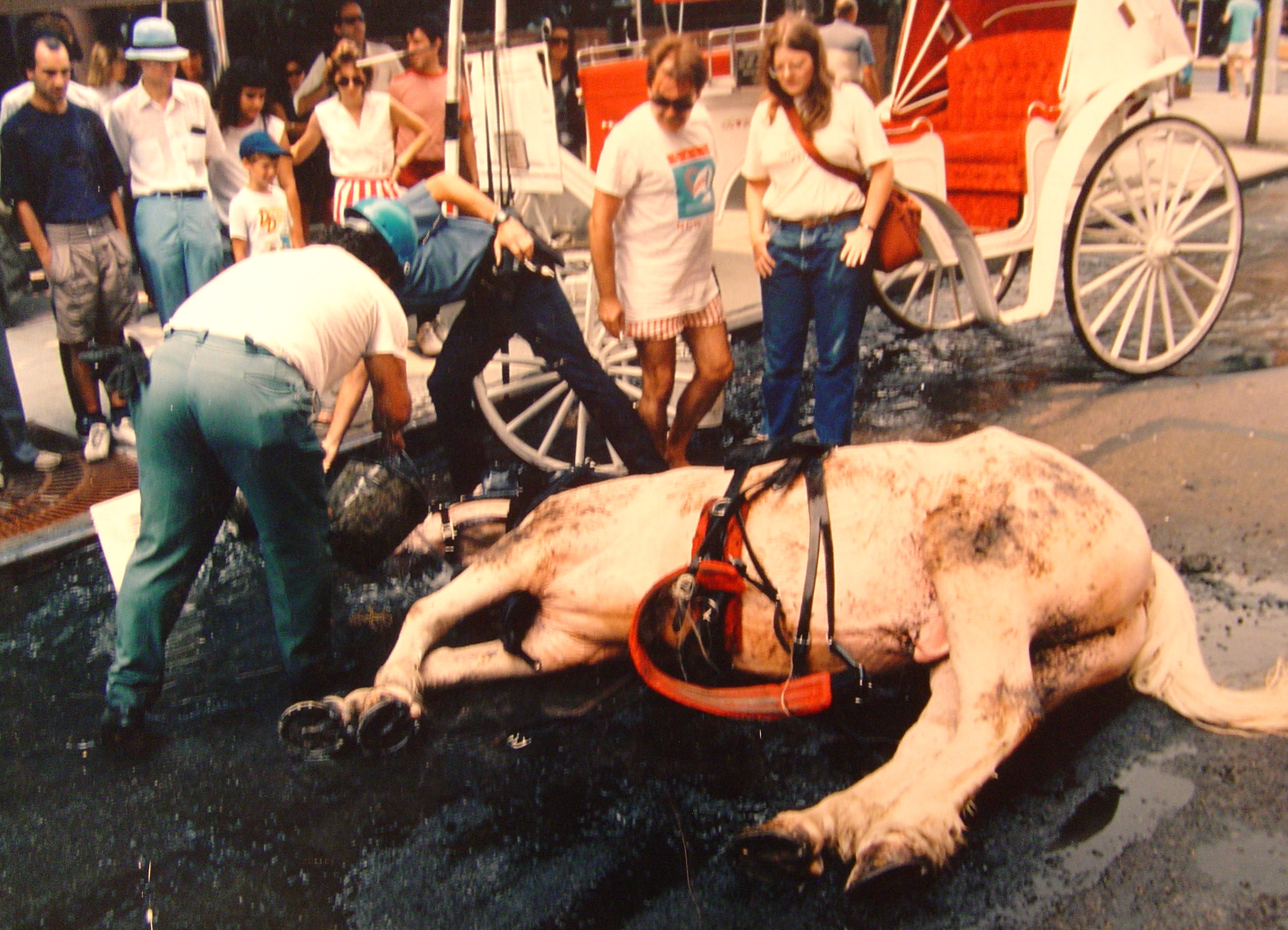
7. Lack of shade: Most of the horses are stationed in Grand Army Plaza, which has no shade. During the hot summer months, they bake in the sun for hours at a time. Over the years, many carriage horses have collapsed and died from heat exhaustion.

WHITEY

Carriage driver pours a bucket of water on a horse who collapsed from heat exhaustion.

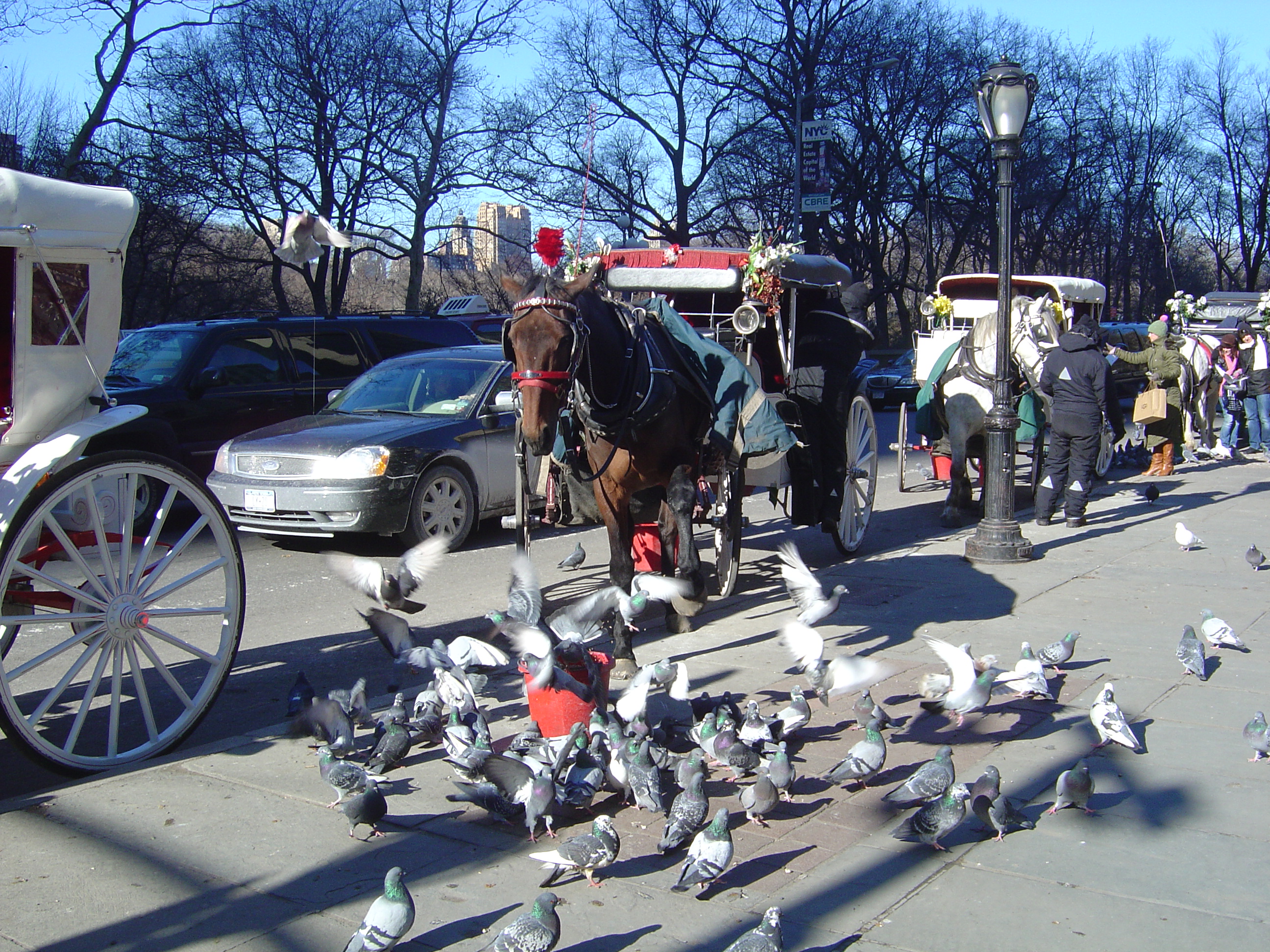
8. Food & water: The horses’ feed is often contaminated with pigeon droppings, which is a violation of city code.  In addition, the horses are watered out of two communal basins, which is described by one expert as “a veterinary nightmare” because the horses can transmit diseases to each other and because humans use them as trash cans.

horse pigeon

Feeding horses with grains contaminated with pigeon feed violates city code, but who is going to enforce that?

The horses have no choice but to wear blinders, but elected officials, carriage operators and patrons intentionally turn a blind eye to the obvious cruelty out of political expedience and greed. History will assuredly judge those who fought to keep horse-drawn carriages in the congested streets of New York City.

How can anyone think this is humane or safe?

How can anyone think this is humane or safe?

Your Turn

1. If you live in NYC, please join NY-CLASS in its efforts to rally support among lawmakers for the Mayor’s bill to ban horse-drawn carriages. If you live elsewhere, please sign their petition.

2. To learn more about the issue and keep apprised of news, subscribe to the weekly newsletter of the Coalition to Ban Horse-Drawn Carriages.

3. Watch the award-winning documentary film BLINDERS to see why people have been fighting for years to take the horses out of NYC:


Filed under: Entertainment, Opinion
Tagged with: ,