Their Turn - The Social Justice Movement of Our Time Their Turn - The Social Justice Movement of Our Time

Live Horse Exhibit at NYC Art Gallery Triggers Backlash and Protests (Video)

June 30, 2015 by Leave a Comment


The News

As thousands of New Yorkers gathered at the Stonewall Inn on June 26th to celebrate the freedom to marry, 12 horses tethered to an art gallery wall just a few blocks away waited patiently for the freedom to move. It was an ironic and disheartening site to behold on an otherwise happy and historic day in Greenwich Village.
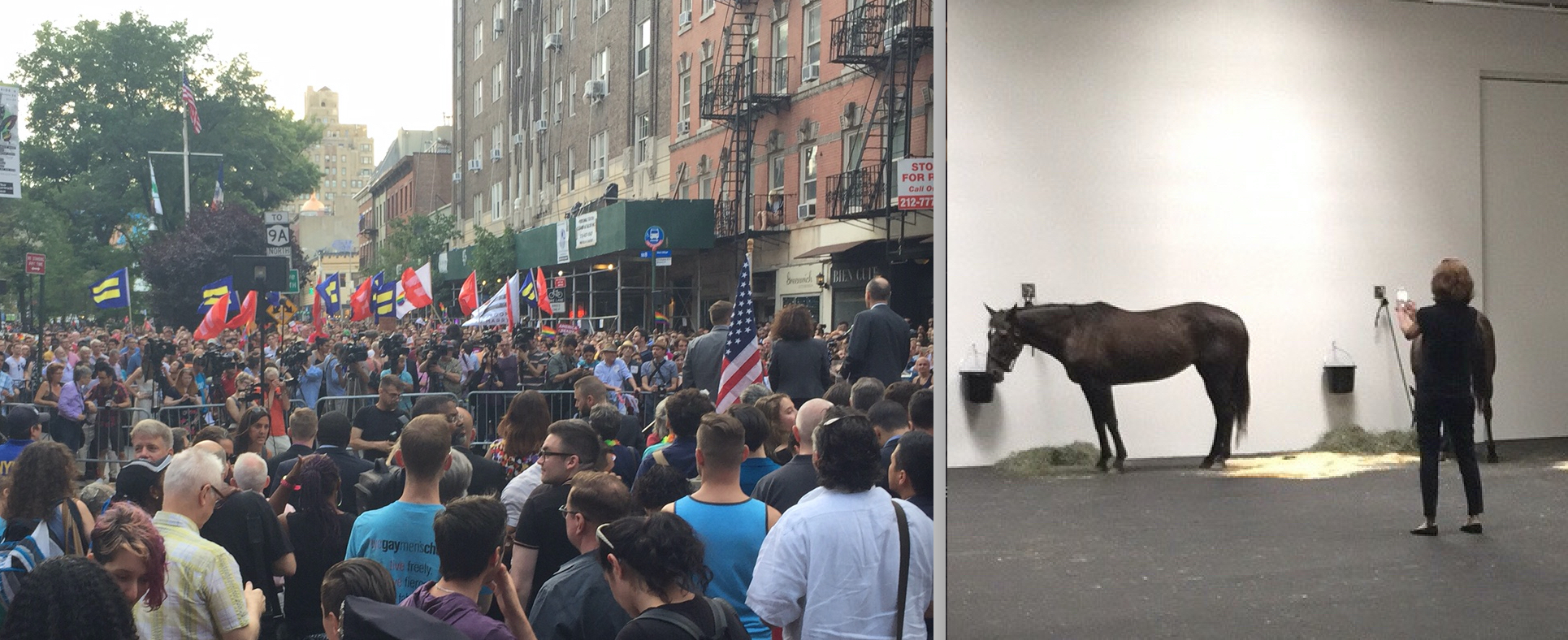
Just a few blocks away from the freedom to marry celebration, horses in art gallery were stripped of freedom to move
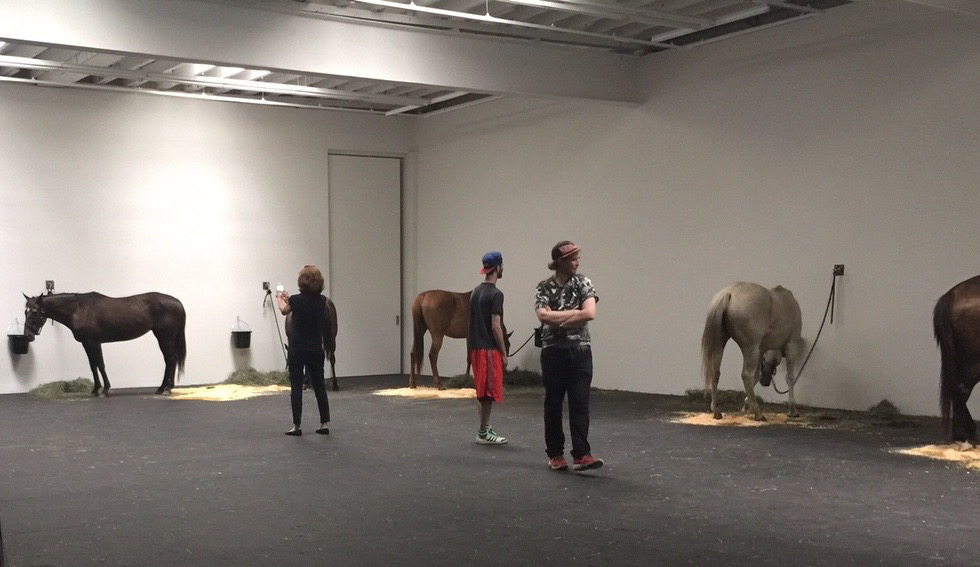
Just a few blocks away from the freedom to marry celebration, horses in art gallery were stripped of freedom to move

A NYC art gallery displayed 12 live horses for four days

A NYC art gallery displayed 12 live horses for four days

The New York Times described the live horse exhibit – “Untitled (12 Horses)” – as “stupendous,” but caring New Yorkers were not impressed. In fact, some showed up to protest.

The artist Jannis Kounellis, who says tying the horses to walls “makes a connection between the living element and the idea of solid foundations,” first created this exhibit in Rome in 1969. Oblivious to the outrage it would trigger in 2015, art dealer Gavin Brown brought Mr. Kounellis to his gallery in Greenwich Village to re-create it. For four days, the horses were tied to the wall for six to nine hours, rendering them unable to move around freely, lie down or scratch an itch.
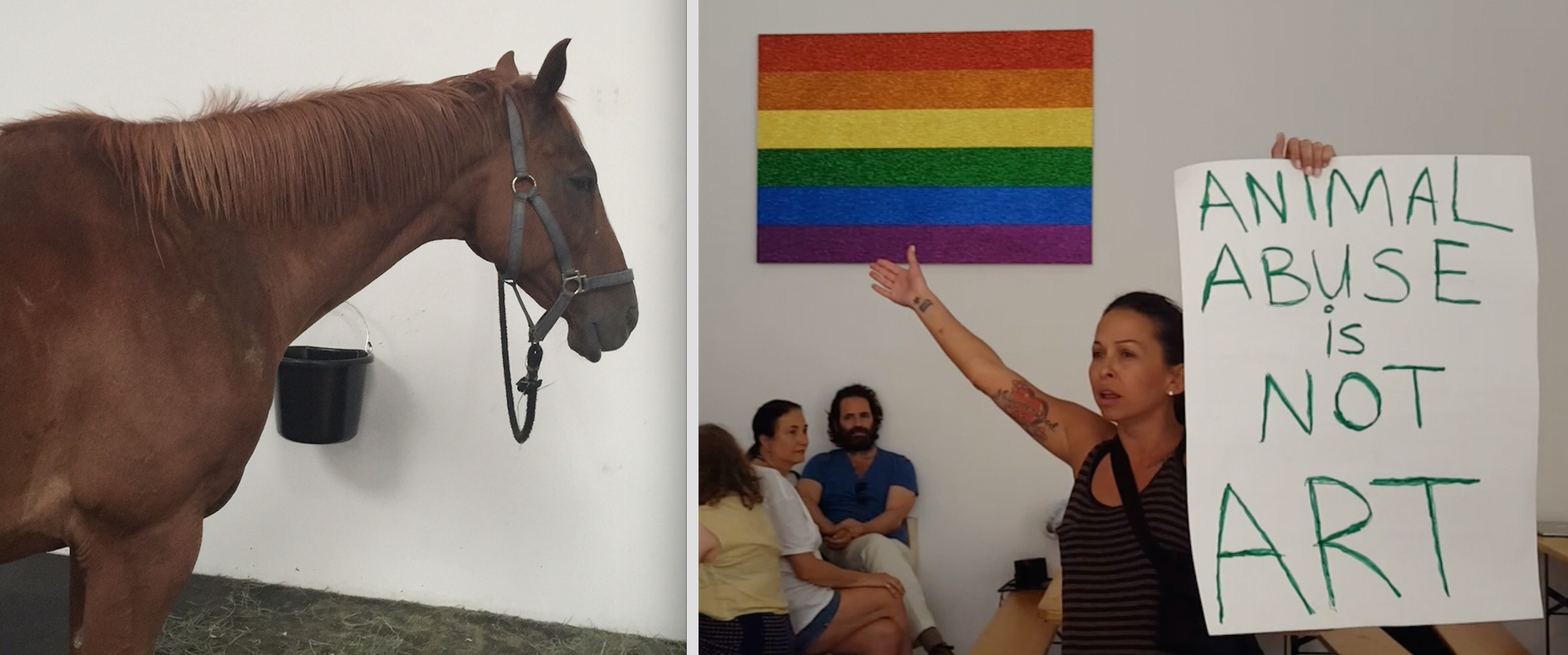
Animal rights activists protest an art exhibit that consists of live horse

Animal rights activists protest an art exhibit with live horses

In a heated discussion at the gallery, Mr. Brown told TheirTurn’s Donny Moss that the horses were being treated humanely, with access to food, water and air conditioning. But, even if true, that misses the point, which, advocates say, is that animals are not props or “objects,” as the artist himself described the horses.
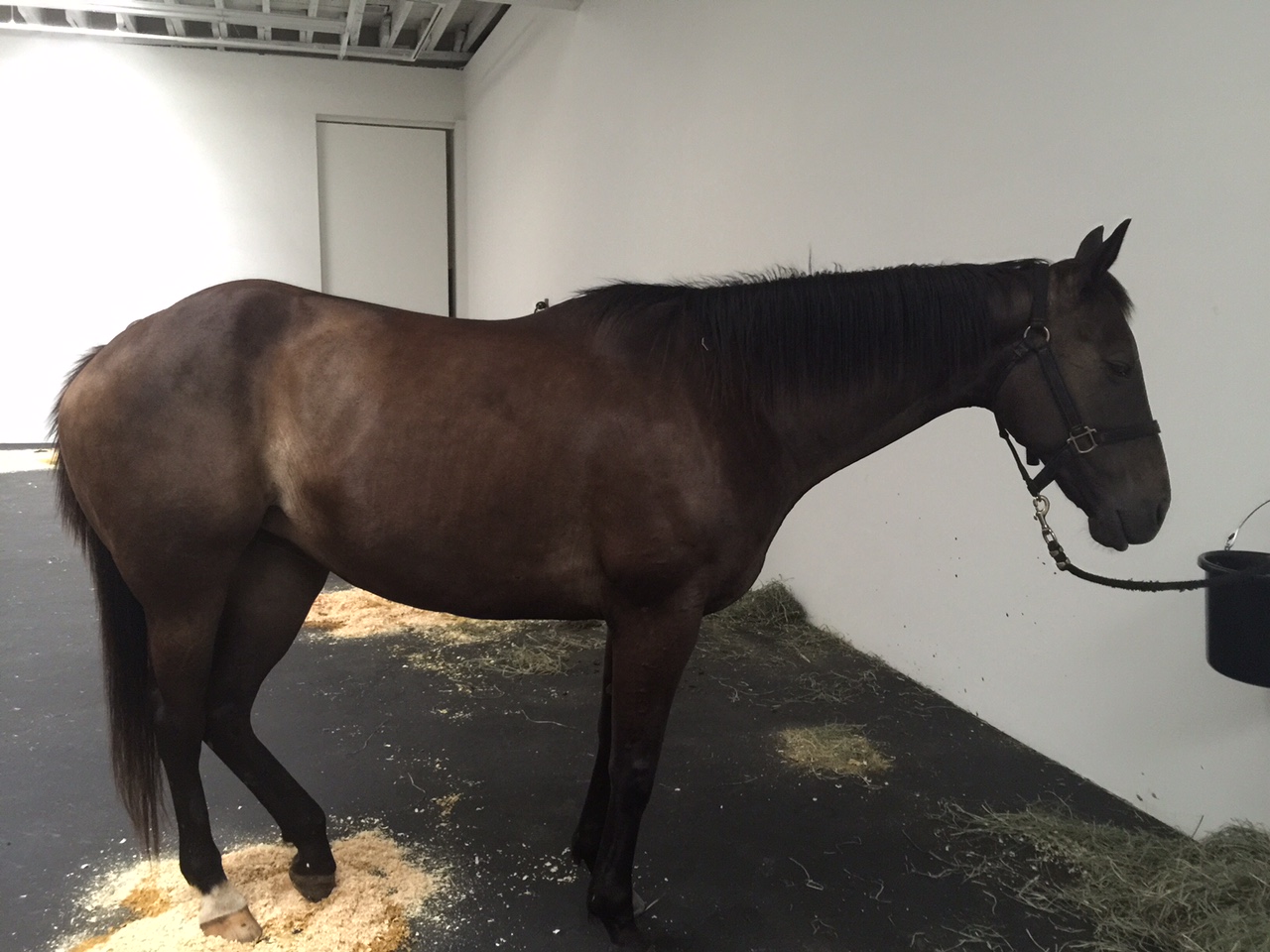
One of 12 horses tethered to the wall at Gavin Brown's art gallery in New York City

One of 12 horses tethered to the wall at Gavin Brown’s art gallery in New York City

It wasn’t only New Yorkers who registered their anger. People around the country flooded Mr. Brown with phone calls; expressed their anger on social media; and wrote scathing reviews online about the gallery. On Facebook, its rating dropped from 4.8 to 2.0 out 5. At least two media outlets wrote articles about the backlash. A story in the Gothamist, which had almost 200 comments, quoted TheirTurn’s Donny Moss: “Future generations will look at the photos of this animal exhibit and ask, ‘What were they thinking?'”
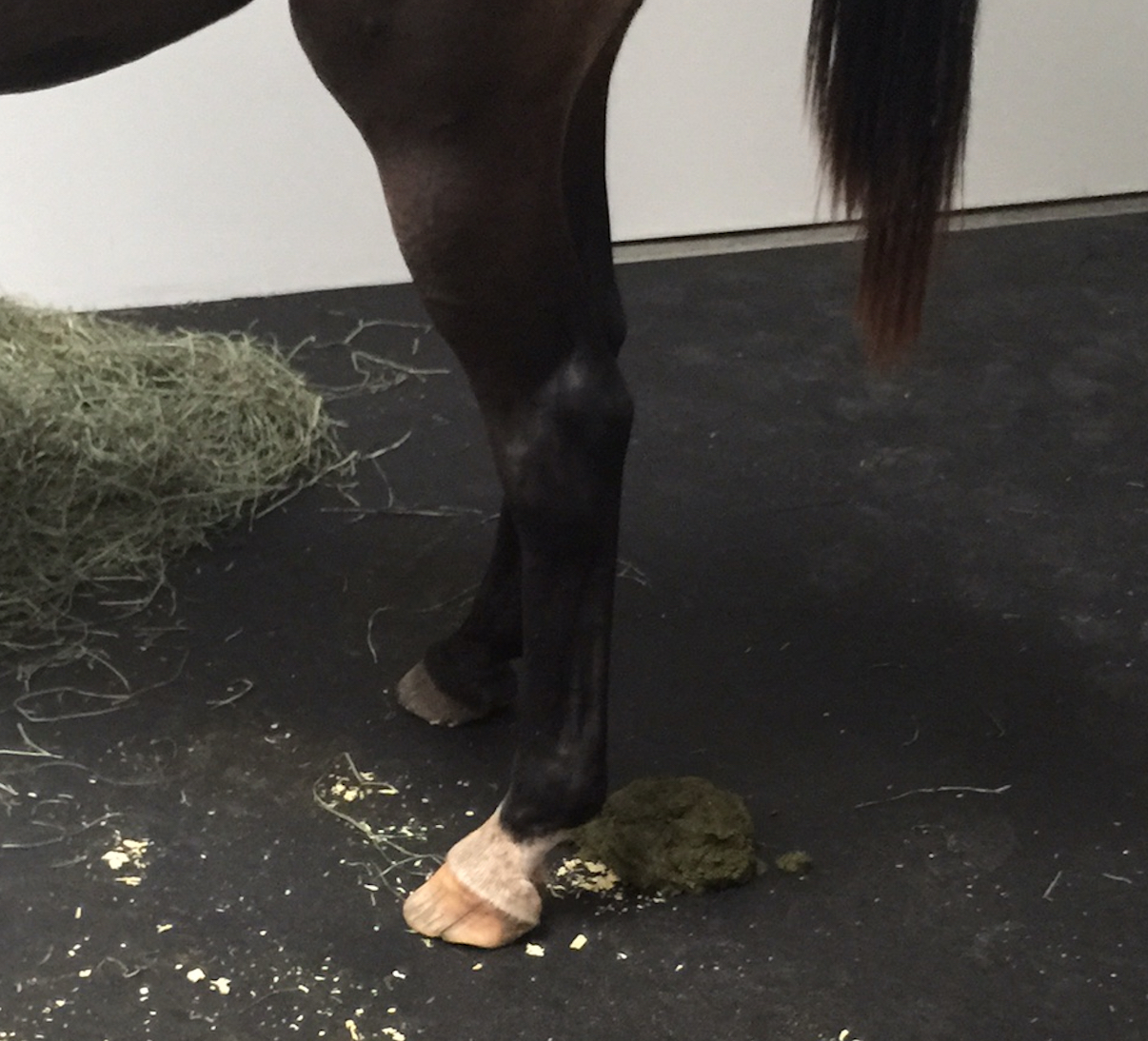
According to the NY Times, horses "relieving themselves" is a part of the experience of the exhibit

According to the NY Times, horses “relieving themselves” is a part of the experience of the exhibit

This is not the first time the Jannis Kounellis has used live animals. In his piece entitled “Fishbowl,” he placed a six inch chef’s knife into a bowl with live goldfish.
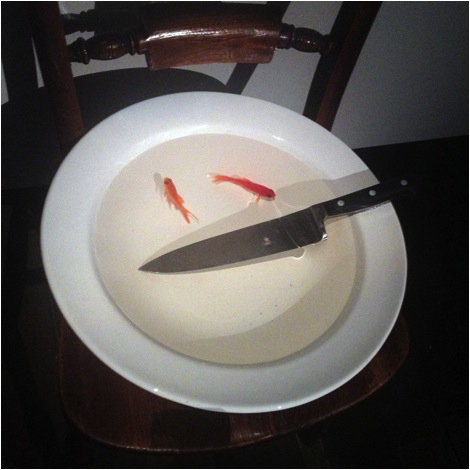
Artist Jannis Kounellis holds fish captive in a small bowl with a chef's knife

Artist Jannis Kounellis holds fish captive in a small bowl with a chef’s knife

An art news publication reported that Mr. Brown intends to re-create the exhibit yet again in a new gallery space. The backlash to this exhibit, however, has reportedly led to a change in plans. Starting on Friday, callers to the gallery were told that Mr. Brown would not be exhibiting the horses again.

Your Turn

Call Gavin Brown’s gallery to convey your point of view about the use of live animals in an art exhibit and ask him to cancel plans to re-create the exhibit in his new gallery space: 212-627-5258

Post a review of the gallery.


Filed under: Entertainment
Tagged with: , ,

Activists To Descend On USDA To Demand Liberation for Nosey

June 17, 2015 by Leave a Comment


The News

Her plight is so extreme that an army of activists is traveling to Washington, D.C., in an effort to liberate her. Her name is Nosey, and, by all accounts, she is the most abused elephant in the country.

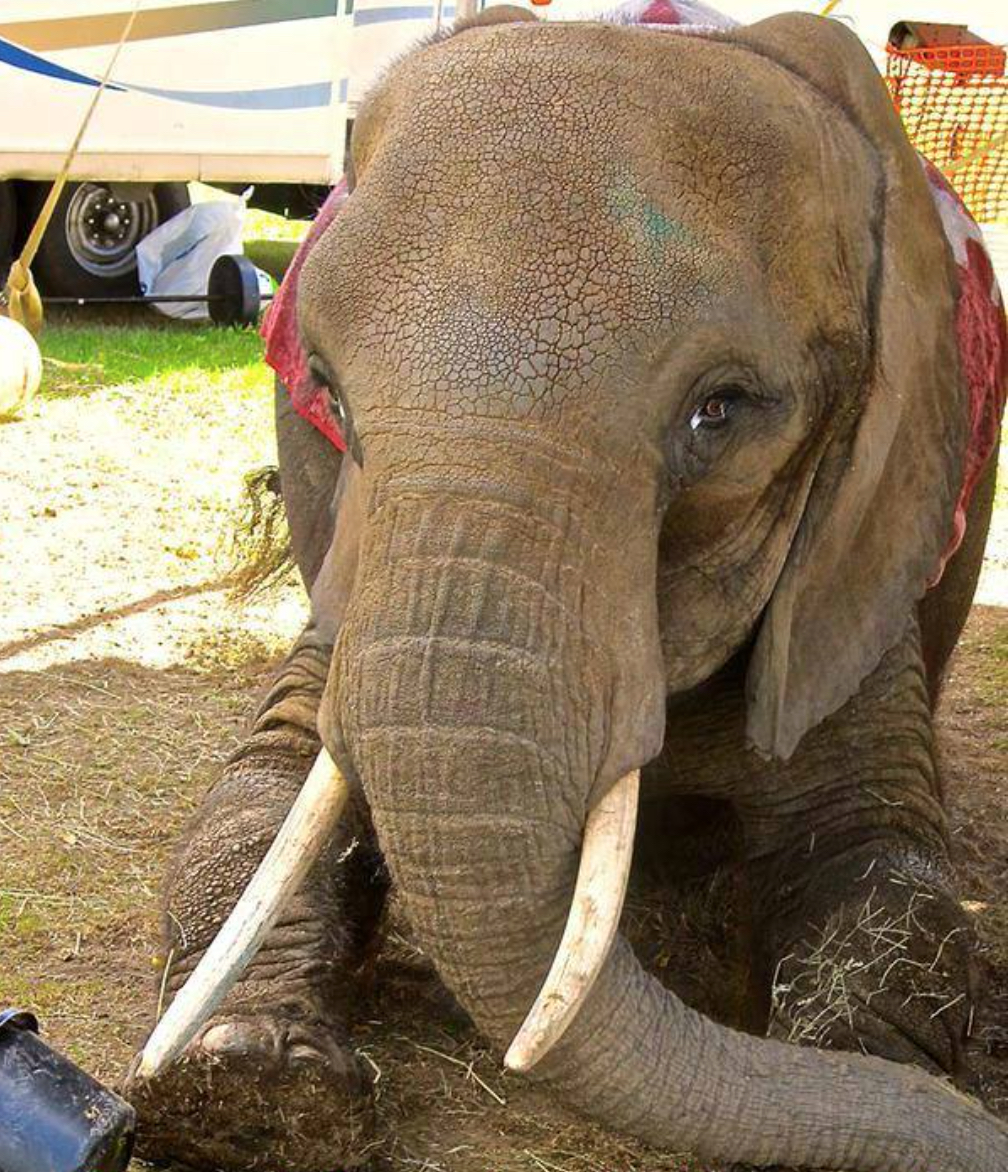
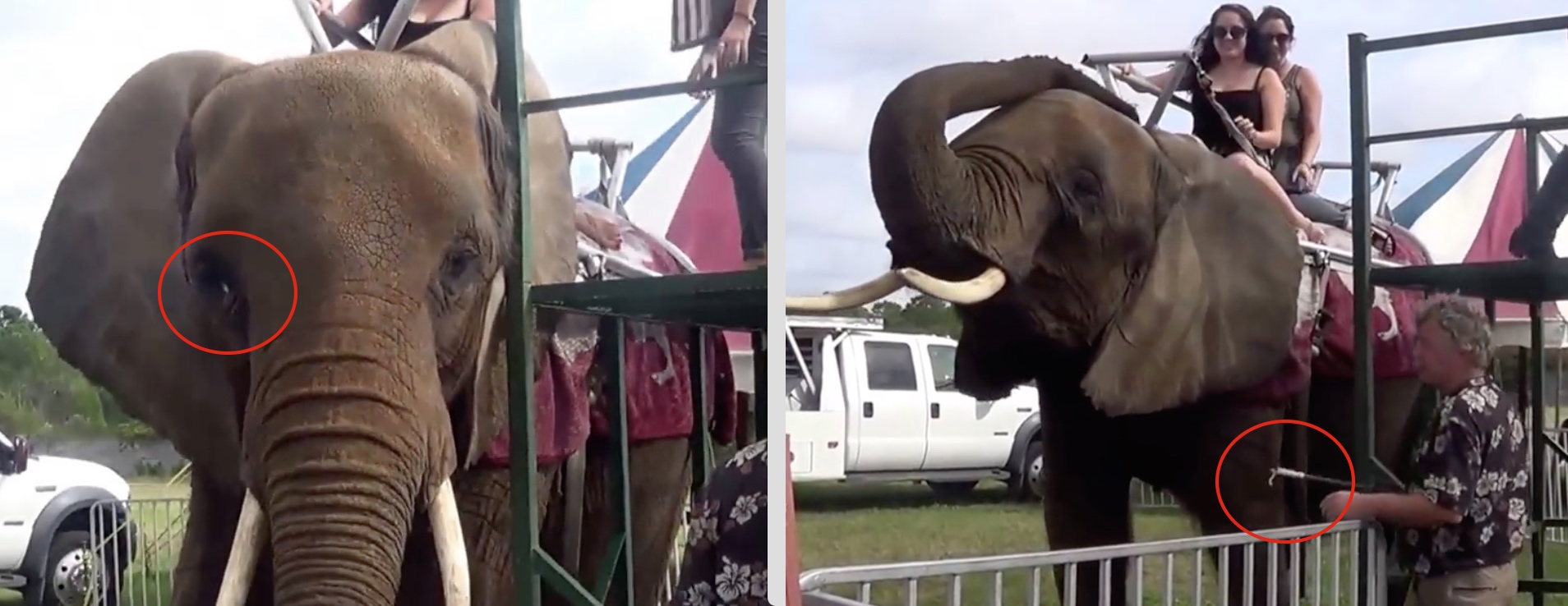
Nosey has a chronic, untreated eye infection

Nosey has a chronic, untreated eye infection

Thirty-two years ago, poachers kidnapped two-year old Nosey from her family in Zimbabwe and sold her into the entertainment business. Since 1988, her owner Hugo Liebel, who uses her for circuses performances and elephant rides, has abused her so frequently that the U.S. Department of Agriculture (USDA) has issued over 200 citations for violations of the federal Animal Welfare Act. What the USDA has not done, however, is revoke his license to keep her. It is for that reason that, on June 26th, activists are descending on the USDA.

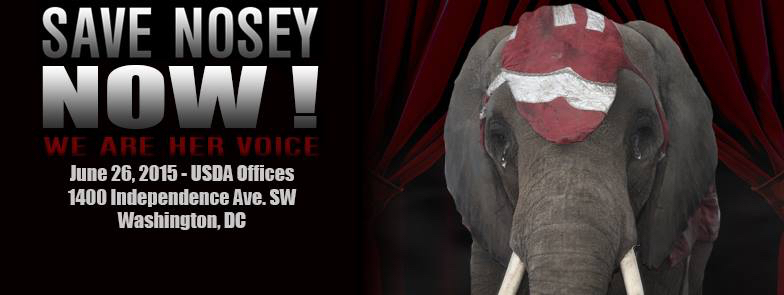
The rally at the USDA is being organized by Save Nosey NOW!, a group that has 1,247 members on Facebook. Over 400 people have signed up to attend, and the number is expected to grow. According to organizers, participants will “urge officials to confiscate Nosey and relocate her to a sanctuary — away from bullhooks, chains and electric shocks.” The renowned Elephant Sanctuary in Tennessee, which has over 2,700 acres and is home to 13 elephants, is prepared to adopt Nosey. Jane Velez-Mitchell from JaneUnchained will report live from the rally.

Over 400 people have signed up to participate in the USDA protest

Over 400 people have signed up to participate in the USDA protest

According to SaveNoseyNow, Hugo Liebel abuses Nosey physically and mentally. He forces her to perform and give rides in spite of painful arthritis, a chronic skin condition and an untreated eye infection. He beats her with a bullhook; chains her for hours at a time; confines her in a small trailer; and exposes her to temperature extremes. In what some advocates say is the cruelest act of all, Liebel deprives Nosey of the company of other elephants, highly social animals who live in herds. Nosey has been all alone for 30 years.

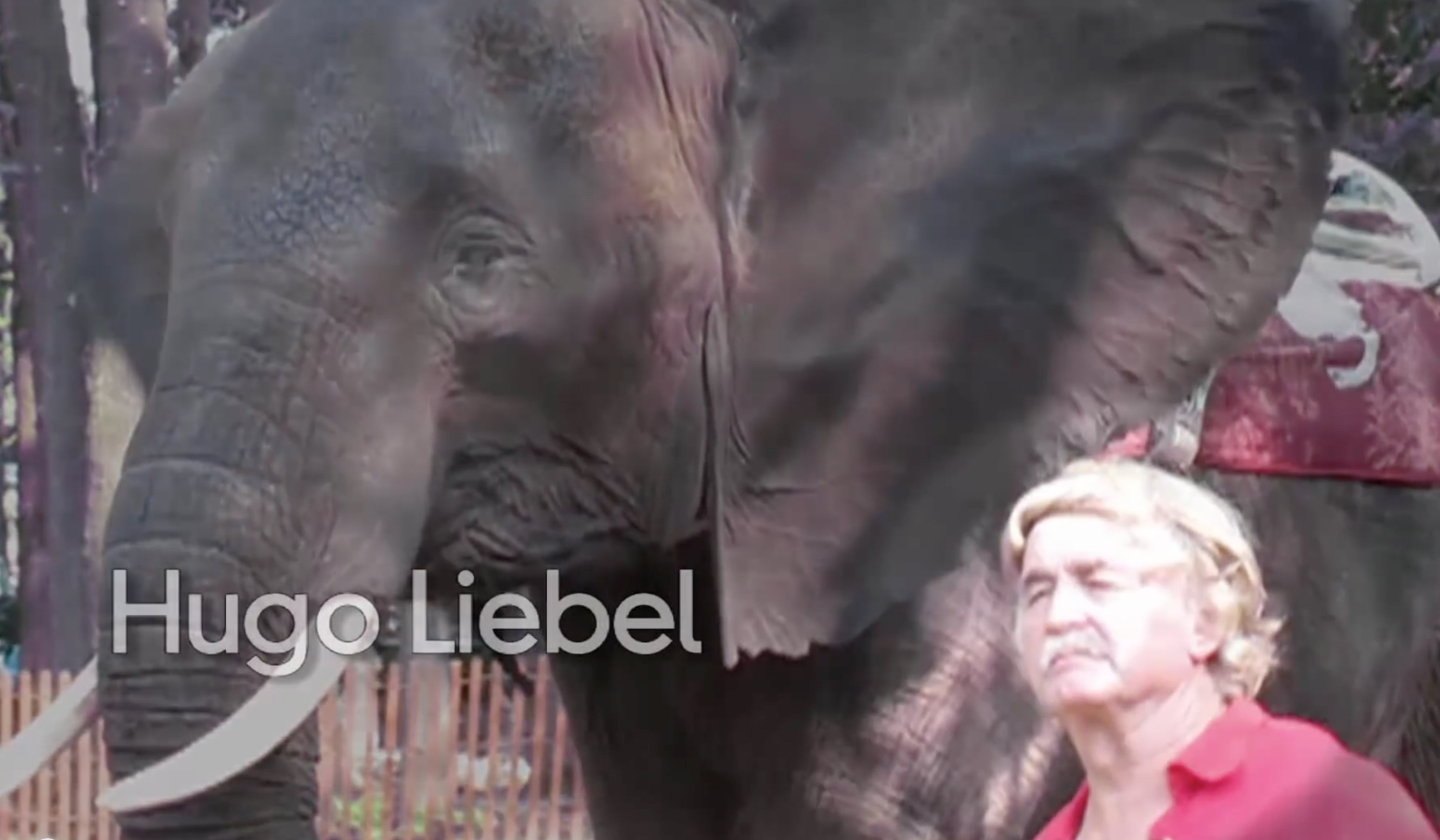
Nosey's oppressor Hugo Liebel (photo: screenshot from video produced by Action For Nosey Now)

Nosey’s oppressor Hugo Liebel (photo: screenshot from video produced by Action For Nosey Now)

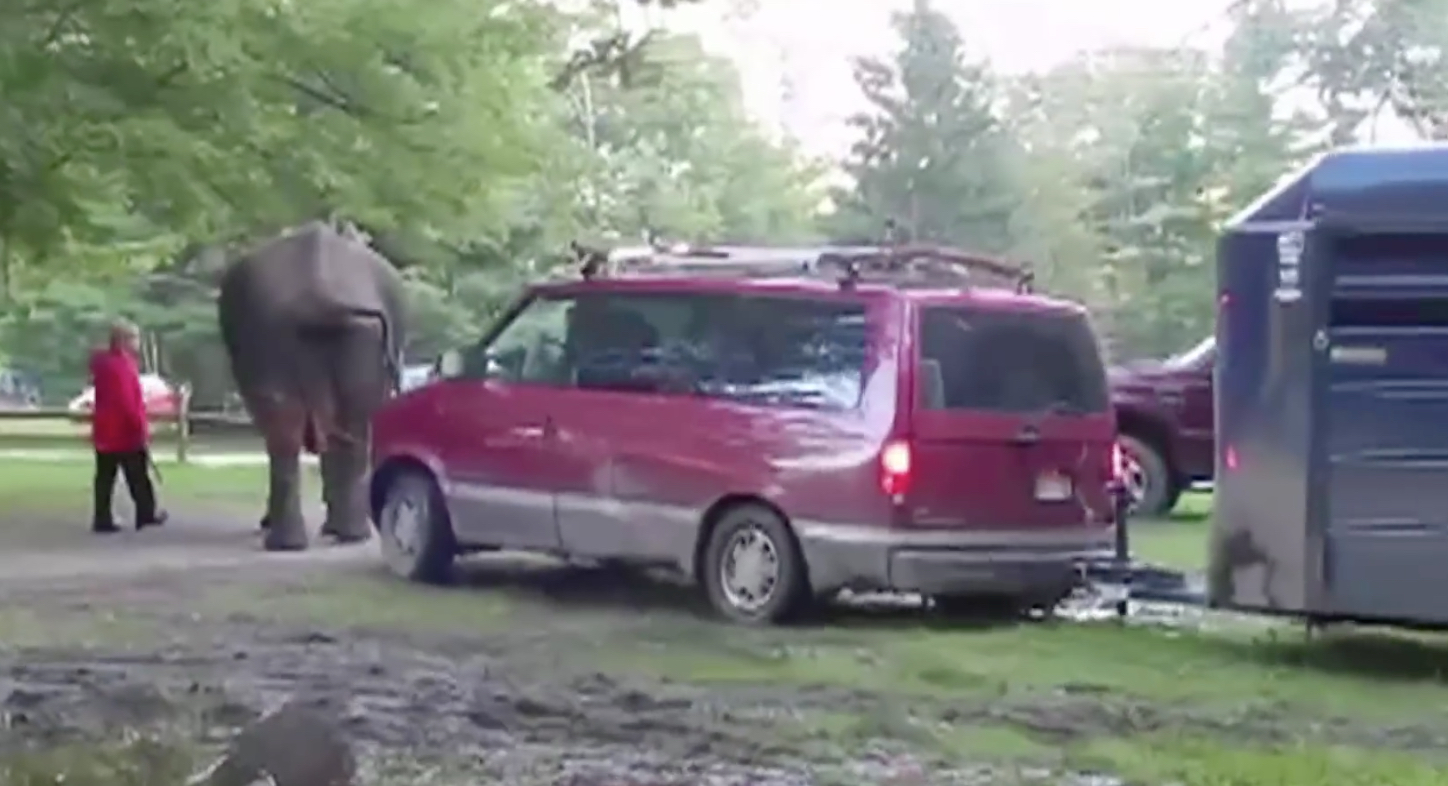
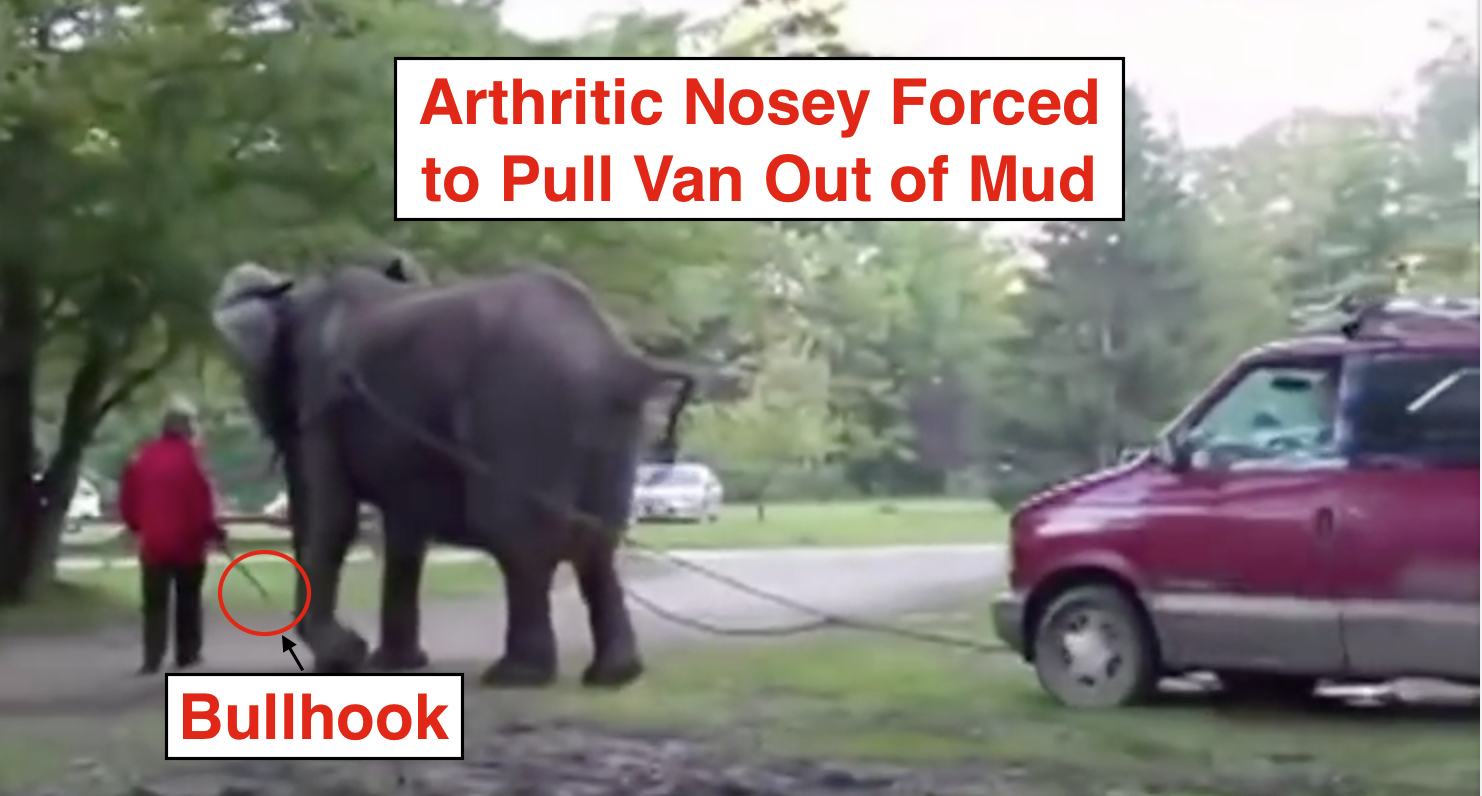
Nosey-pulls-trailer

Nosey’s owner, Hugo Liebel, forces her to pull a van and trailer out of the mud, in spite of her crippling arthritis (photo: AFNN)

In March, 2014, a Philip K. Ensley, a distinguished veterinarian with thirty years of clinical experience in zoo and wild animal medicine, published an Assessment and Opinion Concerning the African Elephant “Nosey”. In the report, he states, “This is the worst, most prolonged, documented example of an uncorrected case of suffering and abuse in an elephant I have ever reviewed.”

Under threat of bullhook, Nosey is forced to give rides in spite of an eye infection and arthritis

Under threat of a bullhook, Nosey is forced to give rides in spite of an eye infection and arthritis

Your Turn

Join the Facebook group Save Nosey Now and participate in the campaign to rescue Nosey from Hugo Liebel and move her to the Elephant Sanctuary.

Send polite emails to USDA officials asking them to revoke Hugo Liebel’s license to use Nosey in the circus and for elephant rides: chester.a.gipson@usda.govkevin.a.shea@usda.govaceast@aphis.usda.gov

Attend the Save Nosey NOW! We Are Her Voice rally in Washington, D.C., on June 26th.

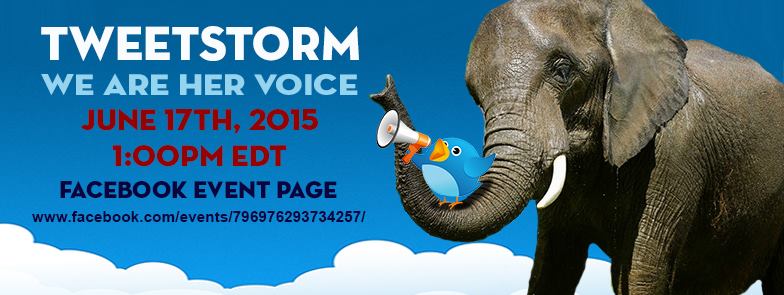
Participate in the Tweetstorm for Nosey until June 20th at 7:00 p.m.

Nosey-tweetstorm


Filed under: Entertainment
Tagged with:

Advocates for Lolita & Nosey Use Viral Video to Demand that USDA Enforces Animal Welfare Act

May 18, 2015 by Leave a Comment


The News

Nosey the elephant and Lolita the orca, longtime symbols of the cruelty of animals in entertainment, have also also become symbols of the U.S. Department of Agriculture’s (USDA) failure to enforce the federal Animal Welfare Act (AWA).

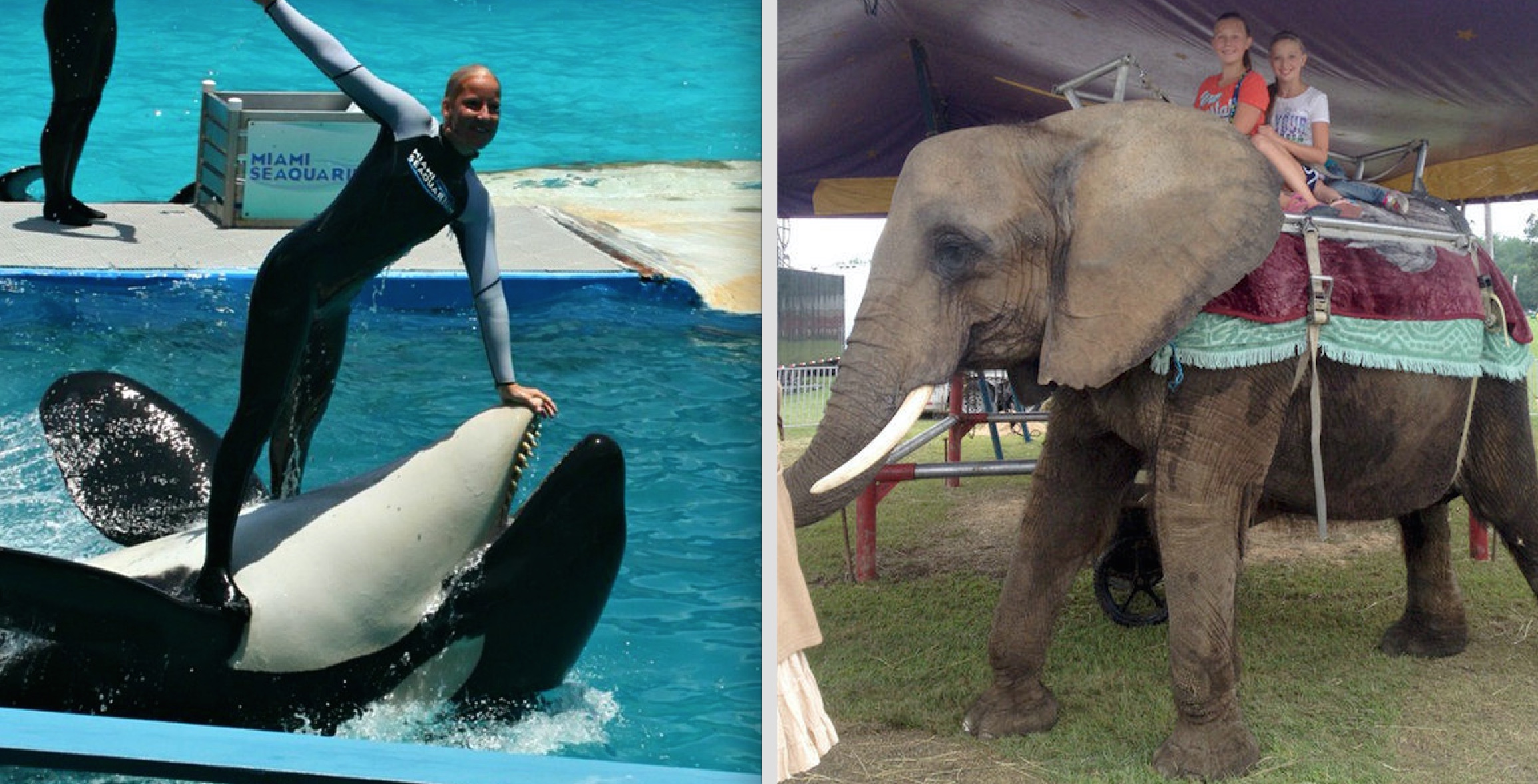
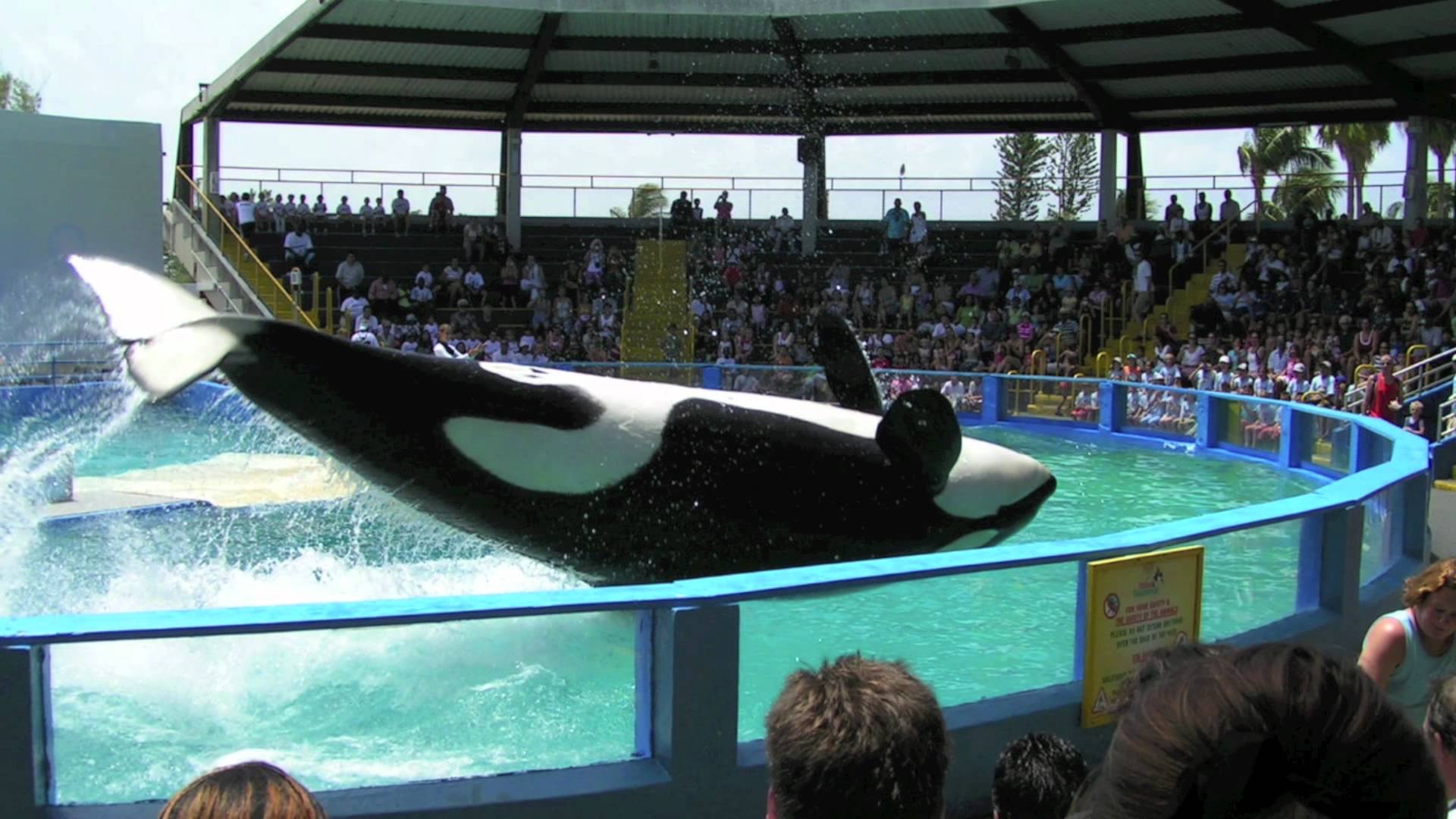
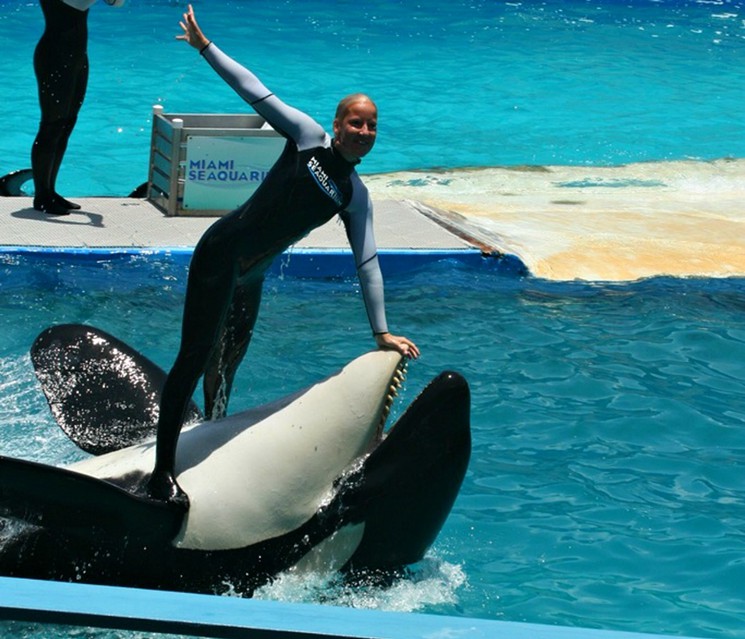
Lolita being used as a surfboard; arthritic Nosey gives rides to unsuspecting children

Lolita being used as a surfboard; arthritic Nosey gives rides to unsuspecting children

After years of protests, petitions and lawsuits, activists nationwide are now using a viral video to demand that the USDA liberate Lolita and Nosey on the grounds that the harsh conditions of their captivity violate the AWA.

NOSEY
Nosey, a 30-year old elephant who was captured in Zimbabwe when she was two, has been held captive by the Liebel Family Circus since 1988. In spite of her crippling arthritis and chronic skin disease, Nosey is forced to give rides to paying customers at flea markets and fairs across the country.
Under threat of bullhook, Nosey is forced to give rides in spite of eye infection and arthritis

Under threat of bullhook, Nosey is forced to give rides in spite of her eye infection and arthritis

Advocates claim that the circus owner, Tom Liebel, and his employees have beaten Nosey into submission with bullhooks, a sledge hammer and shovels and that the USDA has cited Liebel nearly 200 times for violations.  In spite of the violations,  abundant evidence of abuse and a veterinary report stating that Nosey is “suffering, permanently disabled and crippled,” the USDA has refused to revoke Liebel’s license to exhibit Nosey and use her for rides.
Violation of AWA

Violation of AWA

LOLITA
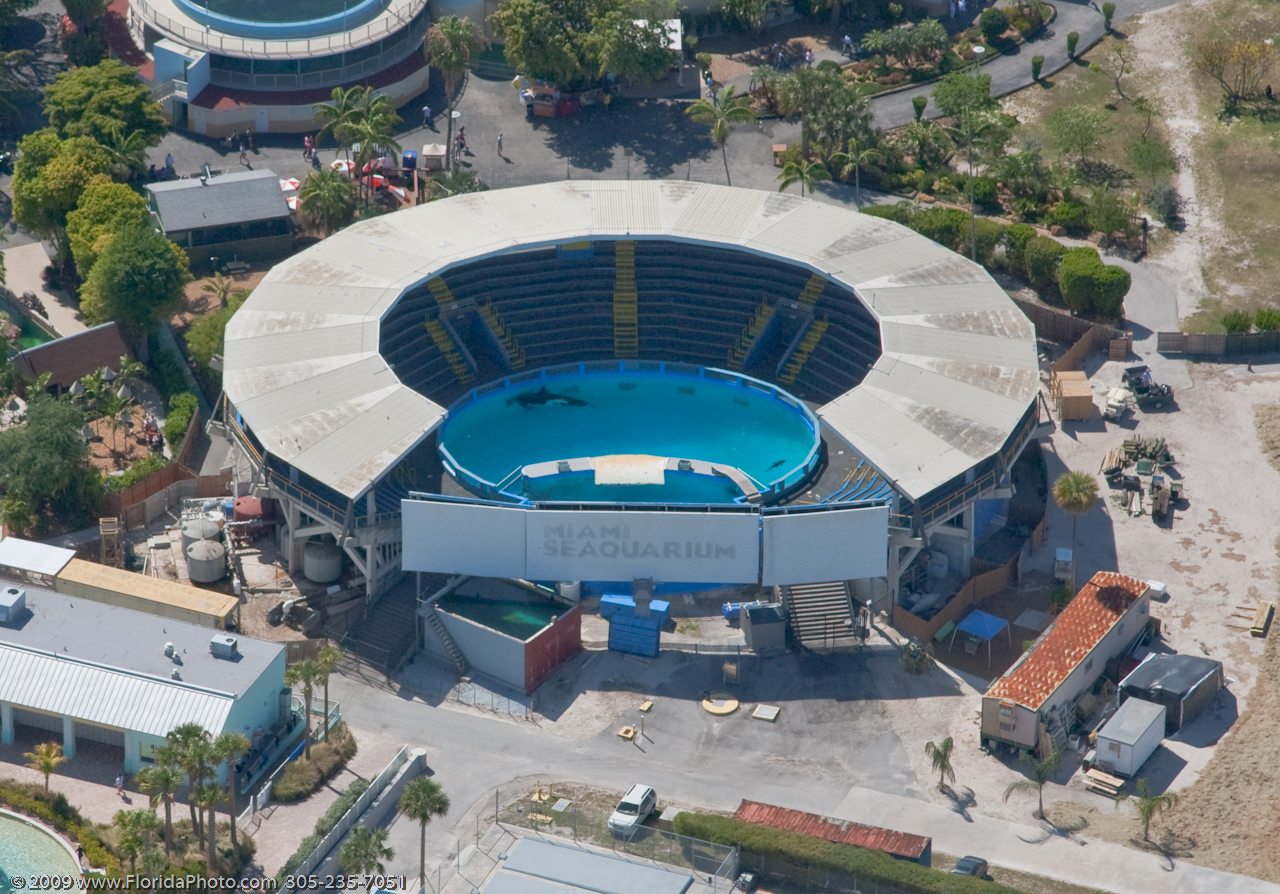
Lolita, an orca who was captured off the coast of Washington in 1970, has been held captive in the nation’s smallest whale tank for 45 years. Until 1980, she had an orca companion, Hugo, who reportedly committed suicide by pounding his head against the side of the tank. For the past 35 years, she has been alone, unable to interact with members of her own species or engage in any natural behaviors, such as hunting, diving and swimming in the open water. Her tank is just 20 feet deep.

Lolita at the Miami Seaquarium

Lolita’s captivity at the Miami Seaquarium is not just cruel; it is illegal. Palace Entertainment is violating the AWA in three ways: Lolita’s tank doesn’t meet minimum size requirements; she has no shade to protect her from the sun; and she does not have a killer whale companion.

Lolita is longer than the tank is deep.

Lolita is longer than the tank is deep.

In February, the National Oceanic and Atmospheric Administration (NOAA) designated Lolita as endangered because she was taken from the protected Southern Resident Killer Whale population. This historic decision has provided legal ammunition to the groups that have sued the USDA for renewing Palace’s license in spite of its AWA violations. If the court rules in favor of the advocacy groups, then Lolita could be released to the Puget Sound where she would be rehabilitated in a coastal sanctuary and, if possible, released to her pod. Lolita’s mother, 86, is reported to be alive.

Your Turn

Robin Jewell, the producer of the historic Miracle March for Lolita in January, created a video with advocates around the country asking the USDA to enforce the Animal Welfare Act. Please hold the USDA accountable for its failure to protect Lolita and Nosey by helping to make this video go viral.

Filed under: Entertainment
Tagged with: , , , , , ,

Activists to Stage Nationwide Protests Against Company Holding Lolita Captive

May 5, 2015 by Leave a Comment


The News

On May 9th and May 23rd, animal rights activists will stage protests in nine states at theme parks owned by Palace Entertainment, the company that operates the Miami Seaquarium, where the orca Lolita has been held captive for 45 years in the nation’s smallest killer whale tank. Palace, which owns 32 amusement and waterparks nationwide, purchased the Miami Seaquarium in 2014.

Seaquarium-Lolita

Lolita has lived in the nation’s smallest killer whale pool since 1970

Lolita was kidnapped from her pod off the coast of Washington state in 1970. For the first 10 years, she had a killer whale companion, Hugo, who reportedly committed suicide by pounding his head against the side of the tank. Since 1980, she has been alone, unable to interact with members of her own species or engage in any natural behaviors, such as hunting, diving and swimming in the open water. Her tank is just 20 feet deep.

"Please take me home. I don't belong in a pool."

Lolita is 20′ long. Her tank is 20′ deep.

Lolita’s captivity is not just cruel; it is illegal. In fact, Palace Entertainment is violating the federal Animal Welfare Act (AWA) in three ways. Lolita’s tank doesn’t meet minimum size requirements; she has no shade to protect her from Florida’s searing sun; and she does not have a killer whale companion.

In February, the National Oceanic and Atmospheric Administration (NOAA) designated Lolita as endangered because she was taken from the protected Southern Resident Killer Whale population. This historic decision has provided legal ammunition to the groups that are suing the USDA for renewing Palace’s license in spite of its AWA violations.

photo: Matthew Hoelscher

Animal exploitation (photo: Matthew Hoelscher)

Palace Entertainment has been steadfast in its opposition to releasing Lolita to a seaside pen. In an effort to keep their biggest money maker, Seaquarium spokesperson Robert Rose tells the press that Lolita will die if she is released into the ocean. Advocates, on the other hand, assert that a coastal sanctuary would finally give her the opportunity to live — providing her with space to swim, communicate with her pod; receive rehabilitation; and be released if she is deemed capable of surviving in the wild.

The May 9th protests, organized by the group Shut Down Palace, will take place at Palace’s theme parks in Florida, Georgia, New York, Connecticut, Pennsylvania (Pittsburgh & Lancaster) and California.  On May 23rd, a second wave of protests will take place at Palace parks in New Hampshire, North Carolina and Wisconsin.

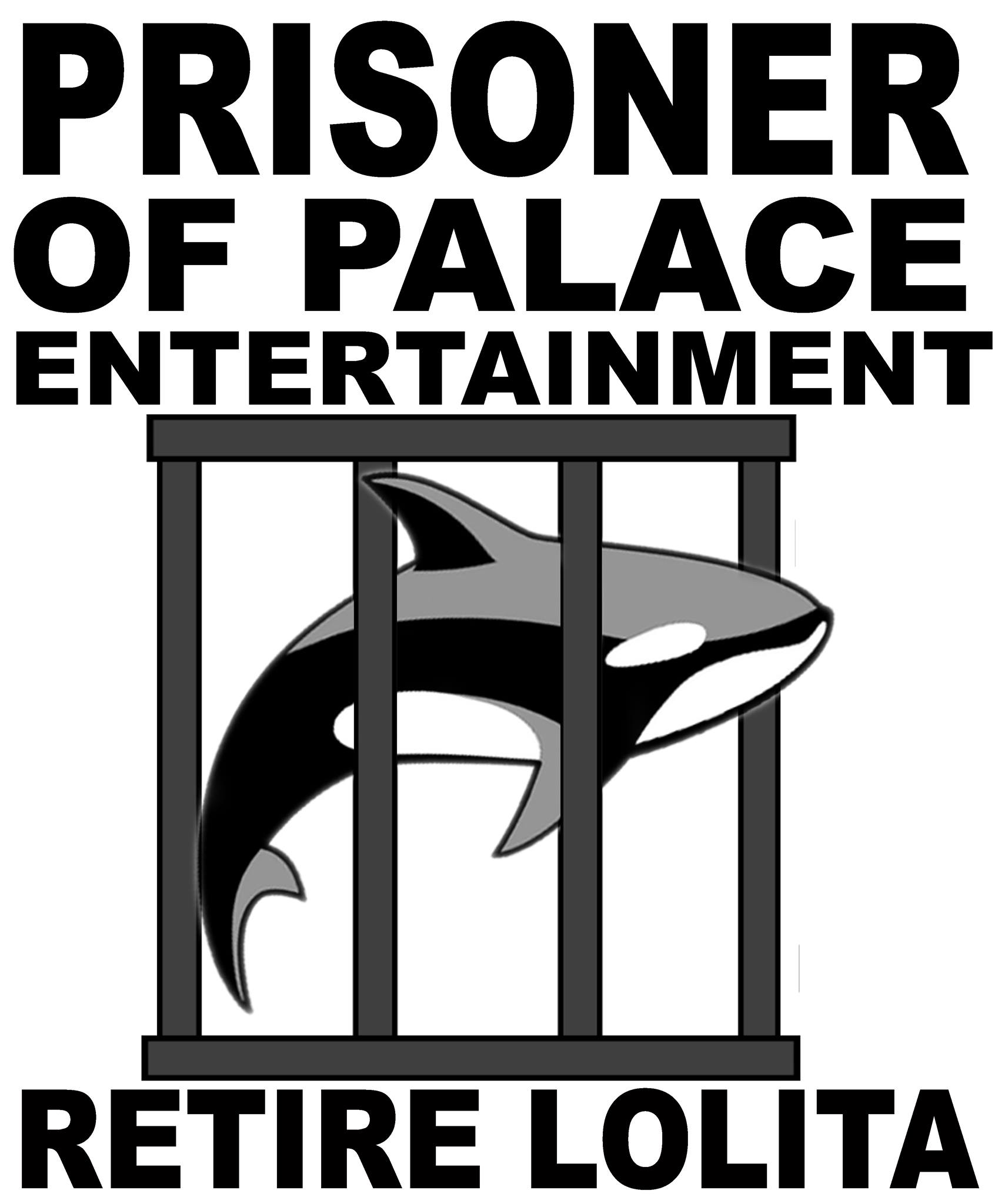
For Lolita, the Miami Seaquarium is a prison, not a palace (photo: Shut Down Palace)

For Lolita, the Miami Seaquarium is a prison, not a palace (photo: Shut Down Palace)

The #ShutDownPalace protests are not the first major effort to liberate Lolita. In January, over 1,500 activists from around the world descended upon Miami to participate in the “Miracle March for Lolita.” In a rousing speech after the march, Jane Velez-Mitchell of JaneUnchained told the crowd to “get the police tape” because the Miami Sequarium is a “crime scene.”

Miracle March for Lolita at Miami Seaquarium

Miracle March for Lolita on January 17, 2015 (photo: Christina Estrada)


Filed under: Entertainment, WIldlife
Tagged with: , , , , , , , , ,

Mayor of San Juan, Puerto Rico Bans Horse-Drawn Carriages

April 20, 2015 by Leave a Comment


The News

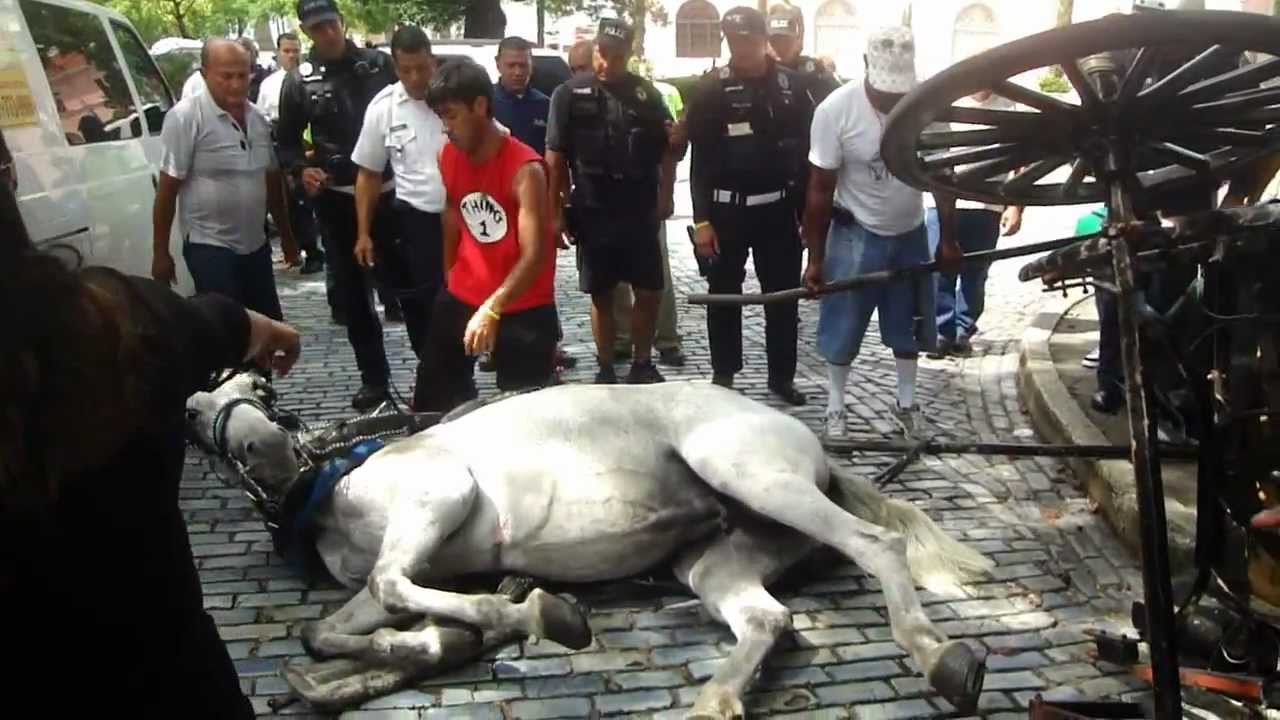
The Mayor of San Juan, Puerto Rico has signed an executive order banning horse-drawn carriages, effective April 20th. The ban comes four days after a horse collapsed on the street. In a statement, Mayor Carmen Yulin Cruz Soto said she made the decision based on “exploitation” and the “mistreatment to which they are exposed every day.”

San Juan, Puerto Rico

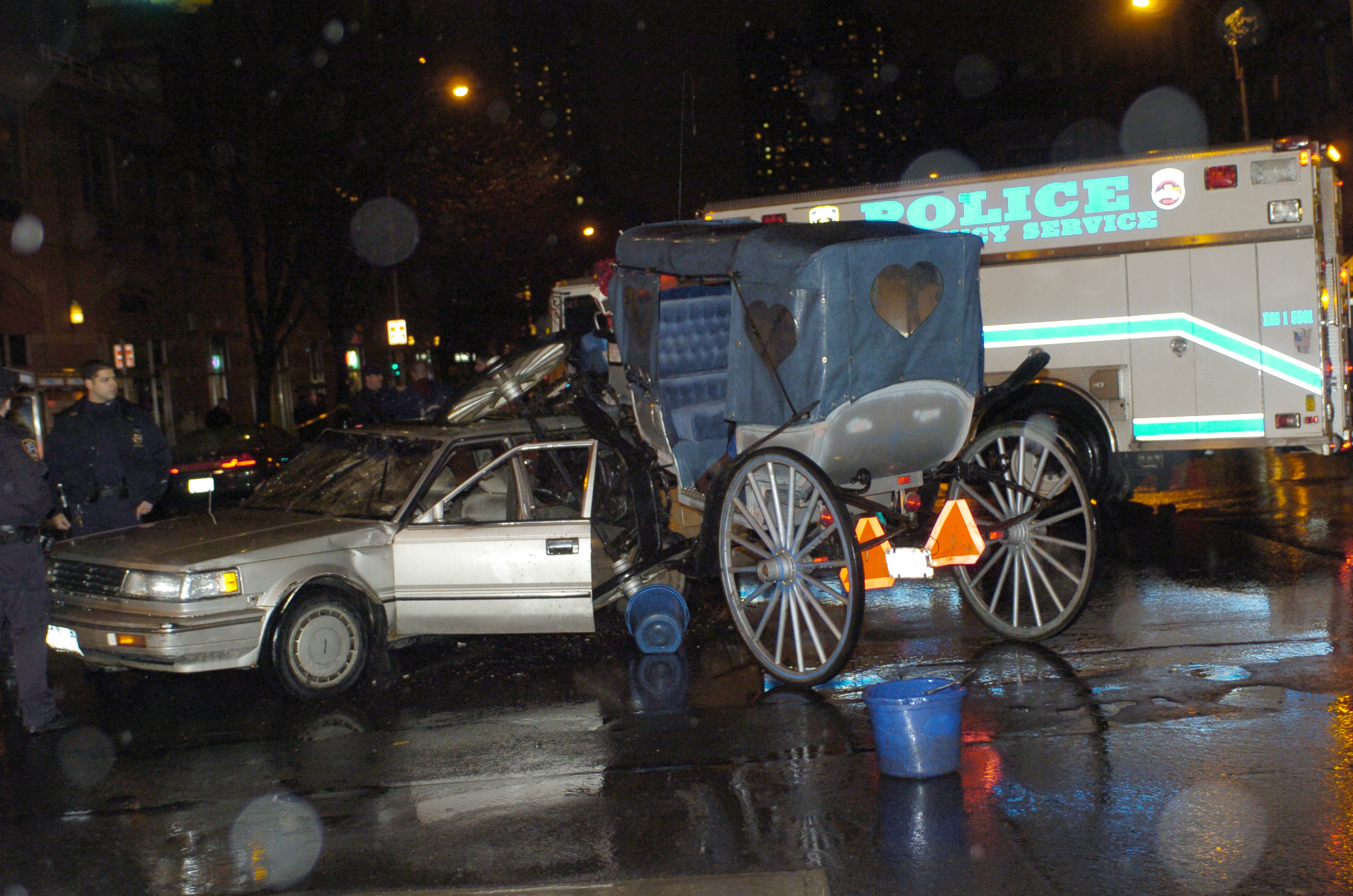
A spooked horse who bolted and crashed into a jeep in San Juan, Puerto Rico, in 2012

The Mayor of New York City, Bill de Blasio, has also pledged to ban horse-drawn carriages. In December, 2014, he introduced a bill that would phase out the carriages over a three year period. In mid-April, he reaffirmed his commitment, telling a reporter that he believes horse-drawn carriages in the streets of Manhattan are “inhumane” and “archaic.” Earlier in 2015, he elaborated on his position on The Daily Show with Jon Stewart.

The NYC Council is expected to vote on the Mayor’s bill this summer, after the city completes a mandatory and routine Environmental Assessment study.

Spooked horse collides with motor vehicle in midtown Manhattan

Spooked horse collides with motor vehicle in midtown Manhattan (photo: Catherine Nance)

Your Turn

To see how you can support the ongoing effort to ban horse-drawn carriages in NYC, please visit NYCLASS and The Coalition to Ban Horse-Drawn Carriages.


Filed under: Entertainment, Victories
Tagged with: , ,